

Table of Contents
Pokémon Legends: Z-A On Nintendo Switch 2
In the Shadow of God
Pokémon has long resisted change. Since the Game Boy era, its formula — catch, battle, collect — has been a constant, a ritual more than a reinvention. That predictability once felt comforting, but as other long-running series evolved with each generation, Pokémon remained steadfast, sometimes stubbornly so.
Pokémon Legends: Arceus was the rare exception. It felt alive, bold, and purposeful — a game willing to disrupt its own legacy. Exploration was deliberate, catching Pokémon felt tactile and instinctive, and for once, the grind had a sense of purpose.
By contrast, Pokémon Legends: Z-A feels like a retreat. It gestures toward innovation but delivers a world too small and a system too messy to justify its ambitions. Where Arceus made discovery thrilling again, Z-A feels like a project half-remembered, half-finished.
Lumiose Returns, but Without Spark
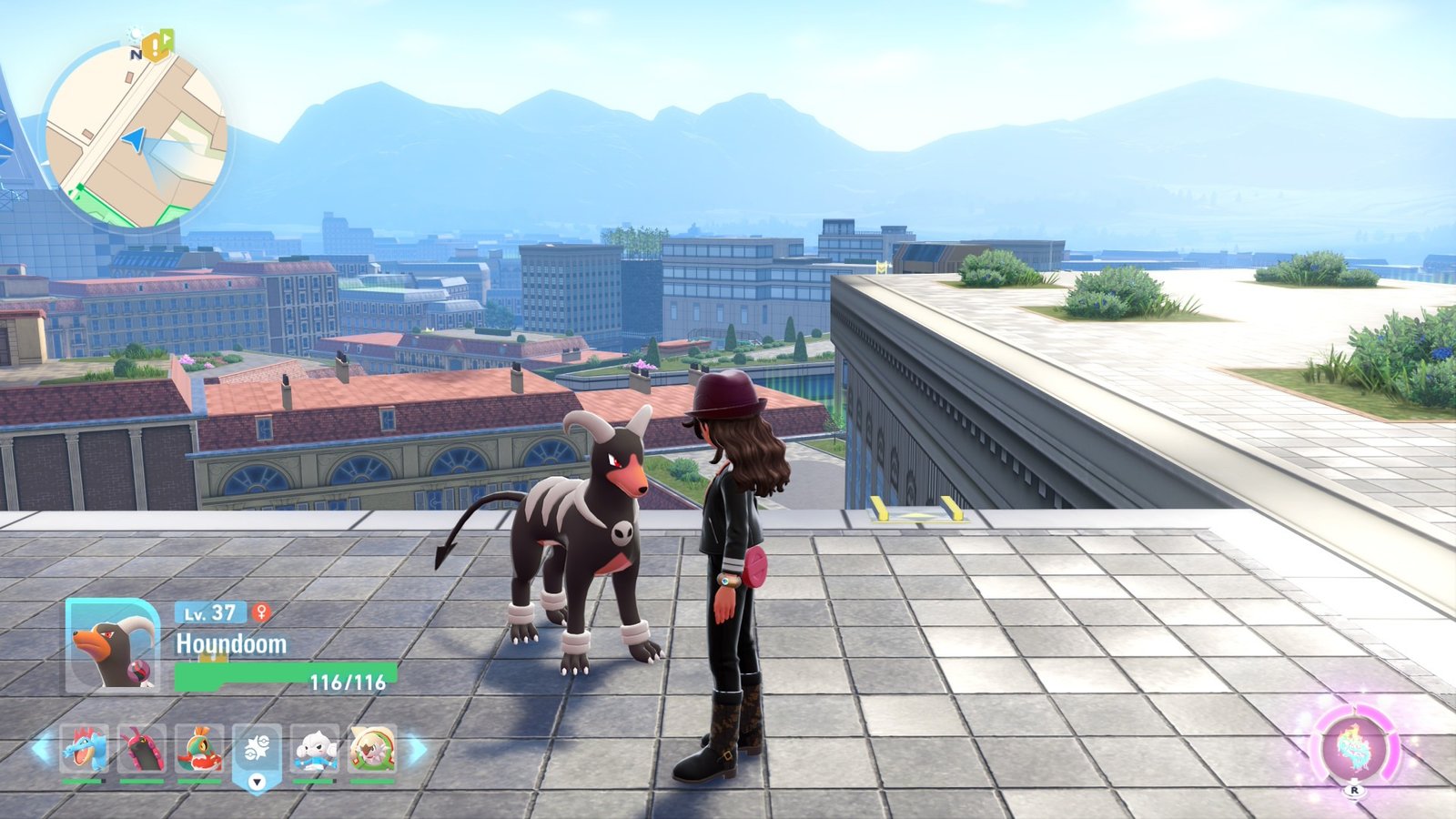
Set in the Kalos region, Pokémon Legends: Z-A returns players to the heart of Lumiose City, a concept with enormous potential. Lumiose, once imagined as a bustling metropolis, should be brimming with stories and secrets. Yet here, it feels oddly lifeless.
You can sprint across the city in minutes, with few reasons to linger. NPCs offer perfunctory fetch quests, and the handful of platforming challenges are more awkward than exciting. It’s a world that seems to exist only to justify the game’s premise, not to invite exploration.
The real action lies in the surrounding Wild Zones, home to roughly 230 Pokémon. Many of the catching mechanics from Legends: Arceus return, such as crouching, sneaking, throwing, and adapting, but in far smaller, more confined spaces. Some creatures dart away at the first sign of danger; others confront you outright. The behaviour variety remains enjoyable, yet these encounters end too quickly, as if the game can’t wait to move you along.
Instead of feeling alive, Lumiose and its outskirts feel like hollow dioramas — beautiful in design, empty in spirit.
Real-Time Combat Complications
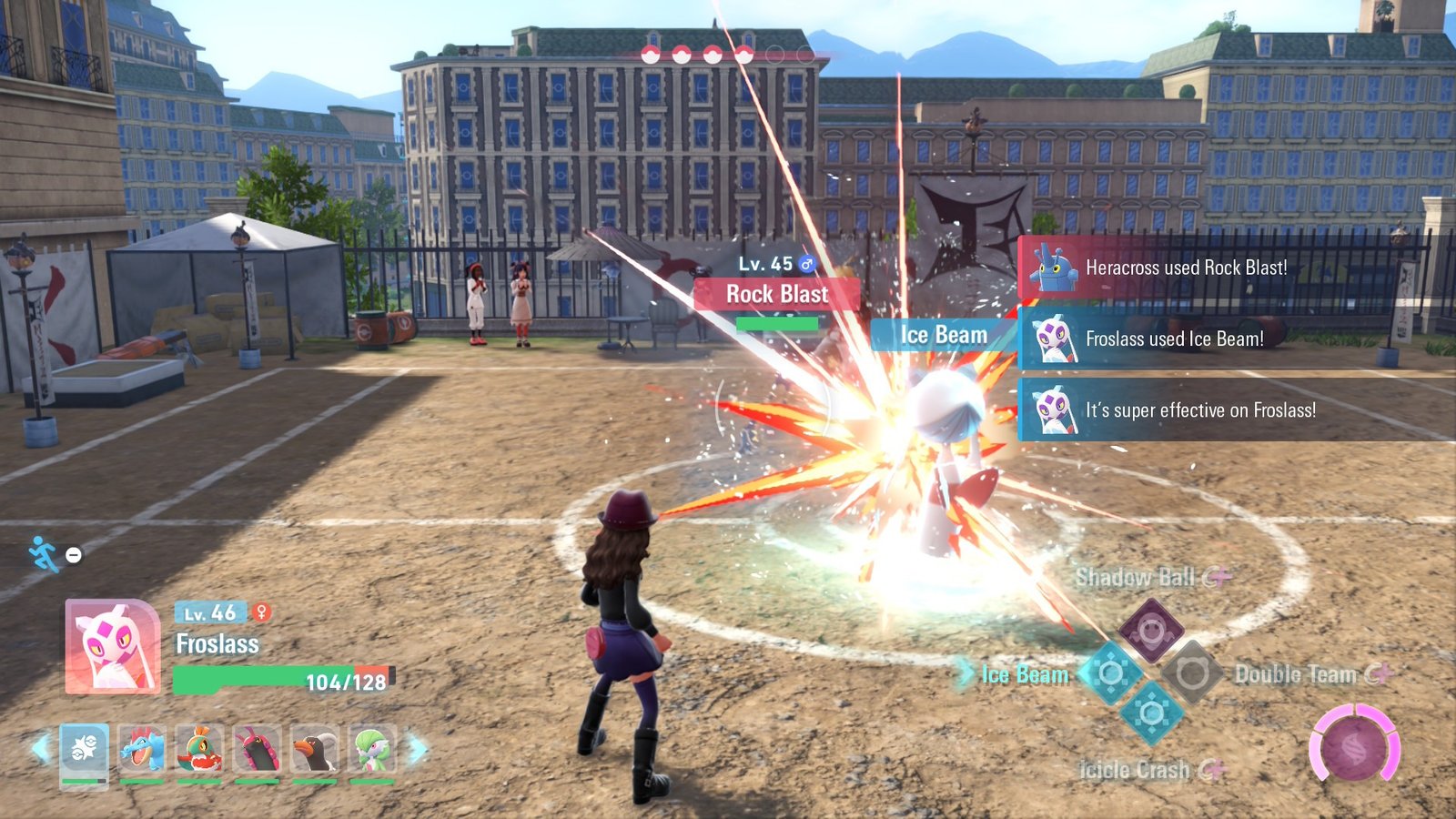
Pokémon Legends: Z-A‘s boldest experiment is its combat overhaul. Battles are no longer turn-based; they play out in real time, with each move tied to a cooldown meter. In theory, this introduces exciting tactical considerations, so think quick, low-power attacks for pressure,while slower heavy hits for risk and reward.
In practice, the system is inconsistent. While it initially forces you to think creatively about team composition, the novelty fades once you realise how easily raw power dominates strategy. Many fights devolve into button-mashing while you wait for cooldowns to reset.
Still, the introduction of area-of-effect attacks and stat-altering abilities brings a glimmer of complexity. Positioning matters. Timing matters. For a moment, you feel as though Pokémon combat has finally matured. Then the chaos settles, and it’s back to spamming strongest moves.
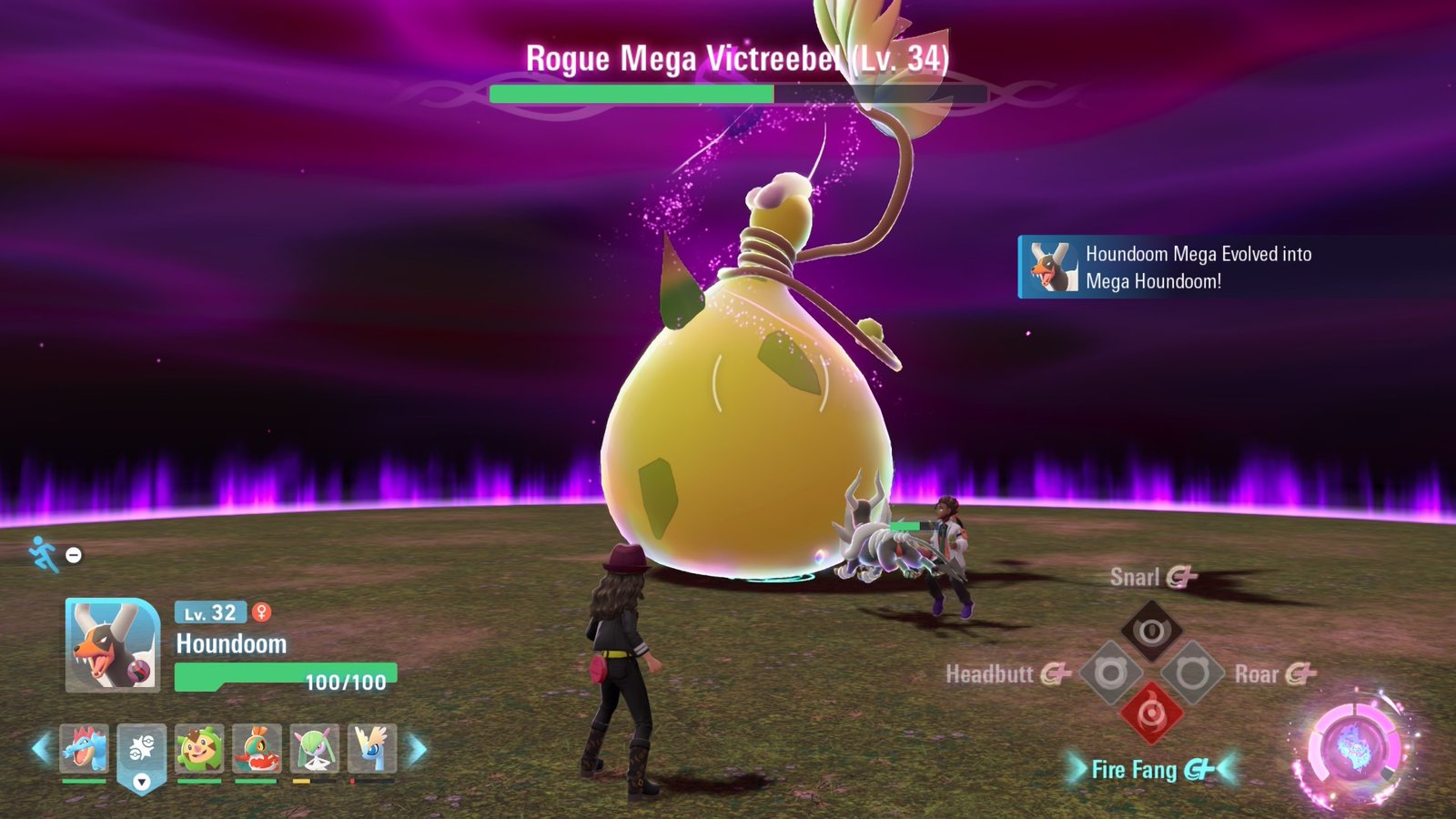
Mega Pokémon battles, however, inject some adrenaline into the mix. These colossal encounters demand chip damage, meter management, and genuine dodging skill. When you finally trigger your own Mega Evolution, the screen erupts in spectacle — fleeting, yes, but thrilling nonetheless. It’s the series’ best use of Mega mechanics since their 2013 debut, even if it can’t quite sustain its momentum.
Z-A Royale and the Weight of Repetition
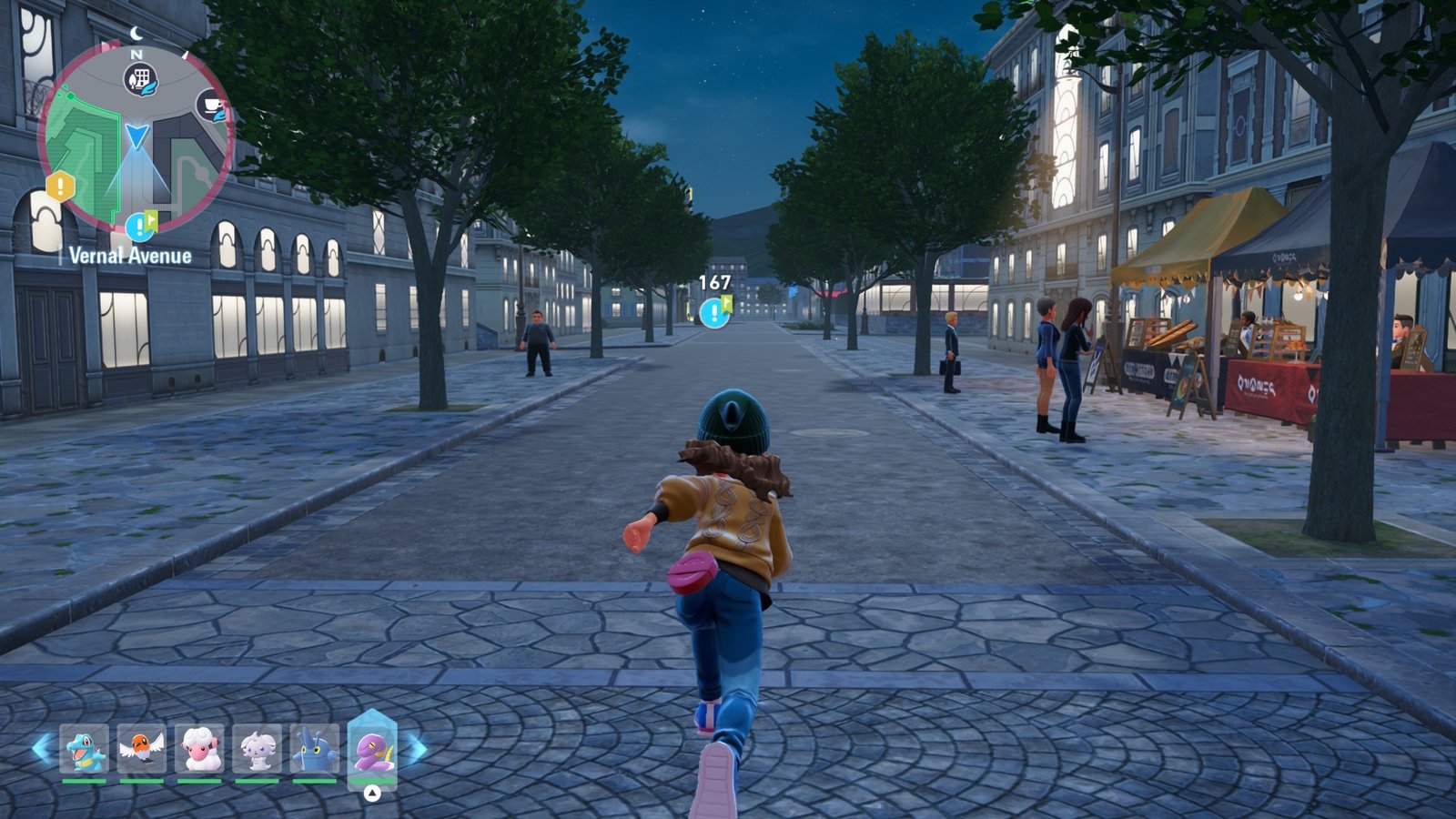
The day–night cycle in Pokémon Legends: Z-A serves little practical purpose beyond enabling the Z-A Royale — a nightly gauntlet of rapid-fire trainer battles meant to simulate urban chaos. On paper, it’s a clever way to integrate the city’s density into gameplay. In reality, it becomes another grind.
Each Royale locks you in cordoned-off sections where trainers swarm the streets. Wins earn points to unlock boss battles, while side objectives like landing surprise attacks, scoring super-effective hits offer bonuses. Unfortunately, the stealth system underpinning these encounters is rudimentary at best. You crouch behind walls or trash bins, hoping the AI turns away long enough for an ambush that rarely works as intended.
As the story progresses, the Royale demands more: longer fights, higher ranks, and increasingly repetitive battles that stall pacing. You can change the time of day at will, but doing so only exposes the loop for what it is: filler content masquerading as a challenge.
At around 25 hours, Z-A isn’t long, but it feels long, which is the worst kind of fatigue, born not from difficulty but from design bloat.
A World That Feels Smaller Than Its Dreams
By the final act, Pokémon Legends: Z-A feels like a fascinating idea left half-realised. Its ranking system nods to No More Heroes but lacks purpose. Its open world feels smaller than Sword and Shield, yet emptier than Scarlet and Violet. Even its side quests which are meant to flesh out the city barely last a minute apiece.
The result is a game that feels less like a sequel to Arceus and more like a prototype for something greater. Its ambition is visible, but so is its exhaustion. Whether the culprit is a tight production schedule, reduced budget, or a DLC-driven strategy, Z-A plays like it’s missing pieces that might have made it whole.
There are moments, albeit small, fleeting ones, when you glimpse the Pokémon series that could be. But those moments pass quickly, and what remains is a city that once symbolised the future, now trapped in its own nostalgia.
When the Experiment Stops Evolving

Pokémon Legends: Z-A should have been the next evolutionary step after Arceus — proof that Game Freak’s new formula could thrive in different settings. Instead, it’s a hesitant, uneven entry that tries to merge old and new ideas but never commits fully to either.
It’s not without merit. The new combat framework has potential, and the Mega battles deliver some of the series’ best large-scale duels. But those sparks can’t sustain a world that feels so limited, nor redeem a design philosophy that seems more risk-averse than ever.
Pokémon has always asked us to evolve. Maybe it’s time the series followed its own advice.
Pokémon Legends: Z-A is now available on the Nintendo Switch and Nintendo Switch 2.
SavePoint Score
Summary
Despite promising ideas and real-time battles that could have evolved the series, Pokémon Legends: Z-A feels small, unfinished, and creatively hesitant. Lumiose City offers little to explore, the Z-A Royale grinds pacing to a halt, and the few glimmers of ambition are buried under a sense of obligation rather than inspiration.
