

Table of Contents
Slapstick Heisting With Surprising Depth
Bandit Trap instantly caught our attention during our hands-on time, not because it reinvents the multiplayer formula, but because it turns a simple idea into an endlessly entertaining loop.
The premise reads like a cartoon skit: one homeowner rigs their house with absurd traps while three bandits sneak in to steal everything of value. In practice, it is a tightly designed 3v1 multiplayer game that mixes physics, strategy and slapstick in a way that feels immediately accessible but quietly clever.
Developed by Picomy and published by PM Studios, the game is set to launch in February 2026. Bandit Trap positions itself as a physics-driven online party brawler. But after playing several matches, it becomes clear that it offers far more nuance than its playful art direction suggests.
Let the Heist Begin
Each match pits a solo Trapper against a team of three Bandits. The Bandits are searching for ten hidden treasures scattered inside furniture across the house, while the Trapper aims to wear the intruders down over time. It sounds straightforward, but Bandit Trap thrives in its roles, feeling fundamentally different yet equally engaging.
Bandits: Quick Thinking and Quick Recoveries

Playing as a Bandit, we quickly learnt that greed is dangerous. You get scanners to detect valuables and potential traps, gadgets to break open furniture, and perks that adjust your survivability or mobility. A personal favourite of my is the drone, as it allows bypassing of pesky locked doors, but it does leave you vulnerable to eager Trappers.
Even with tools in hand, the house in Bandit Trap never feels safe. Mistime a drill and your character ricochets across the room. Sprint too confidently toward a cabinet and you may trigger a trap that launches you down the hallway like a human cannonball.
Bandits can be revived after being downed, creating frantic moments when teamwork matters. Think scrambling to drag a teammate away from danger while the Trapper circles like a shark looking for the next hit.
The Trapper: A Mischief Engineer’s Playground
Playing as the Trapper in Bandit Trap may be the most entertaining form of controlled chaos we have seen all year. Before the bandits arrive, you start utilising Trapper Towers, which are vantage points that allow you to attach devices to any furniture within range.
From rocket-powered boxing gloves to fire vents, ice emitters and spring-loaded surprises, everything feels like a toy box designed purely for comedic yet tactical cruelty.
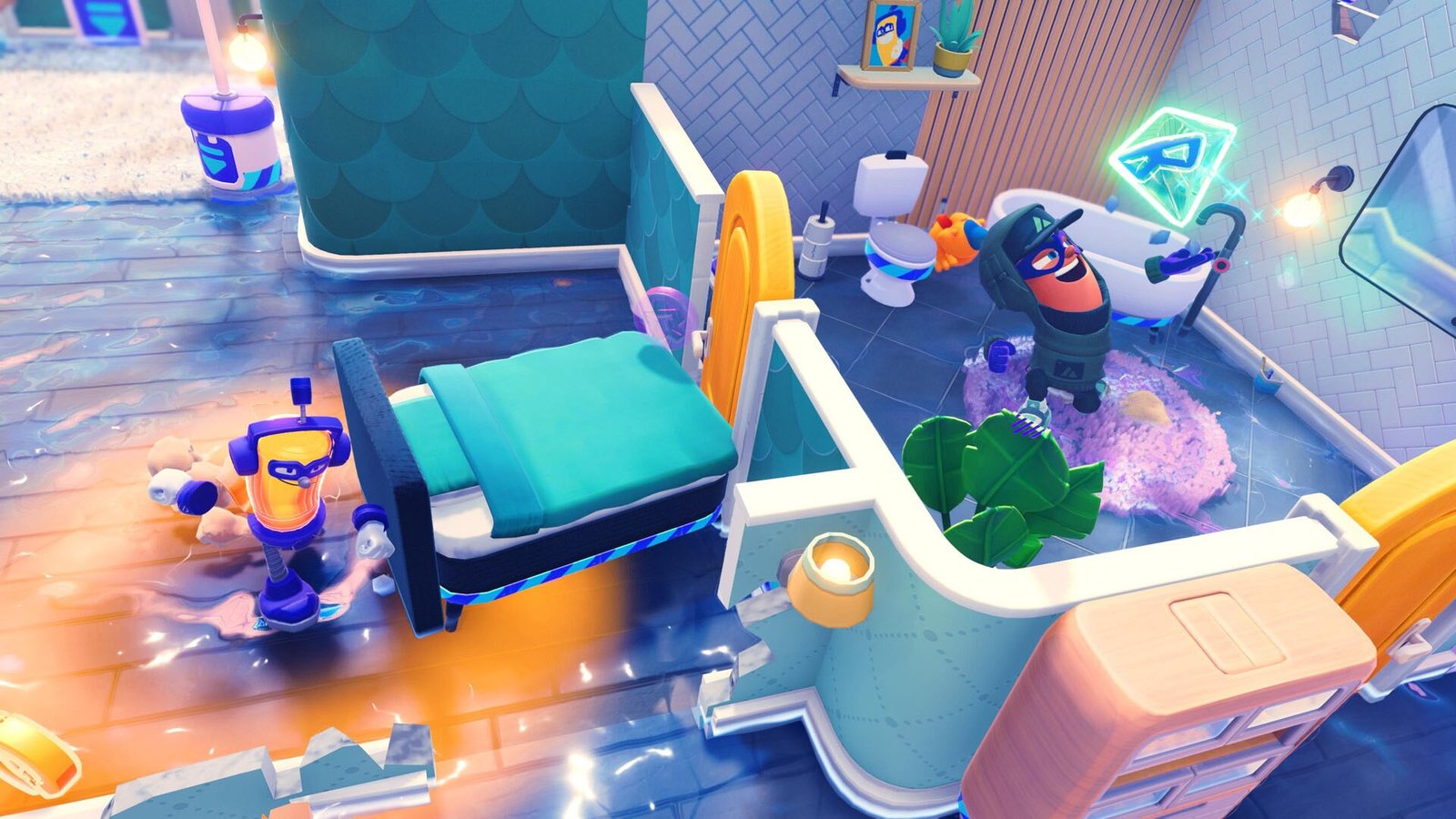
What impressed us is how active the defender role remains. You are not just placing traps and waiting. You are darting through the house, switching vantage points, repositioning hazards, and occasionally inhabiting a trapped object for a direct ambush.
When a trap chain goes exactly as intended, say, launching a Bandit across two rooms into another hazard, it is hard not to grin. You can even combine traps for more dastardly creations as you progress.
A Physics Engine That Steals the Show
Bandit Trap understands that multiplayer comedy comes from chaos you can predict just enough to attempt something clever. Its physics engine sits at the heart of that. Being launched into furniture, sliding across frozen floors, or getting drenched by a burst pipe that reshapes the room mid-match always produced laughter during our session but it also forced us to adapt on the fly.
Environmental destruction adds another layer. Knocking holes in walls or flooding sections of the map creates new paths and new problems. Houses feel different every round because players quite literally reshape them through failure, experimentation and spite.
What surprised us most during our preview was how balanced the game feels already. Unlike many asymmetric titles where one role is clearly more fun, Bandit Trap gives both sides meaningful decisions.
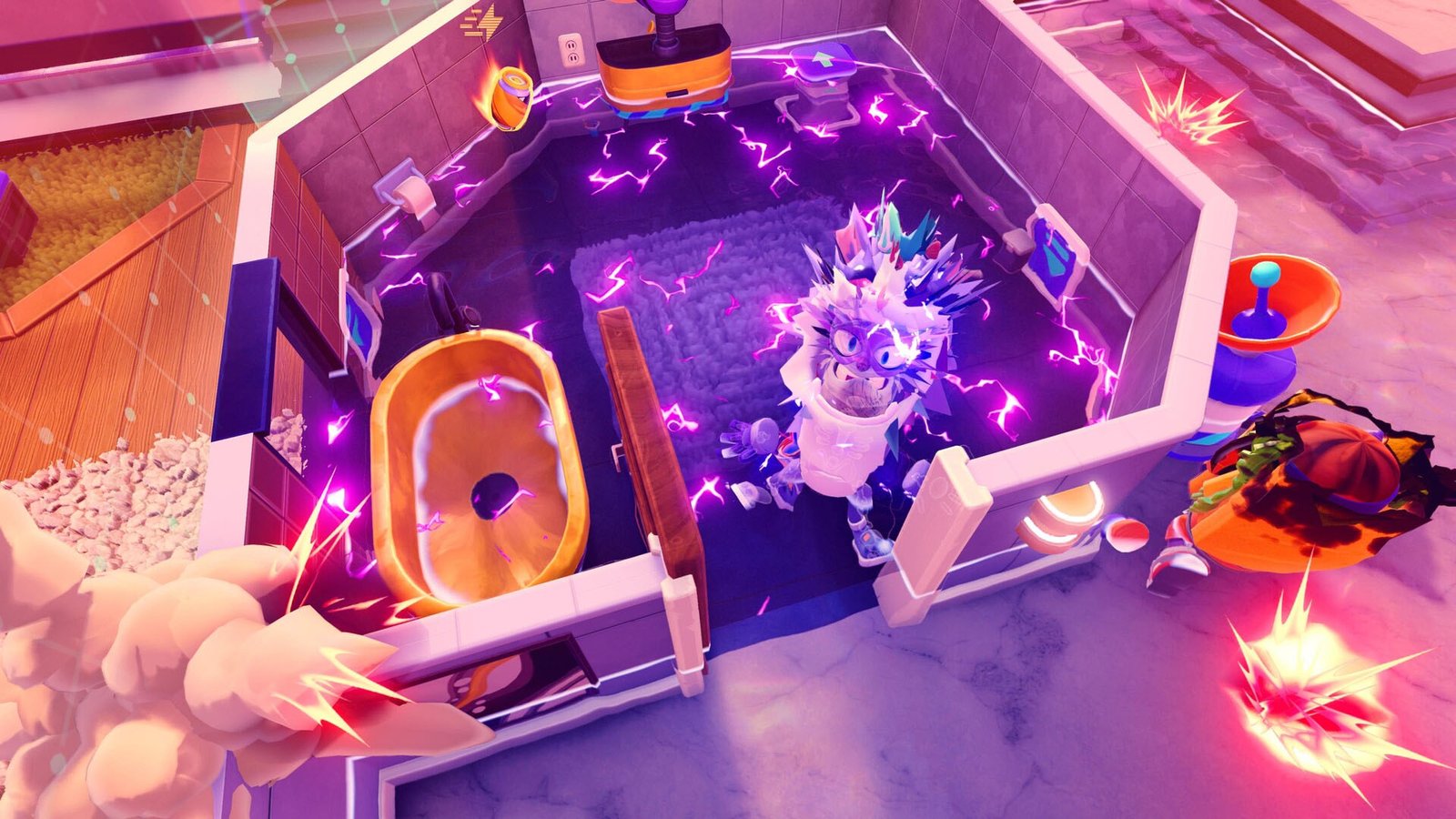
Bandits must weigh caution against speed, scanning, coordinating angles, and choosing when to push an objective or retreat. The Trapper must anticipate Bandit routes, manage vantage points, and efficiently set chain traps to deal damage to all three opponents. The result is a pacing rhythm that feels both readable and chaotic, making every match a small story of missteps, lucky escapes and perfectly timed ambushes.
Visual Identity Made for Mayhem
The exaggerated character designs — floating hands, chunky outlines, oversized reactions — make every misfortune instantly legible from the top-down viewpoint. It has that rare readability that great party games rely on. Even in heated moments, you always know what happened, even if you are laughing too hard to process why.
Damage states such as soot marks, icy silhouettes and singed clothing make each round feel like a gradual descent into utter disaster for someone — usually your team.
Bandit Trap includes progression systems, unlockable tools, new traps, and expanded loadouts, but from what we saw, it does not overwhelm newcomers. Instead, it broadens your options in satisfying ways, encouraging experimentation without turning the game into a meta-driven arms race.
Of course, the long-term success will hinge on matchmaking, cross-play support and thoughtful post-launch balancing. But what Picomy has already achieved is a firm foundation: a multiplayer experience that is funny, competitive and refreshingly distinct from the more intense asymmetric titles dominating the market.
A Most Promising Multiplayer Surprise
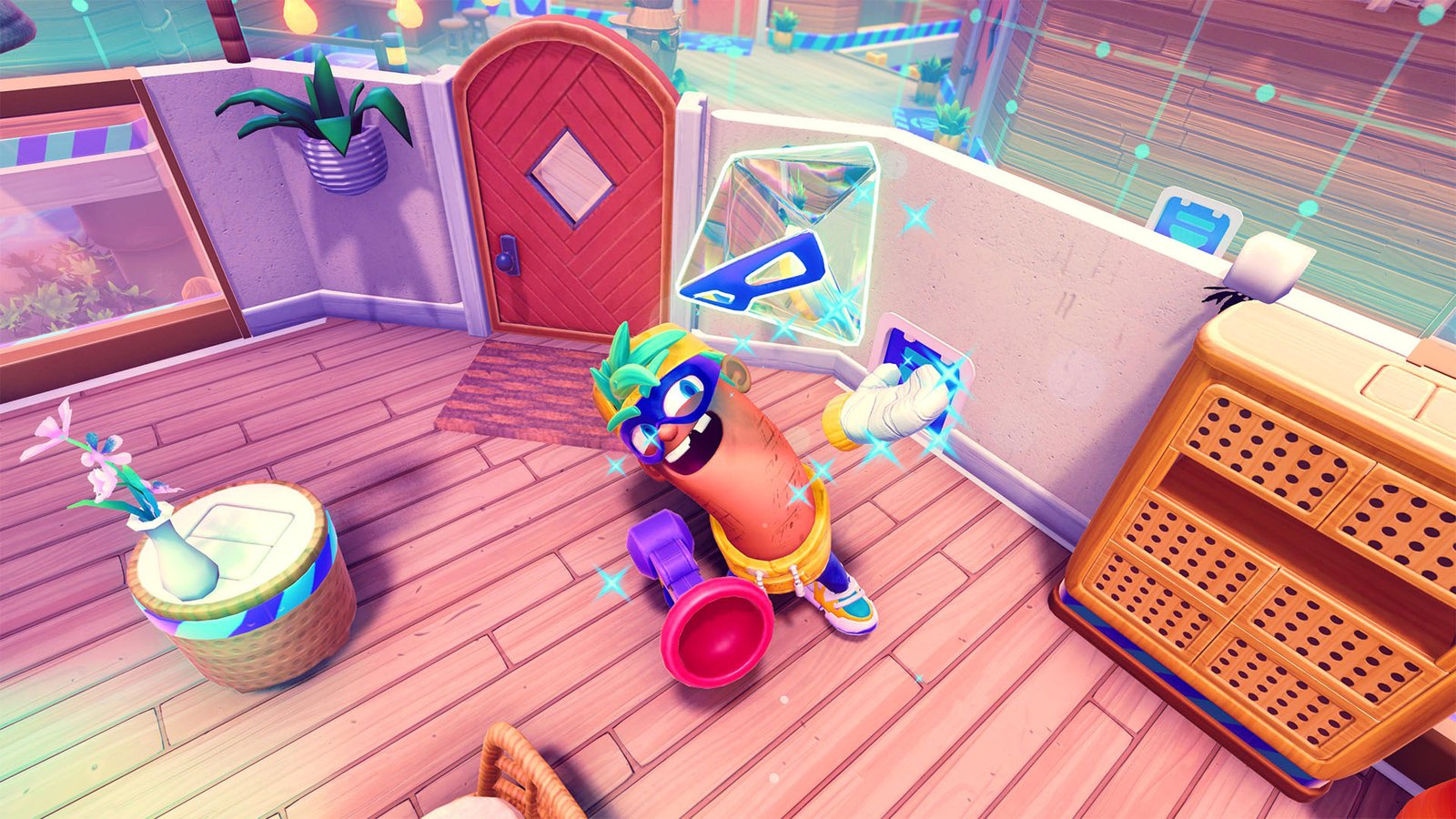
From our time with Bandit Trap, it is clear that this is more than a novelty party game. It is an asymmetric brawler with personality, mechanical bite and a physics system that constantly reshapes the experience. Its blend of strategy and slapstick has the potential to make it a staple for groups looking for a fun, chaotic multiplayer game that still rewards clever play.
If Picomy delivers the netcode, progression balance and support that an online-first title needs, Bandit Trap could easily become one of 2026’s standout multiplayer releases and a new favourite for game nights, whether you like heisting or thwarting the goons.
