

Table of Contents
Xenopurge on PC
Xenopurge opens with an immediately arresting premise. Rather than placing you on the front line, it casts you as an unseen commander issuing orders through imperfect systems while chaos unfolds beyond your direct control. It is a perspective that reframes familiar tactical ideas into something colder and more distant, and, from the outset, the game fully commits to that vision.
This sense of detachment is central to the identity of this title from the folks over at Traptics and Firesquid. You are not reacting moment to moment in the traditional sense, but anticipating outcomes, weighing limited information, and living with decisions once they are made. It creates tension not through spectacle, but through responsibility. When things go wrong, and they frequently do, the game rarely feels unfair. Instead, it feels uncomfortably honest about the consequences of imperfect command.
That clarity of intent is Xenopurge’s greatest strength. It knows exactly what kind of experience it wants to deliver, and it wastes little time trying to be anything else. At the same time, that narrow focus also defines the limits of its ambition, establishing a strong foundation that occasionally feels more like a starting point than a fully realised endpoint.
The Pressure of Imperfect Control
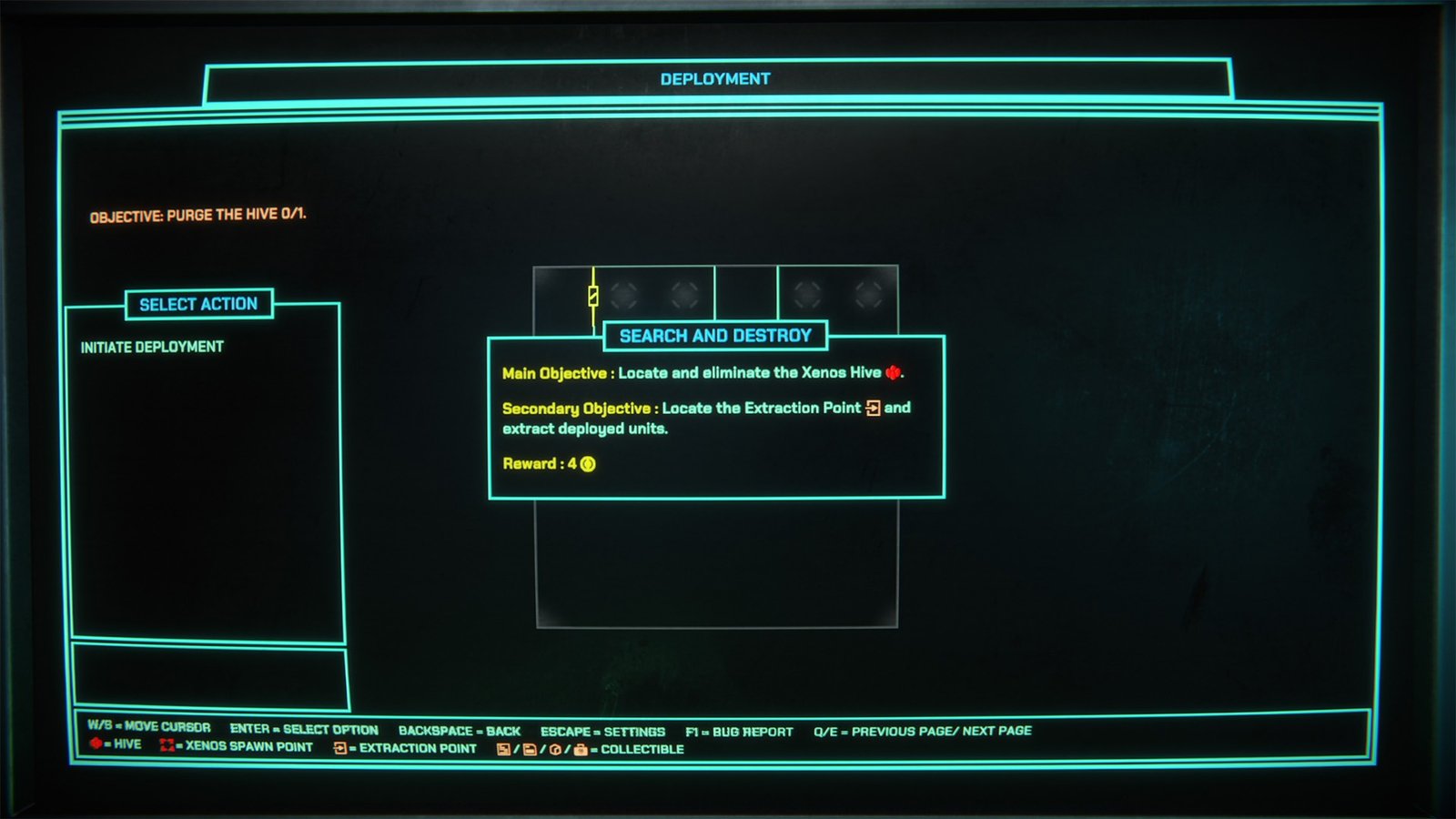
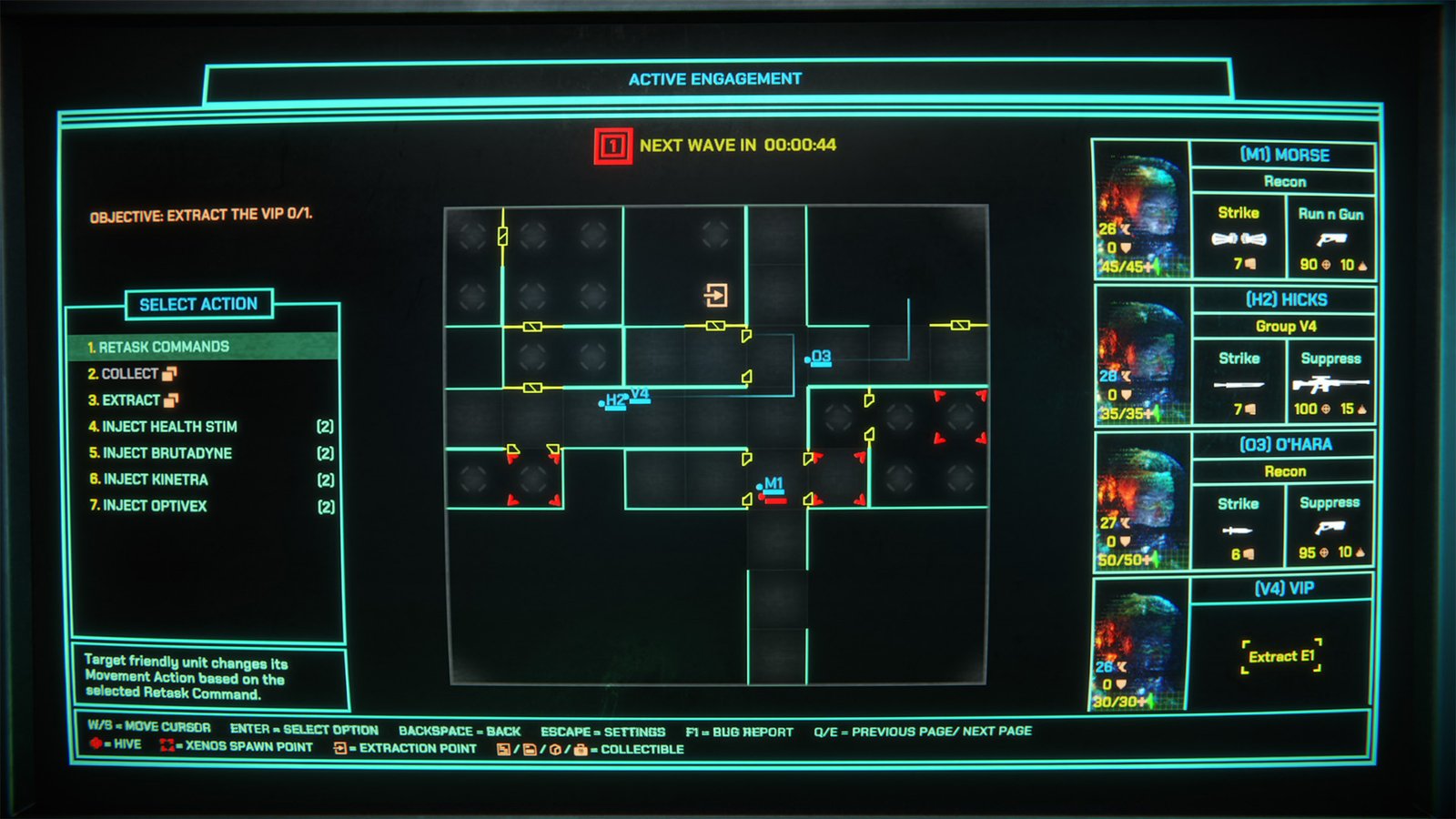
At its core, Xenopurge is built around issuing high-level commands rather than micromanaging individual actions. Squads move, engage, and survive largely on their own, with the player acting as a guiding hand rather than an omnipotent tactician. This design choice is effective in creating stress, especially during early runs when the margins for error feel razor-thin.
The systems encourage forward planning rather than reactive play. Decisions are often made with incomplete knowledge, and the game is at its best when it forces you to commit to a plan and see it through. Success feels earned, not because of mechanical mastery, but because you managed risk effectively under pressure.
However, as familiarity grows, the decision space begins to narrow. While the mechanics remain solid, the number of genuinely distinct tactical approaches can feel limited over time. Xenopurge excels at making each moment feel consequential, but it does not always offer enough variation in how those moments can be approached. The tension holds, but the strategic breadth does not expand at the same pace.
Atmosphere as a Gameplay Pillar
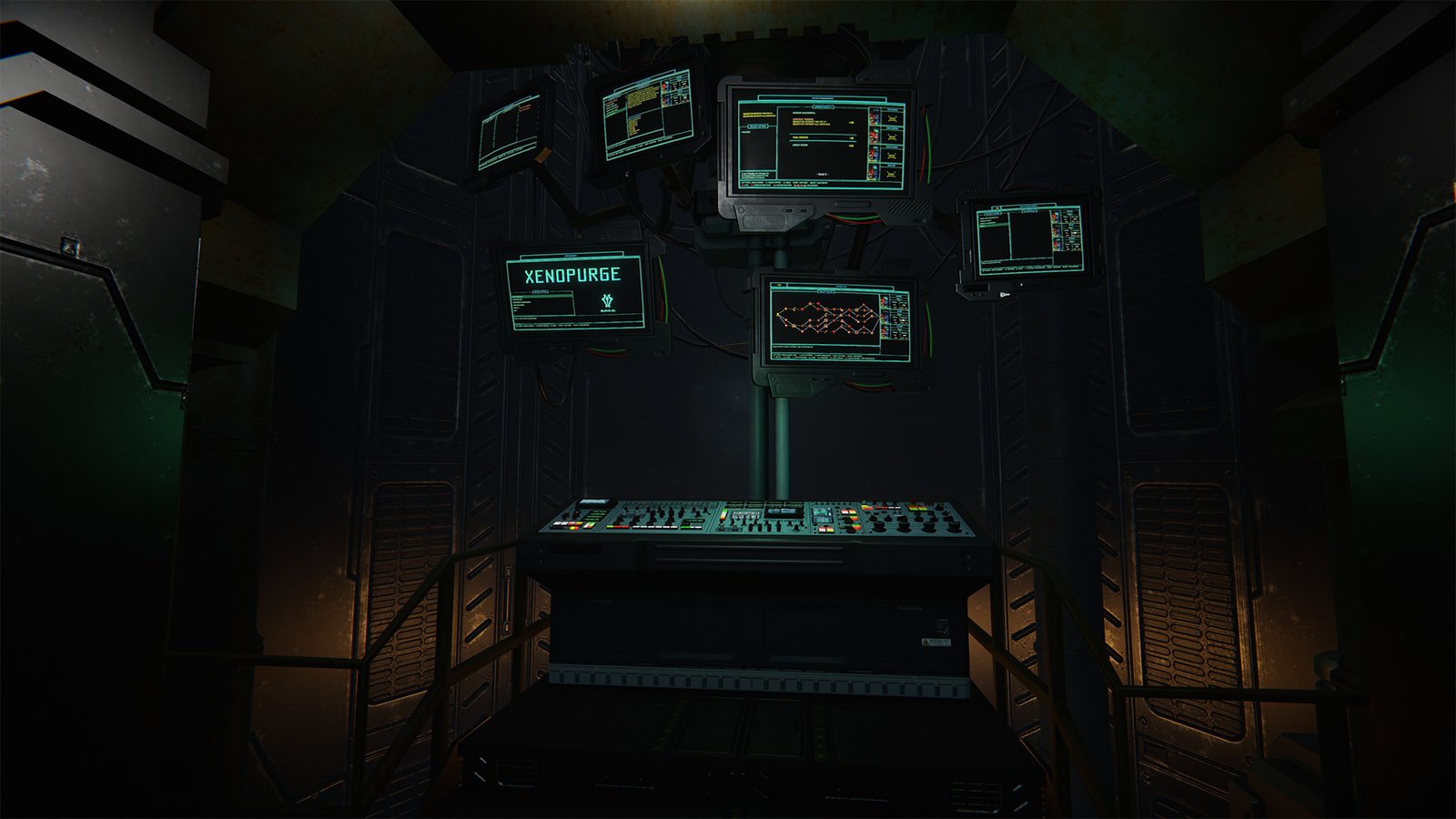
The presentation is deliberately restrained, leaning heavily into a retro-inspired interface that evokes flickering monitors and institutional detachment. This minimalist approach works remarkably well in reinforcing the game’s themes. The lack of visual excess keeps attention fixed on information, alarms, and the steady escalation of pressure.
Sound design plays an equally important role. Subtle audio cues, distorted communications, and the persistent hum of machinery contribute to an atmosphere that feels oppressive without ever becoming overwhelming. Xenopurge recognises when silence is more effective than noise and uses restraint to its advantage.
That said, the same abstraction that enhances immersion can occasionally hinder clarity. During high-pressure situations, critical information can be harder to parse than it should be. These moments are not frequent enough to derail the experience, but they do suggest areas where refinement could significantly improve usability without compromising tone.
A Loop Built for Short Bursts
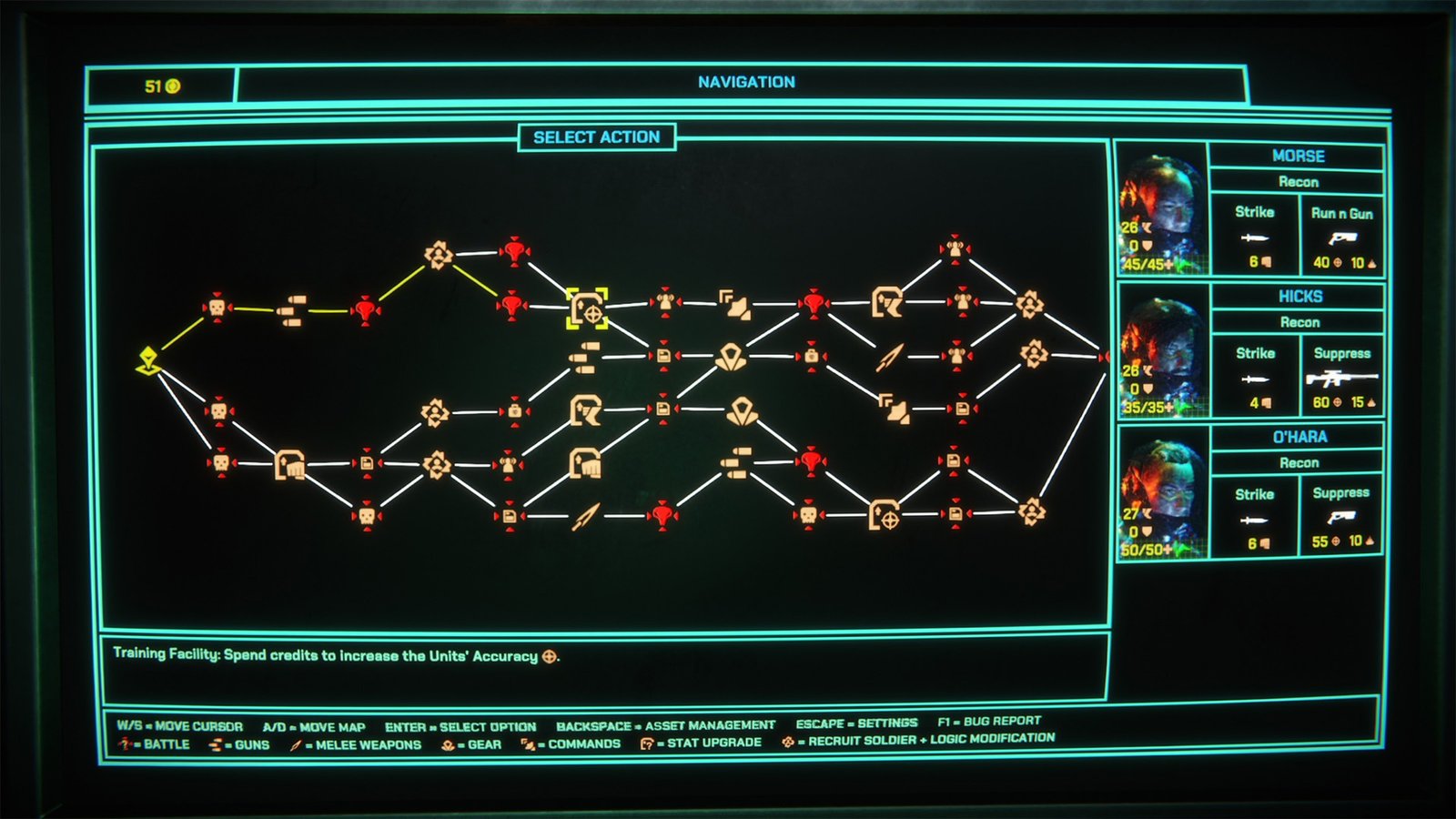
Xenopurge adopts a roguelite structure that encourages repeat runs through procedural variation and incremental progression. In short sessions, this loop is compelling. Each attempt feels distinct enough to justify another go, and failure rarely feels wasted thanks to the gradual accumulation of upgrades and knowledge.
Where the game begins to falter slightly is in long-term longevity. While the core loop remains engaging, the range of scenarios and modifiers does not evolve dramatically over extended play. Over time, patterns emerge, and the sense of discovery diminishes faster than it ideally should.
This is where Xenopurge’s potential is most apparent. The systems in place are strong, but they feel primed for expansion. Additional mission structures, more pronounced escalation, or greater systemic variety could elevate the experience from compelling to genuinely absorbing over the long haul.
There is little doubt that Xenopurge benefits from a clear and confident identity. It does not chase scale or spectacle, and it avoids unnecessary complexity in favour of focused design. That restraint will resonate strongly with players who value atmosphere, tension, and intentional limitation.
At the same time, this clarity comes at the cost of broader appeal. The game is not interested in onboarding every type of strategy player, and those looking for expansive systems or narrative depth may find its scope restrictive. What it offers is precise and well considered, but undeniably narrow.
A Strong Foundation With Eyes on the Future
Ultimately, Xenopurge stands as a thoughtfully designed tactical roguelite that delivers stress, atmosphere, and consequence through restraint rather than excess. Its ideas are compelling, its execution confident, and its commitment to vision admirable.
Yet for all it achieves, the game also feels like it is standing at the edge of something greater. The foundation is strong, but there is room for deeper systems, broader variation, and sharper refinement. In its current form, Xenopurge earns its place as a memorable, tense experience while leaving a clear sense that its most interesting chapters may still lie ahead.
Xenopurge is available now on PC.
SavePoint Score
Summary
Xenopurge succeeds as a nerve-testing tactical experience, even as it hints at a deeper game still waiting to emerge.
