

Table of Contents
Desktown on PC
A Concept Shaped by Intention, Not Scale
Desktown from Deskteam arrives with a clarity of purpose that was already evident when it we first experienced it during IGDX 2025. Rather than pitching itself as a traditional city builder or a productivity app in disguise, the game positioned itself early on as something more ambient. It was framed as a companion experience, one designed to exist alongside everyday computer use rather than demand centre stage.
That intent matters. Desktown does not aspire to compete with sprawling simulation games or deep optimisation sandboxes. Instead, it responds to a modern reality where players often want something present but not consuming. From the outset, the developers were clear that this was a game meant to fit around work, browsing and multitasking. Evaluated through that lens, many of its design decisions feel deliberate rather than constrained.
The result is a game that lives comfortably on your desktop, quietly progressing over time. It sets expectations carefully and largely delivers on them.
Living on Your Desktop, Not Owning It
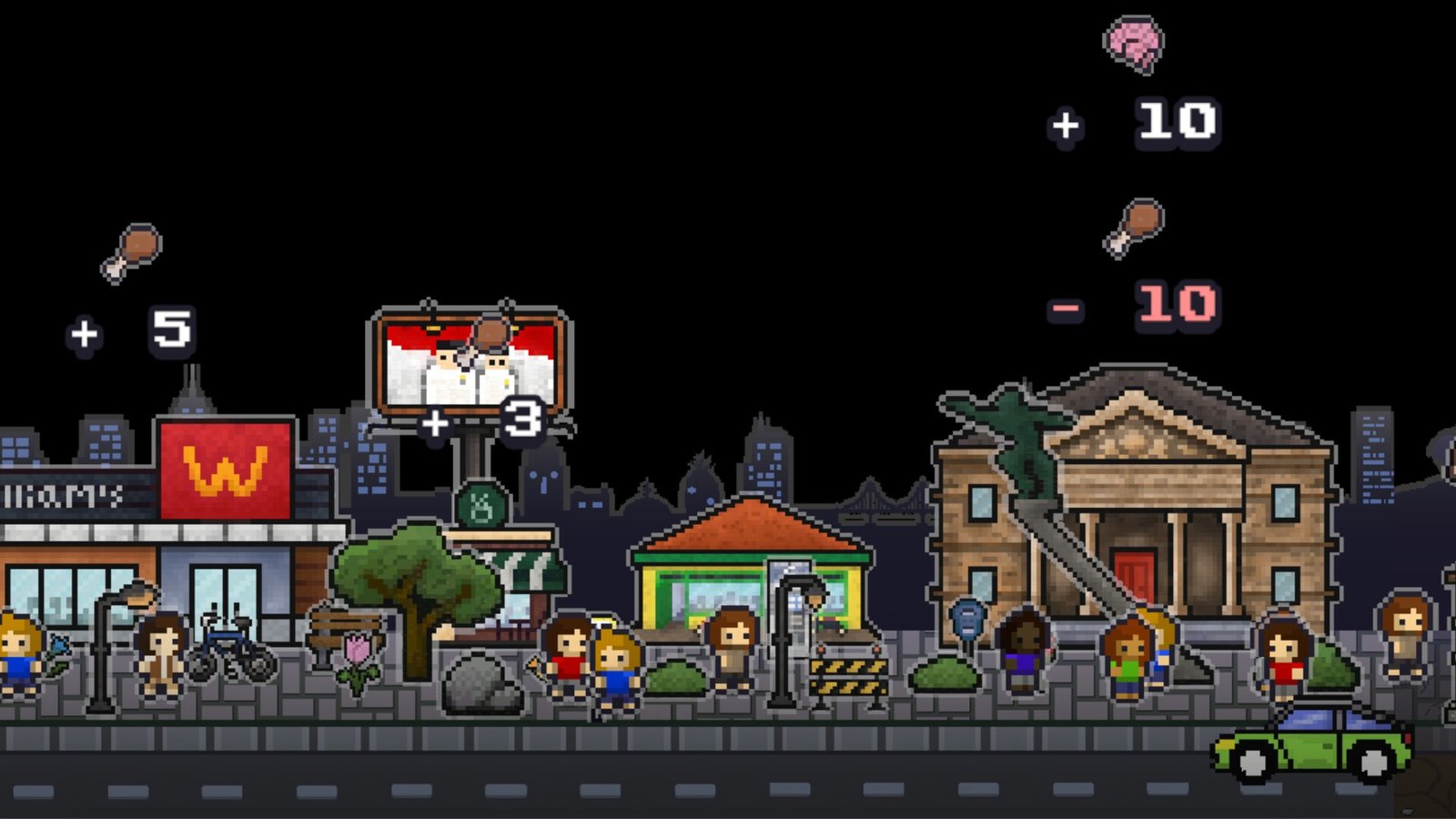
The defining feature is Desktown‘s physical relationship with your screen. The town occupies a strip of desktop space, animating gently while other applications take priority. Citizens wander, buildings pulse with activity, and resources accumulate without constant input. The experience feels closer to a digital terrarium than a management challenge, and that distinction shapes how the game should be read.
Visually, the pixel art style is soft and restrained. Colours are chosen to remain visible without becoming distracting, and animations are subtle enough to fade into the background when focus is elsewhere.
Expanding the game to full view reveals more decorative options and a clearer view of the systems, but it never pressures you to stay there. The design respects attention, which is rare even within the cosy genre. This approach gives Desktown a strong sense of identity. It is not trying to hook you through urgency. Instead, it earns presence through calm persistence.
Idle Systems With Just Enough Engagement
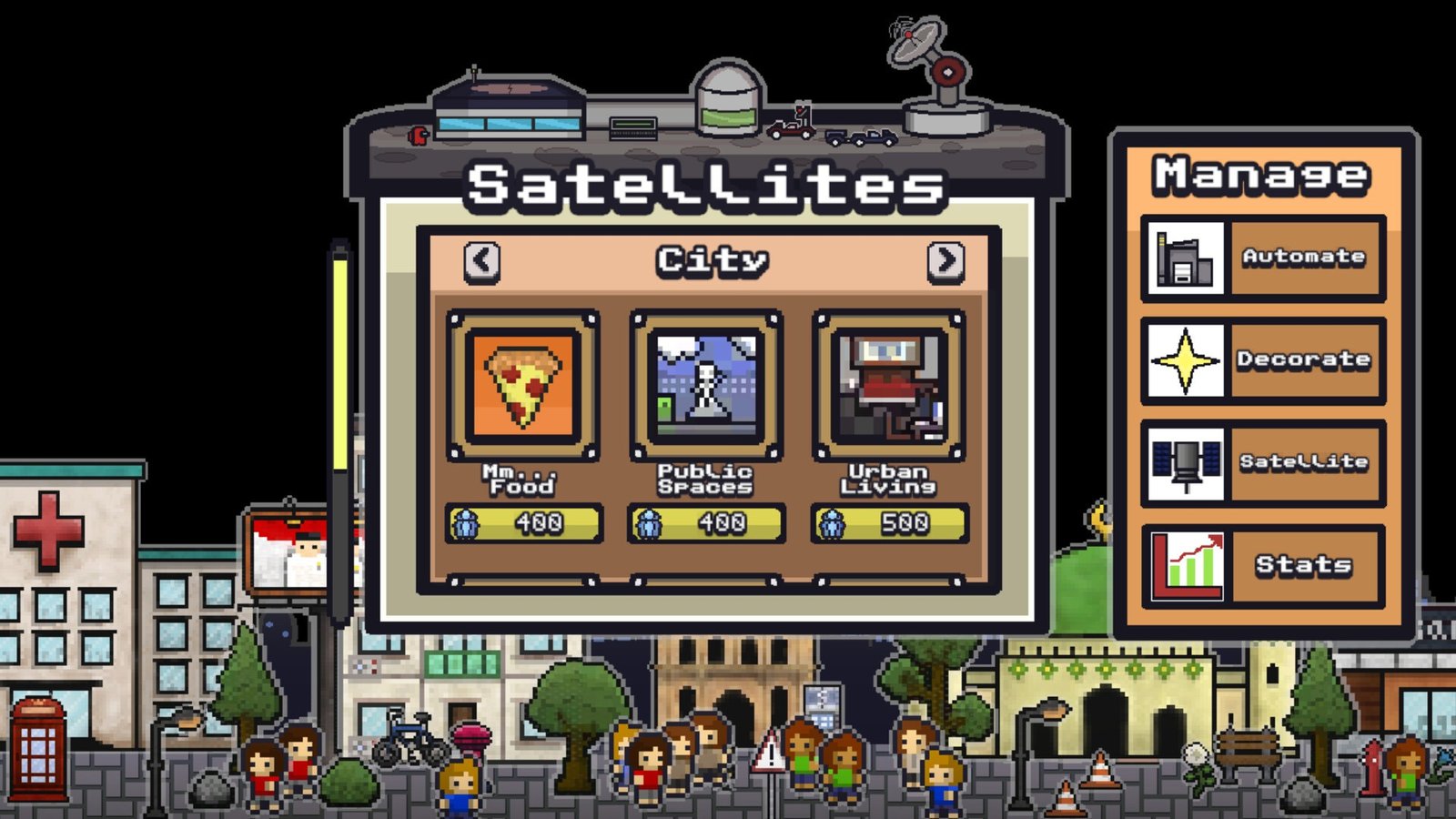
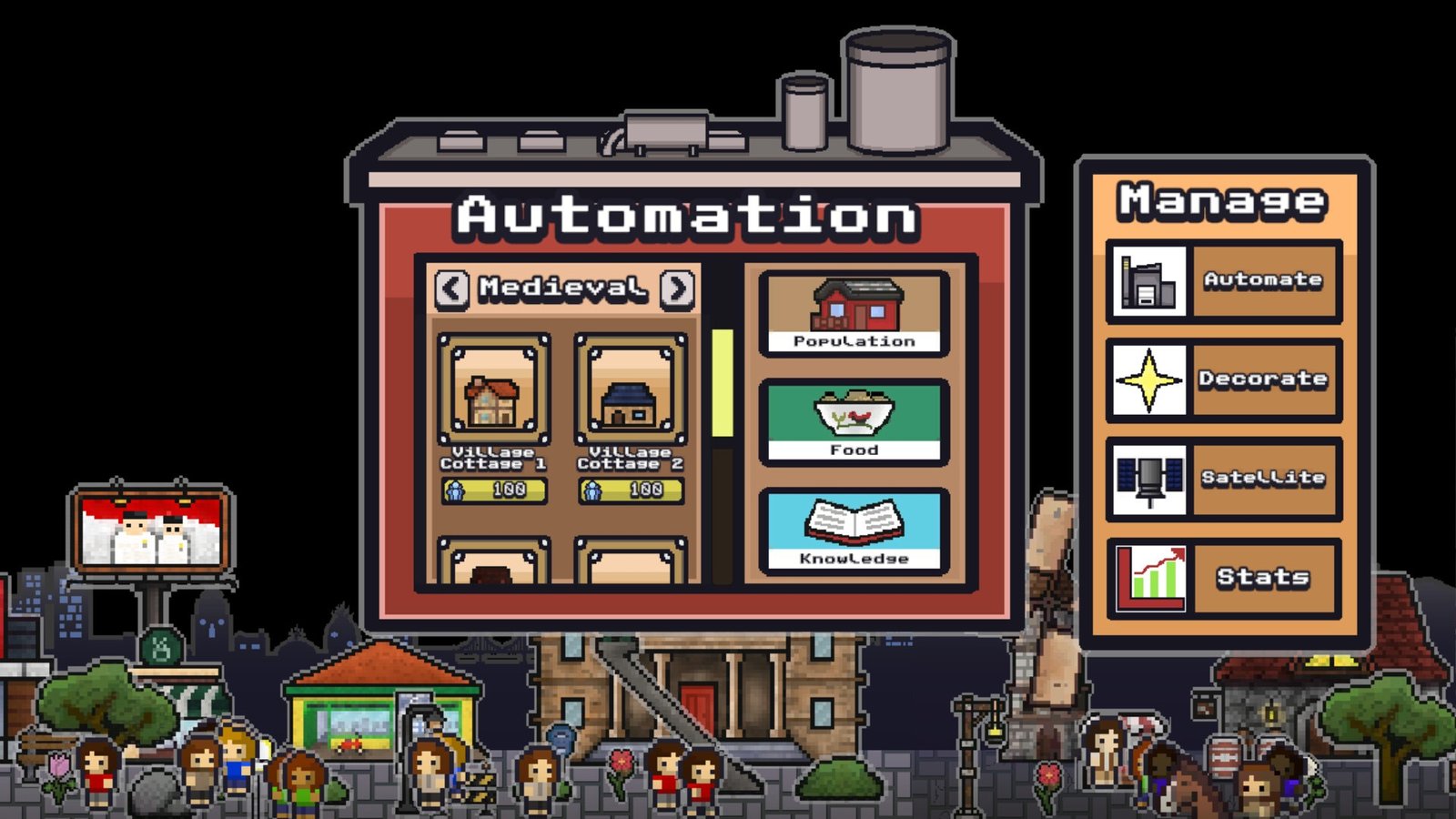
At its mechanical core, Desktown runs on familiar idle foundations. Buildings generate food, knowledge and population over time, while automators ensure progress continues even when the game is unattended. New structures unlock gradually, offering light choices around expansion and visual customisation rather than deep economic trade-offs.
Where the game differentiates itself is in how it invites interaction. Decorative placement grants small bonuses and encourages personal expression, while word-based interactions through satellites allow players to actively boost population by typing out answers to general questions. These moments are brief and optional, reinforcing the idea that engagement should feel natural rather than obligatory.
That said, the systems reveal their limits over longer play sessions. Once automation pathways are established, progression slows, and strategic variation narrows. There are but a few moments where the game meaningfully challenges player decisions or introduces unexpected friction. For a title designed to run passively, this may be acceptable, but it also caps long-term depth.
Productivity as Texture Rather Than Transformation

The inclusion of productivity tools such as timers and alarms reinforces its positioning as a desktop companion. These features are simple, but they align with the game’s philosophy. They are not meant to replace dedicated productivity software, but to gently structure time in a way that complements the idle loop.
In practice, this creates a pleasant rhythm. A timer ends, a short interaction occurs, the town grows a little more, and focus returns to work. The game never insists on attention, but it remains quietly present.
This subtlety is one of Desktown ’s strengths, even if the tools themselves lack depth or customisation. The balance here mirrors the rest of the experience, where the game adds texture to daily routines without attempting to redefine them.
Expectations Met, Scope Maintained
One of the more reassuring aspects of Desktown is how closely the finished experience aligns with how it was presented throughout. It does not overpromise, nor does it attempt to stretch beyond its intended scope.
This consistency works in the game’s favour. While some players may wish for greater mechanical ambition or longer-term progression hooks, it is difficult to argue that the game fails to deliver on its own terms. Its limitations are visible, but so is its restraint.
Desktown is not a game designed to dominate your time. It is designed to share it. As a desktop companion, it succeeds through calm presentation, thoughtful integration and a clear understanding of its role. As a management experience, it remains modest, offering gentle progression rather than deep systems.
For players seeking a cosy, unobtrusive city builder that grows quietly alongside daily tasks, Desktown is easy to appreciate. Those looking for complexity or long-term optimisation will likely find its ambitions intentionally small. Within its chosen lane, however, it remains confident and cohesive.
Desktown is available now on PC via Steam.
SavePoint Score
Summary
Desktown is a calm desktop companion that prioritises presence over pressure. Its idle systems and gentle productivity tools work in harmony, even if depth remains limited.
