

Table of Contents
Romeo Is A Dead Man On PS5
Few directors in the industry possess a voice as unmistakable as Goichi Suda. Through his studio Grasshopper Manufacture, Suda51 has built a legacy on abrasive style, confrontational themes, and an unapologetic embrace of the absurd. From the anarchic swagger of No More Heroes to the fractured storytelling of Killer7, his works have long blurred the line between satire and sincerity.
Romeo Is A Dead Man initially feels like the purest distillation of that ethos. It is louder, stranger, and more conceptually chaotic than anything the studio has produced in years. Yet as the spectacle unfolds, it becomes increasingly clear that eccentricity alone cannot carry a game. Beneath its garish exterior lies an action title that struggles to justify its own complexity.
Lunacy, Thy Name Is Romeo
Players step into the role of Romeo, resurrected to serve within the Space Time Police, an interdimensional force tasked with repairing temporal distortions. These ruptures are orchestrated by criminals who manipulate the fabric of reality, chief among them Juliet, Romeo’s former lover. It is a pulpy premise ripe for philosophical reflection or biting satire.
Instead, the narrative floods the player with technobabble and erratic detours that rarely coalesce into meaningful commentary. Characters are introduced at a relentless pace: a cat scientist, a Roman gladiator, a spectral grandfather rendered as a two-dimensional illustration stitched to Romeo’s jacket. The game presents these ideas with confidence, yet seldom interrogates them.
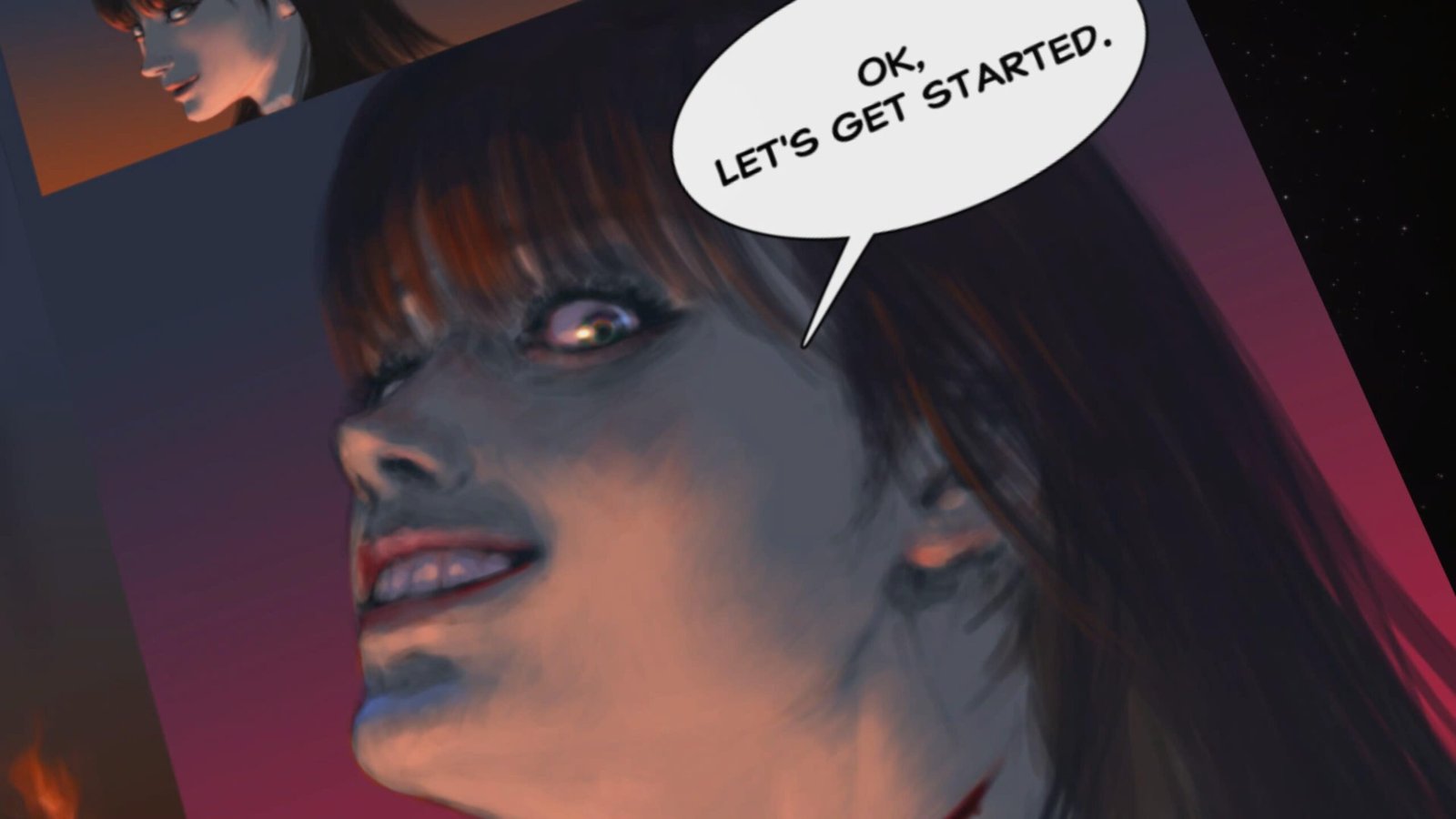
Suda51 has previously drawn inspiration from pop culture touchstones such as Rick and Morty, and that influence is evident in the multiverse-hopping chaos. However, where its inspiration pairs absurdity with pointed satire, Romeo Is A Dead Man frequently substitutes density for depth. A 2D music video interlude, a sprawling dating quiz segment, and a theatrical rakugo performance from Romeo’s sister all gesture toward cleverness, but seldom illuminate character or theme.
The result is neither incomprehensible nor hollow. Weirdness becomes aesthetic dressing rather than a narrative engine.
Bring On The Bastards!
At its core, Romeo Is A Dead Man is an action game built around light and heavy melee attacks, firearm switching, and crowd control. Enemies shamble forward in waves, inviting button-driven aggression rather than tactical engagement.
The problem is not simplicity itself, but stagnation. Weapons can be swapped across four melee and ranged archetypes, each with nominal differences. Yet the game rarely incentivises experimentation. Default loadouts comfortably carry players through most encounters, and even boss fights lack mechanical layers that demand mastery.
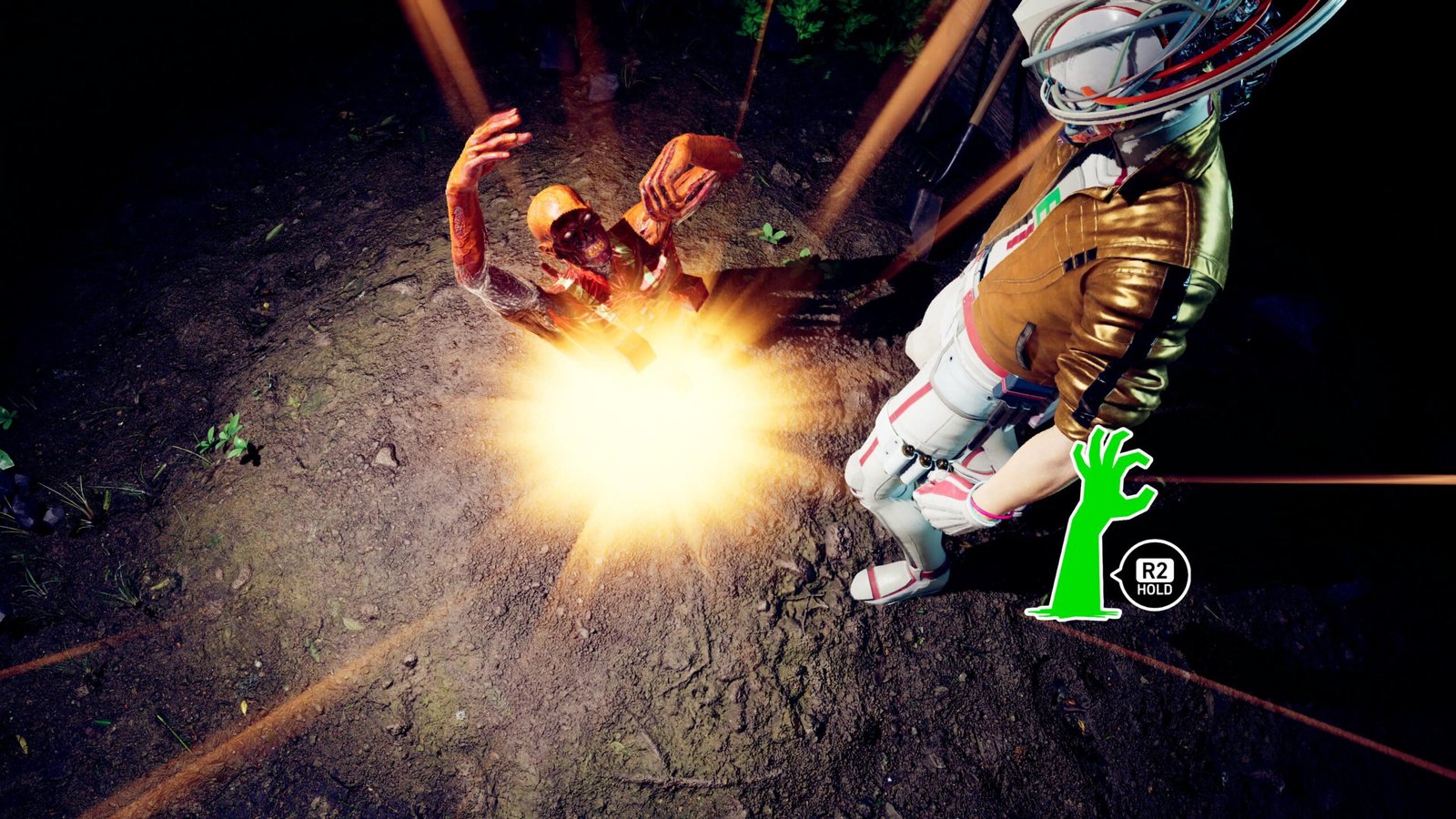
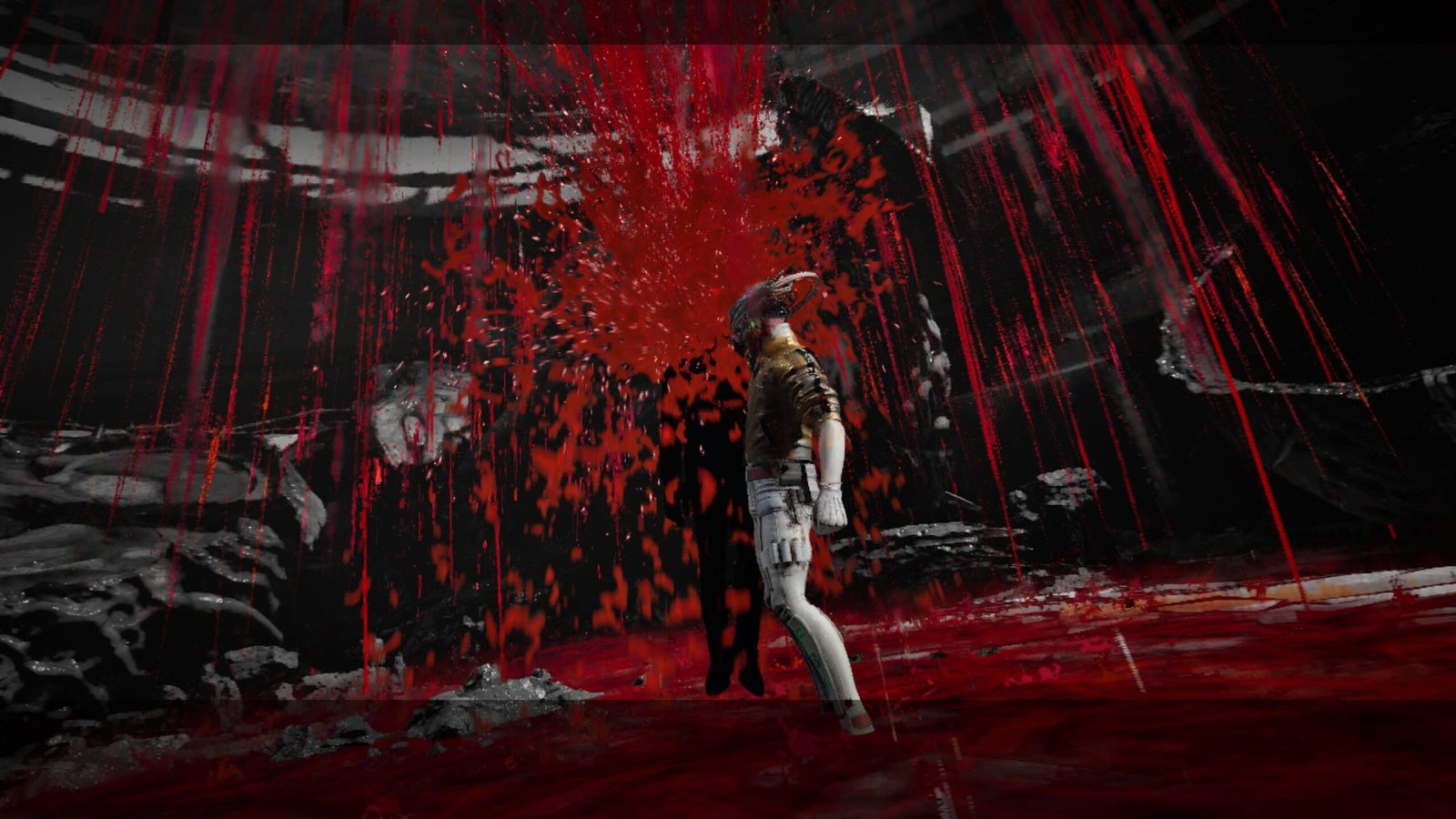
Special mechanics, such as weak-point targeting and the Bloody Summer finisher, inject a momentary spectacle, but they function as visual punctuation rather than systemic evolution.
By the third chapter, the game has revealed nearly every combat idea it possesses. Subsequent chapters reshuffle these components rather than expand upon them. For a studio known for eccentric design, the absence of meaningful progression is striking.
Systems at War
The Bastard system exemplifies the game’s internal contradiction. Enemies drop seeds which can be cultivated aboard the Space Time Police ship to create sub-weapons. On paper, this mechanic promises customisation and strategic layering.
In practice, it demands laborious micromanagement. Seeds must be registered, planted, and grown in real time. Fusion requires multiple cycles of harvesting and renaming, accompanied by lengthy animations. Currency is scarce, discouraging time skipping and compounding the friction.
The irony is that engagement with the Bastard system is optional. One can brute-force most encounters without investing deeply in complexity. Yet certain late-game scenarios implicitly assume its use, creating a design tension between accessibility and expectation.
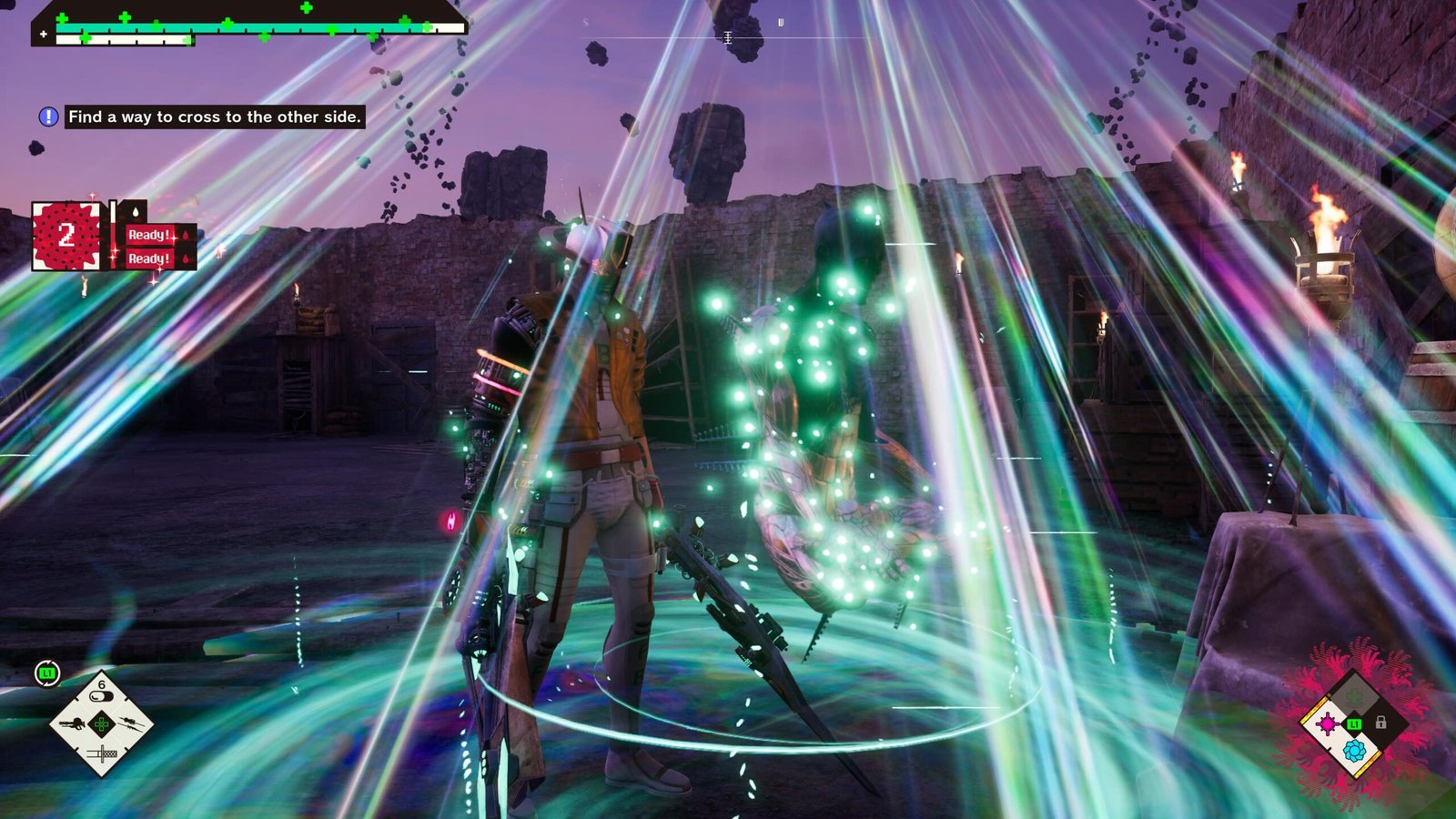
Elsewhere, the DeadGear Cannon Ball mode stands out as a rare highlight. This arcade-inspired stat allocation sequence transforms upgrades into a kinetic puzzle, encouraging deliberation in a way the main campaign rarely does. It is inventive and unexpectedly compelling, though isolated within an otherwise inconsistent structure.
Romeo Is A Dull Man
Beyond the main chapters, Romeo Is A Dead Man offers limited distraction. Procedurally generated Athene Palaces promise replayability but vary little beyond aesthetic palette shifts. NPC interactions occasionally deliver flashes of humour or trivia, yet seldom deepen the world.
This release marks an important milestone as one of Grasshopper Manufacture’s first major self-published projects. The ambition is evident in its stylistic freedom and unfiltered strangeness. However, the absence of restraint is equally visible. Editorial discipline often sharpens bold ideas. Here, indulgence frequently overshadows cohesion.
Romeo himself is an affable enough lead, but he struggles to emerge from the cacophony surrounding him. Bosses, while visually distinct, lack the psychological imprint that defined earlier Suda51 antagonists. The game gestures toward emotional stakes but rarely lingers long enough to earn them.
A Vision in Need of Refinement
There is no denying the audacity of Romeo Is A Dead Man. It is bursting with colour, irreverence, and a refusal to conform. For some players, that may be sufficient.
Yet style without a structural backbone ultimately falters. Combat plateaus too early. Systems overcomplicate what should feel empowering. Narrative flourishes rarely crystallise into insight. What remains is a game that constantly gestures toward profundity without committing to it.
Suda51’s catalogue has never been about polish alone. It thrives on personality. But personality is most potent when anchored by intention. Romeo Is A Dead Man possesses the former in abundance and the latter in frustrating scarcity.
Romeo Is A Dead Man is now available on PlayStation 5, Xbox Series X/S, and PC.
SavePoint Score
Summary
While its opening hours can be impressive thanks to its weirdness, once the charm has worn off and the repetition sets in, you’ll realise that Romeo Is A Dead Man is a conventional and frankly underwhelming action game.
