

Table of Contents
Resident Evil Requiem on PS5 Pro
Resident Evil Requiem is a game that understands restraint. It recognises that fear is not about overwhelming the player with noise or spectacle, but about tightening the vice and refusing to let go. Across its dual protagonists, Grace and Leon, Capcom delivers a survival horror experience that sustains tension, demands intelligence, and respects the legacy it carries.
Where some entries in the franchise have leaned heavily into excess, Requiem opts for discipline. Every bullet matters. Every step forward carries risk. Every shadow may conceal something that cannot be fought head-on. It makes for one of the more exciting entries amid the dual-pronged strategy of remastering older titles and adding new ones into the mix.
And it all centres on our two protagonists caught in the latest bioterrorism incident. On one side of the coin is Grace, the FBI agent sent to investigate the latest in a series of mysterious deaths tied to Raccoon City. And on the other is grizzled veteran Leon, once more chasing the shadows of the past and the horrors of the present when it comes to the Umbrella Corporation, while battling an infection of his own.
It doesn’t take long for the two paths to converge, and that’s where the real fun of Resident Evil Requiem begins in earnest.
Grace: Living in the Dark
As a relative newbie to the whole undead quandary, Grace’s sections are suffocating in the best possible way. You won’t be able to brute-force your way through tight corridors and confined spaces; it’s all about reading the room and making the right move at the right time.
The way the zombies are designed in Resident Evil Requiem complements the way Grace’s sections are meant to be experienced. They maintain patterns from their living days, like maids cleaning up messes or staff turning off lights. This is how you can potentially sidestep them as you move around, using the environment to your advantage.
Crucially, that tension never dissipates. As environments evolve and enemy types grow more varied, Grace herself never becomes powerful enough to stand toe to toe against the forces aligned with Umbrella. Stealth remains her greatest ally. Good timing and positioning are more valuable than raw firepower.
When confrontation becomes unavoidable, the choice of which enemy to eliminate and how to eliminate them matters deeply. Smartly aimed pistol shots to stagger instead of kill, a carefully placed Molotov cocktail in a group, or a well-timed distraction can mean the difference between certain death and hard-earned survival. There is the upside of being able to collect more infected blood to help with Grace’s item crafting, but you have to measure the risk against the reward.
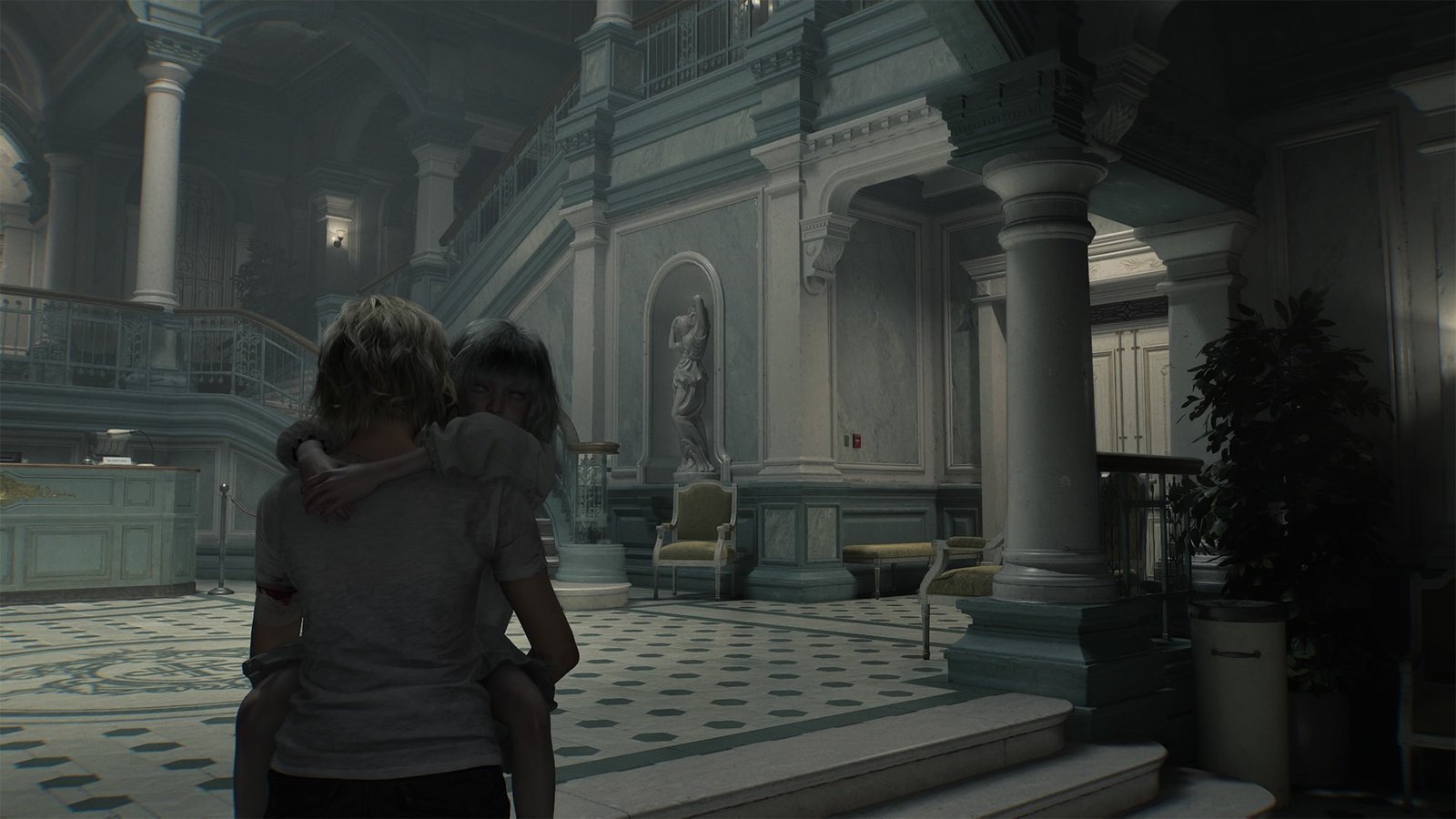
Even as you learn new recipes and take advantage of the item crafting system, your enhanced survivability and firepower never erase the danger. There is no singular optimal path, except the one that gets you out unscathed.
Then there is The Girl, the grotesque creature that is Grace’s version of Nemesis or Mr X in Resident Evil Requiem, always popping up at the most inconvenient time to remind you how fragile life is. It doesn’t take much to understand that ultraviolet light is the only reliable protection against it, but the game constantly pushes you into darkness. Safety is conditional. It is temporary. It flickers.
Just as you begin to feel a semblance of control, a malfunctioning bulb fails overhead, or a sudden blackout plunges the area into pitch-black darkness. The comfort of UV light disappears, and you are reminded immediately that you are not the dominant force here. You are prey. This design choice transforms exploration into psychological warfare. Darkness is not aesthetic. It is mechanical pressure. It forces calculated movement, measured pacing, and constant vigilance.
Her encounters with The Girl escalate intelligently. They are not repetitive chases. They are layered confrontations that demand adaptation. Each time you believe you understand the rules, the environment shifts them. The result is sustained tension that few modern horror titles can match.
Leon: Precision, Power, and Consequence
Then we get to the other half of the equation. Leon’s campaign provides contrast without abandoning discipline. His sections are more action-driven, a clear reflection of his years battling Umbrella and its cohorts, yet recklessness is punished quickly. Even armed with guns, you are never guaranteed an easy ride in Resident Evil Requiem.
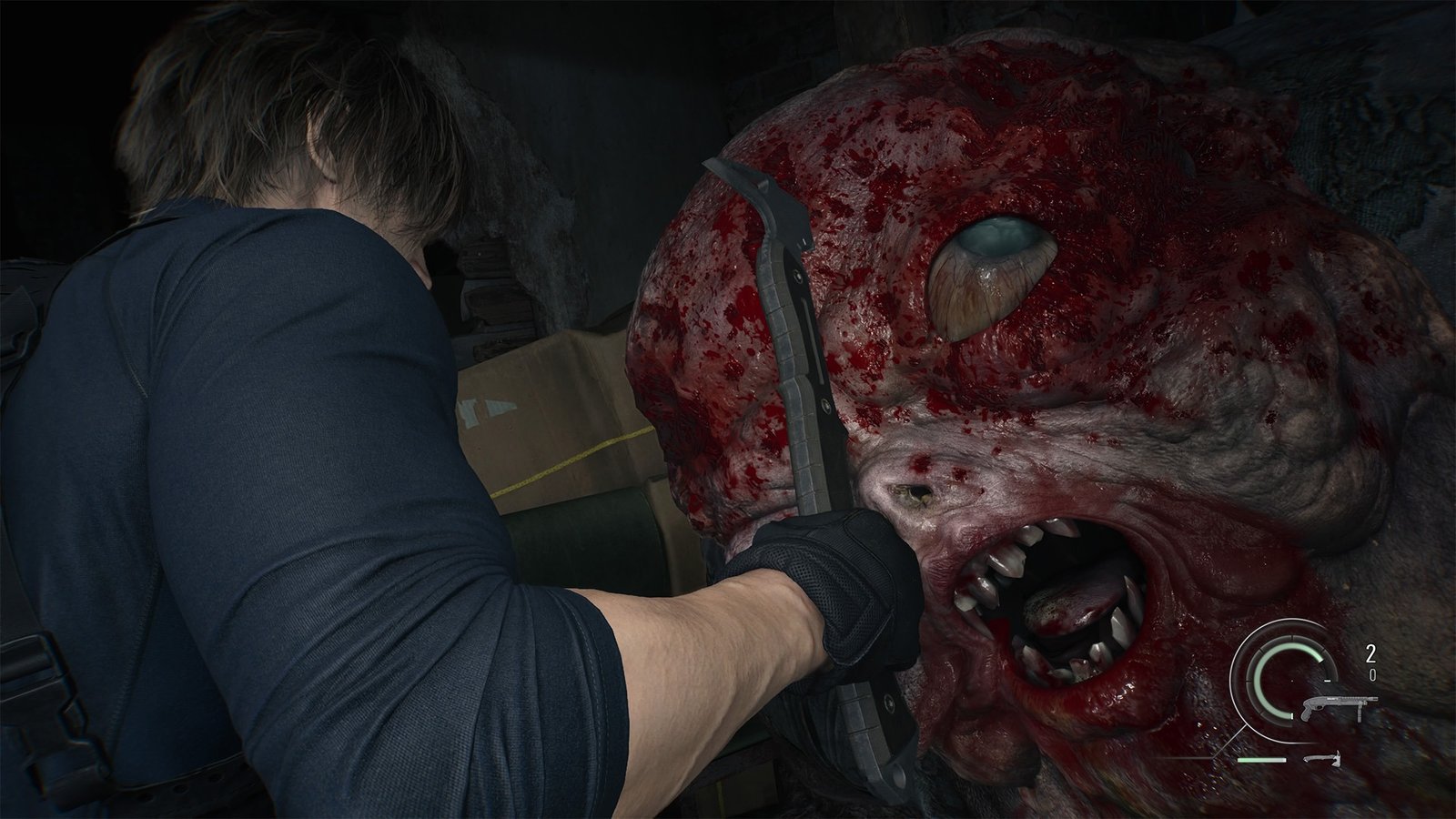
Against single threats, the pistol becomes a surgical instrument. Targeting lower limbs to cripple an enemy, following up with a melee strike, and finishing with a hatchet feels deliberate and efficient. It conserves ammunition and controls space. Against groups, however, precision gives way to necessity. The shotgun or machine gun becomes the better choice, not for lethal perfection, but for debilitating force. Buying time is often more important than securing kills.
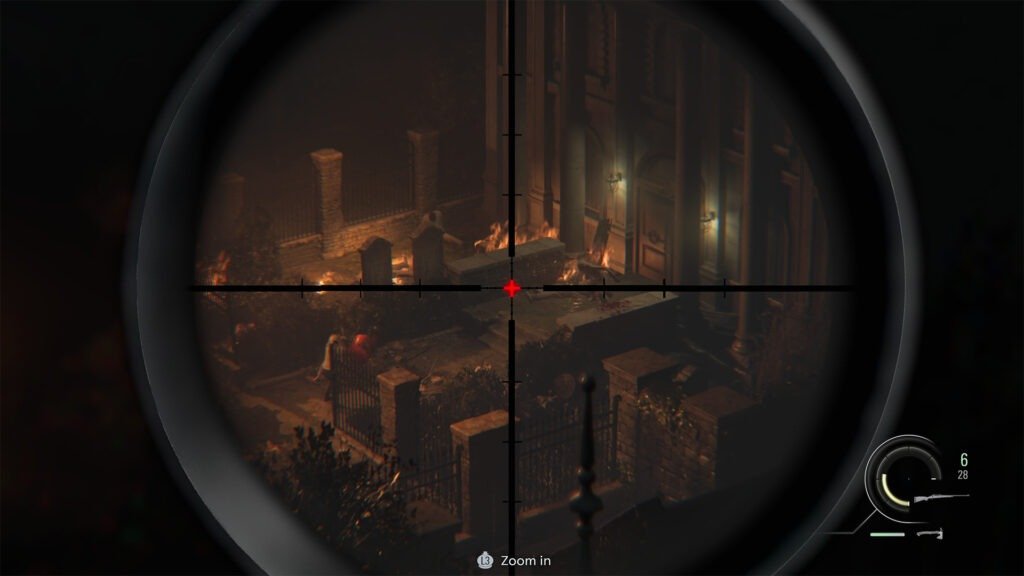
The sniper rifle emerges as a standout tool. It balances power and accuracy beautifully, rewarding patient aim with devastating results. Popping heads at range offers immense satisfaction, though its utility diminishes within Resident Evil Requiem‘s tighter interiors. This balance ensures no weapon dominates every scenario, where tougher enemies demand smarter responses, not simply stronger weapons.
Enemy design reinforces this tactical thinking. Your standard zombies soon give way to more dangerous variants. Retaining their memories means the undead can now wield weapons like axes and even chainsaws, constantly closing in to ramp the pressure up. The terrifying Blister Heads are among the toughest enemies in the series to date, aggressive and capable of sowing further chaos. Taking them down is one thing, but you also have to be careful where you do that, as their blood can mutate normal zombies into the same monstrosity you are trying so hard to eliminate.
There are even more nasty surprises lying in wait for players as Resident Evil Requiem gets into the second half, and while Leon’s sections can feel empowering, they are never indulgent. Strategy remains paramount even as you become more adept at fighting back, where survival is earned, not granted.
Space Under Siege
One early set piece encapsulates Resident Evil Requiem‘s measured spatial design philosophy perfectly. Leon finds himself trapped inside a burning church, face to face with the Blister Borne, a hulking monstrosity covered in pulsating growths.
The arena offers limited manoeuvrability. Avoiding its sweeping attacks while targeting its vulnerable blisters is already a challenge. Then the situation escalates. Zombies armed with weapons flood the space. The flames seem to grow larger as the church crumbles.
Each popped blister sprays mutated blood into the air. Any zombie with an intact head convulses violently, transforming into a Blister Head. Suddenly, what was manageable becomes chaos. The faster, more erratic enemies pursue Leon aggressively, forcing rapid adaptation.
This encounter demonstrates how Resident Evil Requiem weaponises space. It layers threats rather than stacking health bars. It transforms success into new danger. It is dynamic, tense, and unforgettable.
Returning to Raccoon City
Revisiting Raccoon City is a bold narrative choice. Recent entries ventured far from that crucible. Returning carries inherent risk, Requiem utilises it deftly.
For Leon, the return is deeply personal. Landmarks and ruined streets echo with history. There is a quiet poignancy in retracing familiar ground under new circumstances. As Leon confronts remnants of his past, players inevitably connect with their own memories of earlier entries. This resonance enhances the experience. It strengthens Leon’s resolve and frames the current crisis within a larger arc. It is nostalgia deployed with purpose rather than indulgence.
As an overarching narrative, Resident Evil Requiem remains firmly within the series’ traditions. Grace arguably experiences the most meaningful growth. Early moments of panic and hysteria may test players unused to prolonged vulnerability, but her development is tangible. Leon remains his brooding, capable self. A seasoned bioterrorism warrior, he moves with confidence tempered by experience. His determination to make a difference feels authentic, even if his character arc treads familiar ground.
The broader conspiracy surrounding Umbrella and the shadowy powers behind it continues to unfold. New threads are introduced, and while certain questions are addressed, definitive closure is not the game’s objective. This has long been a hallmark of the franchise, and Resident Evil Requiem continues that tradition for better and for worse.
The narrative may not redefine expectations, but it reinforces them competently and positions future instalments with intrigue. Fans of the series will undoubtedly get more out of the journey, but the game does enough in setting the stage for newcomers.
The Sound & Feel of Terror in Resident Evil Requiem
Visually, Resident Evil Requiem excels. Blood splatter effects are particularly striking, especially during explosive headshots or when utilising Hemolytic Injectors to blow up unsuspecting foes. Environmental storytelling is meticulous, with areas communicating decay and desperation without overt exposition, while files can be picked up for more contextualisation.
Lighting and sound design work in harmony. Shadows conceal threats effectively. Silence stretches uncomfortably. Subtle audio cues heighten tension without telegraphing danger too obviously. Throughout my first 8-10 hours, there was always a feeling of excitement mixed with dread, a potent blend for a survival horror game.
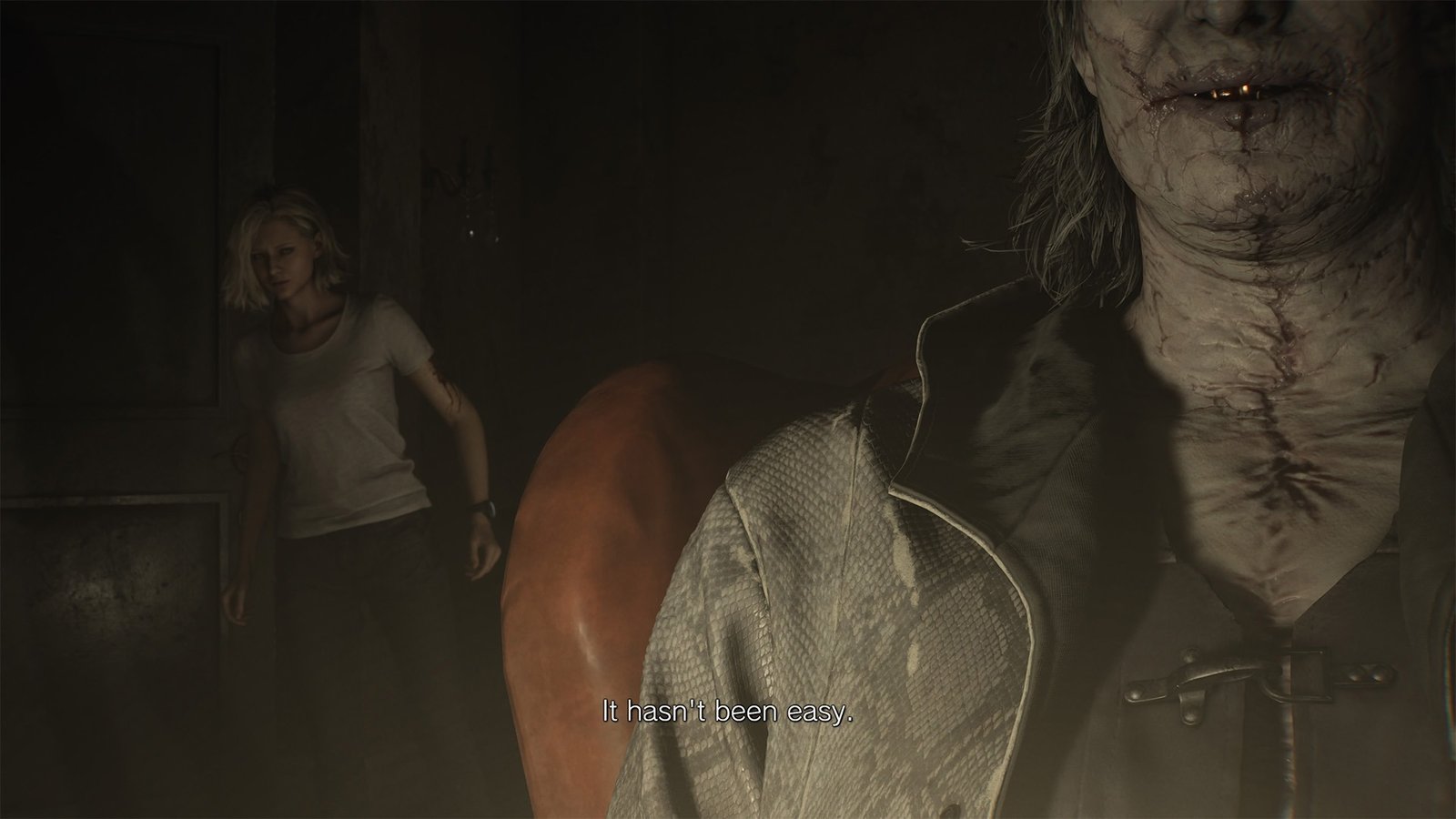
Ultimately, Resident Evil Requiem succeeds because it respects tension. Grace’s sections maintain suffocating vulnerability. Leon’s combat demands tactical intelligence. Returning to Raccoon City reinforces the legacy without relying solely on nostalgia. It does not radically redefine the franchise, but it sharpens its identity with precision and confidence.
In doing so, it stands as one of the stronger modern entries in the series and paves the way for even more undead success to come in future years.
Resident Evil Requiem will be available on February 27 on PlayStation 5, Xbox Series X|S, Nintendo Switch 2, and PC.
SavePoint Score
Summary
Resident Evil Requiem sustains suffocating tension through Grace’s vulnerability and Leon’s disciplined firepower, delivering a strategic, replayable survival horror experience that feels just about right for the franchise.
