

Table of Contents
Pragmata on PS5 Pro
For a game that spent years looking distant and enigmatic, Capcom‘s Pragmata turns out to be remarkably easy to connect with. The setting is still striking in all the ways one would hope. The lunar backdrop is eerie, beautiful, and often unsettling, full of sterile corridors, damaged structures, and a creeping sense that humanity has pushed too far into a place that was never meant to hold it.
Yet for all of its visual spectacle and sci-fi intrigue, what defines Pragmata most is not its setting or even its action. It is the emotional core running through everything. That is the biggest surprise and also the game’s greatest strength. It never feels content to be just a stylish action adventure wrapped in futuristic mystery.
Instead, it finds its identity through warmth, vulnerability, and a relationship that steadily grounds every dramatic turn. There is scale here, certainly, and Capcom knows how to stage a moment with impact, but the story’s best scenes are often the quieter ones. A glance, a question, a brief exchange in the middle of danger. Those are the moments that make the whole journey feel alive.
This is where the writing shows real confidence. The game does not drown the player in overcomplicated exposition or force emotion through clumsy melodrama. It trusts the characters, their developing connection, and the strange world around them to gradually build investment. As a result, Pragmata feels more human than its premise initially suggests. Beneath the machinery, the mystery, and the action is a story about protection, trust, and the ways people change when they find someone worth fighting for.
That sense of heart gives the whole adventure a consistency that many big action games struggle to maintain. Every major beat feels tied to something more personal, and that keeps the story from drifting into empty spectacle. Pragmata has ambition, but more importantly, it has focus. It knows that no amount of visual flair can substitute for emotional grounding, and because it understands that early, it is able to deliver something that feels both exciting and sincere from beginning to end.
Hugh And Diana – Dynamic Duo
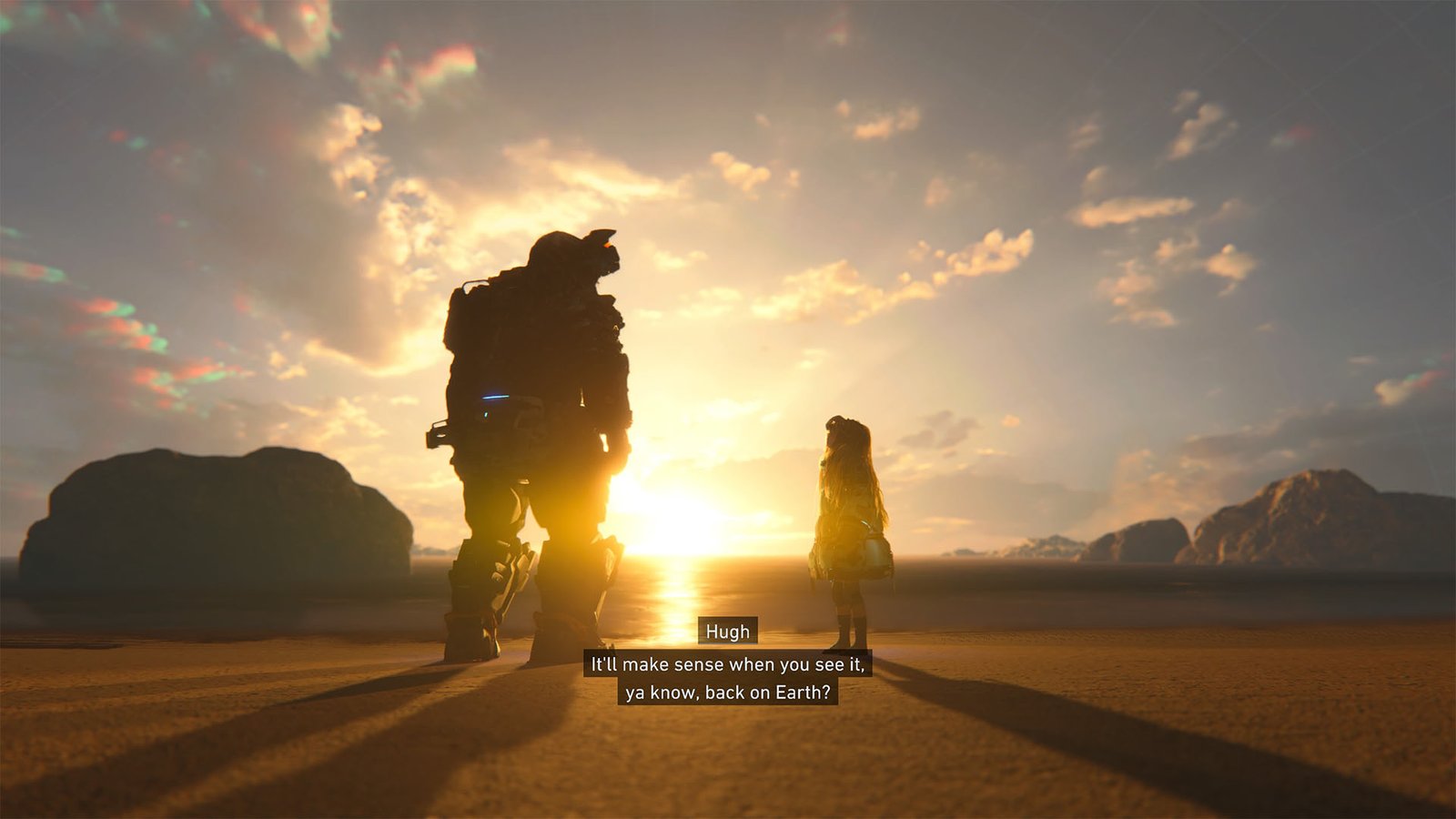
Hugh and Diana are the reason Pragmata works as well as it does. Their bond is not simply an appealing feature of the story. It is the story. From the beginning, the game positions them as two figures forced together by circumstance, but what follows is far richer than a standard protector-and-companion dynamic. Hugh is not just a hardened survivor, and Diana is not merely a source of innocence or wonder. Capcom gives both characters room to feel distinct, expressive, and emotionally necessary.
Hugh’s writing is particularly strong because it resists flattening him into a predictable action hero. He has the weight and practicality one would expect, but there is also patience, awkward tenderness, and a weariness that feels earned rather than performative. He comes across as someone who has been through enough to stay guarded, yet not so broken that he cannot still respond to kindness or curiosity.
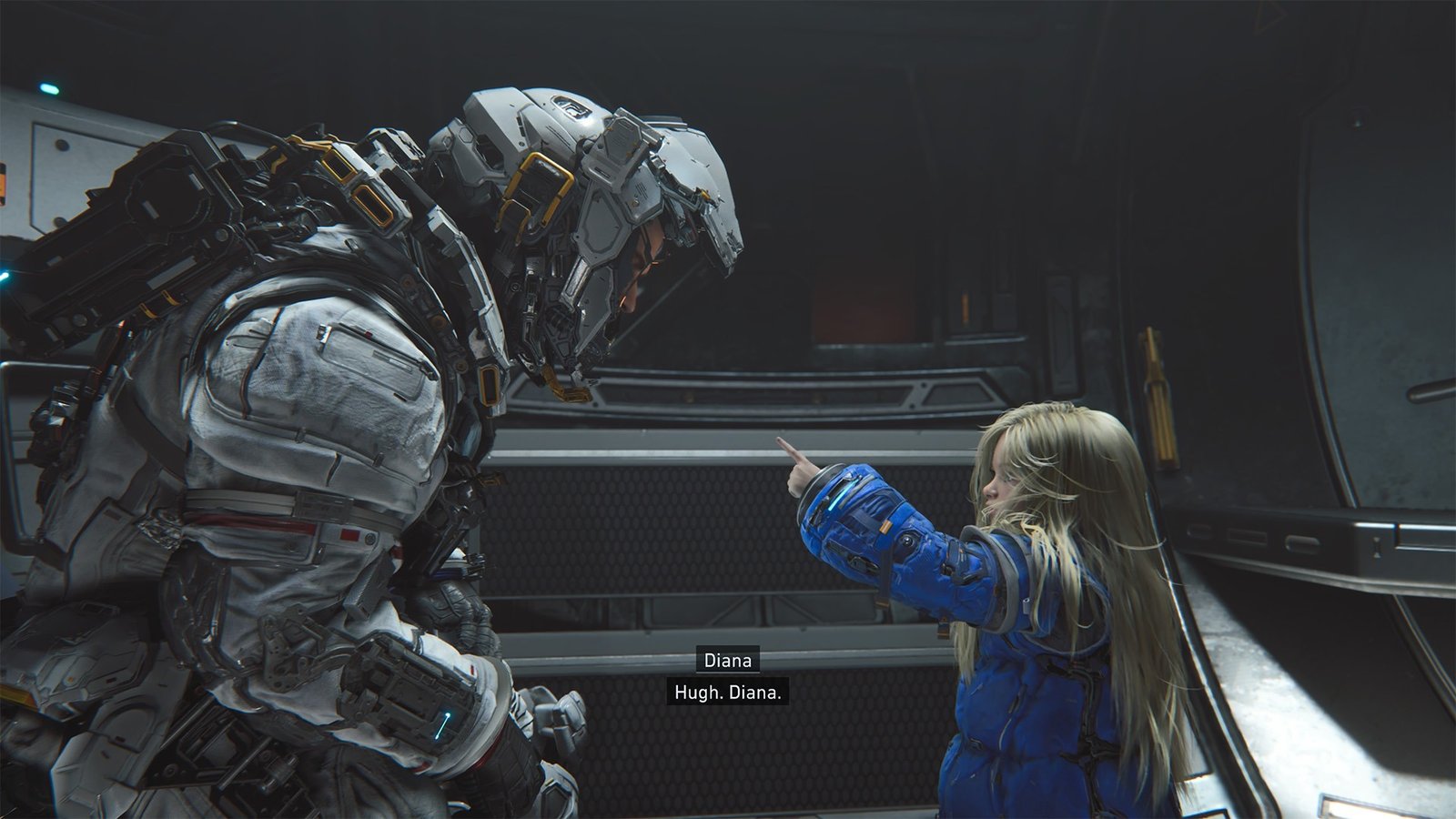
Diana, meanwhile, brings warmth and openness to the story in Pragmata without ever feeling like a decorative emotional shortcut. Her presence changes the tone of every scene she is in, going from a mechanical creation into something truly human. As players explore the world and start collecting representations of life on Earth, it becomes one of the best ways to showcase Diana’s growth and eagerness to learn, dovetailing perfectly with Hugh’s role of connecting the dots.
What makes their relationship so compelling is how naturally it evolves. The game does not rush intimacy or overstate every emotional milestone. Instead, it lets their connection deepen through the rhythm of survival, conversation, and shared discovery. Diana’s constant curiosity becomes a means of revealing both the world and Hugh himself, while Hugh’s protectiveness gradually grows into something more layered and more moving. They begin as a mechanical pairing, but by the time the story hits its stride, they become something much more significant.
That chemistry carries enormous weight in Pragmata. It turns every threat into something more immediate, every quiet moment into something more affecting, and every success into something that feels shared. While a suspension of disbelief is required at certain junctures, there is no doubting that a level of emotional resonance is reached the more time you spend with the pair.
Even when the plot leans into mystery and escalation, Hugh and Diana remain the centre of gravity. They never feel like passengers in a larger sci-fi concept. They are the reason that concept matters. By the end, it is their bond that lingers most, elevating Pragmata from an impressive action game into something genuinely memorable.
Hacking Turns Combat Into Exhilarating Chaos
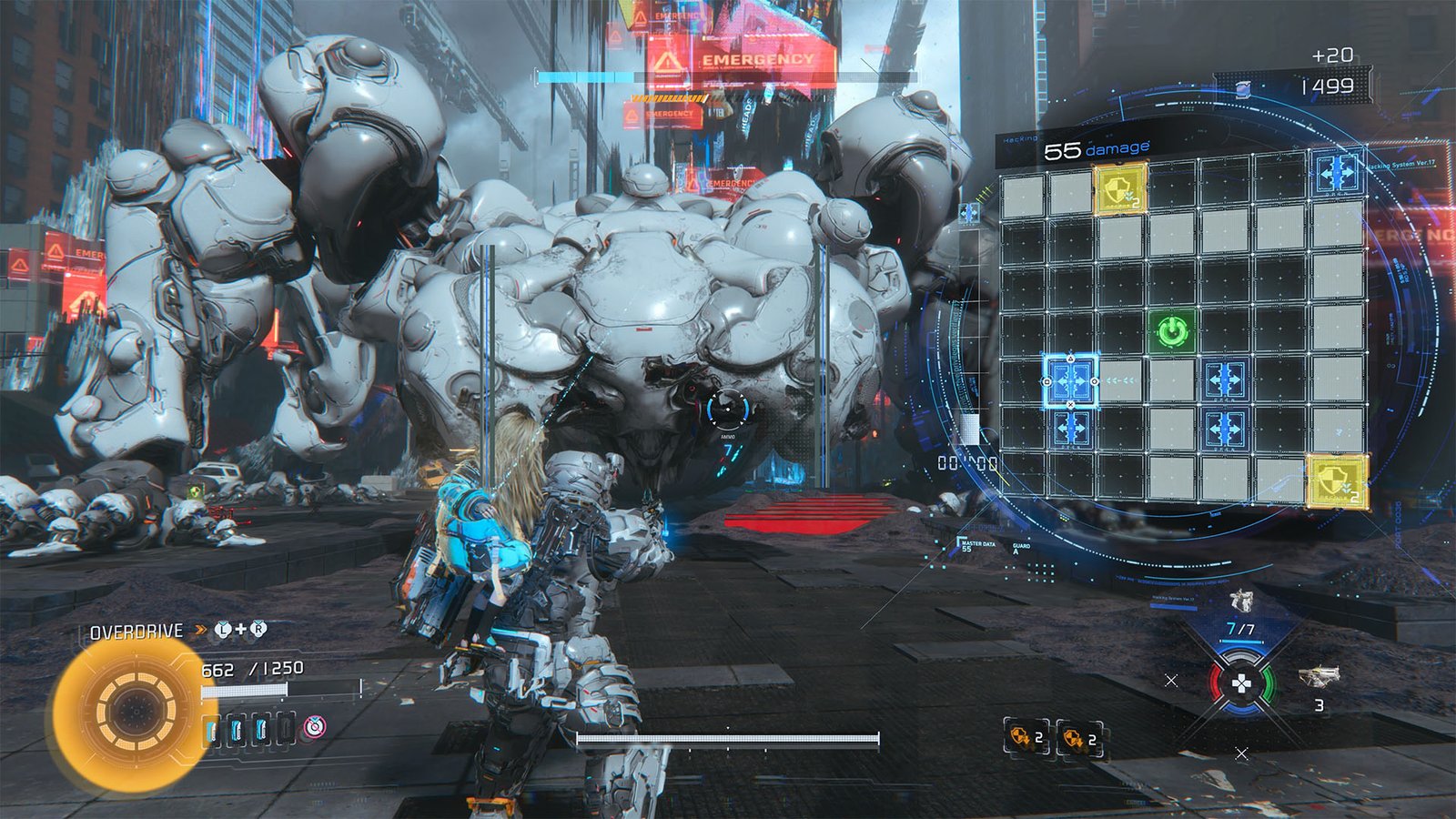
Pragmata ’s headline mechanic could easily have been reduced to novelty in a lesser game. The combination of hacking and shooting sounds strong on paper, but there is always the risk that a dual-layer system becomes more interesting in concept than in practice. Capcom avoids that pitfall beautifully. In combat, hacking is not a gimmick stapled onto the action. It is the vital piece that transforms combat into something far more dynamic and satisfying.
Each encounter demands that the player think on multiple levels at once. You are not just aiming and firing under pressure. You are reading the battlefield, choosing the right moment to break through enemy defences, working around attacks, and creating openings that would not exist through gunplay alone. That creates a wonderfully tense rhythm where every successful exchange feels earned. There is a constant balancing act between quick decision-making and controlled execution, which gives combat an intensity that rarely fades.
The best part is how naturally it all fits together in Pragmata. Hacking never feels like an interruption to the action. It becomes inseparable from the flow of battle. When things are going well, there is a brilliant sensation of momentum as one smart move leads to the next, and even when fights get messy, the system still feels readable and fair. It asks for attention without becoming exhausting, and that balance is a huge part of why the action remains so engaging over time.
The enemy variety keeps you on your toes, requiring players to take a strategic view of what lies ahead and choose the best course of action. Boss encounters show this especially well. They take the same central ideas and push them into larger, more dramatic scenarios without losing clarity.
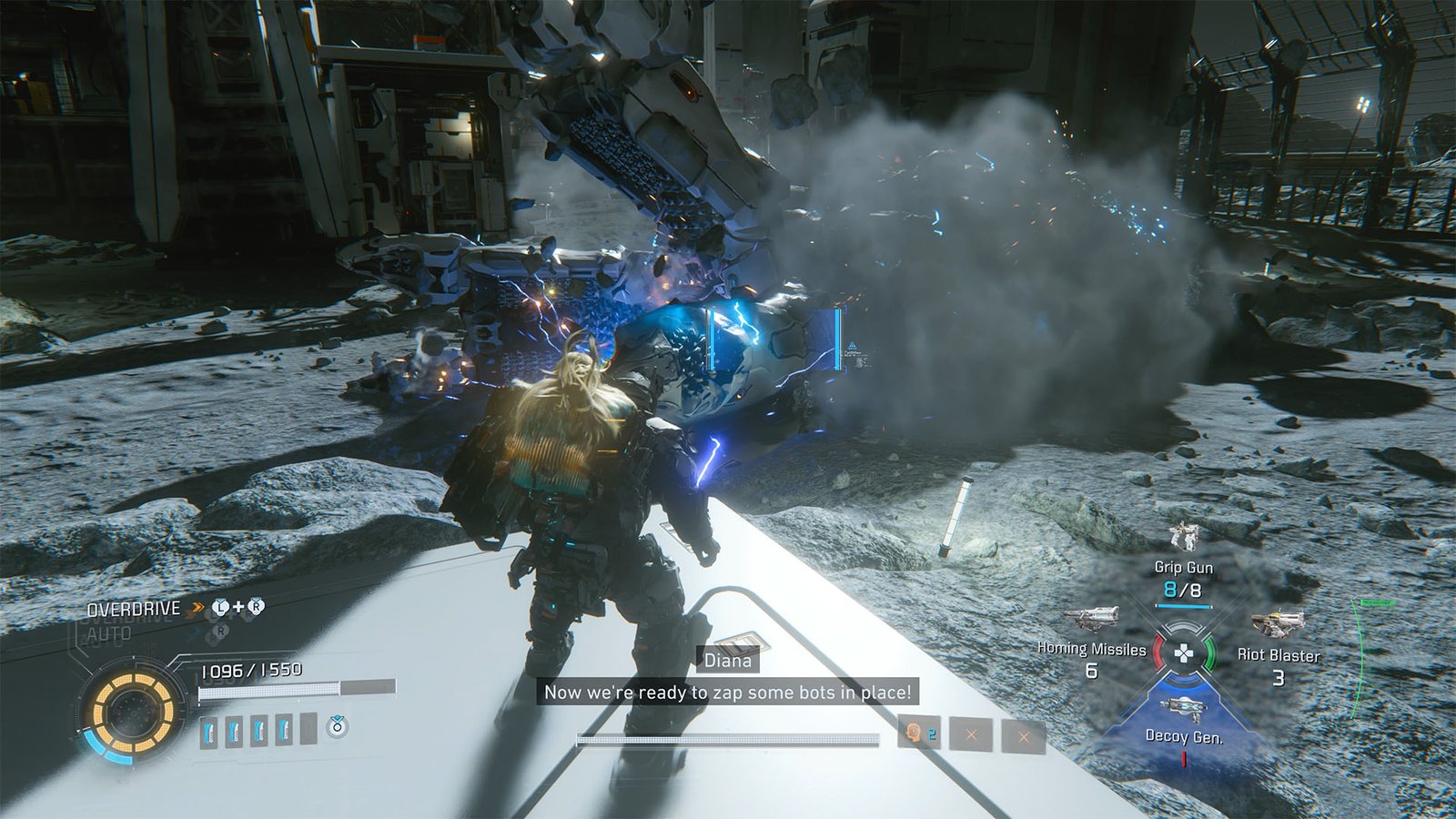
There is spectacle, certainly, but the spectacle always grows from mechanics that already make sense. You are still solving problems under pressure, still relying on the interplay between hacking and gunfire, and still feeling that rewarding sense of control emerging from apparent chaos. Pragmata understands that action is most exciting when it remains interactive in a meaningful way, and its combat embodies that idea from start to finish.
More importantly, rather than an awkward interpretation of traditional controls, it becomes almost second-nature how shooting and hacking work with your hands. In a roundabout sense, players become one with both Hugh and Diana/
Weapons, Mods, And Hacks Embolden Players
Even a strong combat system can wear thin if a game does not continue to build on it, but Pragmata is consistently smart about variety. The hacking-and-shooting loop works so well because Capcom keeps finding ways to stretch it, deepen it, and reframe it through the tools it gives players. Weapons do not feel like simple power upgrades. They have distinct uses, rhythms, and tactical value, which means swapping loadouts changes the feel of combat in tangible ways as you learn more about the dangers.
That sense of differentiation matters. Some weapons are clearly suited to control and space management, while others are built for sharper bursts of damage or a more aggressive tempo. Mods then widen those possibilities further, giving players room to lean into certain strengths or create new synergies. Hacks do the same on another layer, offering options that change how encounters are approached rather than merely increasing efficiency. All of this helps Pragmata avoid the trap of repetitive action design.
What stands out is how often the game gives the player reasons to adapt. Enemy combinations, arena layouts, and combat pressure all encourage experimentation, and because the tools themselves are enjoyable to use, changing tactics never feels like a burden. It feels exciting. There is a constant sense that another effective approach is waiting to be discovered, another combination worth testing, another moment where a different setup could turn a difficult fight into a thrilling success.
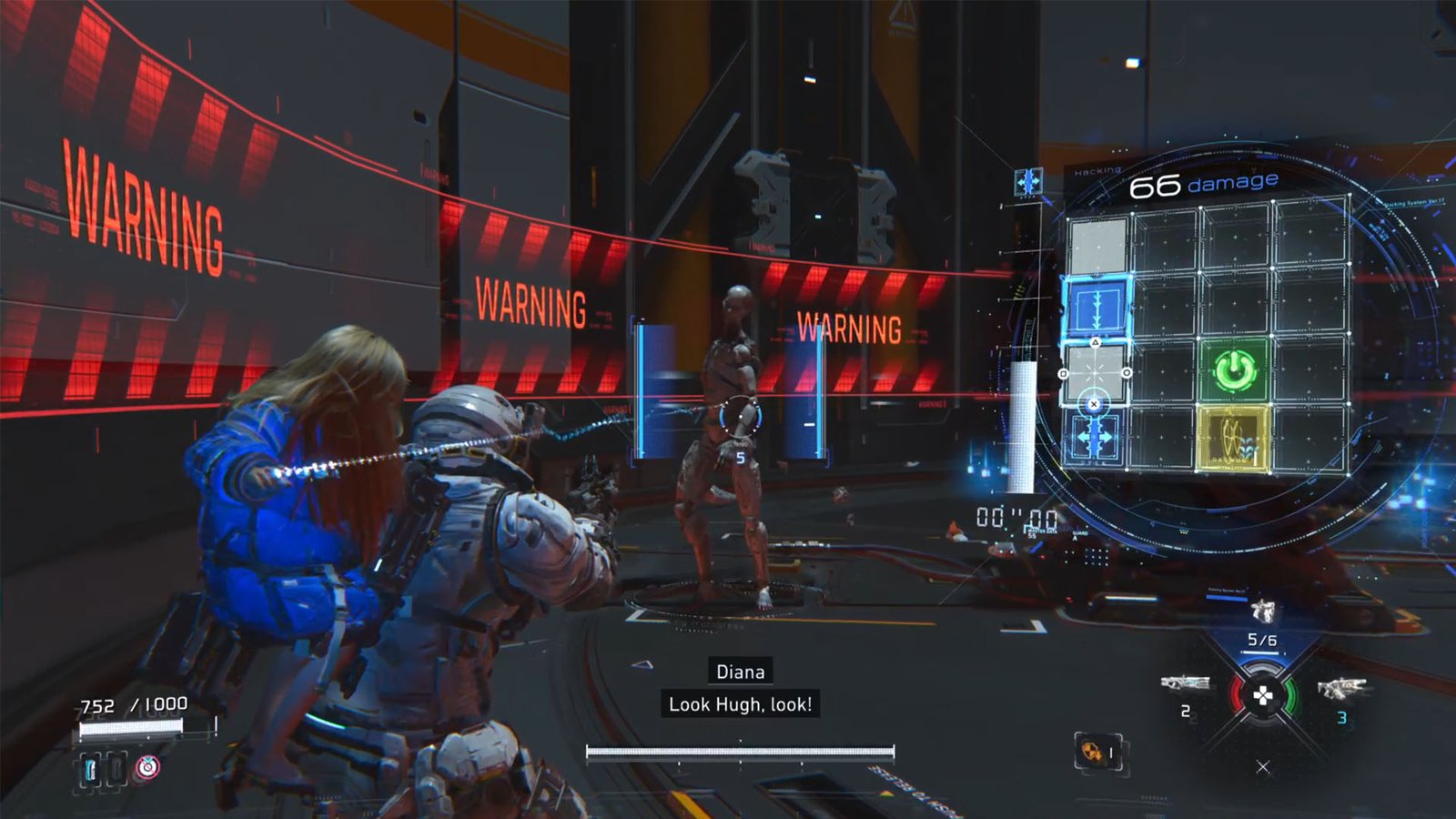
While prioritising pure destructive power at the start, I soon found myself thinking about how best to corral the pesky machines close together, then using hacks to disrupt their systems and cause damage en masse, buying myself more time and space. Eventually, heat became a powerful tool for debilitating stronger enemies, and I found myself adapting to make full use of it alongside other hacks and mods.
This is what keeps the combat from ever feeling stale. The core idea is powerful, but the surrounding layers are what sustain interest for hours. Pragmata does not settle for competence once the initial premise has landed. It keeps feeding the player fresh decisions and new ways to express mastery. By doing so, it preserves the tension and exhilaration that make its action so compelling in the first place. The result is a combat system that remains inventive long after many other games would have run out of tricks.
A Sci-Fi Adventure Built With Love
What ultimately makes Pragmata feel so accomplished is how all its strengths reinforce one another. The storytelling works because the characters are strong. The characters resonate because the world gives them something meaningful to move through. The combat thrills because it is mechanically rich, and that richness matters because it is tied to a journey the player already cares about. None of these elements feels isolated. They all contribute to the same clear, creative vision.
The world design deserves credit here as well. The lunar and space station setting is not just visually impressive, though it certainly is that. It also supports the game’s atmosphere of fragility, danger, and wonder. There is enough environmental variety and tonal contrast to prevent the experience from becoming monotonous, and the spaces themselves often feel designed with both drama and play in mind. Exploration, tension, and spectacle are all given room to breathe, which helps the adventure maintain strong momentum beyond its combat encounters.
There is a pleasing sense of progression throughout the game, too. New tools, upgrades, and ideas arrive at a pace that keeps the experience moving forward without overwhelming the player. Pragmata is careful about layering complexity, and because of that, it continues to feel exciting as it expands. It never loses sight of what makes it special. Instead, it keeps refining and reinforcing those qualities, making the whole experience feel remarkably assured.
That confidence is what defines the final impression. Pragmata feels like a game that knows exactly what it wants to be and understands how to get there. It is thrilling without becoming hollow, emotional without becoming sentimental, and inventive without feeling self-conscious about its ideas. Most importantly, it leaves a lasting impression not because it excels in one isolated area, but because it succeeds across the board in a way that feels cohesive and deliberate.
Capcom has delivered something special here. Hugh and Diana are among the studio’s best recent pairings; the hacking combat remains a genuine joy throughout, and the variety of weapons, mods, and hacks ensures the action never loses its edge. Pragmata is not merely a good concept executed well. It is a fully realised adventure with heart, style, and confidence to spare, be it here on Earth or even in the vast expanse of space.
Pragmata launches on PlayStation 5, Xbox Series X|S, and PC on April 17, and the Nintendo Switch 2 version will arrive on April 24.
SavePoint Score
Summary
Pragmata is at its best when everything clicks together at once. The bond between Hugh and Diana gives the journey real emotional weight, while the hacking and shooting combat remains sharp, demanding, and constantly rewarding. With a strong variety in weapons, mods, and hacks, Capcom has delivered a sci-fi adventure that feels both heartfelt and thrilling from start to finish.
