

Table of Contents
Star Fox on Nintendo Switch 2
Star Fox 64 is a game with a significant legacy. Over the years, nostalgia has elevated it into a beloved Nintendo experience, one that has come to define its respective series in much the same way Ocarina of Time became the reference point for The Legend of Zelda. The difference is that Zelda eventually evolved in new ways, especially through Breath of the Wild and Tears of the Kingdom. Star Fox, on the other hand, has never quite escaped the shadow of Star Fox 64.
That is probably why Nintendo has returned to this particular blueprint more than once. There was the 3DS remake, the Wii U reimagining through Star Fox Zero, and now this full-throated Nintendo Switch 2 revival simply titled Star Fox. It is not hard to understand the hesitation from long-time fans. Before launch, the online discourse was already circling familiar talking points. Some complained about the character designs. Others rolled their eyes at Nintendo going back to Star Fox 64 yet again, including us. The pricing conversation around physical copies also added another layer of irritation before the game itself could properly take the stage.
But that noise does not quite capture what this remake actually is. For better and worse, Star Fox is easily the best version of this nearly three-decade-old experience. It is faster, sharper, more cinematic, and more approachable than before. It is also still very much Star Fox 64, which means the thrill of the flight remains intact, even as the limits of the original structure become harder to ignore.
A New Coat of Paint
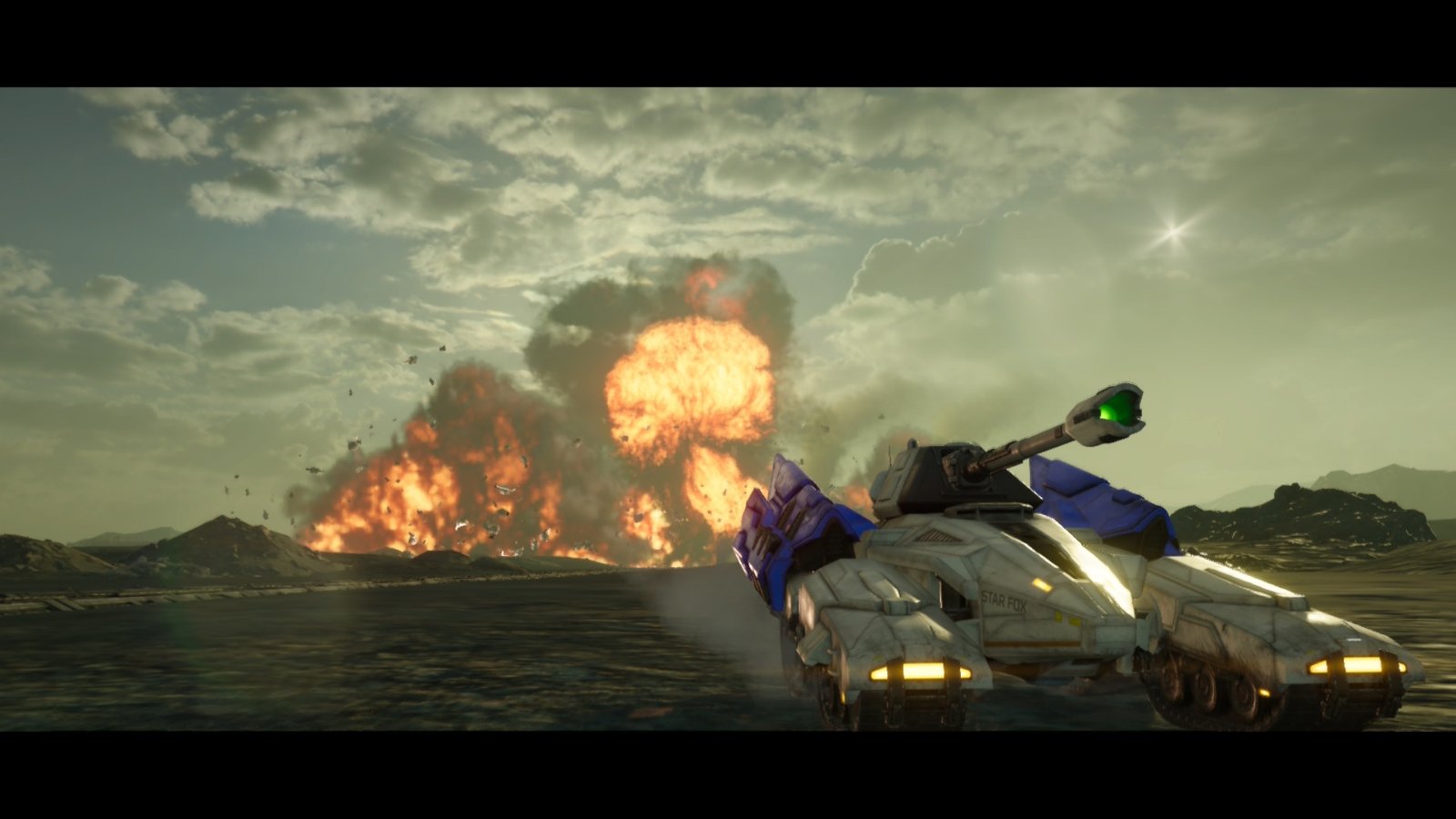
Before players even step into an Arwing, Star Fox makes its cinematic intentions clear. The game opens with an extended cutscene that finally shows events that previous entries had mostly alluded to. James McCloud leads the original Star Fox team towards Venom to investigate what the exiled scientist Dr. Andross has been working on. The mission quickly turns disastrous when Pigma betrays the team, leaving Peppy as the only one who escapes Andross’ ambush.
It is a strong opening that immediately signals the remake’s greater emphasis on story and character. Extended cutscenes now break up every mission, while performance during stages can affect dialogue and explain the route choices that follow. This gives the Star Fox crew more room to breathe. Fox leans harder into the lovable rogue archetype, agreeing to help General Pepper while making it clear that the job still comes with a price. Falco is brasher and cockier than ever. Peppy settles naturally into the role of the level-headed mentor, while Slippy remains Slippy. He is less irritating than he was on the Nintendo 64, but his relentless optimism can still grate after a while.
Veterans may take issue with some of the smaller script changes, especially when certain lines now carry slightly different context. Even so, the story was never really the central strength of Star Fox 64. The added narrative here gives the world a little more shape, but it also creates an odd tension. For a game built around repeated runs and fast-paced arcade momentum, the amount of story presentation can sometimes feel like a source of friction. The first time through, these scenes are welcome. By the third or fourth run, most players will probably start skipping them instinctively.
The new visual identity is also a mixed success. The environments often look spectacular, giving planets, space battles, and enemy encounters a sense of scale the original could only suggest. The character models, however, range from impressive to uncanny. They help Star Fox establish a more distinct cinematic personality, but they can also pull attention away from the clean, arcade immediacy that made the original so memorable.
If It Ain’t Broke, Don’t Fix It
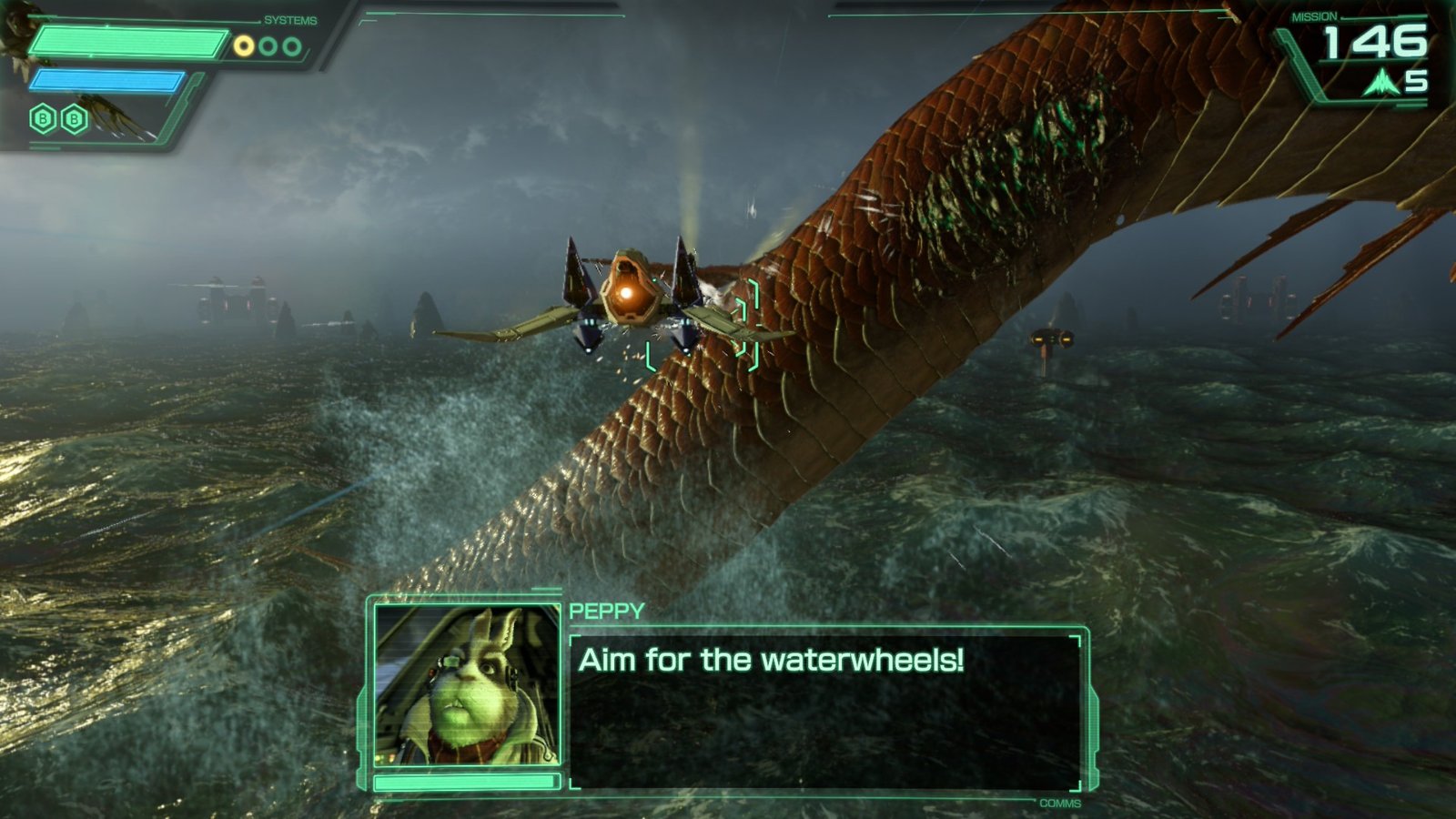
While Nintendo has experimented heavily with presentation, the gameplay itself remains largely unchanged. Anyone familiar with Star Fox 64 will know exactly what to expect here. Most stages place players in control of the Arwing across corridor-based shooting sequences or open-arena dogfights, asking them to shoot down enemies, dodge obstacles, launch bombs wisely, and barrel roll through incoming fire.
That may sound simple, but the core still works. Classic Star Fox gameplay has always been about rhythm, memorisation, route knowledge, and quick reactions, and that foundation remains satisfying. Corneria still makes for a strong opening descent, the warp sequences still carry a strange psychedelic energy, and encounters like the duel with Star Wolf on Fichina still have that immediate, arcade-style bite. Even when the level layouts feel deeply familiar, the remake’s modern presentation makes them exciting to revisit.
Control-wise, the Arwing feels excellent. It is responsive, smooth, and easy to understand, even for players new to the series. The Landmaster and Blue Marine, used across a smaller handful of stages, are less comfortable. The Landmaster, in particular, could have used a stronger tutorial, as Macbeth can become a surprisingly awkward restart point while players get used to its weight and movement. Still, both vehicles are manageable once the rhythm clicks.
The new mouse mode is more divisive. It is an interesting option on paper, but in practice, it can feel too finicky to rely on during more demanding runs. When playing with Joy-Con controllers, it is also a little too easy to trigger accidentally if your hand moves over the sensor at the wrong moment. Veterans who want the closest possible throwback can use the Nintendo 64 controller, which will delight a very specific group of players. For everyone else, the Switch 2 Pro Controller feels like the best option, especially with button remapping available.
The level progression also remains classic Star Fox. You start at Corneria and eventually make your way towards Venom, with the campaign lasting seven missions per run. Your route depends on performance, secret objectives, hidden paths, and, in some cases, even failure. This branching structure is still one of the game’s best ideas, giving each run a sense of consequence without overcomplicating the format.
The replayability is substantial, but it also brings back one of the original’s most familiar problems: repetition.
Making Star Fox Harder and Easier for All
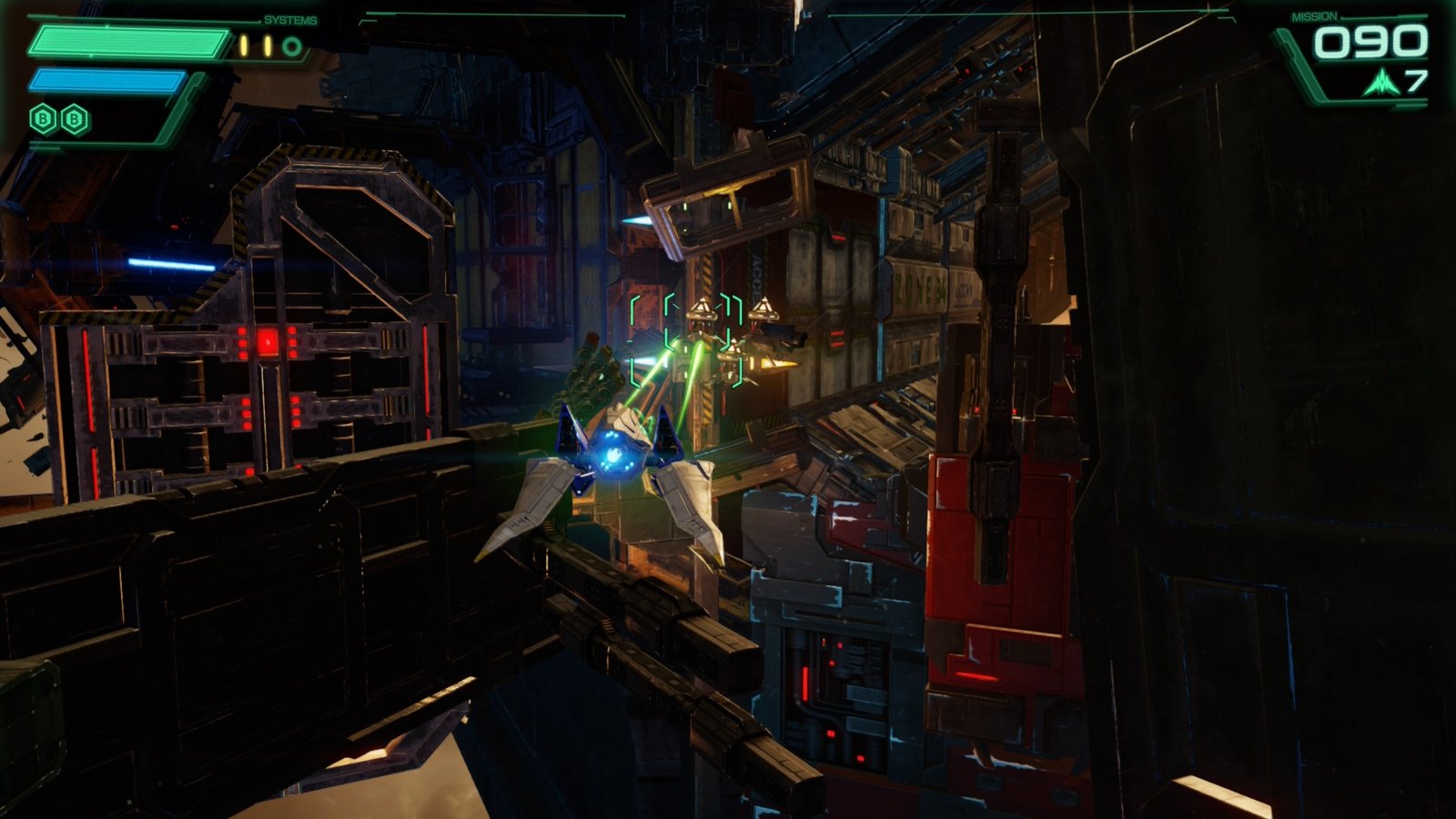
With 16 stages in total and most of them lasting only a few minutes, players will see a large portion of what Star Fox has to offer fairly quickly. Even newcomers are unlikely to feel completely lost, as the remake is much clearer about how to unlock new paths and stages. That makes the game more approachable, but it also removes some of the mystery and self-discovery that made the original so exciting to experiment with.
The bigger issue is that Normal Mode feels noticeably more forgiving. Expert Mode still needs to be unlocked, which is fair enough, but the base difficulty rarely pushes back as hard as expected. Mastery is still measured through medals, which require high scores while keeping the team alive, yet earning them feels far less demanding here. Across multiple Normal Mode playthroughs, it is possible to keep the full squad intact without too much trouble and collect a good number of medals earlier than expected.
That may not bother newcomers, and in fairness, it makes Star Fox much easier to recommend to players who have no history with the series. However, returning fans looking for the same bite may find the main campaign softer than they remember. The game still rewards skill, but it does not always demand it upfront.
Thankfully, Challenge Mode helps fill that gap. Beating a stage unlocks a set of stage-specific challenges, ranging from simple objectives to stricter mastery tests. The first batch can feel underwhelming, often asking players to do things they would naturally attempt during normal play, such as defeating certain enemy types, collecting items, or reaching a score threshold. Once the Expert challenges open up, however, the mode becomes much more interesting. These stricter missions are far more punishing and will take a few attempts to clear cleanly.
The rewards are mostly cosmetic, which is a little disappointing, but the added difficulty is appreciated. Challenge Mode feels like where the remake hides its sharper teeth. It does not completely solve the issue of the main campaign being gentler than expected, but it does give committed players something more demanding to chase after the credits roll.
Short Bursts, Long Shadows
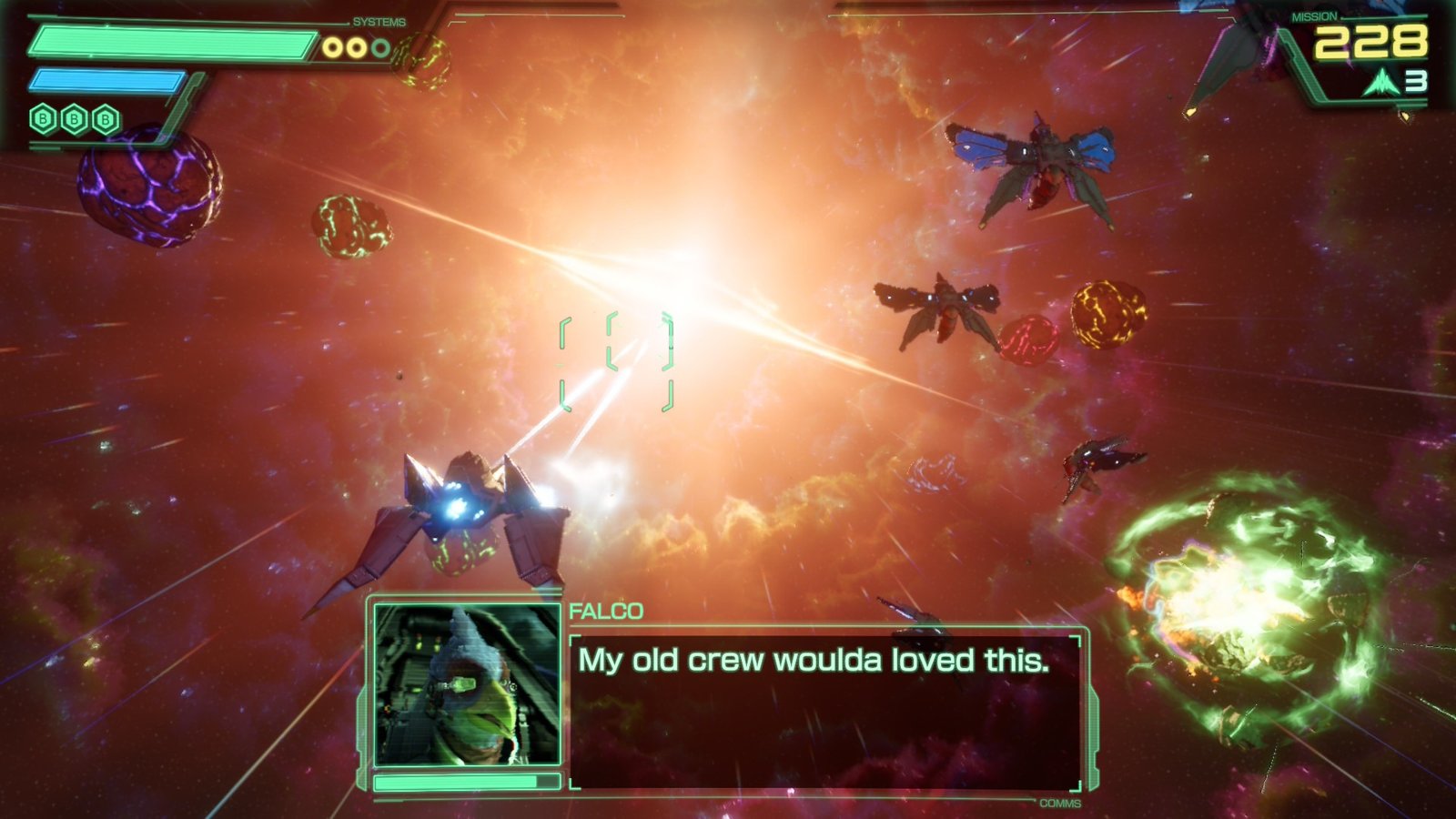
There is very little doubt that Star Fox is the definitive way to experience Star Fox 64. It looks excellent, controls beautifully, and includes enough additional features to make the package feel more complete than a straightforward visual upgrade. The issue is that it remains bound to the same old structure, and that structure will not work equally well for every player.
Aside from Challenge Mode, players are still returning to the same 16 stages. Expert Mode changes the pressure but does not fundamentally alter the level layouts. After a while, the repeated routes, familiar enemy patterns, and recycled objectives start to lose some of their spark. That is not necessarily a flaw in the traditional sense. Star Fox is an arcade-style experience, and arcade-style games are built around repetition, mastery, and score-chasing. Still, modern expectations make those limits more visible than they were in 1997.
The multiplayer options help extend the experience. Local co-op adds a fun new dynamic to the campaign, while online dogfights provide another reason to keep flying after the main routes have been cleared. These are welcome additions, but they feel more like supporting features than the core reason to stay. Eventually, unless you are invested in full completion, medal chasing, or mastering every route, most players will feel ready to move on.
That makes Star Fox best enjoyed in bursts. It is the kind of game that benefits from being returned to now and then, rather than blasted through obsessively in a few sittings. One run after dinner, a Challenge Mode attempt here, a different route there — that is where the remake’s rhythm feels most natural.
At its best, Star Fox is a reminder that great games do not age as quickly as we think. Sometimes, they just need the right quality-of-life improvements, sharper controls, and stronger presentation to feel relevant again. At the same time, this remake also reminds us that Star Fox cannot keep circling the same planet forever. This is a polished, confident, and often thrilling update to one of Nintendo’s most beloved arcade shooters, but it also leaves the series exactly where it has been for years: flying beautifully, but still searching for a new direction.
Star Fox is available on the Nintendo Switch 2.
SavePoint Score
Summary
Star Fox is a solid remake that brings the N64 classic into the modern era with gorgeous visuals and sharper controls, even if it still struggles with the original’s limited content and familiar repetition.
