

Table of Contents
The Legend of Zelda: Ocarina of Time for Nintendo Switch 2
How exactly does one approach reviewing The Legend of Zelda: Ocarina of Time? In the nearly three decades since its original release, Nintendo’s adventure has become more than a celebrated game. It is a landmark, a point of reference for countless 3D adventures, and for many players, a cherished memory of discovering Hyrule for the first time.
That reputation can make the prospect of a remake intimidating. Preserve too much and the result risks feeling dated; change too much and it may lose the qualities that made it special. As someone who was relatively indifferent to the original back in 1998, I was curious to see whether this new version could make me feel what so many others already had.
It didn’t take long for Hyrule to work its magic. With a beautiful new look, expressive performances, and thoughtful improvements to the way The Legend of Zelda: Ocarina of Time plays, Nintendo has breathed fresh life into Link’s journey while keeping the heart of the adventure intact. Some of its older limitations remain, and there are places where I wish the remake had been a little more ambitious, but even without a powerful attachment to the original, I found myself thoroughly enchanted.
A Journey Across Hyrule and Time
Link’s adventure begins in Kokiri Forest, where a young boy who has grown up among the forest’s fairy companions is called upon to face a threat to Hyrule. His journey eventually brings him to Princess Zelda and puts him on a collision course with Ganondorf, whose ambitions threaten the kingdom and everyone living in it.
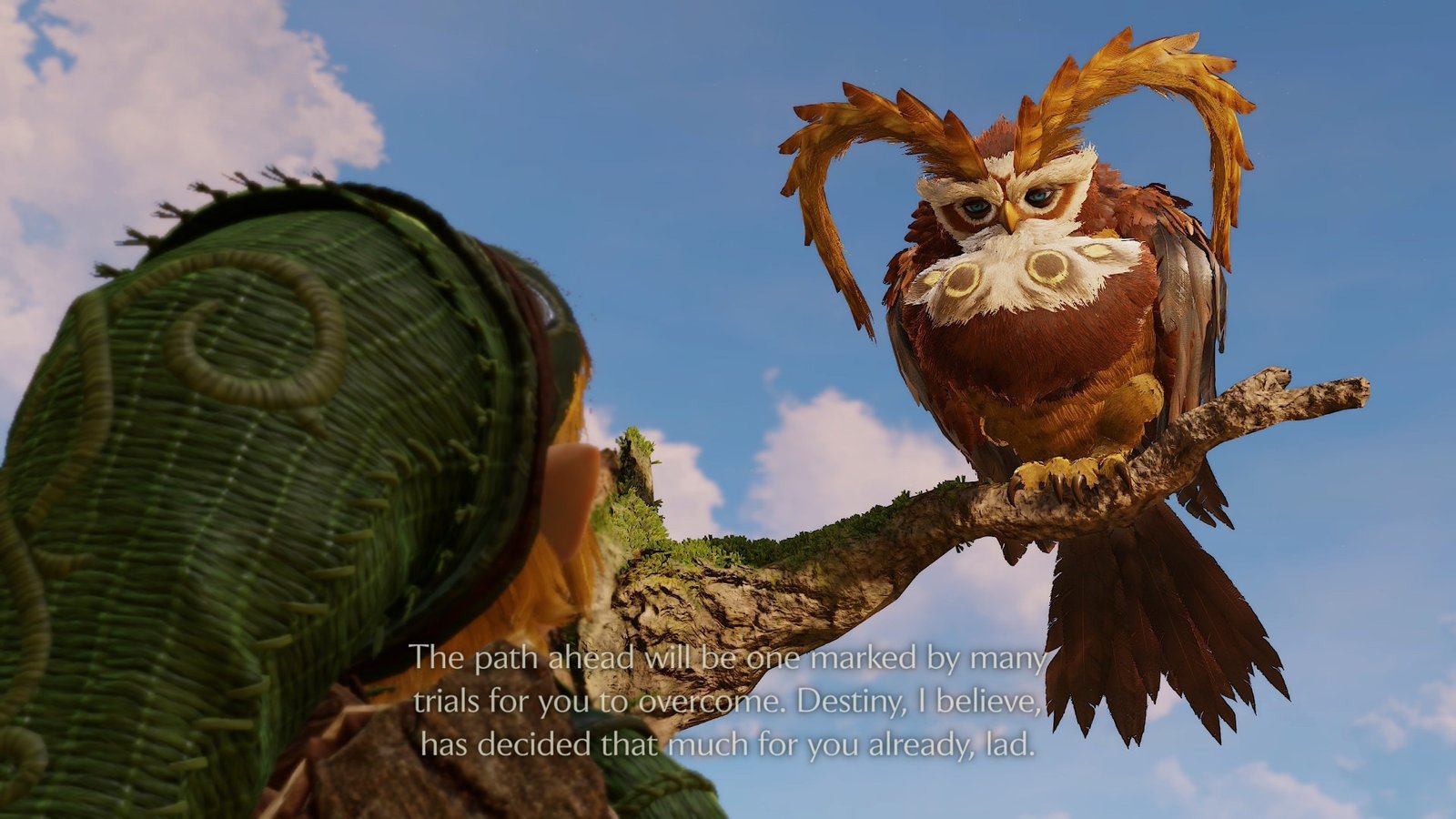
What begins as a child’s first steps into a wider world soon becomes a story about the consequences of time. Link experiences Hyrule as both a child and an adult, seeing how people and places change in the years between. The premise of The Legend of Zelda: Ocarina of Time has a fairy-tale simplicity, but that shift gives the adventure a sense of loss and responsibility that lingers long after its brighter opening hours.
The remake embraces that storybook quality from the outset. A narrator guides the tale as though reading it aloud, while tapestry-like imagery frames important moments in Link’s journey. It is a lovely touch that makes the adventure feel like a legend passed down through generations, even as the characters and places within it become more immediate and expressive.
Hyrule itself is relatively small in The Legend of Zelda: Ocarina of Time when compared with the vast landscapes of The Legend of Zelda: Breath of the Wild and The Legend of Zelda: Tears of the Kingdom, but its compact scale is part of its appeal. Each new region has a distinct personality, from Kokiri Forest’s falling leaves and buzzing fairies to the ghostly, unnerving atmosphere of the Shadow Temple. The world may not stretch endlessly towards the horizon, but its locations leave an impression because of what Nintendo has packed into them.
There is a comforting rhythm to exploring that world. Link arrives somewhere new, learns about the troubles affecting its inhabitants, and ventures into a dungeon to confront the danger at its heart. That structure is more directed than the free-roaming approach of recent entries, yet seeing how each community’s problems lead into the next stage of the quest makes the journey feel connected rather than simply a series of stops on a map.
A Fairy Tale Brought to Life
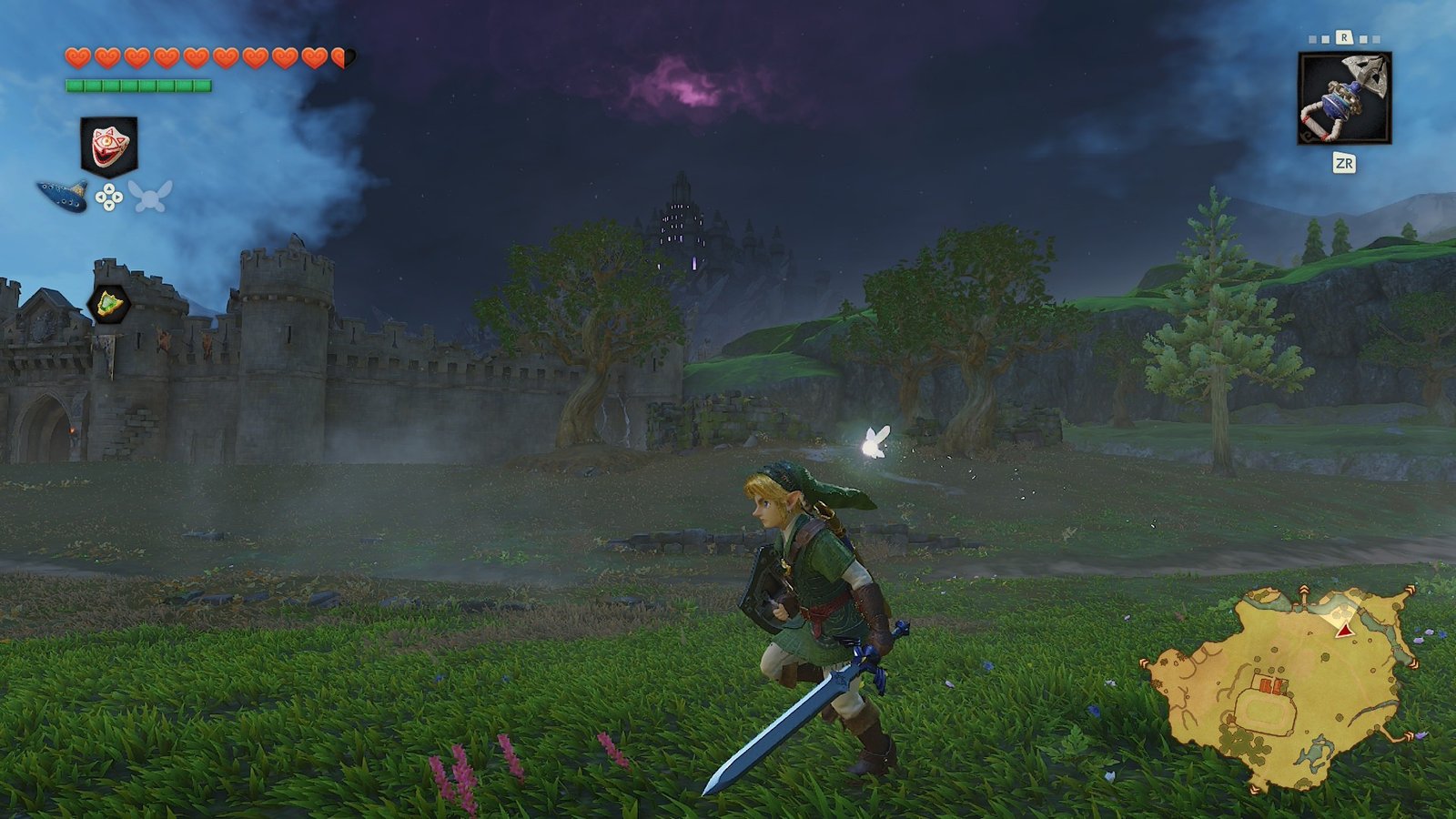
The visual transformation is one of the first things to command attention in The Legend of Zelda: Ocarina of Time. The familiar shape of Hyrule remains, but its forests, towns, and temples have been given a richness that makes them feel like places to spend time in, not just spaces to pass through. The landscapes have a warmth and the inhabitants a liveliness that helps sell the game’s fairy-tale identity.
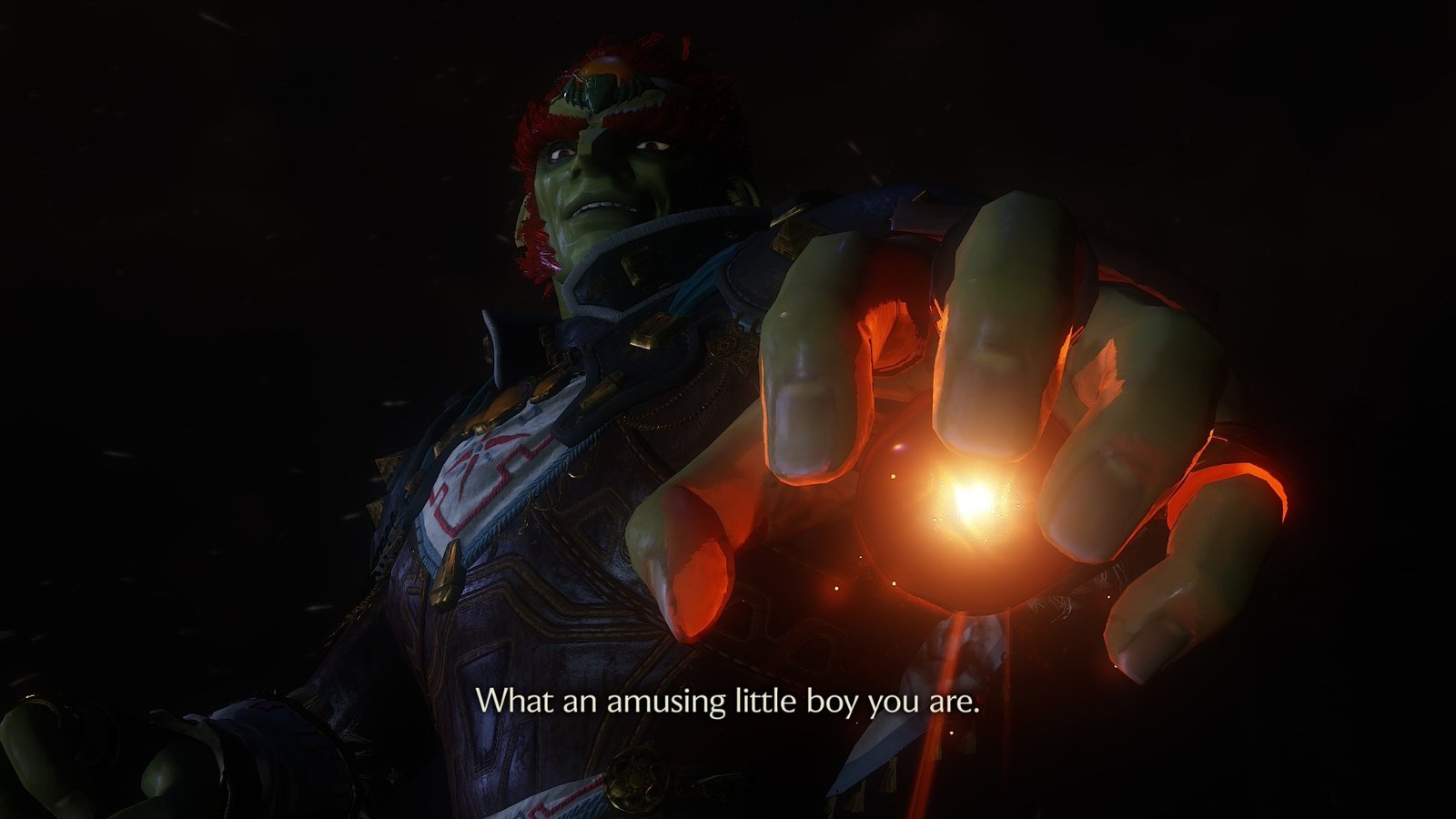
That detail also gives the darker corners of The Legend of Zelda: Ocarina of Time more room to unsettle. The contrast between the inviting greenery of Kokiri Forest and the oppressive atmosphere of the Shadow Temple feels sharper, letting the journey move between childhood wonder and genuine unease without losing its cohesion. Even when the game is taking Link somewhere threatening, there is an eagerness to see how the next location has been reimagined.
The remake’s modernised approach extends to its storytelling. Link remains silent, but key cutscenes now feature voice acting, and the performances bring added personality to characters who previously relied on text and animation. Matt Mercer’s Ganondorf has an intimidating presence, Richard Epcar lends the Great Deku Tree a wise, weary quality, and Lisa Reimold makes Navi a pleasant companion rather than the nuisance many players remember.
Expanded dialogue helps, too, in The Legend of Zelda: Ocarina of Time. Conversations feel more natural, while returning characters benefit from additional personality. Darunia, for example, comes across with the warmth and energy that have come to define the Gorons, and the Mask of Truth now lets Link read characters’ thoughts, adding small but welcome details to encounters with Hyrule’s residents.
The result is a story that feels more expressive without abandoning its original shape. Yet that faithfulness is also where I found myself wishing Nintendo had gone further. Ganondorf is more intimidating here, and seeing his conquest of the Sacred Realm given additional visual weight is effective, but his presence during the adult portion of the adventure can still feel surprisingly limited outside his castle.
The supporting characters who become the sages benefit from the revised dialogue, but I would have liked more scenes in The Legend of Zelda: Ocarina of Time showing what they mean to Link and to Hyrule. Some locations and encounters do convey the impact of the years that have passed, though I wanted the wider world to communicate the consequences of Ganondorf’s rule more consistently. The remake makes the existing story more engaging; it simply leaves a few opportunities for deeper characterisation unexplored.
The Joy of a Classic Adventure
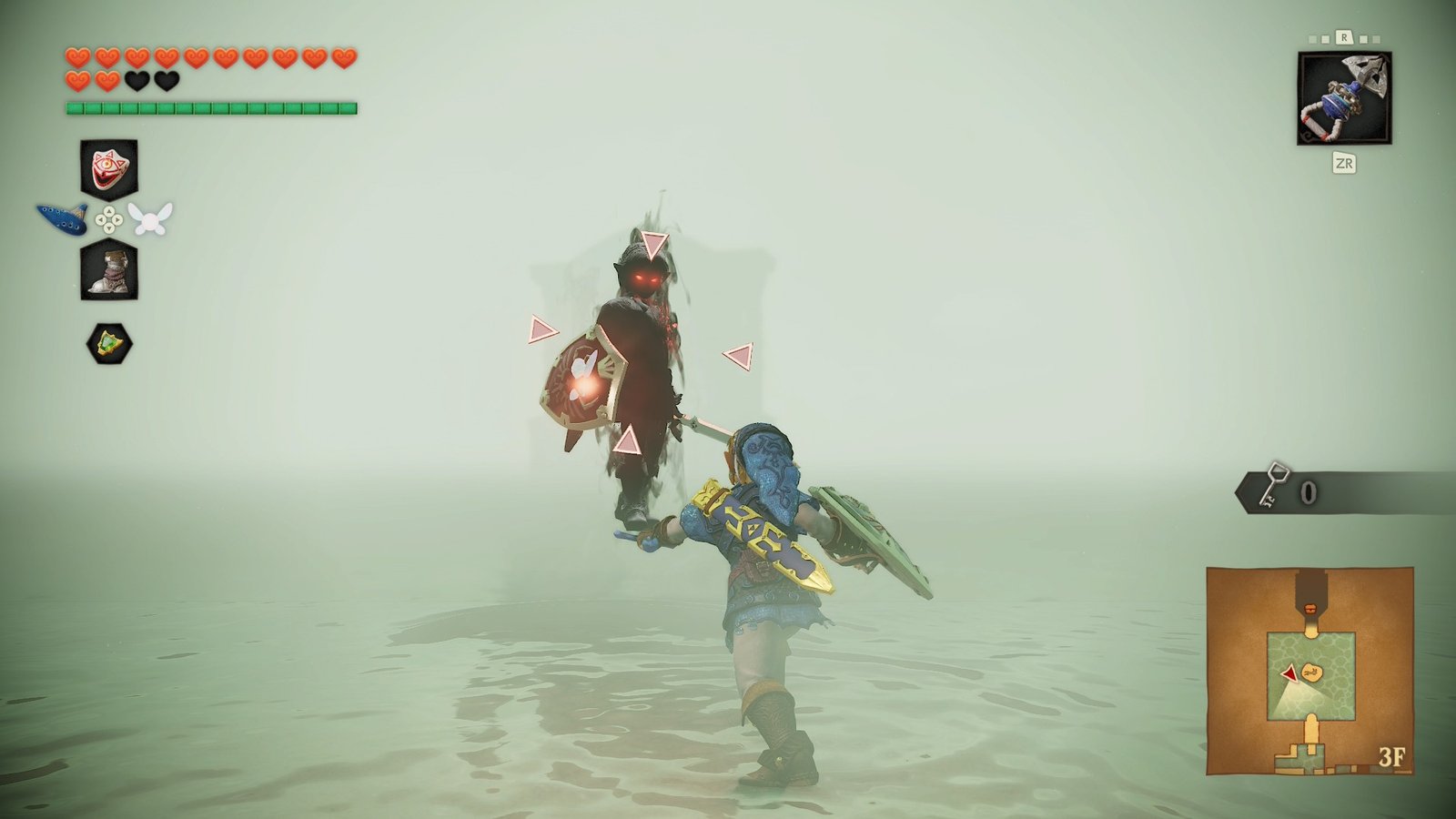
For those who came to the series through its more recent open worlds, The Legend of Zelda: Ocarina of Time offers a different kind of pleasure. Its dungeons are self-contained challenges that gradually ask Link to make sense of their layouts, confront enemies, and put the tools he collects to use. There is satisfaction in arriving somewhere mysterious, learning how its spaces fit together, and eventually reaching the threat waiting at the end.
The tools Link gains along the way give that progression a tangible sense of discovery. Some help in combat, others open up new ways to navigate or solve puzzles, and finding where they fit into the wider adventure is part of the appeal. The game’s structure may be straightforward, but it continually gives you a reason to look at an obstacle and wonder what you might be able to do about it later.
Nintendo has also made the journey easier to navigate with a freely controlled camera. Being able to look around environments that were once presented from more restrictive angles makes it easier to appreciate the detail and understand the spaces you are exploring in The Legend of Zelda: Ocarina of Time. The Water Temple is less intimidating to navigate than I remember, although its reputation was built on more than the camera alone.
Combat remains relatively simple, but the remake makes encounters feel more natural. Enemies such as Wolfos and Stalfos can still become waiting games as you watch for an opening, yet their expanded moves and more involved tells encourage Link to move and dodge instead of standing in place behind his shield. It may not be as versatile as the combat in The Legend of Zelda: The Wind Waker or The Legend of Zelda: Twilight Princess, but it gives an older system a welcome sense of movement.
There are other practical improvements, including the ability to jump manually and access items more conveniently. These changes may sound modest on paper, but they help the adventure sit comfortably alongside more modern games without changing its essential character. The result is a Hyrule that feels easier to explore while still retaining the deliberate pace of its dungeons and encounters.
Travelling across The Legend of Zelda: Ocarina of Time can nevertheless take a little patience, particularly early on when young Link spends plenty of time running through Hyrule Field. Fast travel becomes available as the adventure progresses, making it easier to move between major locations, and the world is compact enough that ordinary backtracking rarely feels especially burdensome. Those aiming for full completion will naturally spend more time revisiting its corners.
For that, I found Zelda Notes, available through the Nintendo Switch app, especially useful. Its map makes it easy to see which objects remain to be collected and which items are needed to reach them, without necessarily spelling out how to acquire those tools. It gives completionists a helpful way to keep track of their progress while leaving room to work things out for themselves.
The Cost of Staying Faithful in The Legend of Zelda: Ocarina of Time
As enjoyable as the adventure is, players looking for a demanding challenge may want more from The Legend of Zelda: Ocarina of Time. Getting to the credits is generally a comfortable journey, and even bosses that once seemed imposing offer relatively little resistance. After a modest amount of sidequesting, Link can accumulate enough bottles, heart pieces, and rupees to make the road ahead even more forgiving.
There are attempts to introduce a little more friction, including Great Fairies charging for their upgrades, but they do not dramatically alter the balance. The Legend of Zelda: Ocarina of Time was never the most difficult Zelda adventure, and accessibility suits its fairy-tale spirit, yet veterans may wonder whether the original was always this easy.
The boss Time Attack mode offers an opportunity to revisit fights under different conditions, and it is a welcome extra for players who want to test themselves. Still, that challenge sits outside the main journey rather than changing the experience of travelling through Hyrule. A more demanding option within the adventure itself would have given returning players another reason to approach it differently.
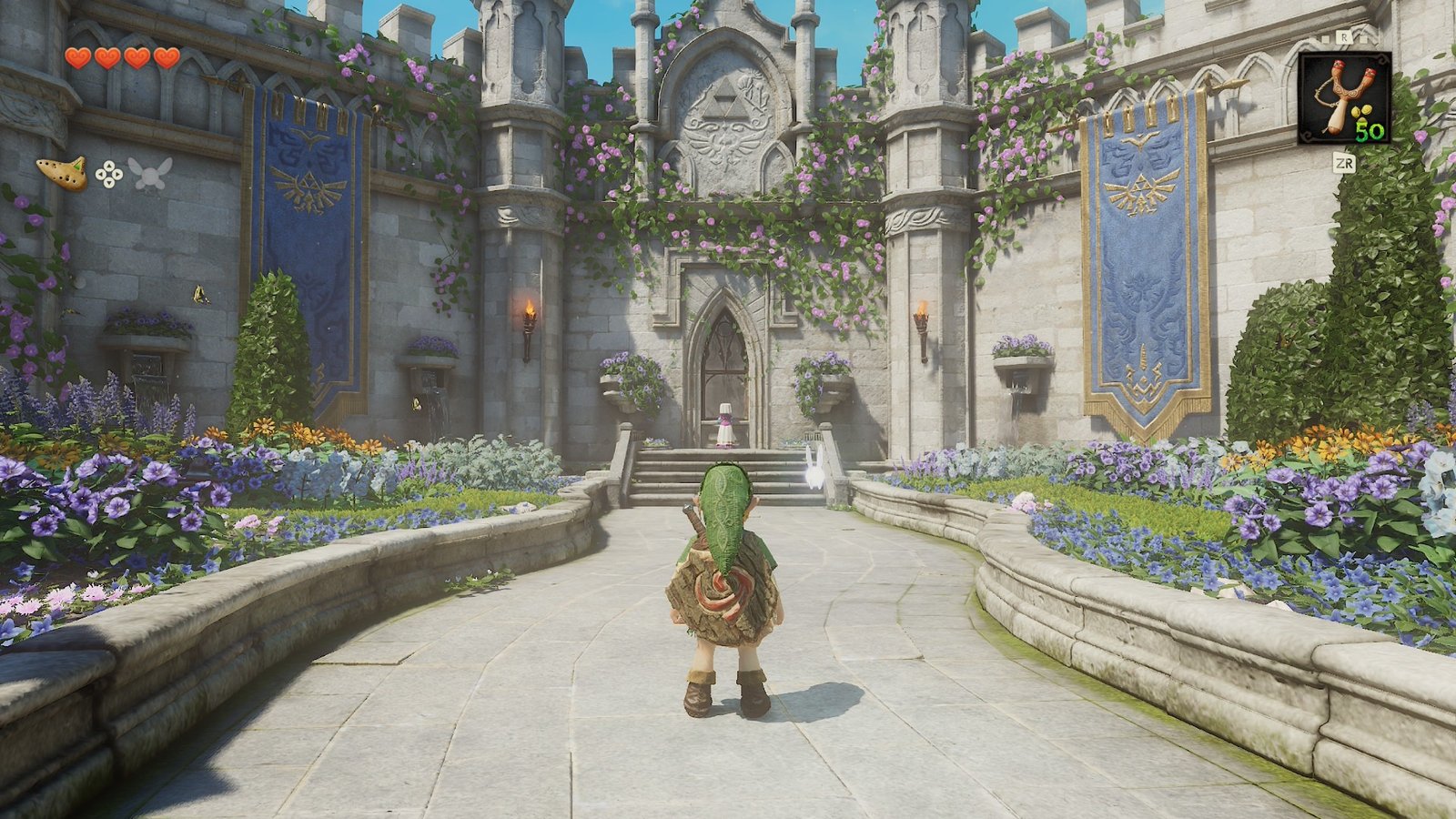
These reservations stem from the same decision that makes The Legend of Zelda: Ocarina of Time remake so appealing: Nintendo has been careful with its source material. The familiar dungeon structure, the broad shape of the story, and the character of the world remain intact, even where a more substantial rethink might have addressed the original’s shortcomings. I would have welcomed a little more narrative expansion and a sterner test, but neither kept me from appreciating how thoughtfully the game has been rebuilt.
A Legend Worth Rediscovering
Despite decades of acclaim, The Legend of Zelda: Ocarina of Time was never a perfect game. Its approach to exploration and progression has limitations, and it is easy to see why the series eventually looked for new ways to build adventures. What surprised me was how little those concerns mattered when I was actually travelling through Hyrule.
I kept thinking back to the title screen: the music begins, Link rides Epona across the landscape, and the adventure seems to invite you in before you have even pressed a button. It felt like a warm hug, and even my wife, who had never played a Zelda game before, came into the room because she admired the music so much. For someone without a deep well of nostalgia for the original, that moment said a great deal about how much of its appeal remains in this new version of The Legend of Zelda: Ocarina of Time.
Nintendo has taken a game with an enormous legacy and made it feel vivid and inviting once more. I would have liked its characters to receive a little more room to grow and its challenges to push back harder, but those shortcomings sit within an adventure filled with personality, wonder, and care. For me, this is the best way to experience Link’s journey, whether you are returning to Hyrule or discovering it for the first time.
The Legend of Zelda: Ocarina of Time is available on Nintendo Switch 2.
SavePoint Score
Summary
The Legend of Zelda: Ocarina of Time does the one thing few remakes do: it renders the original game irrelevant, and when you consider how many consider it the greatest game of all time, that speaks volumes about how good this remake is. The gorgeous visuals, expressive performances, and thoughtful refinements all work, but its faithful design leaves room for greater challenge and deeper characterisation.
