

Table of Contents
SURI: The Seventh Note on PS5 Pro
On the island of Suri, music is more than an accompaniment to everyday life. It shapes the world, gives movement its purpose, and offers a way forward when a mysterious illness threatens to silence everything in its path.
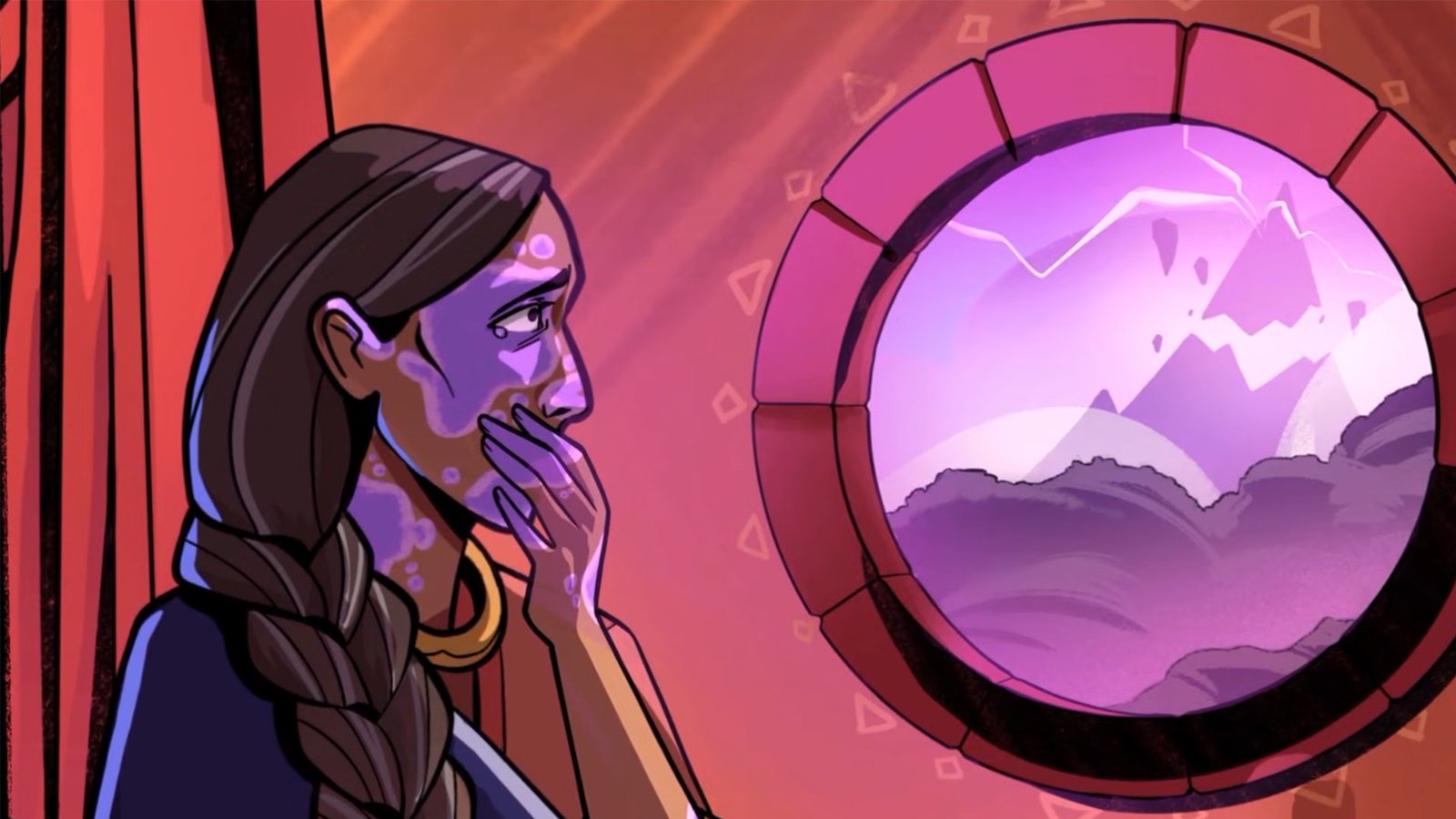
For Ajira, however, the journey begins with a far more personal concern. Having already lost her father to the sickness, she sets out to find a fruit that could save her mother, venturing beyond the safety of home and into an increasingly dangerous world.
That blend of intimate stakes and fantastical adventure gives SURI: The Seventh Note an appealing foundation. Developed and published by Tathvamasi Studios, thiss hand-drawn platformer asks players to move to the beat as they explore its colourful environments, creating moments when music and movement come together beautifully. Unfortunately, those moments are not always easy to sustain.
A World With a Musical Heart
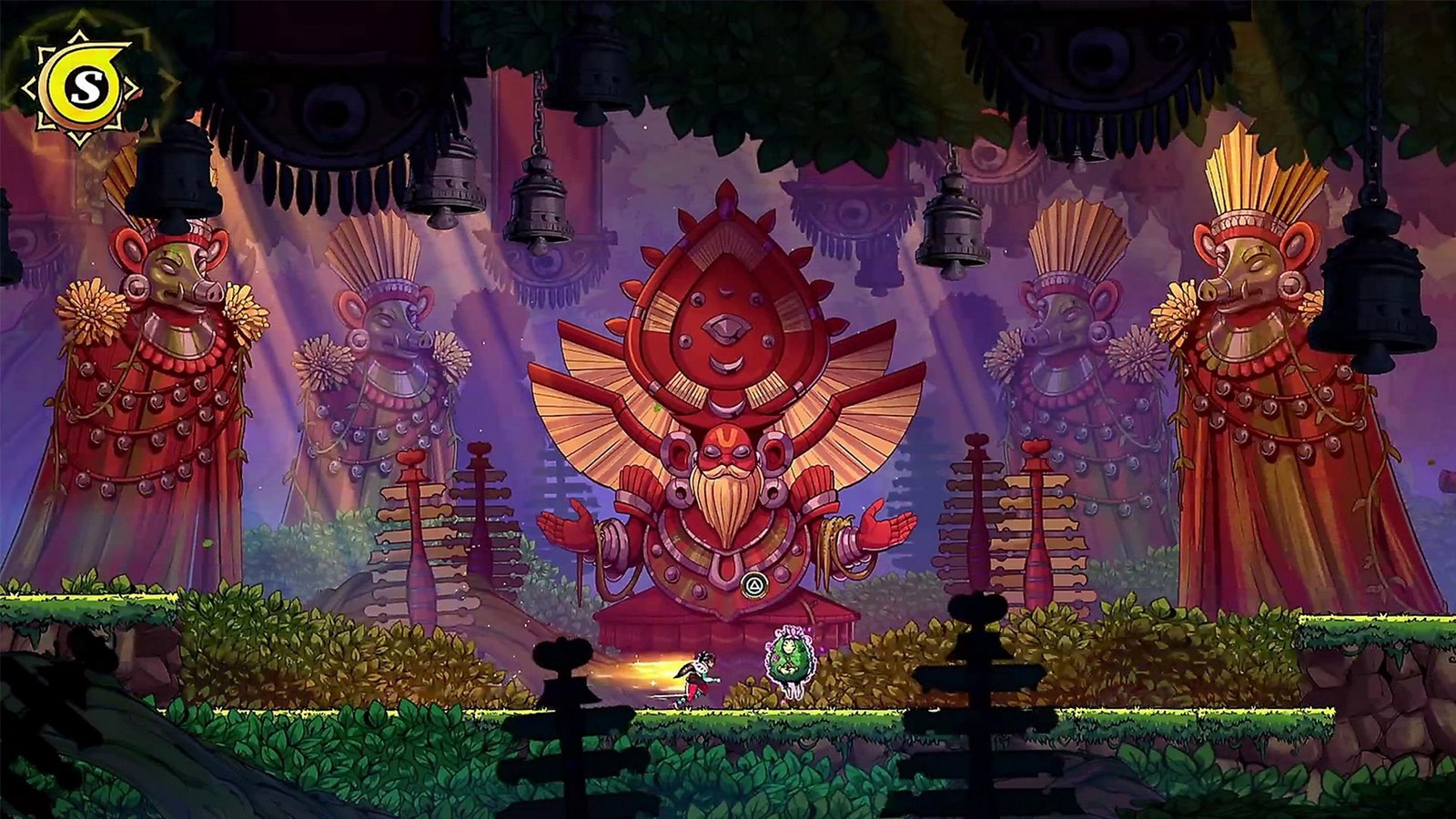
Ajira’s quest takes her through an island filled with vibrant scenery, ancient structures and characters shaped by the world around them. Drawing on Indian artistic and architectural influences, SURI has a visual identity that makes its environments worth taking in, even when the path ahead is filled with hazards.
The illustrated backdrops and colourful designs convey a sense of care, with each new setting contributing to the feeling of travelling through a place with its own history. The island’s connection to music also gives its fantasy a coherent identity, making the rhythm-based obstacles feel like part of the world rather than an unrelated challenge placed in Ajira’s way.
The story of SURI: The Seventh Note, though, struggles to make the same lasting impression. Saving a parent gives a clear reason to press on, but the characters and their interactions aren’t developed enough to give the journey the emotional weight its premise promises. Ajira’s determination remains easy to understand, even if the adventure is more compelling as a place to explore than as a tale to invest in.
Moving to the Beat
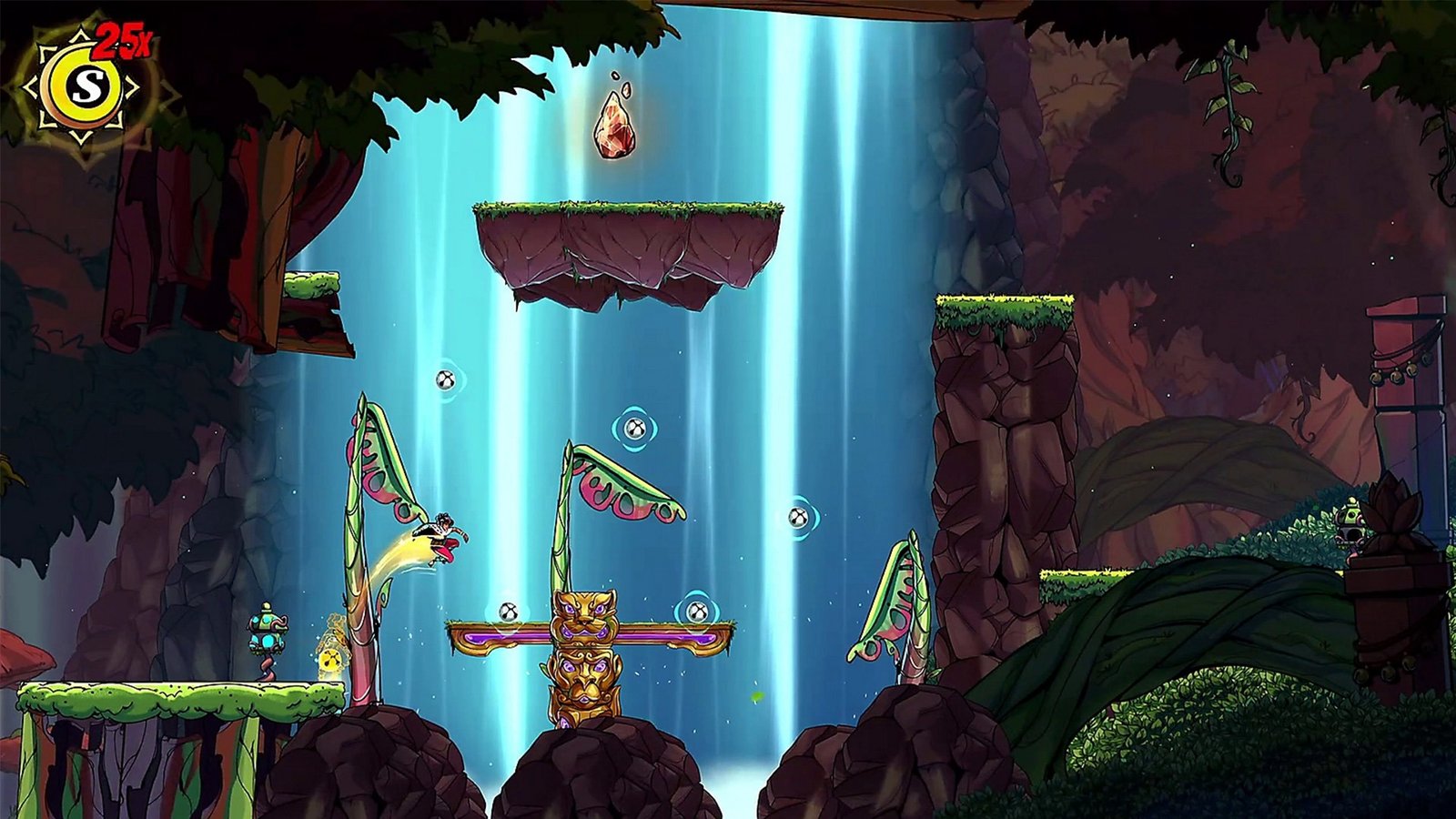
At its heart, SURI is a platformer that asks players to think about when they act as carefully as where they are going. Jumps and other movements need to align with the beat, while elements of the environment respond to the rhythm, turning a route across a room into a sequence to learn and perform.
Getting that sequence right can feel wonderful. A well-timed jump leads into another action, the combo builds, and the soundtrack grows fuller as Ajira moves through the level. It is an appealing reward that connects progress to the music itself, much as Ratatan uses rhythm to give its own strategy an infectious momentum.
As the journey continues, Ajira gains abilities that add new possibilities to traversal. Echo, for instance, can provide extra airtime at key moments, while Phase lets her navigate certain obstacles. Learning how to bring these abilities into the rhythm makes later challenges more involved, particularly when the game combines them with environmental puzzles and escape sequences.
The trouble is that timing is only half the equation in SURI: The Seventh Note. Ajira’s movement can feel floaty, and the precision demanded by some platforming sections makes it difficult to tell whether a missed attempt came down to an off-beat input or an awkward landing. When that uncertainty creeps in, the satisfying connection between player and music starts to fray.
A Song With a Few Sour Notes
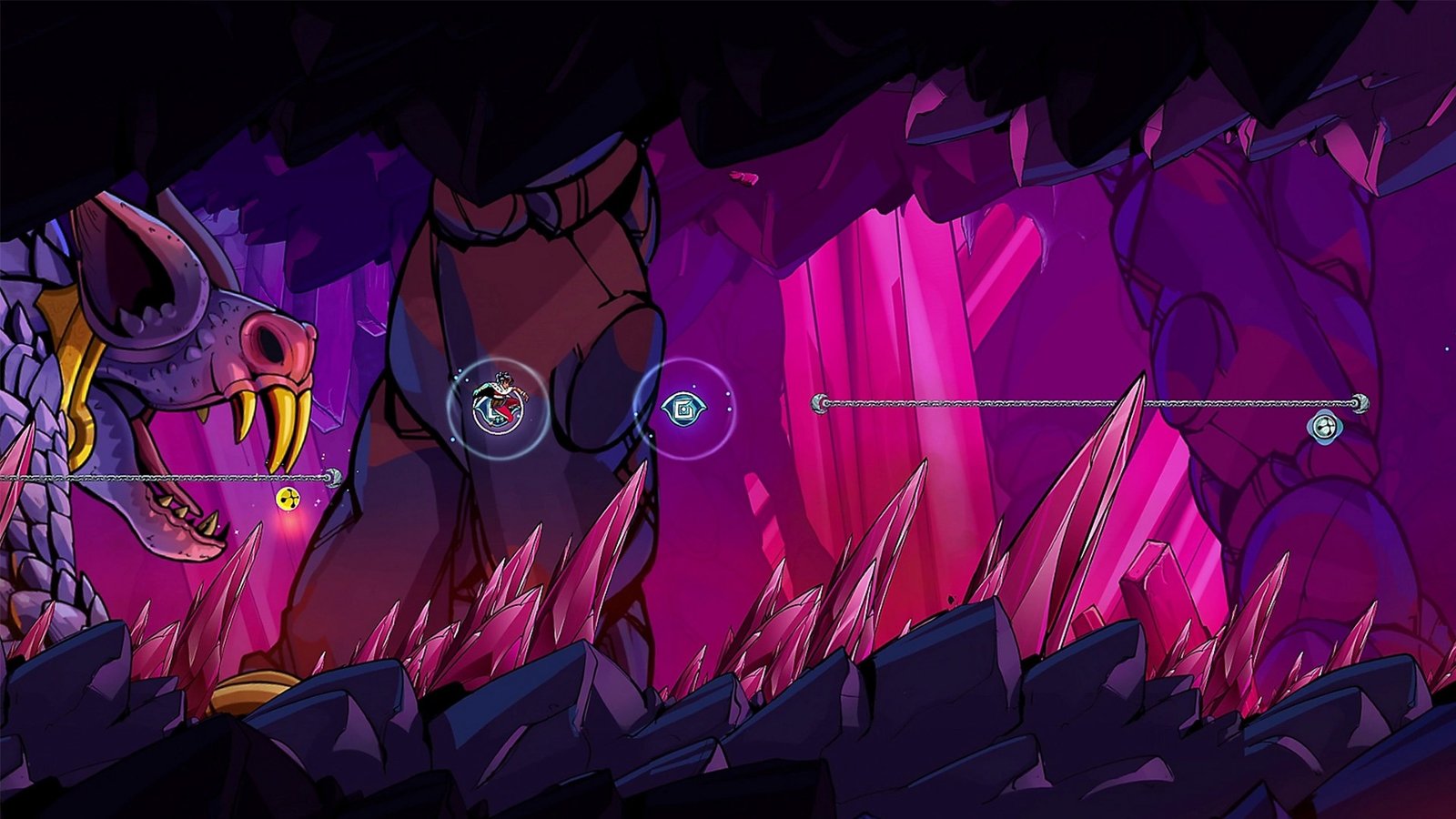
There is enjoyment in learning a tricky passage and finally putting its pieces together. Checkpoints also help take some of the sting out of failure, allowing players to return quickly to a difficult section rather than repeat lengthy stretches of the journey.
Even so, certain difficulty spikes in SURI: The Seventh Note can test patience. The need to coordinate positioning, rhythm, and abilities leaves little room for error, and repeating the same sequence becomes less rewarding when movement doesn’t feel as precise as the challenge demands. Players who enjoy rhythm games may still need time to adjust to the platforming, while platforming fans must learn to resist their instinct to jump at every opening.
The limited accessibility options are another consideration for anyone who finds the timing requirements difficult. Calibration helps account for input delay, and the DualSense’s haptic feedback offers an additional cue, but players looking for broader ways to adjust the challenge may find the available options restrictive.
A Melody That Deserves More
Music remains central to SURI’s appeal, particularly when a strong run adds layers to the arrangement and suggests the island is responding to Ajira’s actions. Those moments make the game’s creative ambition tangible, rewarding players with a richer soundscape as their confidence grows.
Over time, however, the compositions and familiar obstacle sounds can become repetitive. Because so much of the experience relies on revisiting sequences and maintaining a steady beat, the soundtrack needs enough variety to make repeated attempts feel fresh. It does not always manage that, even if the idea behind its evolving music remains compelling.
There is still something to appreciate in the way SURI: The Seventh Note brings its art, setting and mechanics together. Its best passages capture the pleasure of finding a rhythm in an unfamiliar world, and its distinctive presentation gives that journey a character of its own. But with movement that can undermine its precision and a story that never quite reaches the heights of its premise, this is an adventure whose most memorable moments are accompanied by a fair share of frustration.
SURI: The Seventh Note is available now on PlayStation 5 and PC.
SavePoint Score
Summary
SURI: The Seventh Note brings its colourful world to life through music and rhythmic platforming. Its satisfying sequences and distinctive presentation show plenty of imagination, but floaty movement, uneven difficulty, and repetitive stretches keep it from reaching its potential.
