

Table of Contents
Housemarque Is Sharpening Everything It Does Best With Saros
Three hours with Saros leaves a very specific impression. This is not Housemarque stepping away from what made Returnal special, nor is it simply trying to recreate that roguelike magic with a new face. It feels more like a studio that understands its strengths more clearly than ever and is now building a game that pushes them further with greater confidence.
That is what makes Saros so exciting so early, as my time at the preview proved to be. Housemarque has always excelled at pressure, movement, spectacle, and the kind of combat that demands players stop panicking and start learning. Returnal remains such a striking game because of how hard it pushed for mastery. Saros keeps that pressure intact, but wraps it in a structure that feels cleaner, more inviting, and potentially more complete.
The clearest takeaway from this first hands-on session is that Housemarque is not lowering the ceiling. It is widening the door. And in doing so, it may be getting closer than ever to its best work.
A New Peak of Combat
If there is one place where that confidence is obvious, it is in combat. Saros fits the bullet ballet label Housemarque coined to a tee, and this time, the action feels even more layered. It is not just about weaving through waves of incoming fire. It is about deciding how to use the chaos against itself.
Using the Soltari Shield, blue projectiles can be absorbed, helping to charge your Power Weapon. That meant gaining access to firepower, such as an explosive missile or a barrage of smaller projectiles, that could help even the odds against stronger enemies. That one idea changes the tempo of combat in a meaningful way. Danger is not always something to avoid. Sometimes it is something to exploit.
That risk-reward dynamic becomes more important because enemy behaviour is so relentless. Foes mix ranged pressure with melee aggression, move in ways that constantly challenge your positioning, and rarely let you settle into a safe rhythm. It is intense, fast, and genuinely thrilling. More importantly, it feels like Housemarque is taking its signature action language and pushing it further into an expressive space.
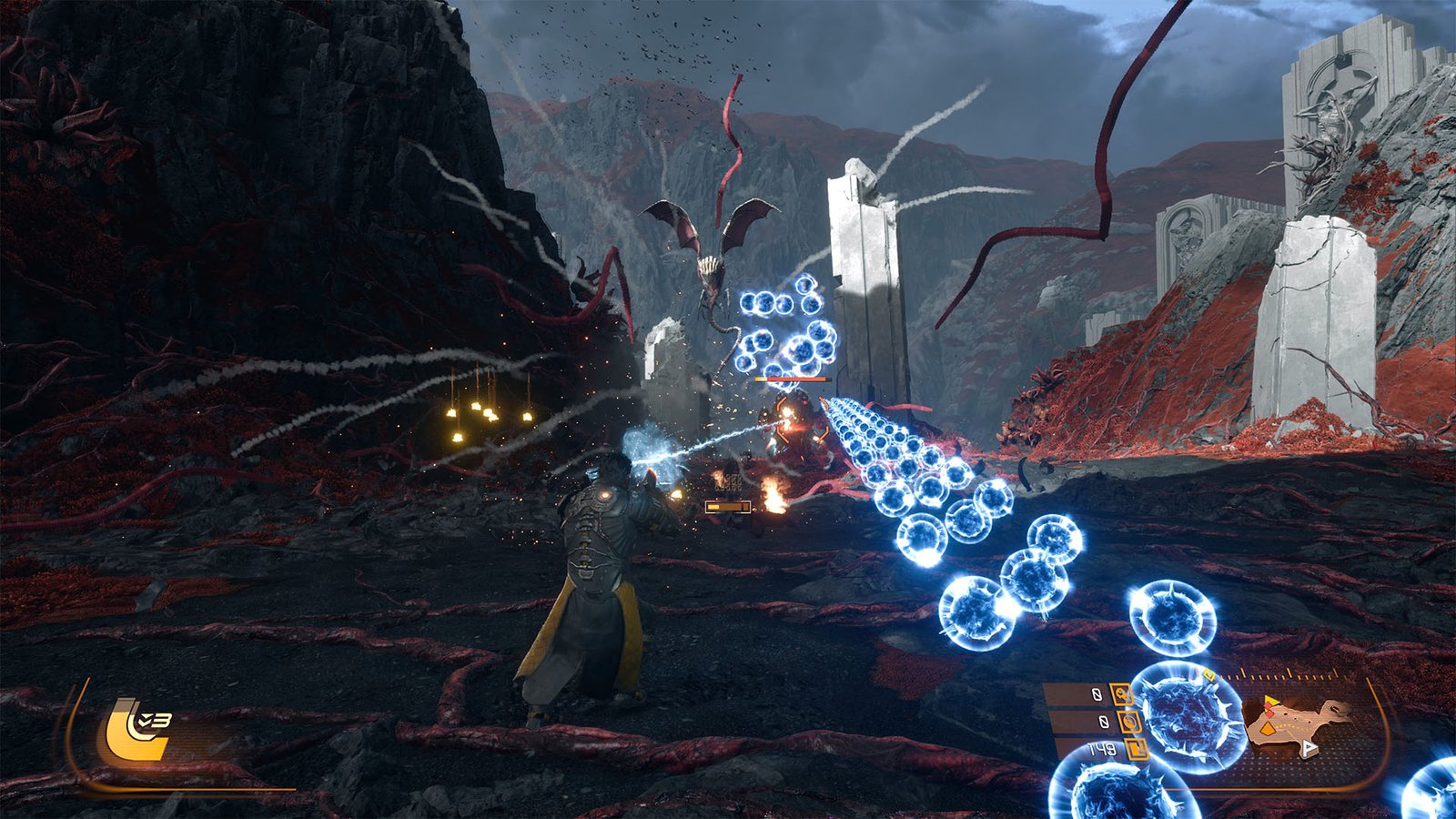
The weapons help a lot here. The heavy pistol was an immediate standout, thanks to its high damage and strong modifiers like ricocheting shots or explosive rounds. The assault rifle was another reliable favourite, especially when paired with homing bullets. Then there is Saros’ shotgun equivalent, which turns close-range aggression into a very satisfying gamble. Every weapon comes with an alt-fire mode and randomised modifiers, which means each run keeps asking players to rethink their approach or chase a better roll.
Then there is the Eclipse, a mandatory transformation of not just the space but the enemies in order for you to progress. The world becomes more oppressive, the music much more energised, and the enemies gain a new level of aggression that you will need to adjust.
Yellow, corrupted projectiles are now added to the mix, which can still be absorbed, but at the cost of your overall health. The only way to remove the corruption is to use the Power Weapon, adding another twist to Saros’s combat flow. At least, during the Eclipse, your Lucenite pickups are worth more, and artefacts and their buffs and debuffs become much more tantalising and punishing in the same measure.
Easier to Return to, Not Easier to Master
What really separates Saros from Returnal is not that it is less demanding. It is that the overall loop feels more considerate without sacrificing the pressure to improve. As someone who loved how Returnal forced players to learn through failure, especially back when there were no real safety nets at launch, there is always a natural concern when a follow-up promises more accessibility.
So far, the game does not seem to be softening its identity. Autosaves and save slots will absolutely make the game more approachable, but they do not remove the sense that you still need to earn your way forward.
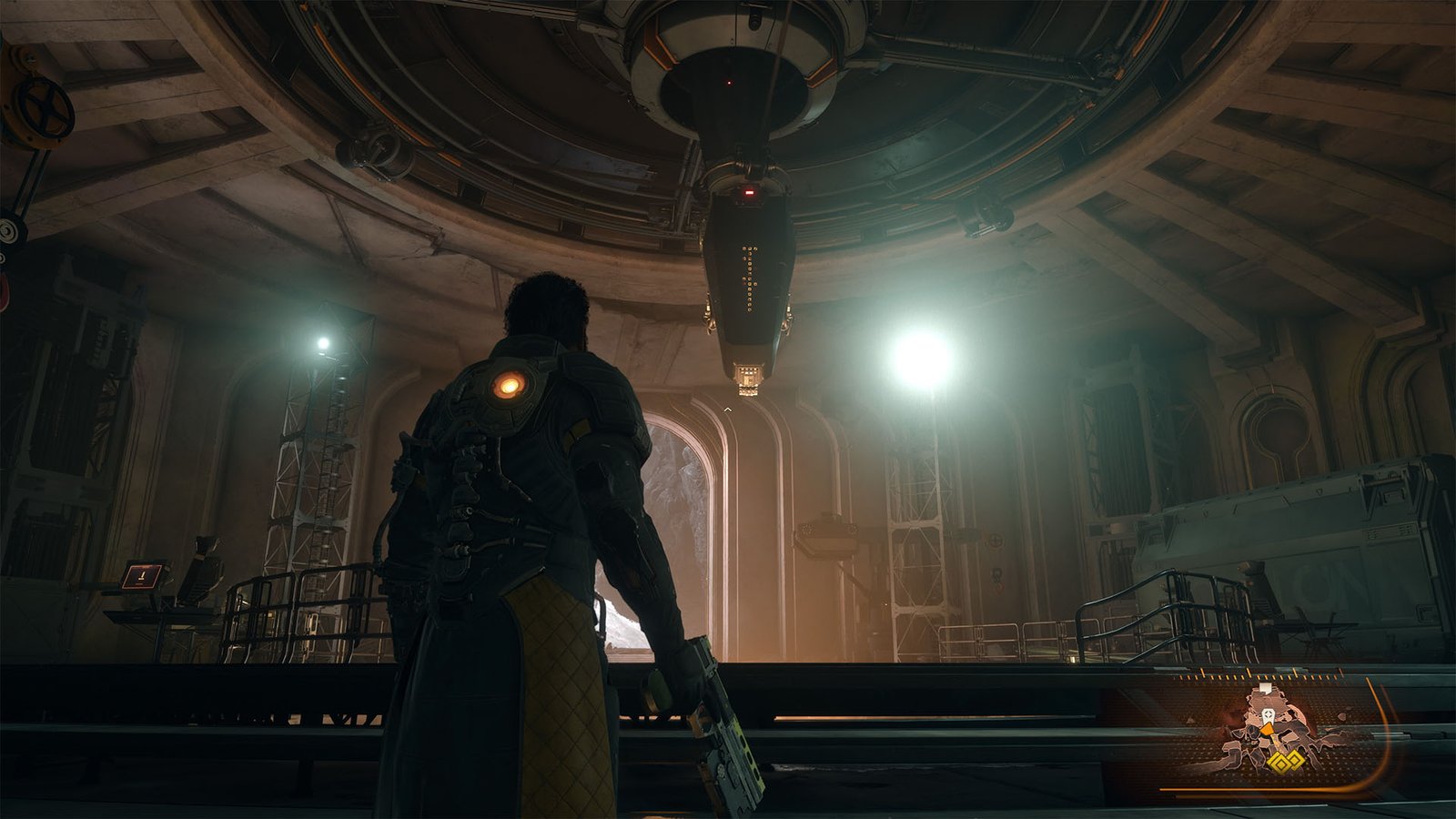
The shorter structure is a big part of that. Runs of around 30 minutes per biome, assuming things go well, make the game easier to fit into your life and easier to jump back into after a setback. For newer players, that should make Saros less intimidating. For skilled players, it creates a tighter loop for repeated attempts, faster mastery, and the sheer joy of staying sharp. Housemarque has said it wanted to keep the danger while reducing the helplessness, and that comes through clearly in play.
Permanent upgrades reinforce that rhythm. Resources like Lucenite and Halcyon ensure that every return trip can leave you stronger, whether that means more health, better shielding, improved Lucenite gains, a second life, or a higher proficiency level on weapons found in the field.
The Passage, the central hub, helps tie all of this together. It is where the crew is based, where conversations flesh out both character and story, and where the Armor Matrix houses those permanent upgrades. That is why Saros feels less like a compromise and more like a maturation of Housemarque’s design instincts.
Bosses Set the Ceiling High
If anything proves that Saros still wants players to rise to the occasion, it is the boss fights.
The two bosses in the preview, Prophet and Bastion, are on the extreme end of the challenge spectrum. These are arena-sized encounters with multiple health bars, swiftly changing attack patterns, and enough sustained pressure to test every part of your understanding. More than anything else in Saros, they are where the game’s systems come together.
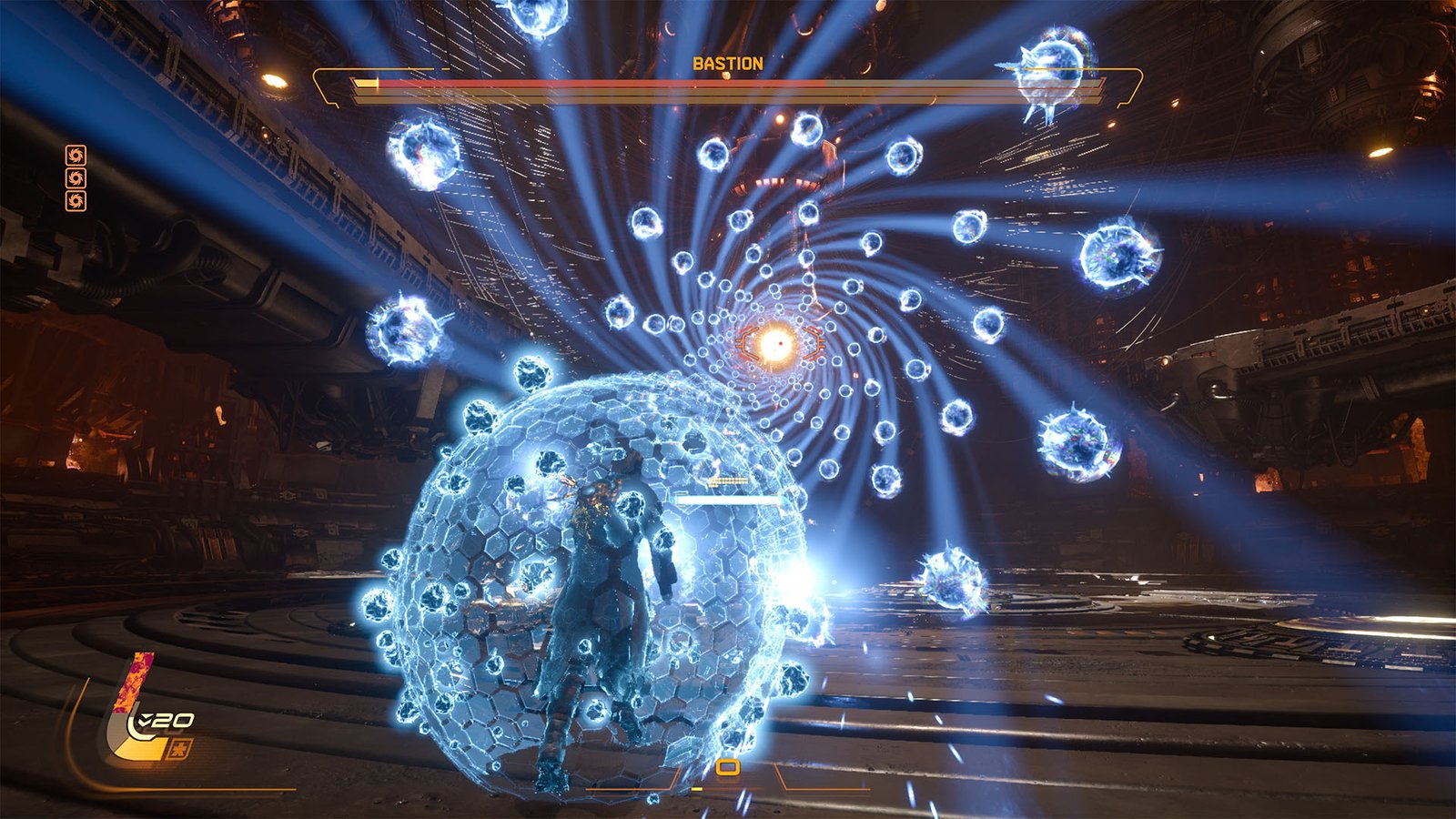
You need to manage your dash well. You need to understand when to absorb projectiles with your shield and when to prioritise survival instead. You need to weigh up whether corrupted projectiles are worth the risk if they can help charge your Power Weapon. Everything the game teaches you in normal combat comes to a head in these fights, and the result is exactly the kind of high-stakes payoff Housemarque has always been good at delivering.
That is what makes the bosses so exciting to take on. They do not just feel hard. They feel earned. Prophet and Bastion suggest that Saros still believes mastery should be the path to satisfaction, and that belief remains one of the studio’s biggest strengths.
Richer, More Present, and More Confident
The other major shift is narrative. Mystery is still at the heart of Saros, but it feels far more present and inviting this time around. There is richer worldbuilding here, stronger environmental storytelling, and a more noticeable ensemble cast presence from the start.
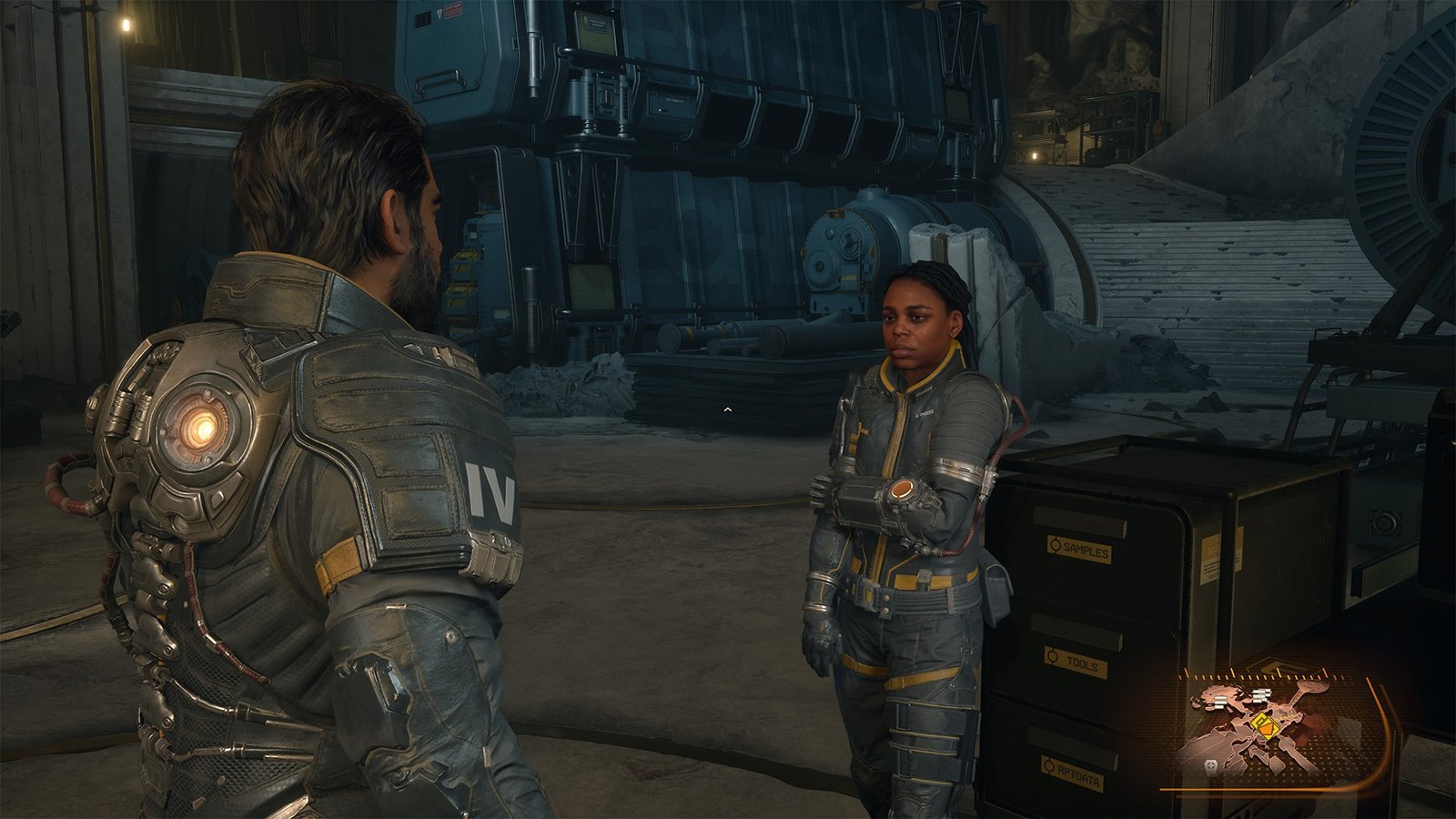
Rahul Kohli’s performance as Arjun Devraj gives the whole thing a stronger focal point, grounding the mystery in a more overtly human perspective. The Passage plays an important role in that too. Because it is a proper hub filled with characters to speak to, Saros immediately feels more socially textured than Returnal did in its early hours.
That does not lessen the intrigue. If anything, it makes the mystery more compelling because there is more context, more personality, and more emotional weight surrounding it. From this first slice, Saros feels richer in its dramatic layering without losing Housemarque’s taste for ambiguity. That balance could make a huge difference.
Saros Already Feels Like the Studio’s Most Complete Vision
That is the question Saros leaves behind after three hours. Not whether Housemarque can still make exhilarating action games, because that much is already obvious. The more interesting question is whether this is the game where all of the studio’s ideas finally come together in their strongest form.
The combat is escalated. The bosses are brutal. The demand for mastery remains. But now the structure is easier to return to, the progression is more generous without feeling cheap, and the story feels stronger from the outset. Everything is a little sharper, a little fuller, and a little more assured.
It is still early, and three hours are only three hours. But Saros already feels like more than a promising follow-up. It feels like Housemarque taking everything it has learned about action, repetition, pressure, and player growth, then shaping those lessons into something more complete.
That alone makes it one of the most exciting games on the horizon. The fact that it might also turn out to be Housemarque’s best work yet makes it even harder to ignore.
Saros arrives on the PlayStation 5 and PlayStation 5 Pro on April 30.
