

Table of Contents
Devil Jam on PC
A Loud Concept That Hits Hard Early
At first contact, Rogueside‘s Devil Jam makes an immediate impression. Its heavy metal aesthetic, hand-drawn hellscapes, and rhythm-infused framing are not subtle, and that confidence works in its favour. This is a game that knows exactly what it wants to be, even if it does not always know how far to take its ideas.
Moment-to-moment play follows a familiar survivors-like structure. Enemies flood the screen, weapons trigger automatically, and survival becomes an exercise in positioning, timing, and long-term build planning. Where Devil Jam differentiates itself is through rhythm-influenced combat. Attacks pulse, cooldowns sync to beats, and the soundtrack is meant to carry both mood and mechanical cadence.
In the opening hours, this works well. The marriage of audio and action gives encounters a sense of flow that elevates otherwise routine crowd-clearing. Weapons feel punchy, visual feedback is clear, and the early challenge curve encourages experimentation rather than caution. The hand-drawn art style also carries surprising clarity during chaotic moments, which is no small feat in a genre often buried under particle effects.
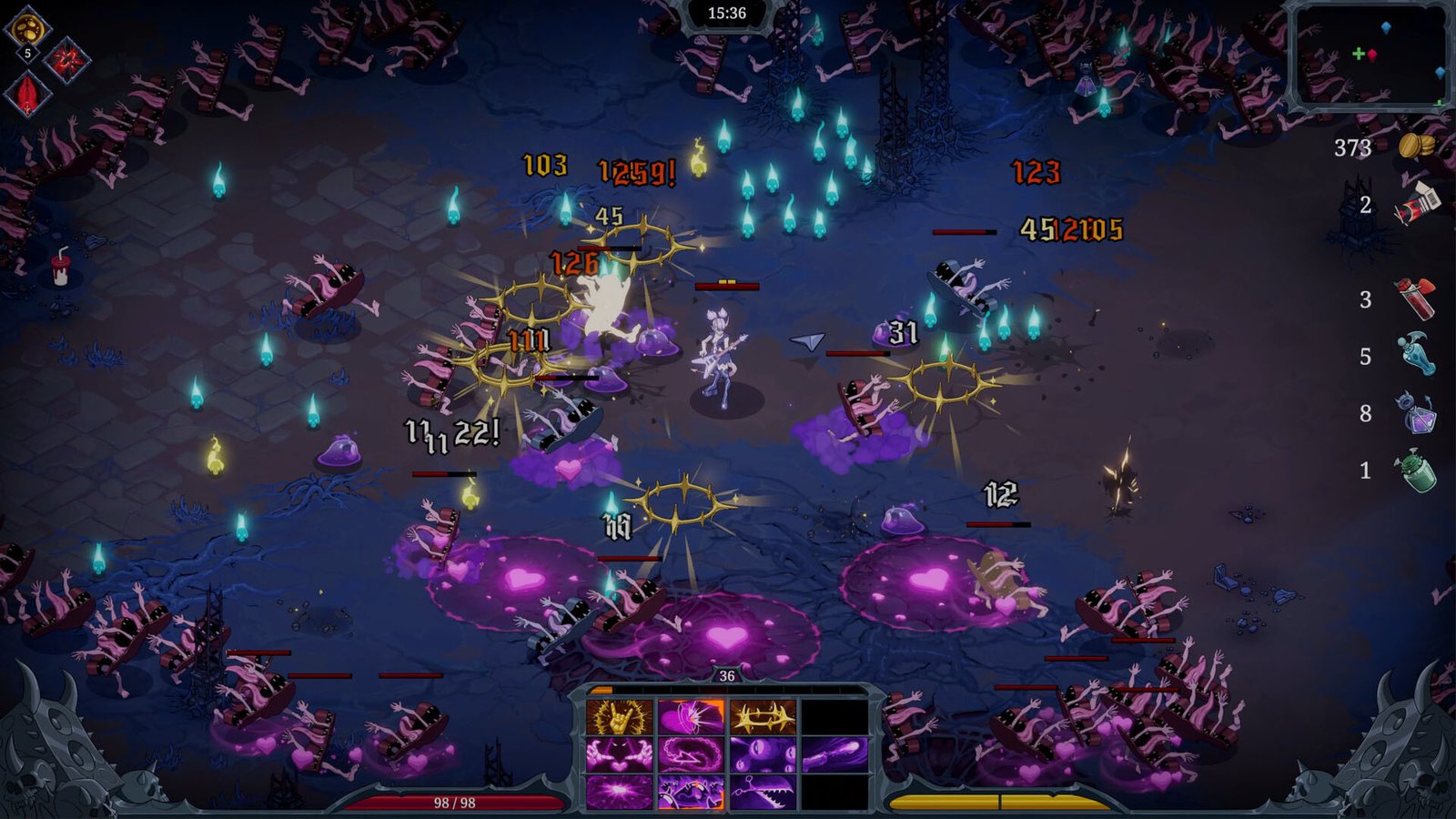
However, once familiarity sets in, the rhythm layer begins to feel more thematic than transformative. While the soundtrack remains stylistically strong, its mechanical influence fades into the background. Combat becomes less about feeling the beat and more about managing cooldowns and positioning, much like any other survival-like game. The concept does not disappear; it simply stops evolving.
This is the central tension of Devil Jam. Its opening act suggests something distinct, but its core loop settles into comfortable, well-worn patterns sooner than expected.
Builds, Progression, and the Weight of Repetition
Devil Jam‘s most interesting system sits outside its combat rhythm. The grid-based inventory and equipment layout introduces genuine decision-making, forcing players to think spatially about how items interact. Placement matters, synergies reward foresight, and poor planning can quietly undermine an otherwise promising run.
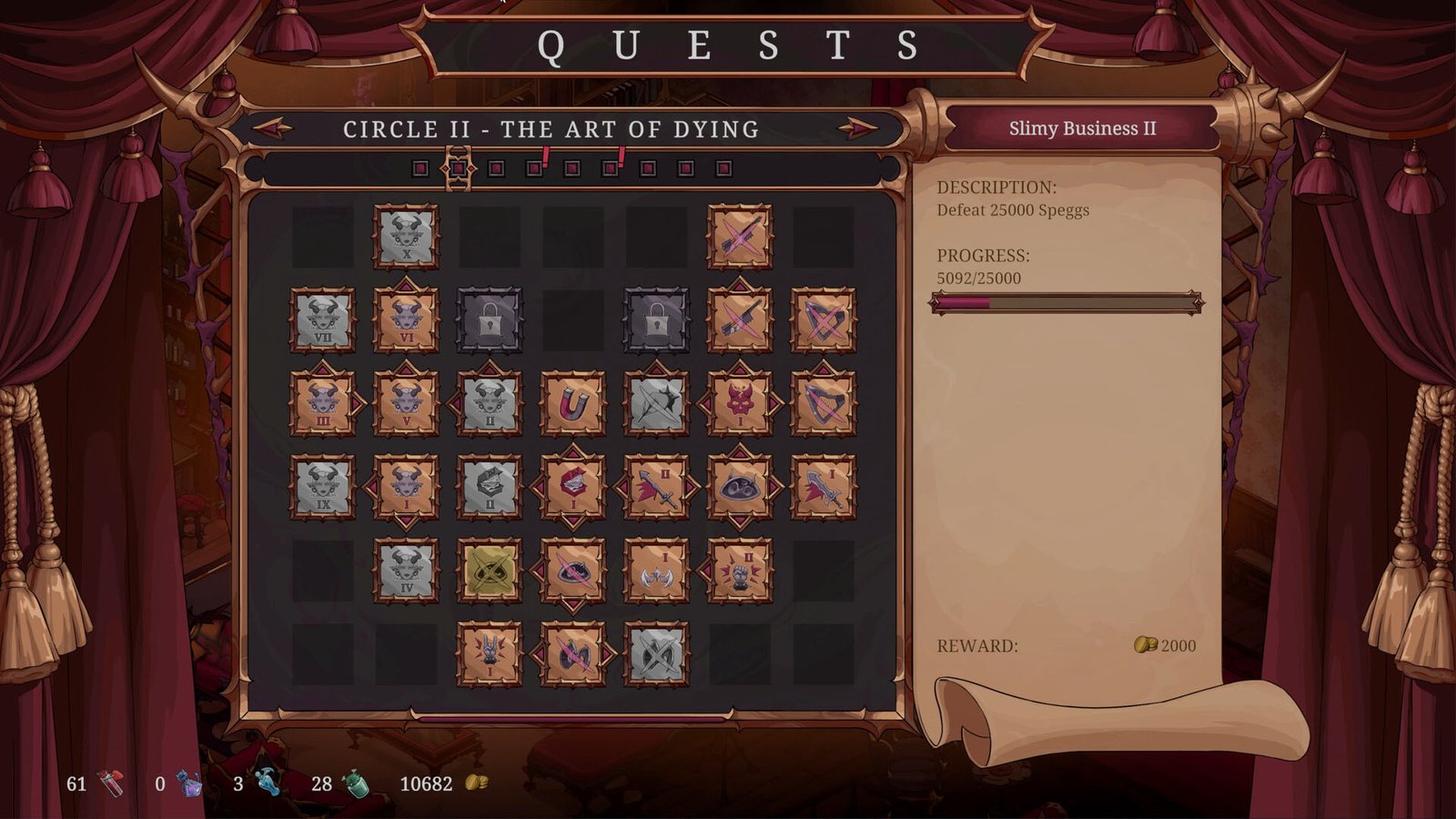
This system adds welcome texture to progression, particularly during the mid-game. Choosing whether to optimise for raw damage, survivability, or synergy-based bonuses gives each run a slightly different identity. It is here that Devil Jam feels closest to carving out its own space within the genre.
Unfortunately, this depth is undercut by limited environmental variety and a progression pace that struggles to maintain urgency. Stages blur together visually and mechanically, and enemy behaviours rarely force players to rethink established strategies. Boss encounters attempt to inject tension, but difficulty spikes can feel abrupt rather than earned, disrupting the otherwise steady rhythm of play.
Meta progression offers incremental upgrades and unlocks, but the sense of long term motivation weakens over time. Unlocks arrive predictably, and few meaningfully change how the game is approached. As a result, later runs often feel like refinements of earlier successes rather than fresh challenges.
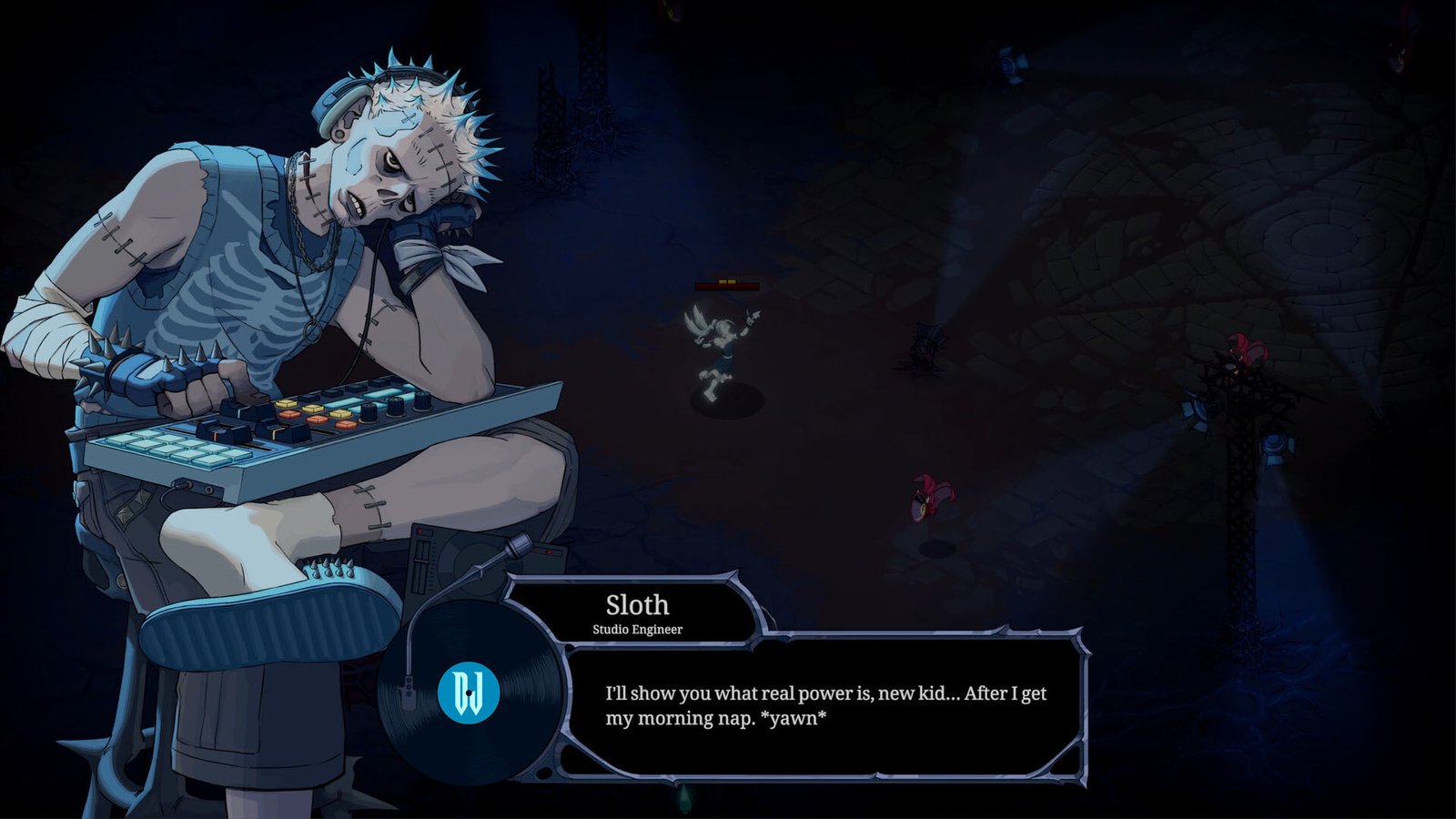
For players deeply invested in survivor-likes, this repetition will not necessarily be a deal breaker. The loop remains functional and occasionally satisfying. For others, the absence of escalating complexity or evolving mechanics may shorten Devil Jam’s lifespan considerably.
Style, Sound, and a Familiar Ceiling
The game’s strongest asset remains its presentation. The art direction is confident, cohesive, and consistently readable even at peak chaos. Characters, enemies, and effects all reinforce the game’s heavy metal identity without slipping into parody. It feels crafted rather than assembled, which matters in a genre crowded with imitators.
Sound design, while thematically appropriate, does not always live up to its mechanical promise. Tracks set the mood effectively, but few stand out as memorable beyond their immediate context. Given the game’s emphasis on rhythm, this feels like a missed opportunity rather than a failure.
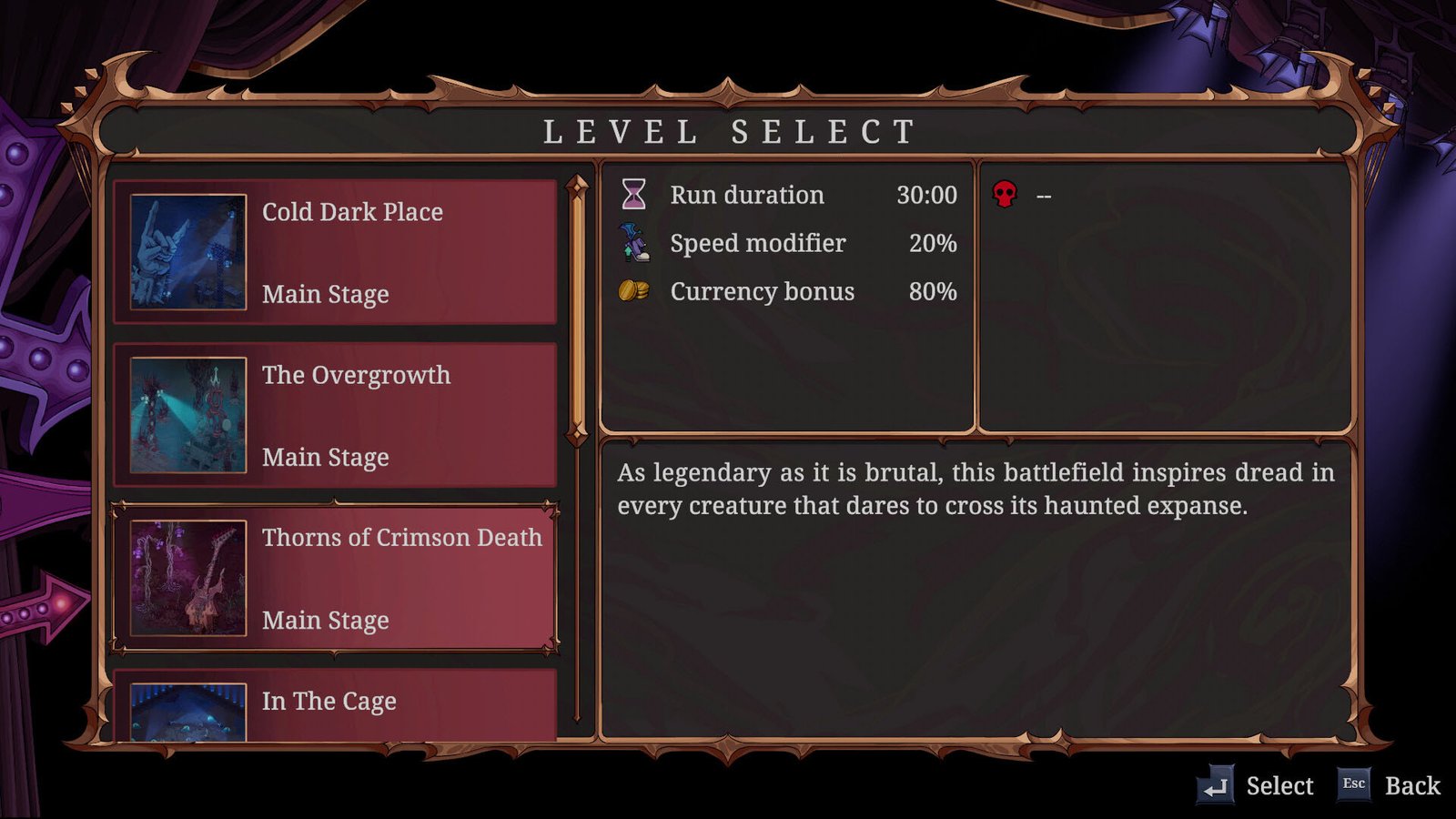
Taken as a whole, Devil Jam is a solid, well-made entry into an increasingly saturated genre. It delivers a strong first impression, supports it with competent systems, and then plateaus before reaching its full potential. Nothing here is fundamentally broken, but little pushes far enough to linger in memory once the final run fades.
For PC players looking for a stylish, digestible survivor-like game with a metal edge, Devil Jam is easy to recommend in moderation. Just do not expect it to redefine the genre or sustain long-term obsession.
Devil Jam is available now on Steam.
SavePoint Score
Summary
Devil Jam pairs confident style with familiar systems, offering a rhythm-infused experience that entertains early before settling into comfortable repetition.
