

Table of Contents
Minos on PC
There is something immediately compelling about a game that asks you to become the monster rather than the hero. Artificer and Devolver Digital‘s Minos understands that appeal from the moment it begins and builds its identity around that reversal. Instead of charging into a labyrinth in search of glory, players are placed in the hooves of the Minotaur himself, protecting his domain from the endless procession of intruders foolish enough to see it as a prize worth claiming. It is a strong hook on paper, but what makes it work is how naturally the game commits to that perspective in play.
This is not simply a roguelite borrowing from Greek mythology for surface-level flavour. Minos feels invested in the fantasy of being a mythic beast, defending a home that has been turned into both a sanctuary and a weapon. That gives the experience a much stronger personality than many of its peers. There is menace to it, certainly, but also a sly sense of humour in watching would-be heroes stumble into traps designed with almost theatrical cruelty.
That confidence in tone gives Minos an immediate point of difference. It is not trying to make the player feel noble or righteous. Instead, it leans into mischief, violence, and the satisfaction of outsmarting enemies who think they are the centre of the story. That makes each run feel a little more personal. You are not just surviving a challenge or grinding through a system. You are protecting a space that belongs to you, and that emotional framing adds surprising weight to even the smallest victories.
The Labyrinth Is The Real Star
The smartest thing Minos does is make the maze itself the heart of the experience. This is not a game where traps simply decorate a battlefield or serve as mere combat supplements. The labyrinth is the weapon, and every wall, corridor, and hazard becomes part of a wider plan. Much of the pleasure comes from learning how to manipulate space so that enemies walk where you want them to walk, pause where you need them to pause, and suffer exactly where you intended them to suffer. And also making sure the right trap is targeted at the most vulnerable wannabe hero.
That gives the strategy a tactile and rewarding rhythm. One badly placed trap does very little. A carefully built sequence of obstacles, pressure points, and lethal surprises can turn a wave of intruders into a controlled disaster.
Minos is at its best when the player stops thinking in isolated actions and starts thinking in chains. A corridor is no longer just a path. It becomes a funnel. A turn becomes an opportunity. A dead end becomes a joke with a brutal punchline. Add to that the discovery of secret combos that come from experimentation with different traps, and it’s hard not to embrace the killing.
There is a wonderful sense of malicious creativity in that process. Every successful set-up feels authored. It is not just that enemies are defeated, but that they are defeated according to a plan that reflects your understanding of the space. That level of ownership is what makes Minos so satisfying. Many strategy games reward efficiency, Minos rewards cruelty with structure.
It also helps that the Minotaur is not reduced to an idle overseer. When things go wrong or when a defence needs reinforcing, stepping in directly stops the action from becoming too passive. The balance between preparation and intervention gives the game a welcome sense of urgency. You are not simply watching a machine operate. You are part of it, and your presence helps maintain the feeling that this labyrinth is alive, reactive, and constantly under pressure. Of course, that is if you survive.
When Cleverness Turns Demanding
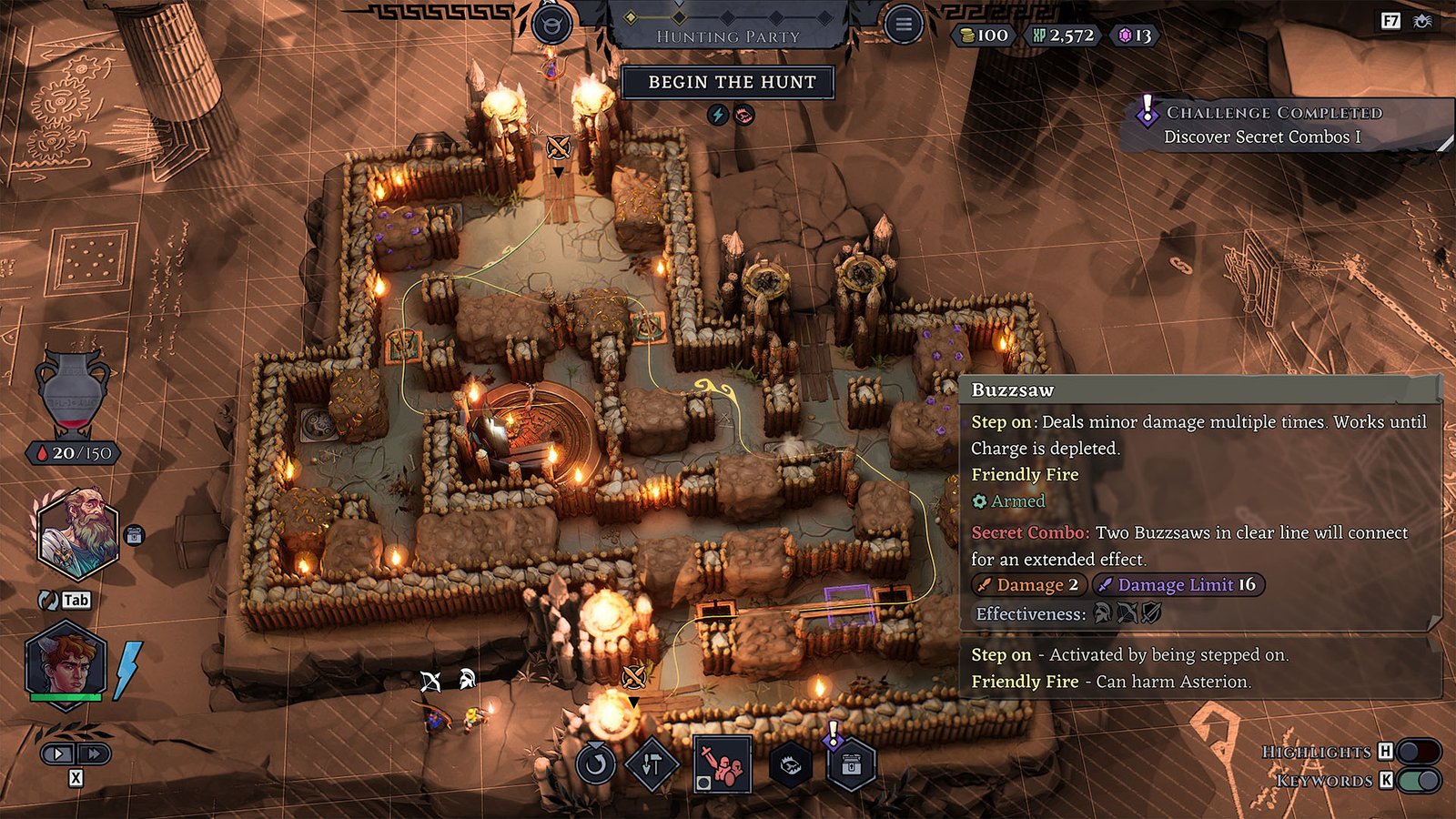
For all its strengths, Minos is not a game that seems interested in softening its edges for a broader audience. That is admirable in some ways, but it also means the friction points stand out clearly. Its systems demand patience, experimentation, and a willingness to fail while learning. For players who enjoy problem-solving through repetition and adjustment, that will be part of the appeal. For anyone looking for something more immediately readable, it may feel a little stubborn.
That tension comes through most clearly in the game’s moment-to-moment setup. Because so much of the design depends on precision, any awkwardness in selecting, placing, or managing your tools becomes more noticeable. When the plan works, Minos feels brilliant. When it does not, there are moments where the gap between intention and execution can feel slightly frustrating rather than purely instructive. A game built so heavily on clever design has to rely completely on its interface and controls, and there are times when that trust is not absolute.
There is also the question of repetition. Even with the strength of its central hook, this is still a game built around enclosed spaces, looping defensive scenarios, and repeated attempts to master the same broad language of traps and routes. The systems are smart enough to carry much of that weight, but the visual and structural familiarity can set in over the course of longer sessions. That does not ruin the experience, though it does mean Minos feels best in concentrated bursts where its ideas remain sharp and fresh.
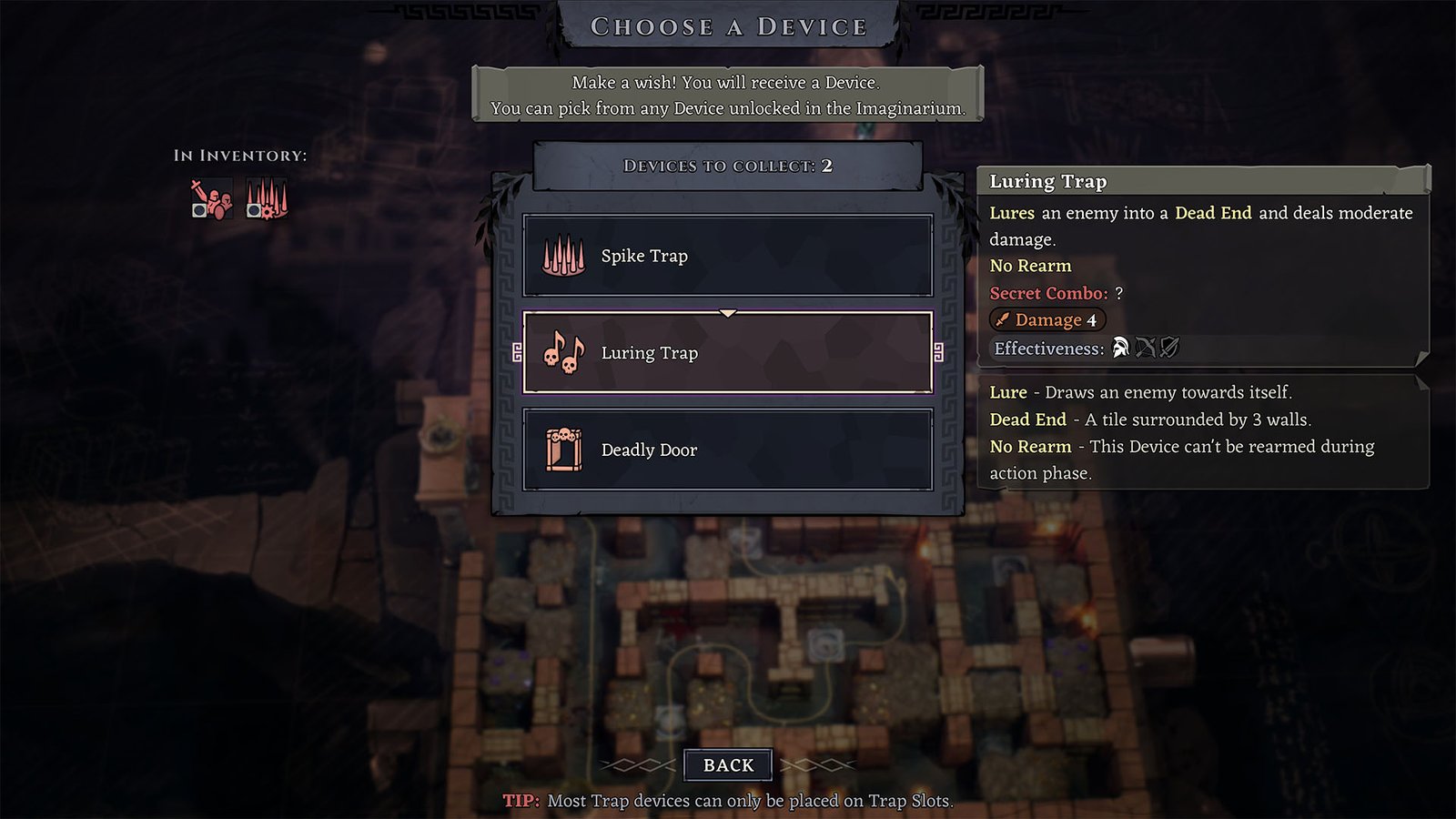
Still, these caveats feel more like the cost of a clear identity than signs of a game losing its way. Minos knows exactly what kind of player it wants to attract. It is not chasing easy accessibility or broad approval. It wants players to engage with its systems, learn from mistakes, and take genuine pleasure in refining a better labyrinth. That narrower focus may limit its reach, but it also gives the game a stronger sense of purpose.
A Sharp And Satisfying Spin On Myth
What lingers after time with Minos is not just the novelty of playing from the Minotaur’s perspective, but how complete that fantasy feels once the systems start working together. The trap design, the maze manipulation, and the direct involvement in combat all combine into something that feels far more deliberate than a simple genre mash-up. This is a game that understands its own appeal and builds toward it with conviction.
That confidence matters. Plenty of indie games arrive with an interesting idea, but far fewer shape that idea into something with real identity. Minos does. It may not always be elegant, and it certainly asks more of the player than a lighter strategy roguelite would, but it rewards that effort with a loop that feels distinct, tactile, and satisfyingly cruel. When your labyrinth is working, when your enemies are moving exactly where you want them, and when the whole structure begins to resemble a well-crafted lie, Minos feels genuinely inspired.
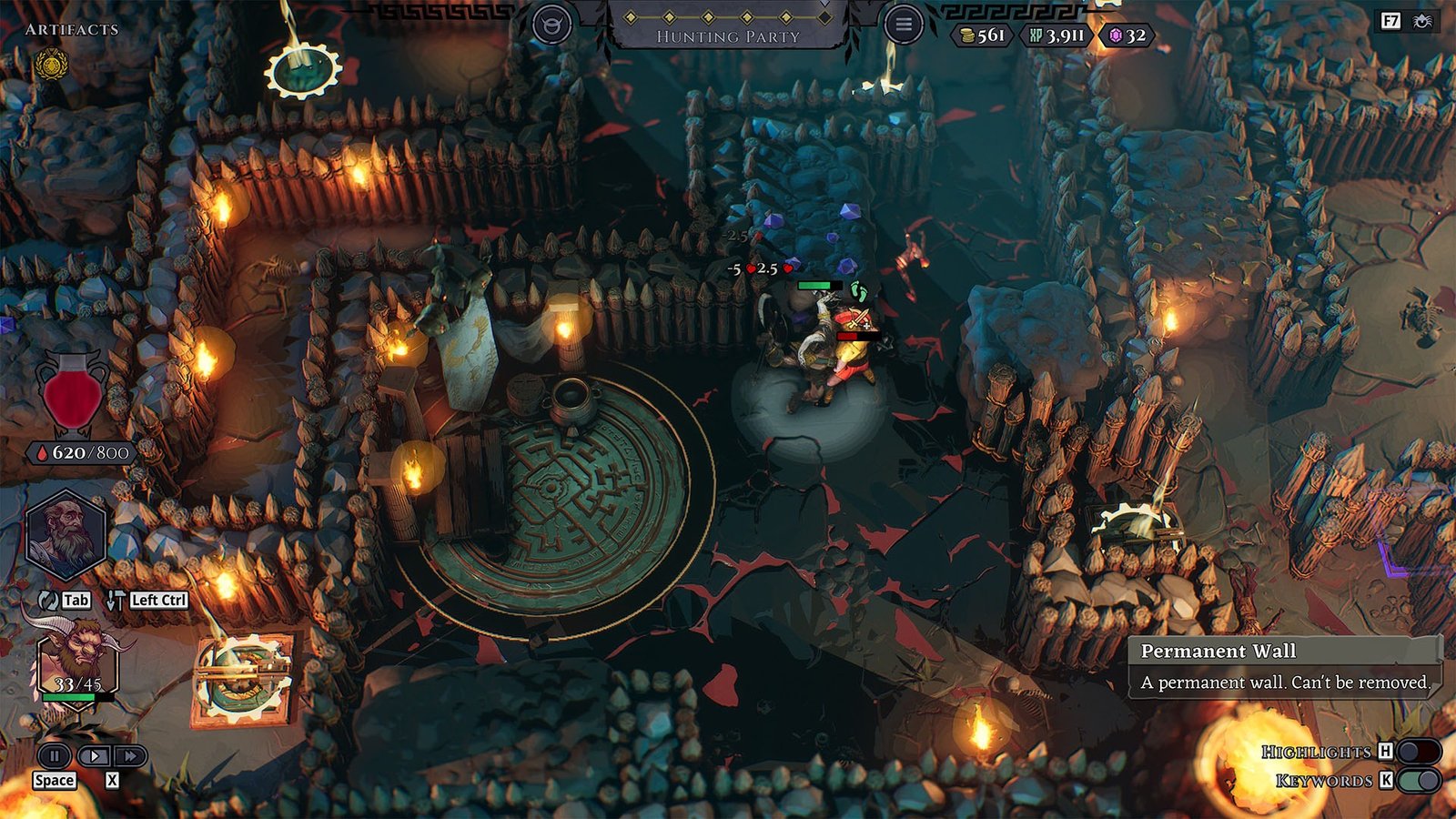
It is also the kind of game that benefits from its own restraint. Rather than overcomplicating its premise or burying it under unnecessary noise, it trusts the core fantasy to carry the experience. That trust pays off. Even when the edges show, the central idea remains strong enough to pull the player back in for one more attempt, one better route, one nastier trap combination.
Minos may not be the most welcoming creature in the maze of games around, but it is easily one of the more memorable. For players willing to meet it on its own terms, this is a clever and distinctive indie that turns myth into method, and method into mayhem.
Minos is available now on PC.
SavePoint Score
Summary
Minos takes a familiar myth and twists it into something far more playful and strategic. Building deathtraps for greedy adventurers is consistently satisfying, especially when the maze starts behaving exactly as planned. It can be demanding and occasionally fiddly, but its blend of puzzle solving, defence, and dark humour gives it real identity.
