

The Rogue Prince of Persia on Xbox Series X|S
Table of Contents
A little over a year after its early access launch, The Rogue Prince of Persia has finally hit PC, PlayStation 5, and Xbox Series X/S with a 1.0 release. Does it chase the distant Sands of Time high with tricks borrowed from Dead Cells, or does it offer something new?
Ubisoft’s relationship with Prince of Persia is an odd one. Suppose you look at the release timeline of the series. In that case, it’s hard to say the IP has been left to rot ever since 2008’s all-new Prince of Persia reboot failed to coalesce into a story worth continuing and 2010’s The Forgotten Sands brought (almost) nothing to the table in a middling attempt to revive the acclaimed Sands of Time trilogy. But at the same time, no one can deny it had been a long time without a major new PoP when The Lost Crown (2024) was announced.
The new plan? Betting on smaller studios to refresh the property while taking cues from modern Metroidvanias. While its sales numbers weren’t stellar, critics and players alike applauded The Lost Crown. Only a few months later, yet another riff on the series’ 2D roots was revealed, but this time it was Dead Cells: Return to Castlevania studio Evil Empire – not an internal Ubisoft team – taking on the legendary IP.
A clever play by Ubisoft as it tries to navigate the problematic development of the Sands of Time remake. With a familiar roguelite structure and striking visuals which continue the tradition of the franchise’s need for reinvention, The Rogue Prince of Persia stacks up well enough against its ‘roguelite Metroidvania’ contemporaries, but there are some caveats.
Shifting Sands
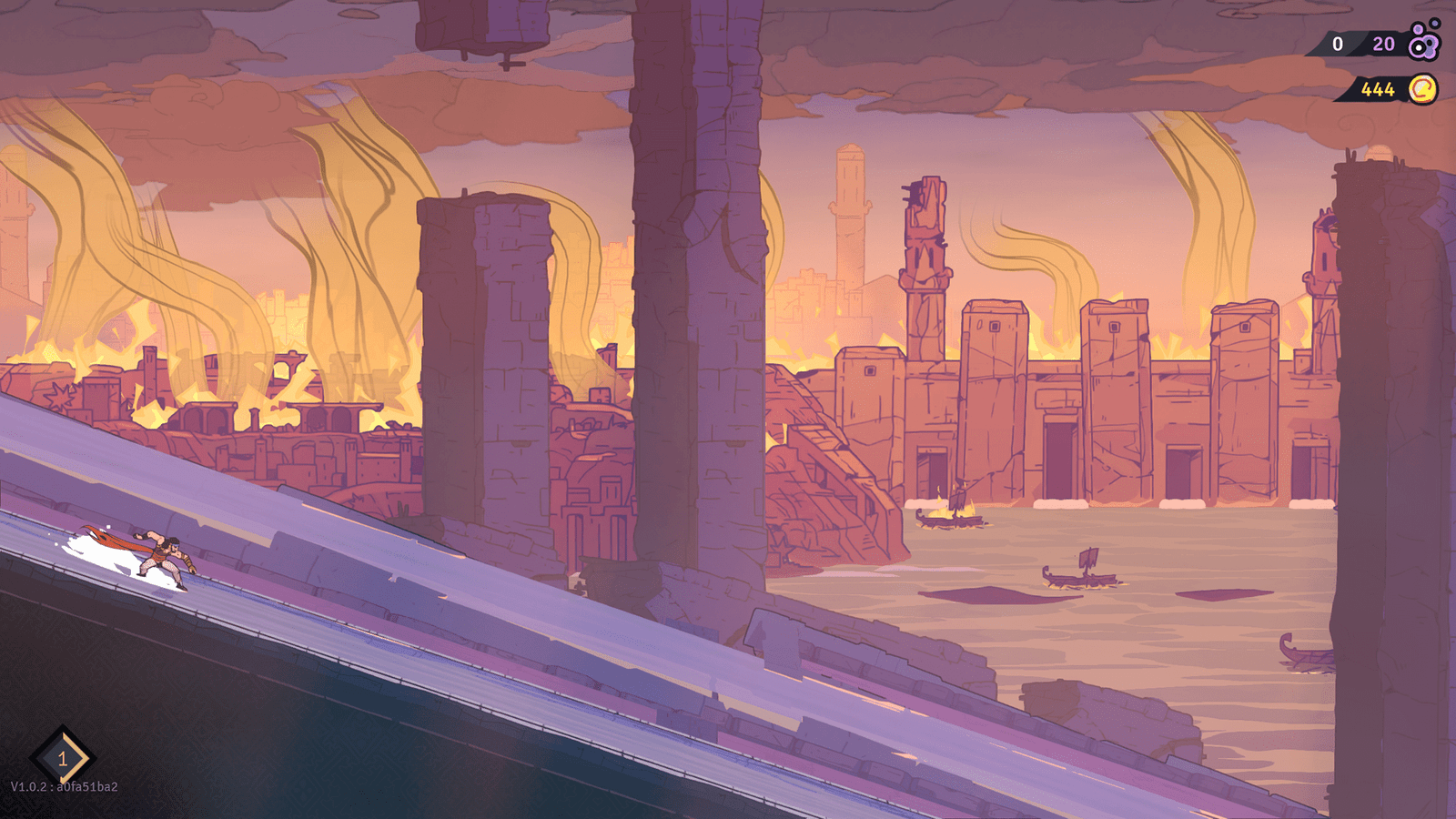
Considering the more limited scope and budget of this project, it comes as no surprise the game literally hits the ground running and only gives players tiny slices of narrative to keep the ‘run loop’ going.
Indeed, you’re meant to fail and improve your stats and the chances of finding better loot several times before reaching the end for the first time. No need to overexplain here what a roguelite is, especially this late into the mainstream era of this ‘endless’ game structure. That said, Evil Empire’s narrative team found ways to pepper new story beats and even side quests throughout the journey, which also presents several forks in the road to defeating the Hun invaders.
When the Persian prince (yes, we’re not playing as a protector of the Prince like in The Lost Crown) dies, there’s an in-universe explanation for the ability to restart a run. It’s the same period of time repeating itself every time he falls in battle, and while there’s no Dagger of Time to be found here, it seems the franchise isn’t willing to escape the shadow of the sixth-generation trilogy. For a roguelite Metroidvania, however, it’s the perfect ‘mechanism’ to fuel both the development of the story and the main character’s strength and resolve in a way that fits the mythology and the genre’s conventions alike in The Rogue Prince of Persia.
Parkour Action
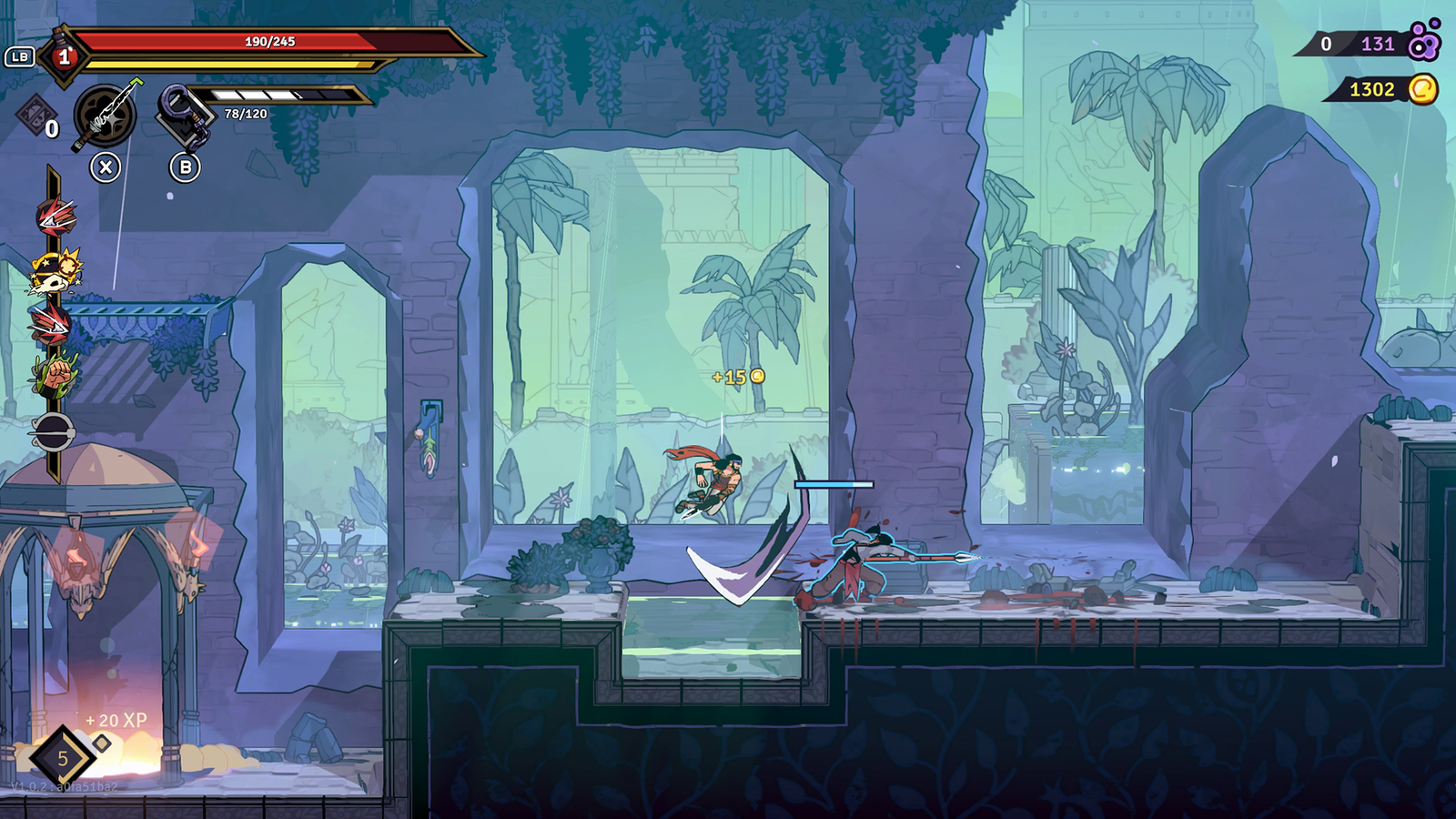
It would’ve been easy to tackle this project as a reskinned version of Dead Cells, and to a certain extent, Evil Empire’s previous work can be felt all over it, but I noticed early on a pitch-perfect focus on smooth and constant movement.
Even when you don’t find yourself running and jumping through a trap-filled area of the procedurally generated levels, getting the timing on jumps, wall-jumps, ledge-grabs, and whatnot allows the Prince to fill up a bar that boosts his speed (and provides other effects with the right upgrades) automatically for a limited time.
This is the sort of system that would’ve been an annoyance without responsive controls and simple inputs. Still, Evil Empire nailed the moment-to-moment feeling of chaining a jump, a wall-run (backgrounds matter), and landing on top of a group of enemies while swinging a censer on fire. It’s smooth, clean, and satisfying on a level that many recent Metroidvanias don’t even get close to reaching. When a roguelite game has such a nice rhythm to it and no downtime between runs, the oft hard-to-define ‘fun factor’ goes up. Simply put, The Rogue Prince of Persia is a game which feels fantastic to play, whether it’s for 15 minutes or a multiple-hour session.
Combat isn’t deeper than it was in Dead Cells, and it’s probably for the best considering the fast-and-furious approach to the overarching design of the game. Each weapon has a distinct special attack/skill, and then there are tools like heavy gauntlets or a bow that hits like a truck. Don’t look for elaborate combos or synergies here; this ain’t a button-mashing extravaganza. Instead, Evil Empire made sure to include a generous amount of weapon types, tools, and medallions (the primary source of passive effects) that are enough to switch things up without going overly complex.
Building Blocks
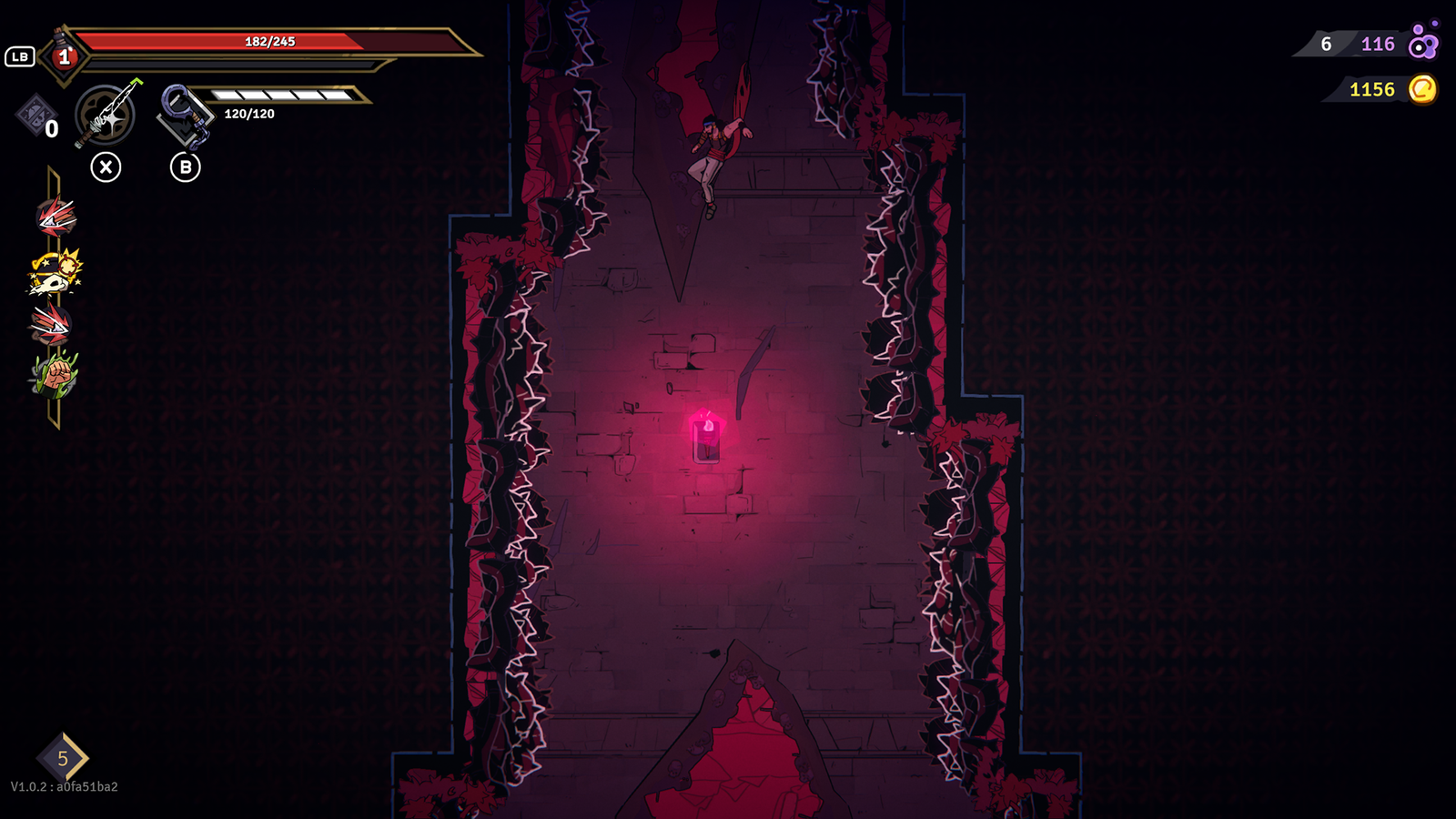
At some point, however, the lack of truly gameplay-redefining loot and modifiers can make The Rogue Prince of Persia feel way more limited than most games which have embraced the roguelite model. There are exceptions, like certain medallions and some temporal modifiers linked to sacrificing some of the Prince’s health points, which give runs the level of variance commonly expected from similar games. Still, its appeal in the long run is low, I’d say.
The recurring level patterns that also crop up long before you’re done with your first run seem to support my theory that neither Ubisoft nor Evil Empire wanted to get a ‘forever game’ out of this one. Sure, I can see myself returning to it from time to time, especially when the ‘game feel’ is so good, but this is no Dead Cells or Rogue Legacy 2.
It’s safe to leave once you’ve cleared two or three runs and uncovered most of the extra routes, and the completionists won’t find much else to do once they’ve platinum’d it. This is perfectly fine, but also means its roguelite aspirations only get halfway there. Bosses might be the weakest part of this package; not because they’re bad, but because there are so few of them. Post-game modifiers to make things harder for yourself in The Rogue Prince of Persia aren’t as rewarding as Hades’ either.
Looking Fresh
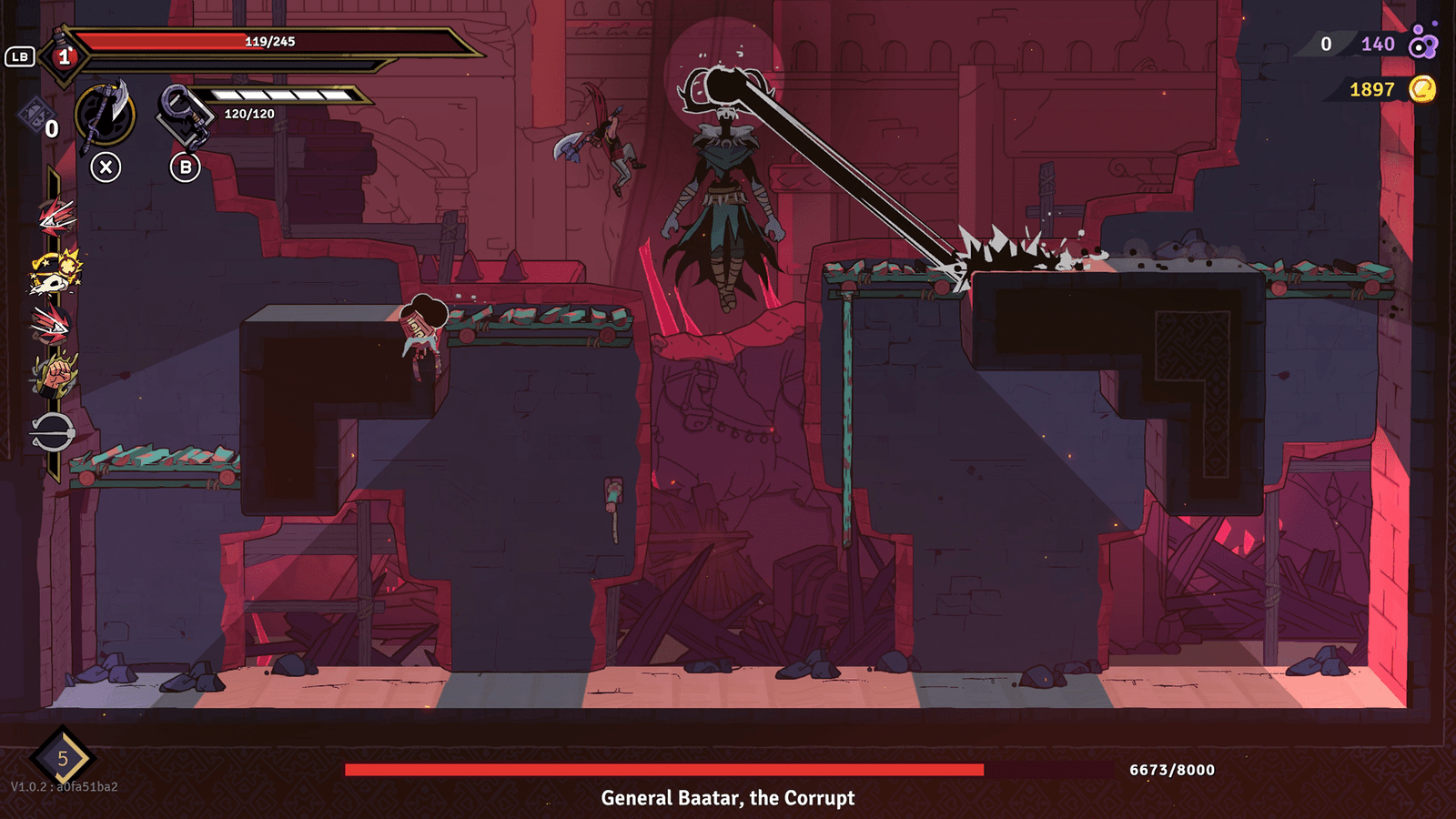
The gameplay’s level of polish also translates to the audiovisual presentation, pushing the overall game into ‘notable’ territory and making the lack of extra roguelite sauce bearable. After a pretty deep art overhaul late last year, it looks both peculiar and like a new-age Prince of Persia that wanted to go more traditional with the 2D angle than The Lost Crown while retaining some of Evil Empire’s signature style. Similarly, the OST by Danny Asadi finds a sweet spot between tradition and novelty with shocking ease; many of his tunes won’t be leaving my mind anytime soon.
As we enter the busiest season of the year when it comes to big new game releases, it’s very easy to miss mid-sized experiments like The Rogue Prince of Persia, but the good news is that Evil Empire’s brave little spinoff has enough moves of its own to wow and can be fully absorbed in under 10 hours. While it won’t become a roguelite obsession of mine, it’s hard not to consider such a laser-focused effort a winner.
The Rogue Prince of Persia is available now on PC, PlayStation 5, and Xbox Series X|S. The Nintendo Switch 1 and 2 versions are confirmed to arrive later this year.
SavePoint Score
Summary
The Rogue Prince of Persia may not sit among the finest roguelites of all time, but it honours and evolves the series with brisk runs, a fantastic presentation, and some of the cleanest movement mechanics in a modern 2D game.
