

Table of Contents
UNYIELDER on PC
A Debut That Knows Exactly What It Wants to Be
UNYIELDER arrives with a clarity of purpose that is increasingly rare, particularly for a first commercial release. Developed by TrueWorld Studios and published by Shueisha Games, this roguelite first-person shooter strips away the excess often associated with the genre and commits fully to a singular idea.
Every run is built around direct confrontation. There are no filler rooms, no disposable enemy waves, and no downtime designed purely to pad progression. Instead, UNYIELDER positions itself as a sequence of escalating boss encounters that demand attention, mechanical fluency, and emotional composure.
That confidence matters. As a debut title, the developers could easily have leaned on familiar genre scaffolding for safety. Instead, it commits to an approach that places the player in repeated high-stakes scenarios, trusting that strong systems and sharp tuning will carry the experience. It is not a game interested in onboarding gently or smoothing every rough edge. It is interested in whether you are willing to meet it on its own terms.
What grounds this ambition is the structure’s deliberate feel. The roguelite loop exists to serve the bosses, not the other way around. Progression, unlocks, and build variety are all framed as tools to refine how you approach each encounter, rather than distractions layered on top of them. For a studio’s first outing, that restraint speaks volumes.
Combat as Conversation Rather Than Spectacle
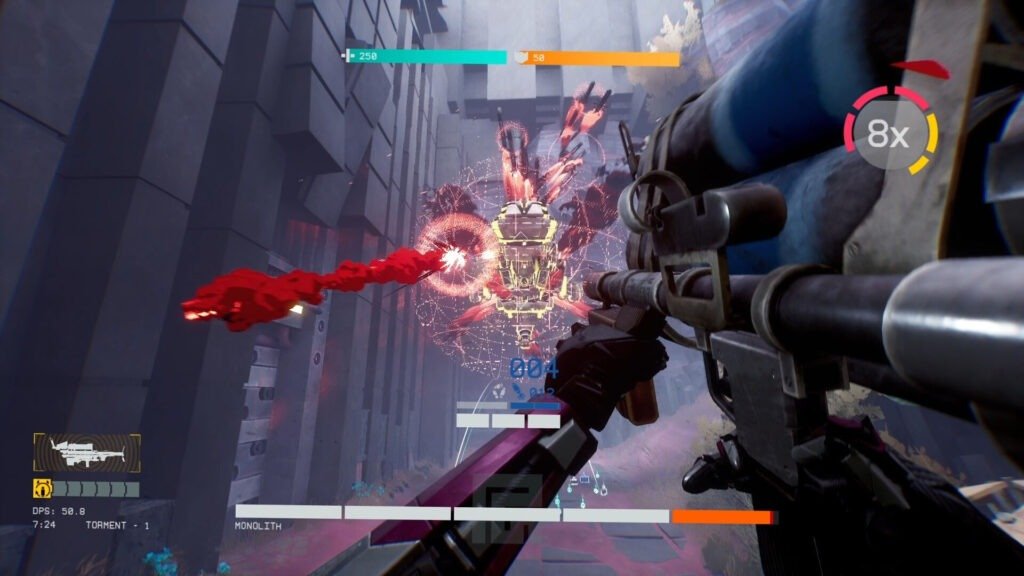
At the heart of UNYIELDER is combat that treats movement and positioning as equal partners to aim. Wall runs, aerial dashes, and rapid directional shifts are not optional flourishes. They are essential verbs in every fight. Bosses are designed to test how well you can read space, manage momentum, and respond under pressure, often simultaneously.
Each encounter feels like a dialogue between player and design. Bosses telegraph patterns clearly, but rarely slowly. Success comes from recognising rhythm rather than memorising scripts. You are encouraged to experiment, fail, and return with sharper instincts.
When a run collapses, it is rarely because the game feels unfair. More often, it is because your timing slipped, your movement faltered, or your build lacked synergy.
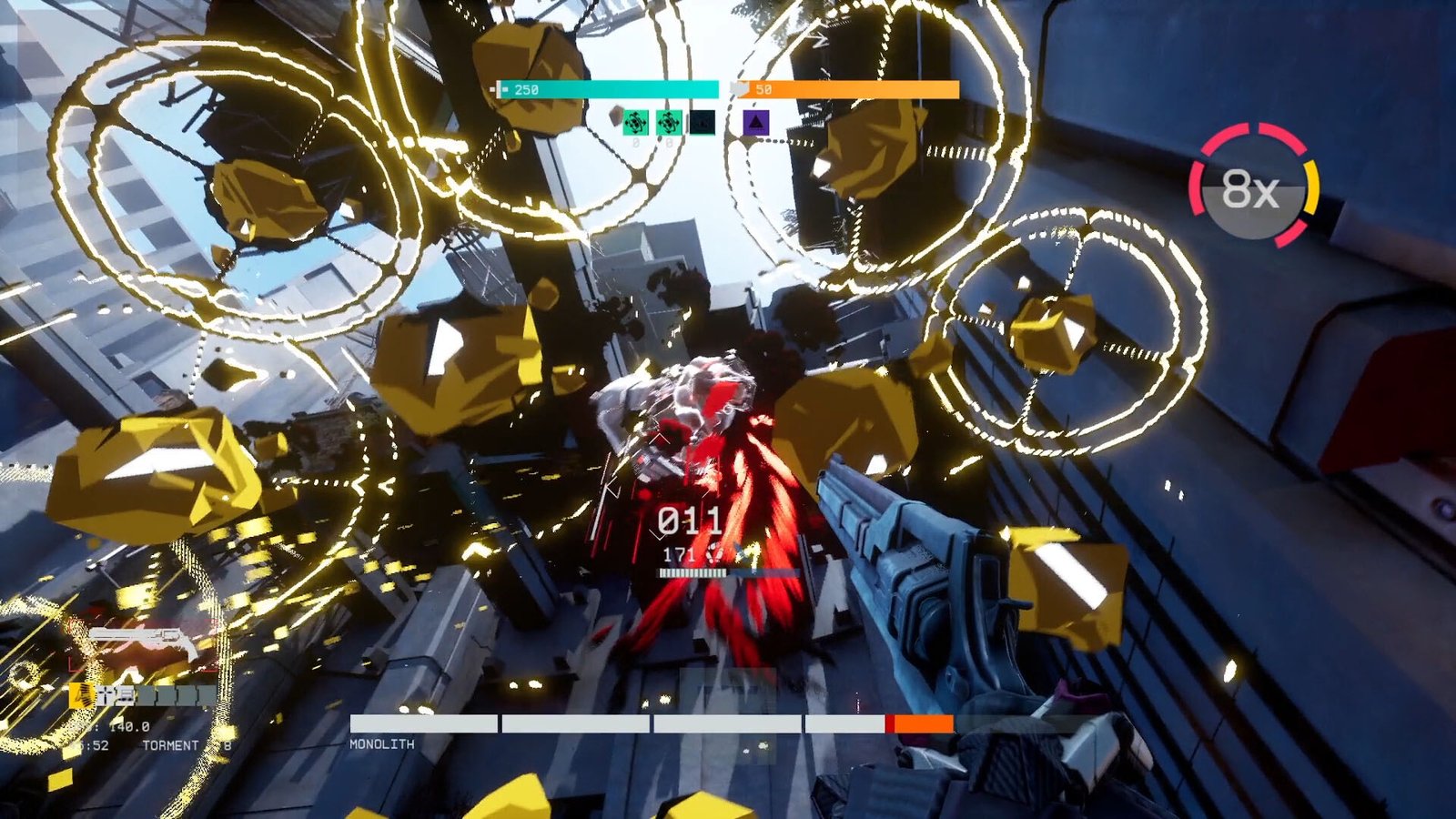
Weapons and perks provide meaningful variation without overwhelming the core loop. Firearms feel distinct in weight and cadence, while modifiers allow for expressive builds that can lean into aggression, mobility, or sustained damage. Importantly, no single configuration trivialises the challenge. UNYIELDER maintains tension by ensuring that even optimal builds still require execution.
The result is combat that feels intense without becoming chaotic. Visual clarity remains strong even during the most demanding encounters, allowing players to make informed decisions at speed. This is a game that respects player skill and expects engagement in return.
Progression That Rewards Commitment, Not Comfort
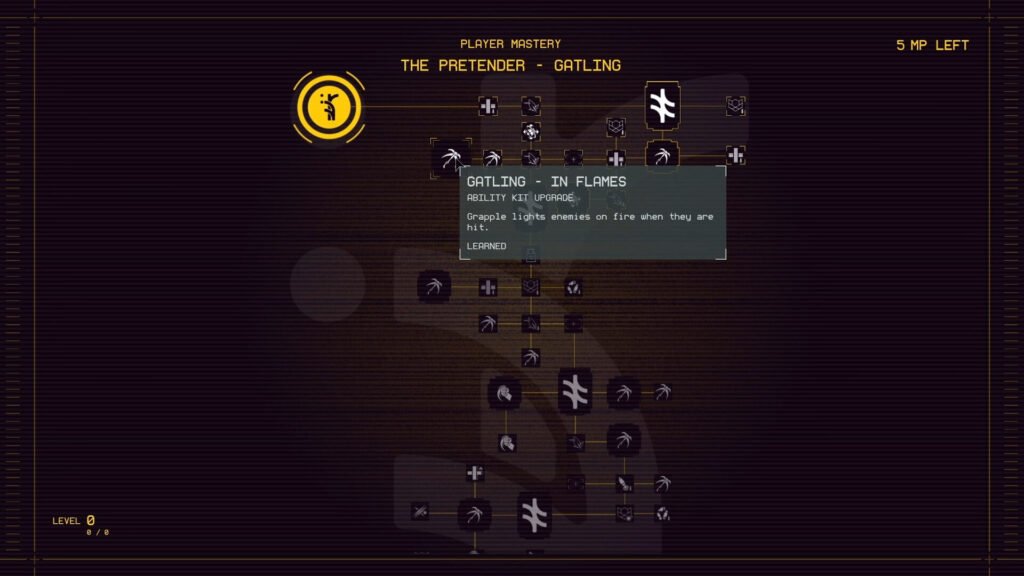
In the same vein, the progression systems are deliberately paced. Unlocks arrive steadily, but rarely feel indulgent. New weapons, perks, and characters expand tactical options rather than offering outright power spikes. Early runs can feel punishing, particularly for players unfamiliar with movement-driven shooters, but the sense of growth comes from improved understanding rather than inflated stats.
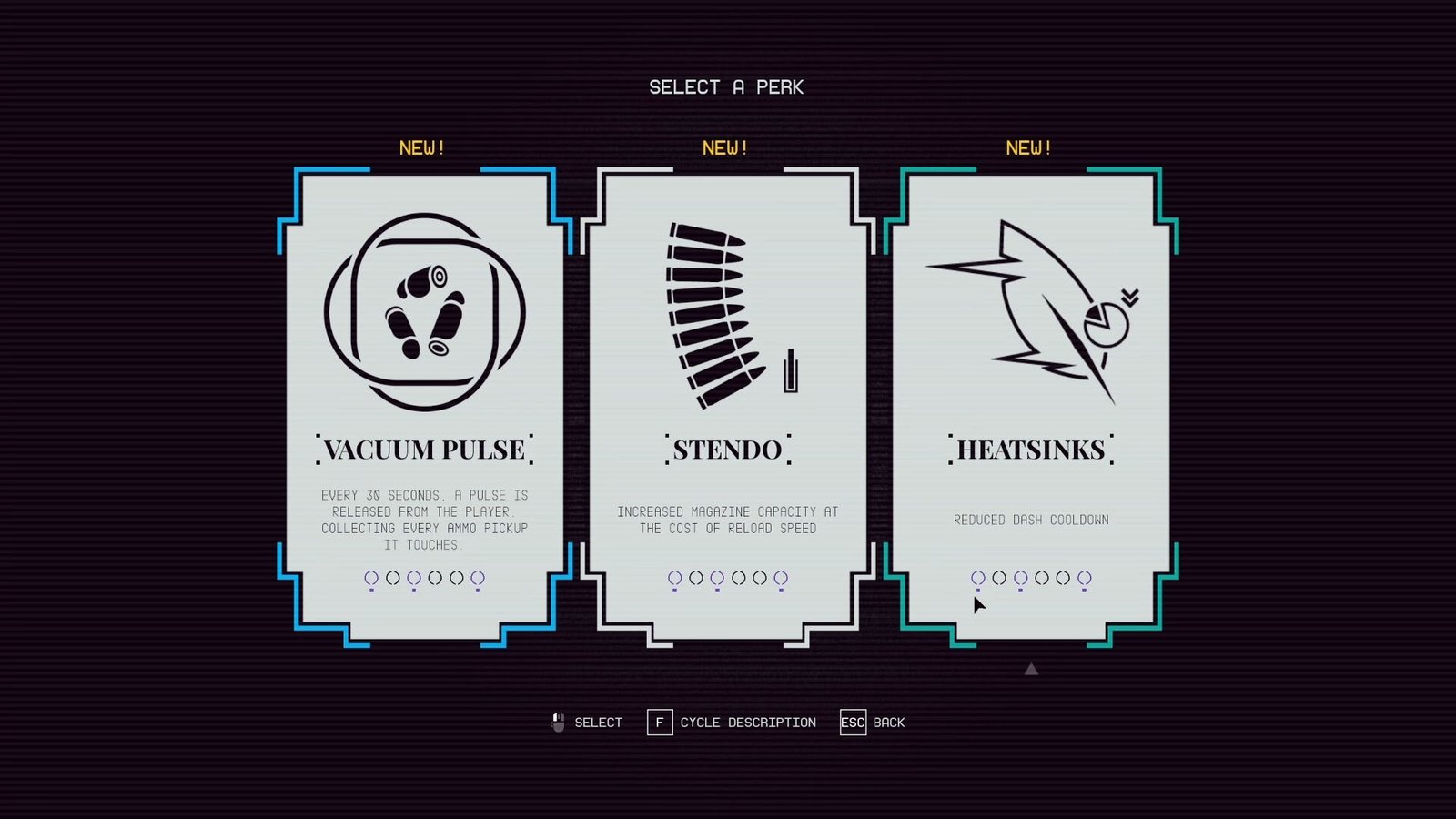
Replayability is anchored in variation rather than volume. With dozens of bosses and the ability to assemble a final personalised encounter from previously defeated foes, no two runs resolve in quite the same way. This structure reinforces the game’s identity as a test of adaptability. You are not simply repeating content. You are refining how you respond to it.
That said, UNYIELDER does demand patience. Some players may find the early hours austere, especially if they are accustomed to roguelites that front-load spectacle or narrative hooks. Here, the reward is mastery. The game trusts that players who persist will find satisfaction in competence rather than constant novelty.
A Focused Identity That Accepts Its Own Limits
Technically, UNYIELDER performs with reassuring consistency. Framerates remain stable even as encounters grow visually dense, and loading times rarely interrupt momentum. Mouse and keyboard control feel precise, reinforcing the importance of movement and aim. Controller support is functional but less refined, subtly reinforcing the sense that this is a PC-first experience built around responsiveness.
Visually, the game embraces a stylised aesthetic that prioritises readability over excess detail. Boss designs are expressive without becoming cluttered, and environments serve their mechanical purpose without distracting from the flow of combat. Audio design complements this approach, using sharp cues and driving music to reinforce pacing rather than overwhelm it.
Where UNYIELDER may divide opinion is in its narrow focus. There is little narrative framing beyond atmosphere, and no attempt to soften its intensity with side activities or exploratory downtime. For some, that restraint will feel refreshing. For others, it may feel harsh. The key distinction is that this feels like a choice rather than a limitation.
Confidence Earned Through Restraint
As an experience, this is not a game that tries to be everything at once. It is a tightly focused expression of a single idea executed with conviction. As a debut release from a Singapore studio, it stands as an example of how clarity, restraint, and respect for player skill can create a memorable experience without excessive scale.
Its difficulty curve will not appeal to everyone, but for players willing to engage with its systems, UNYIELDER offers a rewarding loop built on mastery rather than indulgence. It is demanding, unapologetic, and confident in its design priorities. That confidence is not just admirable. It is earned.
UNYIELDER is available now on PC.
SavePoint Score
Summary
UNYIELDER is a demanding but confident debut that places precision and player mastery above comfort, rewarding commitment with some of the most focused boss design in the genre.
