

Table of Contents
Pragmata Rewards Curiosity as Much as Combat Skill
The easiest way to describe Capcom‘s Pragmata after our latest hands-on time is that it keeps opening up. What begins as a sharp and unusual blend of shooting and hacking steadily reveals itself as something broader, stranger, and more generous.
There is the obvious pull of combat, of course, but what leaves the stronger impression is the loop around it, as shared by the developers in our interview. Exploration leads to upgrades. Upgrades feed expression. Expression changes how you fight, where you can go, and how you read the world.
Much of that is anchored by the Shelter, which increasingly feels like the true centre of the experience. It is not just a pause between missions or a safe room for administrative housekeeping. It is where Pragmata makes its systems speak to one another. Shelter licence keys earned from bosses unlock more possibilities, turning progression into something tangible rather than abstract. The further you push into danger, the more the Shelter evolves in response.
That gives each return trip weight. This is where Cabin, the robot assistant, comes into play as more than a cute addition. Cabin Coins can be spent through Cabin’s Stamp Club, where bingo-style rewards unlock practical and cosmetic benefits alike.
Some of these are straightforward, such as extra healing capacity or useful resources. Others lean into personality through skins and costumes. Either way, the system reinforces a satisfying truth about Pragmata. Nothing feels isolated. Even side progression feeds the larger rhythm.
The Shelter Is Where Build Crafting Starts to Take Shape
The Shelter also houses the systems that make Pragmata’s flexibility more obvious. The firmware updater allows players to improve Hugh’s stats using upgrade components, while the unit printer opens the door to new weapons, hacking nodes, attachments, and abilities. It is an impressive spread, but more importantly, it never feels there for complexity’s sake.
Weapons naturally broaden your options in combat, but the hacking nodes are where things become especially interesting. Multi-Hack, for instance, expands offensive reach to more than one foe. Decode increases damage. New slots for mods and nodes allow loadouts to breathe. The result is a game that nudges players away from fixed habits. You are not just improving a favourite gun and calling it a day. You are constantly being asked to think about how hacking, mods, and support tools fit together.
The tram terminal menu extends that mentality into the field. Switching weapons, hacking nodes, and mods through the terminal makes it easier to adjust to what lies ahead, while the tram itself creates a tangible sense of movement through connected spaces. Pragmata does not feel like a sequence of boxed-off arenas. It feels like a place with routes, layers, and rewards for poking around.
Collectibles in each area help with that impression. They are not the main reason to explore, but they reinforce a welcome sense of density. This game seems to understand the value of making players look twice, and be rewarded for it.
Diana Gives Pragmata Its Warmth, and Not Just in Cutscenes
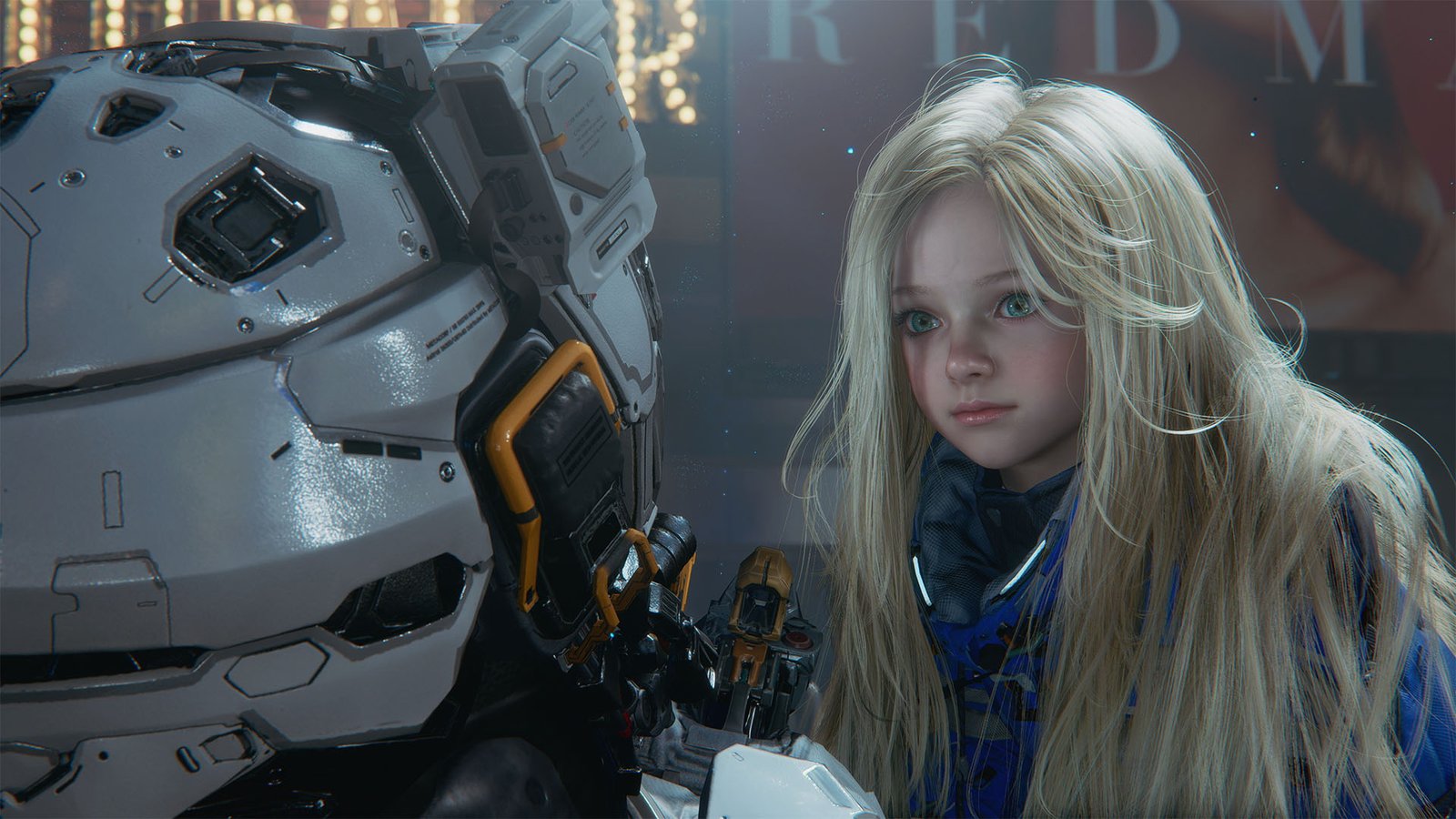
For all the systems at work, Pragmata never loses sight of Diana. That may be its smartest trick. She matters mechanically, but she also adds warmth to a setting that might otherwise feel cold and clinical.
The interactions with Diana are consistently charming. Small moments with environmental objects, whether it is something playful like dice or a slide, do more than add flavour. They remind you that she is present, curious, and reactive.
The option to give her presents of old Earth objects, including delightfully odd choices like a CRT television, only deepens that sense of companionship. She is not background decoration for Hugh’s journey. She is the emotional spark that cuts through the metallic surfaces around them.
That warmth also has practical consequences. Diana’s abilities grow over time, opening up more of the world as exploration and progression continue. One example is obtaining the Lim Eraser, which lets her remove obstacles and uncover new paths. This is an elegant way of tying character growth to map expansion. New traversal is not detached from the relationship at the heart of the game. It flows through it.
That design choice matters because it keeps Diana from feeling compartmentalised. She is there in the quiet moments. She is there in navigation. She is there when Pragmata asks you to rethink how a space can be opened up. Every new ability makes her feel more essential rather than more instrumental.
Combat Keeps Finding New Ways to Stay Fresh
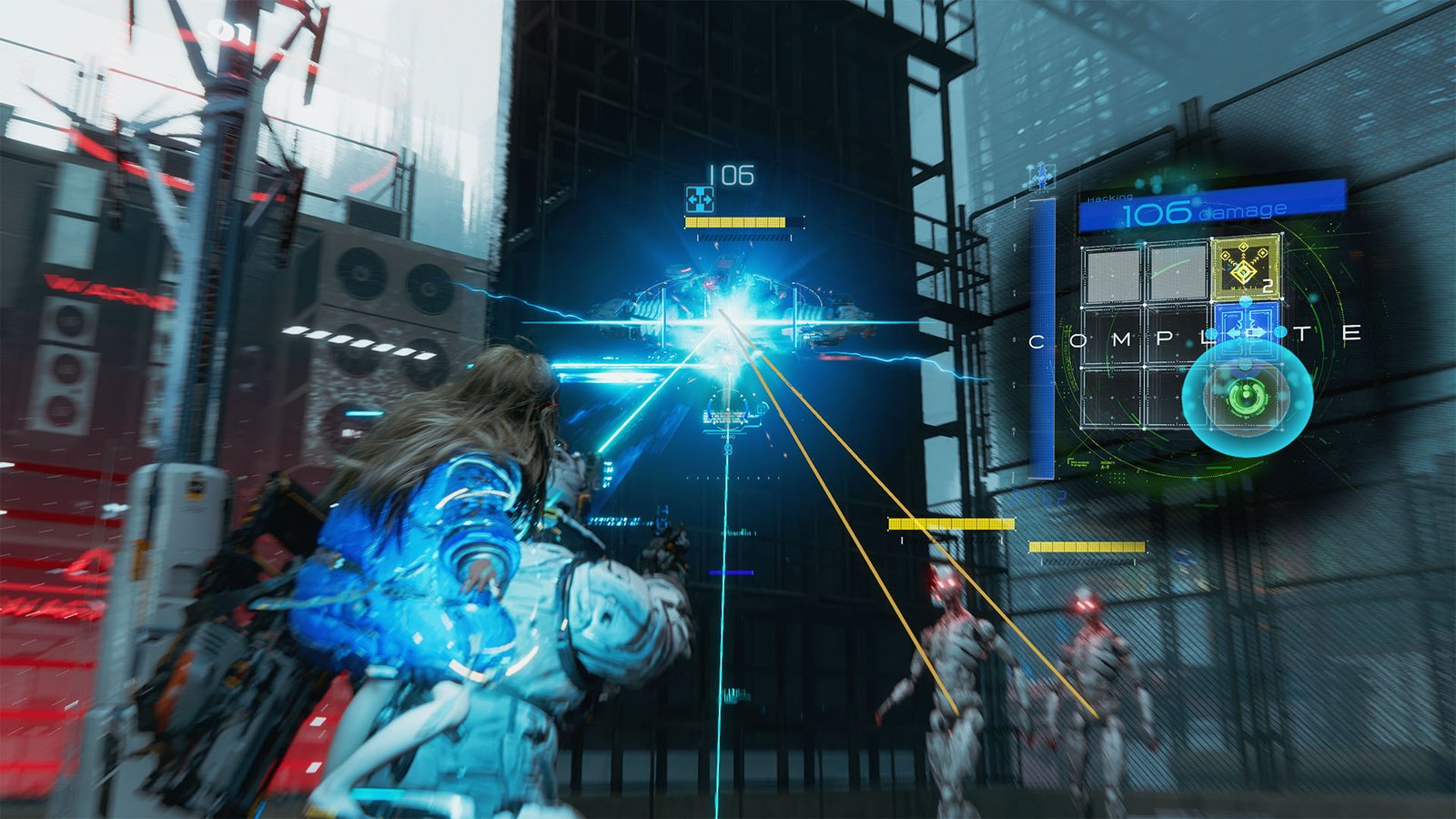
That same sense of possibility carries over into combat, where Pragmata continues to impress through variety rather than sheer scale. The weapon lineup we tried already points to a healthy range of tactical identities. The Grip Gun offers a reliable default weapon, while the Shockwave Gun and Riot Blaster create more area control and crowd management. The Charge Piercer adds a heavier, more deliberate style with charged piercing shots.
Then there are the tools that push encounters into something more playful. The Decoy Generator can lure enemies into position, opening the way for environmental traps, such as lasers, to wreak havoc. Projectiles like missiles can be hacked. If Hugh is grabbed, Diana can step in with a rescue, provided the player can complete the required hack. Those moments keep the duo’s identity active even when things get messy.
What stands out most is how strongly the game encourages experimentation. Diana’s analysis on death screens offers helpful hints that feel constructive rather than punitive. If a swamp section suggests using Multi Hack to hit more enemies, it is not merely giving the player the answer. It is gently inviting them to engage with the full toolset. Hacking nodes such as Multi-Hack and Freeze all meaningfully alter combat flow, and their limited use before you find more in the world pushes players to rotate tactics rather than hoard a single solution.
That economy is clever. It preserves the excitement of powerful tools while subtly steering players away from autopilot.
Red Zones, Hidden Rewards, and More Deepen the Loop
Beyond the main route, Pragmata also hints at deeper, more dangerous layers. Red zones locked behind special keys promise heightened risk alongside stronger rewards. Pure lunum, which appears to push upgrade potential even further, hints at an endgame or advanced progression path that could add real bite for players willing to brave harsher content.
Even smaller encounters add texture. There are drones carrying treasure, like moving loot boxes. They test platforming, timing, and hacking focus all at once, making them feel like compact examples of what Pragmata does well. They ask you to move well and think quickly if you want to reap the benefits.
There is a strong sense that Pragmata wants players to grow alongside its systems rather than simply unlock stronger numbers. The more it reveals, the more the game seems interested in cultivating fluency.
Sprawling and Theatrical
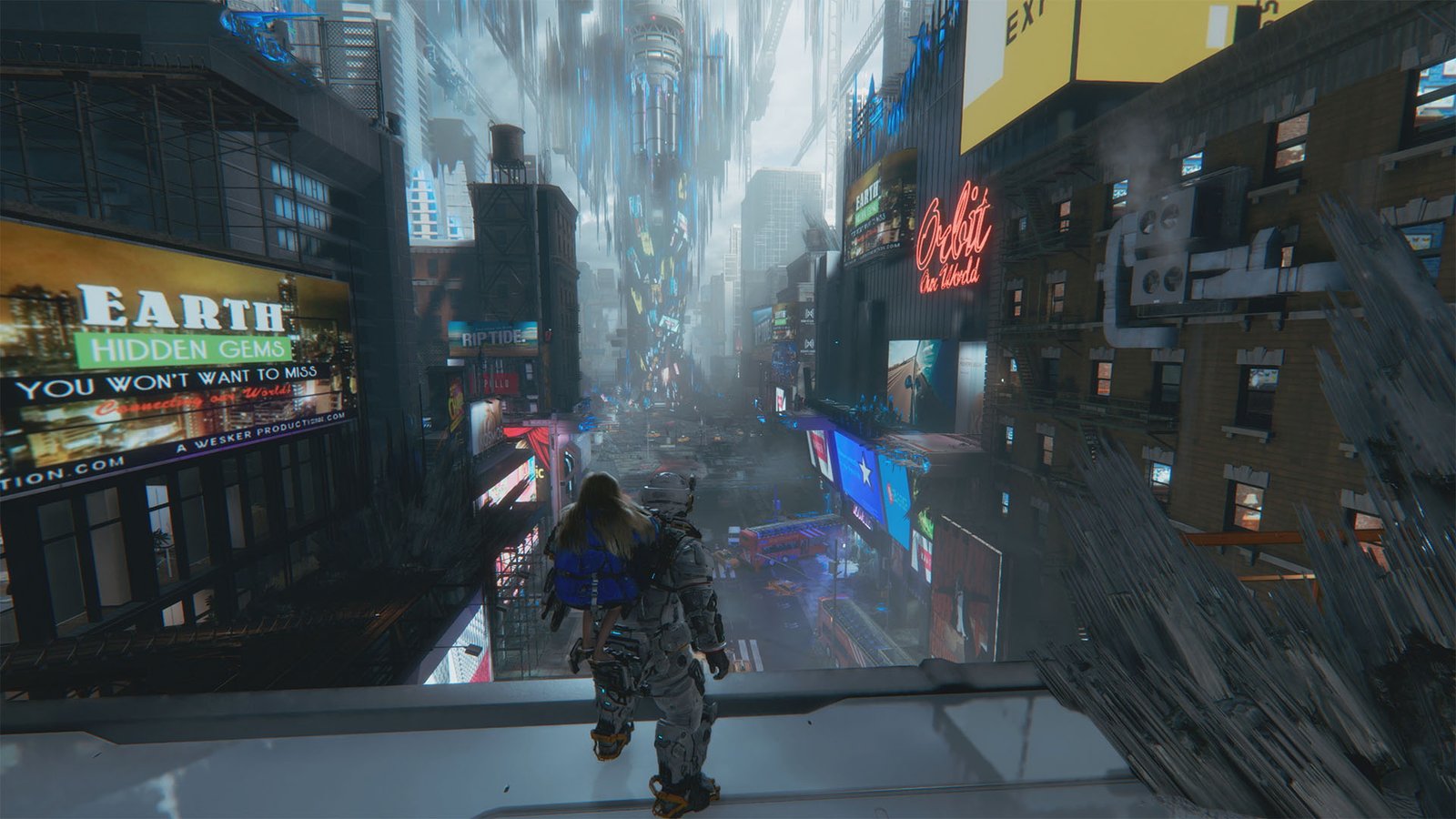
One of the most striking segments we played took us through what appears to be a facsimile of New York City, and it is here that Pragmata really stretches out. The area feels sprawling and interconnected, full of fresh enemies and visually distinct spaces that make exploration a joy rather than a chore. It also does an excellent job of marrying scale with readability. Even when the environment opens up, the game rarely feels directionless.
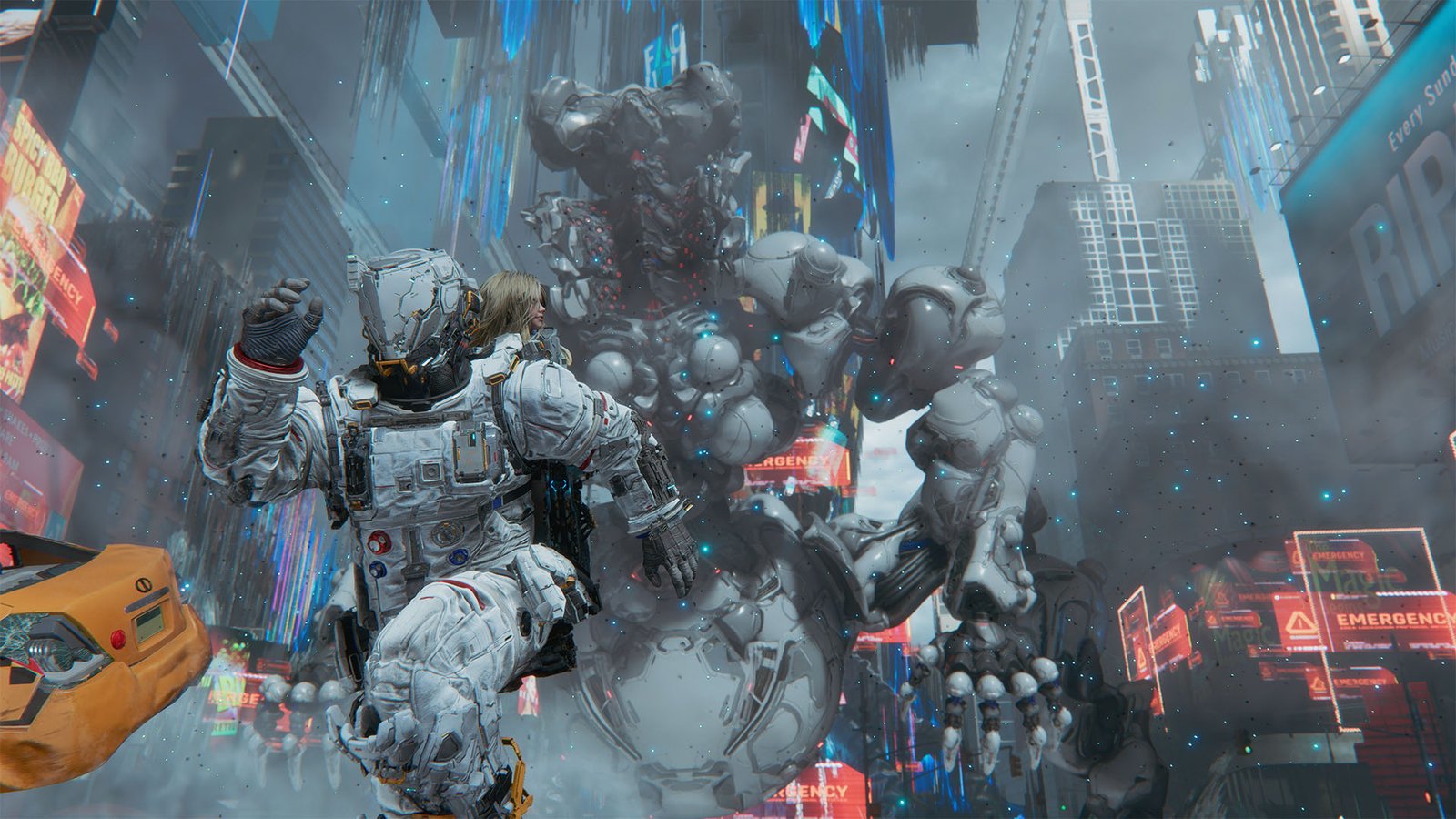
That sequence culminates in a Gigantic Bot boss fight that neatly captures Pragmata’s broader appeal. It is big, theatrical, and layered without becoming overwhelming. The boss brings multiple weak points and attack patterns, including shield generators that prevent Diana from hacking effectively until they are dealt with. There are path-blocking summons, sweeping area attacks that cover the street, and its large hacking interface that turns the encounter into something more than a simple damage race.
The finish is especially telling, with an ending hack that closes out the fight and reinforces the identity of the entire game. Hugh and Diana are not merely adjacent to each other in battle. They complete the logic of each encounter together.
That is why Pragmata is becoming easier to believe in. It has style, certainly, but it is the density of thought underneath that style which stands out more. The Shelter is meaningful. Diana is meaningful. Experimentation is rewarded. Exploration keeps paying off. And every time the game threatens to become familiar, it seems ready to introduce one more wrinkle.
For players, that may be the most exciting thing about it. Pragmata is not just trying to impress in the moment. It is trying to keep unfolding.
The release date for PlayStation 5, Xbox Series X|S, and Steam for PC has been moved forward to April 17 2026, and the Nintendo Switch 2 version of Pragmata in Southeast Asia will still launch as scheduled on April 24.
