

Table of Contents
Saros on PS5 Pro
Housemarque has always understood motion. Not just movement in the mechanical sense, but the hypnotic state that emerges when danger, instinct, rhythm, and precision all lock together. Saros is the studio’s clearest expression of that gift, a blistering sci-fi action roguelite that turns every dodge, shield, parry, and desperate counterattack into part of a violent cosmic dance.
This is not simply Returnal with new scenery. Saros carries familiar Housemarque DNA, certainly, especially in its appetite for mystery, repetition, hostile worlds, and player mastery. Yet it also feels like a studio looking back at everything that worked, everything that alienated some players, and everything that could be sharpened. The result is a game that feels both punishing and generous, mysterious and satisfying, familiar and startlingly fresh.
For me, Saros is not only one of Housemarque’s finest games, but also the kind of action experience that understands how to make failure feel exciting, progression feel earned, and mastery feel intoxicating.
A Haunting Mystery Beneath The Eclipse
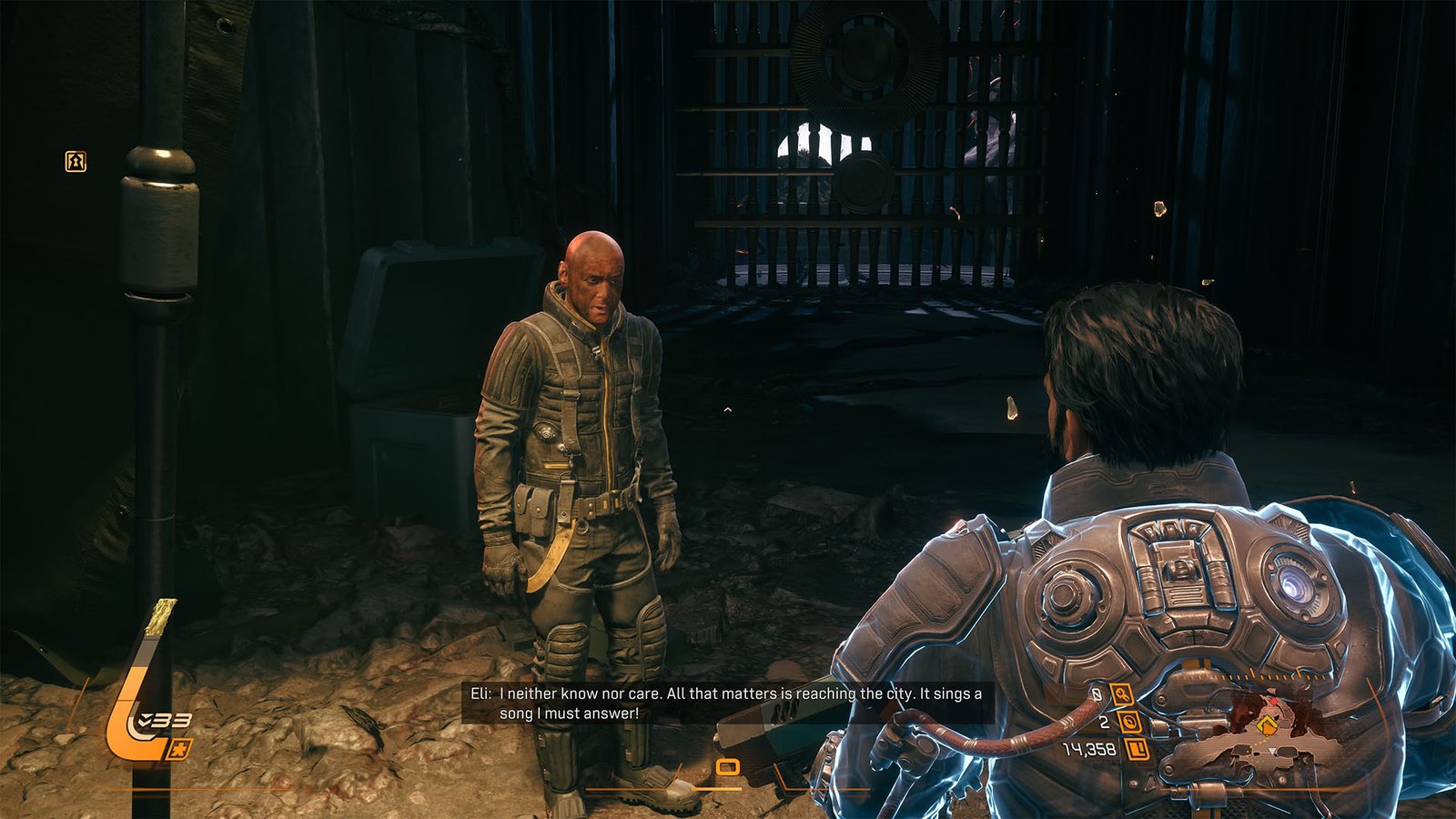
Saros begins with the mystery of Carcosa. This planet is not presented as a simple alien battlefield, nor is Rahul Kohli’s Arjun Devraj portrayed as a straightforward hero pursuing a clear objective. Beneath the ominous blazing sun and the impending Eclipse, everything feels unstable. The shape of the truth is always there, but never close enough to hold completely.
That restraint is crucial. Saros follows in the same vein as Returnal, where storytelling is not just delivered through exposition, but through mood, suggestion, repetition, and implication. It is a narrative about guilt, obsession, purpose, redemption and everything in between, but it does not flatten those ideas into neat explanations. Instead, it lets players piece together the full emotional weight of the journey through Carcosa’s ruins, voice logs, text fragments, holograms, and the uneasy presence of the crew connected to Echelon expeditions.
The result is a story that remains obtuse by design. To explain too much would be to weaken the experience. What matters is that Saros gives enough for the journey to feel worthwhile, while still leaving room for interpretation after the end. The best sci-fi mysteries linger because they continue to echo after the immediate threat has passed, and Saros understands that completely.
Our protagonist is a major reason the narrative works. Kohli brings intensity and control to a protagonist who is not necessarily easy to relate to, but is immediately compelling to follow. Arjun is driven, severe, and difficult to fully trust, which makes his journey more interesting than a simple survival arc. Whether he is moving towards salvation, ruin, or something in between, Saros keeps him fascinating by allowing uncertainty to sit at the heart of his character.
Carcosa itself becomes just as important. This is a world shaped by failure, prior expeditions, strange technology, hostile lifeforms, and psychological collapse. The supporting cast and environmental storytelling give the planet a sense of history without turning the reveal of its secrets into a checklist. It feels like a place where something terrible has already happened, and Arjun is arriving late to consequences that are still unfolding. That gives Saros a haunting quality that supports the action rather than interrupting it.
Bullet Ballet Reaches A New Peak
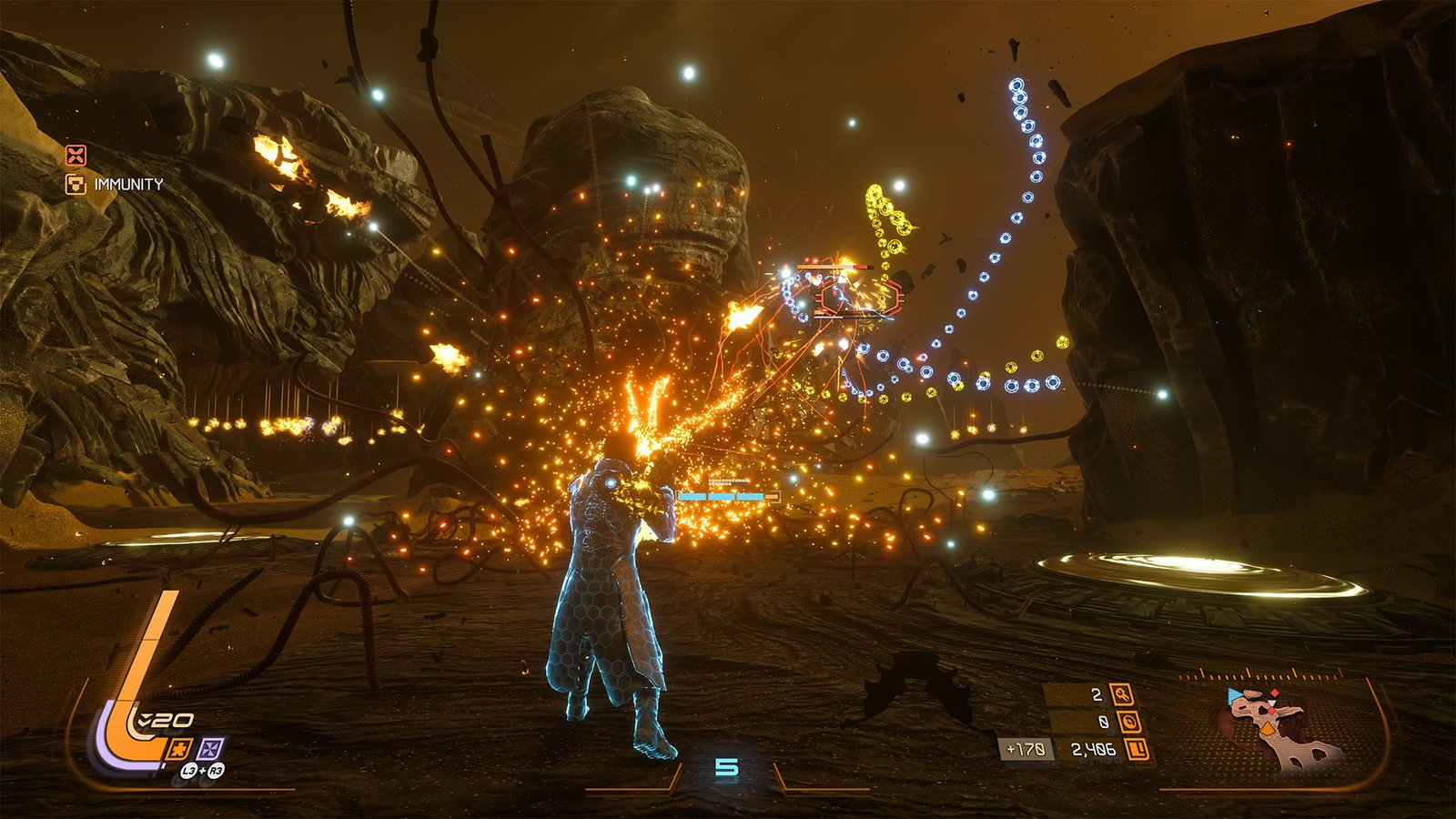
Combat is the beating heart of Saros, and it is simply phenomenal. Housemarque has taken the speed, spectacle, and pressure of Returnal, then rebuilt the flow around a broader toolset that gives players more room to define how they want to survive. It is intense from the start, but rarely cheap and chaotic. Even when the screen fills with projectiles, enemies, traps, and glowing death, Saros remains readable. That clarity is what makes the game sing.
The Soltari Shield is one of the central pillars. In a lesser game, a shield might slow the pace or become a defensive crutch. Here, it changes the entire language of combat. Enemy projectiles are no longer just things to avoid. Some become resources, opportunities, and invitations to push forward rather than back away. Absorbing attacks to fuel Power Weapons adds a thrilling risk and reward loop, especially once Saros starts layering corrupted projectiles, dangerous Nova attacks, parry demands, and aggressive enemy patterns into the same encounter.
This is where the “bullet ballet” truly earns its name. Saros is not only about shooting well. It is about reading space, feeling rhythm, managing danger, and knowing when to turn defence into offence. A clean exchange might begin with a dodge through incoming fire, shift into a shielded absorb, flow into a parry, and end with a devastating Power Weapon that clears the arena before the pressure closes back in. At its best, Saros makes the player feel less like they are reacting to chaos and more like they are composing their way through it.
The Eclipse mechanic, which ramps things up significantly, will seem daunting at first, but will soon become the gateway through which Saros is best enjoyed. Much tougher encounters, more rewards, and if you happen to spot a Nightmare Strand, jump in for what is likely the pinnacle of Saros‘ combat outside of boss fights.
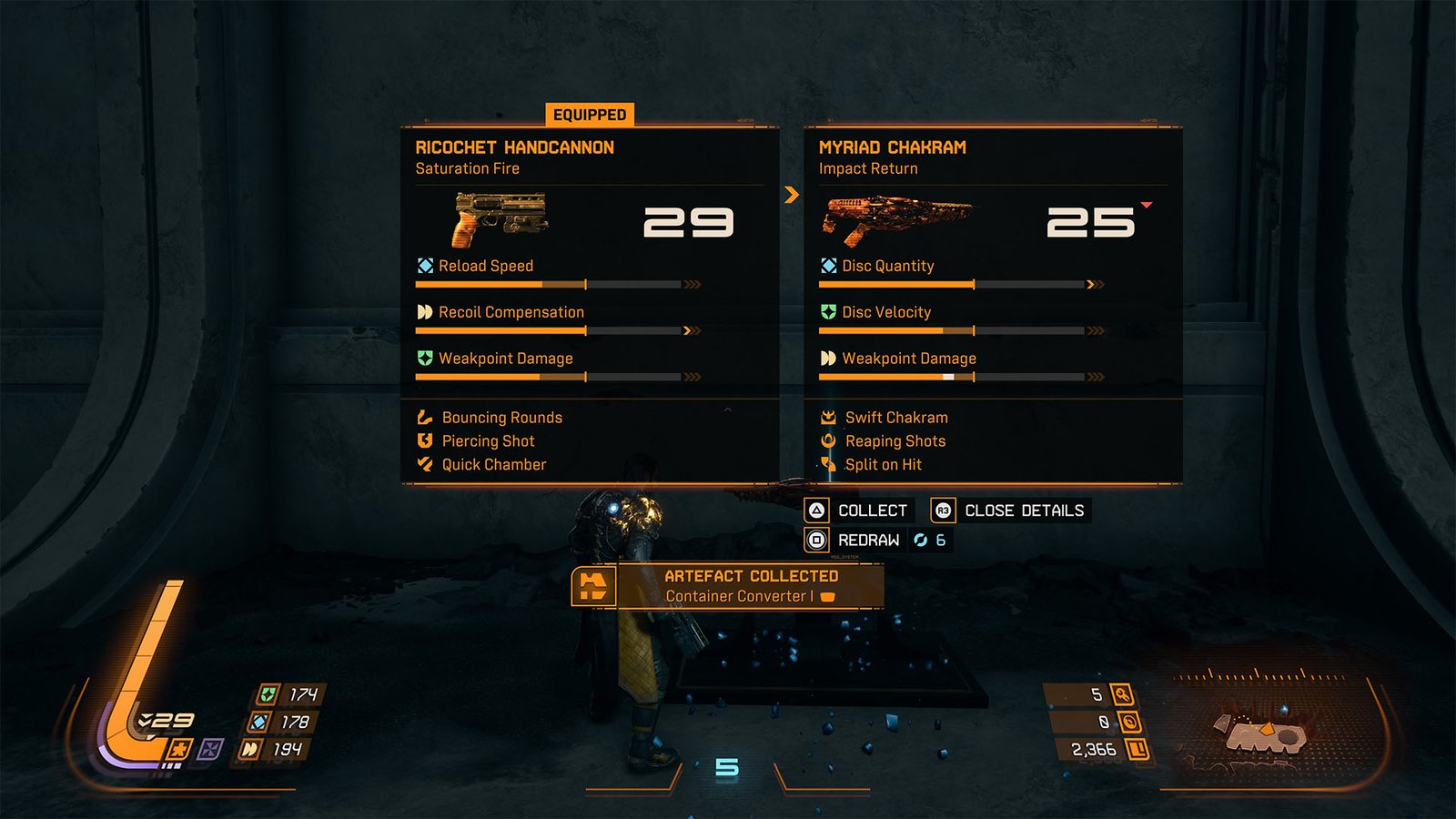
The arsenal holds up Saros quite handsomely as well. Handcannons, rifles, shotguns, crossbows, chakrams, and stronger Power Weapons all change how a run feels. Alternate firing modes, randomised traits and qualities mean that weapon proficiency level is not the only consideration. A technically stronger weapon is not always the best one for your style, your artefacts, or the biome ahead. You might even choose weapons that remove auto-hit for more precise control. That makes each run a series of meaningful decisions rather than a march towards obviously superior numbers.
My preferred weapon early on was the Ricochet Handcannon, which meant my bullets would find targets even behind obstacles. Its alternate fire allowed firing as fast as I pulled the trigger, and combining it with good timing when reloading meant I was always dealing damage. Later in the game, my preference became the Myriad variant of the Chakrams, and it captures why Saros’ combat works so well. With successful hits sending chakrams back instantly and eliminating the need to reload, the weapon encourages relentless pressure against multiple enemies. Combined with a trait that helps generate Power Weapon energy, it allowed me to keep fighting single enemies or large groups of foes.
That kind of build synergy is where Saros moves from excellent to extraordinary. It rewards experimentation, but it also rewards personal identity. You are not just finding a good loadout, you are also finding your rhythm.
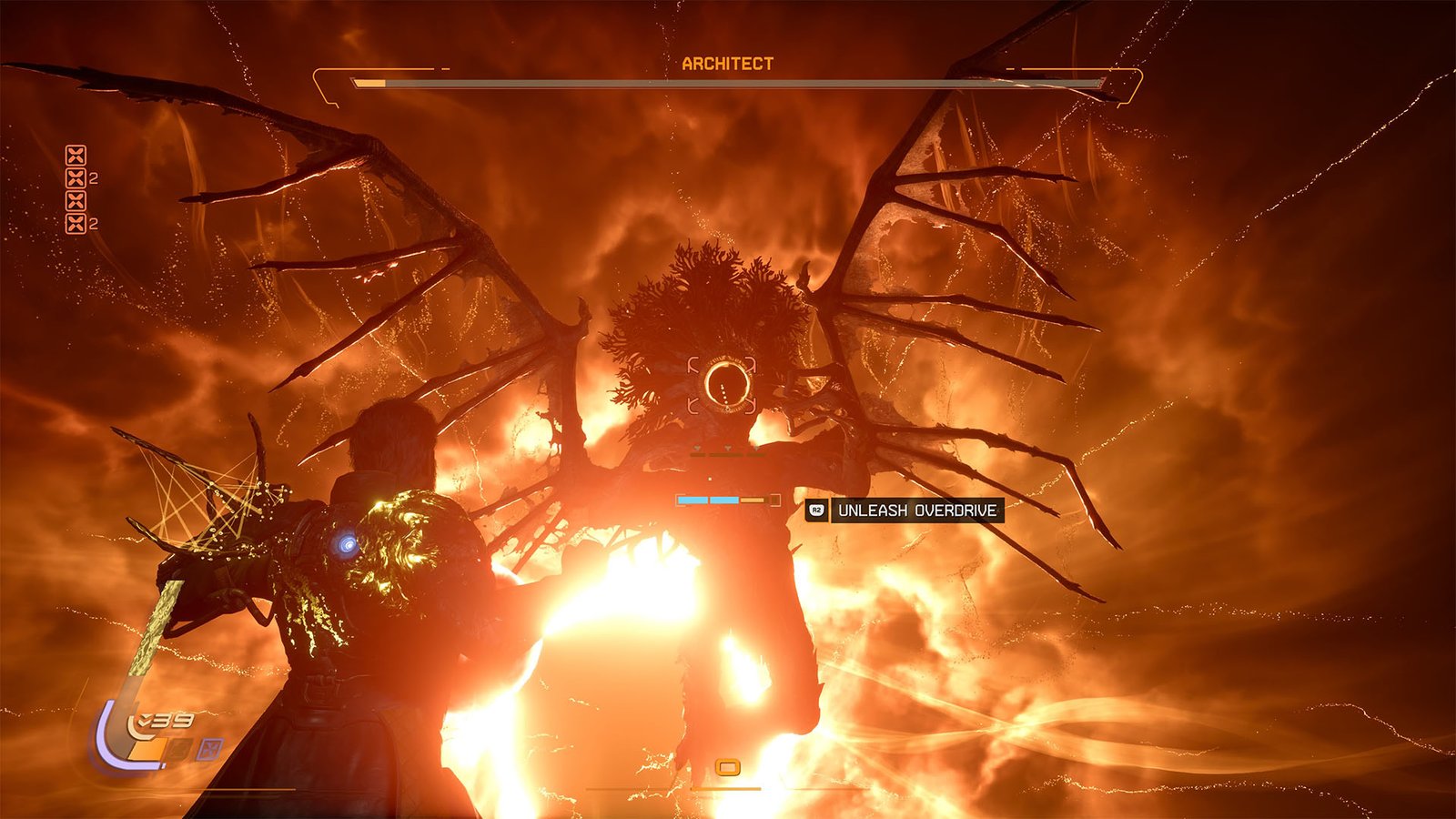
The bosses, or Overlords, elevate that rhythm further. These fights are enormous, spectacular, and punishing, but they are also fair in the way great action bosses need to be. Each death teaches something. A missed parry, a greedy attack window, a poorly timed dodge, or a failure to read the arena becomes part of the learning process. When victory finally comes, it feels earned through understanding rather than luck. That satisfaction never gets old.
Progression Makes Death Feel Purposeful
Saros is more forgiving than Returnal, but that should not be mistaken for softness. It is still demanding, still capable of overwhelming players, and still more than willing to punish sloppy play. The difference is that this game makes failure feel less like a wall and more like a current. You may be pushed back, but you are still moving.
Permanent progression is the key distinction. Lucenite and Halcyon pickups give every run value, even the ones that end badly. Attribute upgrades, artefact slots, and essential tools like Second Chance create a strong long-term pull, giving players constant reasons to return to Carcosa with confidence rather than frustration.
Second Chance, in particular, is a smart addition because it does not trivialise the danger. It simply gives players one more opportunity to recover from a mistake, keep momentum alive, and learn deeper into a run. And you can always earn back a use of the upgrade by completing a difficult but worthwhile Nightmare Strand.
This generosity changes the emotional texture of Saros. In Returnal, death could feel brutal enough to push some players away. Here, death remains painful, but it usually carries purpose. Even a failed run can bring enough Lucenite to unlock another upgrade, test a new weapon, explore a different biome path, or prepare for another attempt at an Overlord. It is a more welcoming structure, but not an exploitative one.
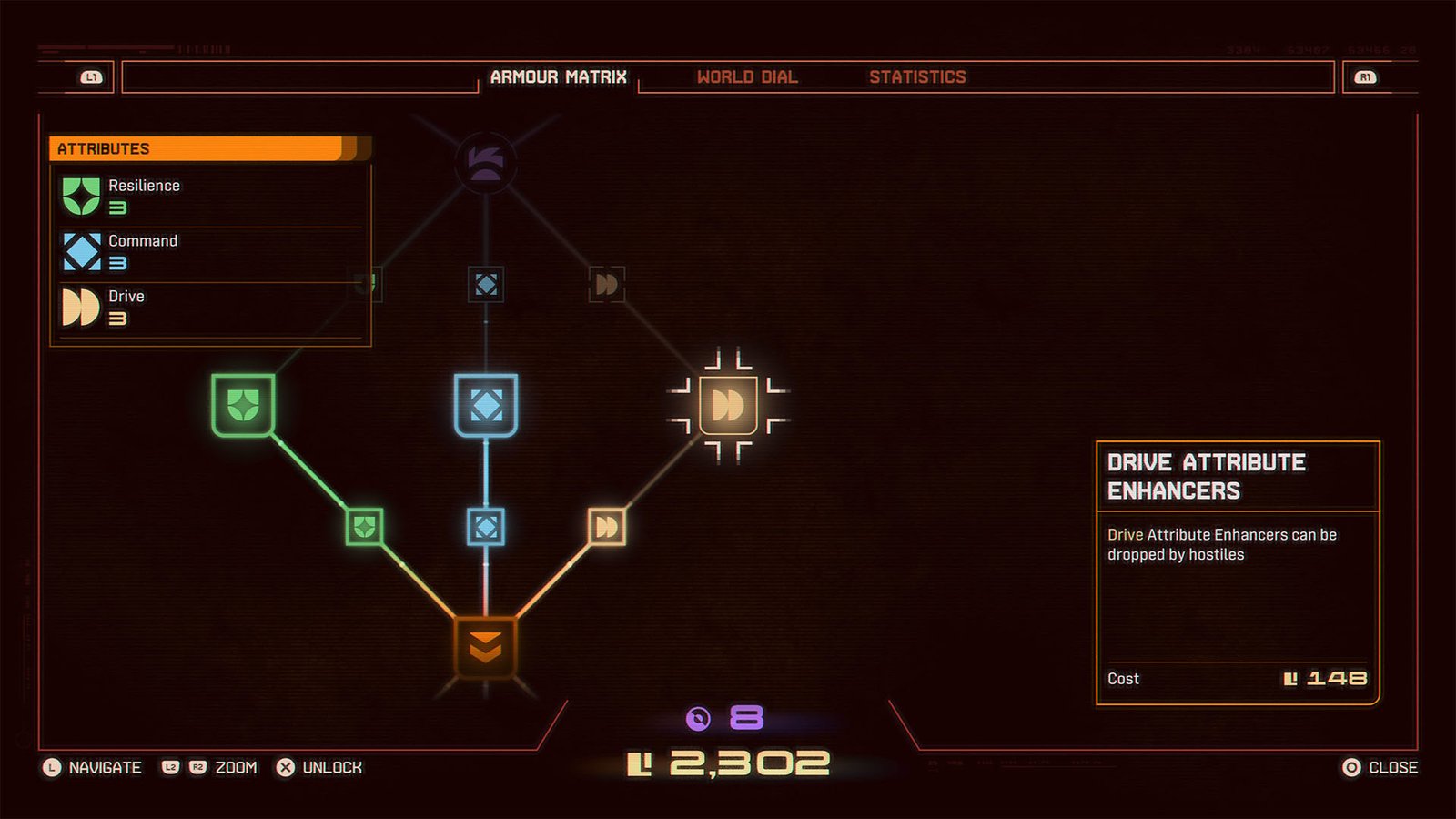
That balance matters because players can technically farm runs to strengthen Arjun, but Saros knows where to draw the line. Overlords act as hard gates within the upgrade tree, ensuring that players cannot simply grind their way past the game’s most important tests. You can prepare. You can improve. You can give yourself a better chance. Eventually, though, you still need to understand the fight, control Arjun properly, and execute under pressure.
Artefacts add another crucial layer. Some increase base integrity, others slow enemies, restore health when conditions are met, or encourage more aggressive play. Because slots are limited, each artefact asks a question about what kind of run you are building. Do you want safety, damage, recovery, control, or riskier power? Once Eclipse effects enter the mix, those decisions become even more interesting. Artefacts can grow stronger, but often with a drawback attached, such as fall damage, Lucenite loss, or other penalties that force players to think beyond raw strength.
Carcosan Modifiers are another elegant example of Saros’ player-centred design. They can be used or ignored, and that is precisely why they work. Positive and negative modifiers allow players to tune the challenge around their comfort level, provided they keep Carcosa in balance. You might increase Lucenite gains, reduce corruption, or strengthen damage, but the other side of the scale may demand more aggressive enemies, harsher damage, or fewer rewards. It is not a simple escape hatch. It is a negotiation with the planet.
This makes Saros more flexible without compromising its identity. Players who want a gentler path can find one. Players who want something nastier can create that too. For everyone else, the system offers a satisfying middle ground. The game meets players where they are, then dares them to get better.
Carcosa Evolves With Every Run
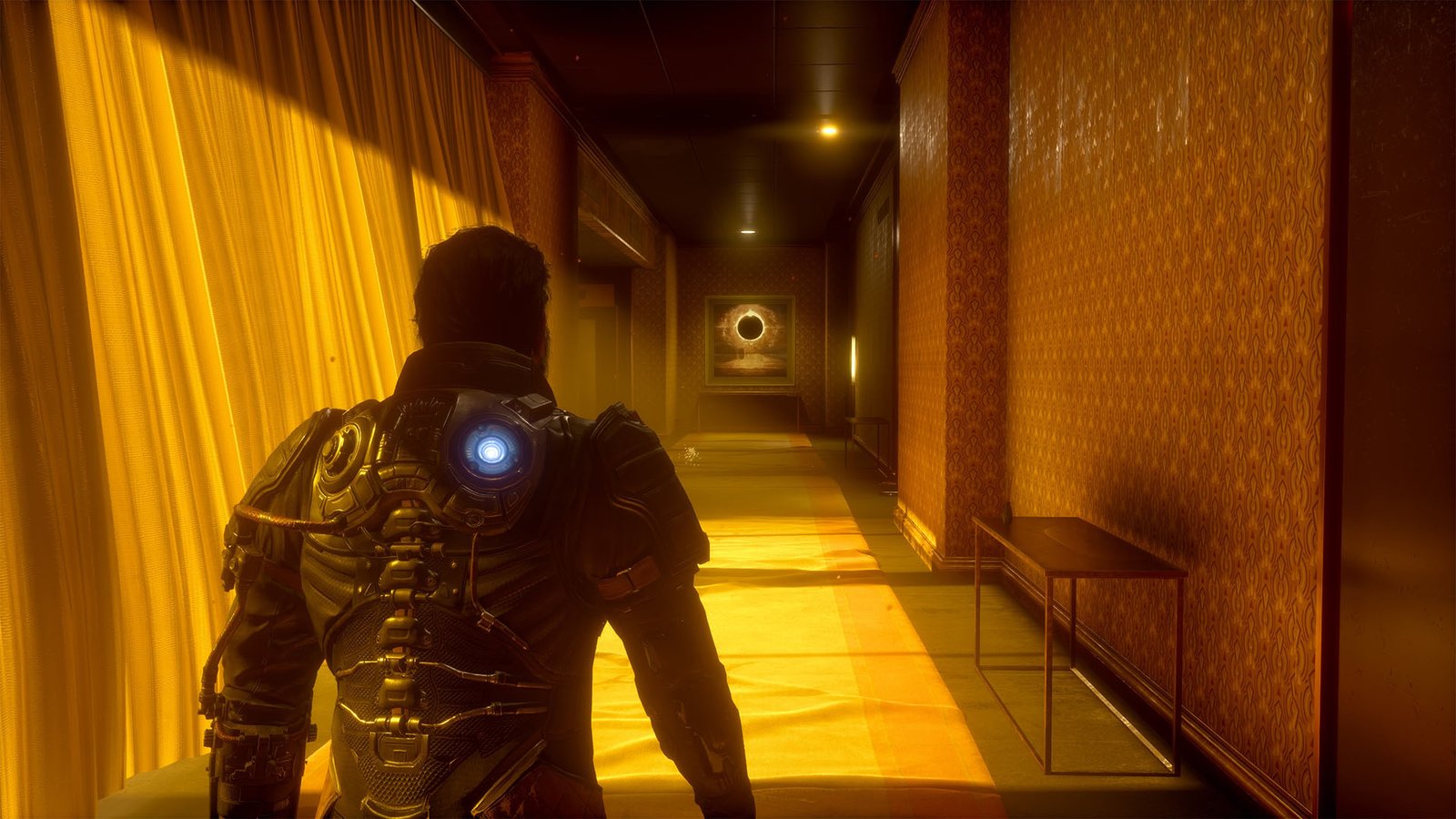
Carcosa is one of the great action game settings of recent years because it avoids predictability while embracing repetition. Each biome has a recognisable identity, but the game constantly shifts enemy combinations, environmental dangers, traps, secrets, and layouts just enough to keep every run alive. Familiarity becomes useful, but never absolute. You learn the broad shape of a place, only for Saros to test whether you can adapt when that shape twists.
The latter biomes are especially strong. As the game progresses, level design becomes more complex, enemy makeup becomes harsher, and platforming demands greater confidence in Arjun’s movement. The addition of traversal tools gives Saros more verticality and variety without diluting the combat focus. Grappling across gaps, using launch pads, and transforming into a streak of light along set paths all help make exploration feel more physical and expressive. By the time the game is asking for sharper platforming, faster reads, and cleaner combat execution in the same stretch, Saros has already trained you well enough to make the challenge feel exhilarating.
The pacing also deserves praise. Individual biome runs are designed to be more digestible, and autosaves at key points make it easier to step away without sacrificing progress. Teleporters eventually allow players to jump directly into specific biomes, which is a welcome quality-of-life feature for those who want targeted attempts, faster progression, or shorter sessions.
Yet Saros is at its most intoxicating when played as a full run from the beginning. That was my preferred approach, even when it stretched sessions to hours instead of minutes. Starting from the first biome, building proficiency, finding secrets, improving weapons, collecting artefacts, defeating bosses again, and slowly turning Arjun into a walking apocalypse gives the game an incredible sense of escalation. Few roguelites make that transformation feel this clean.
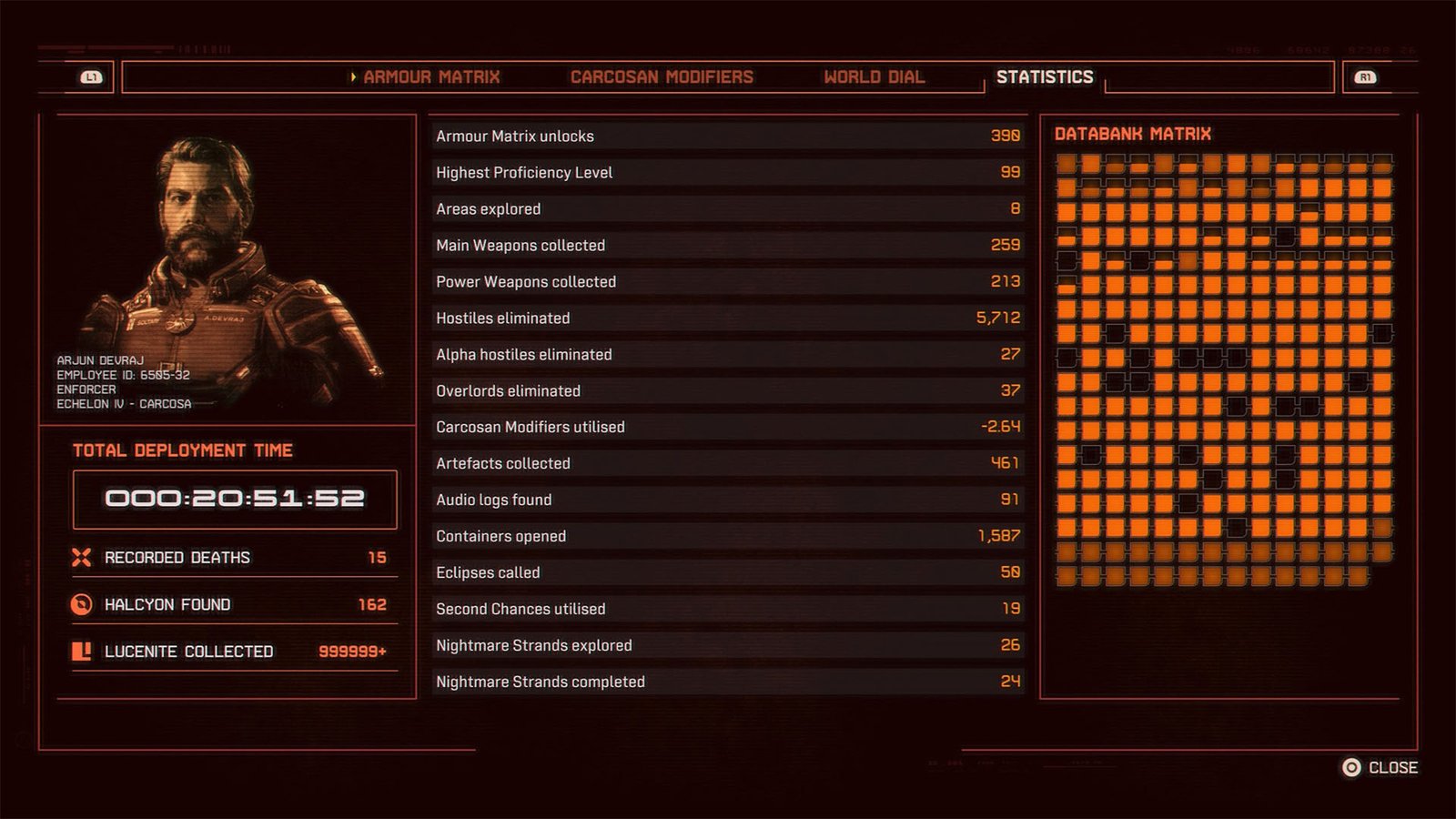
A full playthrough took around 14 to 16 hours, though that will vary depending on playstyle, skill level, and how often players repeat full runs instead of using biome shortcuts. What matters more is that Saros remains compelling beyond completion. Different weapons, artefact combinations, modifier settings, and route choices give it strong replay value without making the main journey feel incomplete. It is substantial, focused, and built for return visits.
A Technical Showcase With Soul
Visually, Saros is stunning. Performance was excellent throughout, with smooth gameplay, fast loading, and no bugs or glitches encountered during the review playthrough. That level of polish matters in any action game, but it is essential here. The game depends on precision, readability, and trust. When a screen is filled with projectiles, particle effects, enemy attacks, and platforming demands, the player needs to know that failure belongs to them, not the game.
Saros is spectacular without losing clarity. The particle effects are gorgeous, filling combat encounters with colour and threat, while textures and environmental details give Carcosa a hostile beauty. There is density everywhere, but it never becomes visual clutter. The best arenas look almost impossible at first glance, yet the design remains clean enough for skilled players to read patterns, identify openings, and carve a path through the storm.
The DualSense implementation enhances that immersion in a subtle yet effective way. Haptic feedback and adaptive triggers help sell the texture of weapons, suit systems, and impact without overwhelming the hands. Combined with 3D audio, Saros creates a strong sense of position and pressure, allowing threats to feel present beyond the centre of the screen. The audio design is not just atmospheric dressing. It becomes part of the player’s awareness.
The musical score and the broader soundscape give Carcosa a distinct identity. The music leans into a dark electronic and drone metal sensibility that fits the Eclipse beautifully, turning combat into something fierce, ritualistic, and unnerving. Between the music, environmental audio, and the strange emotional weight of the world, Saros constantly feels like it is pressing against Arjun from every direction.
What makes all of this remarkable is how completely the pieces come together. The story gives combat emotional weight. Combat gives progression purpose. Progression makes repetition compelling. Repetition deepens the mystery. Performance ensures that none of it buckles under pressure. Saros is not a great game because one element carries the rest. It is great because every element understands what the others are trying to achieve.
Housemarque’s latest is not flawless because it avoids challenge, opacity, or frustration entirely. It is exceptional because those edges feel intentional, meaningful, and beautifully integrated into the experience. The studio has made a game that is more approachable than Returnal, but also more complete, more expressive, and more confident in how it asks players to master it. Saros is brutal, brilliant, haunting, generous, and electrifying. It is Housemarque at its very best, and an experience that lures in you in with the allure of the mesmerising Yellow Shore, and there’s no reason to fight back.
Saros launches on April 30 on PlayStation 5.
SavePoint Score
Summary
Saros is Housemarque operating at the height of its powers. Its combat is electric, its mystery lingers, and its progression makes every run feel meaningful. More forgiving than Returnal but no less intense, this is a stunning Game of the Year contender.
