

Table of Contents
Saint Slayer: Spear of Sacrilege on PS5 Pro
There is a certain confidence to Lillymo Games‘ Saint Slayer: Spear of Sacrilege that becomes clear almost immediately. This is not a retro-inspired game using old pixels as decoration; it is a game that embraces the rhythm, inconvenience, sharp edges, and dramatic punishment of a very specific action-platforming era.
Lillymo Games has not simply built something that looks like an NES game. It has built something that behaves like one, right down to the moments where a mistimed jump can turn confidence into disaster.
Set against a gothic version of late seventeenth-century Europe, the game follows Rudiger, an ex-soldier pulled back into violence after Father Pacer tears through the Holy Roman Empire with stolen relics, monsters, and religious corruption in his wake. It is blunt, theatrical, and just ridiculous enough to feel at home in the era it worships. The story is not the main attraction, but it gives the journey a strong enough spine. Rudiger is not a grand hero by presentation. He feels more like a tired man forced into myth, and that fits the game’s grimy, monster-filled pilgrimage.
The presentation does a lot of heavy lifting in Saint Slayer: Spear of Sacrilege. The pixel art is clean without feeling sterile, detailed without betraying the game’s chosen era, and expressive enough to make each new stage feel like part of a larger cursed route. It understands that retro horror needs more than darkness. It needs silhouette, texture, sudden movement, and a little theatrical excess. Saint Slayer uses all of that well. Its monsters, villages, towers, libraries, waterways, and castles feel connected by tone rather than just asset style.
The chiptune soundtrack deserves equal credit. It gives the game pace, bite, and a sense of momentum that softens some of its harsher mechanical demands. When Saint Slayer: Spear of Sacrilege is at its best, the music, animation, enemy placement, and stage rhythm click together into something that feels less like nostalgia and more like excavation. It is digging up a school of design that many modern action games have left behind, then asking whether players still have the patience to meet it on its own terms.
The Spear Gives The Pain Purpose
The game works because its simplicity has structure. Rudiger’s core movement is deliberately limited. He does not glide through the air, cancel every action, or recover gracefully from mistakes. Every jump matters. Every attack asks for commitment. Every enemy placement feels designed to test not just reflexes, but restraint. The game wants players to slow down just enough to read the screen, then move decisively once the pattern becomes clear.
The spear is the tool that turns this from pure imitation into something with its own character. At close range, it gives Rudiger a reliable means of cutting through enemies without making him feel overpowered. As Saint Slayer: Spear of Sacrilege progresses, its thrown form becomes just as important. Spear throws can deal with threats from a distance, open up approaches to tougher enemies, and even create temporary platforms when lodged into walls.
Because their usage is tied to a limited resource, they never become a casual answer to every problem. That scarcity adds useful tension to combat. Spending a throw too early can make the next room harder. Holding back too long can cost a life. This is where Saint Slayer: Spear of Sacrilege finds much of its appeal.
It is often punishing, but rarely mindless. Stages are built around learning. Enemy patterns, traps, awkward ledges, and environmental hazards are all part of a rhythm that becomes clearer with failure. The first attempt at a level may feel cruel. The second begins to reveal its structure. By the third, the player starts to understand where to jump, when to attack, and when to ignore a threat entirely. That loop is old-fashioned in the best and worst sense. It can frustrate, but it also creates a very direct kind of satisfaction.
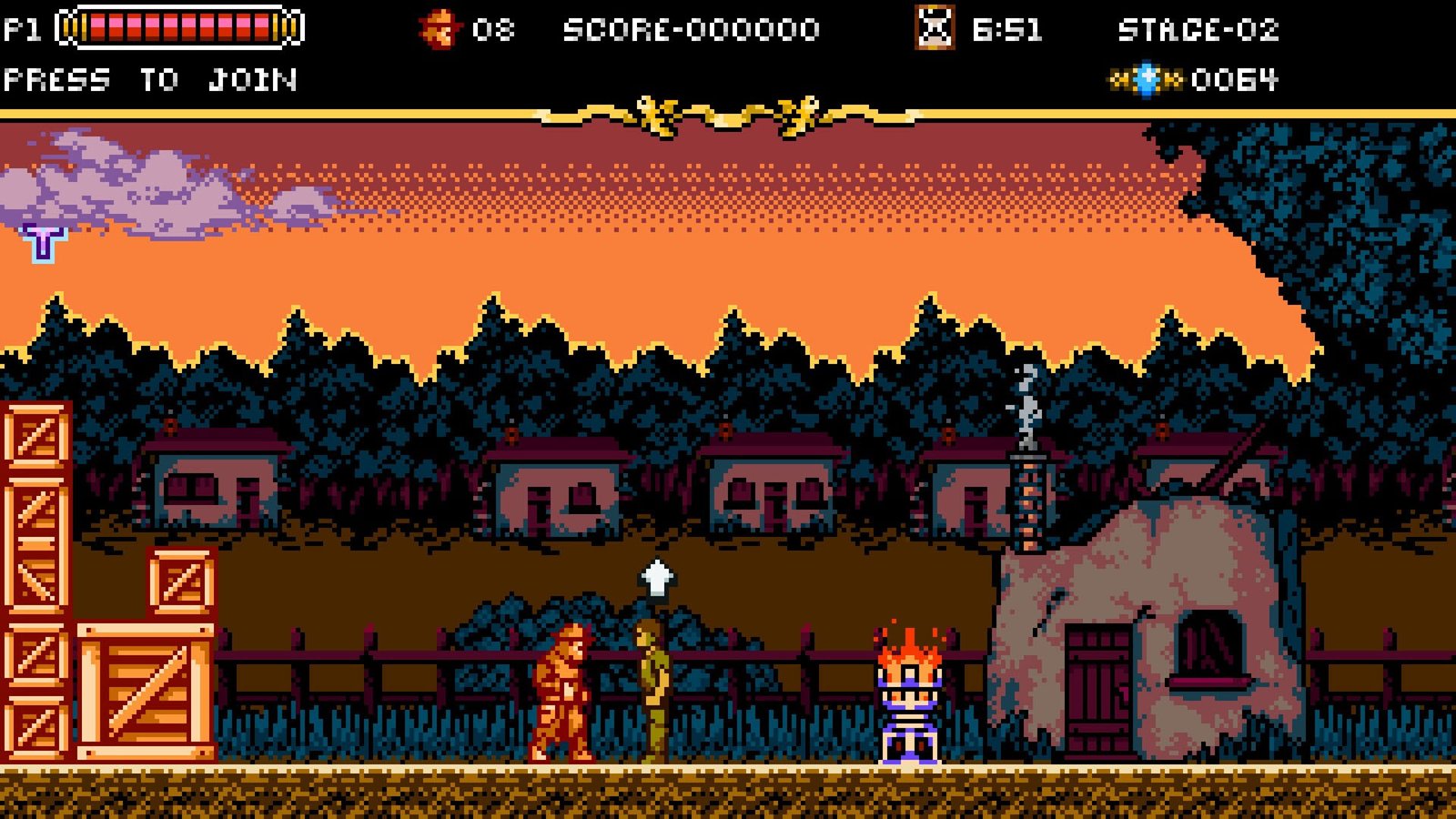
The campaign’s 21 stages help keep that loop from growing stale. Saint Slayer: Spear of Sacrilege does not simply march through identical corridors of enemies. It finds room for different stage concepts, boss encounters, secrets, and set pieces that break up the forward push. Some levels ask for careful climbing. Others lean into moving hazards, vehicle style sequences, or enemy pressure from multiple directions. The result is a game that is more varied than its rigid design might initially suggest.
It also understands replay value. Multiple endings, secrets, passwords, animal familiars, upgrades, and achievements all give players reason to return. Saint Slayer: Spear of Sacrilege is compact by design, but built to be replayed, mastered, and prodded for hidden routes and better outcomes. For the right audience, that compactness becomes a strength rather than a limitation.
When Faithfulness Becomes Friction
The same decisions that give Saint Slayer: Spear of Sacrilege its bite are also the ones most likely to divide players. This is a game where old-school punishment is not merely aesthetic. Knockback can send Rudiger into danger. Long stages can become exhausting without checkpoints. Currency can feel too scarce for a shop system that appears more generous than it really is. Spear throws are useful enough that their limitation can occasionally feel restrictive rather than strategic.
The jump is the biggest sticking point. Its stiffness is intentional, and in many cases, it supports the game’s identity. Still, there are moments where precision platforming and rigid movement rub against each other too harshly. Modern players have been trained by decades of more forgiving platformers to expect some flexibility in the air, a little grace in recovery, or at least a checkpoint after clearing several demanding rooms. Saint Slayer: Spear of Sacrilege offers far less comfort. It expects adaptation, and it does not apologise when adaptation takes time.
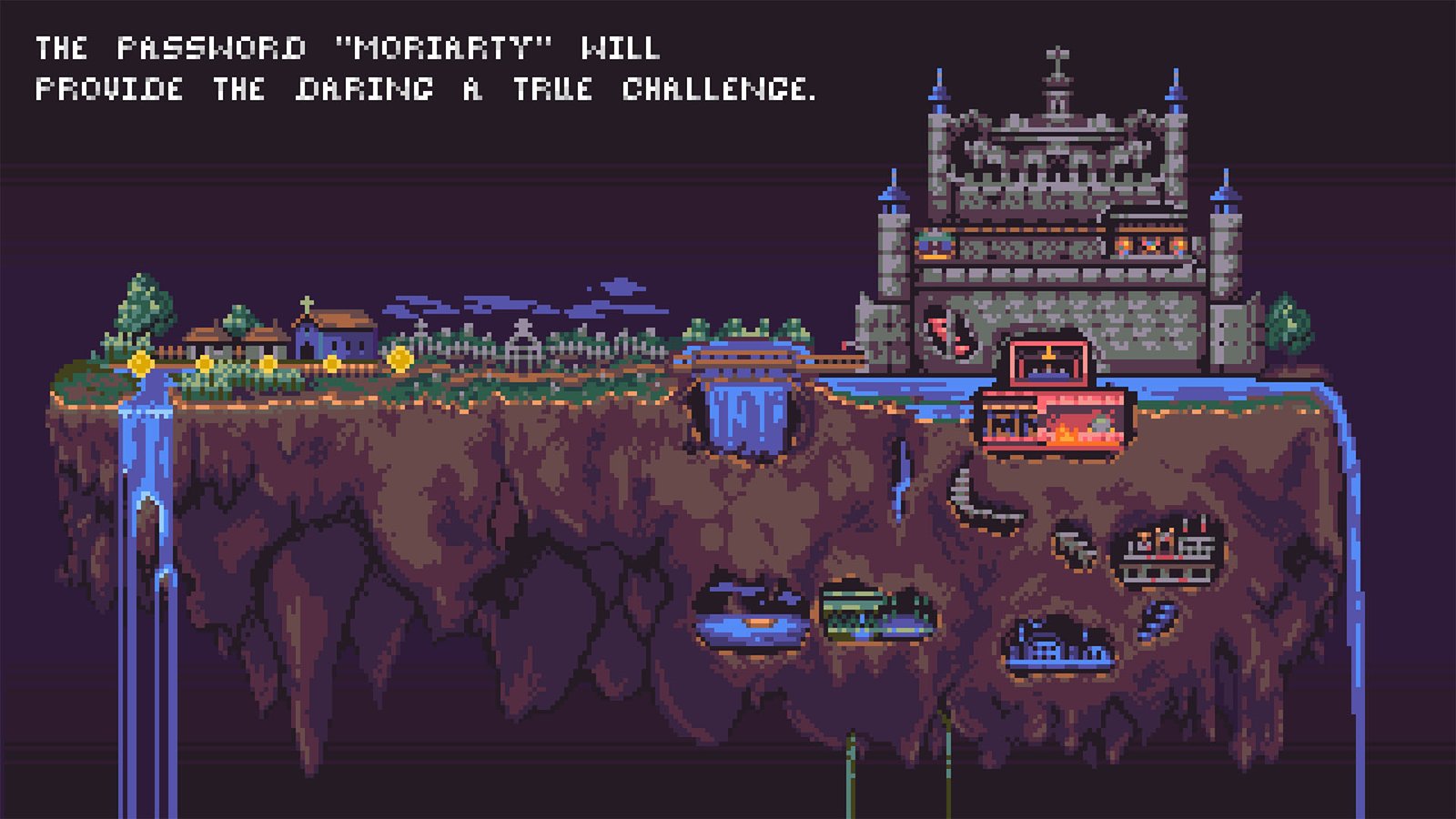
That will be invigorating for some players and alienating for others. On easier settings, the game is more approachable, but its design philosophy remains intact. It is still about committing to movement, respecting enemy placement, and accepting that failure is part of progression. On harder settings, it becomes a much purer test of patience and pattern recognition. That range helps, but it does not turn Saint Slayer: Spear of Sacrilege into a broadly accessible retro tribute. It is aimed at a specific appetite.
The shop system is where the friction feels less cleanly justified. Scarce resources can make every purchase meaningful, but when currency is too limited, the system risks becoming something players avoid rather than engage with. Health, continues, hints, and upgrades should create interesting decisions. Here, they can sometimes feel like choices made under artificial restriction. It does not break the game, but it does make one of its supporting systems feel less satisfying than the combat and level design around it.
Even so, these issues do not erase what Saint Slayer: Spear of Sacrilege does well. They simply define the terms of engagement. This is not a game to recommend blindly to anyone who likes pixel art or gothic action. It is for players who miss the physical language of older platformers, where every movement has weight and every mistake has consequences. Those players will likely find its harshness purposeful. Everyone else may bounce off before the game gets under their skin.
A Sharp Point For A Specific Crowd
Saint Slayer: Spear of Sacrilege is at its strongest when it feels stubborn. It refuses to sand down everything that made its inspirations memorable, even when those same qualities make it harder to love without reservation. That stubbornness gives the game personality. It is not chasing the broader comfort of modern Metroidvania design, nor is it trying to turn retro action into a frictionless celebration of the past. It wants the pain, the repetition, the sudden failure, and the eventual mastery.
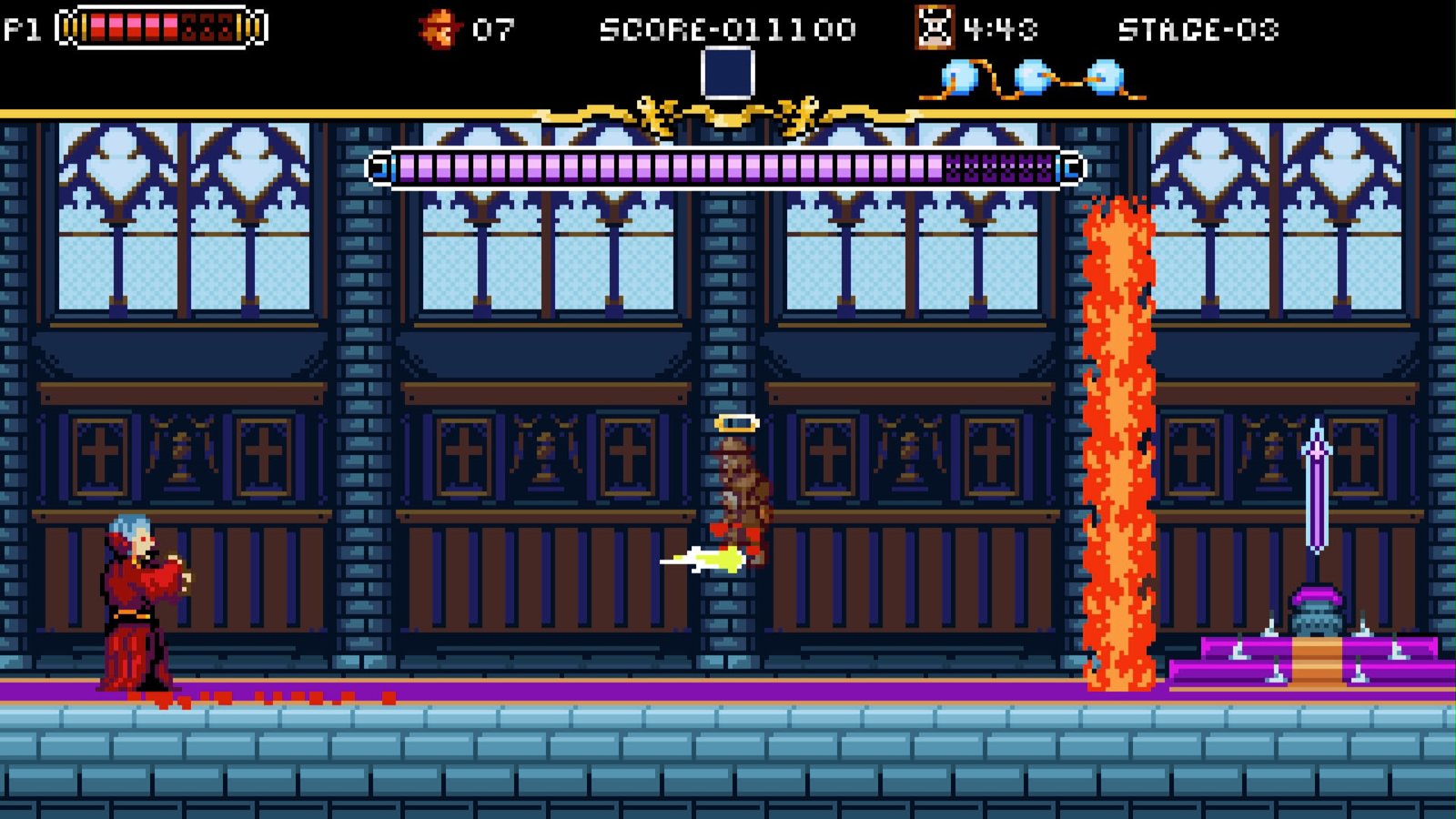
For players who connect with that rhythm, the reward is substantial. The game has strong fundamentals, memorable presentation, excellent musical energy, and enough stage variety to make its compact campaign feel fuller than its length suggests. It captures the sensation of moving through a cursed old world one careful screen at a time, slowly learning how to survive a design language that is hostile until it becomes familiar.
It is not perfect. The stiffness sometimes overreaches. The lack of checkpoints can make longer stages feel more punishing than they need to. The shop economy could stand to be more generous, and some of the game’s limitations feel more inherited than essential. Yet there is craft behind the cruelty. Saint Slayer: Spear of Sacrilege is not difficult because it lacks control over its own design. It is difficult because it knows exactly what kind of game it wants to be.
That makes it an easy recommendation for classic action platforming fans, especially those who still have affection for the sharper end of the NES era. For everyone else, it comes with a warning. This is not nostalgia made cosy. It is nostalgia with teeth, rhythm, and a very sharp spear.
Saint Slayer: Spear of Sacrilege may frustrate, but it rarely feels careless. Its pain has purpose, its presentation has charm, and its best moments make old school punishment feel like something worth enduring again.
Saint Slayer: Spear of Sacrilege is available now on PlayStation 4, PlayStation 5, Xbox One, Xbox Series X|S, PC, and Nintendo Switch.
SavePoint Score
Summary
Saint Slayer: Spear of Sacrilege is not interested in smoothing over its retro inspirations for modern comfort. Its stiff jumps, harsh knockback, limited resources, and demanding stages are part of the point. What makes it work is how confidently Lillymo Games builds around that philosophy, delivering a stylish, compact, and rewarding action platformer that knows exactly who it is for.
