

Table of Contents
EA Sports College Football 27 on PS5 Pro
The first two entries in EA Sports’ revived college football series benefited from an energy few annual sports games could match. One marked a beloved return, while the other proved the comeback was no novelty. EA Sports College Football 27 has a tougher assignment: justifying another yearly purchase without that goodwill carrying it over the line.
Fortunately, the football continues to move in the right direction. Matches feel more deliberate, star players are better at imposing themselves, and the differences between programmes matter without every contest becoming predetermined. The complications arrive away from the field. Dynasty’s expanded management layer creates meaningful strategic pressure, but it can also become dense, while Road to Glory still struggles to turn an entire college career into a consistently compelling personal story.
Winning the Battle at the Line
EA Sports College Football 27 is at its strongest once the ball is snapped. Running now demands greater patience and awareness, with blockers forming lanes that must be read rather than treated as invitations to sprint. Cutting too early can close an opening before it develops, while waiting behind the line for an extra moment can turn an ordinary carry into the play that changes a drive. It lends the running game a welcome rhythm and makes different offensive approaches feel more distinct.
Passing has also grown more expressive. Quarterback ability, pressure, route timing, and receiver positioning interact in a way that makes successful throws feel earned. Back-shoulder passes and contested catches offer more options around the sidelines and end zone, but they are not magical solutions for poor decisions. Forcing the ball with an inaccurate quarterback remains an excellent way to hand possession back, particularly when the pocket collapses and composure disappears.
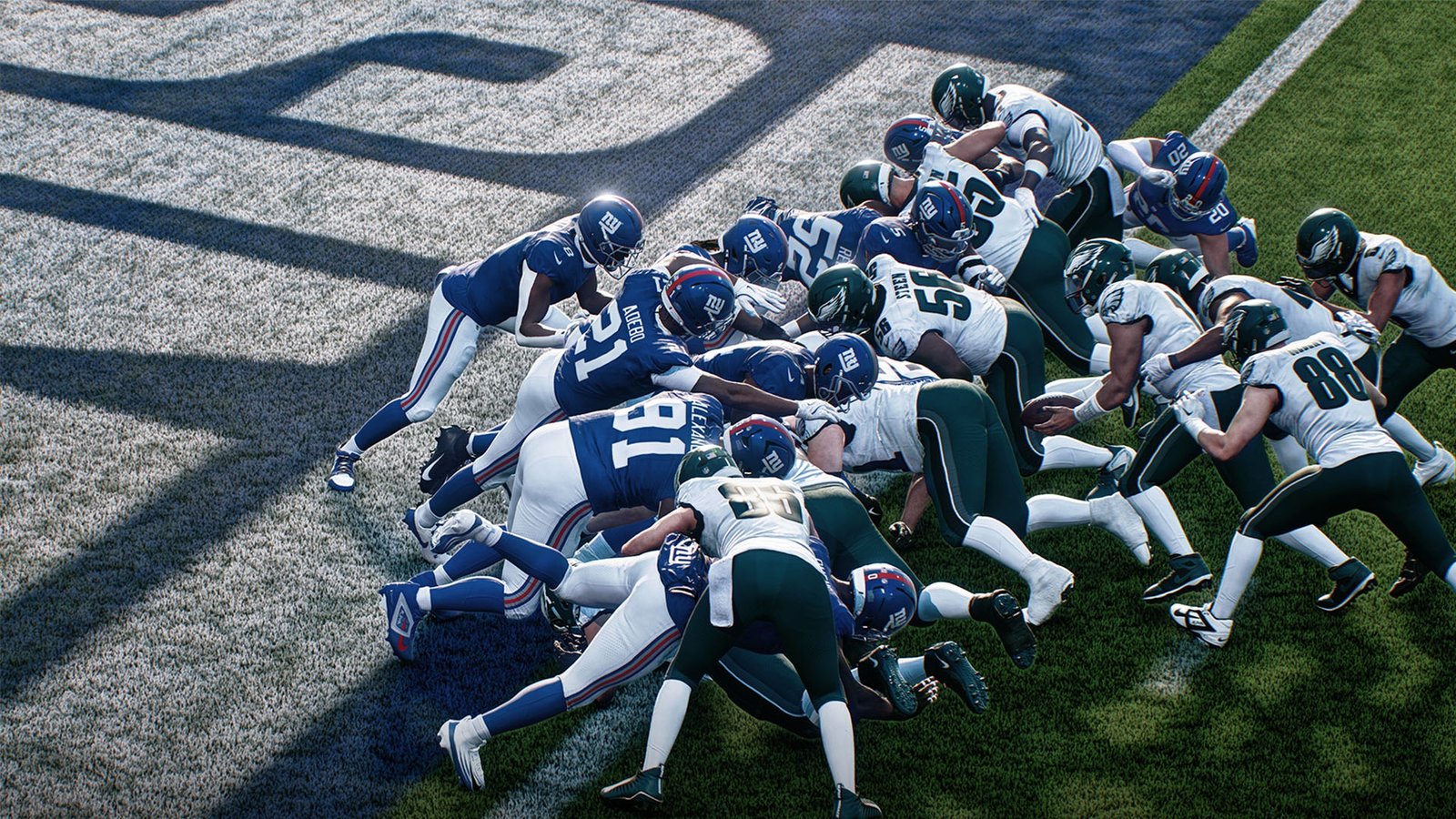
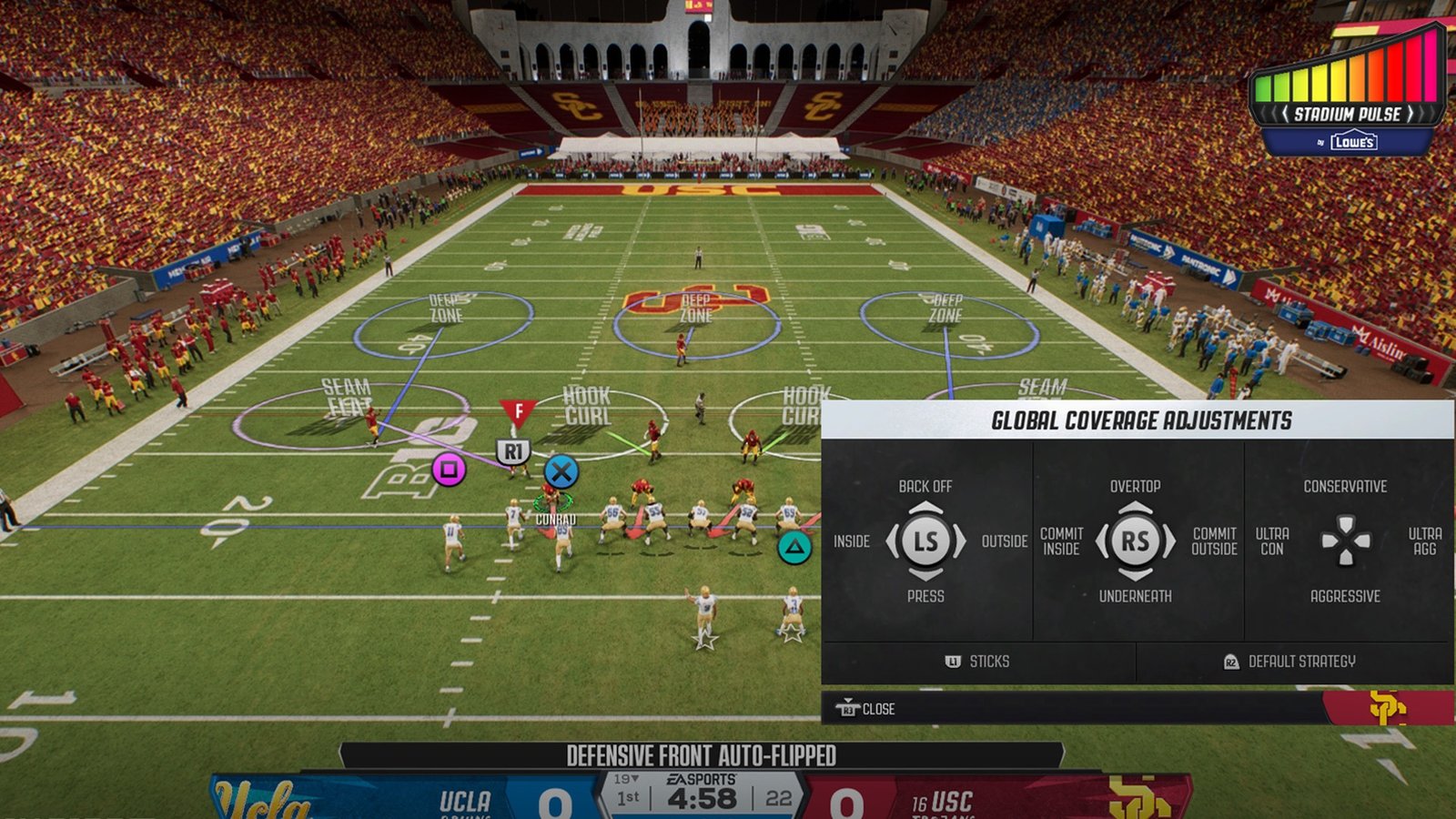
Defence benefits from similar improvements in EA Sports College Football 27. Coverage is less likely to disintegrate for no obvious reason, defensive backs react more convincingly to routes, and pursuit angles reduce the number of cheap touchdowns created by awkward movement. Better players still produce spectacular moments, but the game is more willing to let sound positioning and recognition decide an encounter. The gap between an elite athlete and an average starter is visible without making the supporting cast irrelevant.
Familiar problems have not vanished. Animation collisions, sudden changes in momentum, and occasional lapses in awareness remain, while some interactions favour the game’s chosen outcome over what is happening visually.
The overall balance is still impressive. College football should be volatile. Young quarterbacks make poor reads, hostile stadiums affect execution, and one explosive athlete can dismantle an otherwise disciplined defensive series. EA Sports College Football 27 understands that unpredictability is not the same as randomness. At its best, the game creates chaos while letting players trace a result back to decisions made before and during the snap.
Building a Programme, Not Just a Roster
Dynasty remains the centrepiece of EA Sports College Football 27, and this year’s additions push it closer to a full programme-management simulation. Athletic Director Expectations give each job a clearer identity, defining success through more than a win total. A school may prioritise rivalry results, recruiting territory, offensive style, or postseason progress, forcing coaches to consider what the institution values rather than applying the same approach everywhere.
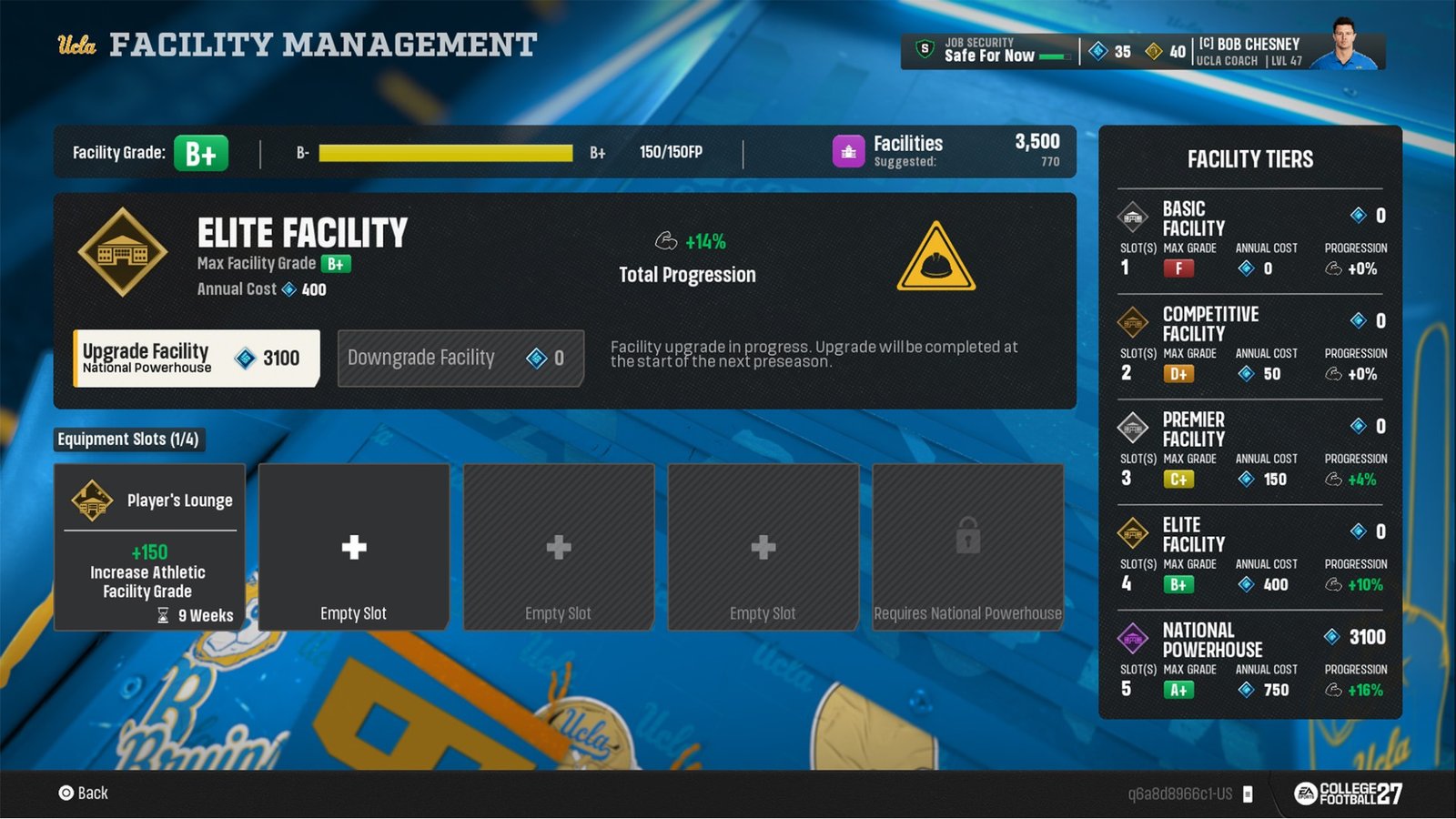
The Dynasty Blueprint expands that idea by giving programmes an annual pool of resources they can direct toward staff, facilities, recruiting NIL, and roster retention. It creates an engaging tension between immediate ambition and long-term sustainability as you spend time in this mode in EA Sports College Football 27. Spending heavily to secure a coveted prospect may solve one problem, but it can leave fewer resources to retain an established star or improve the infrastructure supporting future seasons.
NIL management is particularly effective at making modern college football feel different from a conventional franchise mode. Prospects arrive with expectations, current players can become more expensive as their status grows, and the transfer portal turns retention into a yearly concern. A coach cannot simply gather talent and assume everyone will remain patient. The programme must decide who is essential enough to protect and where its limited resources can have the greatest impact.
Those choices make smaller-school rebuilds more meaningful in EA Sports College Football 27. Taking over an under-resourced programme is no longer only a matter of winning enough games for recruiting grades to rise. There are structural limitations to confront, staff decisions to make, and expectations that evolve as the team improves. Success brings greater resources, but also greater pressure to sustain progress rather than celebrate a single breakthrough season.
The expanded Coaching Carousel complements that journey. Openings carry more context, while programme expectations and existing commitments make a new job feel like a career decision rather than a simple prestige upgrade. Moving to a famous school may provide a stronger recruiting base, but it can also mean inheriting a less flexible budget and far less patience.
The problem is that greater depth does not always produce greater clarity. The connected systems form a satisfying strategic puzzle, but the menus do not always communicate their relationships elegantly. Players who mainly want to recruit and play may find the managerial layer heavier than expected.
Progression is another source of friction in EA Sports College Football 27. The longer coaching arc is understandable after earlier rebuilds could accelerate too quickly, but the default pace risks making major achievements feel insufficiently rewarding. Adjustable progression settings help, yet their existence does not entirely solve the tension between realism and satisfaction.
EA has outlined multiple coach progression speeds, ranging from the intended long-term Career setting to faster Simulation and Casual options. Recruiting balance and offseason player progression have also been targeted for adjustment. These options offer welcome flexibility, but their introduction so soon after launch also highlights how aggressively the initial systems were tuned.
Dynasty is still better because it asks more interesting questions, even when it occasionally asks too many at once. It remains the mode most capable of turning EA Sports College Football 27 into a months-long obsession, with every recruiting loss, upset victory, and coaching departure feeding a story that belongs to the player.
Road to Glory Takes the Longer Route
Road to Glory has expanded in several worthwhile ways in EA Sports College Football 27. Tight End, Edge Rusher, and Free Safety join the playable positions, while a revised creation process allows attributes, potential, and mental abilities to define a more specific athlete. The return of a high-school stage also gives the career a stronger opening, using performance-based scenarios to build a recruiting profile before signing day.
These additions give the mode a better sense of ownership in EA Sports College Football 27. Scheme fit, competition, scholarship opportunities, and projected potential influence how a career develops, while Team Builder integration opens the door to more personalised football landscapes.
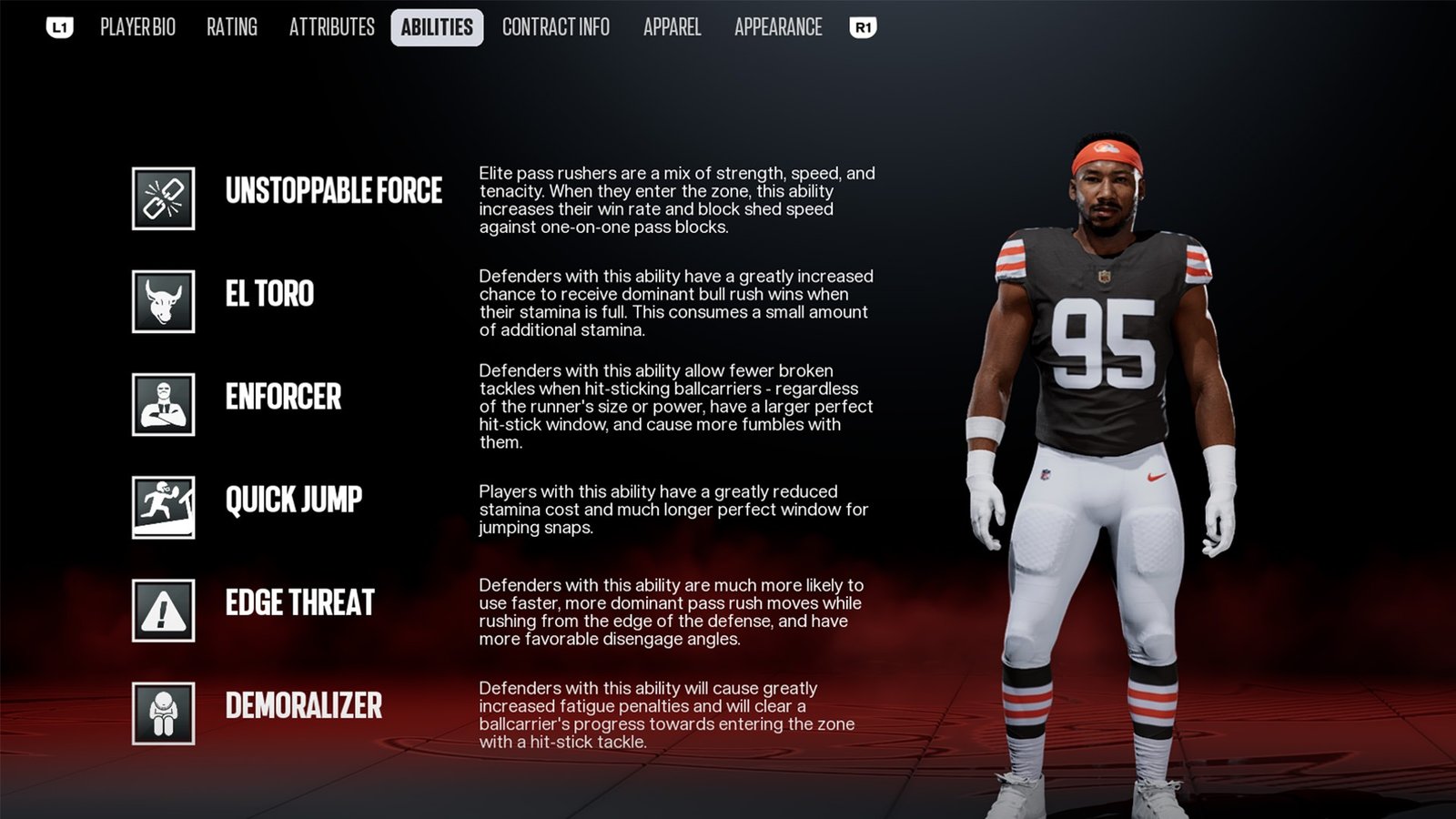
Once college begins, however, Road to Glory falls into a familiar loop. Weekly Agenda decisions balance academics, leadership, fitness, brand growth, and development, with Mental Abilities linked to how successfully those priorities are maintained. It is a sensible representation of a student-athlete’s competing demands, but repeated weeks begin to feel procedural rather than dramatic.
Progression is the larger concern. Starting ratings can be modest, overall ceilings are tied to Legacy Score, and growth is spread across difficulty, weekly management, on-field performance, and annual scholarship bonuses. The intent is to make a full career matter, but the early hours can feel restrictive, especially when strong performances are not matched by equally satisfying development.
Position-specific experiences remain uneven in EA Sports College Football 27. Playing quarterback or running back naturally provides consistent involvement, while defensive careers are shaped by camera limitations, play-calling, and whether the action develops nearby. The new choices are welcome, but simply making a position selectable does not guarantee that its career will be equally engaging.
Launch issues also more directly affect the career structure. EA acknowledged that Edge Rushers could fail to trigger the position battles needed to move up the depth chart, while problems affecting Cap Breakers were still being tracked at the time of review. These are particularly frustrating in a mode where progress is already deliberately paced over several seasons.
Road to Glory can still produce memorable stories. Winning a position battle, transferring into a better opportunity, or turning a lightly recruited player into a national star remains satisfying in EA Sports College Football 27. It simply demands more patience than the mode consistently earns, and its underlying structure needs a stronger sense of event and consequence.
Ultimate Team Carries Familiar Baggage

College Football Ultimate Team remains the most overtly live-service part of the package. Its revised upgrade system offers more flexibility, allowing player items to develop through Skill Points, archetype paths, attribute upgrades, abilities, and chemistry decisions. Objectives tied to selected items also create a clearer connection between using a player and improving that card.
For invested players, these changes provide more control over roster development. Respec options reduce menu friction, while evolving cards can remain useful for longer, which is a good thing in EA Sports College Football 27.
The familiar issue is that every improvement exists inside an economy designed to keep players chasing the next reward. Packs, currencies, seasonal programmes, and escalating item quality make Ultimate Team feel like a parallel hobby demanding constant attention. It can be entertaining, but its priorities remain fundamentally different from Dynasty’s long-term storytelling.
More damaging was the initial decision to bring paid progression into Road to Glory and Online Dynasty. EA removed those purchases on July 11, shortly after launch, but their brief existence raised an obvious question about whether progression was paced with additional spending in mind for EA Sports College Football 27.
EA has since explained that the progression structure was designed around long-term careers rather than paid shortcuts. That explanation is preferable to leaving the purchases in place, but the episode remains a warning about where traditionally self-contained modes could be pushed next. The community should not have needed to object so loudly before such an obvious line was recognised.
Saturday Still Feels Special
Whatever frustrations exist between games, EA Sports College Football 27 still sells the spectacle of the sport exceptionally well. Stadium entrances, marching bands, rivalry details, crowd themes, weather, and school traditions give programmes identities beyond ratings and uniforms. A major night game feels different from an afternoon visit to a smaller stadium, while hostile road environments can turn ordinary drives into tense tests of execution.
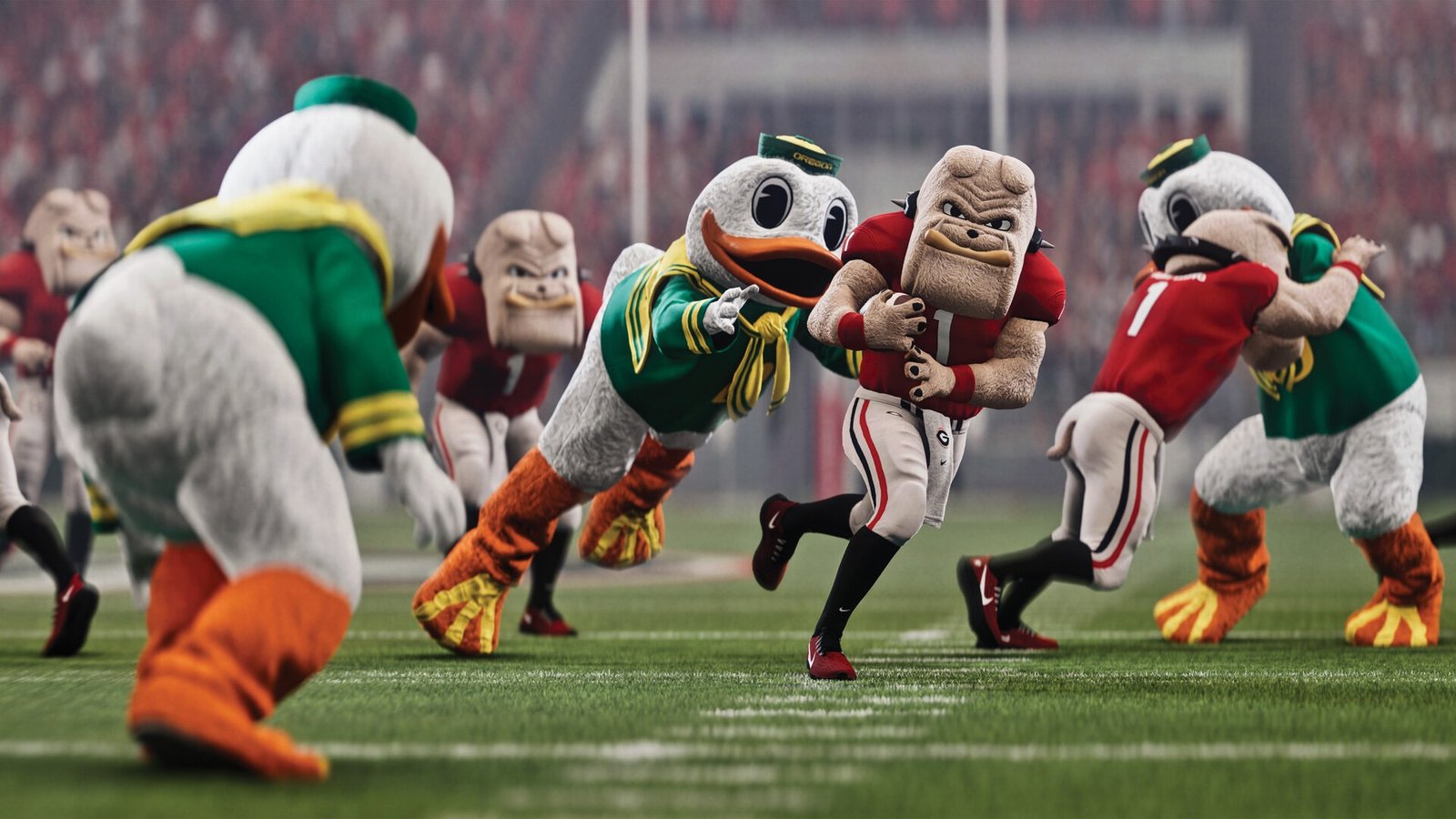
The option to select crowd themes adds another welcome layer of control, whether that means preparing a White Out, coordinating uniforms with the stands, or giving an important rivalry game a more deliberate visual identity. It may be a relatively small addition, but it supports the series’ understanding that presentation is inseparable from college football culture.
The presentation of EA Sports College Football 27 is not completely fresh, and commentary repeats across a long Dynasty, but the accumulated detail remains a major strength. It understands that college football is built on local rituals and regional grudges.
A Strong Season With Work Still Ahead
EA Sports College Football 27 is an excellent football game wrapped in a package that occasionally loses sight of why its best modes are compelling. On the field, smarter movement, more rewarding rushing, improved defensive behaviour, and stronger player differentiation create a confident simulation of the college game. Dynasty uses that foundation to build the deepest and most demanding programme experience the revived series has offered.
The trade-off is friction. Dynasty can become cumbersome, Road to Glory progression is slower and less dramatic than it should be, and Ultimate Team continues to pull attention towards an economy rather than the sport itself. The withdrawn paid-progression experiment is especially difficult to ignore because it attempted to extend those priorities into modes that did not need them in EA Sports College Football 27.
Yet it is hard to stay frustrated once another rivalry game begins, the crowd erupts, and a season comes down to one final possession. EA Sports College Football 27 does not secure an undisputed championship, but it delivers enough great football and long-term drama to remain a convincing contender.
EA Sports College Football 27 is now available on PlayStation 5, Xbox Series X|S, and PC.
SavePoint Score
Summary
EA Sports College Football 27 delivers its best football where it matters, pairing smarter on-field action with a far more absorbing Dynasty. Road to Glory progression and EA’s monetisation choices stop an excellent package from reaching championship form.
