

Table of Contents
Onimusha: Way of the Sword on PS5 Pro
There are plenty of ways Capcom could have approached the return of Onimusha. After two decades without a completely new entry, simply modernising the fundamentals and leaning heavily on nostalgia might have been enough to get long-time fans through the door. Instead, Onimusha: Way of the Sword feels like the work of a team determined to demonstrate exactly why this series deserves to stand alongside Capcom’s modern heavy hitters.
That starts with the sword in Miyamoto Musashi’s hands. Having already spent time with Onimusha: Way of the Sword before, its combat always looked destined to become the centrepiece. What the complete journey reveals is just how much more Capcom was keeping in reserve.
Its opening hours establish an already satisfying rhythm of attacks, parries, deflections, and evasive movement, but that foundation continues to expand almost until the end, layering additional possibilities onto a system that somehow remains immediately readable even as Musashi’s repertoire becomes increasingly elaborate.
Everything surrounding it helps as well. This vision of Kyoto is beautiful and repulsive in equal measure, its Genma are among Capcom’s most grotesquely creative monsters, and Musashi finds himself surrounded by a cast capable of providing humour, menace and genuine intrigue. When Onimusha: Way of the Sword funnels all of that into its carefully constructed story stages and spectacular boss encounters, few action games look or feel quite as confident.
Its ambitions become less convincing as Kyoto opens up and optional activities begin to fill the map, with repetitive objectives and visually similar streets struggling to match the creativity found elsewhere. It is a noticeable blemish, particularly when almost every other element feels so carefully considered, but thankfully one that sits around the edges of an adventure whose blade remains remarkably sharp.
A Sword That Keeps Getting Sharper
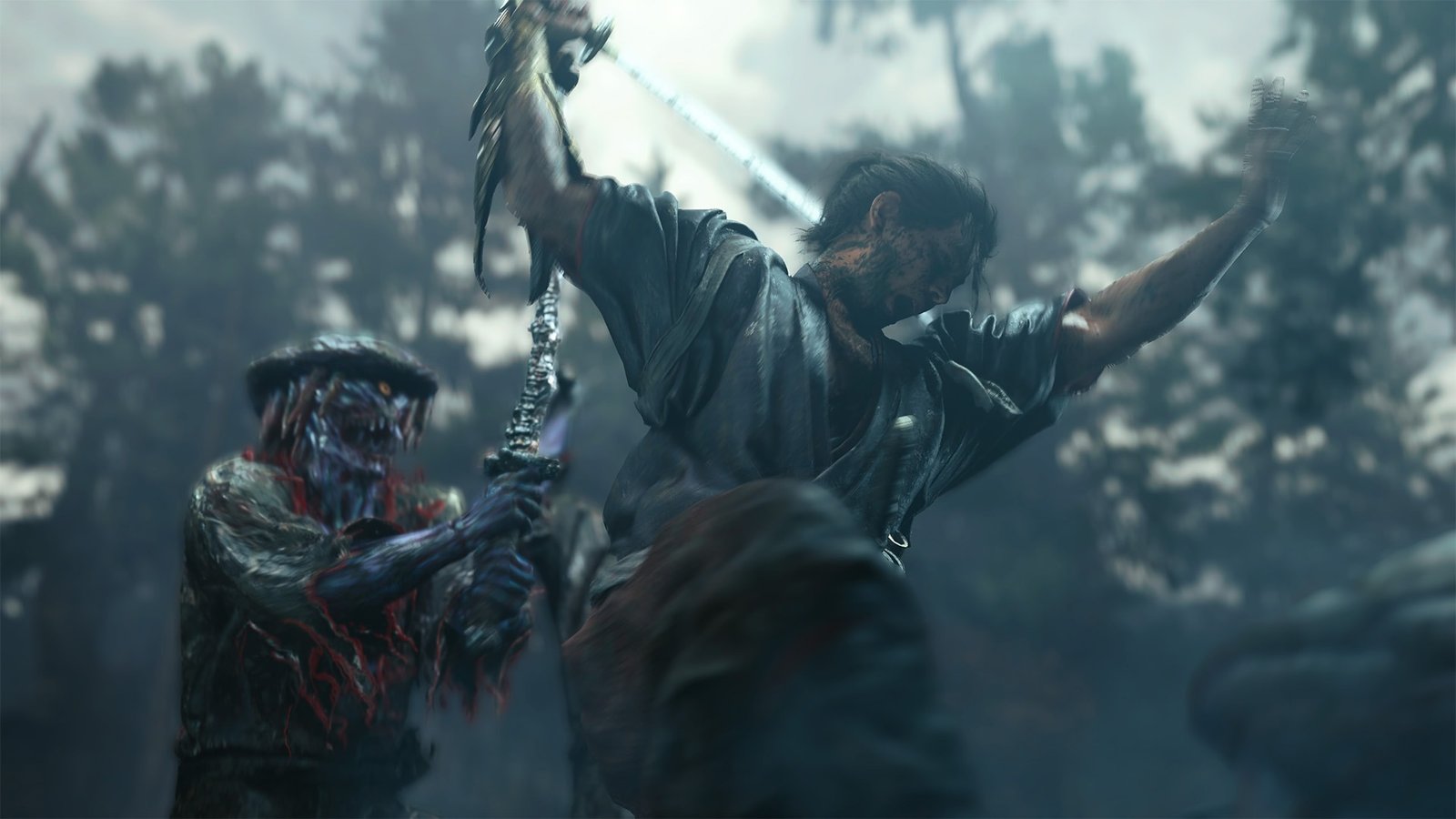
It would have been easy for Onimusha: Way of the Sword to peak early. Parrying an attack before cutting through a Genma is immediately gratifying, while deflecting incoming strikes and projectiles brings another defensive option that feeds directly into aggression. Dodging has its place too, particularly once tougher enemies start demanding lateral movement rather than allowing Musashi to simply stand his ground. Yet these fundamentals are only the first layer of what eventually becomes one of the most rewarding combat systems Capcom has produced.
Progression plays a huge role in keeping that sensation alive. Musashi’s sword, armour and Oni Gauntlet can be strengthened using materials discovered throughout the world, providing straightforward statistical growth, while the skill tree is where his fighting style truly begins to transform. Basic techniques become more effective, Oni abilities gain additional applications and seemingly defensive manoeuvres gradually become offensive opportunities.
Blazing State is one of the most important examples in Onimusha: Way of the Sword. Successfully parrying attacks helps trigger a heightened state that increases Musashi’s damage while making his deflections far more damaging to enemy stamina. Reflex Dodging undergoes a similar evolution. What initially feels like another way of escaping danger eventually fills a gauge that can be converted into Reflex Combos, turning precisely timed movement into another route towards overwhelming an opponent.
The Oni Armaments expand things further. Six become available over the course of the adventure, and each serves a particular purpose rather than simply acting as a different flavour of super attack. The Two Celestials, a pair of twin blades, are especially useful when health is running low because landing their attacks extracts precious yellow souls from enemies. The Earth-Shakers demand more commitment, requiring time to charge before releasing devastating area damage capable of tearing through armour and destabilising groups.
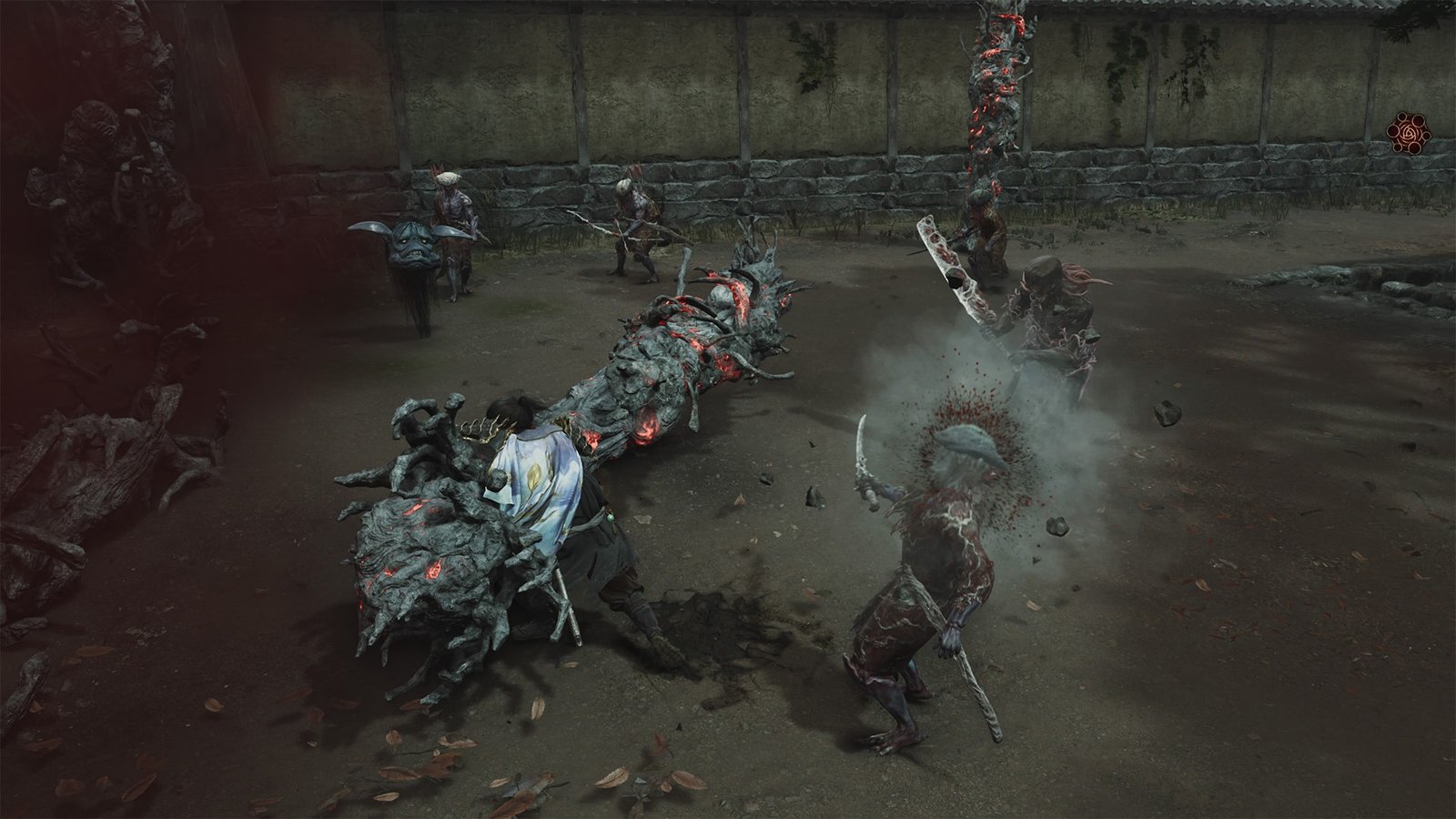
Even the Oni Bow grows beyond being an obligatory ranged option. As additional abilities become available, it can be integrated into encounters as another means of stopping stamina recovery, weakening an opponent before Musashi closes the distance. That gradual transformation is emblematic of Onimusha: Way of the Sword as a whole. Tools are rarely introduced, demonstrated and forgotten. Instead, many become increasingly useful as new skills encourage you to reconsider where they fit within your preferred approach.
Eventually, combat stops feeling like a collection of mechanics and becomes a language. Parry, deflect, evade, weaken, reposition and punish. The better you understand it, the more aggressively Musashi can dictate every confrontation.
Every Genma Demands an Answer
Nowhere is that mastery more apparent than with Issens. The classic Onimusha technique returns as the ultimate expression of confidence, requiring precise timing in exchange for near-immediate execution against most standard enemies. There is always risk involved, particularly when a mistimed attempt can leave Musashi exposed, but few things in Onimusha: Way of the Sword are as satisfying as reading an incoming attack perfectly and cutting through a Genma with a single beautifully animated response.
Break Issens offer another route towards that same spectacle. Wearing down an enemy’s stamina eventually leaves them vulnerable to a devastating strike, rewarding sustained pressure rather than a single perfect moment of timing. Against bosses, the decision becomes more tactical, with Musashi often able to target specific areas to inflict greater damage or prioritise extracting additional souls instead.
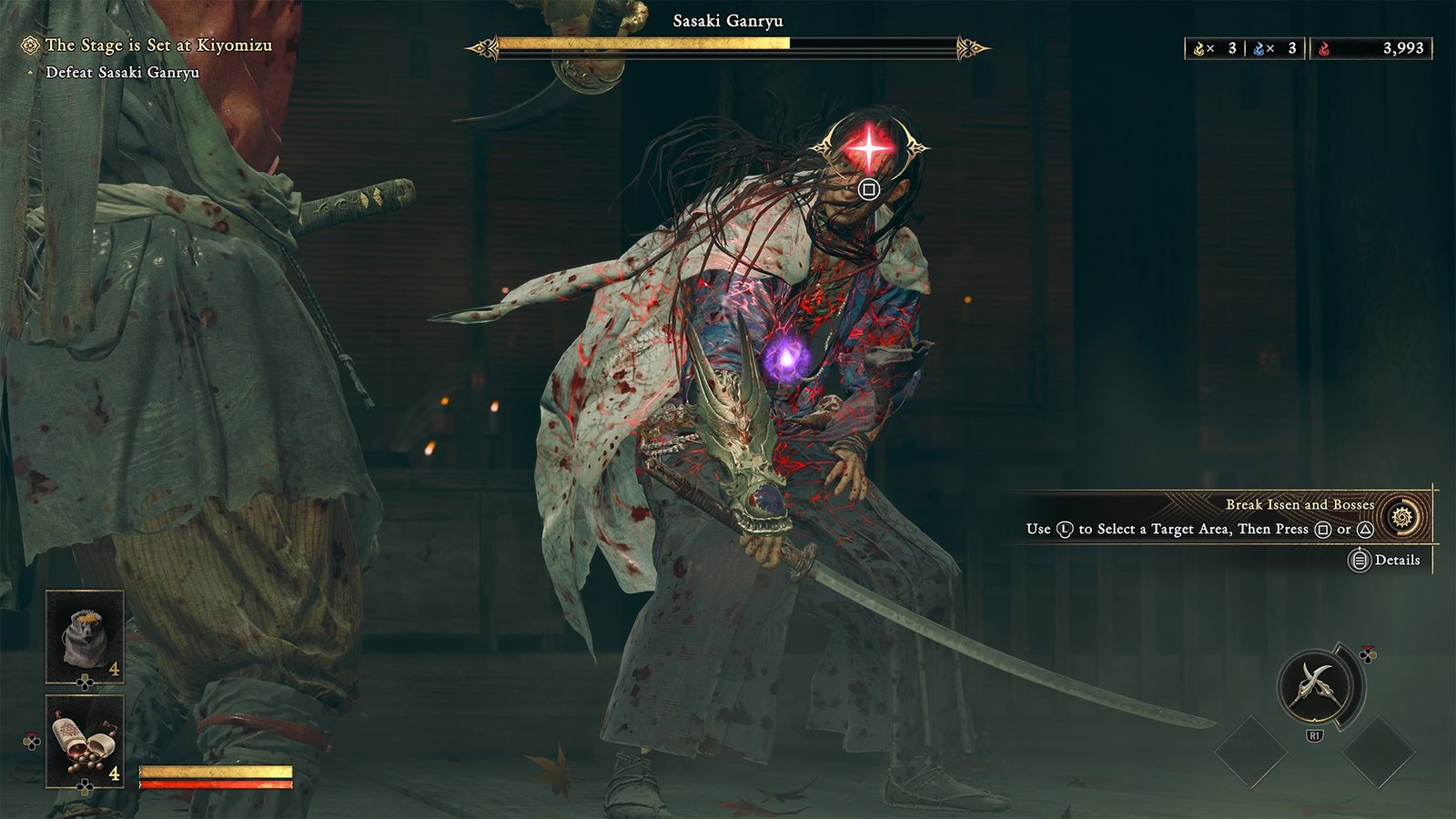
Neither system exists in isolation. Blade Barrages force Musashi to withstand and respond to sustained assaults, while Blade Locks turn direct clashes into brief contests where you must brute-strength your way to come out on top. Add Blazing State, Reflex Combos, Oni Armaments and the constant management of red, blue and yellow souls, and Onimusha: Way of the Sword becomes remarkably good at making every mechanic feed into another.
More importantly, the Genma are capable of fighting back. Enemies that once looked disposable begin appearing with armour. Others introduce grabs, aggressive combinations or attacks that cannot simply be avoided through conventional movement, forcing Musashi to parry, deflect or deploy a specific response. Familiar enemy archetypes gain additional tricks as the adventure progresses, preventing earlier opponents from becoming completely irrelevant simply because Musashi now possesses a much larger arsenal.
The result is an excellent escalation of power on both sides. Musashi unquestionably becomes stronger and significantly more versatile in Onimusha: Way of the Sword, but the battlefield evolves with him. Walking into a gathering of relatively ordinary Genma and becoming careless can still result in a brutal punishment, particularly when several enemy types begin overlapping their abilities. Mastery does not remove danger. It simply gives you more ways of controlling it.
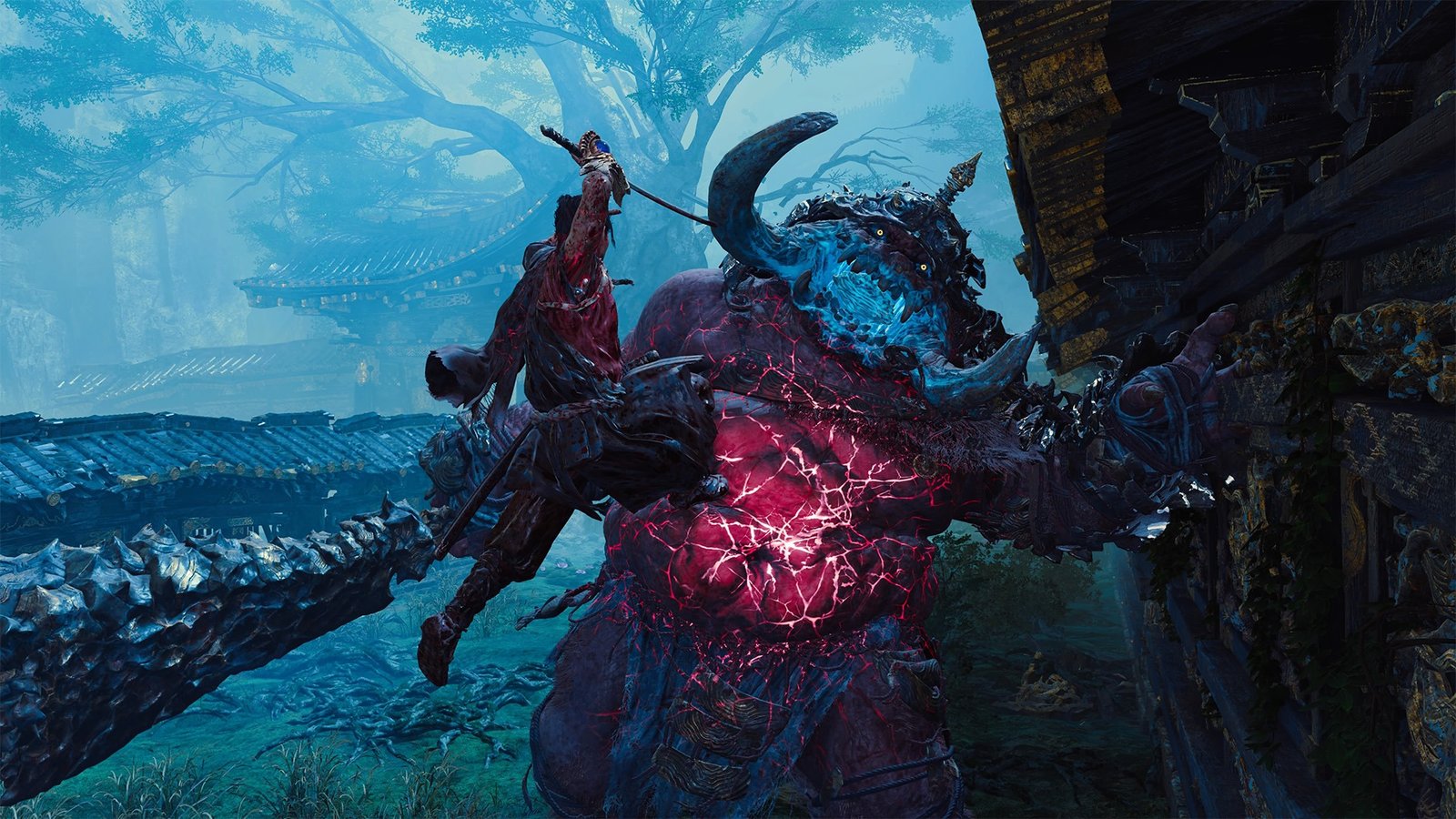
Bosses push this philosophy furthest. Many are mechanical showcases first, asking you to understand attack sequences, manage stamina, identify openings and recognise when aggression needs to give way to defence. Yet Capcom refuses to let them become sterile tests of pattern recognition. Weather, environmental changes and increasingly grotesque transformations regularly turn major encounters into spectacles, while the opportunity to unleash a perfectly timed counter or devastating Break Issen provides an appropriately theatrical conclusion to a hard-fought exchange.
Combat in Onimusha: Way of the Sword is a dangerous dance even after Musashi has learnt most of its steps, and that tension is precisely what makes mastering it so satisfying.
Monsters Worth Drawing a Sword Against
It certainly helps that the things Musashi is cutting apart look spectacularly revolting in Onimusha: Way of the Sword. The Genma are an extraordinary collection of creatures, with Capcom embracing horror, mythology and outright absurdity to create enemies that are immediately memorable. Basic sword-wielding demons quickly make room for severed flying heads, unnatural assassins, hulking monstrosities and angelic abominations whose appearance suggests something holy has been corrupted beyond recognition.
There is an impressive consistency to their designs even when individual creatures are wildly different. They belong to the same diseased world, covered in twisted flesh, impossible anatomy and visual details that invite an instinctive mixture of fascination and disgust. Most importantly, their appearances often complement the way they fight, allowing silhouettes and animations to communicate danger before an attack has even begun.
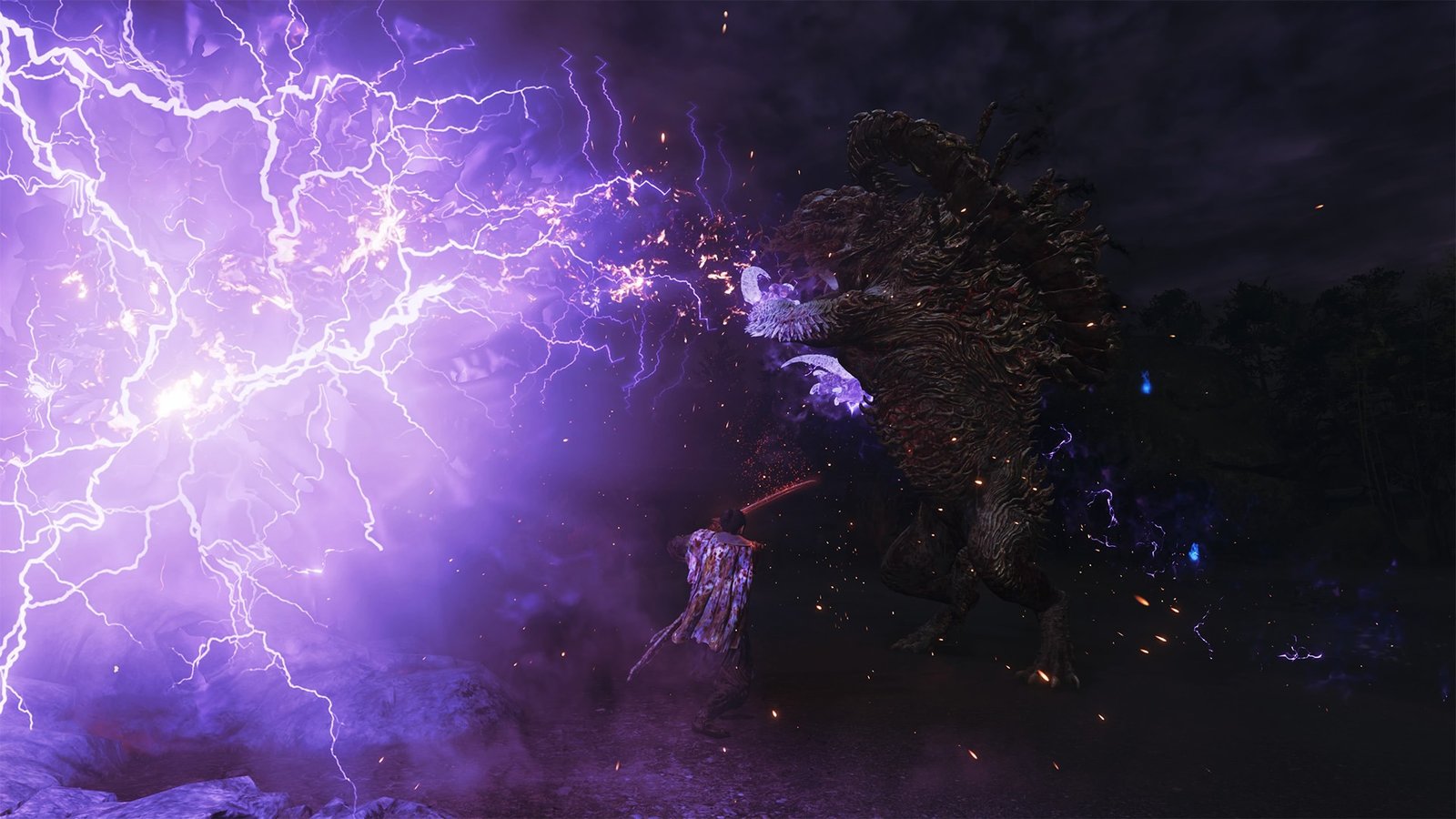
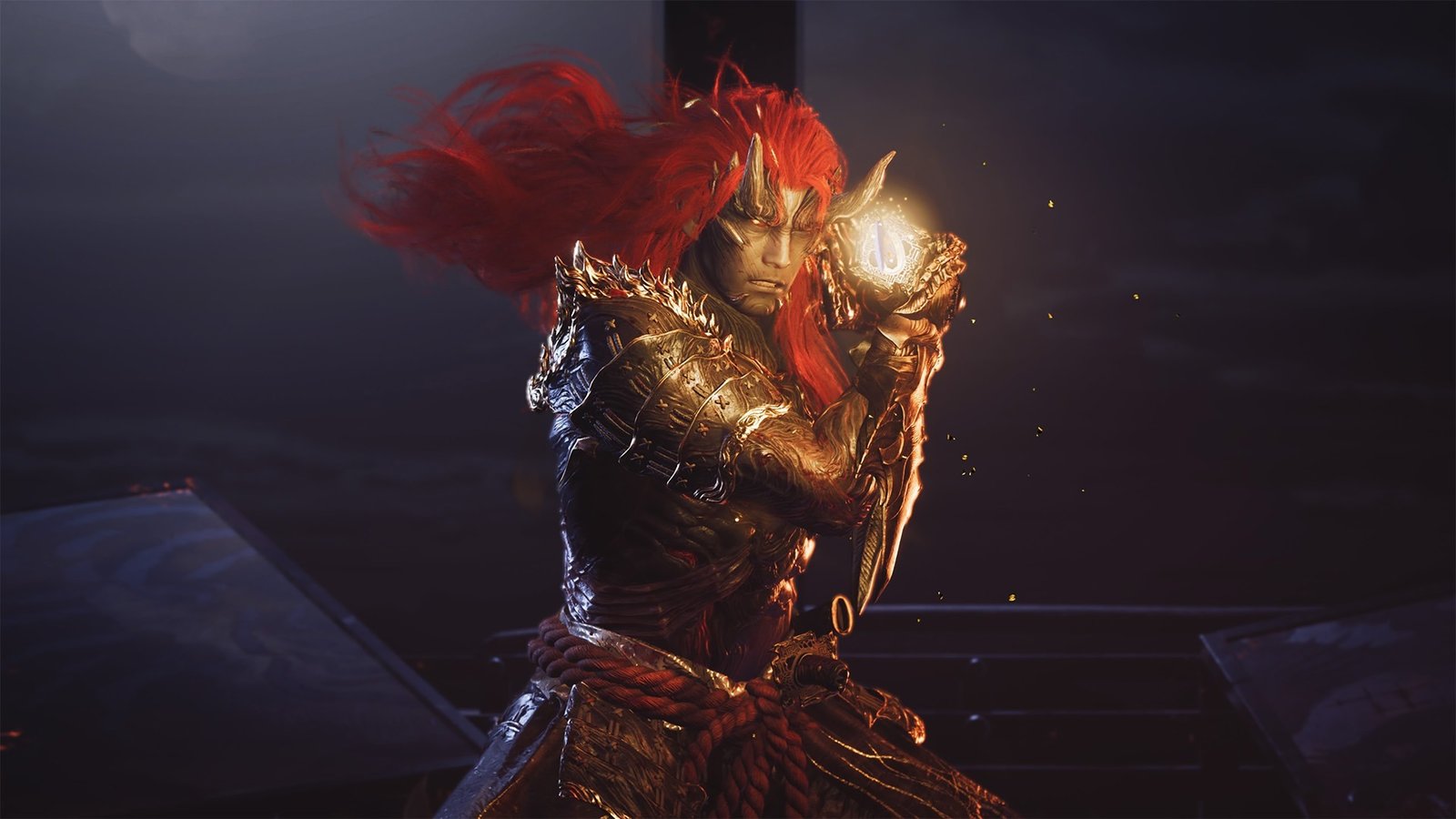
Bosses naturally receive the most extravagant treatment. Some are almost too magnificent to destroy, at least until they start trying to tear Musashi apart. Dramatic lighting, shifting environments and weather effects amplify their entrances and transformations, but it is the animation work of Onimusha: Way of the Sword during combat that sells their presence. Blades collide with real force, bodies recoil under heavy strikes, and Musashi’s finishers carry an exceptional sense of momentum.
The RE Engine continues to prove equally valuable away from combat. Facial animation is especially impressive, allowing this version of Musashi to be considerably more expressive than his imposing reputation might suggest. He can be warmly amused during quieter exchanges, bewildered by the increasingly strange circumstances surrounding him, and visibly furious when confrontation becomes unavoidable.
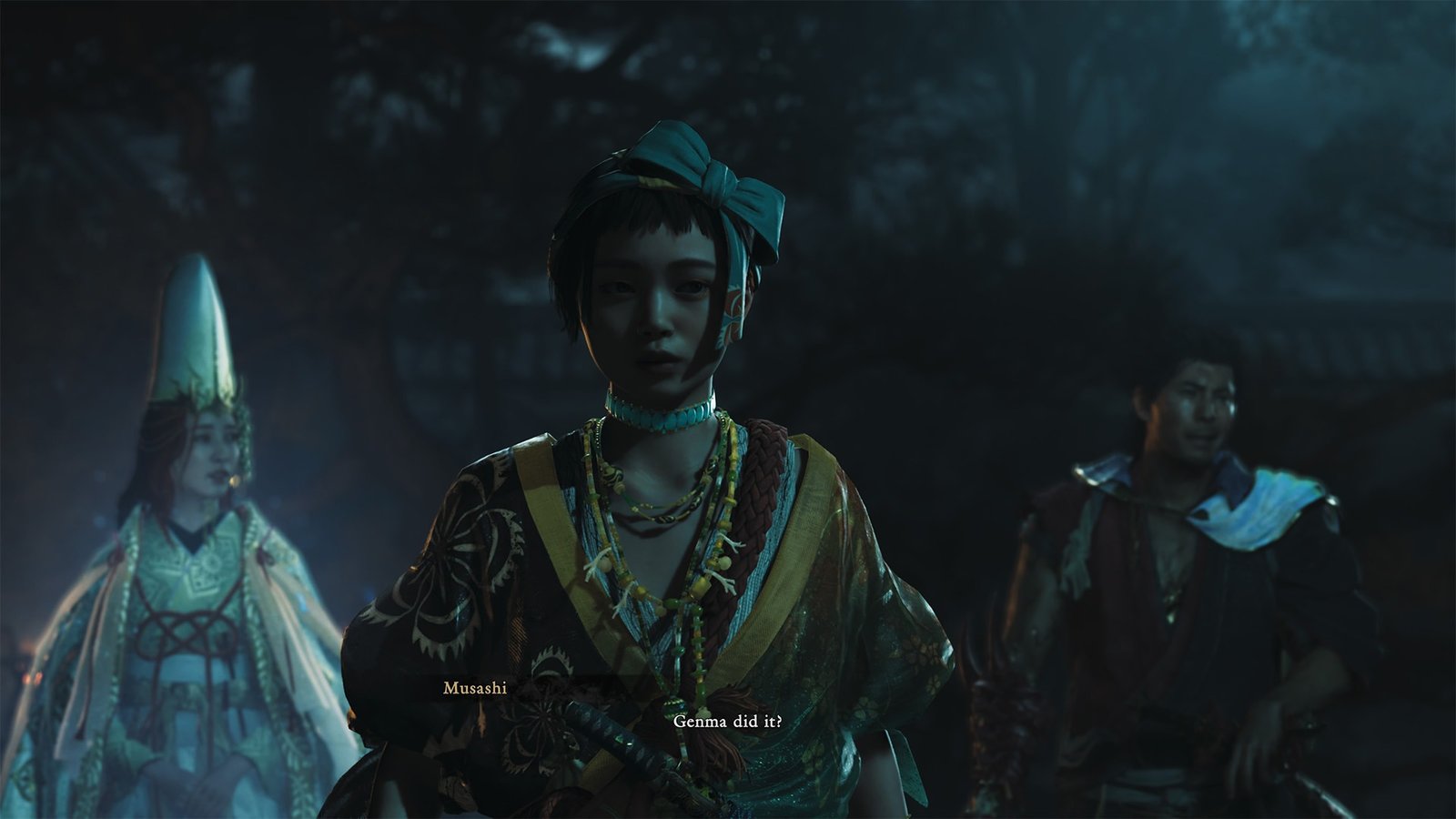
That versatility makes Musashi an easy protagonist to spend time with. He remains a formidable warrior, but Onimusha: Way of the Sword is not afraid of making him personable or occasionally amusing rather than maintaining an exhausting layer of stoicism.
The supporting cast benefits from that same attention. Yoshitsune commands almost every scene he enters with theatrical menace, while Ganryu’s volatile personality provides an entertaining contrast to Musashi and gives their rivalry an energy that develops considerably beyond simply putting two famous swordsmen on opposite sides of a battlefield.
Capcom has clearly taken liberties with history and legend, but those reinterpretations become part of the appeal. Familiar names and stories are twisted through the mythology of Oni and Genma until Onimusha: Way of the Sword develops an identity that feels rooted in Japanese folklore without becoming constrained by it.
Contained Adventures Bring Onimusha: Way of the Sword to Life
Some of Onimusha: Way of the Sword‘s finest stretches come when Musashi leaves the wider streets of Kyoto behind. Story progression regularly carries him into more self-contained locations, and these stages are where Capcom’s level design feels most assured. Rather than relying on sheer scale, each environment can build and maintain a specific atmosphere, blending exploration, environmental storytelling, character development, and combat without any one element overstaying its welcome.
There is almost always something visually distinctive waiting around the next corner. Areas can shift from peaceful natural beauty to unmistakable corruption within minutes, while architecture, lighting, and environmental details quietly reinforce whatever legend or tragedy is being explored. Encounters consequently feel authored rather than simply placed on a map, with enemy compositions and environmental hazards functioning as part of the level rather than as interruptions between objectives.
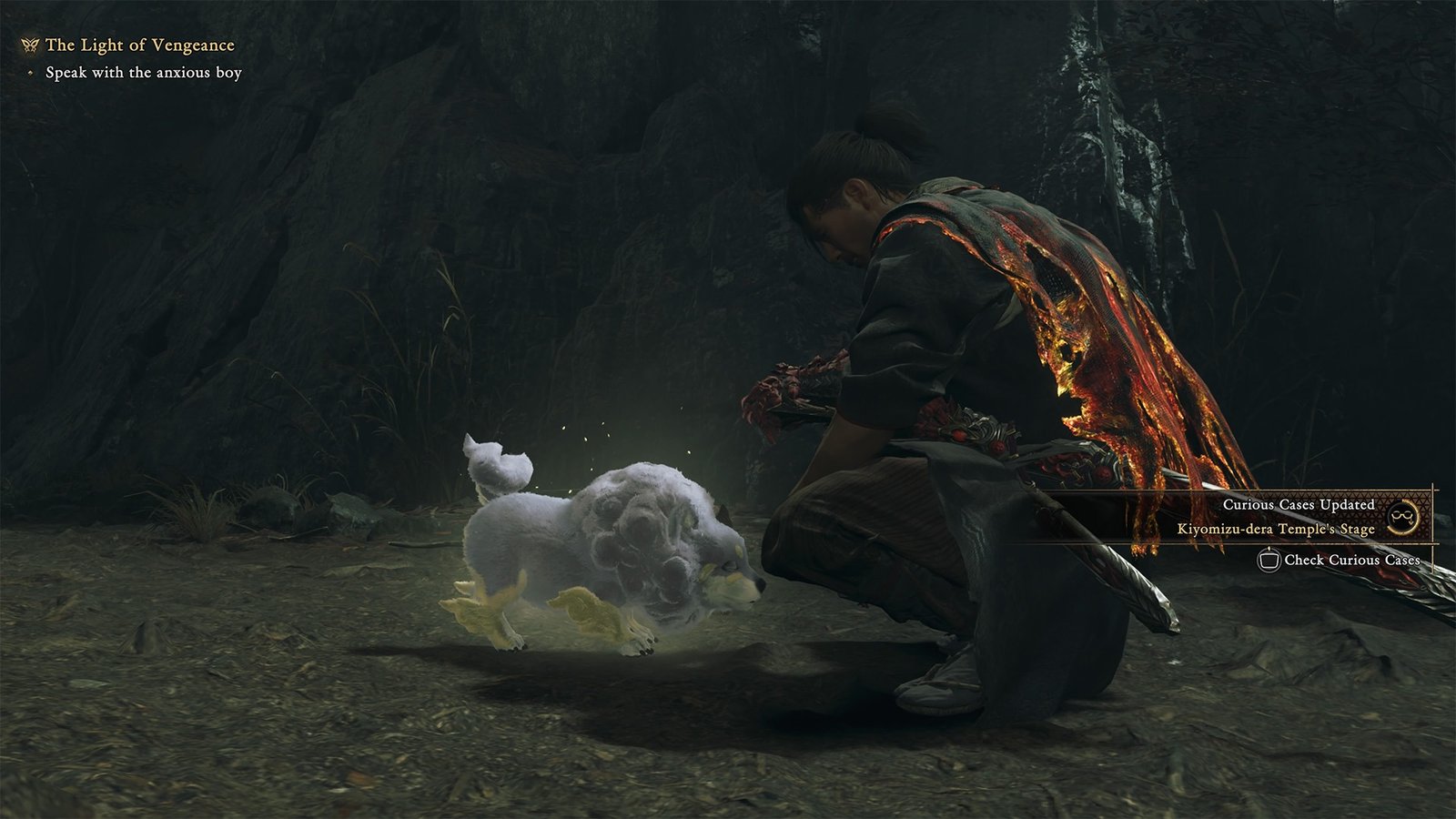
New Oni abilities occasionally broaden exploration in Onimusha: Way of the Sword too. Skills used during combat can unlock traversal opportunities, opening previously inaccessible paths and providing another reason to examine familiar spaces more carefully. It is not an elaborate Metroidvania structure, but the overlap between Musashi’s expanding supernatural abilities and environmental navigation makes his progression feel tangible outside battle.
These stretches also provide the strongest vehicle for Onimusha: Way of the Sword’s storytelling. Characters have room to breathe, supernatural events gain proper context, and the myths underpinning each location become more than flavour text attached to another marker on the map.
It is during these chapters that the game’s earlier promises feel fully realised. Combat is excellent enough to carry an action game by itself, but wrapping it within an environment that is simultaneously beautiful, unsettling and narratively relevant elevates the experience considerably. Unfortunately, returning to Kyoto itself highlights exactly how much is lost when that same density gives way to a broader structure.
Kyoto Opens Up but Loses Its Edge
Kyoto initially feels deliberately oppressive. Much of the city is swallowed by a thick red Malice that will eventually kill Musashi if he remains exposed for too long, constraining exploration until demonic plants can be cleared and additional districts reclaimed.
It is an effective introduction of the threat in Onimusha: Way of the Sword. Every newly liberated section offers another glimpse of the city, additional routes begin opening and previously inaccessible locations can eventually be reached using newer Oni abilities. There is a satisfying sense that Musashi is physically pushing back the Genma’s influence. The problem is that the reward for doing so is rarely as interesting as the process suggests.
Large stretches of Kyoto begin to blend into one another, dominated by similar streets and architecture, lacking the distinctive visual identities found throughout the game’s smaller stages. Exploration frequently leads to another group of enemies or another piece of treasure rather than something that makes a particular corner of the city memorable.
Optional quests suffer more significantly. The legends and strange stories behind them are often worth discovering, particularly because Onimusha: Way of the Sword enjoys corrupting old tales in amusing or horrific directions, but the game’s mechanical execution rarely matches the quality of its premises. Travel somewhere, kill the Genma waiting there and repeat the process until the tale reaches its conclusion. Even when the story surrounding an activity changes, what Musashi actually does often remains disappointingly familiar.
Collectibles such as the missing Lion Dogs encounter a similar issue. Learning more about them and uncovering the associated lore can be charming, but physically locating one before pressing a button is hardly compelling exploration. These activities do at least provide useful upgrade materials, ensuring there is a practical reason to engage with them, and the strength of the underlying combat means that being told to fight another group of Genma is hardly a punishment.
Nevertheless, there is a clear disparity between the creativity poured into the game’s central adventure and the comparatively routine structure of its optional distractions. It is the rare area where Onimusha: Way of the Sword seems content to follow familiar modern conventions rather than sharpening them into something distinctly its own.
Thankfully, that weakness never overwhelms what Capcom has accomplished elsewhere. The side content may struggle to make the most of Kyoto, but every return to a major story location, every monstrous new Genma and every battle that asks you to demonstrate everything Musashi has learnt reminds you where the game’s priorities truly lie.
Onimusha: Way of the Sword brings back a long-dormant series without treating its history as something precious that cannot be touched. Capcom has preserved the satisfaction of absorbing souls and the thrill of an expertly timed Issen, then built an enormously richer combat system around those ideas, one that continues revealing new possibilities long after most action games have exhausted their tricks.
There are rougher edges beyond the blade, most notably whenever Kyoto asks its optional content to carry too much of the adventure, but they are surrounded by extraordinary enemy design, expressive performances, memorable environments and some magnificent boss encounters.
Twenty years is an awfully long time to wait for another proper entry in the franchise. Onimusha: Way of the Sword makes a compelling argument that Capcom knew exactly how much that return needed to matter.
Onimusha: Way of the Sword will launch on September 4 for PlayStation 5, Xbox Series X|S, Nintendo Switch 2, and PC.
SavePoint Score
Summary
Onimusha: Way of the Sword is a spectacular revival built around sublime, ever-evolving combat, striking Genma design and memorable boss battles. Repetitive side activities dull the blade slightly, but little else gets in Musashi’s way.
