

Table of Contents
Marvel’s Wolverine on PS5 Pro
There was never much doubt that Insomniac Games could make Wolverine look violent. Give Logan a pair of adamantium claws, an appropriately mature rating and enemies unfortunate enough to stand in his way, and the blood practically takes care of itself. Marvel’s Wolverine certainly indulges that fantasy, from severed limbs and decapitations to moments where Logan himself can have flesh torn away until there is little more than his adamantium-coated skeleton staring back at you.
After finishing the story and everything optional in roughly 18 hours, however, the blood is nowhere near the most interesting part. Marvel’s Wolverine succeeds because so much of the experience revolves around Logan himself.
The focused level design, aggressive combat, Rage system and even its quieter moments understand that being Wolverine involves considerably more than having claws that can cut through almost anything. This is a story about trauma, memory, anger and the people who continue trying to reach a man who has spent much of his extraordinarily long life pushing everyone else away.
That commitment to its main character also creates some of the game’s weaknesses. Wolverine may be capable of surviving almost anything, but that creates an awkward problem when designing enemies capable of challenging him. As the campaign heads into its final stretch and Insomniac piles on stronger opponents, larger groups, and tougher encounters, the brilliant brutality starts to feel repetitive.
Starting With a Savage Edge
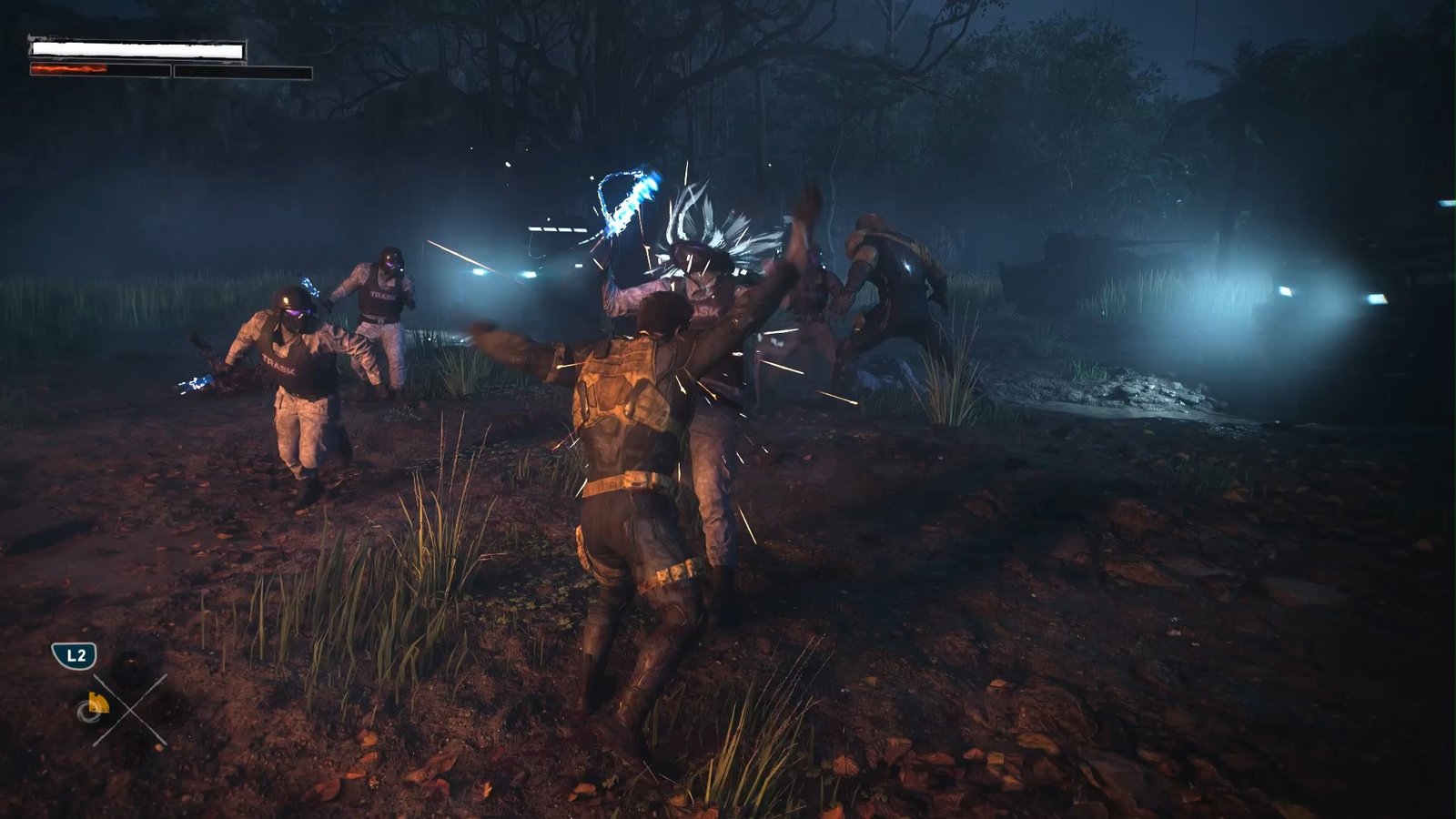
At its best, combat in Marvel’s Wolverine is fast, violent and constantly pushing you towards the next unfortunate target. Logan can rapidly lunge across a battlefield, shred one opponent, kick another towards an environmental hazard and turn his attention towards someone firing from across the arena before the first body has even hit the floor.
The Reavers and The Hand provide the bulk of the opposition, while Sentinels and other more specialised enemies steadily complicate matters through shields, ranged weapons, invisibility and sheer physical size. There is pleasure simply in seeing what Logan will do next in Marvel’s Wolverine.
Finishers can be spectacularly excessive, claws find their way through various parts of the human anatomy, and damage remains visible on Wolverine himself as his body repairs whatever has just been done to it. Watching Logan return from injuries that would reduce practically anyone else to a corpse remains an excellent visual expression of the character. The problem with spectacle is familiarity.
There are only so many times an animation can shock you before it becomes another part of the combat vocabulary, and across that many fights in Marvel’s Wolverine, certain kills and dismemberments inevitably start repeating. That would matter less if the underlying combat kept evolving at the same pace as the threats surrounding Logan, but by the second half, that balance slips.
Parrying is perhaps the clearest example. There is an instinctive expectation that successfully catching an attack with Wolverine’s adamantium claws should create a meaningful interruption, either staggering an enemy or producing enough breathing space to turn defence into aggression. Instead, later encounters increasingly feature chained attacks and several enemies applying pressure simultaneously, so a successful response to one threat does not necessarily break the momentum of everyone else.
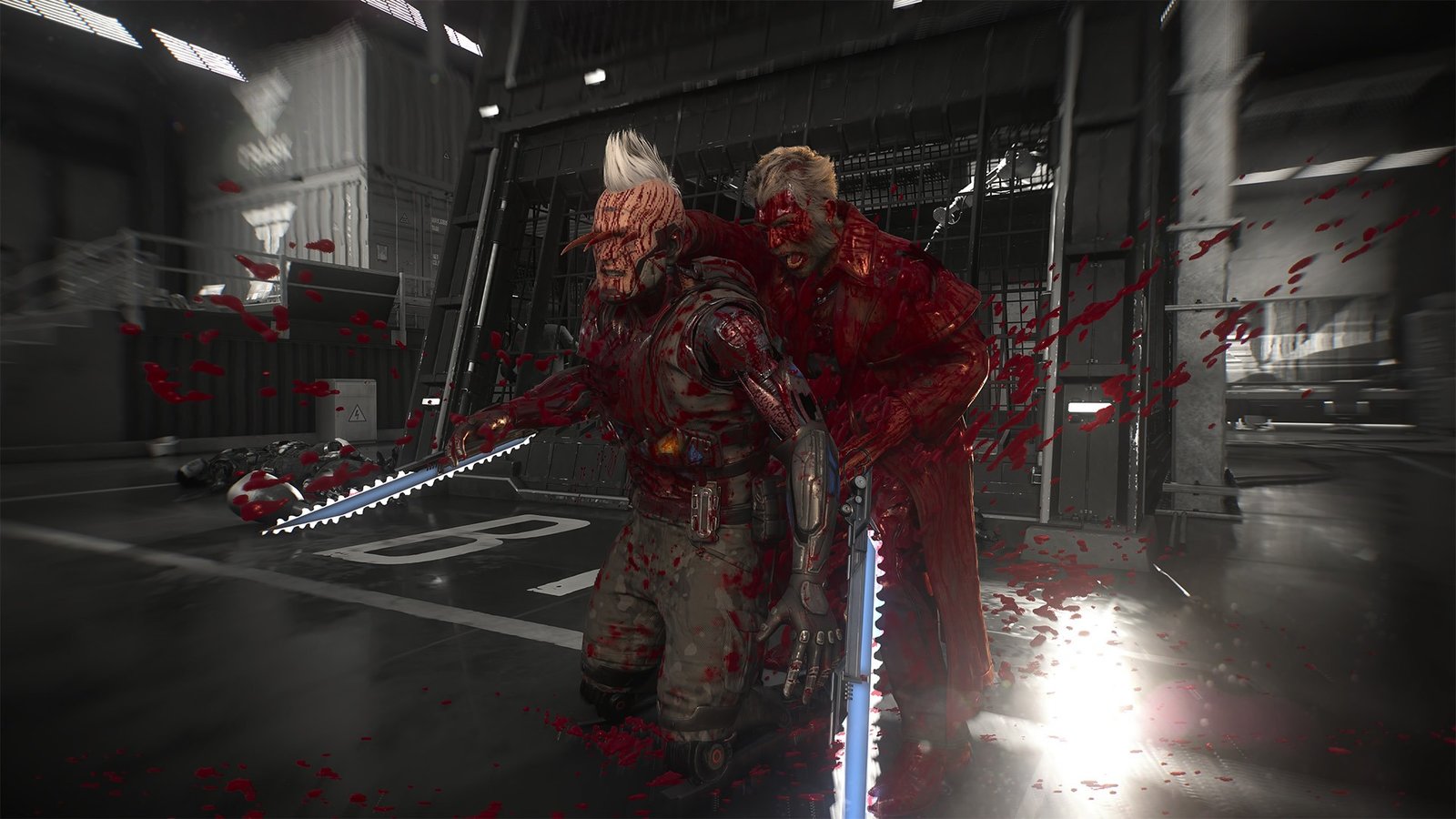
It can leave Logan trapped in a defensive cycle, even though he’s technically doing what the game asks. Ranged opponents complicate that pressure, while shielded, invisible, and larger enemies demand extra attention.
Individually, those archetypes add useful variety, and prioritising the right threat remains key to surviving larger encounters. Together, though, they can turn what initially feels like controlled savagery into something messier, especially when enemies are chaining attacks while another opponent is firing from elsewhere.
Rage Helps Wolverine Survive When Technique Is Not Enough
Thankfully, Rage becomes increasingly important rather than falling away as another meter to mindlessly activate. Earlier encounters in Marvel’s Wolverine give Logan room to remain aggressive because his healing factor and Special Techniques provide enough security to make recklessness enjoyable.
Later fights change that equation. Enemies can wear Wolverine down quickly, Techniques have cooldowns, and there are moments where survival becomes less about dominating the room than finding enough time to recover and regain control. That is where Rage works best.
There is something very Wolverine about being beaten towards the edge of defeat, surviving anyway and turning that punishment back on everyone responsible. Rage gives the player another resource to manage when everything else is exhausted, fitting naturally with the idea that putting Logan under increasing pressure doesn’t necessarily make him less dangerous.
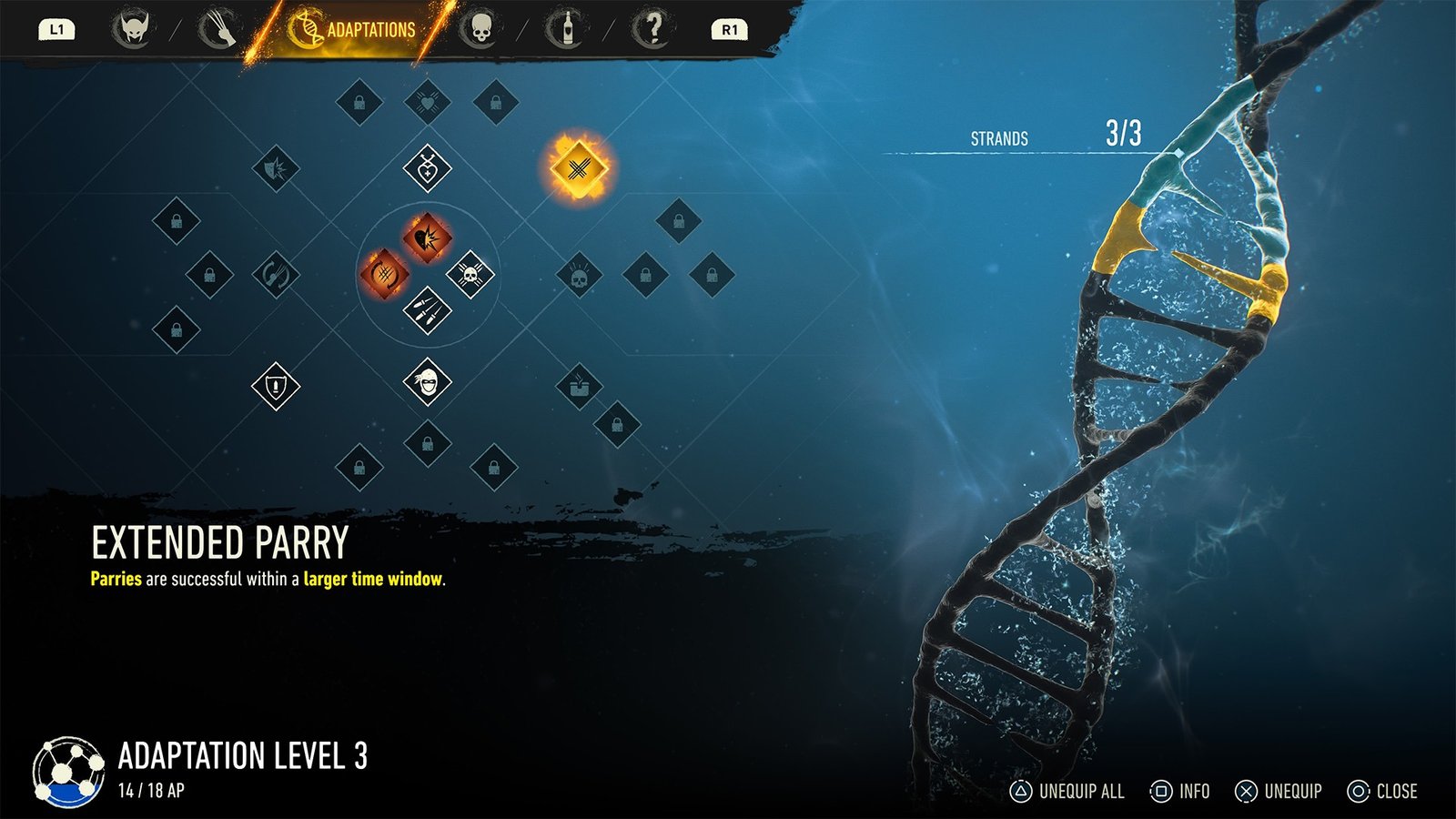
Special Techniques and Adaptations complement that system well. Techniques provide crowd control, powerful attacks, and ways to respond to particular situations, while Adaptations let players favour enhancements that better match how they prefer to fight. By the end, though, you will have acquired everything, so this is not an RPG system designed around radically different builds.
The choice is predominantly about what you prioritise first and which Adaptations you prefer to equip. That streamlined progression works because Marvel’s Wolverine never pretends to be something more complicated. Nightmare Trials unlock additional DNA Strands and Adaptations, crafting suits increases Logan’s health, and exploration provides materials to keep that progression moving.
There is almost always a worthwhile reason to investigate what is around the next corner without turning Wolverine into someone constantly comparing statistically similar pairs of trousers. Stealth offers another welcome change of pace. It remains entirely optional in most applicable encounters, but quietly stalking enemies and clearing an area without being discovered gives the player a different expression of Wolverine’s predatory side.
Better yet, detection never feels like catastrophic failure. If somebody sees Logan, the solution usually involves extending the claws and accepting that the quieter approach has reached its natural conclusion.
Bigger Enemies Expose the Limits of Wolverine’s Claws
Unfortunately, the problems become harder to ignore whenever Marvel’s Wolverine substantially increases the size of whatever Logan is fighting. Large enemies and bosses frequently repeat their attack patterns while absorbing enormous amounts of damage, leaving players with relatively few ways to become more effective beyond learning the cycle and repeating it correctly.
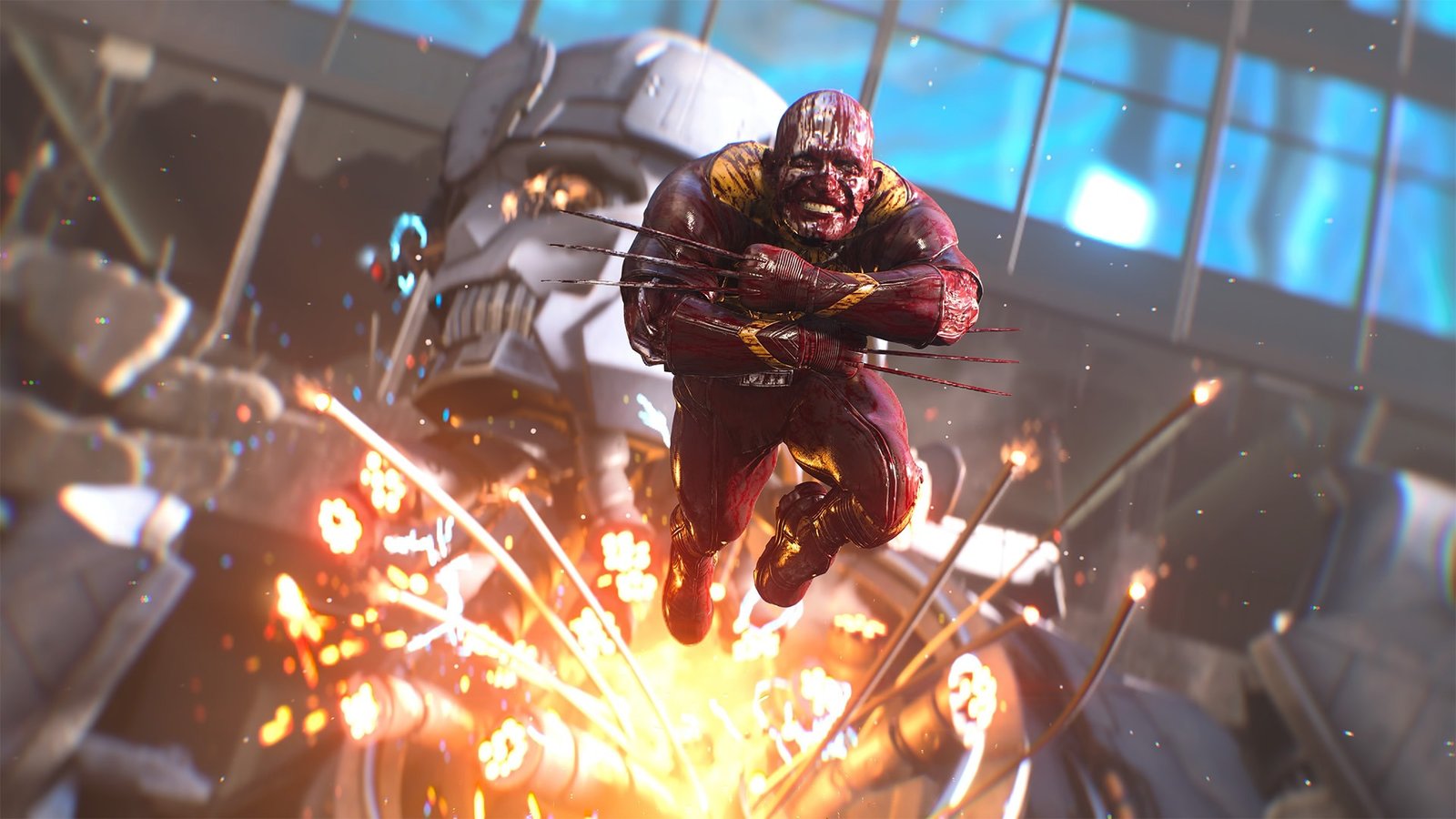
Wolverine’s broader toolkit can make standard encounters more expressive, but much of that flexibility disappears when the game places him against something designed primarily to endure. This problem was already visible during our earlier hands-on with a Sentinel Prototype, and the completed game does not entirely overcome it.
These encounters can certainly look spectacular. Insomniac has spent years becoming exceptionally good at transforming superhero action into enormous cinematic sequences, and Marvel’s Wolverine continues that tradition with set pieces that understand the attraction of watching characters with ridiculous abilities collide with equally ridiculous threats.
Spectacle alone cannot sustain a boss fight, though. The stronger encounters preserve Logan’s mobility and aggression, letting players read the battlefield, prioritise threats, and turn openings into punishment. When an enemy becomes a particularly elaborate damage sponge, the difference between looking like Wolverine and feeling like Wolverine becomes far more obvious.
It doesn’t ruin combat as a whole in Marvel’s Wolverine. The fundamental act of moving between targets, deploying Techniques, entering Rage and dismantling groups remains enjoyable. It simply means combat hits its mechanical ceiling earlier than the campaign reaches its conclusion.
A Smaller World Gives Logan More Room to Matter
Moving away from the open-world structure of Insomniac’s Marvel’s Spider-Man games was absolutely the correct decision. Wolverine does not need a city full of map icons or miles of traversal between objectives to justify his existence. Instead, Marvel’s Wolverine moves between self-contained environments that vary considerably in size, verticality and density while keeping narrative momentum firmly under Insomniac’s control.
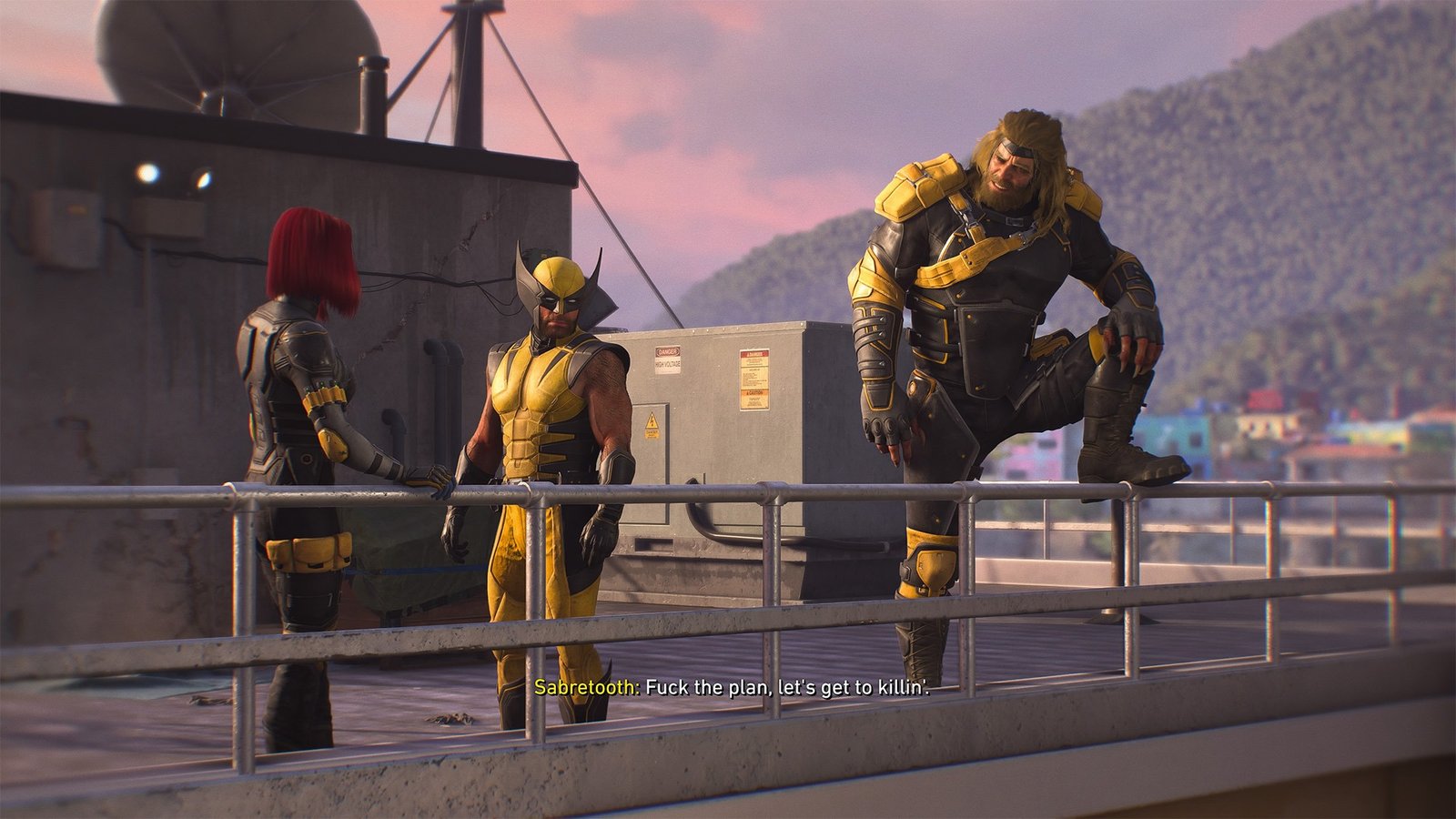
Some areas funnel Logan towards combat or the next major set piece, while others provide considerably more room to explore. Platforming is never particularly extensive, but larger spaces encourage players to climb away from the obvious route, discover another view of the environment, or uncover pieces of storytelling they might otherwise miss.
Material crates provide the resources required for crafting, while whisky bottles offer a particularly appropriate reason for Logan to wander slightly off course, even if it doesn’t match the current predicaments. Nightmare Doors and Trials add another layer, combining challenge content with the continuing reconstruction of his damaged past. None of this is especially complicated, and that largely works in Marvel’s Wolverine‘s favour.
These activities provide enough incentive to explore without transforming every level into an exhaustive checklist. Completing and finding everything felt a semi-natural part of the action rather than like cleaning icons from a map after the story had already ended.
The environments themselves also provide some of the game’s strongest visual moments. Insomniac retains its taste for large-scale superhero spectacle while demonstrating considerably more restraint in how players move between those moments in Marvel’s Wolverine. Environmental storytelling benefits from that focus, especially when locations communicate something about the existence or treatment of mutants, or Logan’s history without another character stopping to explain it.
On PS5 Pro, that presentation is consistently impressive. I spent most of the game in Performance Mode with 120Hz enabled, occasionally switching to Fidelity Mode, and both looked excellent while Performance stayed impressively smooth. Occasional animation jank appeared, particularly when the game’s systems and characters didn’t transition cleanly between actions, but nothing significant enough to disrupt the overall experience.
Logan and Jean Give the Bloodshed Purpose
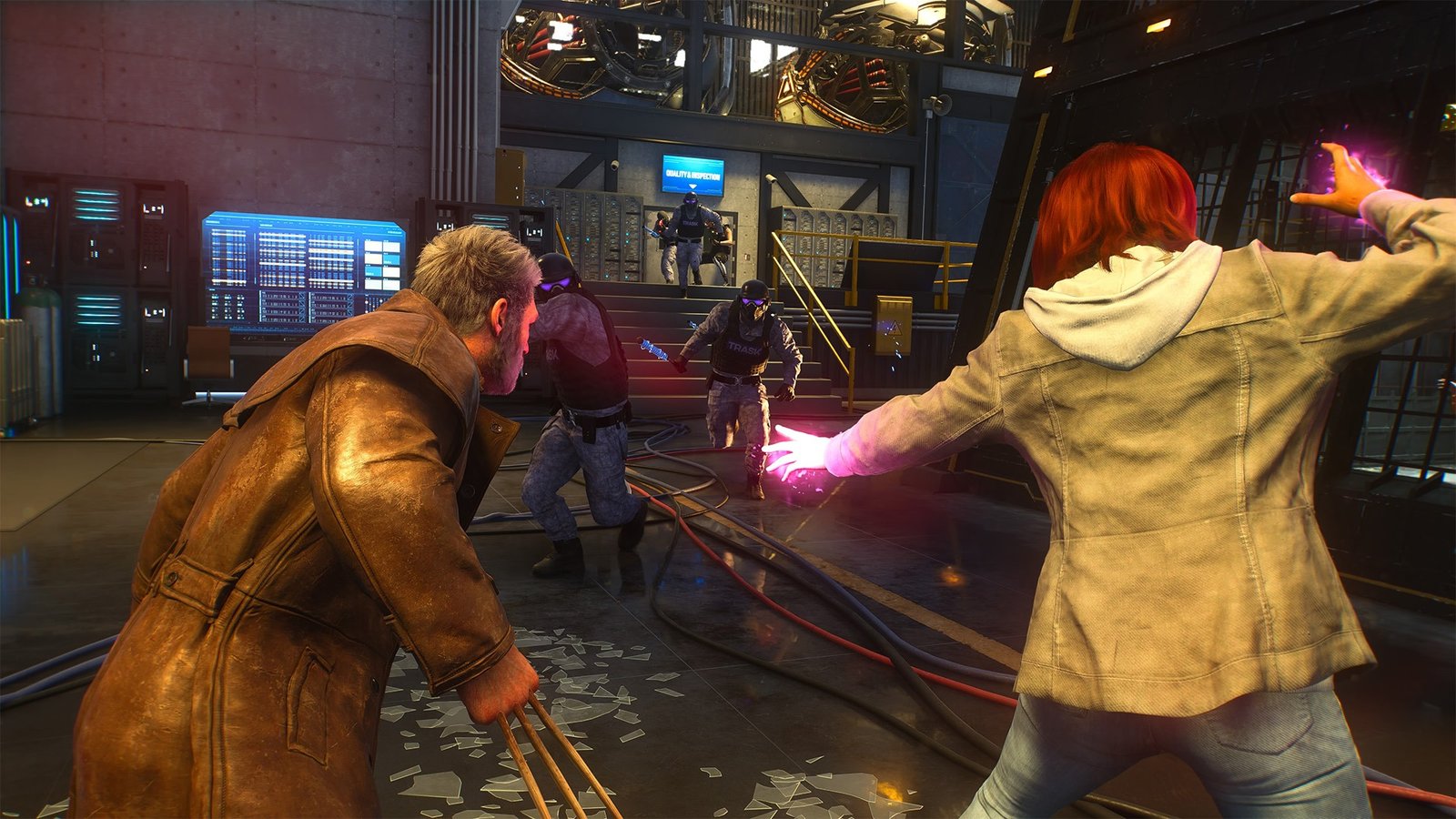
The part of Marvel’s Wolverine most likely to divide players has little to do with combat. Wolverine comes with decades of history, interpretation and expectation attached to him. So do Jean Grey, Mystique, Sabretooth, Nathaniel Essex and practically every other recognisable name Insomniac pulls into its version of mutant history. Audiences will inevitably dislike certain changes because they don’t align with another favourite interpretation.
That is unavoidable. More importantly, this version has to be allowed to tell its own story. For the most part, Marvel’s Wolverine does so confidently. The familiar themes are all present. Mutants are feared and hated, equality remains something that has to be fought for, Sentinels turn prejudice into machinery, while trauma and persecution continue shaping the people trying to survive it.
It is unmistakably a comic book story, complete with conspiracies, enormous threats and people capable of doing impossible things, but the emotional centre remains comparatively simple. Logan suffers, because Logan almost always suffers, and what makes that suffering worthwhile is his relationship with Jean.
She is not simply there to soften Wolverine or explain why he occasionally behaves like a functioning person. Their relationship develops around two people carrying their own damage, and their connection gives Logan’s increasingly desperate circumstances considerably more emotional weight, especially as Marvel’s Wolverine reaches its finale.
The conclusion deliberately resists the clean answer many fans occasionally want. There is enough there to imagine Logan and Jean finding something lasting together, and enough uncertainty to believe they might not. That ambiguity can be frustrating, but it also feels appropriate for a relationship that has rarely existed comfortably within simple boundaries.
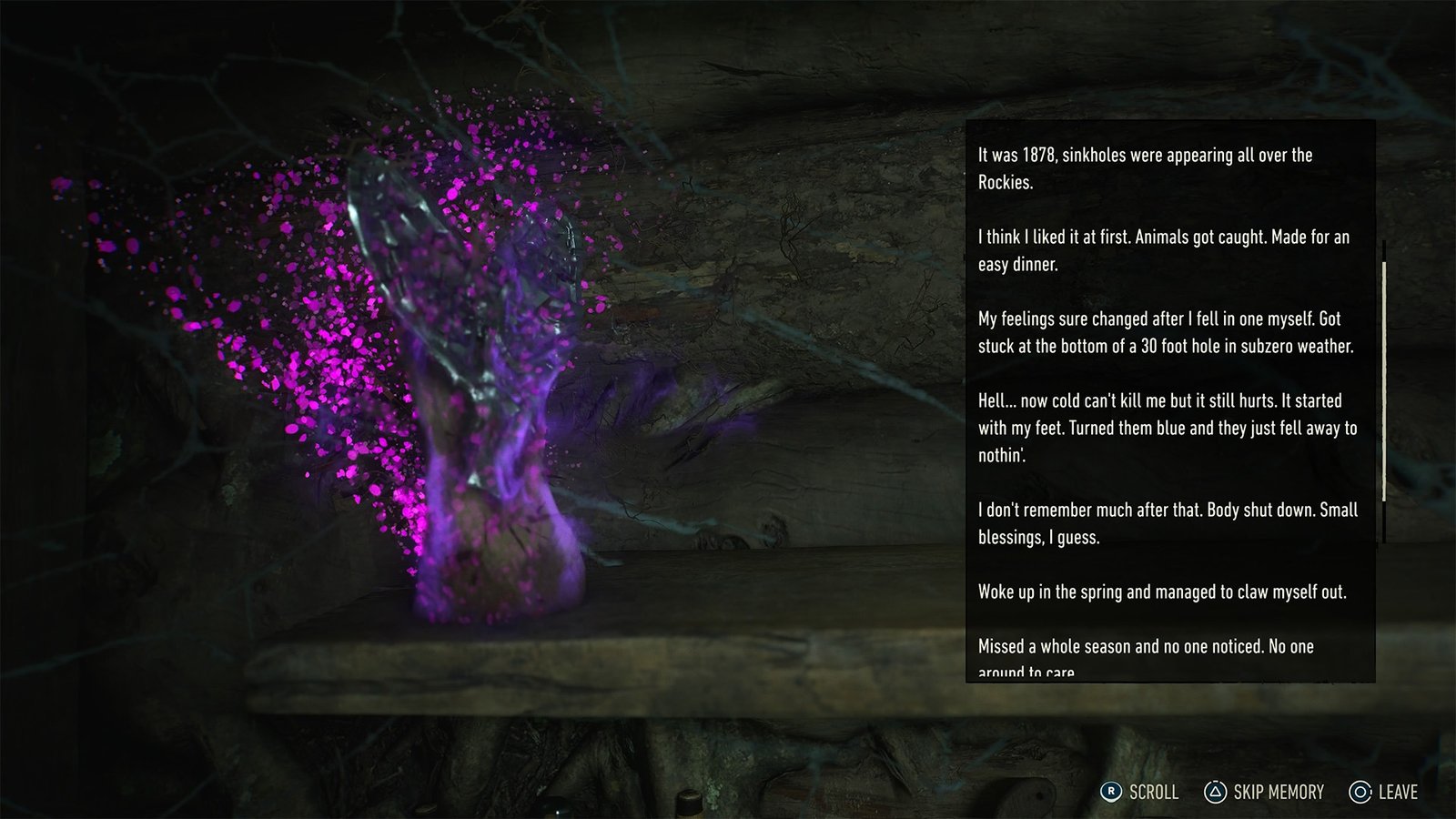
Elsewhere, Insomniac’s rearrangement of familiar characters generally works. Sabretooth and Mystique remain recognisably themselves, although viewing more of their history through the relatively sympathetic lens of Team X provides useful texture. Callisto has far less prominence, but Nathaniel Essex benefits considerably from having more space.
His history with Logan and his gradual journey across the story make him a more nuanced antagonist than simply deploying the version audiences already expect. Anyone paying close attention will probably anticipate one of the game’s larger narrative turns well before the reveal arrives, but predictability does not automatically make the direction ineffective.
Something larger is also clearly waiting beyond this story. Insomniac leaves enough unexplained to establish the foundations of a sequel without letting those questions completely swallow what happens here, although players familiar with Marvel’s mutant mythology will probably have plenty of theories before the credits finish rolling in Marvel’s Wolverine.
Marvel’s Wolverine Is Strongest Beneath the Adamantium
That ultimately leaves Marvel’s Wolverine in an interesting place. Insomniac Games has produced a superhero adventure that understands exactly why Wolverine cannot simply be Spider-Man with sharper hands. Its focused environments fit him better than an open world would, its violence is suitably excessive, progression constantly provides something useful to chase, and its willingness to spend time on Logan rather than merely Wolverine gives the narrative the emotional foundation it needs.
Yet the combat does not always rise alongside him. By the final third, when abilities have been unlocked and preferred Adaptations established, encounters increasingly rely on greater numbers, longer attack chains and enemies capable of absorbing more punishment. Successful parries do not always create the control they feel like they should, while larger opponents and bosses magnify repetition by reducing the number of meaningful solutions available.
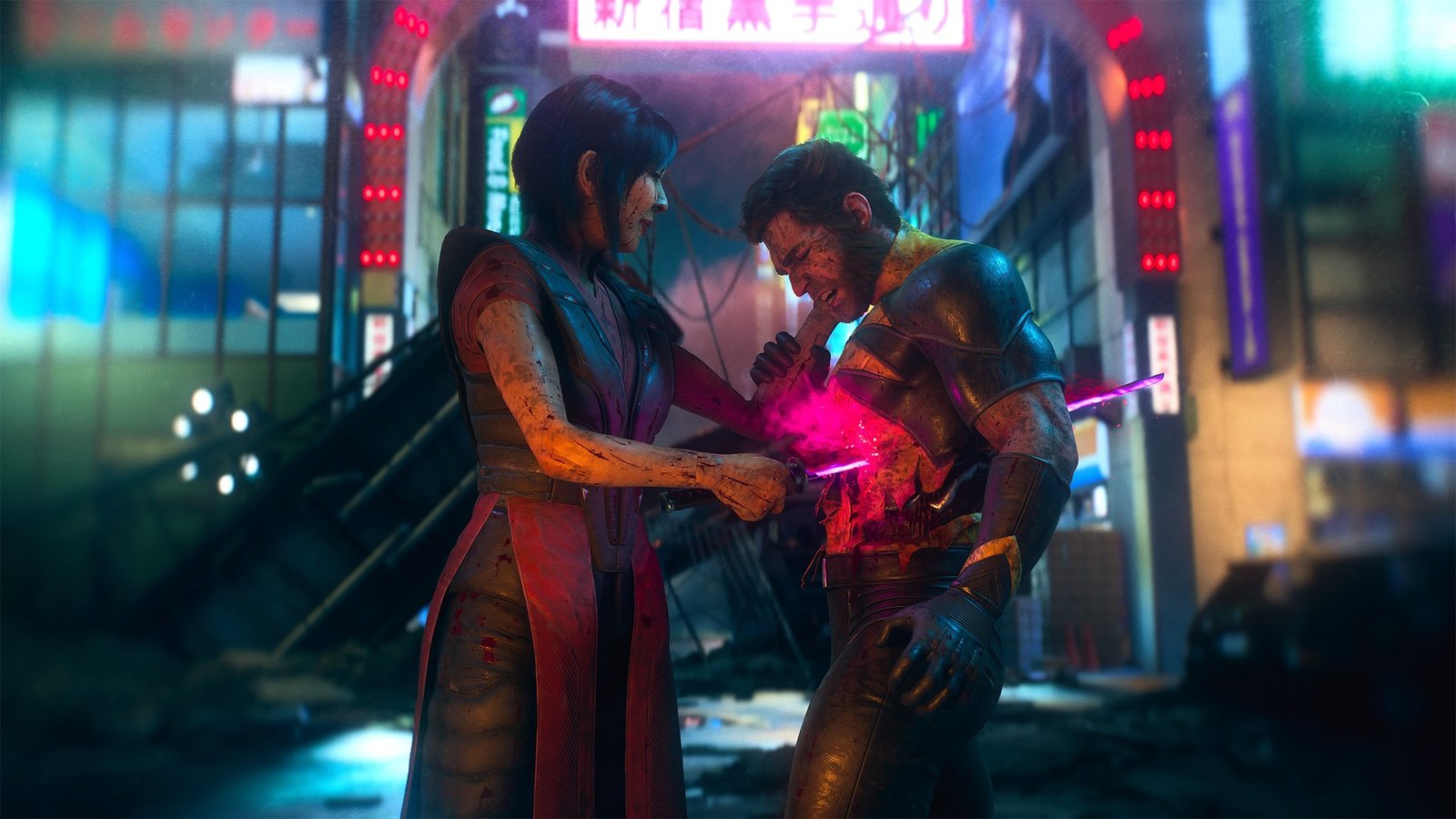
None of that prevents Marvel’s Wolverine from being a hugely enjoyable adventure. It just stops the claws from feeling quite as sharp after nearly 18 hours as they did when Logan first extended them. Perhaps fittingly, the blood eventually becomes background noise. What remains are Logan’s scars, his complicated relationship with the people around him and another interpretation of a character who has spent decades being pulled apart and putting himself back together. Insomniac understands that part well enough, and adds another solid chapter to the long history of James Logan Howlett.
Marvel’s Wolverine launches September 15 for the PlayStation 5.
SavePoint Score
Summary
Insomniac gives Logan a focused, brutal adventure with strong character work, spectacular set pieces, and rewarding progression in Marvel’s Wolverine, but repetitive late-game encounters and underwhelming boss design keep its claws from cutting quite as deeply as they should.
