

Table of Contents
When Frontier Developments first revealed Planet Zoo 2, the immediate attractions were difficult to miss. Fully aquatic animals, flying birds, and Wildlife Reserves were sizeable additions to a series already built around animal welfare, conservation, and increasingly elaborate habitat design.
The subsequent first Planet Zoo 2 gameplay trailer made it clear the sequel was aiming considerably wider, introducing more reactive animals, expanded construction tools and a greater emphasis on conservation outside the zoo gates.
Frontier has spent the months since pulling those systems apart through its Creature Feature series, which concluded in September with a closer look at zoo management. With Planet Zoo 2 launching on October 13, we now have enough information to see how the pieces fit together.
The sequel is not simply giving players more animals to collect. It changes how those animals behave, how habitats are built, when breeding happens, where conservation leads, and even how an entire network of zoos and Wildlife Reserves can be managed.
Planet Zoo 2 Connects Animals, Building and Conservation
The biggest additions are easy to market on their own. Aquariums finally allow sharks and other fully aquatic species. Aviaries put properly flying birds overhead. Wildlife Reserves let animals leave the zoo altogether.
What makes Planet Zoo 2 more interesting is how Frontier increasingly seems to be connecting them into the same management loop.
Animals Should Tell You More Without Opening Another Menu
The original Planet Zoo already treated individual animals as more than moving decorations, but the sequel is rebuilding much of what happens underneath them.
Frontier calls the new behavioural framework the Animal Brain, which lets animals shift between normal routines and reactions to changing conditions. Visible results include herding, grazing directly from vegetation, and responding more naturally to their surroundings, alongside more expressive moods and movement.
That matters because welfare should increasingly be something players can see.
If an animal is uncomfortable, stressed, or lacking something important, Frontier wants its movement, activity, and behaviour to communicate that before the player immediately reaches for another statistics panel.
The latest management Creature Feature pushes welfare another step further with the new Thriving state. Merely meeting an animal’s basic needs is no longer necessarily the ceiling. Researching a species and creating a sufficiently natural and enriching environment can help it thrive, increasing longevity while also encouraging guests to donate more.
That neatly connects animal care to research and finances rather than treating welfare as an isolated meter.
Aquariums Add an Entirely Different Kind of Habitat
Aquariums were among the first headline features announced, but they involve considerably more than putting glass around a pool. Planet Zoo 2 supports freshwater and saltwater aquariums alongside fully aquatic species such as Blacktip Reef Sharks, Hawksbill Turtles and shoals of fish.
Players need to consider water volume, filtration, temperature, lighting and staff access while designing spaces that work for both animals and visitors. The important change is that habitat space becomes genuinely three-dimensional.
A large terrestrial habitat is primarily about usable ground, terrain and climbing opportunities. Fully aquatic animals need enough space above and below them, which means depth and the vertical shape of a tank become meaningful parts of habitat planning.
Guest viewing also becomes more flexible, with underwater tunnels allowing visitors to move beneath or through aquatic spaces rather than simply standing beside another barrier.
For players who spent years building elaborate pseudo-aquariums in the first game, this is one of the most obvious examples of the sequel formalising something the community repeatedly tried to create for itself.
Aviaries Finally Make Air Part of the Habitat
Flying birds introduce a similar change above ground. Aviaries are built with barriers and support poles, and the game generates dynamic mesh coverings to create enclosed flying spaces.
Frontier has shown birds nesting, perching, flying freely, and cohabiting with other compatible species, while suitable aviaries can even let guests walk directly through them. The interesting part is not simply that birds can fly, as air itself effectively becomes usable habitat space.
That means the height, shape and internal structure of an aviary matter in ways they could not for the terrestrial enclosures of the original game. Perches, vegetation and guest paths all have to coexist with animals using the space above them.
Aquariums make players think below the surface; aviaries ask them to think above the ground.
Building a Zoo Should Be Much Less of a Fight
For longtime Planet Zoo players, some of the less glamorous additions may prove just as important. Frontier openly acknowledges that creating paths in the original could require repeated attempts to get something looking right.
Planet Zoo 2 introduces Line and Curve Builder tools, a Draw Tool for filling custom shapes, preset Stamp Builder options, and Border Edit controls for fine-tuning edges. Terrain creation is getting similarly practical upgrades.
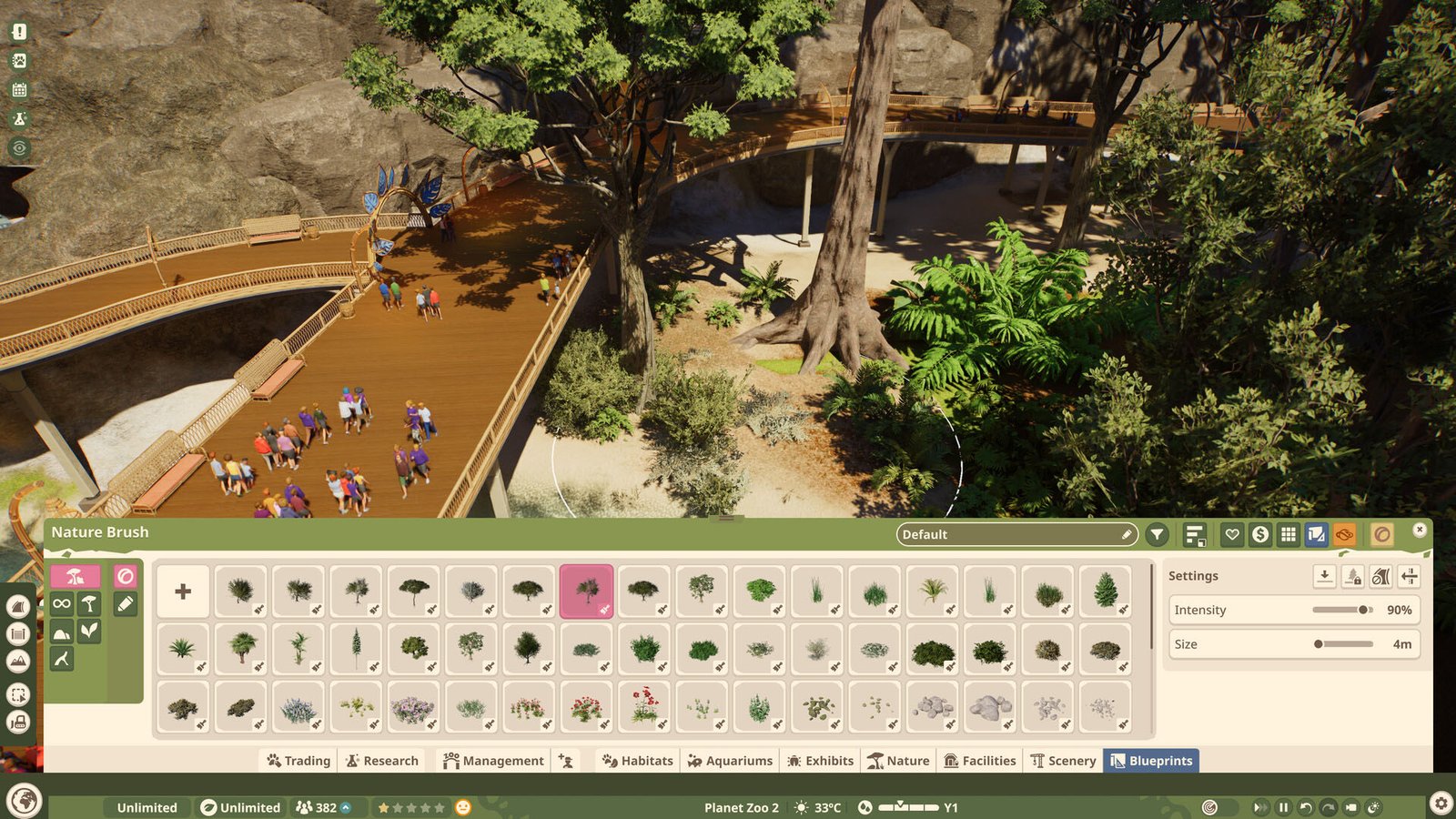
Dynamic terrain paints respond to slopes and elevation, landscape stamps can quickly produce features such as dunes and rolling hills, and the new Nature Brush lets you paint foliage and rocks across an area rather than place them individually.
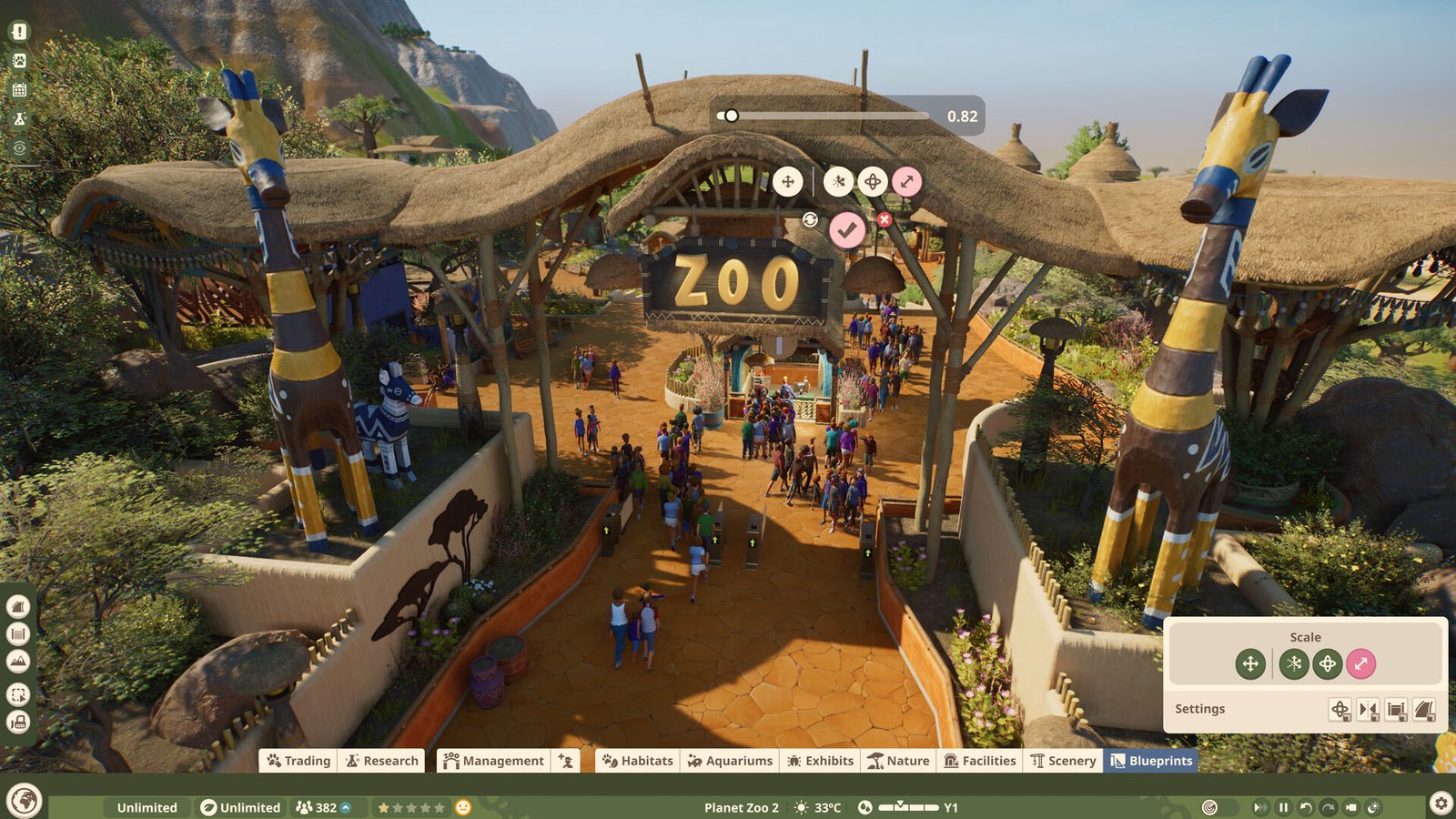
Scenery pieces can also be scaled and mirrored, Flexicolour support is broader, and the Frontier Workshop is integrated directly into the game for browsing and placing community blueprints. None of that sounds as exciting as a shark, but for anyone who lost an evening fighting with a path junction, it might be considerably more important.
Seasons Affect More Than How the Zoo Looks
Proper seasons are another change that initially sounds cosmetic before becoming a management problem. A year in Planet Zoo 2 lasts 60 real-world minutes, compared with 18 minutes in the original, giving weather and seasonal changes more time to actually matter.
Plants can bloom, fruit, change colour or lose their leaves, while weather probability reflects the season rather than occurring entirely at random. Temperature changes also affect animal care. A cold winter may require additional shelter or heaters, which in turn places more demand on a zoo’s power infrastructure. Summer creates its own pressures, depending on the species and biome.
Breeding is where the system becomes particularly interesting. Some animals have seasonal fertility and can only conceive during particular periods. Because welfare influences fertility, missing that window with an unhappy animal can mean waiting until the following year before trying again.
Other species breed year-round, creating the opposite problem: managing a continuously expanding population. That gives the calendar genuine strategic weight rather than simply changing the colour of the trees.
Wildlife Reserves Give Conservation Somewhere to Go
Wildlife Reserves may be Planet Zoo 2‘s most significant addition because they make something previously abstract tangible. In the original game, releasing an animal to the wild largely meant removing it from the zoo and receiving the relevant conservation benefit.
Planet Zoo 2 gives that animal somewhere visible to go. Players can restore damaged landscapes, establish ecosystems, build research outposts and create release groups before introducing suitable zoo animals into Wildlife Reserves. The Sumatran Rainforest example shown by Frontier begins with land damaged by mining, requiring players to restore environments before reintroducing native species.
Research continues after release through tools such as camera traps and acoustic monitoring, while biodiversity and conservation progress contribute towards accreditation and further opportunities.
Players can also physically explore these environments using the new Research Vehicle, making reserves somewhere to revisit rather than a menu destination, and that fundamentally changes the conservation loop.
The zoo is no longer necessarily the final destination for an animal you have successfully bred and cared for, it can become the beginning.
The Planet Hub Connects the Entire Conservation Network
The final Creature Feature introduced one of the easiest additions to overlook: the Planet Hub. Rather than treating every zoo or Wildlife Reserve as an isolated save, the Hub lets players view and jump between locations across Career, Sandbox, and Franchise modes.
Trading, animal storage and research can all be managed through the same interface without repeatedly returning to the main menu. That gives the sequel a broader management scale, as you are not only running a zoo anymore. Depending on the mode, you can be overseeing an international network of zoos and conservation projects, with research and animals moving between them.
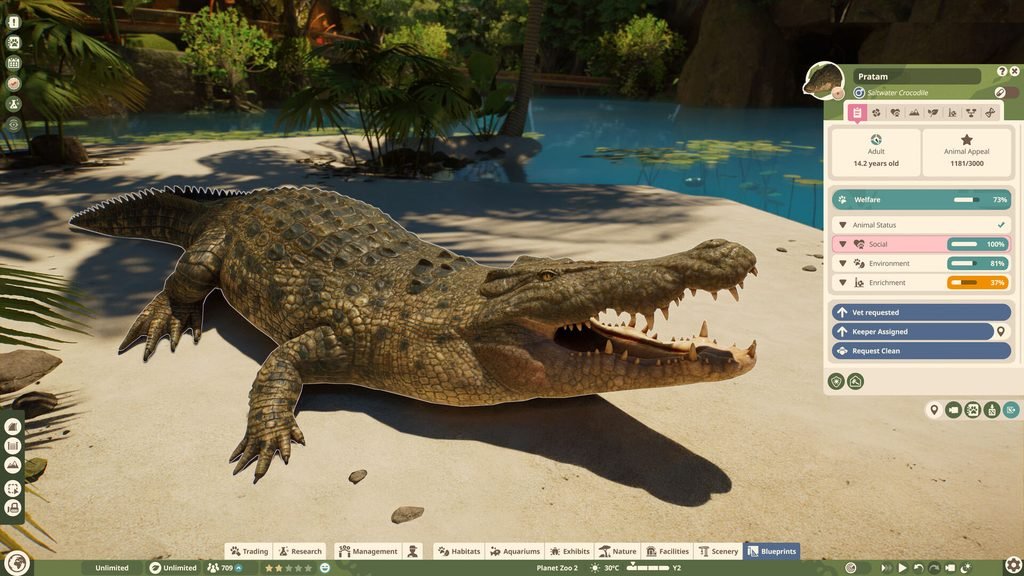
That is where many of the sequel’s individual systems start making more sense together. Animals are researched so they can thrive. Better care supports breeding. Animals can eventually be released into Wildlife Reserves, where conservation and biodiversity continue. The Planet Hub then lets players oversee that wider network without losing sight of the individual locations.
Planet Zoo 2 Still Has to Keep the Lights On
For all the new conservation systems, Planet Zoo 2 is still a management game. Guests need food, drinks, toilets, places to rest and good views of the animals. Neglect them badly enough and they may leave early or ask for refunds, while visibly poor animal welfare can attract protesters and upset visitors.
Staff still require reasonable workloads, salaries and training, while facilities need power and water infrastructure. Players can adjust ticket prices, sell souvenirs, encourage donations, run marketing campaigns or take out loans when cash becomes tight.
Zoo Reputation has also been streamlined into a five-star rating built around four areas: Animal Husbandry, Sustainability, Guest Education and Guest Experience. The broader goal appears to be familiarity without quite as much friction.
Veteran players should recognise much of the old management structure, while the sequel aims to make the systems easier for newcomers and returning players to understand.
Planet Zoo 2 Looks More Connected Than Simply Bigger
The easiest way to advertise Planet Zoo 2 is with sharks and flying birds. They photograph well, immediately communicate what the original couldn’t do, and give returning players obvious new toys. Yet the more meaningful difference may be everything happening between those headline additions.
Animals behave more naturally and can progress beyond basic welfare into Thriving. Seasons affect habitats and breeding. Better building tools make creating those habitats less cumbersome. Research improves care and eventually supports release into Wildlife Reserves, while the Planet Hub connects zoos and reserves into something resembling a global conservation network.
That is where Planet Zoo 2 starts looking like more than a larger version of the same simulation. The individual features matter, but the sequel’s bigger promise is that they increasingly feed into one another. Build a better habitat and an animal can thrive. Help it thrive, and breeding becomes more successful. Research it properly and conservation options expand. Release it into the right Wildlife Reserve, and its story doesn’t simply end when it leaves the zoo.
For a series that has always talked about conservation alongside creativity, making that relationship more tangible may matter more than any single new animal.
Planet Zoo 2 launches on October 13 for PC, PlayStation 5 and Xbox Series X|S.
