

Table of Contents
Total War SHOGUN 2 – Complete Edition on PC
15 years is an eternity in gaming, particularly for strategy titles that have continued to evolve through increasingly elaborate systems, sprawling campaigns and technological advancements. Yet, some games possess an enduring quality that makes them difficult to replace, regardless of how much time has passed. Few represent that better than Total War: SHOGUN 2 – Complete Edition, which brings one of the genre’s most celebrated experiences back into the spotlight.
Originally released in 2011, Creative Assembly‘s historical strategy classic returns through an enhanced edition developed alongside MATABOO and SEGA. Bringing together the original campaign, its two major expansions and an assortment of additional content, this is intended to be the definitive way to experience Japan’s turbulent history through the lens of grand strategy.
More importantly, the Complete Edition introduces visual enhancements, updated controls, additional playable factions and several quality-of-life improvements designed to make the experience more accessible to modern audiences.
However, the question isn’t necessarily whether Total War: SHOGUN 2 – Complete Edition is worth playing, as its reputation has been earned through years of engaging strategic gameplay. Instead, the real question is whether this modernisation does enough to justify another campaign across feudal Japan, especially when some of the original game’s limitations remain firmly entrenched.
An Empire Built on Strategy
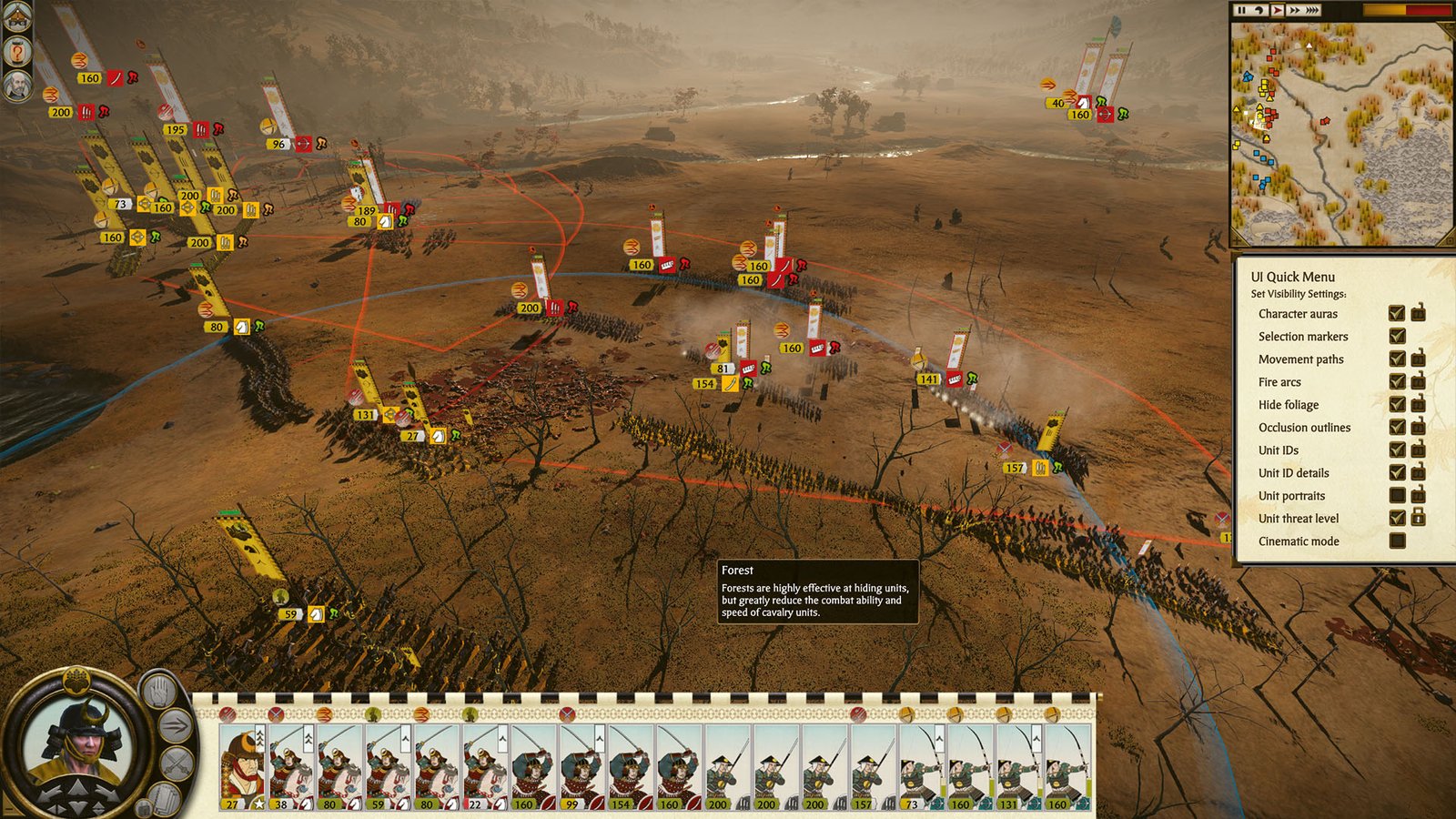
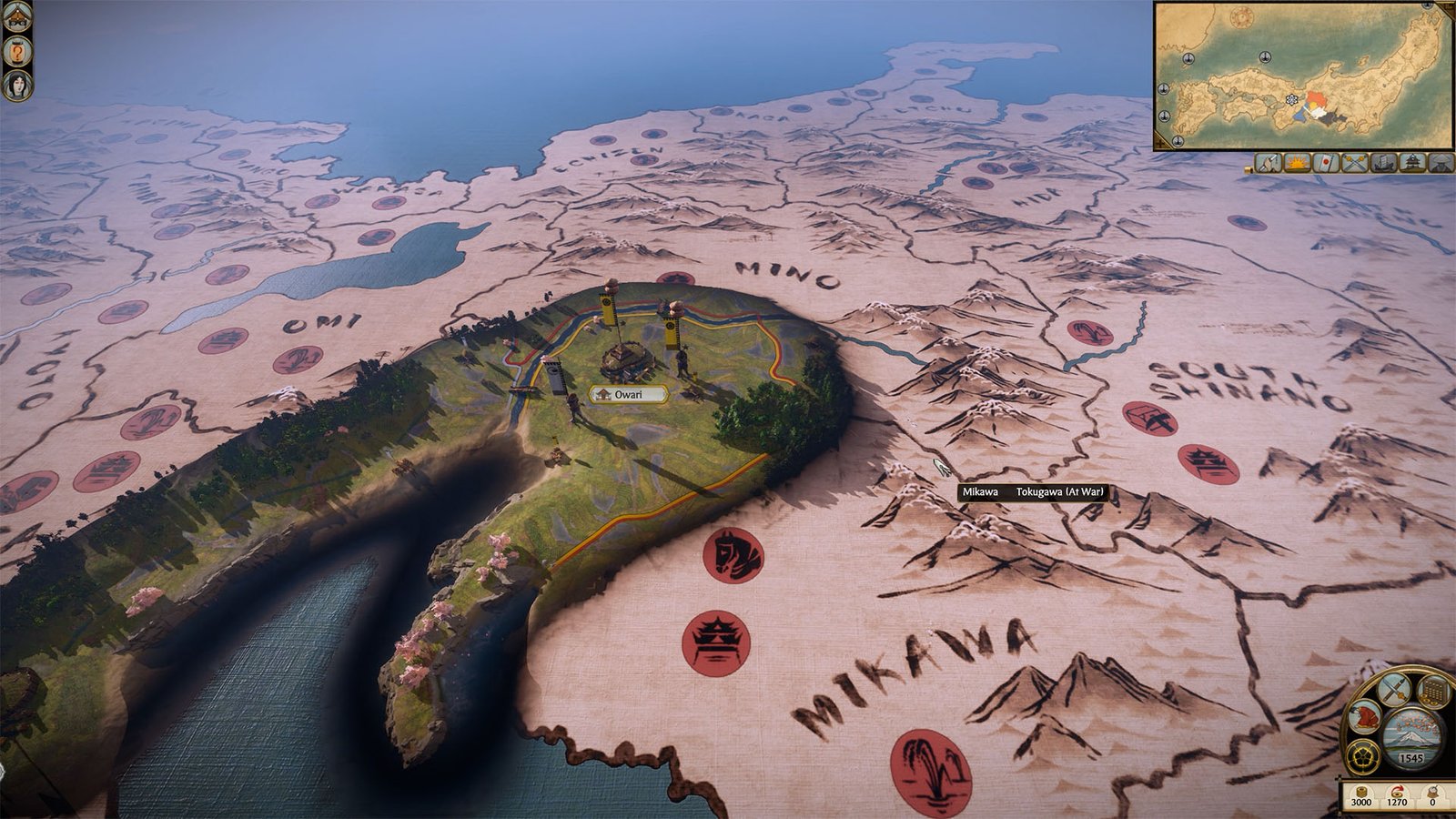
What continues to make Total War: SHOGUN 2 – Complete Edition special is the elegance of its strategic design. Set during Japan’s Sengoku period, the campaign places players in control of a powerful clan seeking to unite a fractured country under a single banner. Achieving that ambition requires far more than military superiority, with diplomacy, economic management and political manoeuvring playing equally important roles in determining the fate of an emerging empire.
The familiar Total War formula remains compelling because its two central components complement each other beautifully. On the campaign map, players oversee provinces, construct settlements, manage resources and negotiate with rival clans through a turn-based structure. When opposing armies clash, the perspective shifts to expansive real-time battles where positioning, timing and military composition become crucial.
Neither side of the experience exists independently of the other. A costly battlefield victory might secure an important province but leave an army weakened and vulnerable. Expanding too quickly can stretch financial resources, while neglecting domestic stability risks rebellion at precisely the wrong moment. Even maintaining a powerful military becomes a delicate balancing act when its upkeep threatens to undermine the economy supporting it.
There’s an appealing sense of consequence to these decisions, particularly because Total War: SHOGUN 2 – Complete Edition rarely encourages reckless expansion without preparation. A prosperous province can become the foundation for future conquests, while a poorly defended border might invite opportunistic neighbours to exploit a moment of weakness. The strategic satisfaction comes from recognising these possibilities before they become immediate problems.
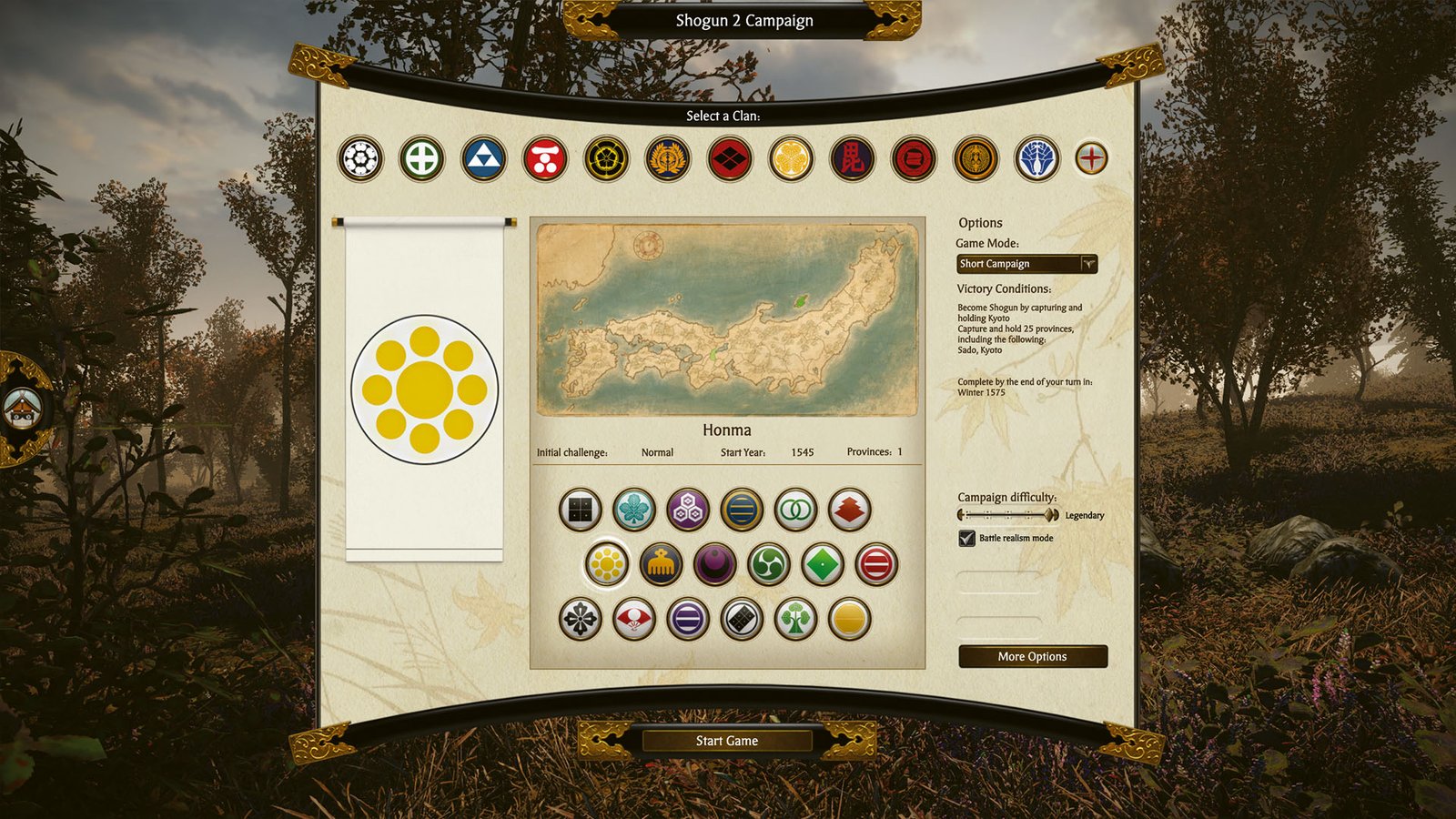
Each major clan also brings its own advantages and starting conditions, encouraging different approaches to conquest. The cavalry-focused Takeda, for example, offer a different strategic emphasis from the economically inclined Chosokabe, whose aptitude for archery provides additional battlefield advantages. Although the differences aren’t as dramatic as the faction asymmetry found in some modern strategy games, they help give campaigns distinct identities.
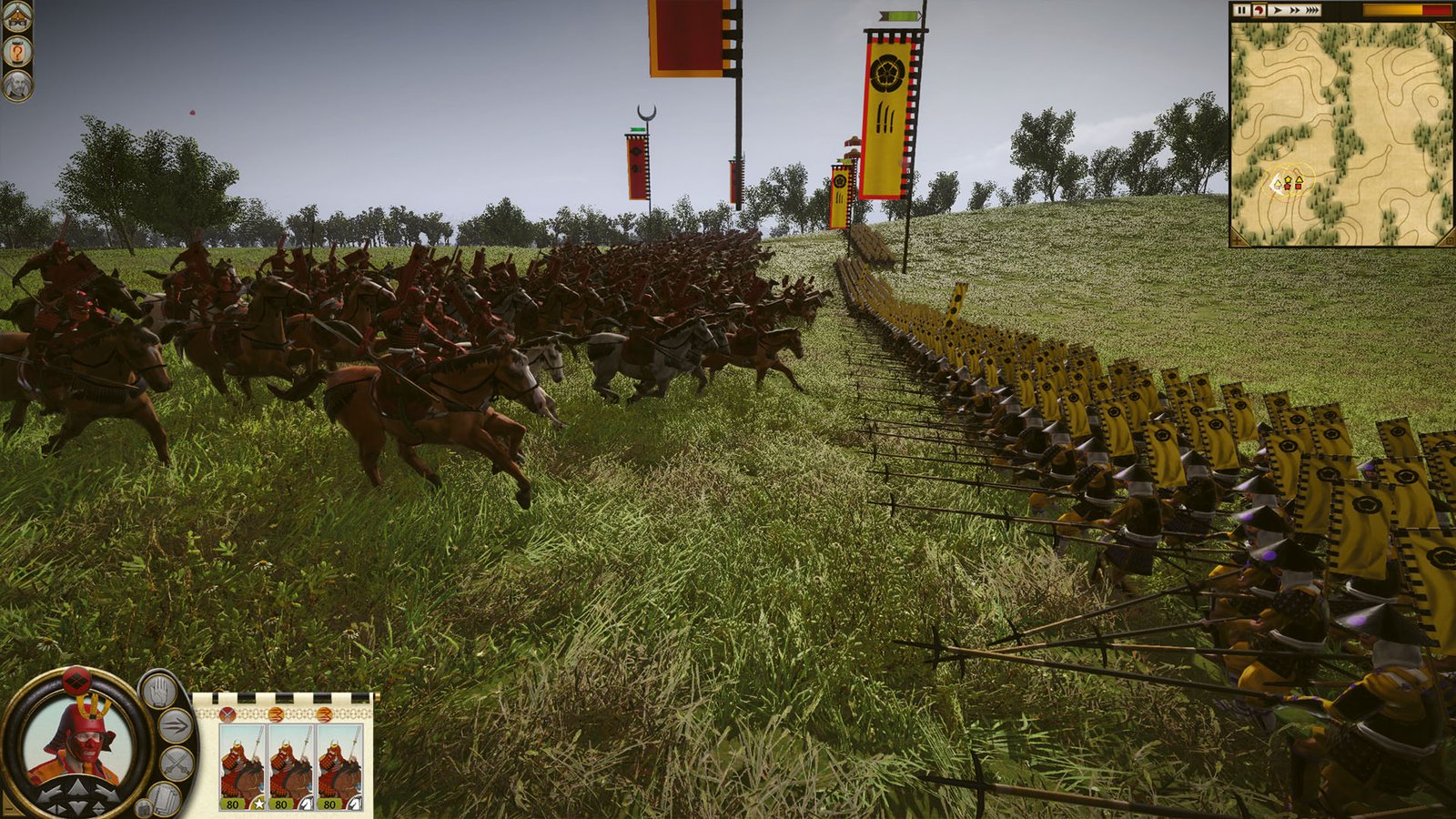
Battles remain equally rewarding thanks to the relatively focused unit roster in Total War: SHOGUN 2 – Complete Edition. Spearmen, swordsmen, archers and cavalry fulfil recognisable battlefield roles, establishing an accessible tactical foundation without sacrificing depth. Superior numbers might provide an advantage, but using terrain effectively, protecting vulnerable units and exploiting enemy weaknesses can prove considerably more important.
Morale is particularly influential, allowing well-executed flanking manoeuvres or devastating charges to collapse enemy formations. Watching a seemingly disciplined army lose its cohesion after a crucial tactical mistake remains one of the game’s greatest pleasures, especially when the consequences extend beyond the immediate battle.
There is a trade-off to this streamlined design. Players accustomed to the extraordinary faction and unit variety of newer Total War releases may find the armies comparatively homogeneous. Nevertheless, Total War: SHOGUN 2 – Complete Edition demonstrates how a smaller collection of carefully balanced mechanics can produce considerable tactical depth.
Rather than overwhelming players with endless possibilities, it concentrates on making each decision meaningful. That focus remains central to why its battles and campaigns have aged remarkably well.
Three Eras, One Enduring Conflict
The greatest advantage of Total War: SHOGUN 2 – Complete Edition is undoubtedly the amount of content gathered into a single package. Beyond the original Sengoku-era campaign, players can explore two considerably different periods of Japanese history through Rise of the Samurai and Fall of the Samurai, creating a broader experience than the original release offered on its own.
Rise of the Samurai transports players back to the Genpei War, centuries before the events of SHOGUN 2. With powerful families competing for political dominance, its earlier historical setting produces a different approach to military organisation and territorial expansion.
Armies feature more rudimentary units and a greater emphasis on traditional warfare, while political allegiances and specialised agents add another dimension to the struggle for influence. The campaign doesn’t necessarily offer the same immediate spectacle as its counterparts, but its more restrained military systems and different political relationships provide a worthwhile change of pace.
Fall of the Samurai, meanwhile, represents the other end of the historical spectrum in Total War: SHOGUN 2 – Complete Edition. Set during the nineteenth century, it explores Japan’s transition towards industrialisation and modern warfare, with the conflict between the Imperial forces and the Shogunate forming the foundation of its campaign.
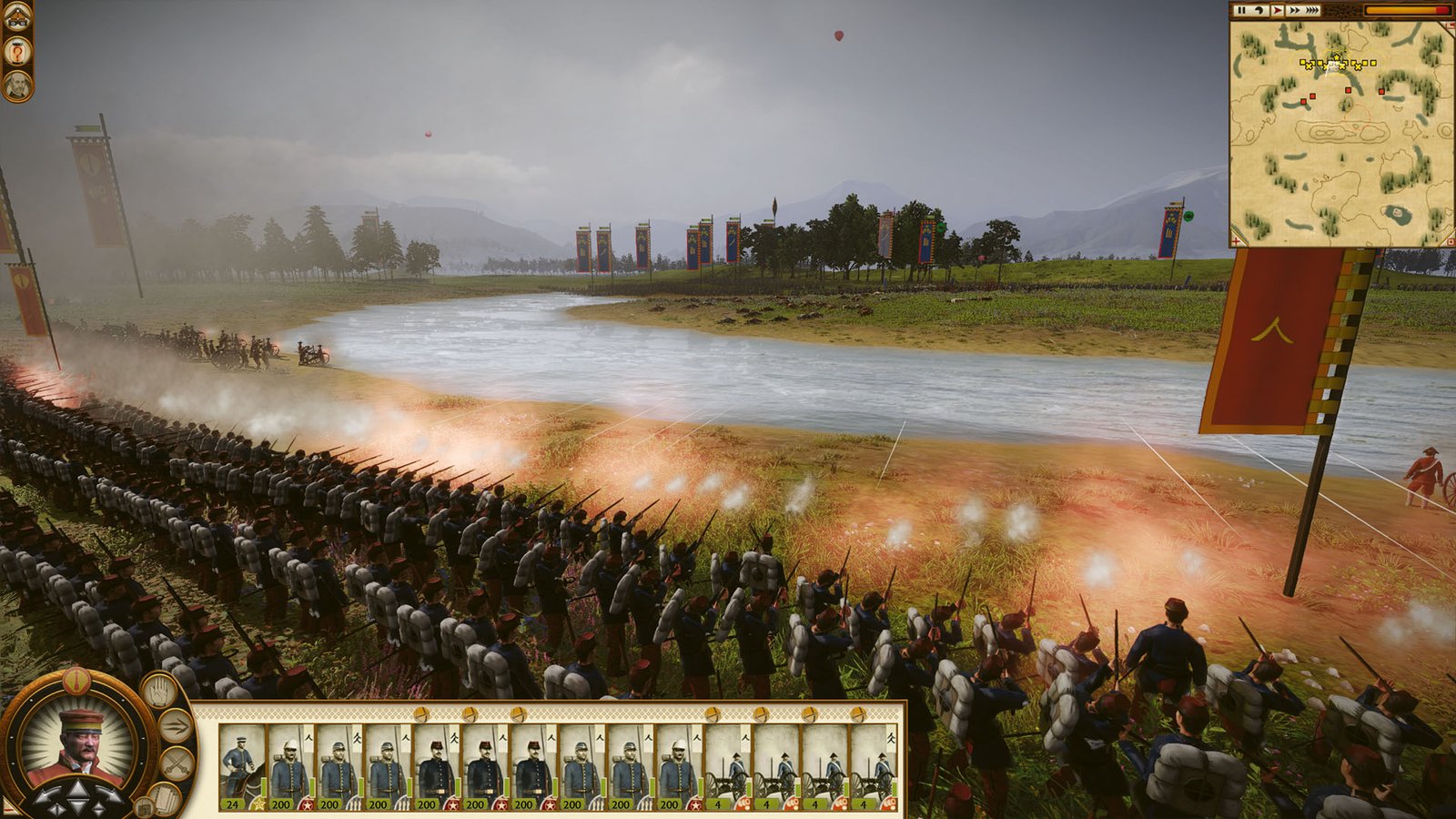
Here, traditional samurai increasingly find themselves competing against technologically superior armies equipped with modern firearms, artillery and other innovations. Industrial development introduces new strategic possibilities, while railways and powerful naval vessels change how military forces can be deployed across the campaign map.
The transformation is especially noticeable during battles. Traditional formations and cavalry charges must contend with disciplined rifle infantry and devastating artillery bombardments, fundamentally changing the relationship between positioning and firepower.
There’s something fascinating about how Fall of the Samurai uses the existing Total War framework to explore an entirely different military philosophy. Where the original campaign frequently rewards carefully coordinated melee engagements, its nineteenth-century counterpart places considerably greater importance on ranged superiority and technological progress.
This contrast helps Total War: SHOGUN 2 – Complete Edition feel like more than an exercise in repackaging old content. Each campaign offers a distinct perspective on Japanese warfare, reinforcing the appeal of moving between different historical periods while retaining the strategic principles that define the broader experience. The additional clan and unit content further improves replayability, while multiplayer options, including cooperative and competitive campaigns, provide opportunities to extend the experience beyond solo conquest.
More than 50 previously unplayable minor factions have also been made available across the three campaigns. Their inclusion significantly expands the selection of starting positions, opening up alternative geographical challenges and opportunities for players who want to approach Japan’s unification from unfamiliar territories. However, their appeal is somewhat limited by the absence of distinctive faction bonuses comparable to those enjoyed by the established major clans. A different starting location can certainly alter the early stages of a campaign, but it doesn’t necessarily create an entirely new strategic identity.
Even so, the sheer breadth of content makes Total War: SHOGUN 2 – Complete Edition particularly attractive to newcomers. With three substantial campaigns and numerous approaches to conquest, there’s enough here to keep aspiring shoguns occupied for a considerable amount of time.
A Sharper Blade With Familiar Scars
While the underlying experience remains strong, the modernisation is a more complicated affair. Creative Assembly and MATABOO have made numerous changes intended to improve Total War: SHOGUN 2 – Complete Edition‘s appearance and usability, although the results aren’t consistently transformative.
Visually, the improvements include revised lighting, shadows, textures and environmental effects, giving battlefields a more contemporary presentation. Weather conditions and terrain benefit from the updated rendering technology, while improvements to character models and battlefield details help strengthen the spectacle of large-scale engagements.
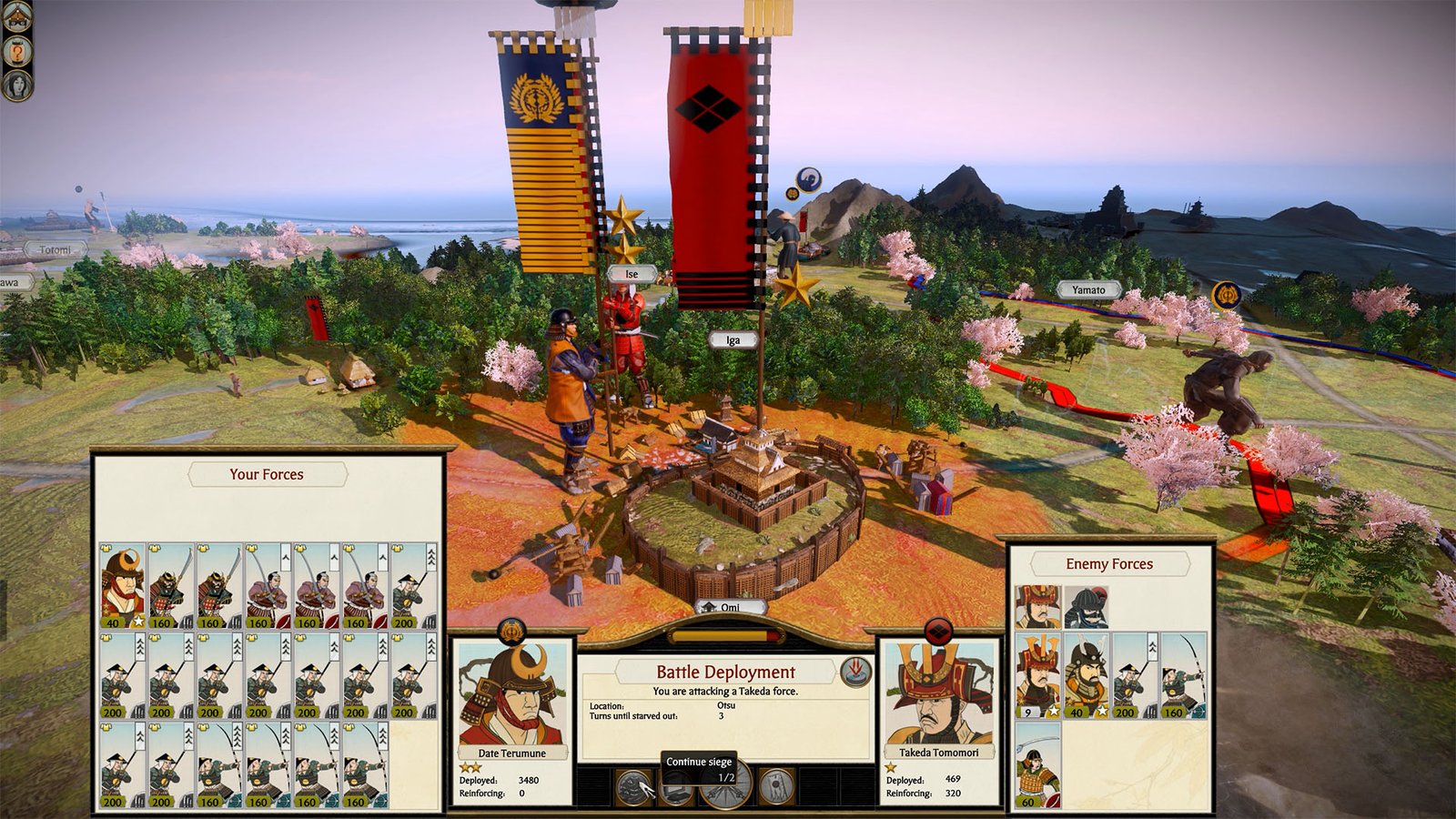
Yet SHOGUN 2 was already a visually distinctive game. Its restrained aesthetic, atmospheric environments and beautiful Japanese-inspired presentation have arguably aged better than the technology supporting them. Consequently, the enhancements feel more like refinements to an existing artistic identity than a dramatic reinvention.
Some of the revised campaign-map visuals may also prove divisive, particularly where the brighter presentation moves away from the original’s more subdued atmosphere. The game still looks recognisably like the Total War: SHOGUN 2, but not every visual change necessarily improves upon what came before.
A more welcome artistic addition in Total War: SHOGUN 2 – Complete Edition comes through optional animated cinematics inspired by traditional Japanese ukiyo-e artwork. These stylised sequences complement the historical setting and offer a distinctive alternative to the original cinematics, which remain available for those who prefer them. Full Japanese and Chinese voice localisation also adds to the presentation, with Japanese dialogue particularly well suited to the historical atmosphere.
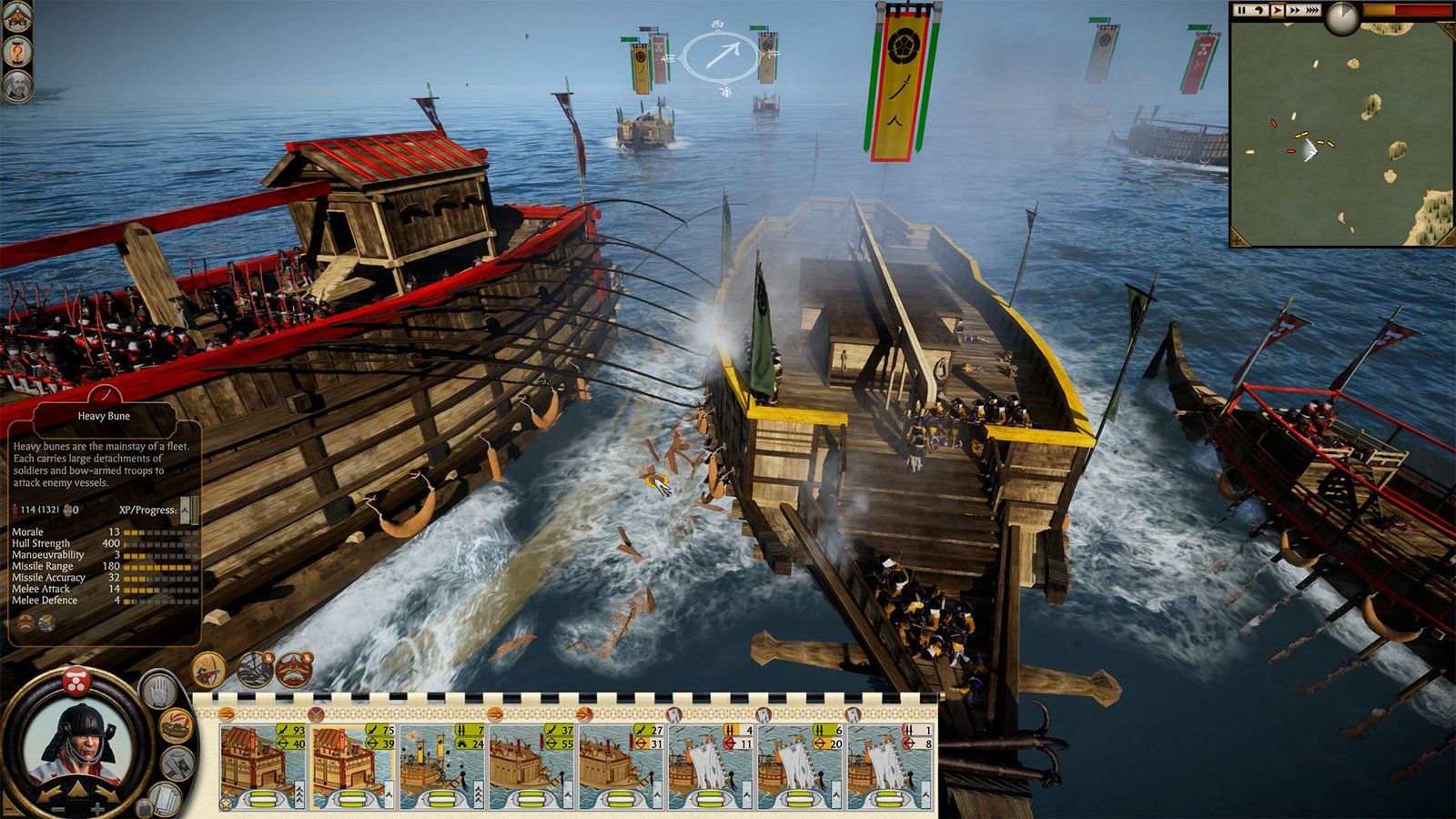
Combined with the revised visuals and improved interface scaling at 1440p and 4K resolutions, these changes help make the overall experience more appealing on contemporary hardware. The control improvements are arguably more consequential than the graphical updates. Modernised unit movement and rotation commands bring battlefield management closer to newer Total War titles, making it easier to reposition formations and coordinate military manoeuvres during hectic encounters.
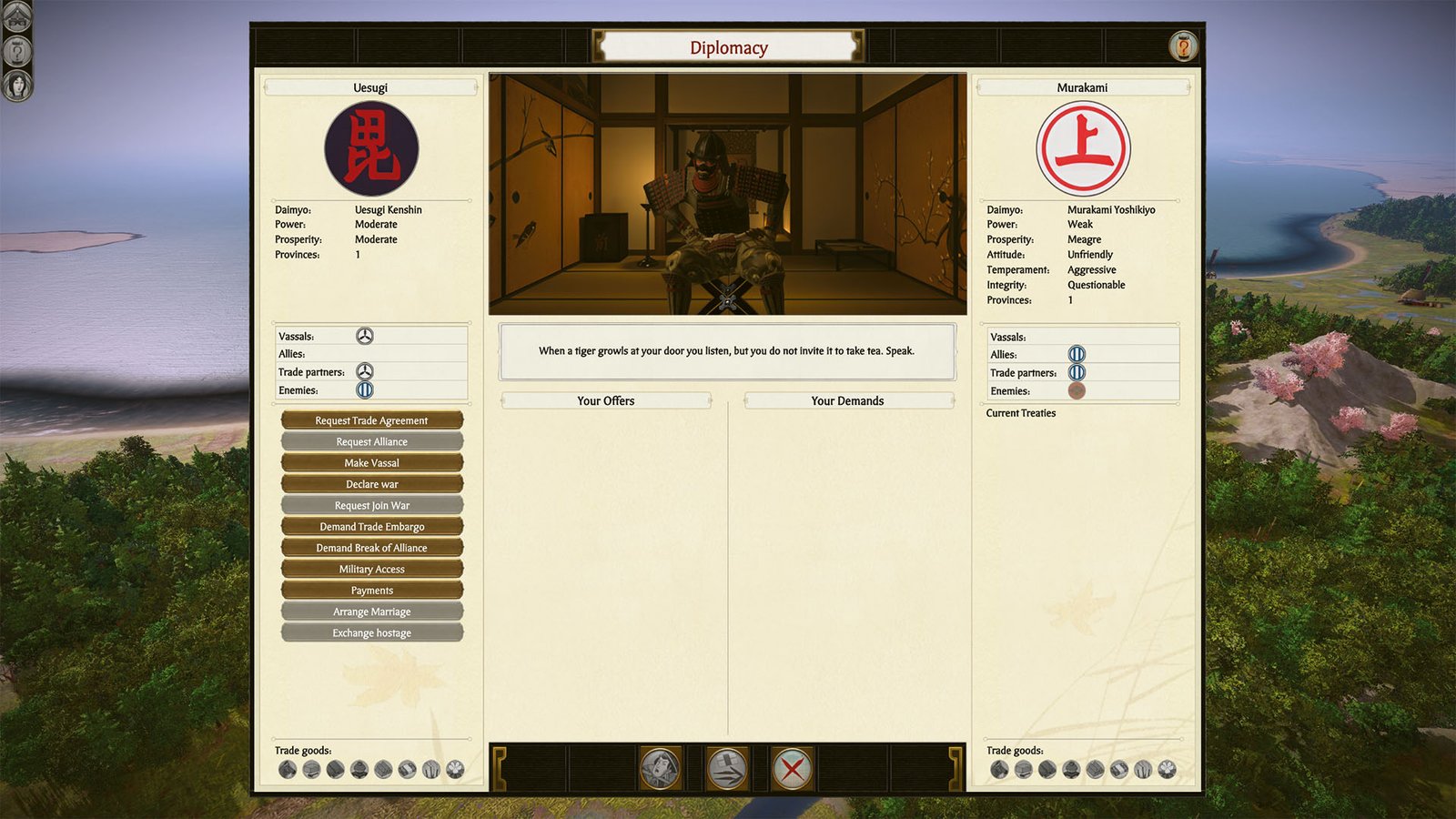
Additional camera options provide a wider overview of the battlefield in Total War: SHOGUN 2 – Complete Edition, while interface adjustments and colourblind accessibility settings contribute towards a more accommodating experience. The inclusion of a diplomatic Quick Deal function and additional campaign overlays likewise offers greater convenience when navigating the game’s interconnected systems.
Not every addition feels essential, however. Some interface conveniences address relatively minor frustrations, while other aspects of campaign management remain more cumbersome than necessary. This creates an uneven sense of progress, where certain improvements make a genuine difference but others struggle to justify their inclusion. Perhaps the most meaningful gameplay adjustment concerns Realm Divide, one of the original campaign’s most contentious mechanics.
Previously, becoming powerful enough to threaten Japan’s political order could trigger a dramatic deterioration in relations with rival clans, turning an expanding empire into a target for widespread hostility. While this provided a formidable late-game challenge, it could also undermine diplomatic relationships that players had spent considerable effort developing.
Total War: SHOGUN 2 – Complete Edition introduces adjustable Realm Divide settings, allowing players to retain the original experience, increase its severity or disable the mechanic entirely. It’s a simple but significant improvement, giving players greater control over their preferred campaign experience without fundamentally changing the strategic systems surrounding it.
Whether preserving the original challenge or pursuing a less restrictive conquest, that flexibility makes the game more accommodating to different playstyles. Unfortunately, the modernisation isn’t nearly as comprehensive when it comes to addressing the game’s longstanding mechanical shortcomings.
The Price of Becoming Shogun
For all the attention devoted to improving presentation and accessibility, Total War: SHOGUN 2 – Complete Edition still carries several problems that have accompanied it for years. Some are minor inconveniences, while others can undermine the precision expected from a strategy game built around careful planning and calculated decisions.
Battlefield pathfinding remains a notable concern, particularly during sieges where navigating fortifications and positioning troops can become needlessly awkward. Naval engagements also retain some of their older limitations, including inconsistent enemy behaviour that can make certain confrontations more frustrating than strategically interesting.
Campaign management in Total War: SHOGUN 2 – Complete Edition has its own irritations. The inability to merge depleted units conveniently, along with occasional awkwardness surrounding agent movement and army organisation, makes some routine tasks more cumbersome than they ought to be. None of these problems fundamentally destroys the underlying experience, but their continued presence is disappointing in an edition specifically intended to bring the game up to modern standards.
The learning curve also remains substantial. Although the revised interface and controls make certain interactions more intuitive, the tutorials still struggle to communicate the full complexity of campaign management and tactical warfare. New players may find themselves learning through experimentation, particularly when multiple economic, political and military systems begin demanding attention simultaneously.
There is nothing inherently wrong with a demanding strategy game, but better onboarding could have made Total War: SHOGUN 2 – Complete Edition a significantly stronger introduction for players unfamiliar with the franchise. Performance represents another concern. The transition to a 64-bit architecture and updated rendering technology should provide a more suitable technical foundation for modern systems, but the graphical improvements also come with increased hardware demands.
That trade-off is difficult to ignore when the visual enhancements aren’t always substantial enough to justify the additional processing requirements. Players expecting an older strategy game to run effortlessly on modest hardware may find that the refreshed presentation asks considerably more of their systems than anticipated. The biggest complication for returning players, however, may come from the game’s approach to mod support.
Total War: SHOGUN 2 has benefited from an enthusiastic modding community for well over a decade, with modifications extending everything from faction availability to campaign mechanics and historical detail. Unfortunately, the Complete Edition introduces integrated Mod.io support without compatibility for existing modifications created for the original release.
While this provides a new foundation for future community creations, it also means established players cannot simply transfer their preferred modded experience into the enhanced edition. Thankfully, the original version remains available to existing owners, while Steam purchases of Total War: SHOGUN 2 – Complete Edition also include access to the original game and its associated legacy content. That helps preserve the older experience, although it does little to resolve the fragmentation between the two versions.
The purchasing arrangement further complicates matters. Existing Steam owners receive the original DLC at no additional cost and can take advantage of a limited-time discount on Total War: SHOGUN 2 – Complete Edition. Nevertheless, asking longtime players to purchase an enhanced version of a game they already own naturally invites greater scrutiny of how substantial those improvements actually are.
For newcomers, the proposition is much simpler. The Complete Edition brings together an exceptional strategy game, two worthwhile expansions and numerous additional factions, while introducing enough modern conveniences to make the experience more approachable. Veterans have a harder decision to make, especially if their enjoyment depends heavily on existing mods or if the original game continues to satisfy their appetite for conquest.
Ultimately, Total War: SHOGUN 2 – Complete Edition succeeds largely because the foundations established fifteen years ago remain so compelling. Its intricate relationship between empire management and tactical warfare, focused campaign design and rich historical setting continue to deliver an experience that few strategy games have managed to replicate.
What prevents this from feeling truly definitive is the sense that more could have been done. The presentation is sharper, the controls are better and the content remains exceptional, but persistent mechanical issues and questionable decisions surrounding mod compatibility leave the modernisation feeling incomplete.
Even with those shortcomings, there is still immense satisfaction in guiding a small clan through generations of political manoeuvring and military conquest, gradually transforming an uncertain future into an empire capable of challenging Japan’s most powerful rulers. Total War: SHOGUN 2 – Complete Edition might not be the flawless restoration this classic deserves, but the ambition to become shogun remains every bit as irresistible as it was all those years ago.
Total War: SHOGUN 2 – Complete Edition is available now on PC.
SavePoint Score
Summary
Total War: SHOGUN 2 – Complete Edition is a superb marriage of grand strategy and real-time warfare, with three campaigns offering tremendous replayability. Yet uneven technical upgrades, persistent AI frustrations and limited mod compatibility stop this edition from feeling definitive.
