

Table of Contents
Battle Vision Network and the Art of Reinvention
When Capybara Games first announced Battle Vision Network, it was positioned as a mobile-first, season-based competitive experience. What we see today is something very different.
As Eileen Hollinger, President of Capybara Games, put it candidly during our interview, “Battle Vision Network’s development has been a windy path.” And that “windy path” has reshaped the game entirely.
From Live Service Ambition to Roguelike Structure
Originally built around a mobile-focused, live-service 1v1 model in partnership with Netflix, Battle Vision Network has now pivoted to a PC-first, single-player roguelike-inspired progression model.
Dan Vader, Creative Director at Capybara Games, described the reality of that moment.
“We just felt like we could not release that game anymore,” he said, explaining how the platform strategy shift forced a creative decision. “So the decision became, we just shelve this thing that we all love and have been working really hard on, or do we figure out a new format to sort of twist it into, to make it a new game for a new audience?”
Rather than abandon years of work, the studio chose to reinvent itself. The solution was surprisingly organic. Internally, the team had already been gravitating towards run-based games.
“I really love run-based games,” Vader admitted. “They’re sort of bite-sized. I can just pick it up, I can play a little bit, fail a run or pause a run, and I don’t feel like I haven’t made a dent in the game.”
That philosophy now defines Battle Vision Network’s structure.
A Spiritual Successor With a Spectacle Twist
The game is seen internally as a spiritual successor to Capybara’s cult classic Might & Magic: Clash of Heroes, but it is not a simple revival.
“It’s a puzzle battle roguelite,” Vader explained. “A roguelike run of the game is framed as a season of this sport and of this spectacle that is the BBN show.”
The sporting conceit is not cosmetic. Each run consists of three tournament maps, culminating in the Prisma Crown championship. Players draft units, apply performance enhancements, and stack synergies until a full team emerges. The spectacle itself is deliberate. Vader described the inspiration as “a mixture of Eurovision and sports,” smashing glamour and snarky hosts together with tactical puzzle combat.
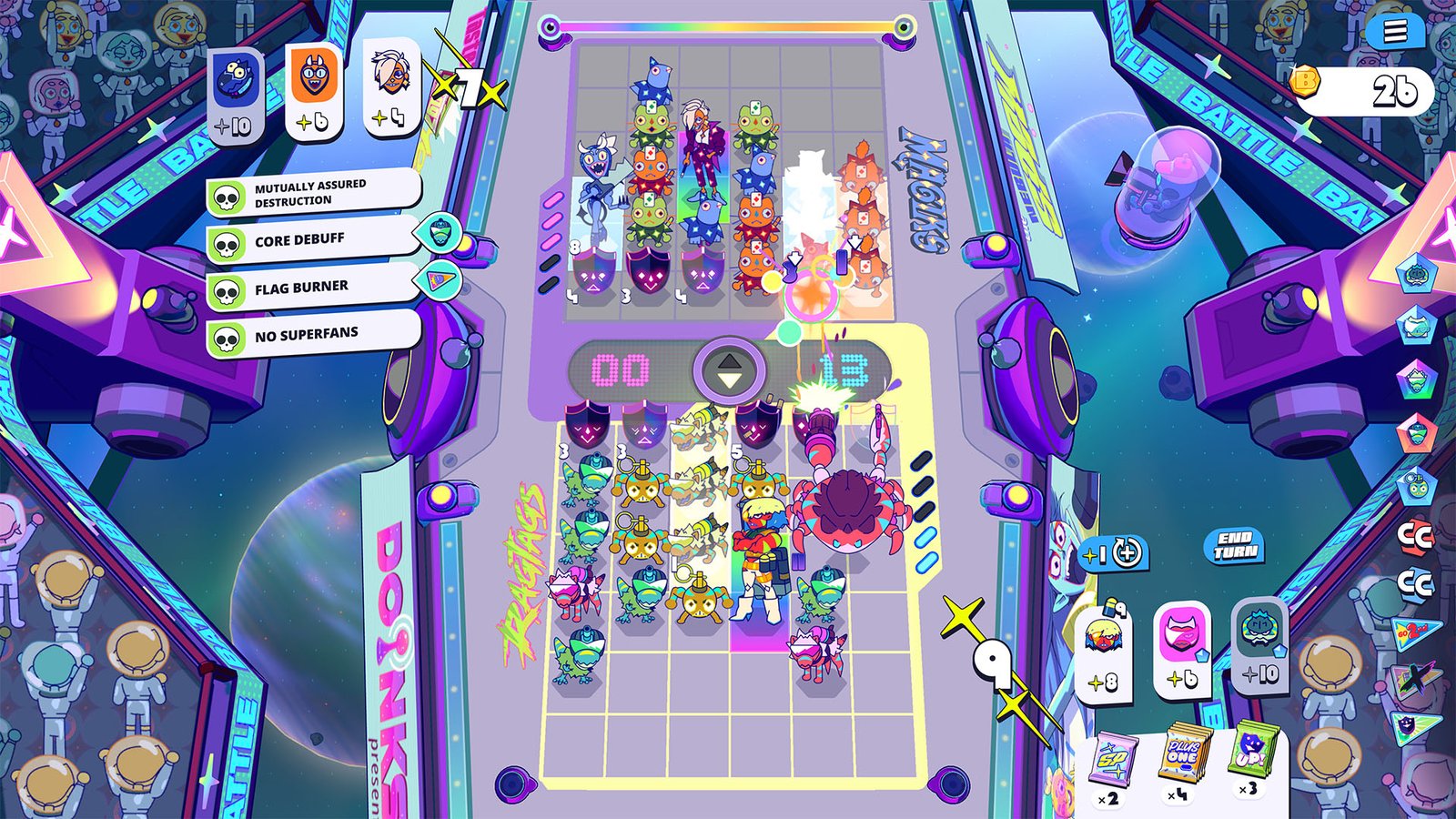
That framing allows the narrative to respond dynamically to performance. “There’s actually a narrative inside a run, and then there’s a narrative that’s responding to run over run,” Vader explained further about the game and each run, where it is not just progression, it is commentary.
Deep Puzzle Mechanics, Modernised
At its core, Battle Vision Network remains about tactical colour matching, but it has been expanded for wider screens and greater strategic depth.
“When we moved to mobile, we found we had to make it a six by six,” Vader noted. “Then when we pivoted back to widescreen, we could show off the beautiful arena art and let the mechanics have room to breathe.” That return to PC allowed Capybara to lean into complexity rather than hide it.
“Going, okay, we’re gonna make a PC widescreen game… we can lean into that depth and experimentation.”
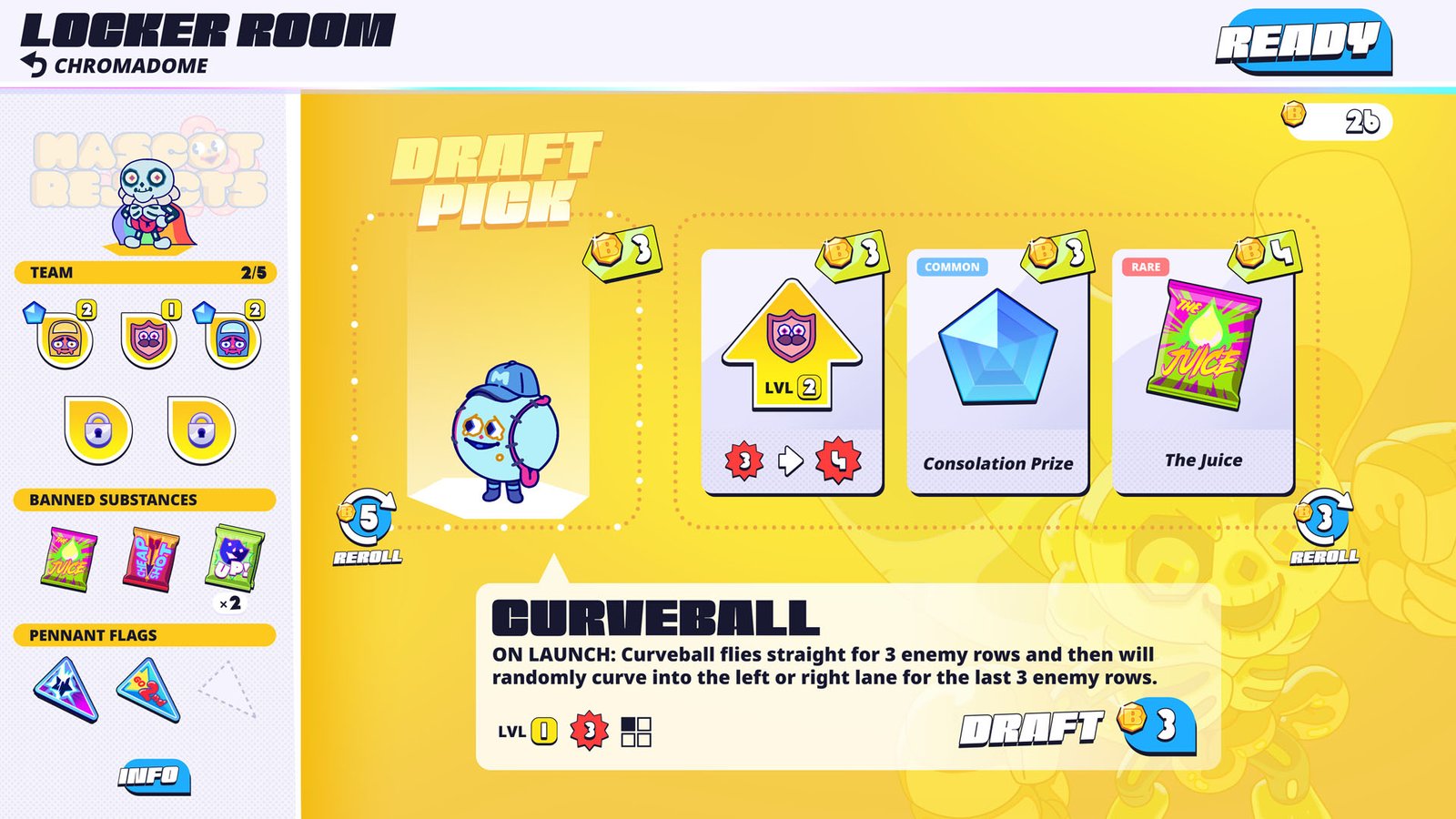
The roguelike layer introduces pennant flags, banned substances, and performance enhancements that stack into powerful but inconsistent synergies. Capybara does not want predictable dominance.
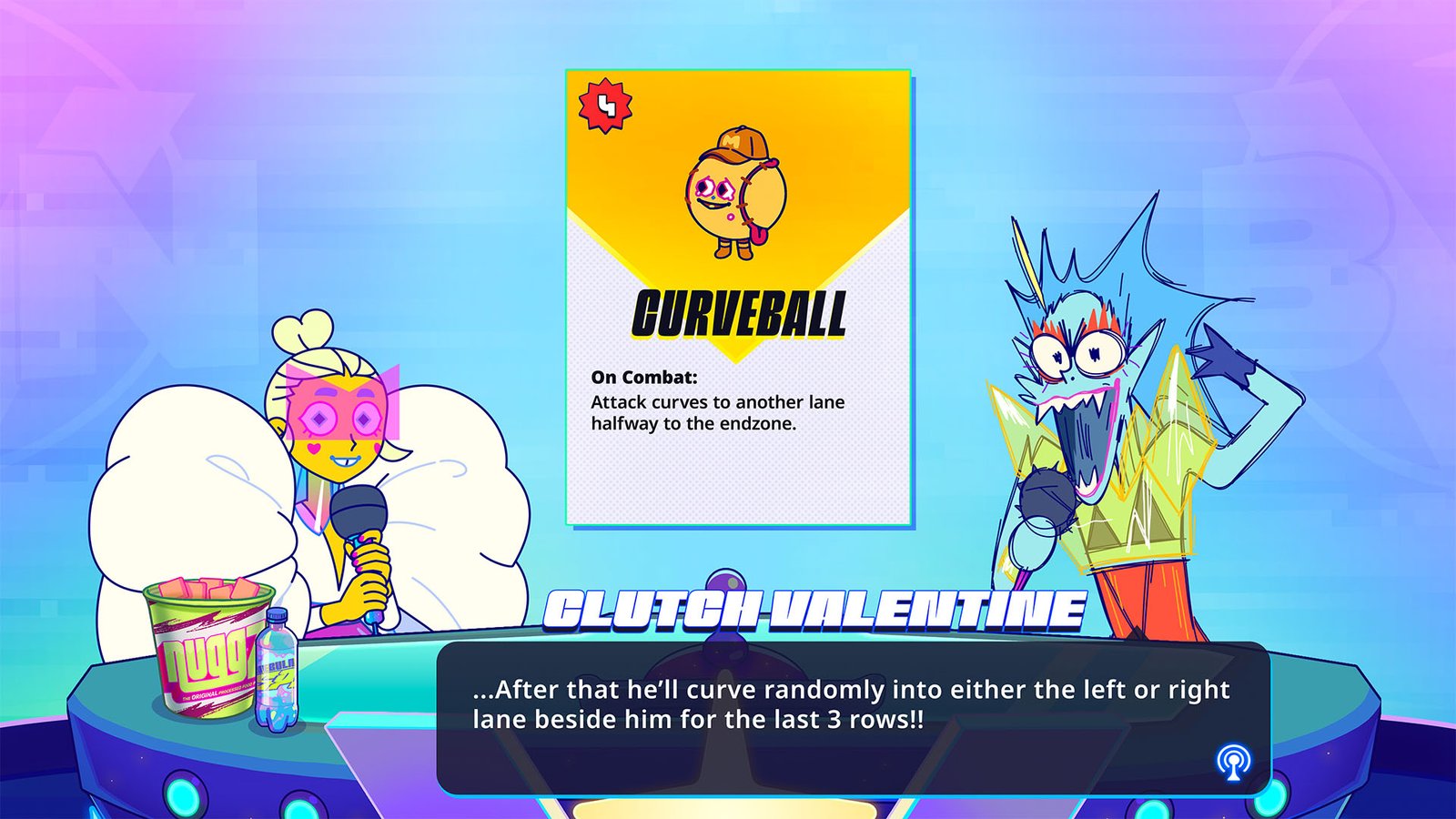
“We definitely want big spikes of power,” Vader said. “We just don’t want them to be consistent so that it becomes trivial to win.” Failure unlocks new units, new teams, and new content. Winning accelerates it.
Teams That Should Not Exist Together
If Clash of Heroes focused on archetypal fantasy armies, Battle Vision Network embraces absurd contrast. One faction consists of cursed Earth mascots whose flesh has fused with foam suits. Another is a ragtag band of space mercenaries. A magical faction hails from the planet Abracadabra.
“They shouldn’t seem uniform and homogenous,” Vader explained. “They should seem wildly different.” That diversity extends mechanically. Captains now exist on the board rather than as icons.
“We wanted to take those heroes and make them flesh and blood units on the board,” Vader said. It is a small design change with large strategic consequences, one that the developers hope players will fully embrace and invest in.
What Comes Next
Battle Vision Network is targeting PC for launch, with Steam Deck support confirmed and additional platforms under consideration. Multiplayer remains on the roadmap but is no longer the core focus.
“We’re targeting late 2026,” Hollinger confirmed, while noting that roadmap details are still being finalised.
For Capybara Games, this is less a course correction and more a rediscovery of identity. By stepping away from live service ambitions and leaning into roguelike experimentation, Battle Vision Network feels less constrained and more authentically Capy.
The spectacle remains. The puzzle remains. But now, the structure supports experimentation rather than endurance. And sometimes, a windy path leads somewhere better, and we hope to find out soon in 2026.
