

Table of Contents
A Lannister Should Not Win Like a Stark in Game of Thrones: War for Westeros
A good Game of Thrones strategy game should not simply ask which banner you want flying above the same army. House Stark and House Lannister may both be fighting for control of Westeros, but the way they approach that fight should reflect who they are. After spending time with Game of Thrones: War for Westeros, that distinction is already becoming one of its more encouraging qualities.
Our preview was restricted to 1v1 Skirmish matches, either against another member of the press or the CPU, with House Stark and House Lannister available to play. There was no lengthy tutorial walking us through every faction mechanic either, so much of the session involved learning through experimentation and mistakes, occasionally discovering a useful ability several minutes later than would have been ideal.
That made the opening slightly uncomfortable, even for anyone familiar with real-time strategy games, but it also revealed something useful about what PlaySide Studios is building with Game of Thrones: War for Westeros. The fundamentals are traditional. Gather resources, expand, claim territory, construct buildings, build an army and use the correct units to counter what the opponent is fielding. Heroes arrive much earlier and carry greater battlefield importance than in many traditional RTS titles, but the underlying language is immediately recognisable.
The more interesting part is how each House begins pushing those familiar decisions in different directions.
House Stark Rewards Patience Before Power
Playing predominantly as House Stark, I quickly realised that trying to match a Lannister opponent’s early momentum was probably the wrong approach in Game of Thrones: War for Westeros. The Lannisters’ economic advantages naturally encourage greater aggression. Their wealth provides more opportunities to accelerate production, expand quickly and apply pressure before the opposing player has comfortably established themselves.
The Starks of the North required a different mindset. My early priority became survival. Rather than chasing the opponent immediately, I spent more time strengthening my position, choosing where to expand and making sure I had enough military presence to discourage an early Lannister push. The result was not passive play, but rather calculated patience.
Territory became particularly important because specific control points can provide additional bonuses when developed with the appropriate structures. As the Starks, I found myself deliberately prioritising areas that offered greater financial benefits, attempting to close some of the economic gap before committing more heavily to military expansion.
The Starks do not necessarily need to overwhelm an opponent immediately in Game of Thrones: War for Westeros. Their appeal lies in holding firm, making sensible choices and gradually accumulating enough strength to turn defence into pressure. The important thing is that this came through during play, rather than the faction simply feeling weaker.
House Lannister Encourages Early Ambition
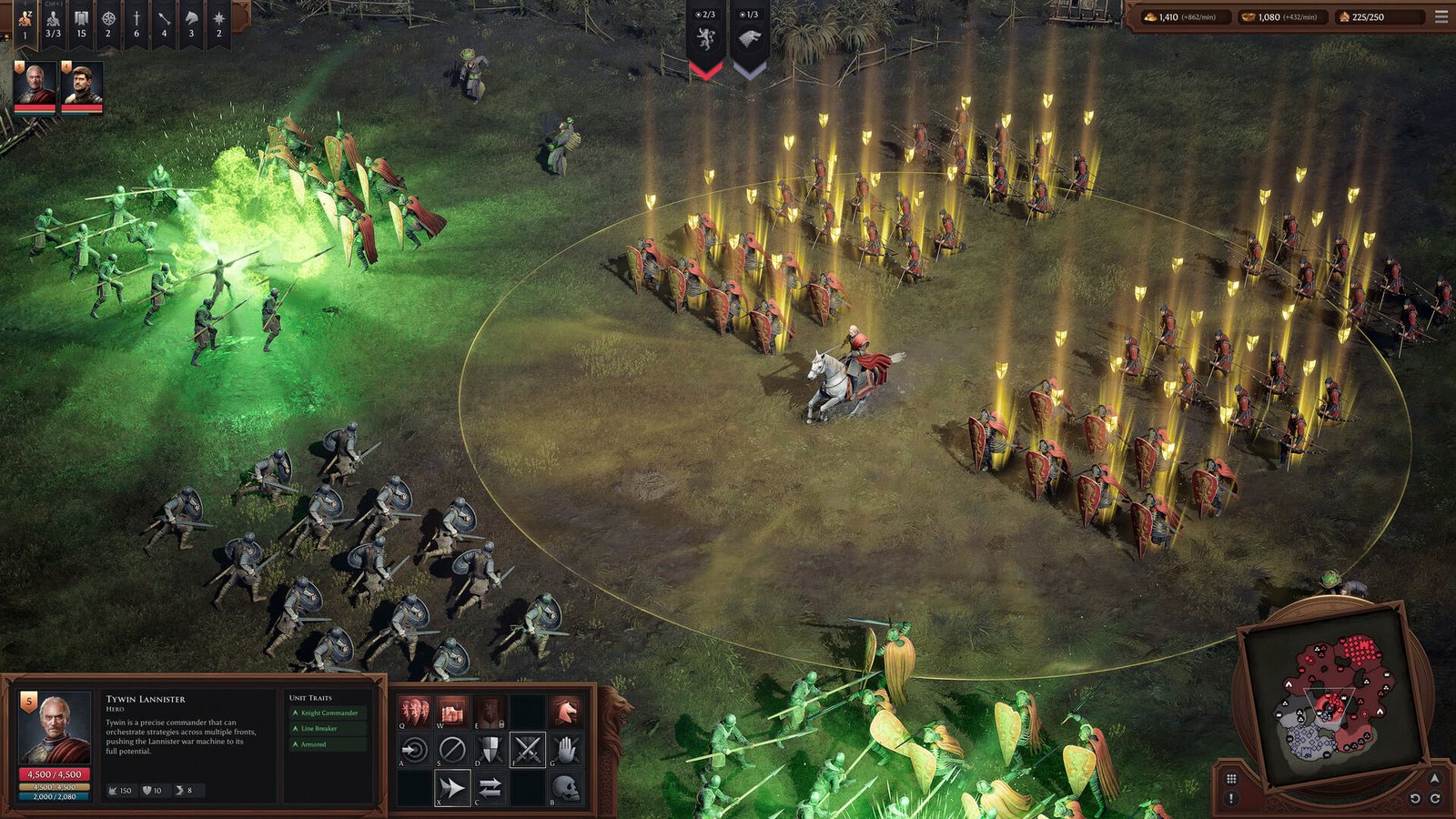
House Lannister pushes the opposite instinct. Their economic strength gives players more room to spend aggressively, whether that means expanding production, supplementing forces or generally trying to turn financial advantage into battlefield momentum.
During our matches, that advantage did not feel inherently overwhelming. A Lannister player still has to make the correct decisions and understand when spending more resources will actually produce an advantage. If the Lannisters simply generate enough wealth to ignore mistakes, the faction becomes frustrating rather than interesting. Based on the preview build, there was still room for a Stark player to absorb early pressure, secure the right territories and gradually even the contest.
Both Houses therefore start from familiar RTS concepts but encourage different levels of risk. That is exactly the direction Game of Thrones: War for Westeros needs.
Knowing When to Expand Matters as Much as Expanding
Neither faction immediately reveals its ideal strategy. There are enough resources, structures, abilities and territory bonuses involved that both underextending and overextending can become costly. Spending too long protecting one position can leave valuable areas uncontested, while expanding aggressively without the military power to protect new territory can undo several minutes of progress.
That learning process was one of the more satisfying aspects of Game of Thrones: War for Westeros. The game initially feels familiar enough that established RTS instincts take over, but familiarity only gets you so far. Understanding exactly what each House can exploit becomes increasingly important as the match develops.
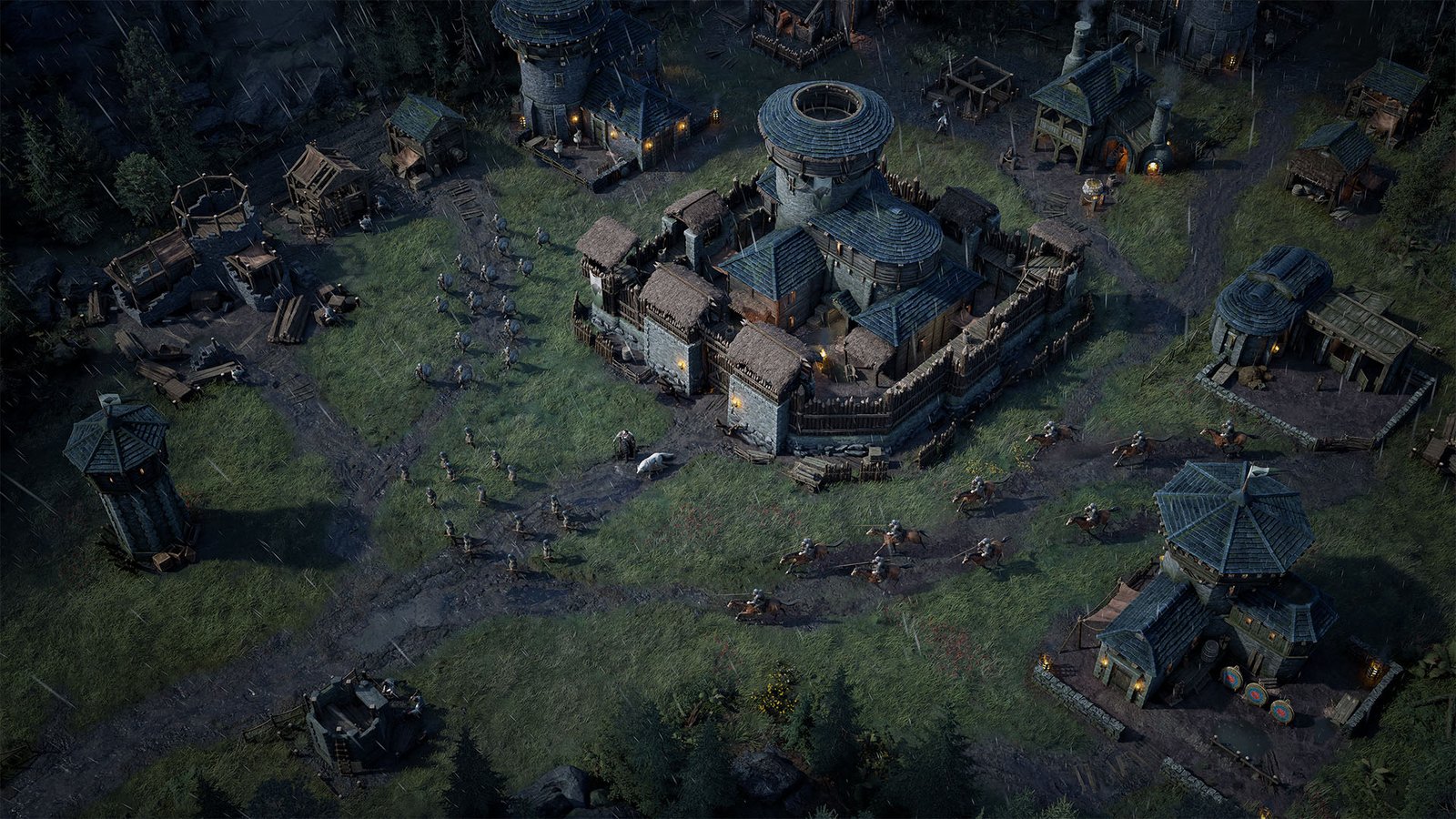
The preview did not provide enough time to identify perfect build orders or established strategies, and that is probably for the best at this point. What matters is that there appears to be enough strategic depth for different approaches to emerge rather than every match immediately collapsing into one obvious route towards victory.
Heroes Can Change a Battle Without Becoming the Entire Army
Hero units are another major part of that equation in Game of Thrones: War for Westeros. Characters including Robb Stark, Jon Snow, Jaime Lannister and Tywin Lannister are not saved solely for late-game spectacle. They can appear much earlier, gain experience through battle and grow increasingly valuable as their abilities develop. They can level up, unlock additional abilities and can strengthen the armies around them.
That naturally makes them tempting to use aggressively, but it also makes losing one increasingly painful. During our time with Game of Thrones: War for Westeros, heroes felt powerful enough to influence an engagement without becoming an automatic solution. Poor positioning, bad matchups, or simply allowing the opposing player to concentrate enough force could still remove them.
That creates another useful strategic tension: a stronger hero gives players greater incentive to place them where they can change a battle, while each additional level makes the possibility of losing them more painful. For an RTS based on Game of Thrones, where important people making one terrible decision can change everything, that feels appropriate.
Territory Turns the Map Into More Than Empty Space
Territorial control may ultimately become one of the systems that determines how much depth Game of Thrones: War for Westeros can sustain. Control points are not simply milestones on the way towards the opponent’s base.
Different locations can support structures that provide useful bonuses, making the decision over where to expand more important than simply painting more of the map in your colour. My Stark matches made that particularly obvious.
Knowing the Lannisters could have an early economic advantage meant financial territory immediately became more valuable to me. Rather than expanding into whichever area was closest, there was a reason to evaluate which location would compensate for the weaknesses of my chosen House.
That is where map and faction design begin to support each other. Our preview of Game of Thrones: War for Westeros featured a limited selection of battlefields, so it is too early to judge whether every map will create equally interesting territorial decisions.
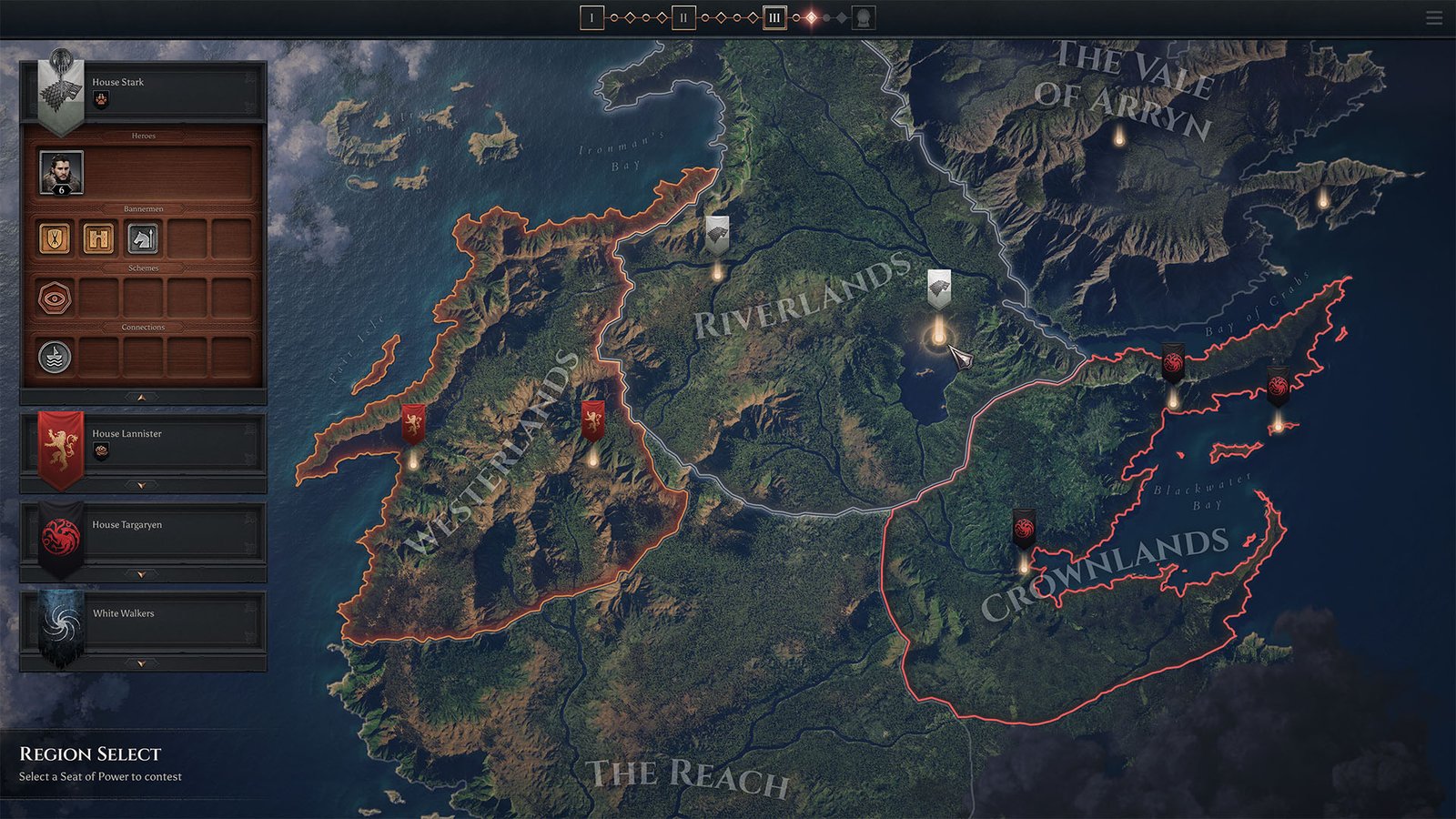
PlaySide says locations are being built with different layouts, defensible positions and strategic opportunities across Westeros, including maps inspired by places such as The Wall and King’s Landing. If those spaces meaningfully change how different factions expand, the strategic variety could extend well beyond unit composition.
Familiar RTS Design Is Not Necessarily a Weakness
There is no getting around the fact that Game of Thrones: War for Westeros feels traditional. That was simultaneously comforting and slightly uncomfortable during the preview.
Resource gathering, counters, territorial expansion and base construction are all immediately recognisable. Anyone expecting PlaySide to completely rethink the RTS genre around Westerosi politics may find the current Skirmish experience more conventional than expected.
But reinventing the genre may not actually be necessary. The more important challenge is making a familiar decision feel different depending on which banner the player has chosen. A Lannister should look at an early economic advantage and see an opportunity to apply pressure. A Stark player should be comfortable absorbing that pressure, identifying valuable territory, and preparing for the moment when patience becomes strength.
Heroes should change how an army behaves rather than merely provide recognisable faces. in Game of Thrones: War for Westeros Territory should influence strategic priorities. Eventually, the Targaryens and the Night King’s Army of the Dead should develop their own identities rather than feel like another variation of the Starks or the Lannisters.
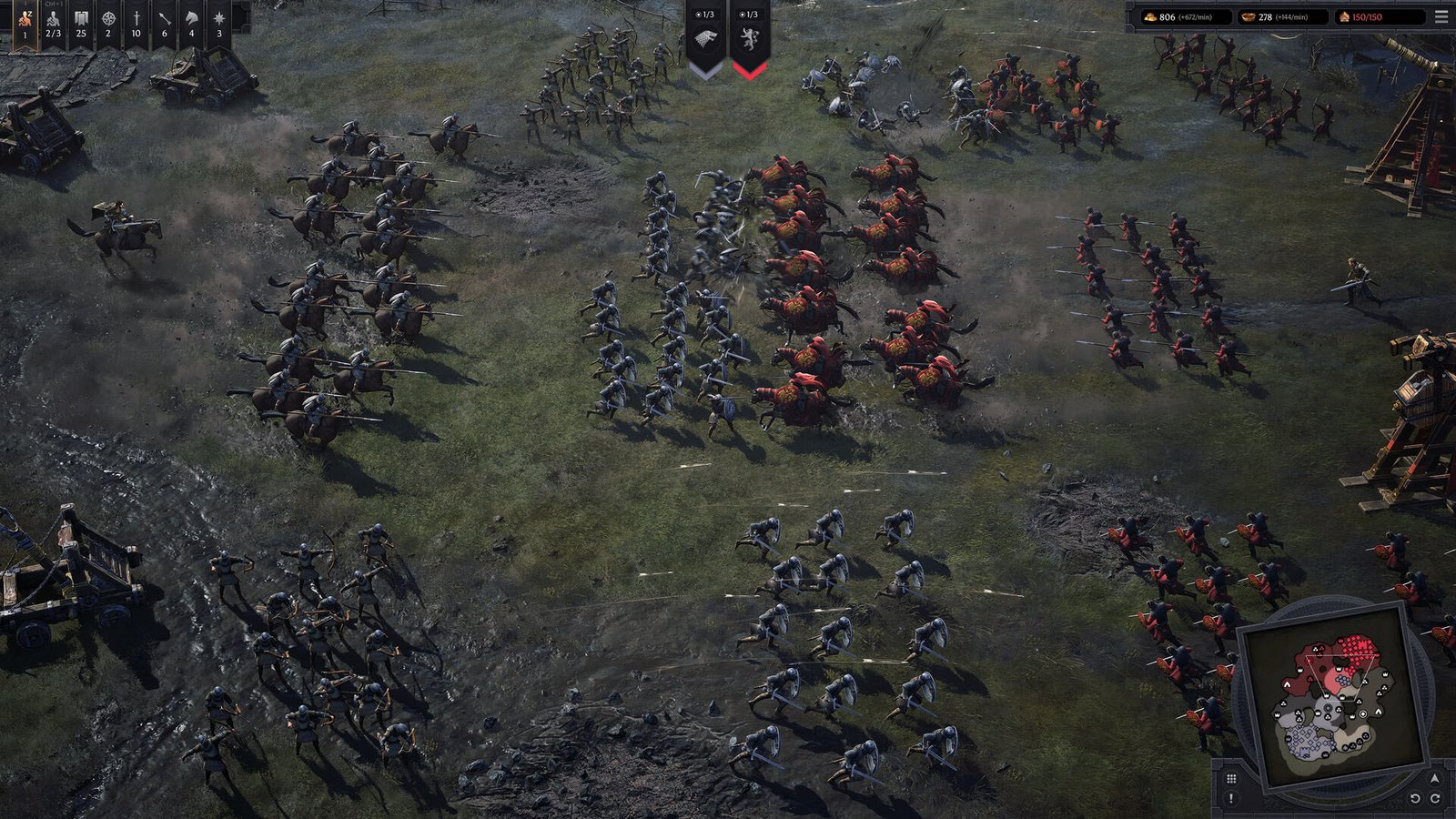
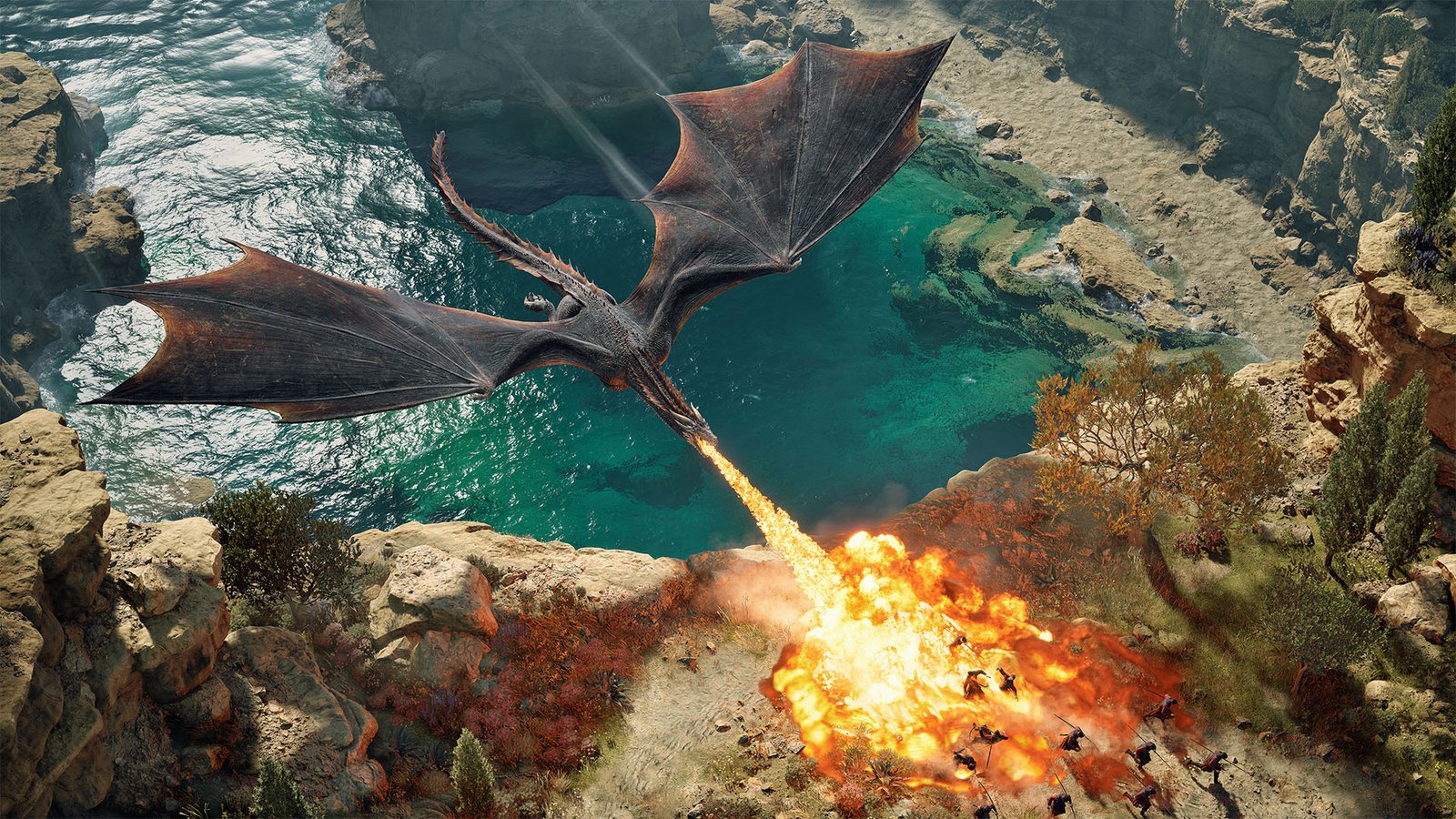
PlaySide is promising deeply asymmetric factions across House Stark, House Lannister, House Targaryen and the Night King, each with distinct armies, mechanics and heroes. The two we played already appear capable of competing without feeling identical, and that is a promising start.
Balance Will Decide Who Deserves the Iron Throne
The biggest unknown is also the obvious one for any multiplayer RTS: balance. House Stark and House Lannister currently appear different enough to create distinct strategies while remaining competitive against one another. That balance could become considerably harder once dragons, the Army of the Dead and whatever additional faction systems PlaySide has planned enter the equation.
A faction needs to be exciting enough that choosing it changes how you think. It also needs to remain understandable and beatable from the other side. Our limited Skirmish session cannot answer whether Game of Thrones: War for Westeros will achieve that across four factions, nor could we properly assess how the promised political elements and free-for-all multiplayer might change the experience when more than two players are fighting over the same realm.
What the preview did establish is a foundation that makes sense. Game of Thrones: War for Westeros does not need to reinvent real-time strategy simply because the licence carries enormous expectations. It needs to ensure familiar RTS decisions feel specific to the House making them.
After playing Stark and Lannister, PlaySide appears to understand that distinction. Now we need to see whether everyone else fighting for Westeros can be just as different without being any less fun.
Game of Thrones: War for Westeros launches for PC in early 2027, with a beta planned for later this year.
