

Table of Contents
XBOX Fans Want Exclusives Back as Player Voice Feedback Takes Shape
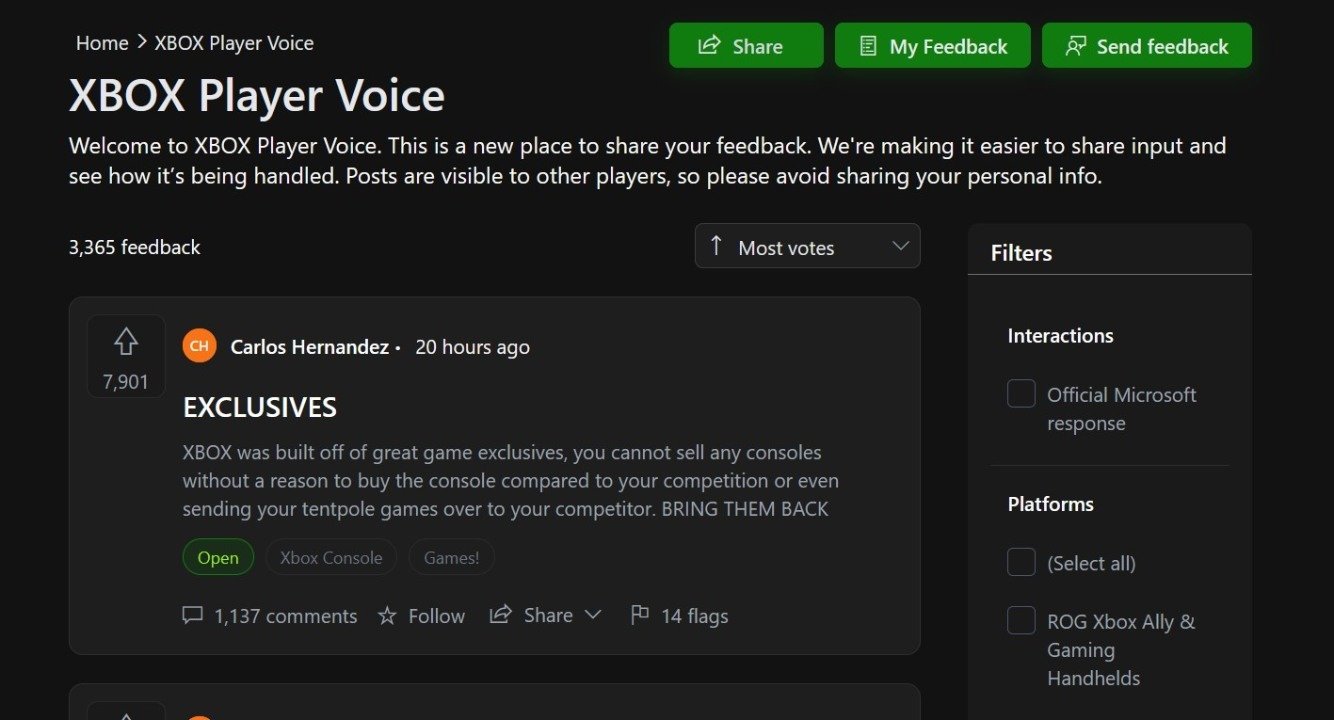
Microsoft’s new XBOX Player Voice platform was built to make it easier to submit, track, and review community feedback. It has also quickly made one thing hard to ignore: many XBOX fans want exclusives back at the centre of the brand. The most upvoted feedback on the portal has called for more exclusive games for XBOX consoles, alongside more backwards-compatible titles and free online multiplayer.
That response lands at an awkward time for Microsoft. While PlayStation is pulling back from bringing its major narrative single-player exclusives to PC, XBOX has been moving in the opposite direction by sending more of its first-party catalogue to rival platforms. For players who bought into the console ecosystem, that wider release strategy has weakened the perceived value of owning the hardware.
The fan argument is straightforward. Exclusive games have historically given console platforms a clear identity, a stronger purchase reason, and a sense of long-term investment. If Halo, Forza, Gears of War, Fable, and other major franchises increasingly become available elsewhere, some fans feel the console loses part of what once made it essential.
Player Voice Arrives During a Wider XBOX Reset
The timing is important because Player Voice is part of a broader attempt to rebuild trust with the community. Microsoft says the portal is designed to let players share feedback, see when it has been received or reviewed, and follow updates when there is progress to report. It also cautions that not every suggestion will become a feature or policy change.
That makes the exclusives debate more than a standard feedback thread. It is an early test of how seriously Microsoft wants to treat player sentiment when it clashes with a commercially attractive strategy. A multiplatform future may expand software revenue, but it also asks loyal console users to accept a weaker version of platform identity.
The pressure is not limited to exclusives either. Fans are also pushing for broader backward compatibility support, free online multiplayer on console, a Game Pass family plan, improvements to achievements, and an HDR dashboard.
The XBOX Rebrand Adds Another Layer
The conversation is unfolding shortly after Microsoft’s gaming arm leaned harder into the all-caps XBOX branding. CEO Asha Sharma recently polled fans on whether the brand should be styled as Xbox or XBOX, with the all caps version winning 64% of more than 19,000 votes.
That rebrand may look cosmetic on its own, but it fits into a broader effort to make the platform feel bolder, clearer, and more connected to its community. Sharma had previously moved the division away from the Microsoft Gaming label and back to Xbox, describing the change as a way to unify the gaming teams.
The problem is that branding can only carry so much weight. For longtime fans, a louder name and a direct feedback platform will mean little unless they are matched by choices that make XBOX feel distinct again. The early Player Voice response suggests that the community is not only asking to be heard. It is asking Microsoft to reconsider what the console is supposed to stand for.
Microsoft Still Has a Difficult Business Case
The challenge for Microsoft is that the fan demand for exclusives exists alongside the financial logic of wider releases. Bringing first-party games to PlayStation and Nintendo platforms can grow audiences, reduce reliance on console hardware sales, and give expensive productions more commercial runway.
That does not make the community’s frustration meaningless. It simply creates a harder balance. XBOX has spent years repositioning itself around access, Game Pass, PC, cloud, and now rival platforms. Fans asking for exclusives are effectively pushing back against the idea that ecosystem reach should matter more than console identity.
For now, Microsoft has not committed to reversing its multiplatform strategy. Sharma has reportedly said XBOX will reevaluate its approach to exclusivity and windowed releases, but there is no firm promise that future first-party games will stop appearing on competing platforms.
