

Table of Contents
D.O.T Defence on PC
A defensive line is only comforting until the enemy finds a way around it. One moment, turrets hold a narrow approach while fresh troops march to the front; the next, another patch of territory needs protecting, and the balance of a battle can shift in seconds. In D.O.T. Defence, war moves quickly, and keeping up with it is half the fun.
Developed by Rattleaxe Games and published with Gamersky Games, this PC strategy game combines the defensive planning of tower defence with the territorial struggles of real-time strategy. Throw in armies that fight largely on their own, and you get a colourful battlefield where the focus is on making the right decisions rather than controlling every soldier.
The premise of D.O.T. Defence makes for an inviting route into strategy, helped by a campaign that keeps changing the terms of engagement. Yet as the fighting grows busier and missions demand more precision, that same streamlined approach can make it difficult to see why a plan has succeeded or fallen apart.
Drawing the Battle Lines
The Chroma Wars provide the backdrop for a conflict over a powerful resource, with the campaign presenting the struggle from several faction perspectives. The setting is an excuse for opposing forces to clash across compact maps, but the changing factions give the fighting a welcome sense of variety, from more conventional military units to hordes of the undead.
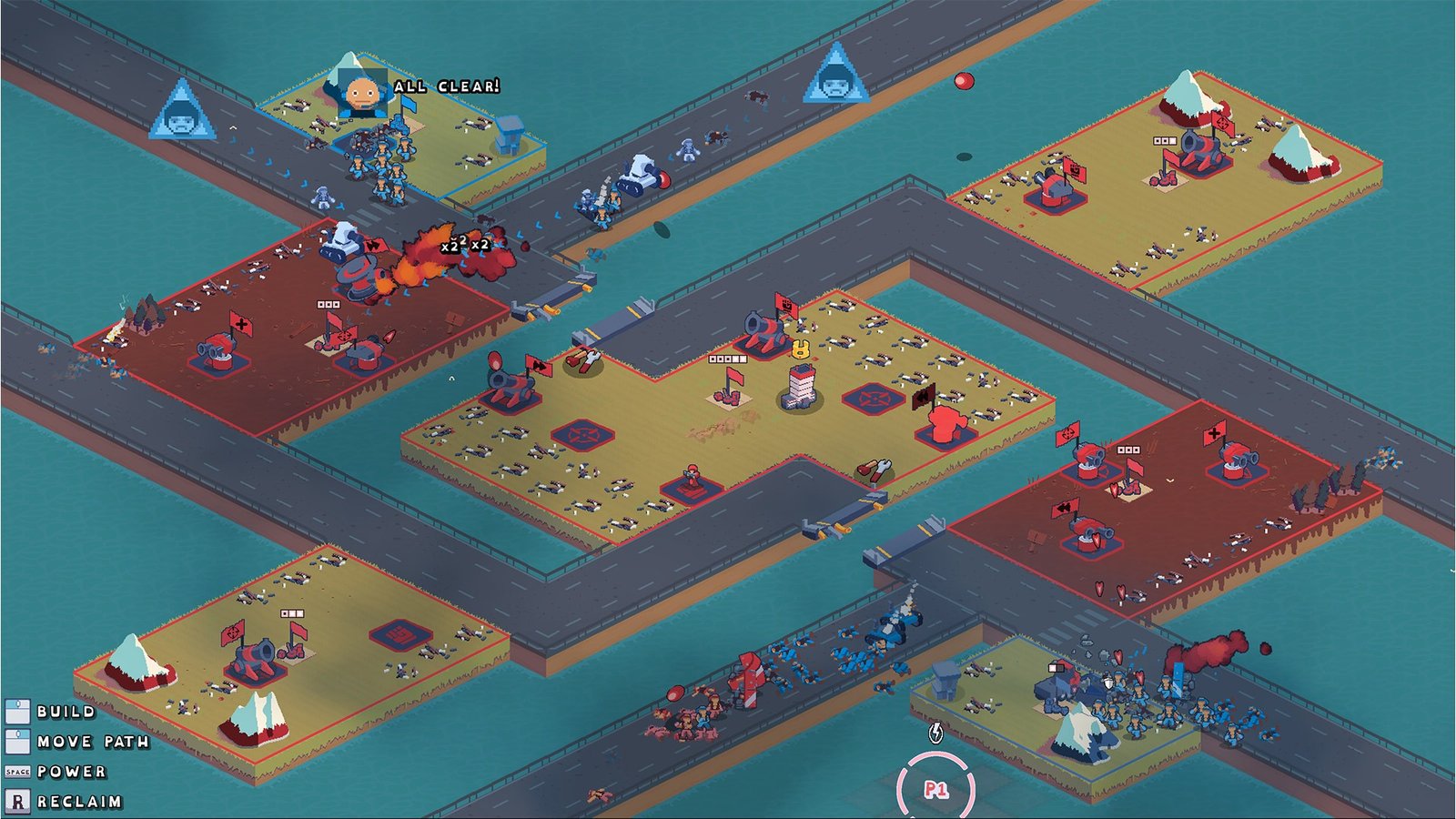
The fundamental goal in D.O.T. Defence is straightforward: protect your headquarters, build up your forces and take the fight to the enemy. Territory provides the foundation for expansion, while production buildings and turrets turn captured ground into a supply of soldiers and defensive firepower. There is a satisfying rhythm to securing space, reinforcing a vulnerable approach and watching an army gather enough strength to push forward.
Unlike a more traditional RTS, units can handle much of their own movement and fighting, although players can set paths to guide their forces. That makes D.O.T. Defence less concerned with micromanaging individual troops and more about the broader shape of a battle. Compared with the carefully placed defences of tower defence titles, the frontline here feels more fluid, with attack and defence constantly competing for attention.
Fast Decisions, Crowded Frontlines
The game’s best moments come when its systems pull in the same direction. A turret can protect a key route while production buildings keep troops flowing towards the enemy, and choosing where to invest becomes as important as reacting to the next threat. On maps with railway tracks, placing turrets on train carriages adds another entertaining wrinkle, turning a fixed defensive tool into a moving source of firepower.
There are commanders, abilities and different building choices to consider in D.O.T. Defence, giving players ways to adjust their approach before and during a fight. The streamlined economy also helps battles get moving without a lengthy opening routine, making another match appealing when time is limited. There is room for tactical thought beneath the colourful explosions, even if the game presents it in an unusually brisk package.
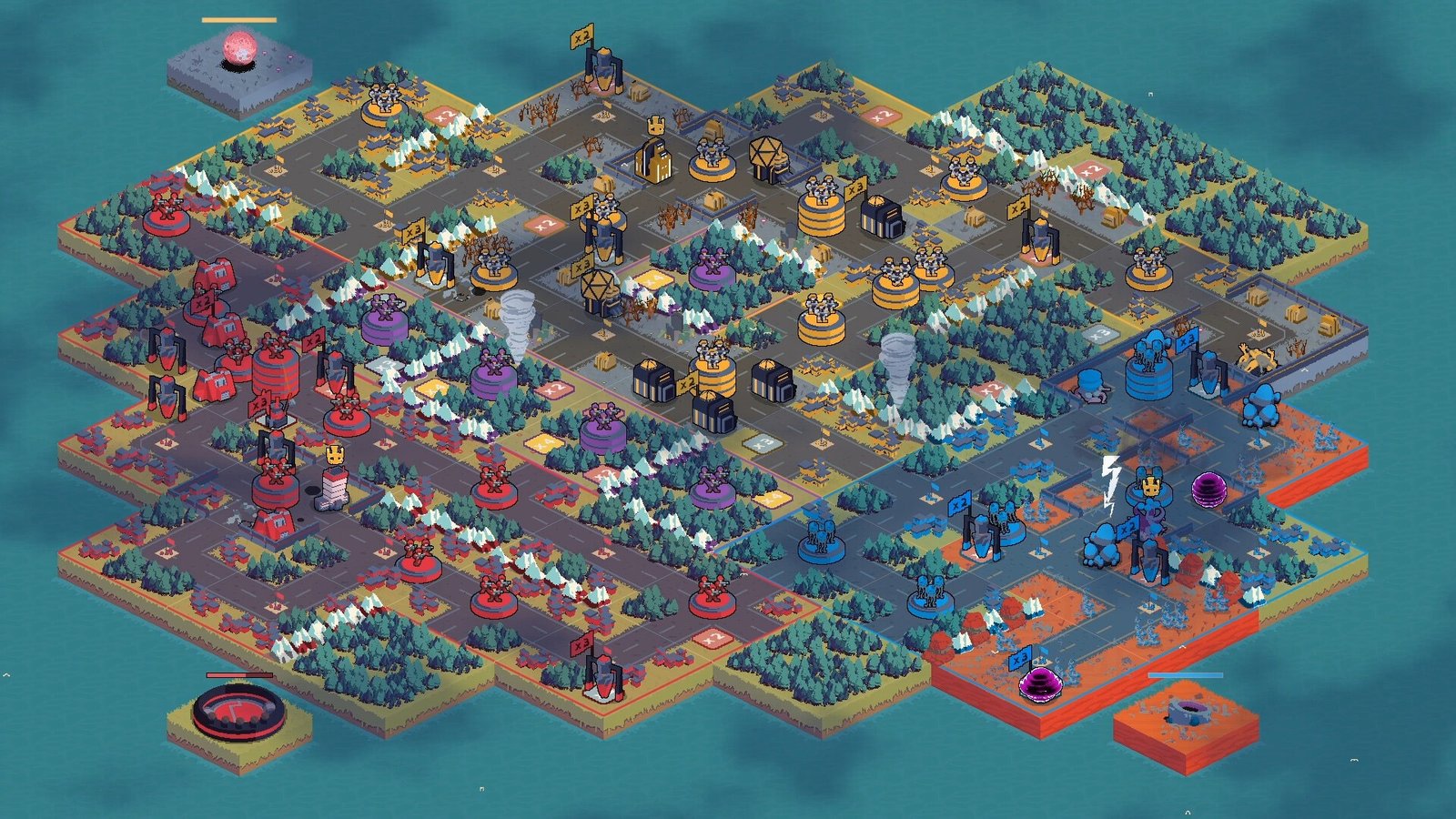
That pace can also work against the action. Once several types of troops and defences are competing for space, the impact of an individual unit or placement choice is not always easy to read. The difference between a clever combination and simply producing enough bodies to wear down the opposition can become blurred, particularly when the screen fills with activity. The automated fighting is enjoyable to watch, but clearer feedback would make it easier to understand what deserves credit when a plan comes together.
A Campaign With Uneven Pacing
To its credit, the D.O.T. Defence campaign does more than ask players to repeat the same battle across different backgrounds. Alongside familiar base assaults and defensive stands, missions introduce time pressures, stealth challenges and other changes of pace. Shifting between factions helps vary the available tools, while unlocks offer reasons to experiment with new combinations.
Not every change of pace is equally successful, however. The game’s loose control over individual units can become awkward when a mission calls for more precise movement, especially if a valuable squad wanders into danger after an instruction. What feels like an acceptable setback in a short skirmish can become more irritating in a longer, multi-stage scenario, where failure means repeating earlier work before reaching the difficult part again.
The lack of checkpoints or a rewind option in those missions makes experimentation more costly than it needs to be in D.O.T. Defence. It is a shame because the scenarios themselves suggest a willingness to explore ideas beyond straightforward attrition. The broader tactical challenges are welcome; the frustration comes when the journey back to another attempt takes the edge off solving them.
Small-Scale War, Plenty of Personality
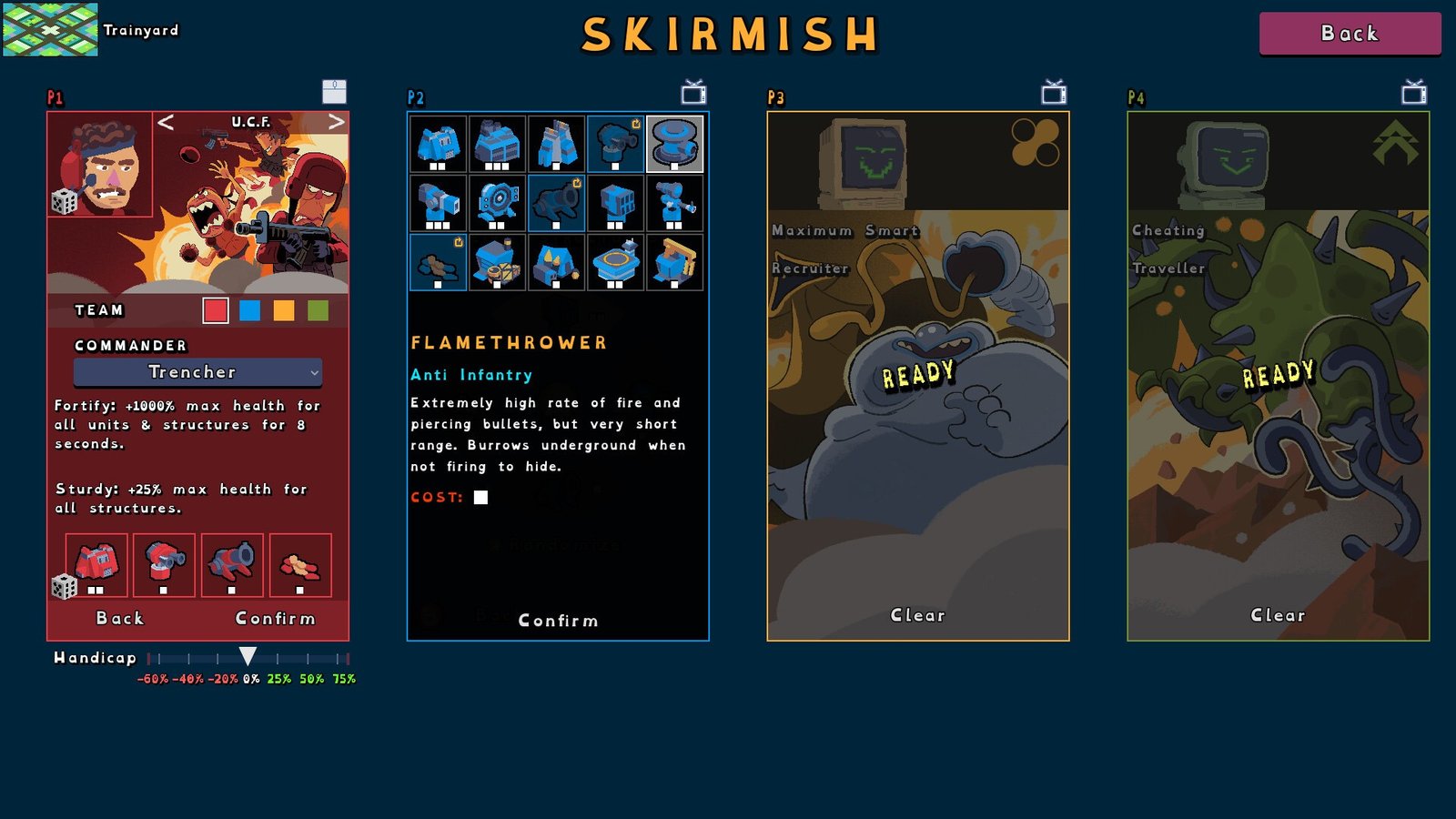
Outside the campaign, skirmish and wave defence offer a more immediate way to enjoy D.O.T. Defence‘s strengths. The former centres on contesting territory and destroying rival headquarters, while the latter shifts attention towards surviving incoming attacks. New maps are tied to campaign progress, which can make the path to these alternatives less convenient for players who prefer shorter battles.
Local multiplayer adds another dimension, with competitive and cooperative options alongside AI opponents. Watching a carefully assembled defence buckle under pressure fits the game’s energetic style, though the appeal of those modes will naturally depend on having others available to play. Steam Remote Play Together also lets you share local sessions remotely.
The bright, simplified art gives each side a distinct presence, and the animated clashes lend personality to a game about tiny armies destroying one another. Like The King Is Watching, it finds an engaging hook in making strategy approachable, even if the battlefield becomes harder to decipher as the action intensifies. For players who enjoy quick bouts of tactical chaos, D.O.T. Defence has plenty to offer; those hoping for precise control and clearer feedback may find its charms harder to sustain over a longer campaign.
D.O.T Defence is available now on PC.
SavePoint Gaming
Summary
D.O.T. Defence delivers lively strategic scraps through an approachable mix of tower defence and automated warfare. Its varied missions and colourful armies are entertaining, though muddled battlefield feedback and frustrating campaign restarts can blunt the fun.
