

Table of Contents
Gears of War: E-Day on Xbox Series X
Review Note: This assessment is based primarily on a roughly 14-hour campaign playthrough in the pre-Early Access review environment. Public multiplayer, including Horde Siege and Versus, was not available for assessment and is therefore not reflected here.
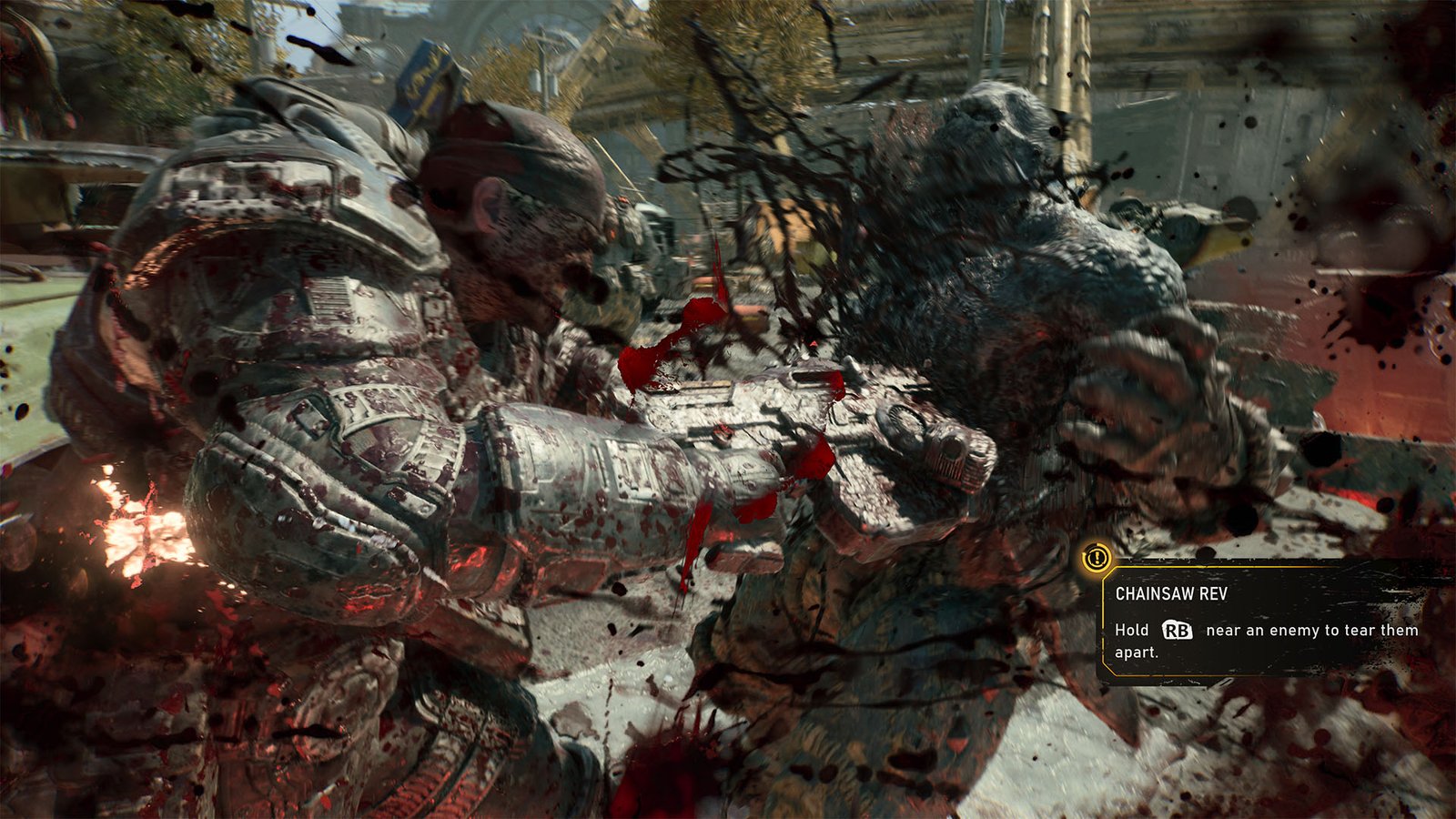
For all the advancements shooters have made over the last two decades, there remains something distinct about playing Gears. The weight of a Gear slamming into cover, the satisfaction of nailing an Active Reload and the frankly unreasonable amount of blood produced by introducing a Locust to a chainsaw have endured because very few games have ever replicated that particular combination.
The Coalition clearly understands this with Gears of War: E-Day. Rather than reinventing the series until little remains recognisable, this prequel goes back to the day everything fell apart and rebuilds those familiar foundations around greater mobility, more tactical freedom and a story capable of giving familiar faces new meaning.
Across roughly 14 hours, that approach produces one relentless ride. It isn’t without repetition, and some attempts to broaden the traditional Gears structure work better than others, but when the combat, characters, and spectacle come together, Gears of War: E-Day feels like the strongest modern interpretation of what made Gears special in the first place.
The Day Everything Changed
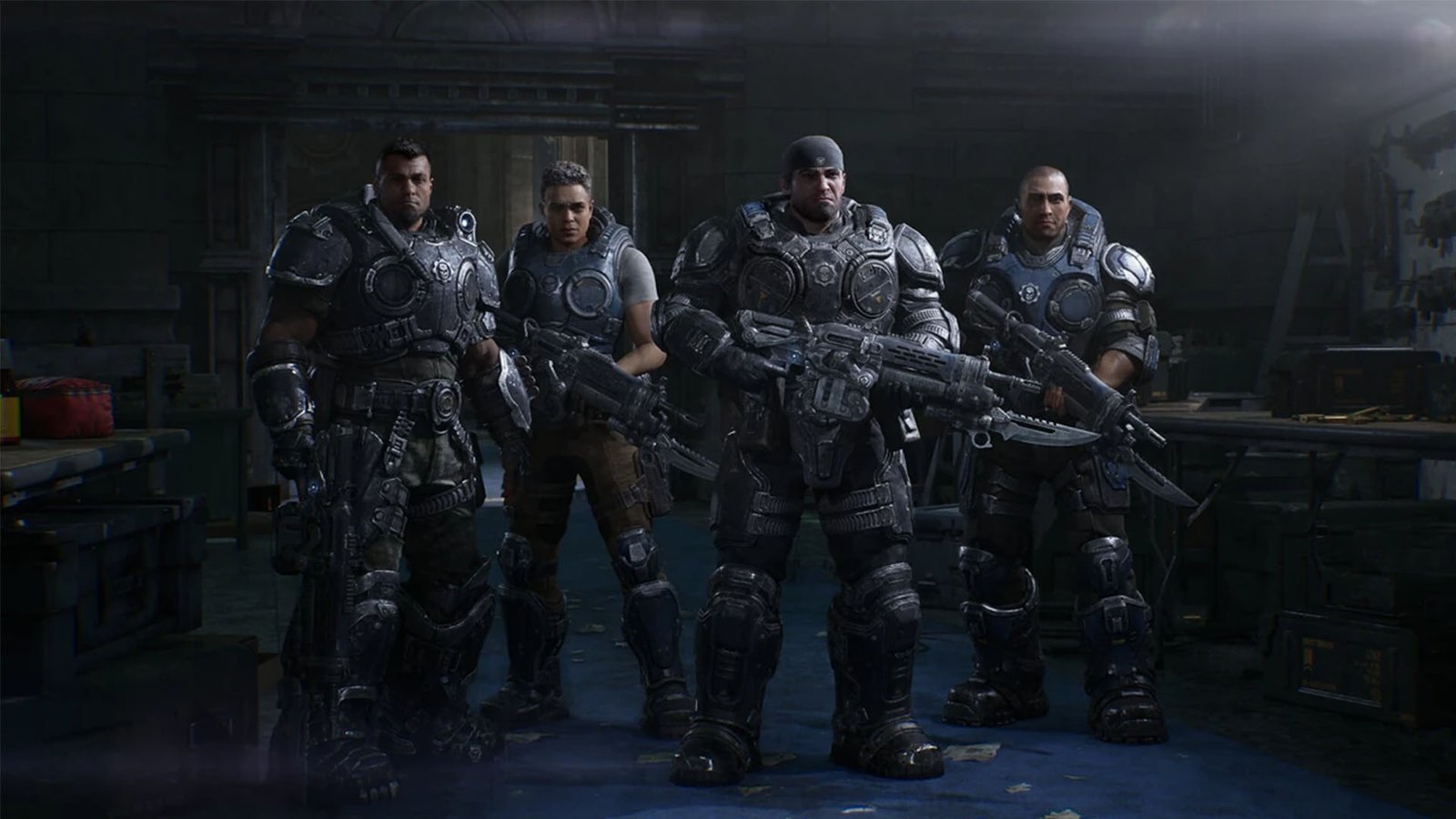
There was always a danger in finally depicting Emergence Day itself. The series has spent years telling us what happened when the Locust erupted from beneath Sera, and turning that mythology into something players actually experience could easily have diminished the horror. Gears of War: E-Day avoids that problem by making the invasion feel every bit as sudden, bloody and helpless as it should.
Even battle-hardened Gears confront something they don’t fully understand, while civilians watch their world literally collapse around them. Streets become killing grounds, buildings are ripped apart, and every victory feels temporary because something worse is always waiting around the corner.
That relentless pacing can almost become exhausting, yet it fits the premise remarkably well. Bravo Squad rarely gets much time to process one disaster before another demands attention, reinforcing that this is not a military campaign unfolding according to plan. Humanity is improvising against an enemy it was nowhere near prepared to meet, and what keeps all that destruction from becoming empty spectacle is the squad at its centre.
Marcus Fenix is already recognisably Marcus. He is grizzled, guarded, and well on the road to becoming the man players know, but Gears of War: E-Day still has room to show those harder edges forming. Dom provides a useful contrast, considerably more upbeat and hopeful until circumstances begin taking their toll.
Their relationship remains one of the campaign’s strongest selling points, but Gears of War: E-Day wisely refuses to make the entire story dependent on nostalgia. Newcomers Mags Carter and Lucas Reyes bring their own histories and perspectives to Bravo Squad, allowing the narrative to explore not only Emergence Day, but the lingering consequences of the Pendulum Wars, Imulsion, technological progress and what survives after people convince themselves a war has finally ended.
The former’s past as a miner and her extended family unit gives us a lens into the everyday life of the people in Kalona and beyond, while the latter’s rookie status as a soldier and how he came to be acts as a perfect foil for players new to the brutalities of facing the Locust. As Bravo Squad puts it, ‘war doesn’t give a shit about our good intentions’, and that surfaces throughout most of E-Day.
Returning faces such as Tai offer additional rewards for existing fans, while others, such as the banter between twin Gears Mako and Manu, give an otherwise bleak campaign some necessary personality. More importantly, newcomers do not need years of Gears knowledge for any of this to work. Fans simply understand more of the tragedy waiting further down the road.
Heavy Enough to Hurt
Marcus may finally be able to jump, but nobody is going to mistake him for an acrobat. That is arguably the smartest thing about Gears of War: E-Day‘s expanded movement. Sliding, climbing, jumping and negotiating different forms of cover make Marcus substantially more agile, yet the distinctive physical heft of controlling an armoured Gear remains intact.
The greater flexibility also matters because Gears of War: E-Day discourages passive play. Sitting behind one piece of cover and unloading towards distant enemies is rarely the best solution, particularly when sustained incoming fire starts affecting your aim. Moving between positions, finding another angle or pushing into a more appropriate weapon range becomes increasingly important.
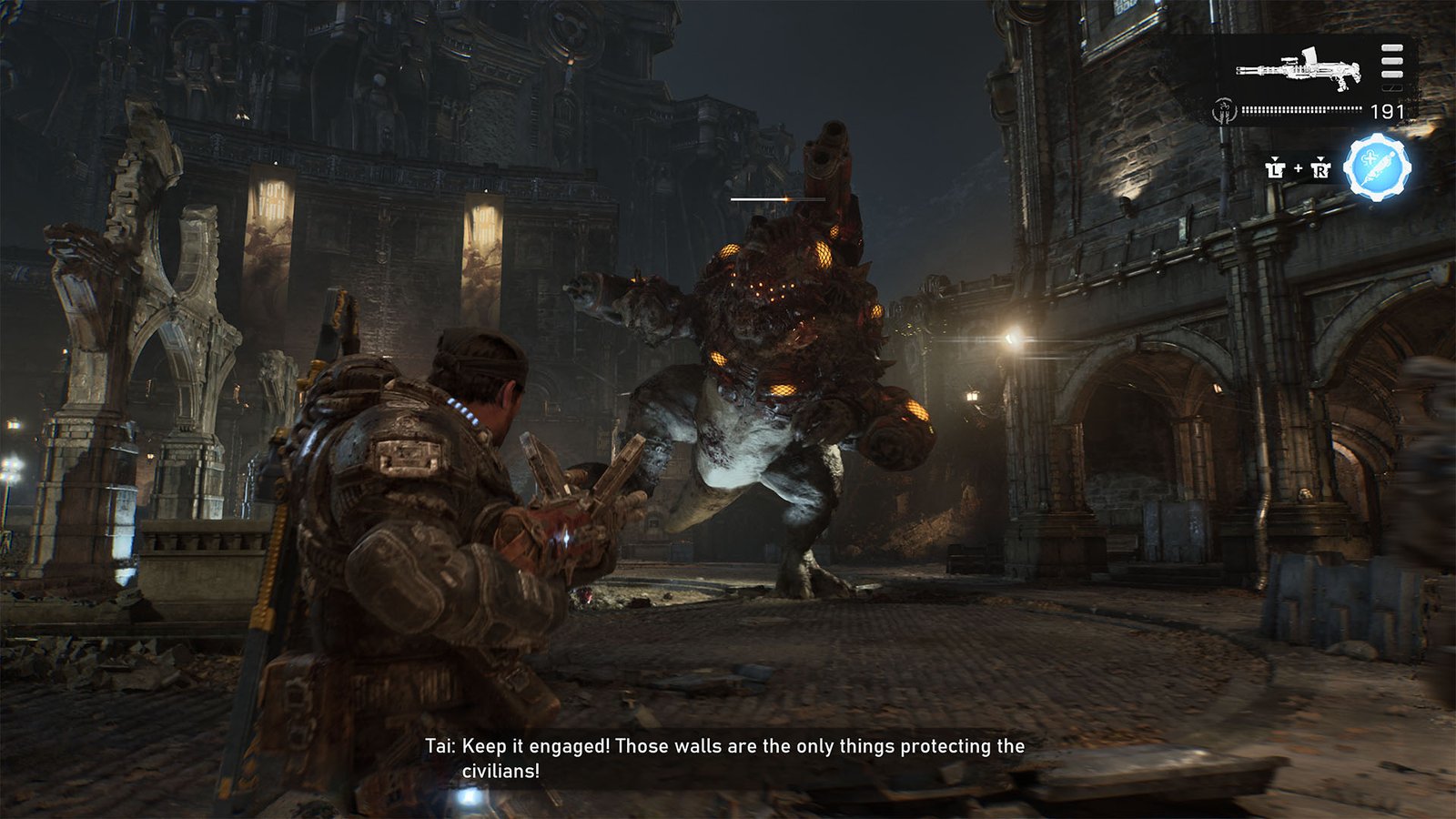
That makes the new traversal options feel like tactical tools rather than concessions to modern shooter design. Sliding into protection, climbing for a different firing angle or using an alternate route to flank a position all feed naturally into the familiar cover-shooter framework.
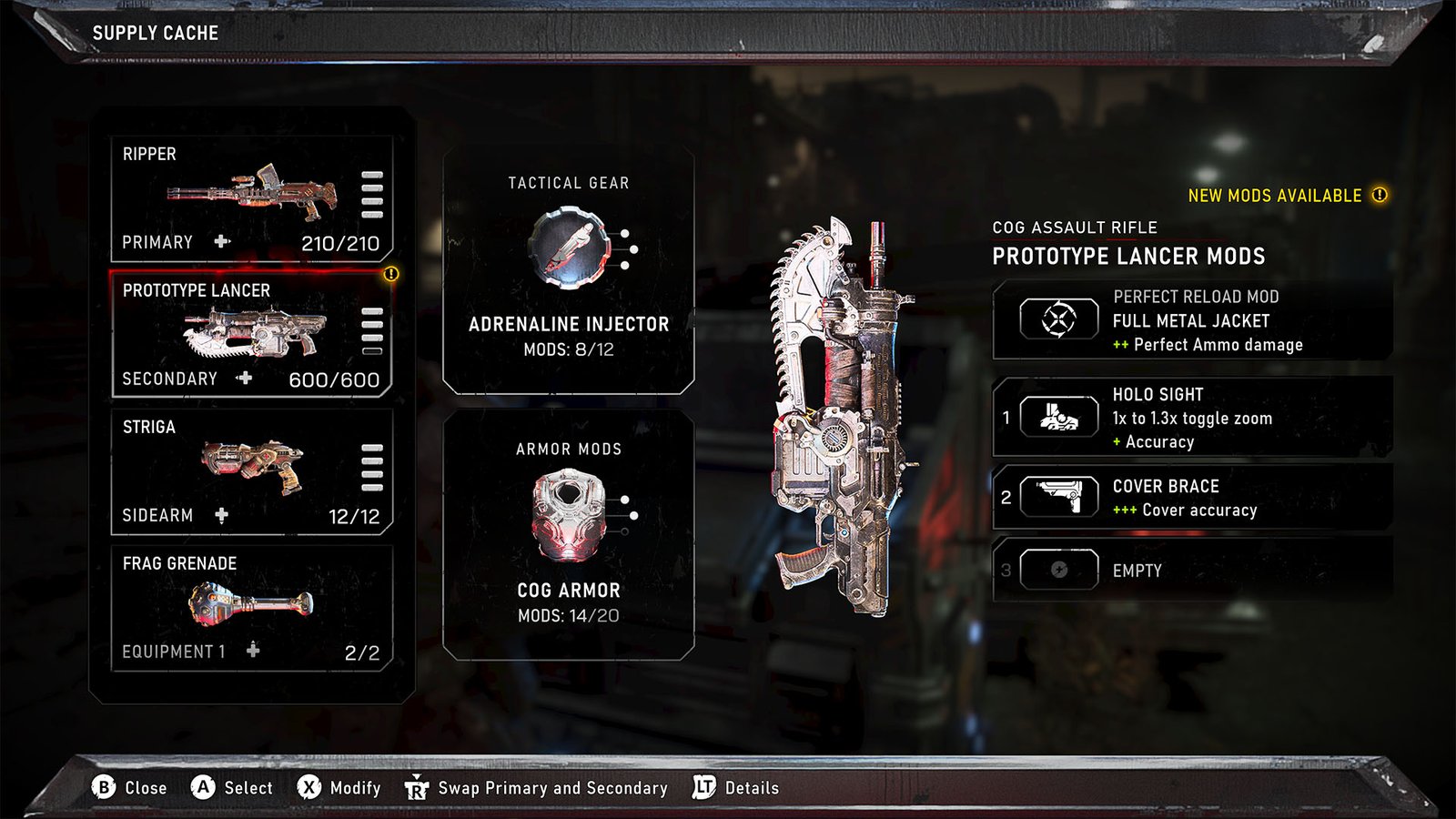
Gunplay remains suitably vicious. Weapons sound powerful, impacts carry weight, and executions retain the gleefully excessive gore expected from the series. The Lancer chainsaw remains as satisfying as ever when something gets too close. Gears of War: E-Day also makes weapon choice more interesting through Mods.
My preferred combination eventually settled around the Longshot and Ripper, providing strong options across different ranges, while the Striga became a dependable emergency answer whenever smaller enemies pushed too close. Mods transformed those weapons further: critical kills could restore health, Longshot headshots could trigger a Perfect Reload, the Ripper could ignite targets, and the Striga could evolve into a lighter shotgun firing a five-shot burst.
These upgrades are not merely percentage increases buried in a menu. They can materially alter how a weapon functions, making Hard Cases containing them and mod slots one of the strongest reasons to explore beyond the critical path in Gears of War: E-Day. Active Reload remains another wonderfully simple piece of design. Different weapons carry their own timings, and learning each rhythm still turns something as mundane as reloading into a small but satisfying test of execution.
One presentation choice is less successful. The familiar damage emblem gradually filling the centre of the screen can become intrusive during hectic firefights, reducing visibility when identifying threats matters most.
The Locust Don’t Fight Fair
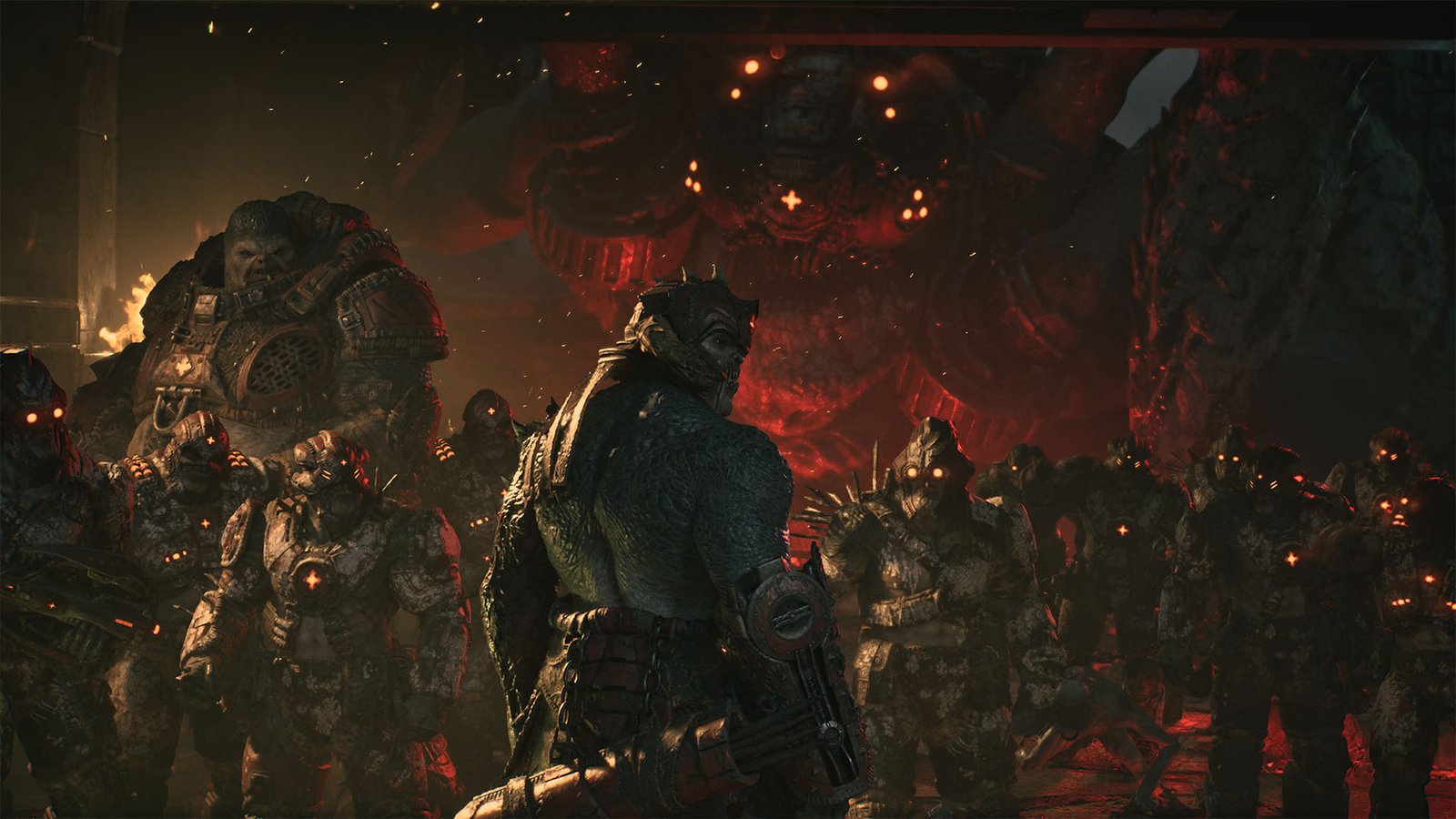
If Gears of War: E-Day succeeds in making the Locust frightening narratively, it does an equally convincing job of making them threatening mechanically. Even basic enemies can absorb a surprising amount of punishment. Accurate shots and better weapon choices mitigate that durability, but attempting to pour automatic fire into targets from long range often turns firefights into prolonged exchanges.
That naturally encourages different approaches. Weapons such as the Longshot and Breechshot make considerably more sense at distance, while closing the gap opens opportunities for the Lancer, Gnasher and other close-range options, but getting closer also makes everything substantially more dangerous.
The Locust can shred Marcus with sustained fire, rush positions, attack in melee or simply overwhelm the squad through numbers. Their behaviour is generally convincing enough to force movement, though some encounters drag on when enemies settle into defensive positions and neither side gains much ground.
Larger creatures and boss fights tend to be more entertaining in Gears of War: E-Day. They are dangerous without simply functioning as oversized health bars, and different enemy combinations keep encounters demanding attention even after you’ve heavily modified your preferred weapons.
The bigger issue comes from Bravo Squad itself. AI teammates occasionally shoot towards enemies they cannot realistically reach, position themselves at odd angles or fail to reach Marcus quickly enough after he goes down. They aren’t expected to carry encounters, but the inconsistency becomes frustrating when the game is already putting considerable pressure on a solo player.
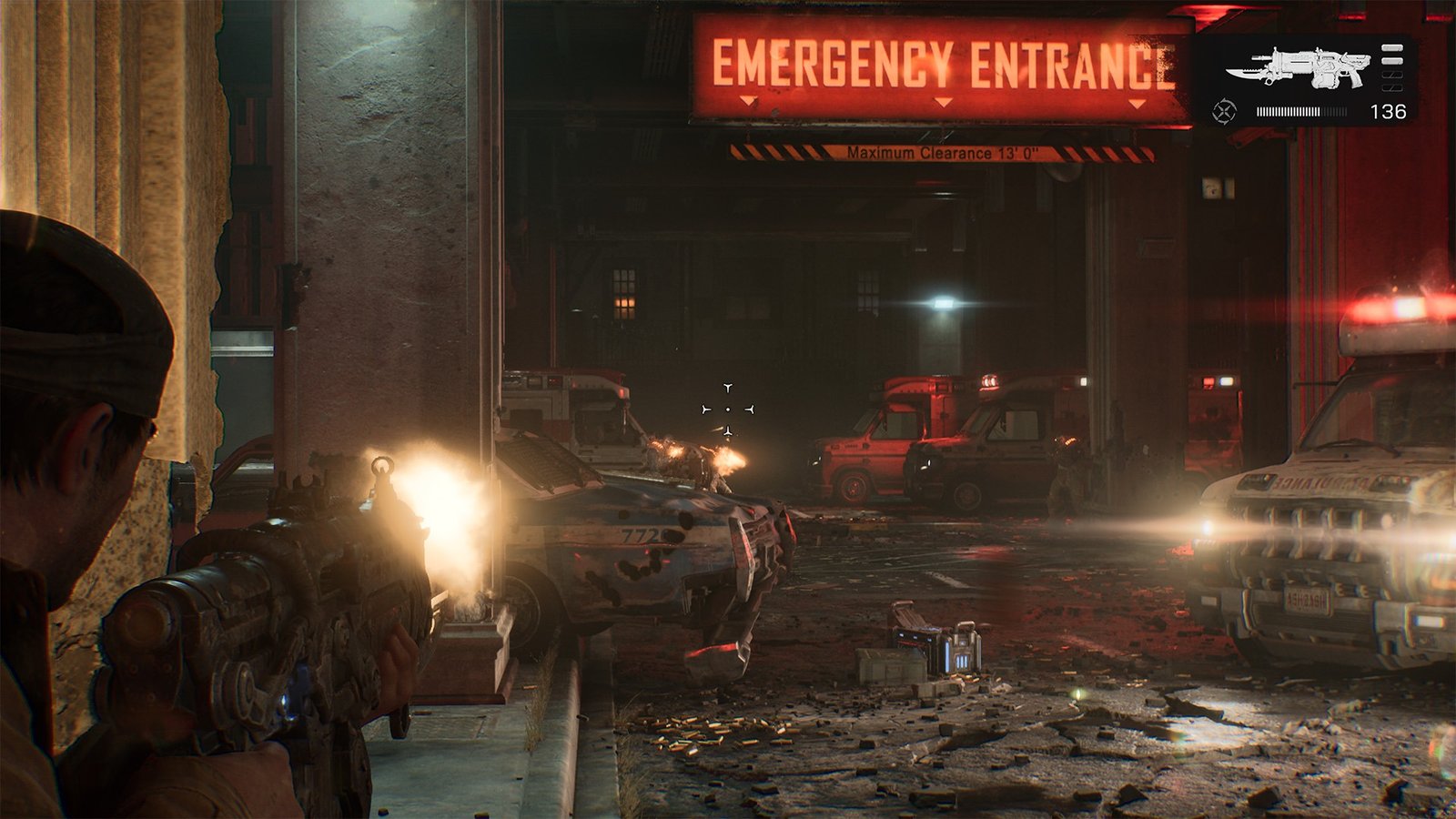
Certain fights exacerbate the problem. Being locked into a confined rooftop with multiple hulking enemies that can kill Marcus almost instantly strips away many of the tactical options Gears of War: E-Day otherwise encourages, turning difficulty into frustration. Fortunately, those encounters are exceptions rather than the rule. Most battles make the Locust feel appropriately dangerous while still providing enough room for player skill and preparation to matter.
Finding Space Between the Ruins
Gears of War: E-Day‘s relationship with exploration is more complicated than simply being better or worse because of its larger levels. The campaign remains predominantly directed, but several sections open up and give Bravo Squad room to wander between objectives.
These areas are large enough to encourage exploration without dominating the entire campaign, and their relative rarity prevents them from recreating the extended downtime that can make an open-world structure feel unnecessary. More importantly, there are legitimate reasons to investigate.
Hard Cases provide Mods and additional slots that can significantly improve weapons, while traditional Collectibles add smaller pieces of history and context. Squad conversations also fill quieter stretches, showing how Emergence Day affects people beyond the immediate firefight.
Not everything found off the critical path is equally compelling, however. Side objectives are mechanically straightforward and often amount to variations on defending a position, helping survivors, or clearing another Locust presence. In other words, they often resemble bite-sized Horde encounters inserted into Gears of War: E-Day rather than fully distinct missions.
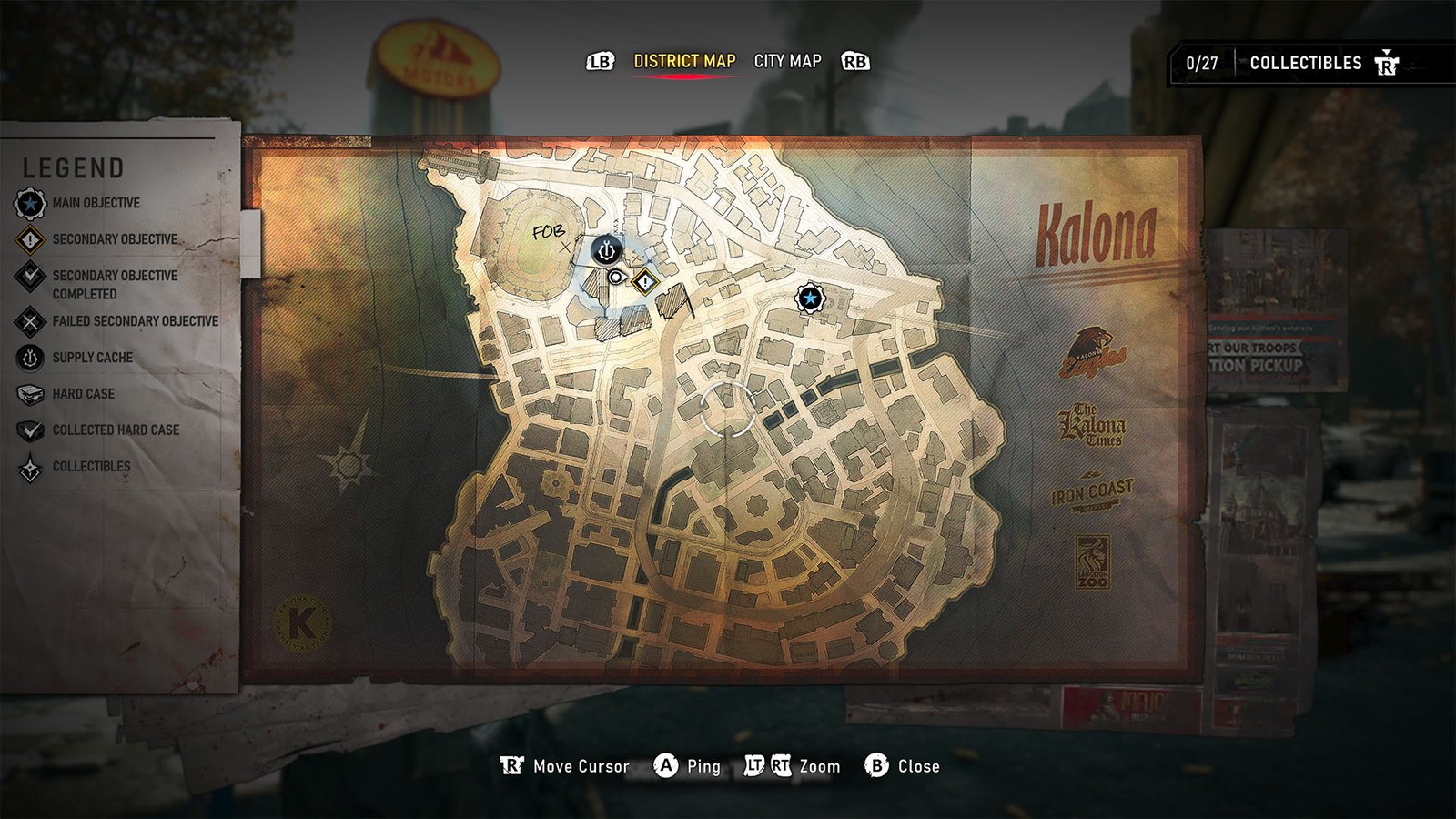
They remain enjoyable largely because the underlying shooting is good enough to make another firefight appealing, not because the objective design itself is especially inventive. The game also has an odd contradiction in how it handles exploration. While simply moving through an open district gives players considerable freedom, beginning a main objective or side mission suddenly tightens the boundaries. Wander too far once one of those activities is active, and the game can trigger a mission failure.
It makes sense from a scripting perspective, but it still feels strangely restrictive in environments that otherwise encourage curiosity. Gears of War: E-Day is not afraid to route Bravo Squad through familiar territory either. Certain locations reappear, and stretches of the map can feel repetitive. Yet returning to places already scarred further by the invasion also contributes to the sense of watching Kalona deteriorate across the campaign rather than moving through a series of disconnected levels.
The balance works more often than it does not, especially because tightly authored missions regularly return before the open spaces overstay their welcome.
Familiar Tricks, Sharper Execution
The bigger issue is that Gears of War: E-Day lacks meaningful gameplay variety outside its combat sandbox. There are moments designed to break up the cover shooting, including turret sequences and larger cinematic encounters, but few fundamentally change how the campaign is played.
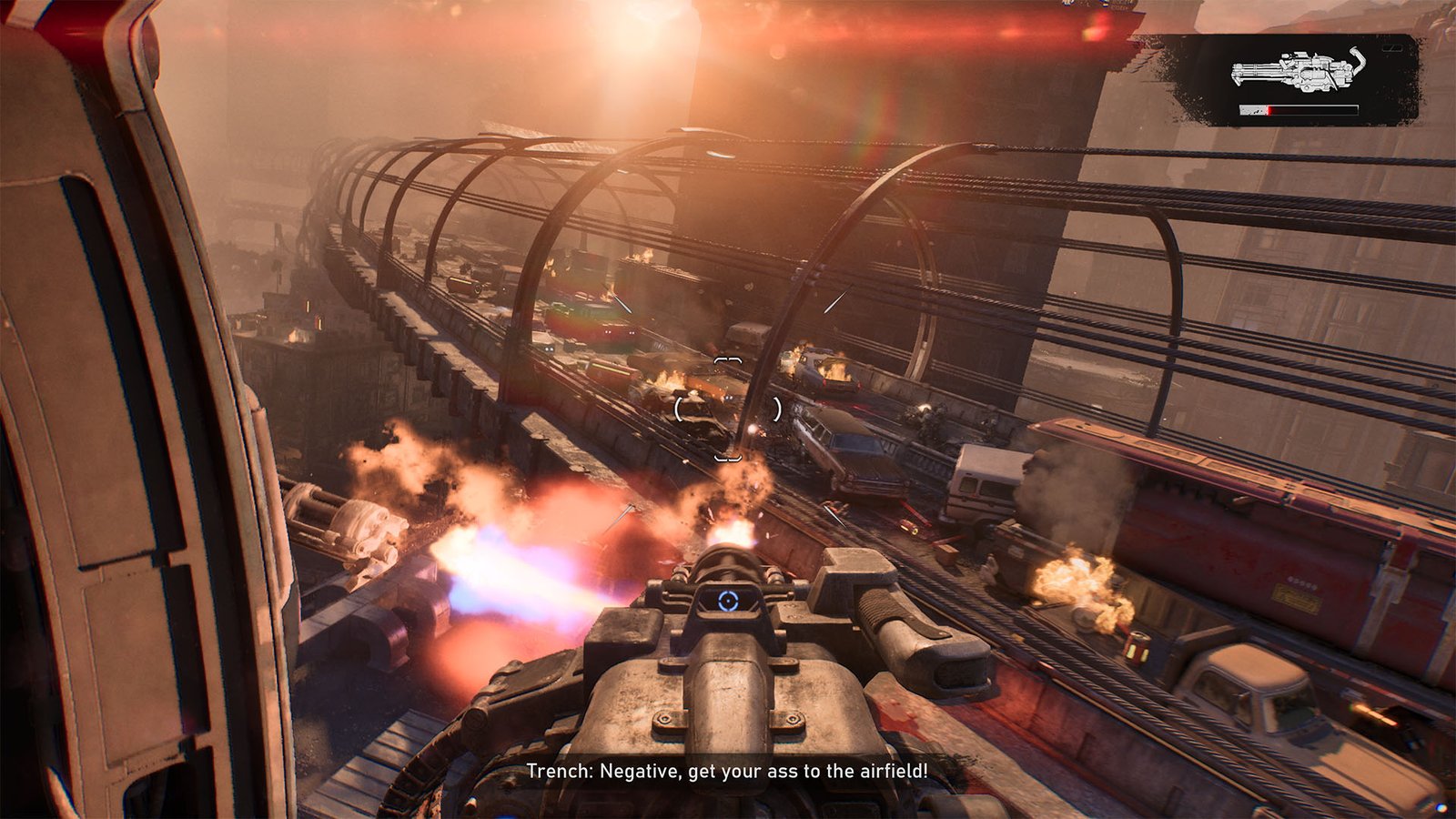
The mandatory gun emplacement sections are particularly ordinary, serving mostly as reminders that Gears of War: E-Day is considerably better when Marcus has his boots on the ground and his preferred weapons in hand. That could have been a bigger weakness if the core combat were shallower.
Instead, The Coalition places most of its faith in changing battlefield layouts, enemy combinations, weapon choices and positioning rather than constantly replacing shooting with another minigame. Those systems offer enough tactical flexibility to sustain the campaign, especially once Mods begin reshaping favourite weapons.
That said, players expecting every chapter to introduce a completely new mechanic may find the campaign conservative. For those who still enjoy reading a battlefield, choosing a route, pushing into the right range, and watching a Locust explode into an anatomically questionable number of pieces, Gears of War: E-Day‘s focus works considerably better.
A Beautiful Place to End the World
Unreal Engine 5 feels particularly well suited to the apocalypse. Kalona’s environments are dense, expansive and packed with detail, while the aftermath of Emergence Day produces some spectacularly grim imagery. Streets collapse into chaos, buildings become battlefields, and environmental damage continually reinforces how thoroughly the Locust have shattered normal life.
Character presentation is equally impressive in Gears of War: E-Day. Facial animation gives quieter conversations room to land, an important strength for a story that relies heavily on grief, exhaustion, and camaraderie between catastrophic set pieces.
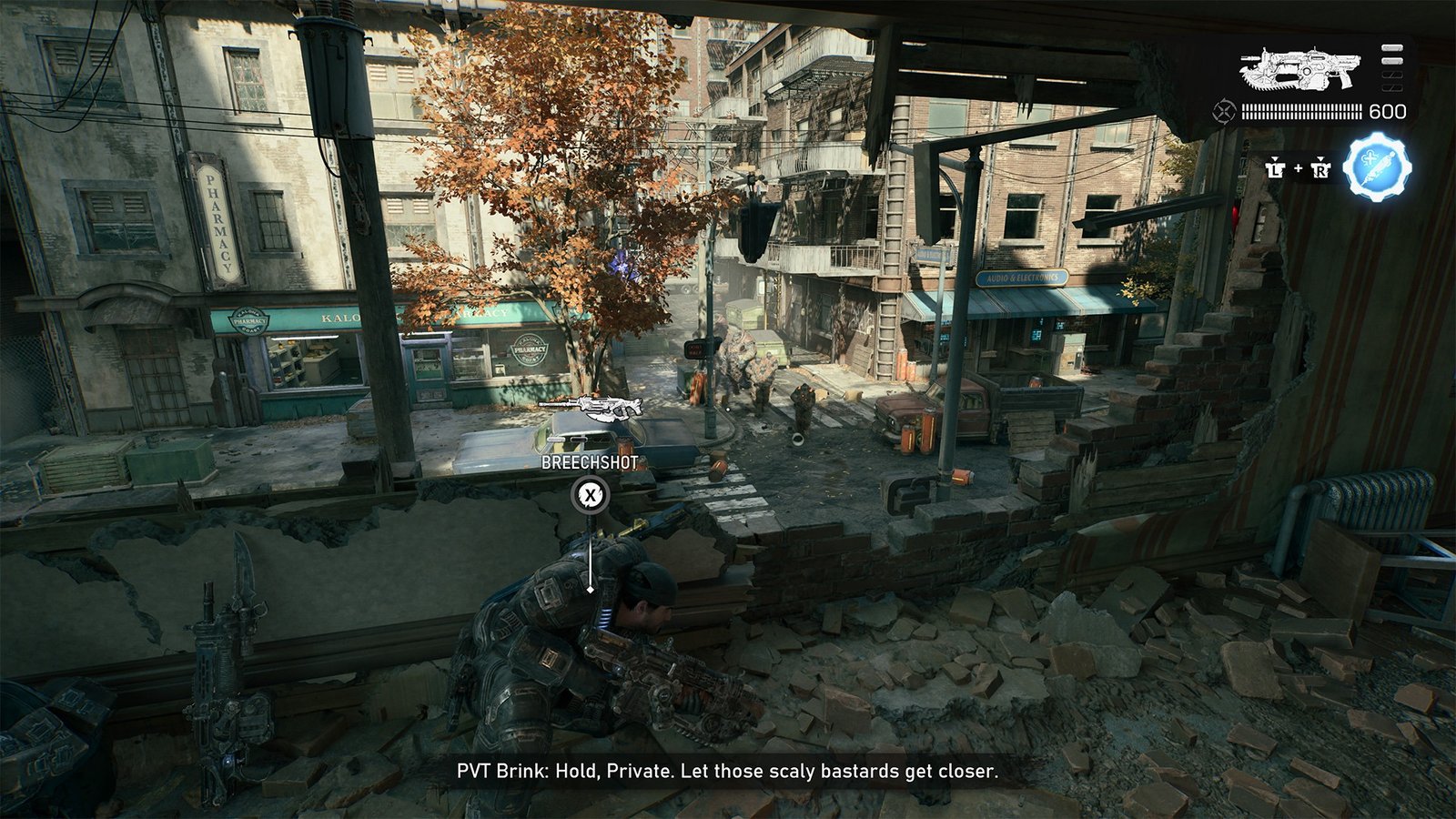
Technical issues were relatively minor during the playthrough. The most noticeable issues came during close-range struggles, where the camera began jerking awkwardly as an enemy grappled Marcus during an attempted revive, but those problems were isolated rather than persistent.
The soundscape may be even more effective. Weapons possess the necessary punch, while the almost alien noises accompanying the Locust mean hearing something before seeing it is enough to put you on edge. Their screams are particularly unpleasant, exactly as they ought to be.
The score knows when to pull back as well, supporting intimate conversations without overwhelming them before rising alongside the campaign’s more extravagant sequences. Together, those elements make Gears of War: E-Day‘s devastation impressive without turning it into meaningless scenery.
The War Has Only Begun
Perhaps the smartest decision for The Coalition in Gears of War: E-Day is recognising that returning to the past doesn’t mean playing like a game from the past. The fundamentals remain unmistakably Gears: take cover, understand the battlefield, choose the right weapon, watch your flanks, hit reload, and turn whatever gets too close into an unreasonable amount of meat.
Greater mobility, meaningful Weapon Mods and more flexible combat spaces simply give those fundamentals more room to breathe. The structure is not flawless. Repeated locations become noticeable, side objectives rarely evolve beyond variations of another firefight and mission boundaries occasionally clash with the freedom offered by open areas. Solo squad AI needs refinement; a few encounters cross the line from demanding to aggravating, and the campaign doesn’t constantly reinvent its core loop.
But it rarely needs to, as when Gears of War: E-Day clicks, the combat sings, the Locust feel genuinely dangerous, and the story gives its return to Marcus and Dom enough emotional weight to justify revisiting characters whose futures we already know.
This is not Gears abandoning its past in search of something new. It is Gears recognising which parts of that past were worth preserving, then giving them the flexibility and polish to work again in the present. And with Horde Siege and Versus still sitting outside the scope of our time with Gears of War: E-Day, the campaign alone makes a convincing case that Emergence Day was worth returning to, no matter the horrors.
Gears of War: E-Day releases on October 6, with paid Early Access beginning on October 1, on Xbox Series X|S and PC.
SavePoint Score
Summary
Gears of War: E-Day modernises the series without losing its trademark weight, pairing brutal combat and meaningful weapon customisation with strong character work, smart exploration and only a handful of frustrating solo-play shortcomings.
