

Table of Contents
Grim Trials on PlayStation 5 Pro
Death is rarely the end in a roguelite, and for Avelin, it is barely the beginning in Grim Trials. After an untimely demise, the young woman is recruited into the Academy, a training ground for aspiring Reapers, where the possibility of returning to the person she loves offers ample motivation to endure whatever the afterlife throws her way.
Developer Glory Jam isn’t shy about wearing its influences on its sleeve. Comparisons to Hades are practically unavoidable given the top-down action, repeated runs, character-filled hub and powers granted by various gods. Yet expecting Grim Trials to compete directly on that scale would miss what makes its much smaller adventure work.
This is a compact roguelite that gets in, lets players find a rhythm, tells its story and largely gets out before repetition becomes overwhelming. That modest scope ultimately proves to be one of its greatest strengths.
Learning the Art of Reaping
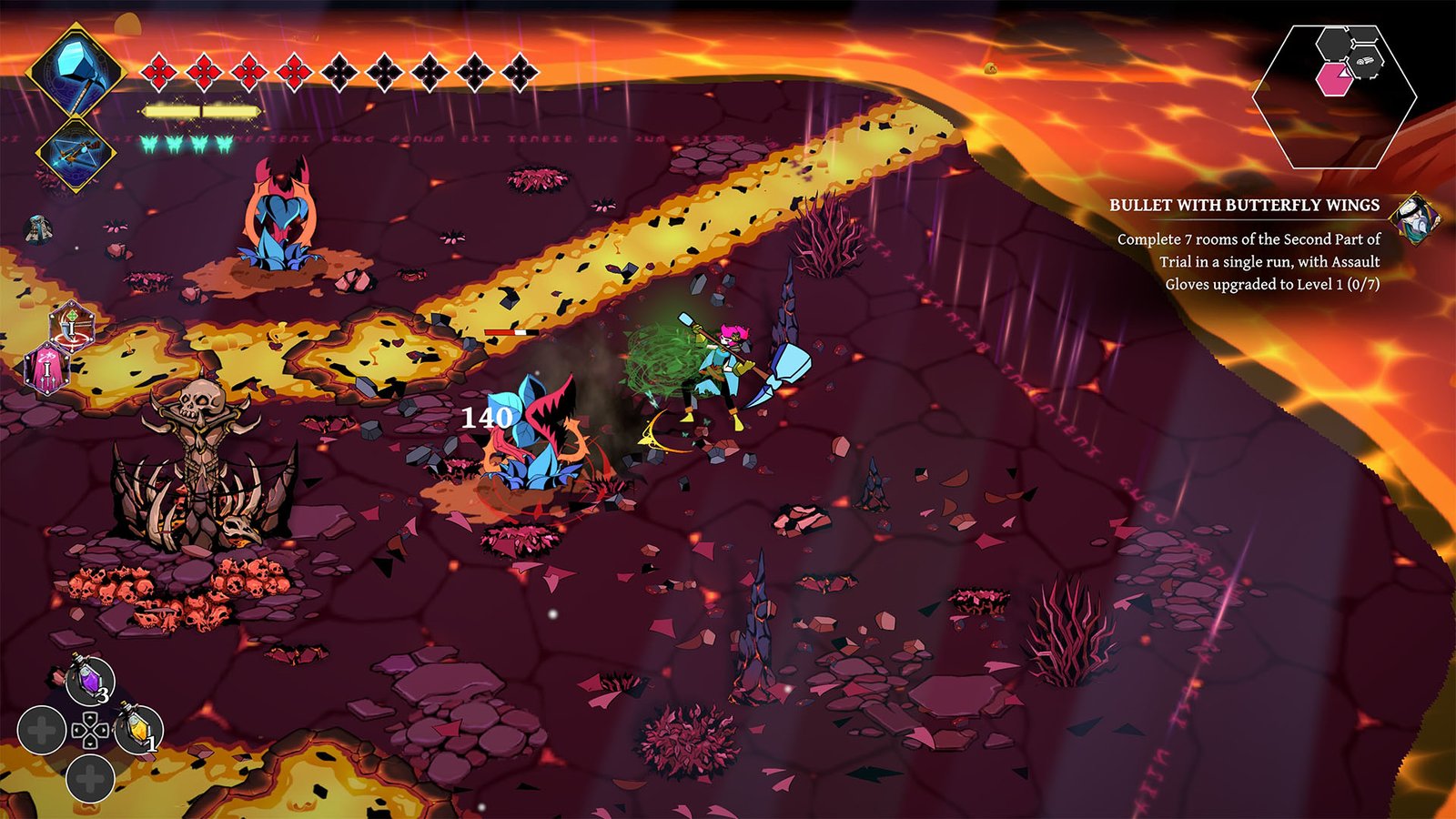
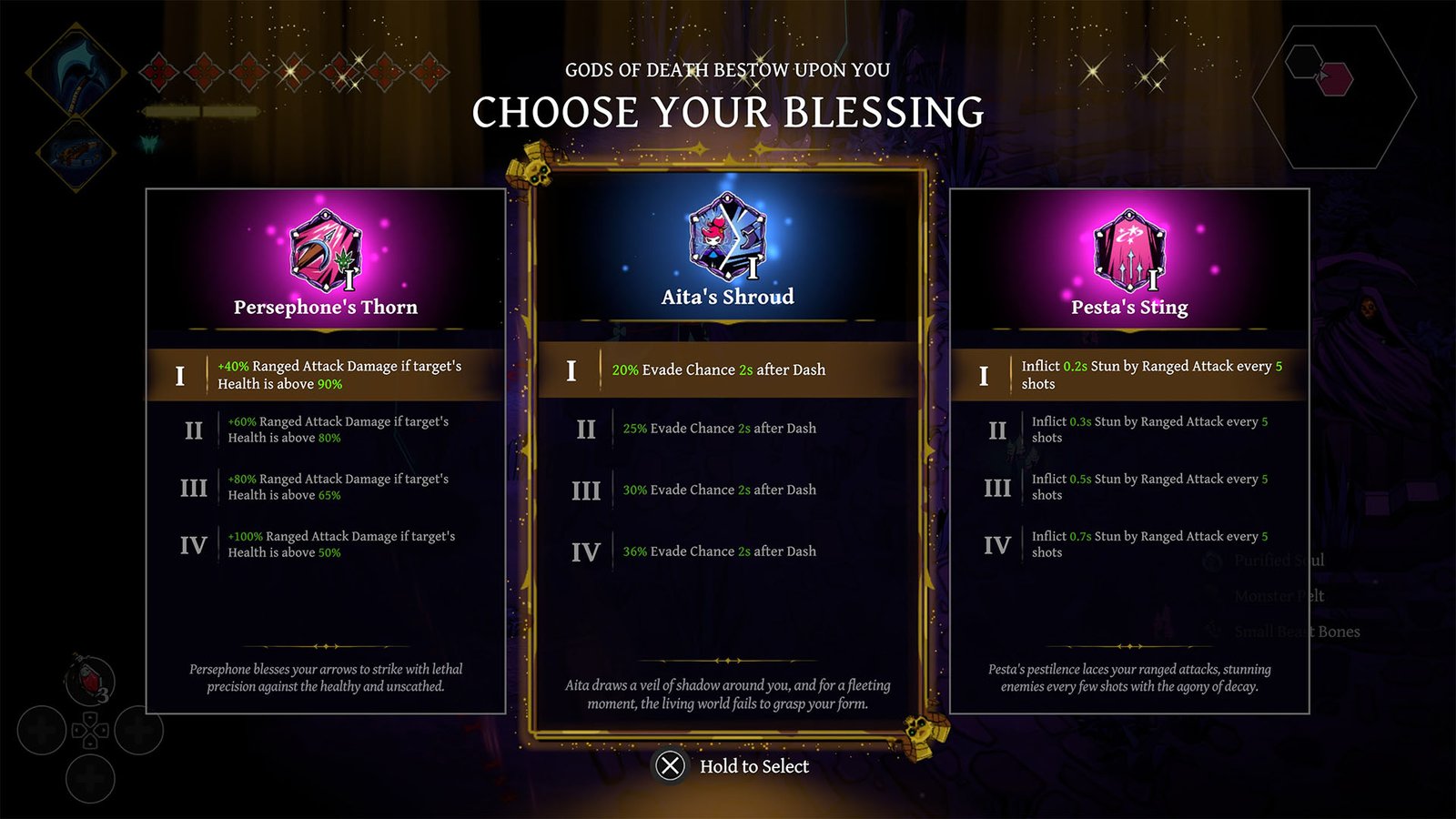
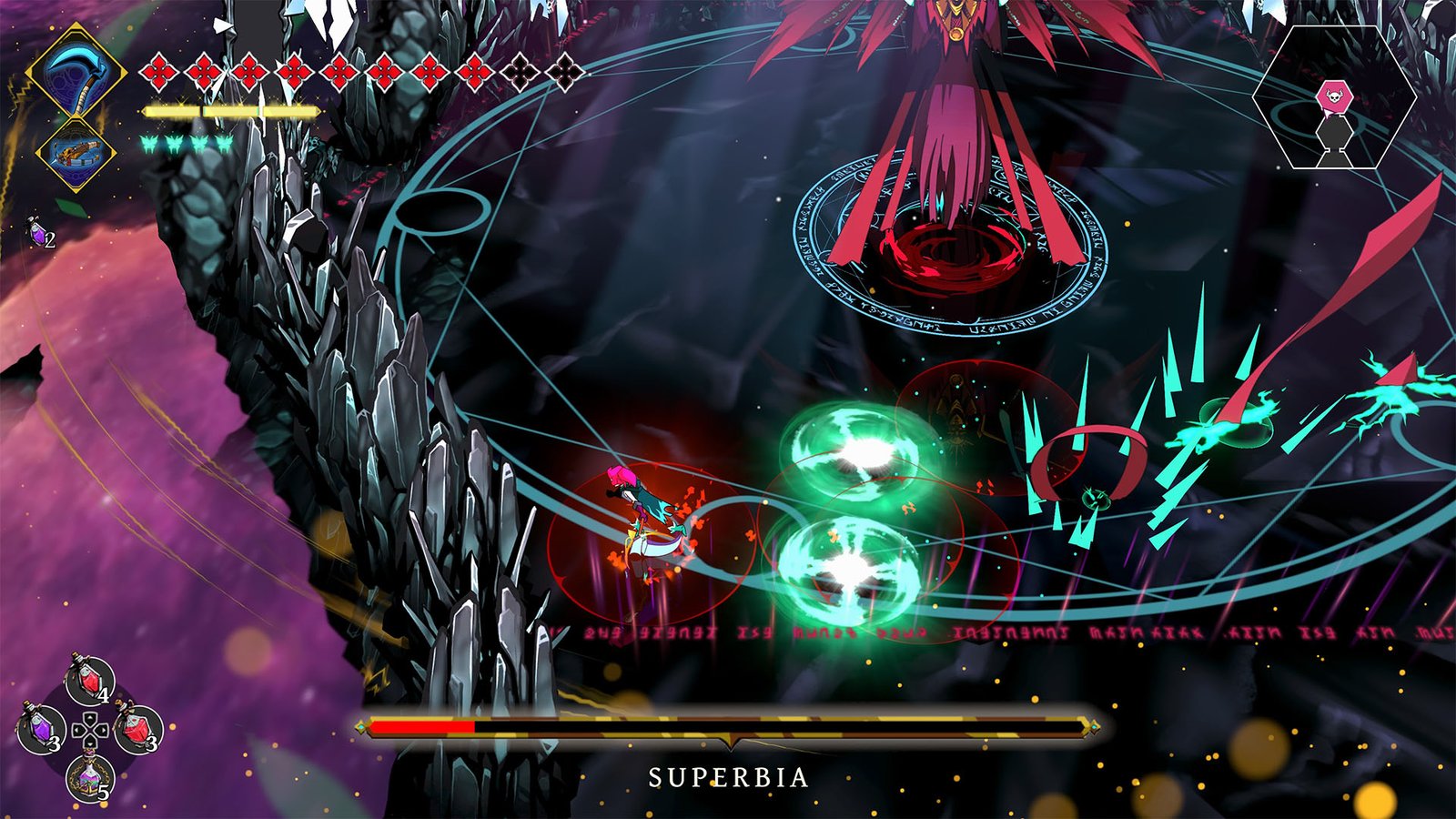
Combat is comfortably Grim Trials’ biggest attraction, particularly once its various systems begin working together. Avelin combines one of three primary melee weapons with an assortment of crossbows, while Blessings collected throughout each run dramatically influence how those tools perform. Finding combinations that complement one another can be exciting, particularly as effects begin to stack, turning an initially straightforward setup into something considerably more dangerous.
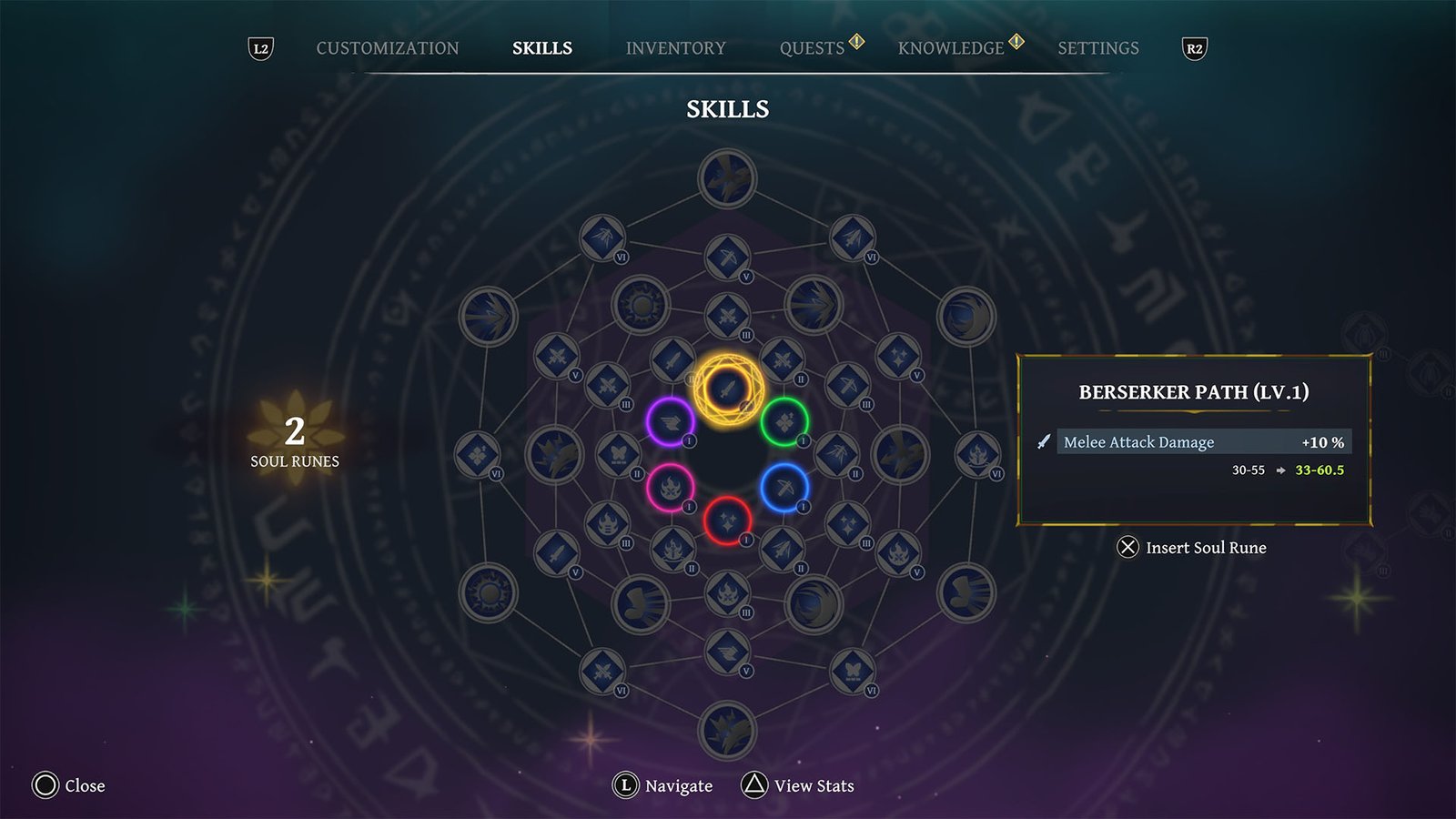
There is plenty of satisfaction in experimentation at first. Different blessings and skill upgrades encourage particular approaches, while unlocking additional weapons and crossbows regularly gives you something new to consider. The limitation is that experimentation eventually gives way to optimisation.
Once I discovered a combination that suited my preferred weapon setup, there was relatively little incentive to abandon it. Players who enjoy settling into a reliable build will likely appreciate that consistency, but anyone expecting enormous build diversity across dozens of runs may find the possibilities exhausted relatively quickly.
For a shorter game, that isn’t disastrous. Grim Trials lasts long enough for a preferred setup to feel rewarding without necessarily forcing you to reinvent it repeatedly. Its enemies help maintain that momentum. Each of the locations that the various Sins call home introduces its own assortment of melee, ranged and magical threats, requiring enough adjustment that growing stronger never completely removes the need to pay attention. Learning attack patterns naturally makes encounters easier, but enemy combinations still do a good job of preventing the power gap from becoming ridiculous.
The Sins are bosses that appropriately sit at the top of that hierarchy. Their mechanics are more elaborate, their attacks demand greater awareness, and each represents a satisfying test of whatever build you have assembled along the way. Experienced action players may decipher their tricks relatively quickly, but there is enough resistance here to make overcoming them worthwhile.
Growing Stronger With Every Death
That approachable balance extends across the larger progression loop. Failure doesn’t feel particularly punishing because every attempt feeds resources and experience back into Avelin’s growth. Early deaths become learning opportunities as you understand enemy patterns, familiarise yourself with weapons and begin recognising how particular Blessings interact.
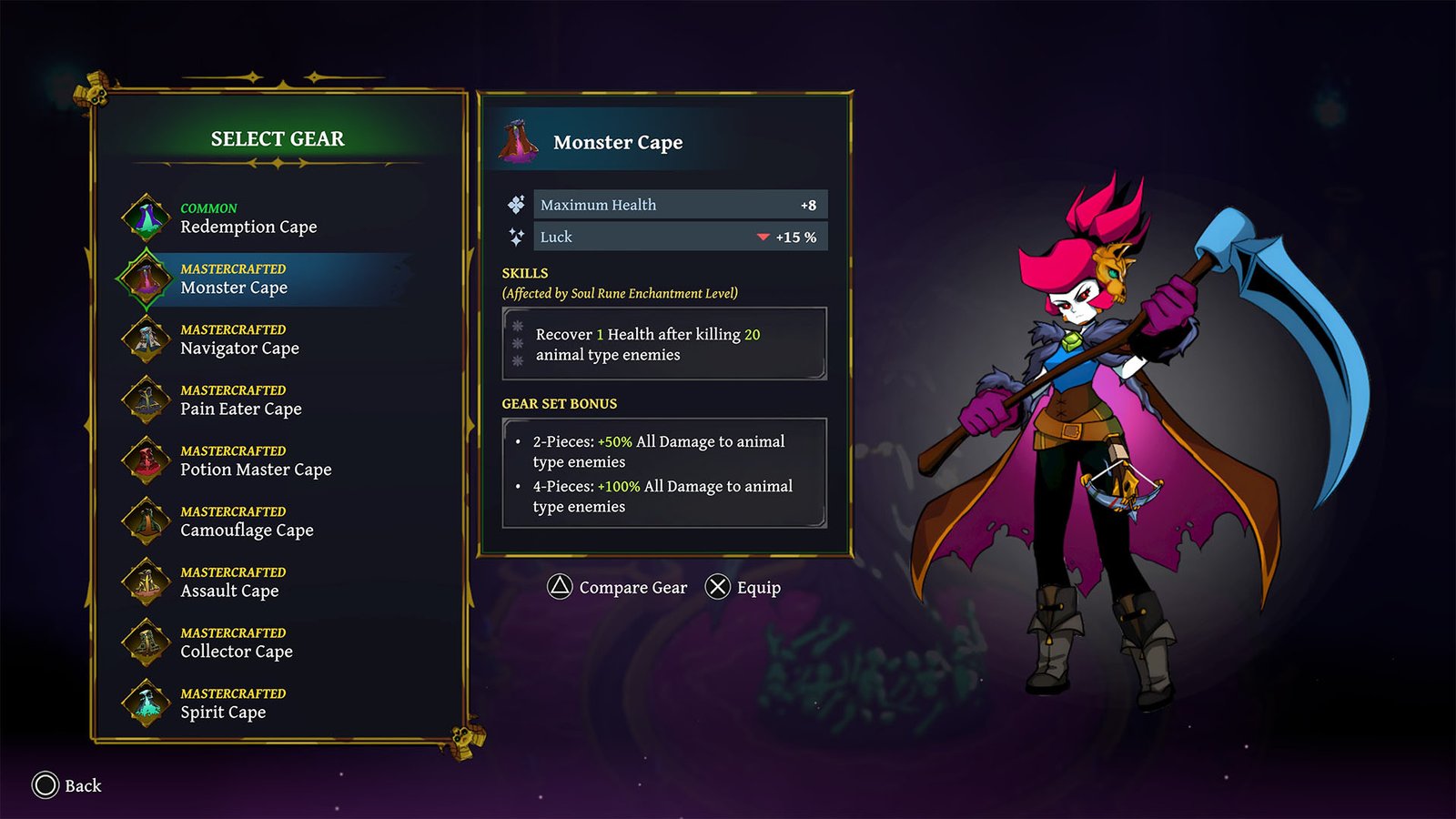
Eventually, that knowledge noticeably shifts the balance in your favour. Grim Trials becomes considerably easier once its underlying systems click, but the progression feels natural rather than abrupt. Crafting contributes to that growth without becoming overly complicated. Materials gathered during runs are used to unlock equipment and weapons, and collecting everything eventually requires some grinding. However, the game’s relatively compact scope prevents that resource gathering from becoming especially oppressive.
Crafting itself uses a simple timing minigame that determines how successfully an item is made. It is easy to understand, quick to perform and, importantly, painless enough that failing a perfect craft and trying again never becomes a major annoyance. There isn’t tremendous depth underneath it all, but there doesn’t really need to be in Grim Trials. The system provides another tangible reason to keep venturing back into the Trials without interrupting the pace.
Finding Life Among the Dead
The Academy gives those repeated excursions some narrative purpose as well. Avelin’s central motivation provides a straightforward emotional anchor, while the Reapers and mentors around her gradually reveal their own histories. Side quests in Grim Trials smartly intertwine those stories with progression and equipment rewards, so learning more about the supporting cast happens naturally while pursuing practical goals.
The result isn’t a groundbreaking story, but it is an efficiently integrated one. Avelin also proves a likeable enough vessel for it, possessing her own personality while gradually revealing more about the life, relationships and motivations that existed before her death.
Visually, Grim Trials similarly finds plenty of personality. Its colourful environments and vibrant combat effects keep the afterlife from becoming relentlessly gloomy, while crisp animation ensures fights remain readable even as multiple effects fill the screen.
The heavy metal soundtrack provides the biggest injection of attitude. Its selection of tracks isn’t especially extensive, but when the riffs kick in before or during a major confrontation, they provide exactly the energy the combat needs.
An Afterlife That Knows When to End
Playing on the PlayStation 5 Pro was generally smooth, though prolonged sessions occasionally caused a noticeable hitch, with the game freezing momentarily before continuing. Closing and restarting Grim Trials consistently resolved the issue, making it more irritating than disastrous.
Trophies proved considerably more troublesome. Several failed to unlock despite their requirements being completed, with progression and trigger issues seemingly preventing them from registering correctly. The development team is working on the problem, but trophy hunters should be aware of it in the meantime.
Those problems aside, Grim Trials benefits immensely from understanding its own scale. Completing the main journey and essentially everything around it took me approximately eight hours, which feels about right for what its combat and progression systems can sustain.
It doesn’t possess the enormous mechanical breadth that might keep players experimenting indefinitely, nor does every supporting system demand endless optimisation. Instead, Glory Jam delivers a colourful, energetic and accessible roguelite where finding a favourite combination can be just as satisfying as constantly searching for the next one, and sometimes a good afterlife doesn’t need to last forever.
Grim Trials is available now on PlayStation 5, Xbox Series X|S, PC, as well as Switch and Switch 2.
SavePoint Score
Summary
Grim Trials makes its short afterlife count with satisfying combat, enjoyable Blessing synergies and memorable bosses. Limited build variety and a few PS5 technical frustrations hold it back, but its eight-hour journey remains easy to enjoy.
