

Table of Contents
Tomodachi Life: Living the Dream on Nintendo Switch
There is something wonderfully strange about returning to Tomodachi Life after all these years. Nintendo has never been short of charming social spaces, but this series has always occupied a weirder corner of the company’s catalogue. It is not quite Animal Crossing, not quite a life sim, and not quite a toy box in the usual sense. It is a tiny stage where player-made Miis wander around, make questionable decisions, develop sudden rivalries, fall in love, pick up odd hobbies, and say things that probably should not sound as funny as they do.
That oddness remains the heart of Tomodachi Life: Living the Dream from Nintendo EPD. This is not a sequel that tries to force the series into something grander or more conventional. Instead, it expands the original idea with more tools, more expression, more island personality, and a greater sense that the player is managing a living comedy experiment rather than steering a traditional game. Its best moments happen when the player stops trying to control everything and simply watches the chaos unfold.
That also makes it a difficult game to evaluate in the usual way. There is little urgency here, nor is there a steady stream of objectives pushing the player forward. Much of its appeal comes from routine, surprise, and the personal humour of seeing familiar faces thrown into absurd situations. When it works, it is delightful. When the routine settles in, it can feel a little thin. Yet even at its lightest, Tomodachi Life: Living the Dream has enough personality to make its tiny island feel worth revisiting.
An Island That Works Best When Let Loose
The core pleasure of Tomodachi Life: Living the Dream comes from watching its Miis develop into strange little people. At first, they can feel more like customised avatars than actual inhabitants. You create them, dress them, feed them, answer their questions, and set the broad conditions for their lives. The opening hours are more about assembly than discovery, as the game asks you to build the cast before the island can really find its rhythm.

Once enough Miis live together, however, the island begins to develop a personality of its own. Traits, quirks, gifts, expressions, relationships, and repeated interactions begin to pile up. A Mii who seemed ordinary at first can become memorable simply because of who they argue with, who they admire, what hobby they suddenly pick up, or what bizarre sentence the voice system gives them at exactly the right moment.
The game is funniest when it pushes back against the player’s expectations. You might try to guide two Miis towards romance, only for someone else to derail that plan completely. You might expect two personalities to bond, only for them to immediately rub each other the wrong way. You can nudge outcomes and shape the island’s tone, but Tomodachi Life: Living the Dream is smart enough to preserve enough unpredictability to keep the social simulation from becoming a checklist.
That balance matters. The player is still a caretaker, but not an all-powerful director. There is a god-like quality to hovering over the island, answering requests and shaping daily life, but the game is more compelling when the Miis appear to have their own messy little instincts. The comedy works because it feels lightly authored rather than fully scripted. Even when you can see the systems underneath, the results often feel personal because they are built from the specific cast you created.
Turning The Absurd Into Something Personal
The biggest step forward in Tomodachi Life: Living the Dream is how much more expressive the creative side has become. The game understands that many players are not here only to watch Miis talk nonsense in their apartments. They are here to build an island that reflects their own sense of humour, references, fandoms, friendships, and grudges. In that sense, the sequel feels much better equipped for the way players engage with games now.
The basic structure remains accessible. You do not need to be especially artistic or obsessive to enjoy the island, and the game is still easy to dip into for short sessions. Yet the longer you spend with its tools, the clearer it becomes that there is real depth beneath the silliness. Masks, decorations, custom items, buildings, terrain pieces, pets, and visual flourishes all give players more ways to turn the island into something distinctly theirs in Tomodachi Life: Living the Dream.
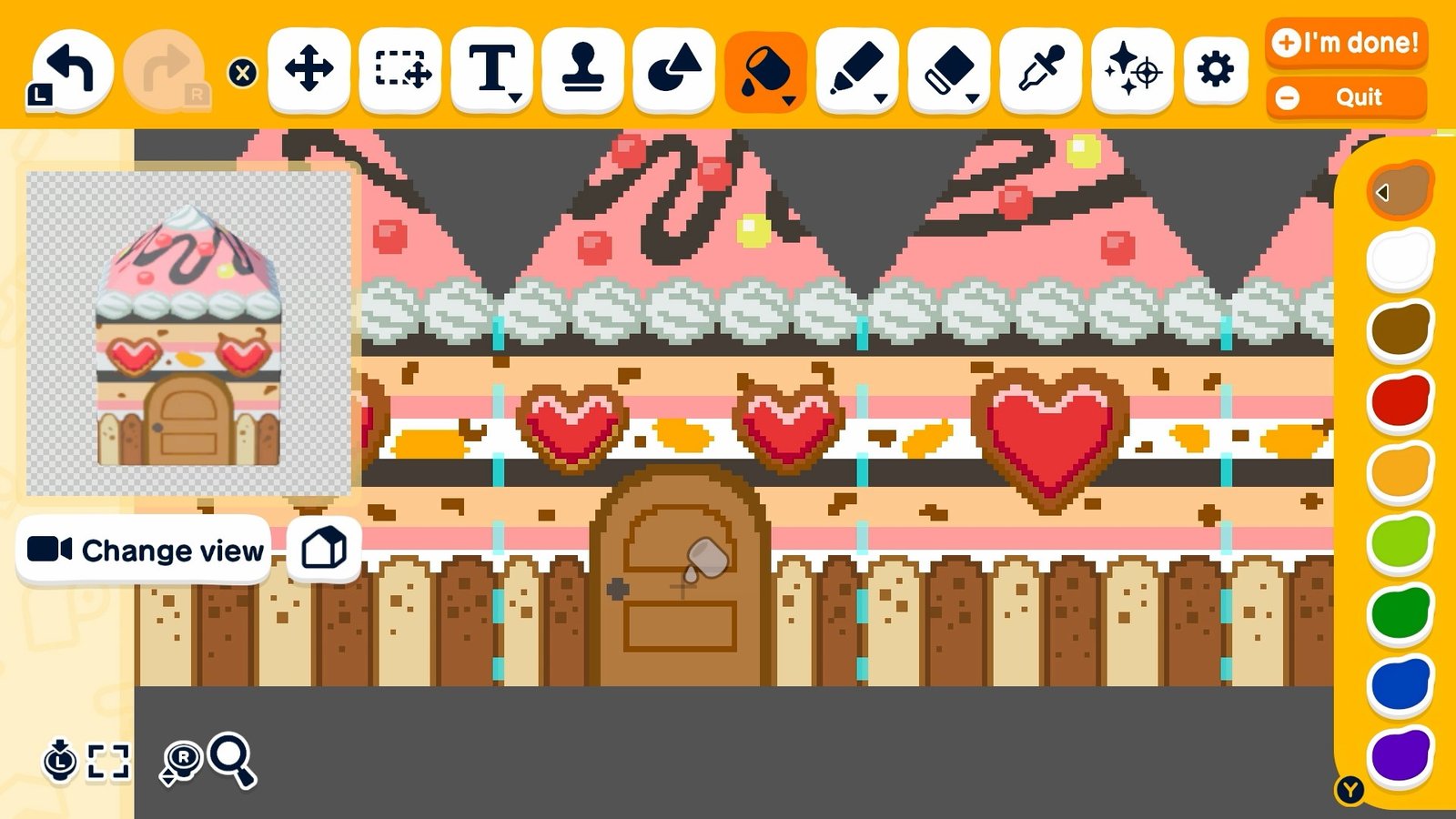
That personalisation is important because it makes the humour land harder. A generic joke can be funny, but a joke delivered by a Mii based on someone you know, wearing something ridiculous, standing in a room you designed, is much more likely to stick. Tomodachi Life: Living the Dream understands that the player’s imagination is the real engine. Nintendo provides the framework, but the best stories come from whatever nonsense the player feeds into it.
The creative tools will also likely divide players by investment level. Some will only scratch the surface, using the standard options and enjoying the island as a light social toy. Others will lose hours refining looks, recreating characters, designing pets, and building elaborate spaces. The impressive part is that both approaches work. The game does not punish players who keep things simple, but it clearly rewards those willing to experiment.
Within its deliberately goofy visual style, the potential for expression is surprisingly broad. It is not trying to become a full design platform, but it gives players enough flexibility to make the island feel authored rather than merely decorated. That is where Tomodachi Life: Living the Dream feels most like a successful sequel. It does not abandon the original appeal; it simply gives players more ways to make that appeal feel personal.
Nintendo Weirdness Finds Its Loudest Voice
The comedy in Tomodachi Life: Living the Dream is not subtle, but it is often very effective. This is Nintendo at its strangest, leaning into awkward voices, bizarre news segments, odd confessions, surreal relationship drama, and tiny moments that feel funnier for arriving without warning. The game’s humour works best when it does not feel like it is trying too hard. A strange line reading, an absurd pairing, or an unexpected outburst can do more than an elaborate scripted gag.
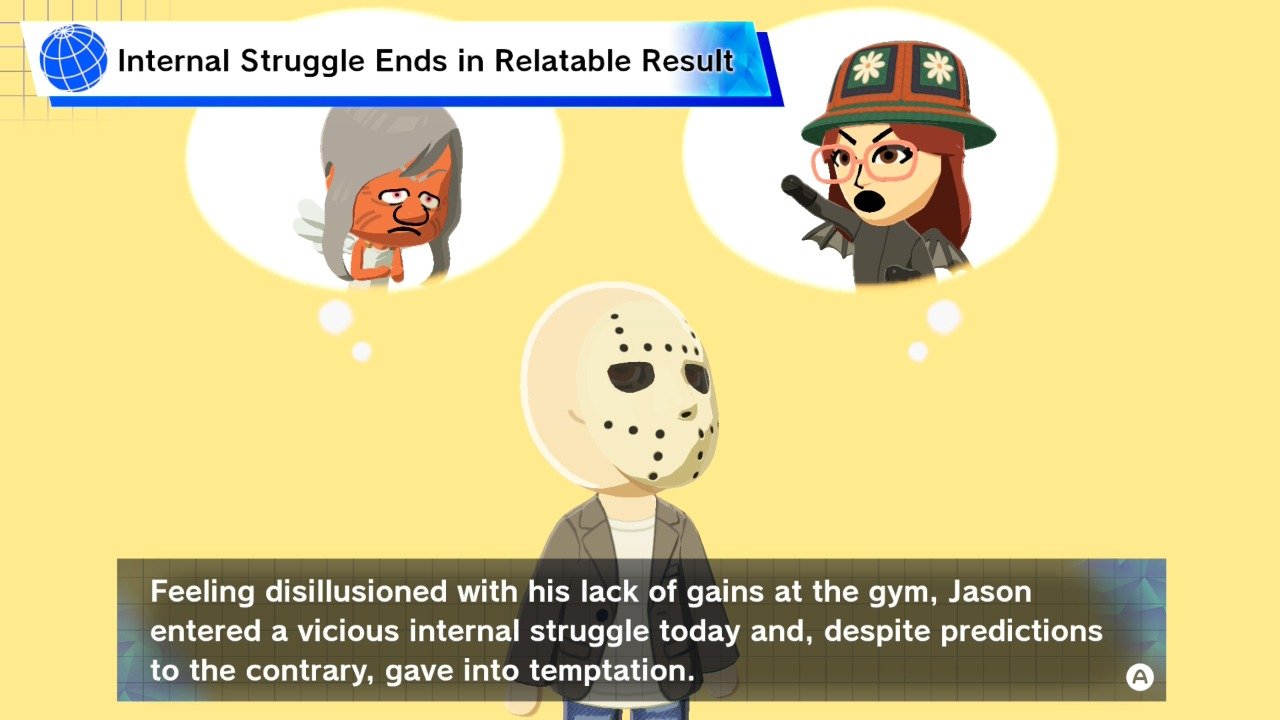
The voice system is a major part of that appeal. Letting Miis say player-written lines immediately gives the game a modern social energy, especially because the results can sound so wonderfully unnatural. The sliders, pronunciation tweaks, and cadence options are simple enough for anyone to understand, but flexible enough to make each Mii feel more distinct. Even a small adjustment can turn a throwaway phrase into something memorable.
That freedom does come with an obvious trade-off. A game built around strange personal comedy feels like it should be easy to share, but Tomodachi Life: Living the Dream is more limited than expected in that area. That restriction is disappointing because so much of the fun comes from moments that feel like they deserve an audience. The game practically invites players to create absurd scenes, then makes the sharing side less frictionless than it should be.
Even so, the creative benefits outweigh the frustration. The freedom to make Miis speak, behave, and interact in such odd ways gives the game much of its identity. The island’s daily news segments are a particular highlight, turning your cast into the stars of ridiculous local broadcasts that feel like tiny rewards for the work you have put into them. It is in these moments that the game feels most alive, as though the island is quietly generating its own mythology one strange report at a time.
There is also a pleasing looseness to the minigames and smaller interactions in Tomodachi Life: Living the Dream. They are not deep, but they fit the tone. They break up the routine, add texture, and reinforce the sense that this is less a conventional management game than a comedy engine with a cosy daily rhythm. The result is a game that regularly feels ridiculous, but rarely careless. Its weirdness has shape, and that shape is what keeps the island charming.
A Lovely Routine That Could Use More Depth
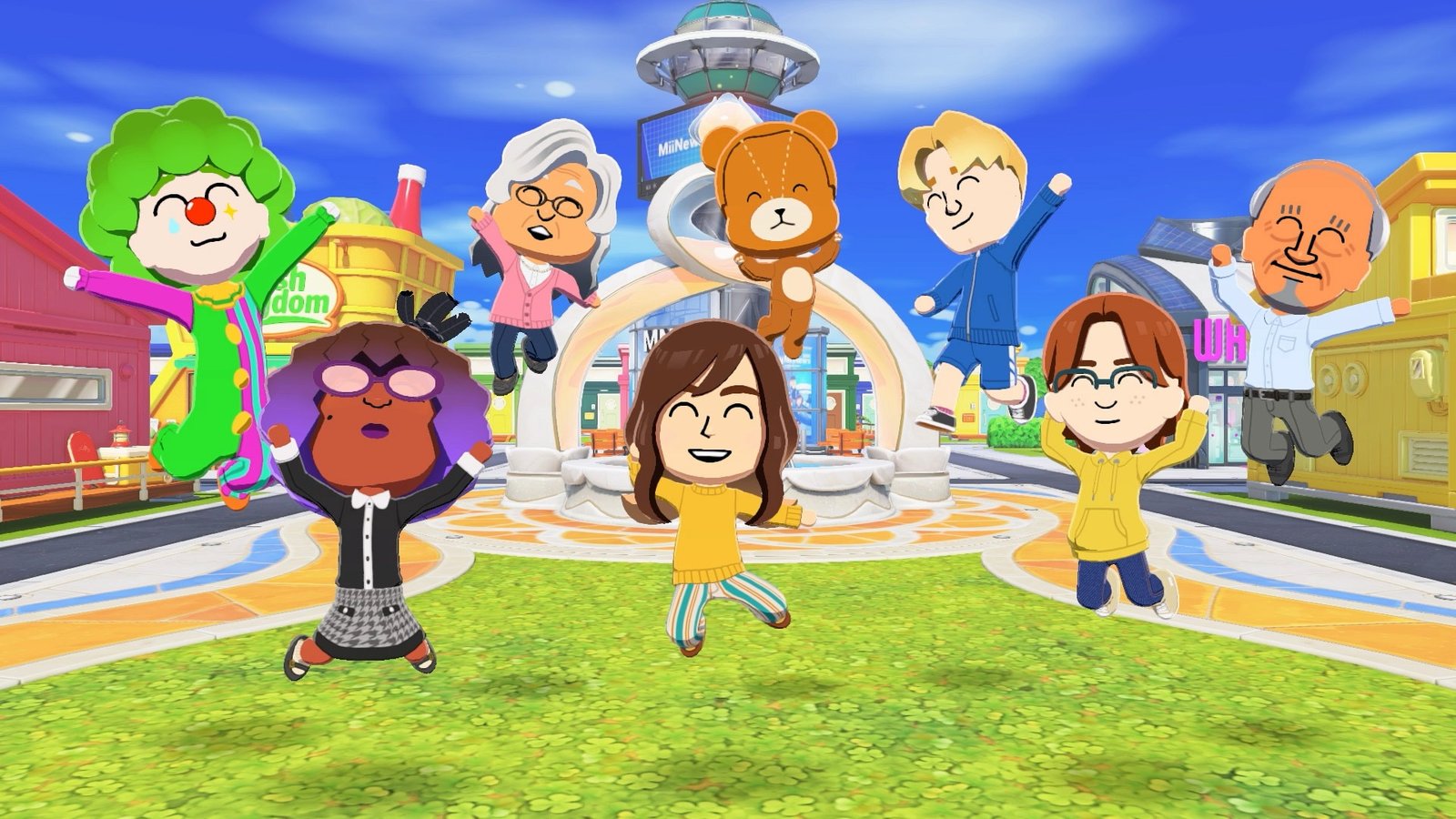
For all its charm, Tomodachi Life: Living the Dream eventually settles into a familiar routine. You check in, see what everyone wants, deal with a handful of requests, laugh at whatever has gone wrong, adjust a few details, and then leave the island to breathe until next time. That rhythm is not inherently a problem. In fact, it suits the game’s relaxed identity. Not every social simulation needs to demand hours of attention each day.
The issue is that the routine sometimes exposes how light the active play can be. The systems are entertaining, and the creative suite gives the game a stronger backbone, but there are moments where it feels like one more layer of interaction would have made a big difference. Tomodachi Life: Living the Dream excels at generating funny moments, but is less successful at giving the player meaningful things to do between them.
That is where the sequel’s ambition feels uneven. It is bigger, richer, and more expressive than the older version, but it still carries the limitations of a game designed around observation more than involvement. Players who enjoy checking in daily and letting stories form naturally will likely find that rhythm comforting. Players looking for deeper management, stronger goals, or more sustained mechanical progression may find themselves wishing the island offered more than novelty and customisation.
Still, there is value in a game this comfortable with its own peculiar identity. Tomodachi Life: Living the Dream does not chase scale for its own sake, nor does it dilute the series into something more conventional. It remains a strange, funny, deeply personal social sandbox where the best moments are usually the ones you did not plan. That makes its limitations easier to accept, even if they are still worth noting.
At its best, Tomodachi Life: Living the Dream feels like peering into a tiny world that has somehow become absurdly important. At its weakest, it feels like a daily routine waiting for the next big laugh. The truth sits somewhere between those two feelings. This is a charming and imaginative return that understands why players loved the series in the first place, but it also leaves room for an even bolder version of the dream.
Tomodachi Life: Living the Dream is available now on Nintendo Switch. It’s also playable on Switch 2.
SavePoint Score
Summary
Tomodachi Life: Living the Dream stays true to and builds on the series’ brand of zany simulations, relaxed management, and powerful creative tools. While it rejects evolving into a meatier experience, it’s a charming diversion full of possibilities for laid-back gamers.
