

Table of Contents
Baladins on PS5 Pro
Storybook Warmth for the Living Room
Baladins has the rare confidence to be gentle without being flimsy. Its papercraft look lands like a pop-up book brought to life, with characters and locations staged in a way that feels instantly readable from a sofa. That readability matters because the game’s pleasures are social. This is not an RPG that asks you to focus on execution, reflex, or damage maths. It asks you to react to situations, argue for a plan, and laugh when the result refuses to match your certainty.
The tone is warm, playful, and lightly mischievous, but it is not hollow comfort. There is a clear narrative thread running through the adventure, anchored by a festival at risk and a world caught in a repeating cycle. Baladins frames your party less as warriors and more as a travelling troupe, the kind of heroes who win by judgment, persuasion, and improvisation. It is a welcoming pitch, particularly for players who have always preferred role-playing stories to traditional combat systems.
Choices arrive frequently enough to keep the room talking, and outcomes are unpredictable enough to keep the conversation honest. You do not simply pick an option and move on. You commit to a direction, the world pushes back, and suddenly your group is dealing with the consequences of what sounded like a harmless decision five minutes ago. This is where the headline earns itself. Baladins is warm, but it is not calm. It is the specific kind of chaos that comes from shared decision-making and small risks compounding into memorable stories.
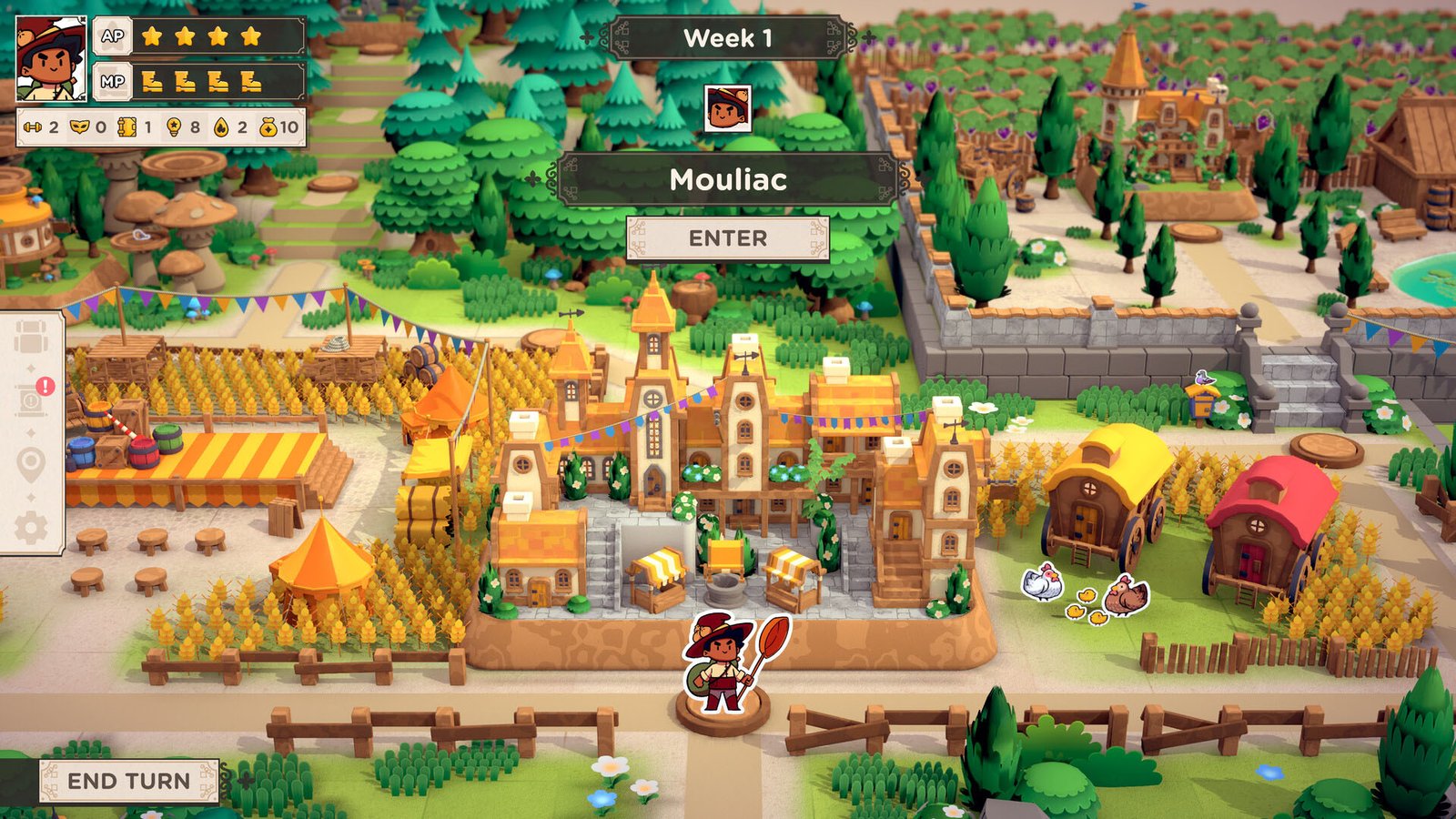
There is also an important expectation check. Baladins is an RPG in structure, but not in the usual fantasy of power growth. The satisfaction comes less from becoming stronger and more from becoming wiser about how the world ticks.
If you meet it on those terms, its charm feels deliberate rather than quaint. If you arrive wanting tactical mastery, you will likely find its gentleness underwhelming. Baladins is built for players who want their most meaningful moments to come from what the group decides, not from what the group defeats.
The Time Loop Sets the Stakes
The game is defined by its time loop. You have a limited span, measured in weeks, to roam, pursue leads, and help people; then the timeline resets. The most effective thing it does with this structure is refuse to treat the reset as a punishment. Instead, it frames the loop as the table’s rules. You are expected to learn, adapt, and return with a better plan, and that shift makes failure feel closer to curiosity than frustration.
This loop is where the game finds its tension. In most RPGs, pressure comes from combat. In Baladins, pressure comes from time. Every detour has an opportunity cost. Every quest you start is a bet on whether you can see it through before the week ends. In co op, that becomes the centrepiece. Your party debates what matters, what can wait, and what is worth risking. Planning becomes the combat system, not because it is complex, but because it forces the group to commit to priorities.
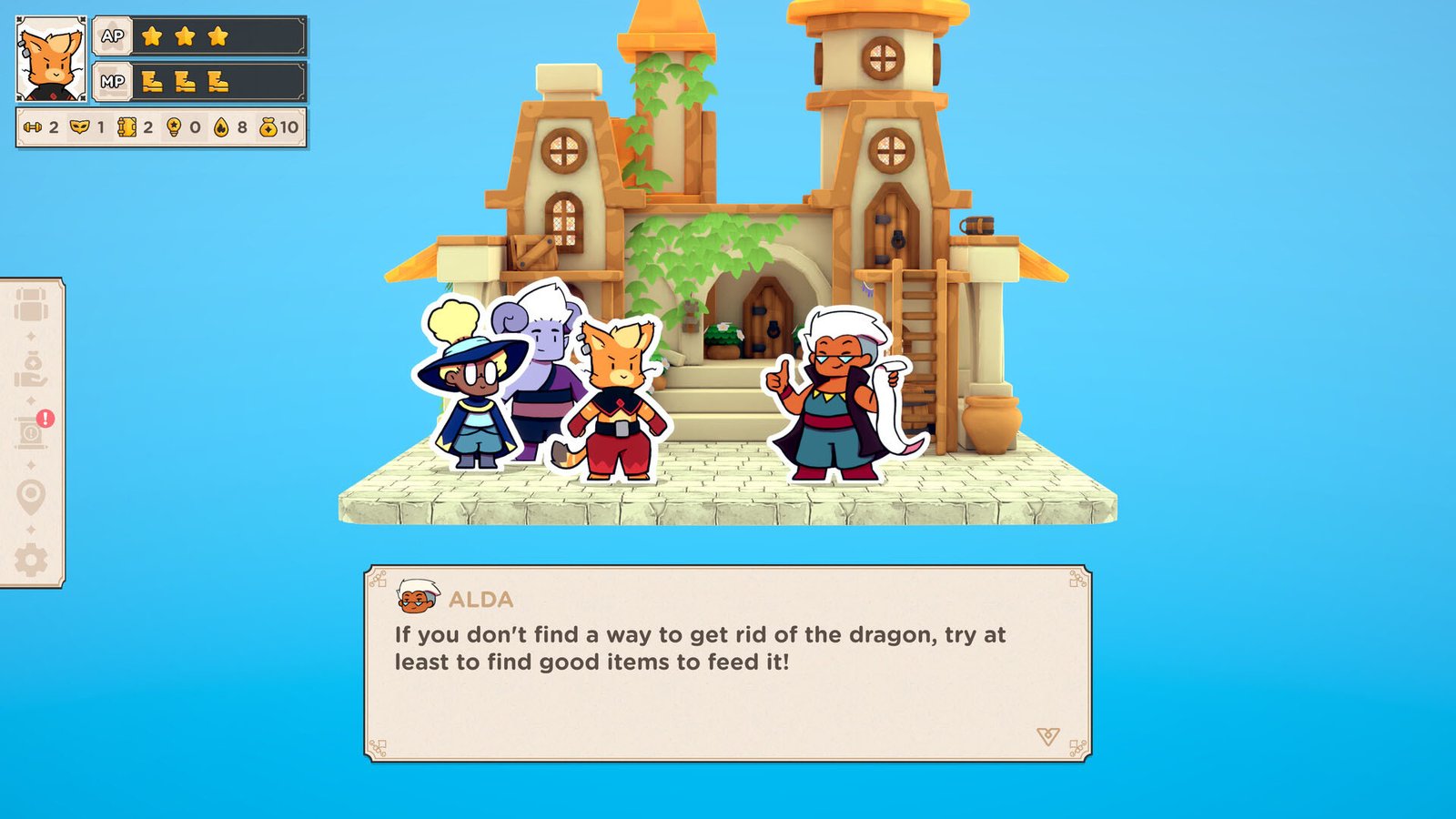
Early on, the loop feels invigorating. It gives structure to play sessions and makes experimentation feel productive. A run can end without you achieving your ideal outcome, yet still feel satisfying because it taught you something about the world’s logic. That is the best version of a time loop game, where repetition reveals new understanding rather than simply repeating content.
Over time, the loop’s demands become clearer. Baladins sometimes struggle with clarity when you start chasing specific outcomes. A great loop game communicates what changed, what carried forward, and why the next run should feel meaningfully different. It often gets close, but it can also be vague at precisely the wrong moments, which makes the reset feel less like a chapter ending and more like an interruption. When that happens, repetition stops being part of the charm and starts to feel like a tax you pay to see the next beat.
It is easy to play in bursts, easy to return to, and easy to treat as a social session rather than a long campaign. Baladins works best when you accept that it is designed to be replayed for the stories you create, not optimised for the most efficient route. If you approach it like a checklist, you will notice its seams sooner. If you approach it like a tabletop session, the loop becomes a gentle engine that keeps the night moving.
Co-op Chemistry Shapes the Night
Baladins live on table talk. It wants discussion to be gameplay, and it structures itself around that idea. Choices are frequent, consequences arrive quickly, and the tone is light enough to make disagreement fun rather than stressful. When the group is right, the game delivers something that many co-op games struggle to achieve: it makes everyone feel like they are contributing to the story, even if only one player is making the inputs at a given moment.
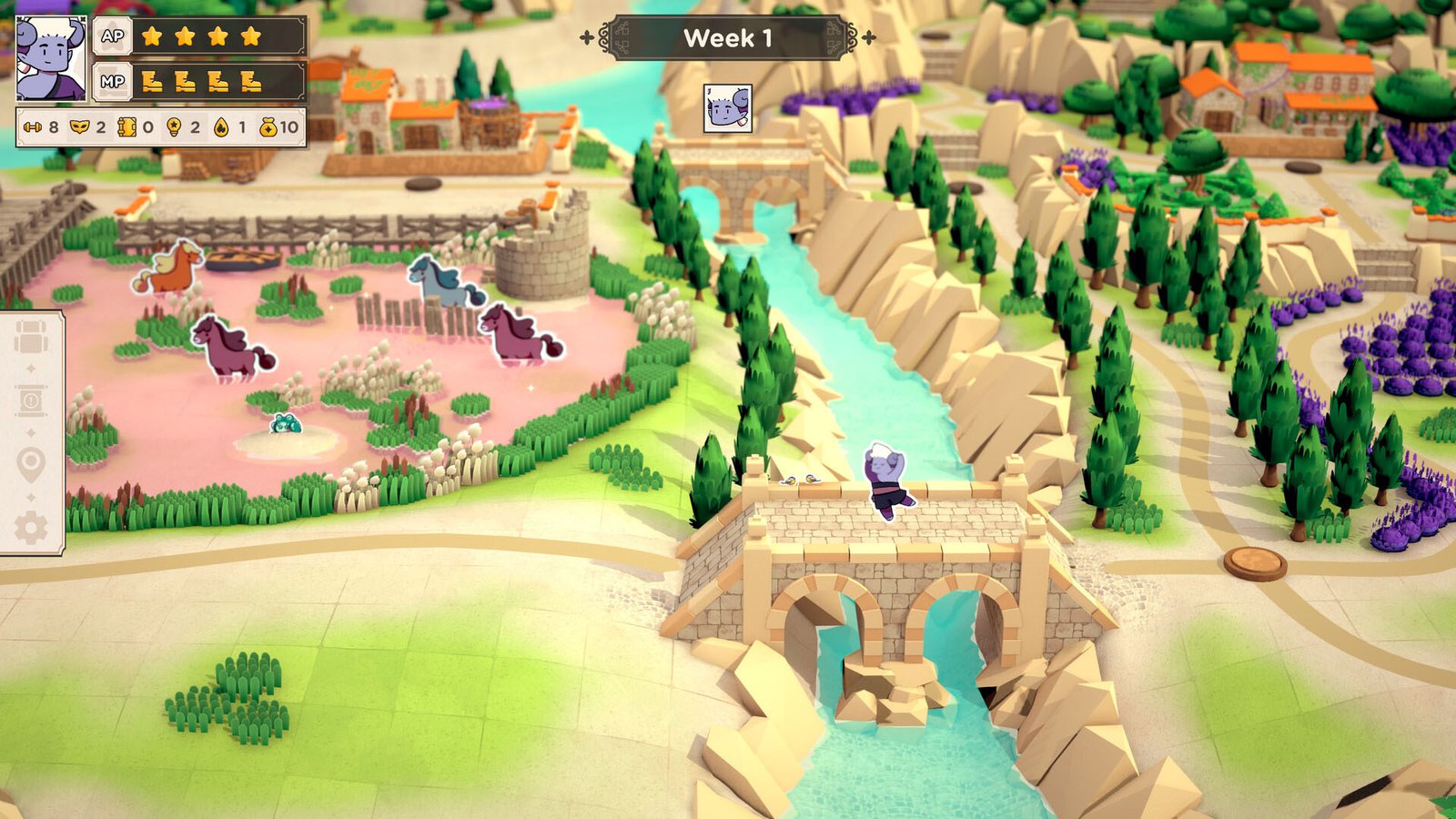
The strongest sessions feel like shared authorship. One player argues for the practical route, another insists the party should help the stranger, someone else wants the risky option because it sounds more interesting, and the game rewards that dynamic by letting outcomes surprise you. The memories that stick are rarely the “best” results. They are the moments the group can retell afterwards, where a confident plan collapsed, a detour became the main story, or the party sacrificed a clear win for a choice that felt right in character.
That said, Baladins also inherits a classic co-op risk. Because planning is the primary skill, it can naturally reward the most decisive player. Over time, one person may begin steering the run while others become spectators. This is not always a problem, and in some groups it is the preferred dynamic, but it is a real edge to the design. When shared authorship fades, the game’s warmth can thin out because the story stops feeling like a communal creation and starts feeling like one person’s route.
There is also a pacing reality to acknowledge. This experience is not about constant input chaos. It is conversational. That means there will be moments of waiting while choices resolve. If your group enjoys the chatter, those moments feel like the table settling into the scene. If your group wants constant agency, those moments can feel like downtime. The game is at its best when the room treats debate as action and roleplay as momentum. When the room does not, the loop’s repetition becomes more obvious because the social energy is no longer carrying the experience.
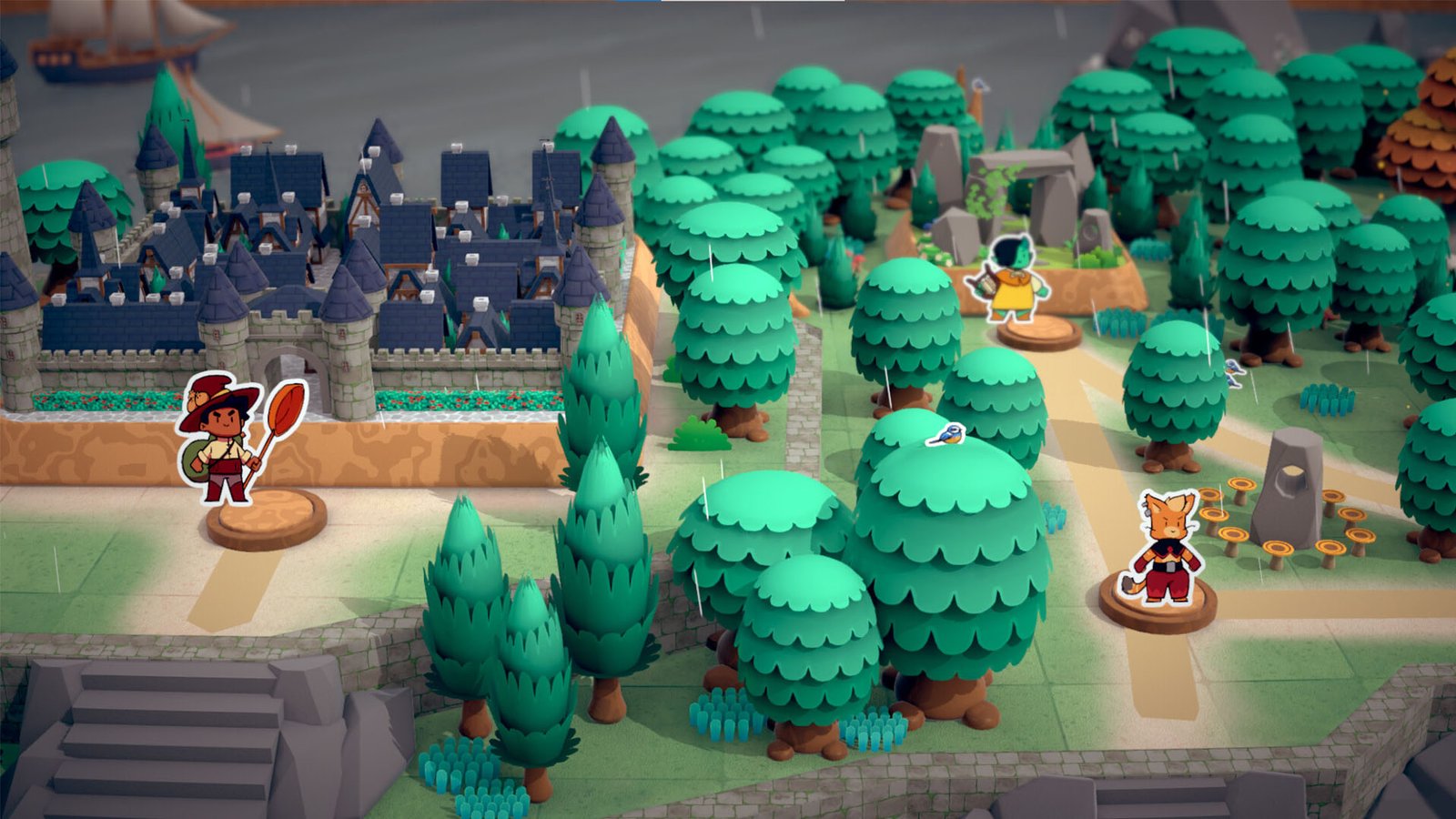
If you have friends who enjoy making decisions together and laughing at the consequences, it can become a reliable night-in game. If your group prefers action-first pacing or tends to defer to a single planner, you may find its charms fading faster than expected.
When Charm Meets Familiar Roads
Baladins is consistently likeable, but it is also a game whose strengths are easy to exhaust. The papercraft world, the gentle humour, and the warm tone do a lot of heavy lifting early on. The loop gives the adventure shape and makes each session feel contained. For a while, repetition feels like a feature because it lets you revisit the world with new knowledge and new priorities.
The tension arrives when you begin chasing particular outcomes. This is the moment when many time-loop games separate the great from the merely good. The game can sometimes feel as if it is asking you to revisit familiar roads to trigger specific conditions, rather than constantly rewarding curiosity with fresh discoveries. Some runs surprise you and reinvigorate the loop. Others feel flatter, and flatness is the true enemy in a choice-driven narrative game.
Even with that unevenness, Baladins remains easy to recommend to the right audience. It is approachable, structured for session play, and committed to the idea that co op storytelling can be a complete experience without combat. Its best moments deliver exactly what its presentation promises: warm, storybook chaos shaped by a group willing to talk, gamble, and accept consequences.
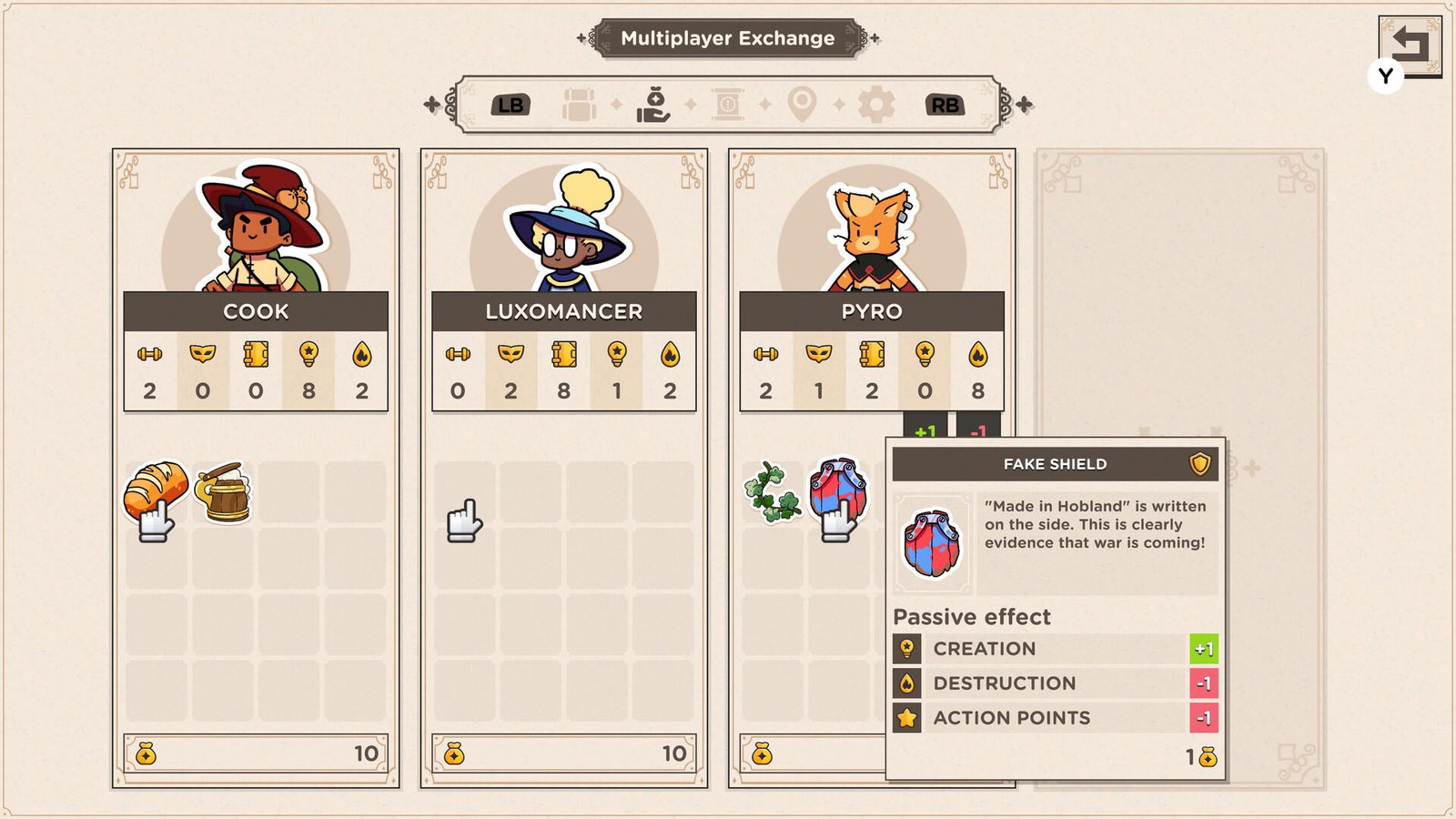
If you treat this as a tabletop night rather than a campaign to complete, its repetition becomes easier to forgive. The reward is not only progress toward a perfect outcome. The reward is the small stories you make, the arguments you have, and the surprising turns that only happen when a group is writing the adventure together in real time.
Baladins is available now on PlayStation 4, PlayStation 5, Nintendo Switch, and PC.
SavePoint Score
Summary
Baladins captures tabletop warmth through a looping week structure, turning planning into tension and co-op chatter into the real reward while struggling with the spectre of repetition.
