

Table of Contents
Pragmata is a Game Built on Partnership, Not Protection
For a game that has spent years wrapped in intrigue, Pragmata now feels surprisingly clear about what it wants to be. Speaking in an exclusive interview, Capcom repeatedly returned to one central idea: this is not a story about one character carrying another. It is about two very different beings learning how to move through a hostile world together.
That distinction matters. Hugh and Diana can, at a glance, resemble another familiar adult-and-child pairing in games, but Capcom sees the relationship differently.
As the team explained, “what you often see is that the adult has to protect the kid as they go forward in the game. But with Pragmata, the two of them work together… protecting and strengthening themselves as they go forward.” It is a small shift in wording, but an important one. Capcom is not selling dependence; it is selling reciprocity.
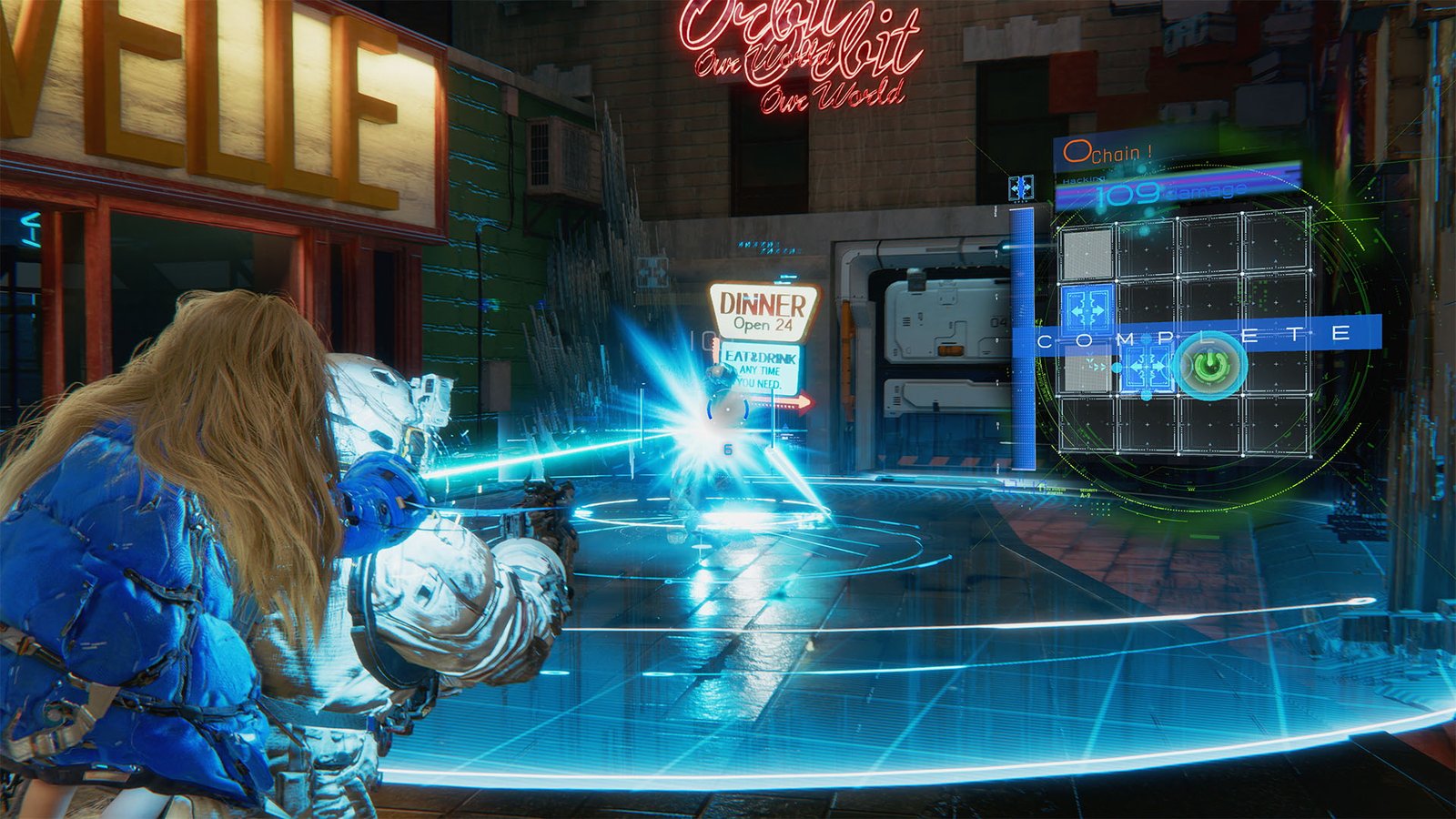
That idea stretches beyond the script and into the mechanics. Hugh handles the shooting. Diana handles the hacking. Neither side appears designed to stand alone. Instead, the player is asked to learn the language of both characters at once, with the game’s emotional arc and mechanical arc moving in tandem.
Capcom described that unfamiliarity as intentional. At first, players may not know when to shoot, when to hack, or how to combine both. Over time, as Hugh and Diana grow closer, the player becomes more fluent as well. It is an elegant way of thinking about progression. Rather than treating narrative and gameplay as separate tracks, Pragmata seems determined to make them mirror each other.
Why Capcom Believes the Hybrid Combat Will Click
If there is one immediate risk with Pragmata, it is that the game can look more complicated than it actually feels. Shooting is layered with hacking. Weapons are only one part of the equation. The interface invites players to think while moving, and that can seem daunting from the outside. Capcom is fully aware of that first impression.
“One thing players might think is, ‘This is a tricky game. It will be hard for me to get used to it,’” the team said. “But once you get over that first little hurdle, it is quite a natural way of playing the game.” That appears to be one of the defining goals behind the design. Complexity is present, but Capcom does not want it to curdle into friction.
What stands out is how often the team framed combat not as a rigid solution, but as a set of options, as we found out during our gameplay preview. Back in the Shelter, the hub area, players are meant to confront an array of upgrades and unlocks that shape their play style. Capcom does not want players to rely only on weapons. It wants hacking to matter just as much, which immediately makes Pragmata feel less like a conventional action game with a gimmick attached and more like a system built around twin inputs.
That also explains why the team seems confident about the difficulty. The developers suggested that players are often more skilled than they are given credit for, and that Pragmata will likely feel less intimidating once its rhythms settle in. In other words, Capcom is betting that mastery will come from familiarity, not simplification.
Hugh and Diana Are a Dynamic Duo
Capcom also stressed that Hugh and Diana are not simply an adult and a child figure placed into a sci-fi setting. Hugh is human. Diana is an android. That distinction opens the door to a relationship built not just on care, but on mutual discovery.
The team described them as stepping into each other’s worlds without really understanding them at first. That gives the partnership a different texture. Diana is not merely there to be protected, nor is Hugh just a guardian. They are both navigating uncertainty. That framing gives Pragmata a chance to make its emotional core feel more inquisitive than sentimental.
Capcom also hinted that the player’s connection to Diana will change over time. Players may begin by identifying more with Hugh, the more recognisably human half of the pair, before gradually building attachment to Diana as the game unfolds. In a lonely, metallic world, Diana is positioned as a kind of light within the setting. That image says a lot about how Capcom wants her to function. She is not only useful. She is meant to become meaningful.
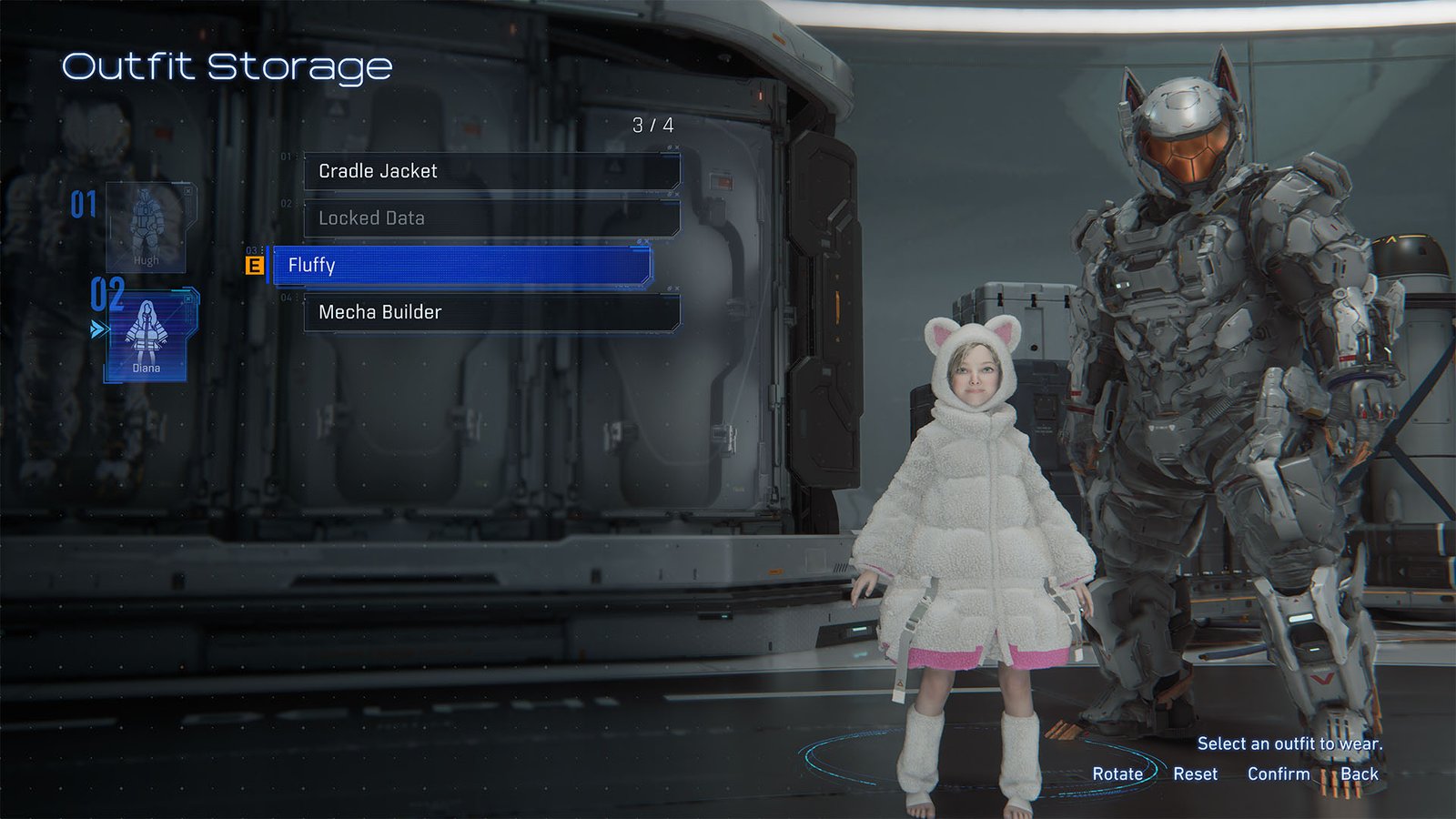
The Shelter appears especially important here. Capcom described it as one of the first spaces where players are separated from Diana in direct play, only to interact with her more personally. That distance seems deliberate. It gives players time to see her as more than a combat mechanic. By the time they head back into danger, Diana is no longer just a function in Hugh’s right hand. She is a presence.
The Past Matters, but Pragmata Wants to Stand on Its Own
When asked about Capcom DNA, the studio did not lean too heavily on legacy. The team acknowledged that Pragmata is developed by developers within the same division responsible for titles such as Resident Evil and Devil May Cry, but it was careful not to frame the project as a patchwork of old ideas.
Instead, Capcom positioned that history as development experience rather than direct inheritance. The value is not that Pragmata is borrowing someone else’s identity, but that the people shaping its stages, encounters, and feelings have learned from building great action games before. “We want to have a new game, a new experience,” the team said plainly.
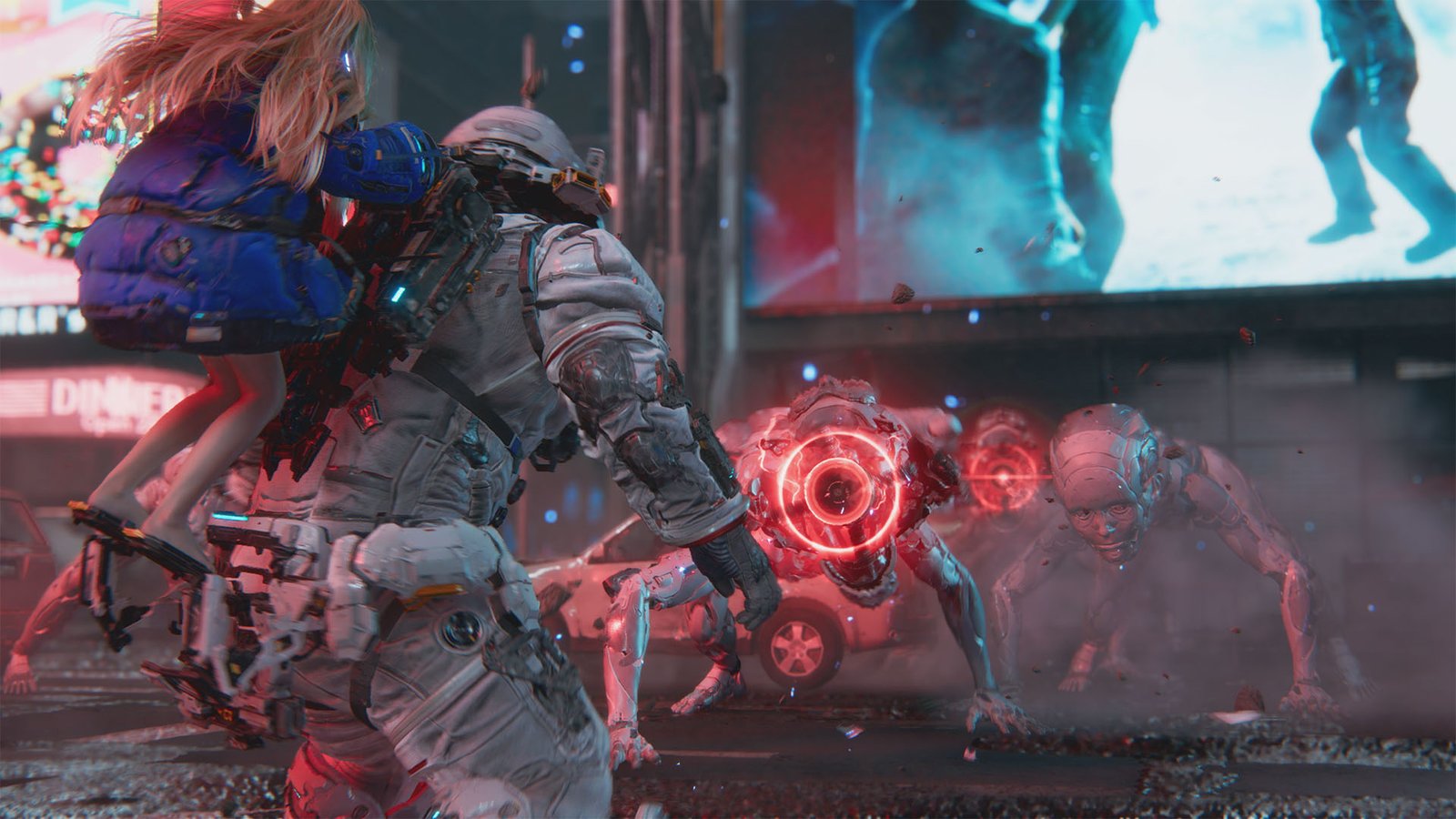
That ambition seems visible in the world design as well. As part of our preview, we enter a city area that resembles New York, which, according to Capcom, is not intended as a realistic recreation. It is a sci-fi facsimile shaped by one of the game’s key ideas, 3D printing. Glitches, half-printed objects, and environmental errors are part of the fiction. This is not Earth as it is. It is a world that has been processed, distorted, and rebuilt.
The same philosophy appears in the game’s tension. The team acknowledged that some players may feel traces of horror in the preview, but framed that more as controlled pressure than a genre pivot. Enemies are built to create tension and excitement, and over time, even those frightening designs may become familiar. That is a telling detail. Pragmata does not seem interested in remaining unknowable forever. It wants the player to adapt and, in doing so, claim confidence in spaces that once felt hostile.
At Its Best When Story and Systems Move Together
The most encouraging part is that Capcom presents Pragmata as though its ideas are all in conversation with one another. Hugh and Diana’s relationship feeds the combat. The combat fosters a sense of learning together. The Shelter reinforces attachment. The world design supports the sci-fi fiction rather than just decorating it. Even the challenge curve is framed around trust in the player’s ability to grow into the experience.
That coherence is often what separates a merely interesting game from a memorable one. Plenty of titles have strong mechanics. Plenty have emotional ambition. Fewer manage to make the two feel like they belong to the same beating heart.
From this conversation, Pragmata sounds like a game chasing exactly that. It wants its central duo to be felt in every fight, every upgrade choice, and every quiet moment back at base. If Capcom delivers on that promise, Hugh and Diana may end up being remembered not because they fit an existing template, but because they quietly broke away from one.
The release date for PlayStation 5, Xbox Series X|S, and Steam for PC has been moved forward to April 17 2026, and the Nintendo Switch 2 version of Pragmata in Southeast Asia will still launch as scheduled on April 24.
