

Table of Contents
People of Note on PS5 Pro
There is a particular kind of risk that comes with making a musical game. It is not enough to have a few catchy tunes, a colourful cast, or a world dressed up in music-themed puns. A musical lives or dies on whether it can sell the feeling of performance. It has to persuade you that breaking into song is not an interruption, but the natural language of the world. That is where People of Note from Annapurna Interactive and Iridium Studios gets its hooks in early and keeps them there for most of the ride.
Set in a world shaped by genre, performance, and musical identity, People of Note follows Cadence on a journey to bring together an ensemble of musicians and carve out something bigger than any one style alone. The premise is charming, but more importantly, the game commits to it. Battles are staged like performances, attacks are tied to rhythmic flow, and the adventure frames music as culture, conflict, and self-expression rather than just aesthetic dressing.
That commitment is what makes the game memorable, even when the rest of it doesn’t always reach the same level. The official pitch leans heavily on that musical combat identity, with rhythm-based attacks, evolving battle conditions, and mashup abilities at its centre. What immediately works is the confidence of the presentation.
The voice acting does a huge amount of heavy lifting here, and that is meant as a compliment rather than a caveat. The cast sounds invested in the material, which matters in a game like this because it needs to sell sincerity without tipping over into self-importance. Cadence and company are not simply speaking lines between songs. They carry a tone of adventure that is playful, theatrical, heartfelt, and, at times, knowingly corny. If the performances were flat, People of Note would collapse under the weight of its own concept. Instead, they give it shape.
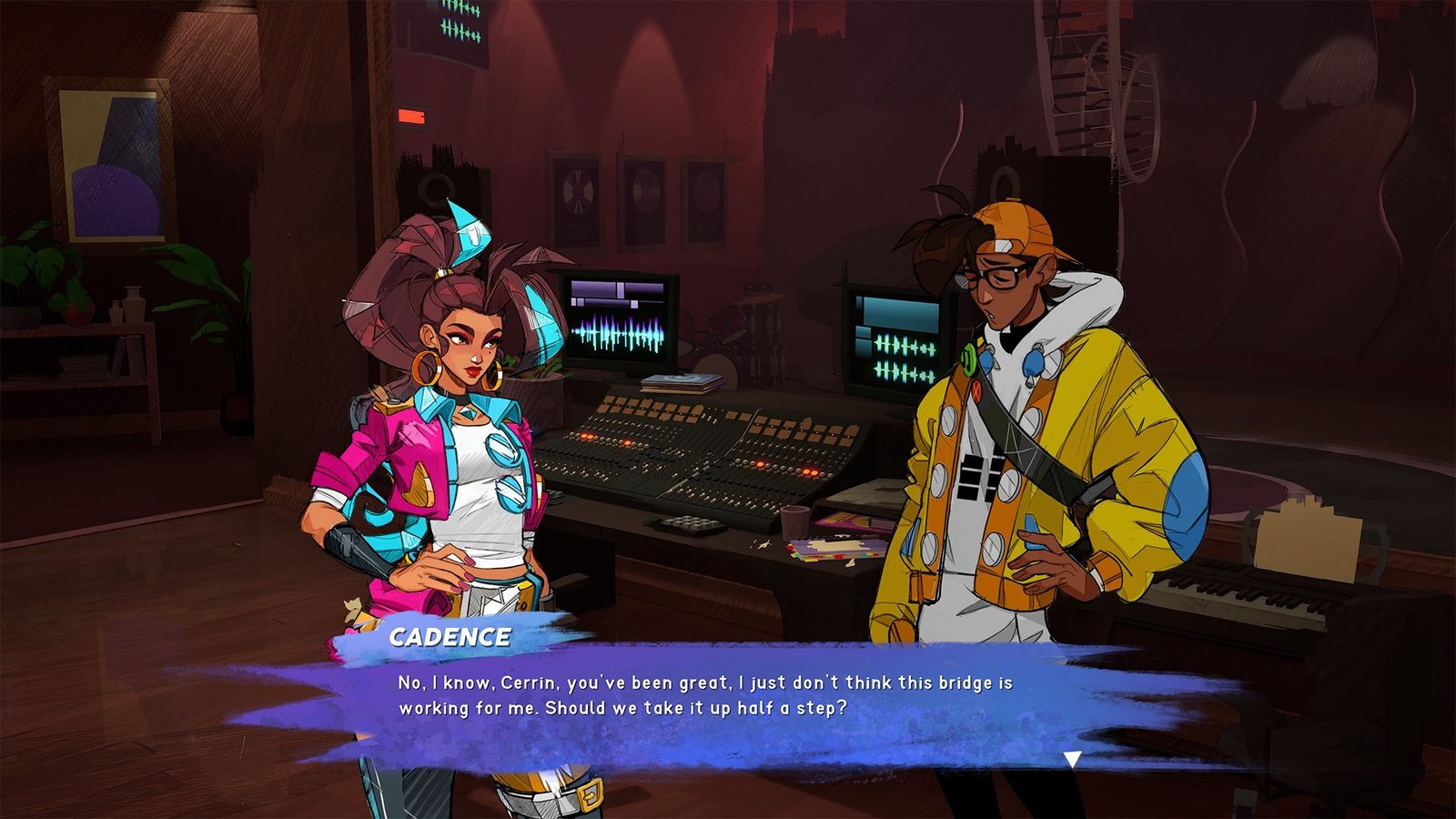
The musical numbers themselves are the clearest expression of that strength. They do not just exist to punctuate the plot. They are the moments where People of Note feel most complete, where the game’s world, personality, and emotional register line up cleanly, surfacing as standout qualities.
The Best Parts Happen When People of Note Get on Stage
That is the key to understanding why People of Note works as often as it does. It is not because it is a deep RPG or because every system clicks into place with elegant precision. It works because it understands where its biggest strengths are and keeps returning to them. The world has personality. The songs land. The vocal performances give scenes warmth and momentum. The best stretches of the game feel less like an RPG occasionally flirting with the idea of being a musical, and more like a musical that has figured out how to turn battles and exploration into part of the act.
That matters because the concept could easily have become smug or exhausting. Music-themed fantasy, especially one packed with puns and genre caricatures, always runs the risk of becoming a one-note joke.
People of Note avoids that more often than not because genuine affection lies behind it. It is playful, but it is rarely sneering. There is a sweetness to how it treats performers, styles, and collaboration. Even when the writing does not dig especially deep, the game is good at communicating why this world cares so much about music in the first place.
Visually, that theatrical bent helps too. Each area is built to feel like a space with its own sonic identity, and even when the storytelling between major peaks can feel lighter than it should, the atmosphere tends to hold. Preview coverage before release highlighted how each musical style shapes its own environment and sense of culture, and the final game still benefits from that core idea.
That does not mean every emotional beat lands with equal force. There are points where the story is more charming than affecting, and stretches where the game seems more interested in maintaining its breezy rhythm than in digging properly into its characters. But even then, the performances often pull scenes over the line.
There is a difference between writing that is genuinely profound and writing that is simply well delivered, and People of Note knows how to make the latter count. That is why it remains easy to like even when it is not always easy to love.
The Role-Playing Side Never Quite Sings
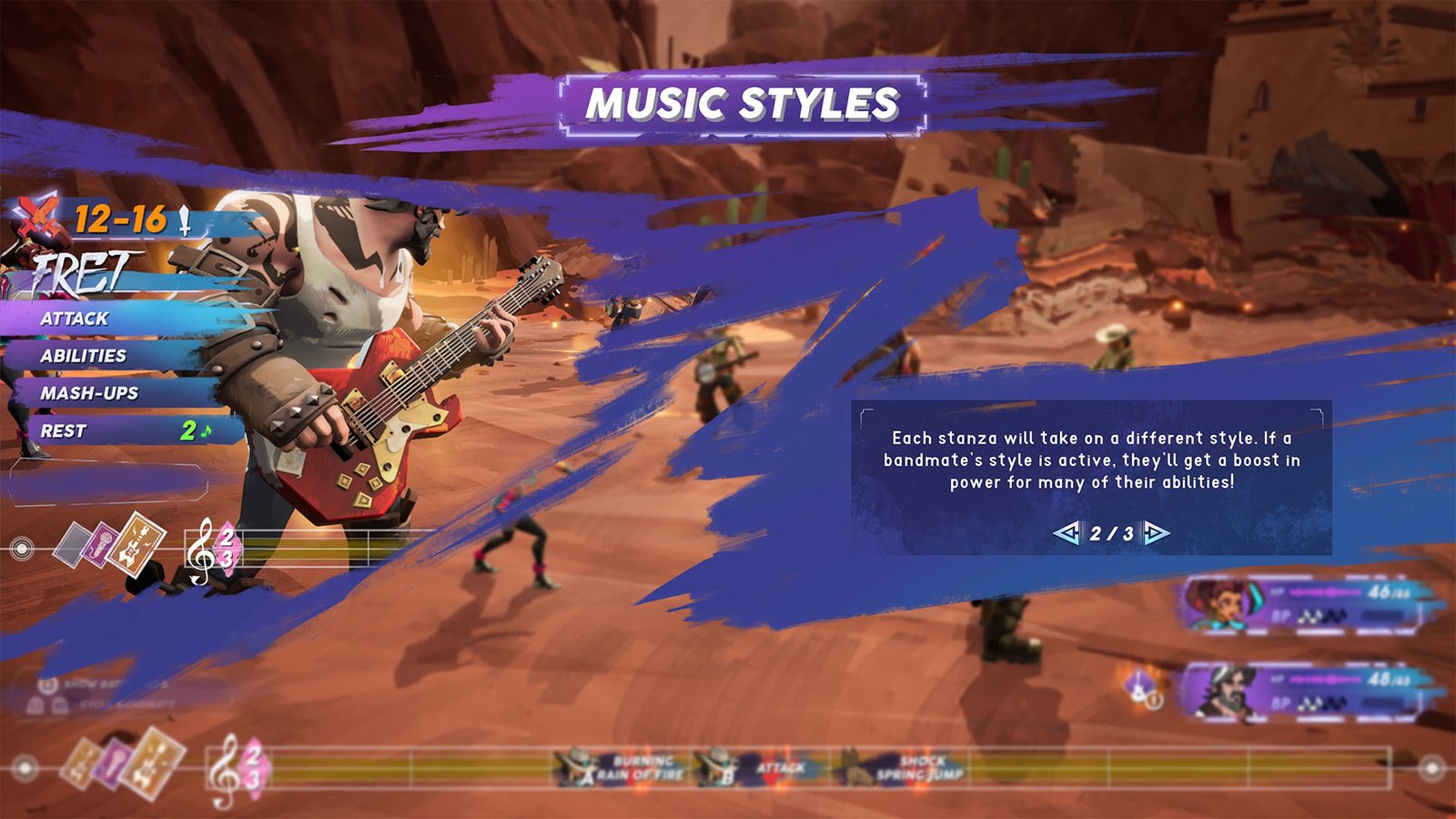
The combat is where the game makes its most compelling systemic case. Battles are built around stanzas, timing, positioning, and changing field conditions. It is not a rhythm game in the pure sense, but it borrows enough from musical timing and performance logic to make encounters feel distinct from ordinary turn-based skirmishes.
In practice, the best thing about combat in People of Note is its flow. Moving characters into place, reading the field’s shape, and working around the current stanza give encounters a sense of motion that suits the game’s theatrical identity. It feels staged in a good way, almost choreographed. You are not just selecting commands from a menu and waiting for the next turn to roll in. You are trying to maintain momentum, line up impact, and keep the battle feeling like a performance rather than a checklist.
That gives combat a freshness that helps the game stand apart, even when the broader RPG side never becomes especially deep. The issue is not that the systems are weak. It is that they feel more supportive than defined. Character progression, customisation, and the broader sense of role-playing depth are serviceable enough, but they rarely develop into something genuinely rich. You are given enough tools to stay engaged, but not enough for the game to become especially exciting as a pure systems-driven RPG.
That is why the combat remains enjoyable without ever quite becoming the thing you will remember most vividly once the credits roll. You remember the sound of it. You remember the musical texture of encounters. You remember the thrill of a battle slotting neatly into the game’s larger performance fantasy. But in pure RPG terms, it does not build into something especially dense or surprising. There is enough here to stay engaging, not enough to become transformative.
People of Note has a smart combat hook, and it uses that hook well, but it does not quite turn that promise into a role-playing experience with the same weight or complexity as its presentation suggests. The ideas are good. The execution is enjoyable. It just never fully evolves into something greater than the sum of those parts.
The Show Never Falls Apart, But The Gaps Are Easier To Notice
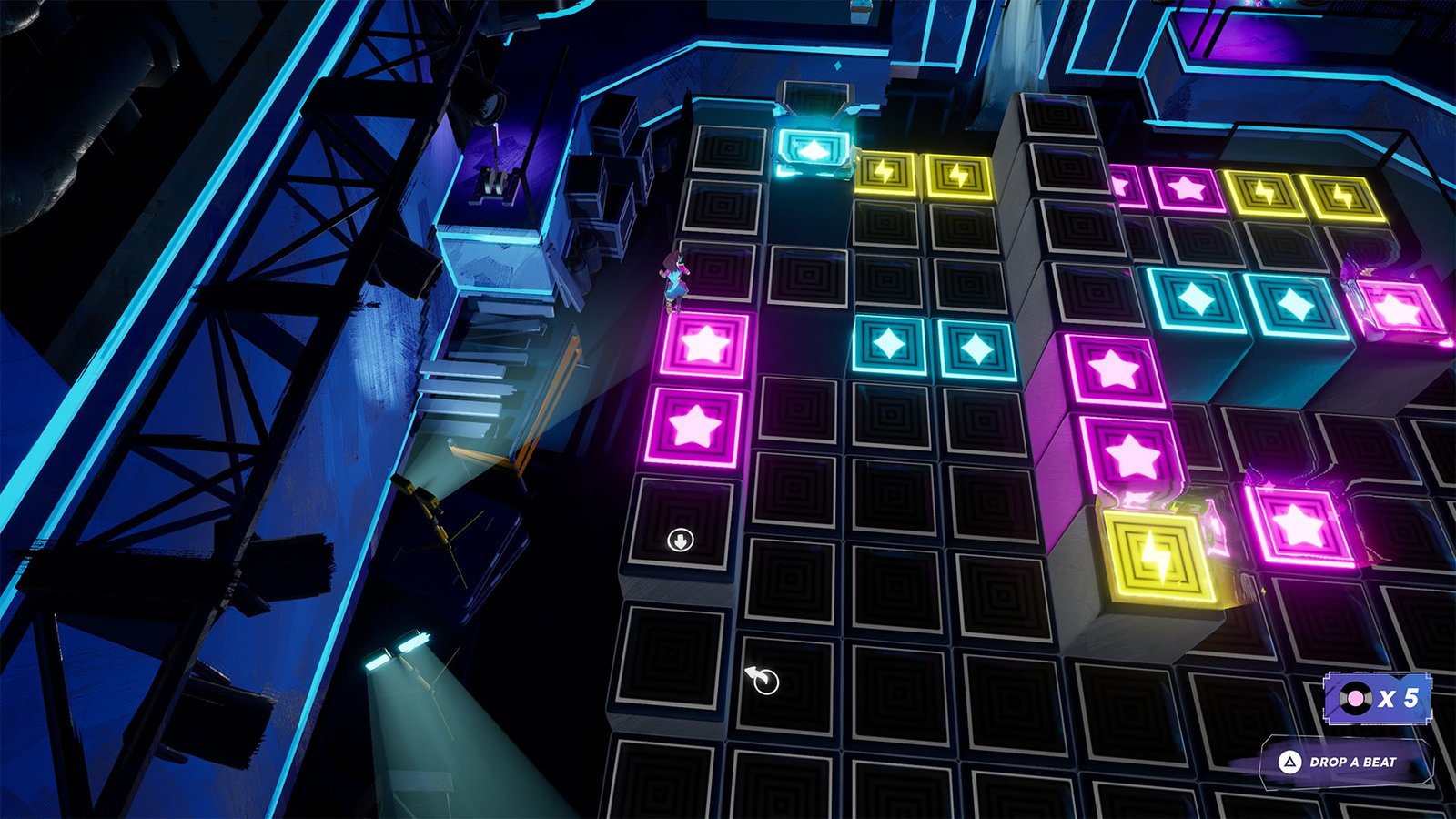
Where People of Note loses some momentum is in the connective tissue. For every big musical moment or cleverly staged battle, there are stretches where the pacing dips and the underlying structure feels thinner than the game’s presentation suggests. This can show up in exploration, in how progression unfolds, or simply in the sense that the game’s strongest ideas peak early and then rely on charm to keep carrying them.
That charm goes a long way, but not all the way. When a game is this good at putting on a show, it invites you to expect the quieter parts to be just as compelling. They are not always. Some reviews singled out late-game pacing, puzzle fatigue, or storytelling that falls short of the visual dynamism the premise deserves. Those criticisms are not enough to sink the experience, but they are enough to explain why the game stops short of greatness.

To the game’s credit, it sounds like the developers knew some of those sticking points might be divisive, because accessibility and customisation options are part of the package, including the option to reduce or remove certain puzzle friction. That flexibility is welcome, especially in a game where players may be arriving for very different reasons. Some will be here for the songs, some for the combat hook, some for the worldbuilding, and some simply for the novelty of a full musical RPG. The fact that People of Note makes room for those preferences is smart design.
In the end, People of Note is easiest to recommend when you frame it correctly. This is not an RPG that happens to have a few good songs. It is a musical adventure whose best qualities are rooted in performance, voice, and atmosphere, with combat and role-playing systems that are good enough to support that vision without fully matching it. When it is on stage, it is a delight. When it steps away from the spotlight, the seams become easier to see.
That still makes it worth hearing out. Plenty of RPGs have stronger progression systems, denser mechanics, or more expansive worlds, but very few have this kind of personality or this much faith in their own sense of theatre. People of Note does not hit every note with equal force, but when it sings, it really does sing.
People of Note is now available on PlayStation 5, Xbox Series X|S, Nintendo Switch 2, and PC.
SavePoint Score
Summary
People of Note earns its applause through sheer conviction. Its voice acting is excellent, its musical numbers genuinely memorable, and its combat has just enough tactical rhythm to keep things lively. What stops it from reaching higher is an RPG backbone that never feels quite as rich or rewarding as the show built around it.
