

Table of Contents
KuloNiku: Bowl Up! on PC
Some games win you over with scale. Others do it with systems deep enough to keep you busy for dozens of hours. KuloNiku: Bowl Up! from Gambir Studio and Raw Fury takes a different path. It charms its way in through food, familiarity, and the quiet comfort of a town that feels shaped by the people living in it.
What makes it click so quickly is not just the act of cooking, though that is certainly part of the appeal. It is the way the game understands that food can mean far more than a mechanic. Here, every bowl feels tied to memory, routine, and care. The restaurant at the centre of it all is not simply a business to rebuild, but a piece of family history, and that gives the entire experience a warmth that many cosy games spend hours trying to earn.
That sense of place is what gives KuloNiku: Bowl Up! its identity. This is not a generic management sim dressed up with cute characters and kitchen tasks. It is a game with a cultural heartbeat, one that folds bakso, community, and small-town life into something that feels real from the outset. Even before its larger systems begin to open up, that sincerity is enough to make the world feel inviting.
A Town Built On Food And Feeling

The strongest thing KuloNiku: Bowl Up! does is make the act of cooking feel tied to place. You inherit your grandmother’s once-famous meatball restaurant in the town of KuloNiku, and from there the game frames food not just as labour, but as identity. The restaurant is a family legacy. The townsfolk are not faceless customers. Even the rivalries and ambitions orbit around what food means to the community. That framing gives the whole game a warmth many cosy sims chase but never quite reach.
What makes this especially effective is the way the game leans into the cultural specificity of bakso and soup-making without turning that into a novelty. KuloNiku: Bowl Up! does not present its culinary heart as a gimmick. It treats it as everyday life. The result is a setting that feels more grounded and more personal than the usual vaguely pastoral small-town backdrop. There is colour here, but also familiarity. The game understands that food can be ritual, memory, comfort, and social glue all at once, and that understanding shapes everything from the atmosphere to the progression. Critics have repeatedly responded to that sense of warmth and personality, and it is easy to see why.
That sense of place also comes through in the characters. The cast is quirky in a way that often feels playful rather than forced, and the friendships you build help the town feel genuinely lived in. These relationships are not the deepest the genre has ever seen, but they do enough to make your presence in the world feel meaningful. New ingredients, locations, tools, and dialogue all help create a steady sense that KuloNiku: Bowl Up! is opening up to you because you are becoming part of it again. It is a simple arc, but an effective one.
Cooking That Feels Comforting Instead Of Hollow
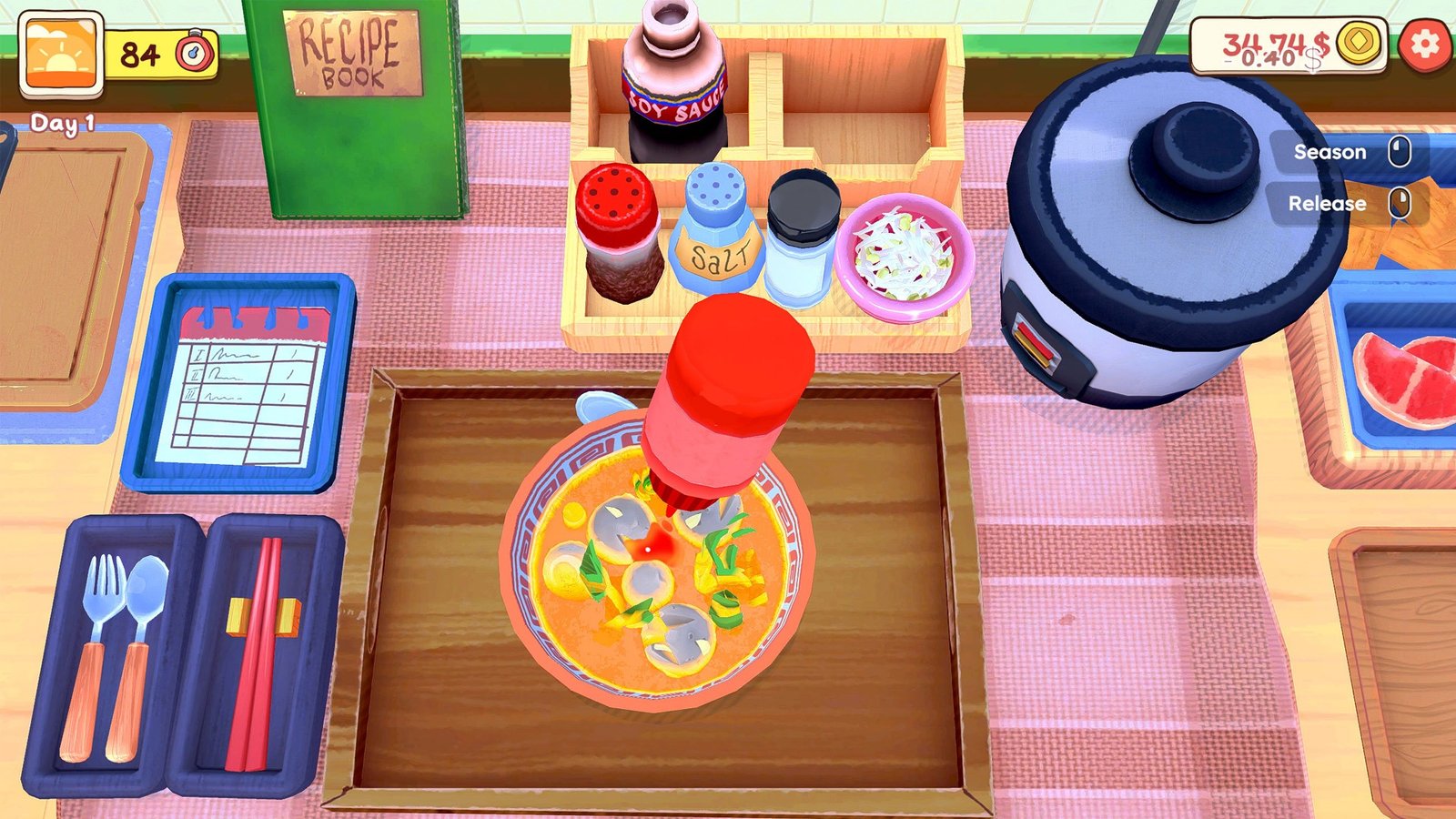
The actual act of cooking is where the game earns its keep. A cosy premise can only carry so much on its own, and KuloNiku: Bowl Up! would fall apart quickly if the kitchen work felt shallow. Thankfully, it does not. Preparing bowls, balancing ingredients, responding to customer preferences, and managing the rhythm of service all come together in a loop that is tactile, readable, and satisfying. The game understands that repetition is not a problem if the process itself feels good.
What helps most is that customer orders are not always straightforward. There is enough specificity in requests, flavour profiles, and presentation demands to keep the process engaging. You are not merely assembling dishes by rote. You are making small decisions, reacting to needs, and trying to satisfy a set of expectations that keep each service from blurring entirely into the next. That added friction gives the game texture. It is never stressful to the point of hostility, but it is active enough that your attention matters.
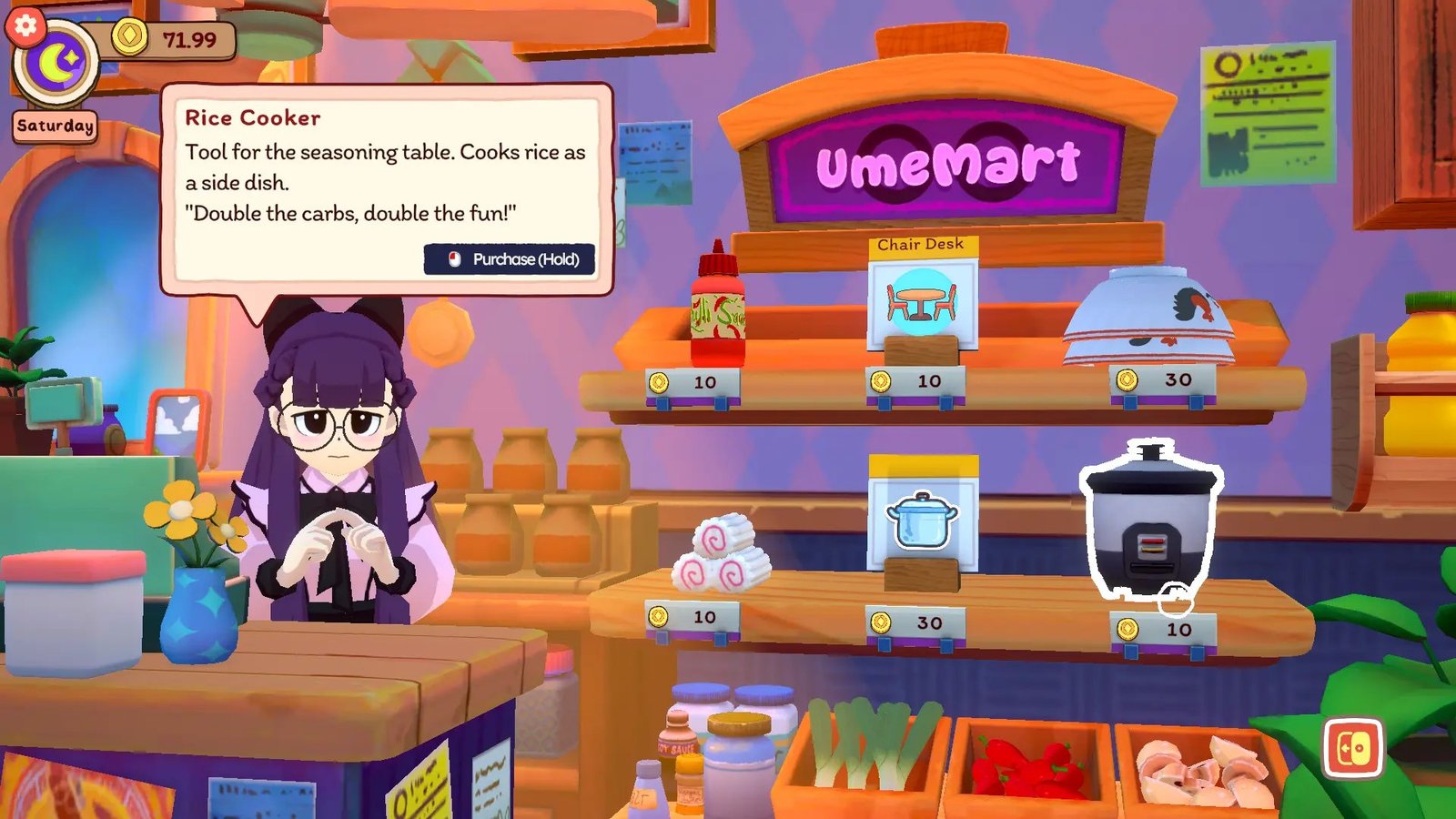
KuloNiku: Bowl Up! also does a good job of breaking up the daily loop. Between restaurant shifts, there is decorating, shopping, socialising, and the broader story thread nudging things forward. This is where the game’s charm does some of its best work. Rather than feeling like a checklist of side activities, these quieter moments reinforce the larger appeal of the town itself. You are not just grinding for upgrades. You are settling into a rhythm. That is a subtle but important distinction, and it gives the game a more relaxed confidence than many of its genre peers.
Meatball Brawls Give The Game Its Spark

If the everyday restaurant loop is the comforting base of KuloNiku: Bowl Up!, the Meatball Brawls are the spice that keeps it from going too soft. These cooking competitions are the game’s best twist, injecting higher-energy challenges and more creative pressure into a structure that might otherwise become too familiar. They are also the clearest sign that Gambir Studio did not want this to be just another cosy management sim.
The appeal of these sequences is not just that they are louder or faster. It is that they ask you to think differently. Vague briefs, fussy judges, limited moves, and the need to draw on what you have already learned from regular service all make the competitions feel like a natural extension of the core cooking rather than a detached minigame. They reward familiarity with the game’s food logic while also giving you something showier to work towards. More than once, they provide the exact jolt of momentum the story needs.
They also help sharpen the larger theme of the game. Cooking is not treated as a background chore. It is skill, expression, and pride. The Meatball Brawls turn that into something visible, almost performative, which suits a game so interested in how food connects community, rivalry, and self-worth. Other critics have singled them out as one of the game’s biggest strengths, and that holds up. They are not just a neat idea. They are one of the reasons the whole package stands out.
Charm Carries It Through Its Softer Spots
That said, KuloNiku: Bowl Up! is not flawless. Its biggest weakness is that it occasionally becomes too comfortable. The same qualities that make it soothing can also make it feel a little too safe over longer stretches. Dialogue repetition crops up, some progression beats take their time, and the challenge curve is forgiving enough that players wanting sharper management pressure may come away slightly underfed. These are not dealbreakers, but they are noticeable. They are also the same caveats that keep cropping up in the wider review landscape.
Still, this is where the game’s sense of identity matters so much. KuloNiku: Bowl Up! is easy to forgive because it understands what makes it special. The art direction is bright and inviting, the anime-inspired flair gives the town real character, and the combination of food, friendship, and small-scale ambition creates a world that is pleasant to inhabit. Even when the systems ease up a little too much, the atmosphere keeps pulling you along. You want to see what the next day brings. You want to meet the next local, unlock the next ingredient, and make the next bowl.
KuloNiku: Bowl Up! may not always push its systems as far as it could, but it understands exactly what makes it special. Its cooking, characters, and cosy structure are all elevated by a setting that feels personal rather than ornamental. In a genre where charm can sometimes feel manufactured, this one feels genuinely lived in, and that makes all the difference.
KuloNiku: Bowl Up! is available now on PC.
SavePoint Score
Summary
KuloNiku: Bowl Up! wins you over, not through spectacle, but through sincerity. Its cooking is satisfying, its town is full of warmth, and its cultural identity gives the whole experience a flavour that sticks. A little repetition does creep in, but the heart of this one is easy to love.
