

Table of Contents
Find Your Words on PC
Games often make communication feel effortless. A button press moves conversations forward, dialogue options appear neatly on screen, and characters respond as though understanding is the most natural thing in the world. Find Your Words from Capybara Games takes that assumption and gently slows it down. It asks players to think about communication not as background noise, but as the heart of connection itself.
This cosy adventure is small in scale, but it carries a clear sense of purpose. Set at Camp Pals, it follows a non-speaking child who arrives at summer camp and learns to build friendships through a Communication Binder filled with symbols, names, actions, places, and feelings. That premise could easily have become overly instructional in the wrong hands, but Find Your Words avoids turning its subject into a lecture. It works simply because it treats communication as something lived, practised, sometimes awkward, and often joyful.
There is an immediate gentleness to its world. The camp is bright, soft, and welcoming, with beaches, trees, cabins, birds, and children waiting to be met. It is not trying to overwhelm the player with complex objectives or hidden systems. Instead, it creates a safe space where a conversation can feel like an achievement, and where being understood becomes its own form of progress.
Communication Becomes the Heart of Play
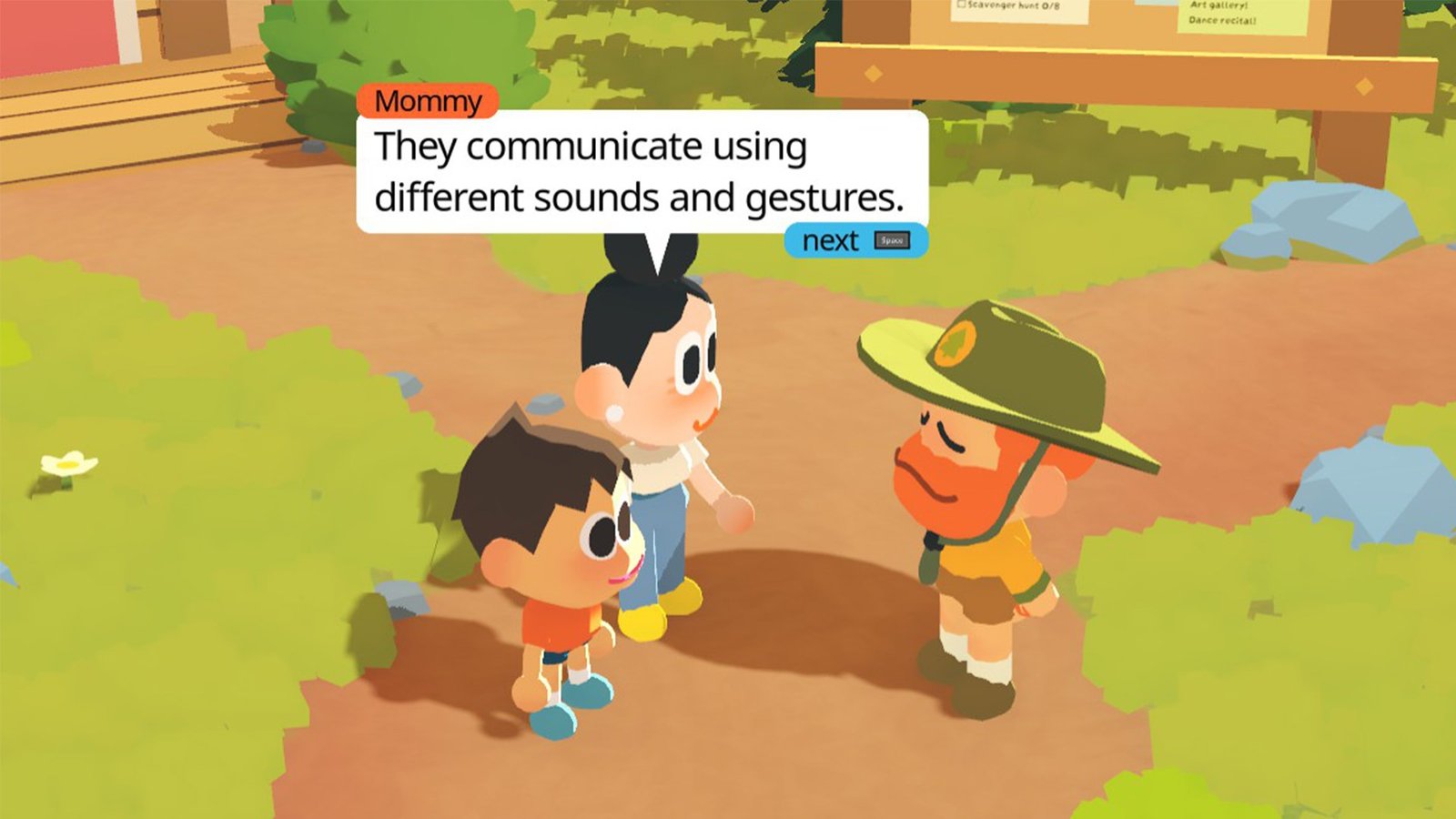
The Communication Binder is the central mechanic that makes Find Your Words feel distinct. Rather than selecting traditional dialogue lines, players build meaning through symbols. At first, this can feel intentionally limited. You may understand what someone is asking, but responding requires the right symbol, the right combination, and the patience to form an answer within the tools available to you.
Asking for help, identifying another camper, pointing towards a place, or expressing a desire becomes part of the adventure. The game makes players pay attention to context, not just objectives, and that small shift gives its simplest interactions more emotional weight. New symbols are added through exploration and interaction, gradually expanding what can be said. It gives progression a gentle thematic clarity.
That is where Find Your Words is most effective. Its systems are not deep in a traditional mechanical sense, but they are expressive. They ask players to engage with communication as a process rather than an automatic exchange. For a game this compact, that is a meaningful achievement.
Camp Pals Finds Warmth in Small Rituals
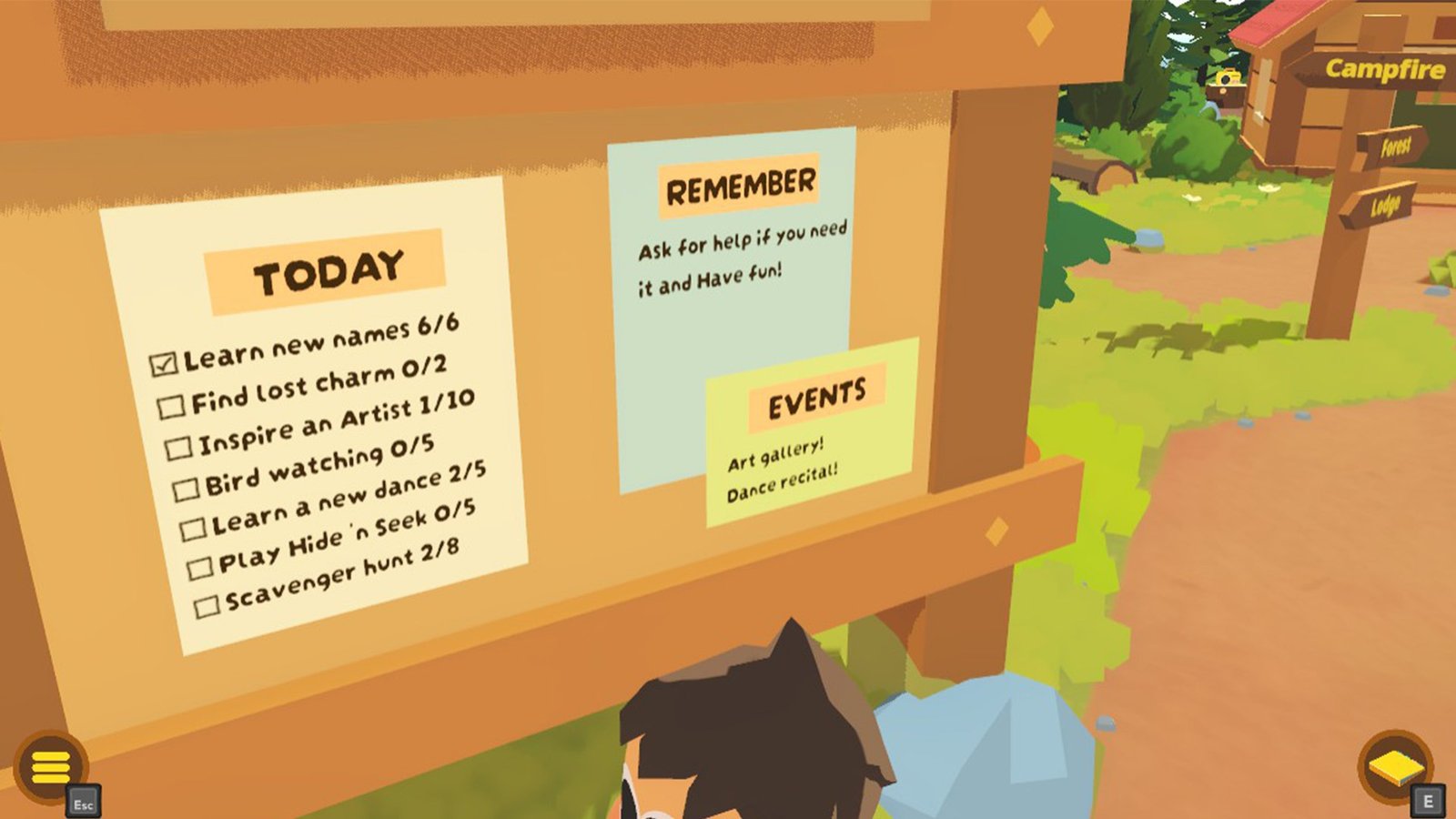
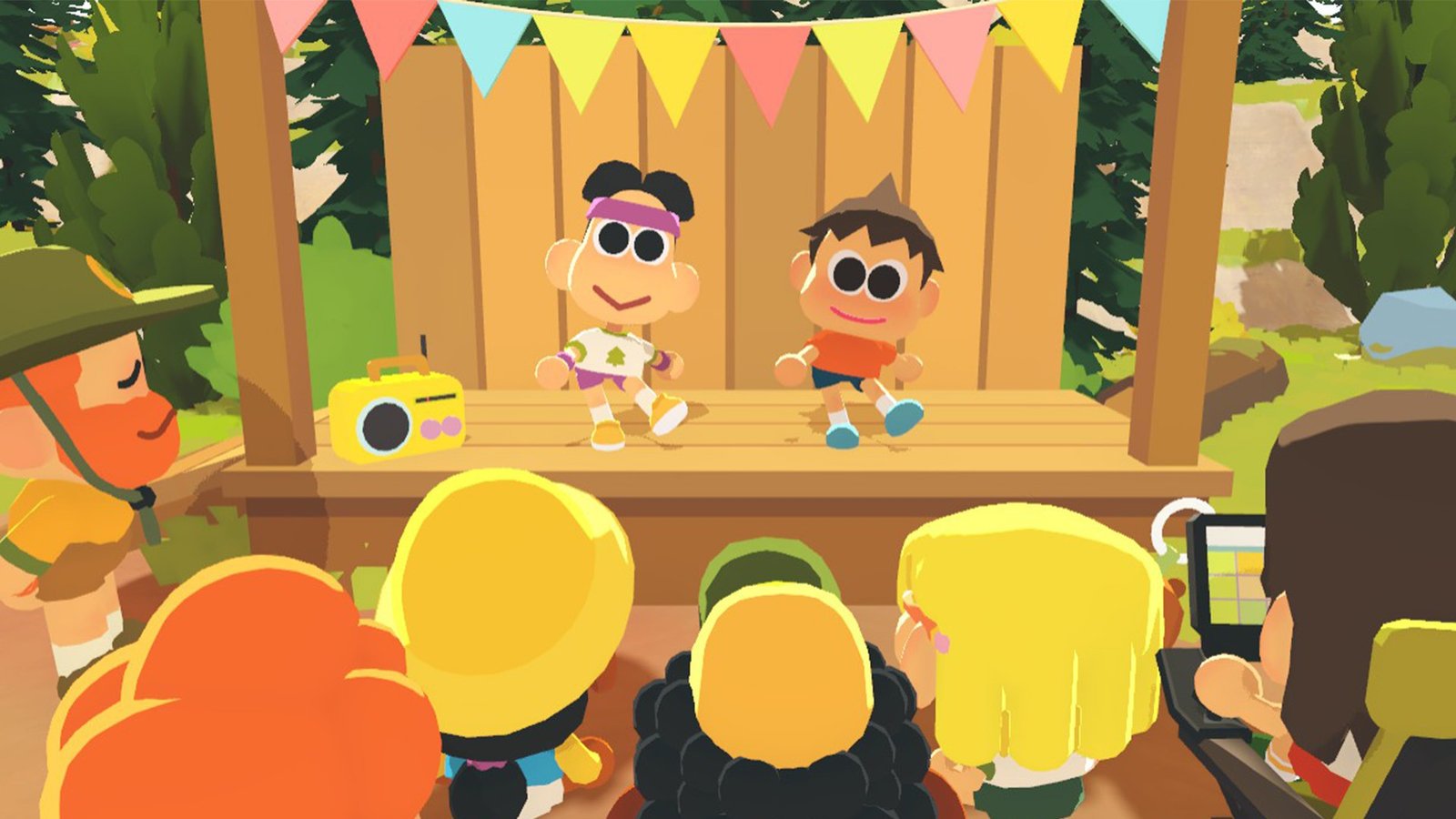
The actual activities around Camp Pals are deliberately simple. Players can explore, meet other campers, help with small tasks, take part in light minigames, and enjoy the relaxed rhythm of a short summer camp stay. There are moments of hide-and-seek, birdwatching, dancing, and gentle problem-solving, all built around the idea that connection often begins through shared activity.
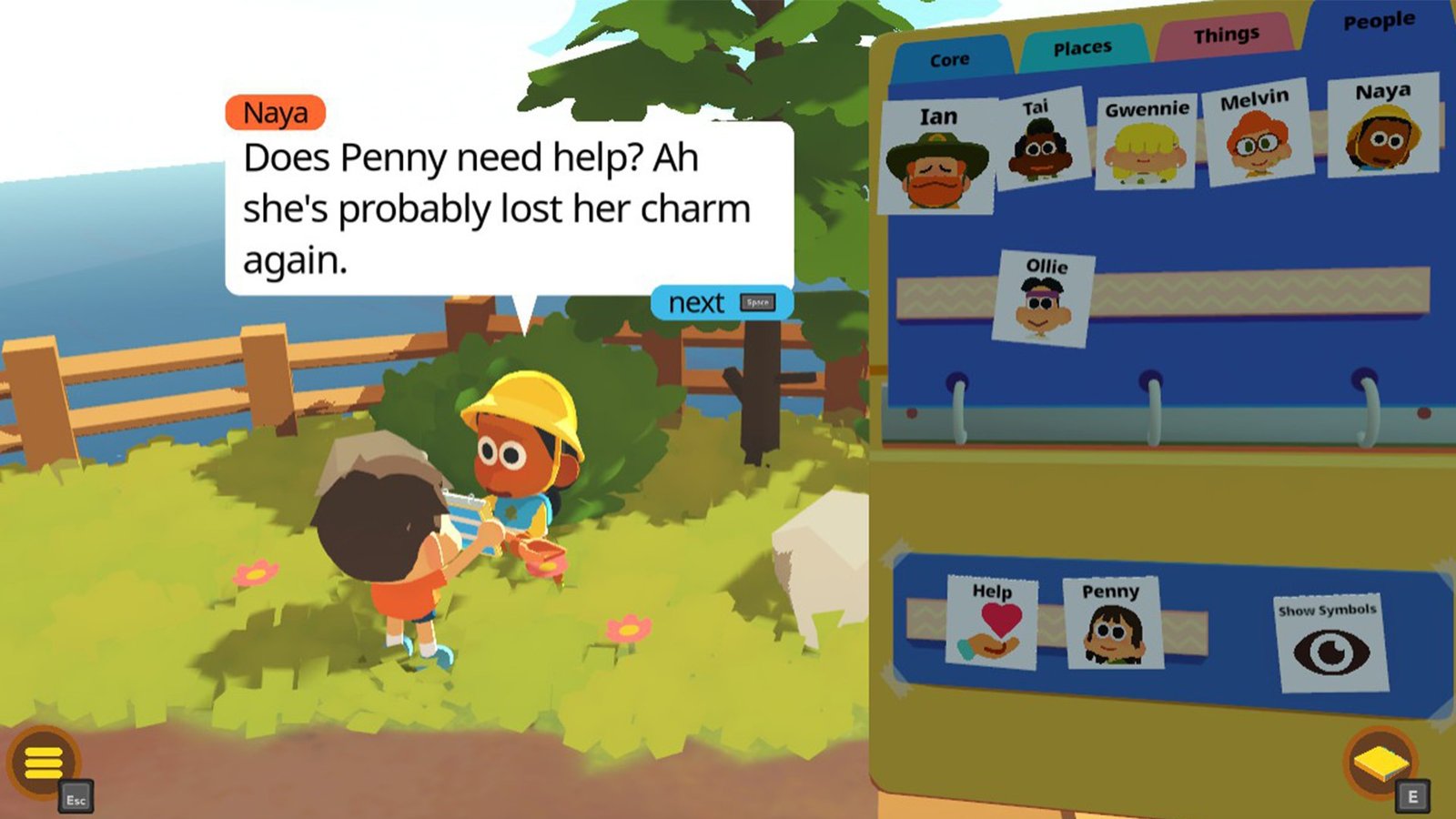
None of these moments is especially demanding, and players looking for a more elaborate adventure may find the structure slight. Yet the simplicity serves the tone. Find Your Words is not trying to test mastery. It is trying to create comfort, and its best moments come from how naturally its activities support that emotional goal. Helping another child, identifying something in the environment, or using newly acquired symbols to participate more fully gives the camp a sense of quiet growth.
Visually, the game leans into softness. Its colour palette, character designs, and environments all foster a sense of a welcoming children’s space, while its pacing lets players move through the world without pressure. The audio design also fits the experience, giving the camp an easy warmth that never becomes too busy or intrusive.
There is inherent charm to Find Your Words, but it is not empty charm. The setting gives the protagonist a community to enter, not simply a map to explore. Every camper becomes part of the game’s larger argument that communication is not only about speaking. It is about being given the tools, time, and willingness from others to be heard.
Its Brevity Is Both a Strength and a Limit
The most obvious limitation is length. Find Your Words is a short experience, and it can feel like it ends just as its ideas begin to widen. The camp has enough personality to make you wish there were more conversations, more layered activities, and more opportunities to see the binder used in increasingly complex ways. There is a fuller game hidden within this concept, and the ease with which it comes to mind speaks to the strength of the premise.
Its writing can also feel plain at times, and the dialogue rarely reaches for lyrical complexity, but it does not need to. What matters more is whether the game creates clarity, kindness, and emotional connection for a likely younger audience, and on those terms, it succeeds.
The free-to-play model also changes how its limitations land. As a focused, free release with a strong representational purpose, the compactness feels more like intentional scope than a lack of ambition. Find Your Words says what it needs to say, leaves room for reflection, and avoids overstaying its welcome. What lingers is not the number of activities completed, but the sensation of being asked to communicate differently. That is rare, as many games are about finding your place in a world, and Find Your Words is about finding a way to be understood within it.
A Quietly Meaningful Stay
Find Your Words is the kind of title that earns its value through specificity. It is not trying to be a grand, cosy life sim, a sweeping narrative adventure, or a mechanically dense puzzle game. It is a short, sincere, and carefully shaped experience about a child entering a new place and finding connection through tools that many games would never think to centre.
That focus makes it special. Its representation of non-speaking communication feels thoughtful without being heavy-handed, and its camp setting gives that representation a warm, approachable frame. It is accessible, generous, and easy to recommend, especially for families, younger players, cosy game fans, or anyone interested in how games can meaningfully represent different ways of moving through the world.
It may be slight, but it is not disposable. Find Your Words understands that finding a voice is not always about speech. Sometimes, it is about being met halfway, sometimes, it is about having the right symbol at the right time. And on occasions like this, it is simply about someone waiting long enough to understand you; for a game this small, that message carries beautifully.
Find Your Words is available now on PC.
SavePoint Score
Summary
Find Your Words is brief and mechanically light, yet its heartfelt communication system, gentle camp setting, and thoughtful representation make it quietly memorable long after its short stay ends.
