

Table of Contents
Coffee Talk Tokyo on PS5 Pro
Coffee Talk Tokyo does not walk into the room trying to be louder than its predecessor. It sits down, lowers the lights, puts on a soft track, and waits for the first customer to speak. That patience is the core of its charm, and it remains the reason this series continues to feel so distinct in a space crowded with louder, busier, and more mechanically demanding games.
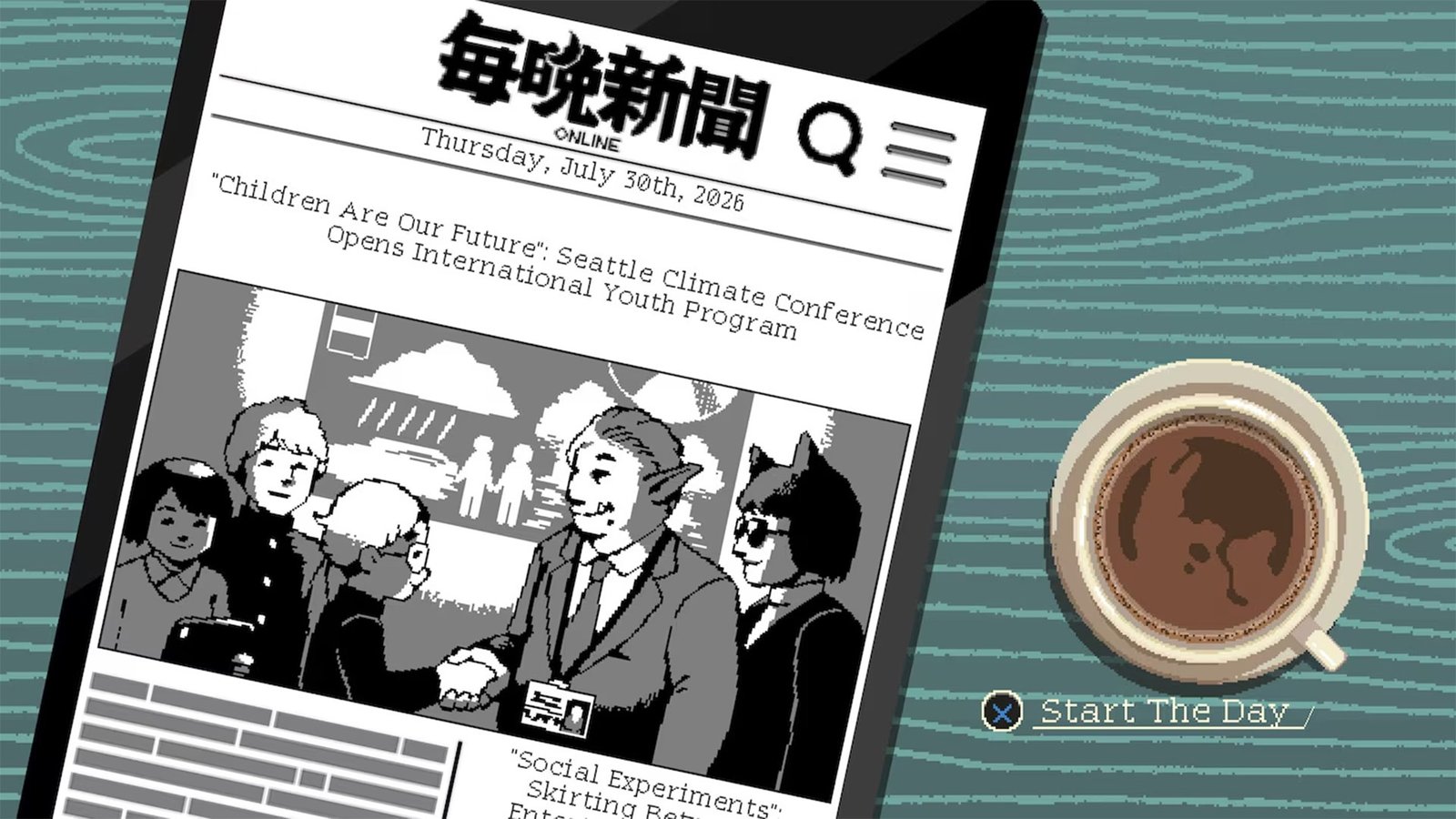
The shift from Seattle to Tokyo gives this standalone entry an immediate sense of renewal, as it is not just a cosmetic relocation. The city’s mix of old and new, human and mythic, heat and stillness, gives the game a refreshed emotional texture while preserving the series’ familiar rhythm. Behind the counter, the player is still more a listener than a hero, more a witness than a saviour. The café becomes a pocket of calm in a world that feels heavy outside its windows.
That sense of calm is especially important because Coffee Talk Tokyo remains deeply committed to small conversations. Its stakes are rarely theatrical in the conventional sense, but they feel personal. A drink order becomes an invitation. A pause in conversation becomes a confession. A seemingly casual exchange becomes the start of something that will linger in the mind long after the cup has been cleared.
Quiet Stories That Carry Real Weight
The strongest part of Coffee Talk Tokyo is its cast, something that Chorus Worldwide and Toge Productions do really well. Humans and yokai come through the café with their own wounds, anxieties, contradictions, and hopes, and the writing treats them with a steady hand. Kenji, the kappa salaryman searching for meaning after retirement, could easily have become a simple joke about overwork and age. Instead, his story taps into a more universal unease about identity after routine disappears.
Ayame brings a different shade of melancholy, with her struggle to make sense of her afterlife giving the game room to explore memory, grief, and unfinished business without turning its tone grim. Vin, meanwhile, helps ground the café from the other side of the counter, adding a sense of continuity and vulnerability to a place that might otherwise feel too perfectly comforting.
What works here is that Coffee Talk Tokyo rarely forces emotion through dramatic spikes. It lets characters circle around difficult truths, deflect with humour, misunderstand each other, and then return to the heart of the matter when they are ready. The supernatural elements are not there to distance the stories from real life. They sharpen them. A yokai can still worry about work, regret, loss, purpose, connection, and the awkward business of being understood.
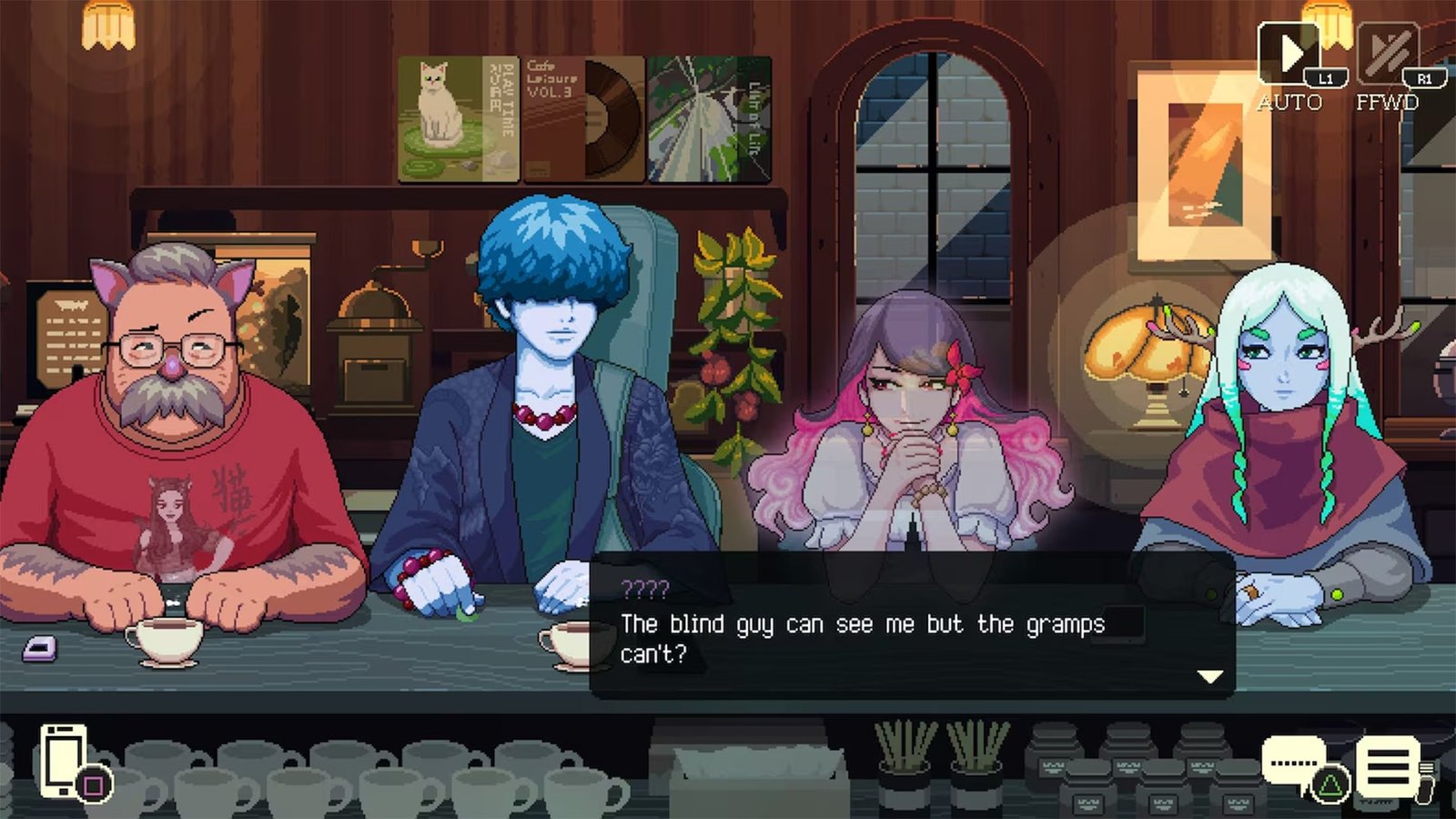
The dialogue occasionally leans into a level of emotional neatness that may feel idealised, especially when characters articulate their feelings with unusual clarity. Yet that is also part of the series’ appeal. Coffee Talk Tokyo imagines a world where people are given space to speak properly, where listening is active, and where a late night café can become a temporary shelter from everything unresolved.
Brewing, Listening, And Small Choices
Mechanically, Coffee Talk Tokyo remains deliberately modest. The main loop still revolves around reading the room, preparing drinks, and paying attention to what customers are really asking for. Some orders are direct, while others require interpretation, nudging players to think about flavour, mood, and context rather than simply following a list.
The addition of cold drinks fits naturally into the Tokyo summer framing, while latte art stencils give the drink-making process a small but welcome flourish. They do not transform the experience, but they make the act of preparation feel a little more expressive and approachable. The café fantasy works best when serving a drink feels like part of the conversation, not a separate system bolted onto it.
Tomodachill also helps widen the storytelling beyond the café counter. Checking posts, following hints, and noticing how characters present themselves online adds another layer to the way relationships unfold. It is a smart fit for a game about observation, because some of its most useful details come from what people reveal indirectly.

Still, this is where Coffee Talk Tokyo’s limitations are most visible. Players looking for a major evolution in structure may find the experience too familiar. Choices matter, and there are branching outcomes, but the broader shape remains restrained. This is not a game trying to reinvent visual novels, life sims, or narrative adventures. It is refining an established blend, and whether that feels comforting or conservative will depend heavily on what the player wants from the cup.
A Comforting Blend, Not A Bold Reinvention
Coffee Talk Tokyo is at its best when it trusts silence, softness, and sincerity. Andrew “AJ” Jeremy’s returning lofi soundscape gives the experience its steady pulse, wrapping the café in music that feels intimate without becoming intrusive. Combined with expressive pixel art and the warm glow of the setting, the game creates an atmosphere that is easy to settle into.
That presentation matters because Coffee Talk Tokyo is ultimately a mood piece as much as it is a narrative one. The act of playing is slow, but not empty. It asks the player to notice people, to remember what they said, and to care about what might help them open up. In an industry often obsessed with escalation, there is something quietly powerful about a game built around emotional attention.
It also helps that the Tokyo setting gives the series a meaningful new frame without sanding away its identity. The mythological influence adds freshness, but the heart remains recognisable. This is still Coffee Talk in the ways that matter: reflective, gentle, intimate, and occasionally bittersweet.

Coffee Talk Tokyo may not surprise those who already know the series well, and its familiar structure does leave room for wanting more mechanical ambition. Yet it succeeds because it understands exactly what it is serving. This is not a bold new roast. It is a carefully prepared cup of something warm, familiar, and quietly moving, made for players who still believe that a good conversation can change the shape of a night.
Coffee Talk Tokyo is available now on PlayStation 5, Xbox Series X|S, Nintendo Switch, Nintendo Switch 2, and PC.
SavePoint Score
Summary
Coffee Talk Tokyo understands the quiet power of listening. Its familiar structure leaves little room for surprise, but its tender writing, Tokyo atmosphere, charming cast, and soothing café rhythm make it a deeply comforting return.
