

Table of Contents
Splatoon Raiders on Nintendo Switch 2
When Nintendo announced a Switch 2-exclusive spin-off of the multiplayer-oriented Splatoon series, there were more questions than immediate answers. How could Deep Cut’s big adventure distinguish itself from the story campaigns of the previous games? Splatoon Raiders is not what we expected, and that is ultimately for the best.
It was only shortly before release that we learned Nintendo EPD had dived head-first into the looter-shooter subgenre. That means plenty of action RPG elements, but also a structure that may push away players who are not interested in hunting for better loot and increasing their power level, either alone or alongside other Inklings and Octolings.
Splatoon Raiders is committed to the grind, but that does not mean it suffers from the bloat associated with established giants such as Warframe or Destiny 2. Once the idea of a Nintendo-made looter shooter settles in, it becomes clear that the company has not forgotten who it primarily makes games for. Anyone who finds the basic premise of blasting Salmonids while searching for new weapons and treasure enticing should find plenty to enjoy here.
Nintendo Changes Course
After Salmon Run grew into one of Splatoon’s defining cooperative modes, it made sense to expand the idea into a dedicated game with a stronger single-player focus. The original concept for Splatoon Raiders revolved around a more defensive playstyle, including traps that players could deploy around the battlefield. Following internal testing, the developers moved away from that approach and instead doubled down on the mobility and fast-paced action of the mainline series.
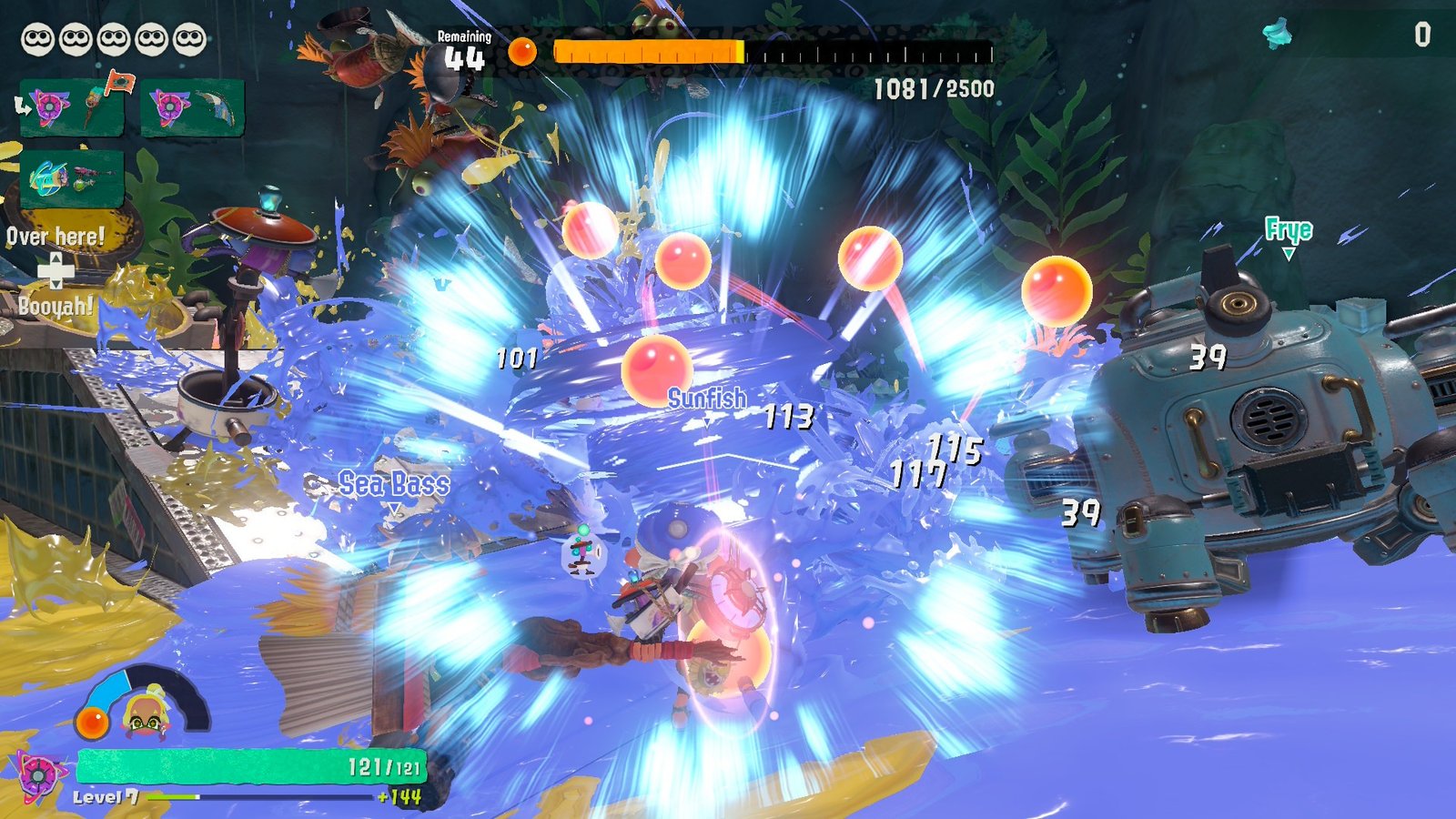
It could have been a very different, and potentially less appealing, shooter. Thankfully, the qualities that make Splatoon distinctive have been preserved. Cooperative shooters without progression systems have become increasingly rare, even if classics such as Left 4 Dead remain beloved. Making Splatoon Raiders rewarding through a constant stream of compact missions and weapon drops feels like a logical next step. In practice, it helps keep the relatively simple moment-to-moment action fresh.
Most runs take no more than a few minutes, while downtime is kept to a minimum. There are few opportunities to become bored, provided you enjoy blasting Salmonids, because that is what you will be doing for much of the game.
The good news is that using the varied arsenal of Splatoon Raiders, whether at range or up close, remains as satisfying as it was in Splatoon 3. The focus on clearing large groups of Salmonids, supported by more enemy types than before, also gives Raiders a flavour that was not present in either the single-player campaigns or competitive multiplayer modes of past games.
Although Splatoon Raiders is narrower in scope, that focus results in an experience with fewer rough edges. The sharp image quality and fluid 60 frames-per-second action further reinforce the feeling that this is the series’ most polished release, even if much of that visual improvement was expected from the Switch 2’s more powerful hardware.
A Breezy Tale of Fortune Seekers
The story of Splatoon Raiders follows Shiver, Frye, and Big Man, the members of Deep Cut, as they travel to the remote Spirhalite Islands in search of treasure. After their helicopter crashes, the group becomes stranded on the archipelago. Players control the Mechanic, a customisable character who is unsurprisingly tasked with handling the dangerous work while Deep Cut searches for a way home.
Along the way, the group also pursues a legendary treasure trove that may hold answers to the mystery surrounding the cursed islands. As far as looter-shooter premises go, it gets the job done. The mystery provides enough connective tissue to support the different raids that become available as the fog surrounding each island is cleared.
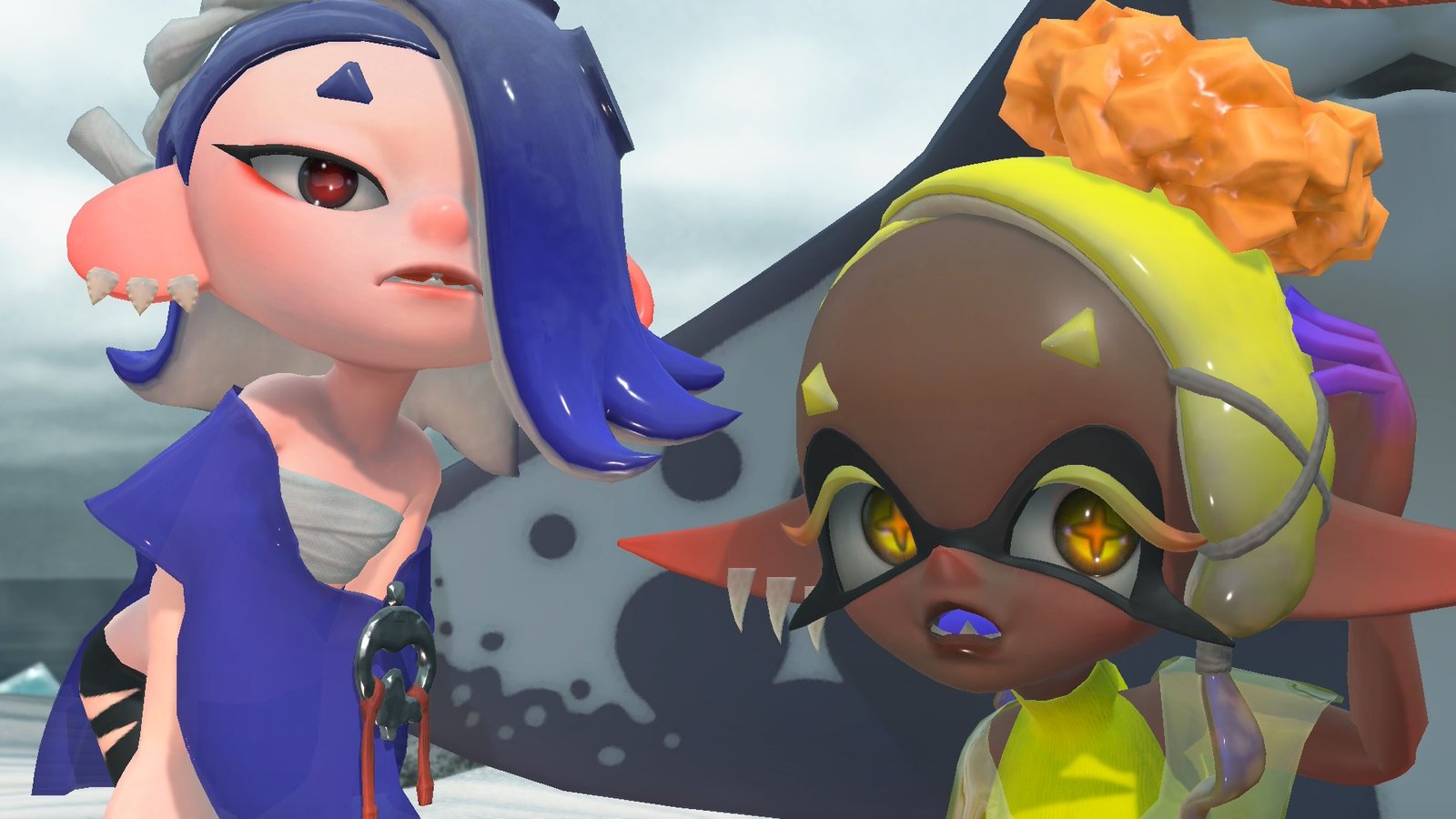
Splatoon’s lively art direction, memorable character designs, and excellent animation add considerable charm to the adventure. The main cutscenes regularly deliver humorous moments that would feel out of place in most looter shooters, serving as a welcome reminder of how far the games have come and why the series has attracted such a large audience.
The soundtrack is less inspired this time around in Splatoon Raiders, although several catchy end-of-mission tracks still stand out. More interesting are the pieces of lore concerning the Salmonids and the wider world that are uncovered over time. The developers use the spin-off to flesh out both the finned menace and the members of Deep Cut, who were already fan favourites following their introduction in Splatoon 3. Further trouble back home is also teased, although whether that leads into downloadable content or another mainline game remains to be seen.
Balancing Intent and Player Expression
Splatoon Raiders fully comes together once all its systems are in place. After the opening hours and several upgrades to the home base, players gain access to enough crafting and customisation options to adapt their builds for different raids.
There are few major difficulty walls until the more demanding endgame grind, but the range of Salmonid enemies and level layouts still makes loadout selection important. More defensive combinations of weapons and gadgets may struggle in handcrafted scenarios built around a particular gimmick or encounter setup.
Although looter shooters provide the main inspiration for Splatoon Raiders, Nintendo EPD’s design experience remains apparent throughout the campaign. Director Yoshihiko Ito and his team faced the challenge of supporting player expression through different builds while ensuring that each raid felt like more than a new backdrop for the same gameplay loop. Gadgets form the foundation of this flexibility, allowing players to tailor their abilities around preferred weapons and approaches.
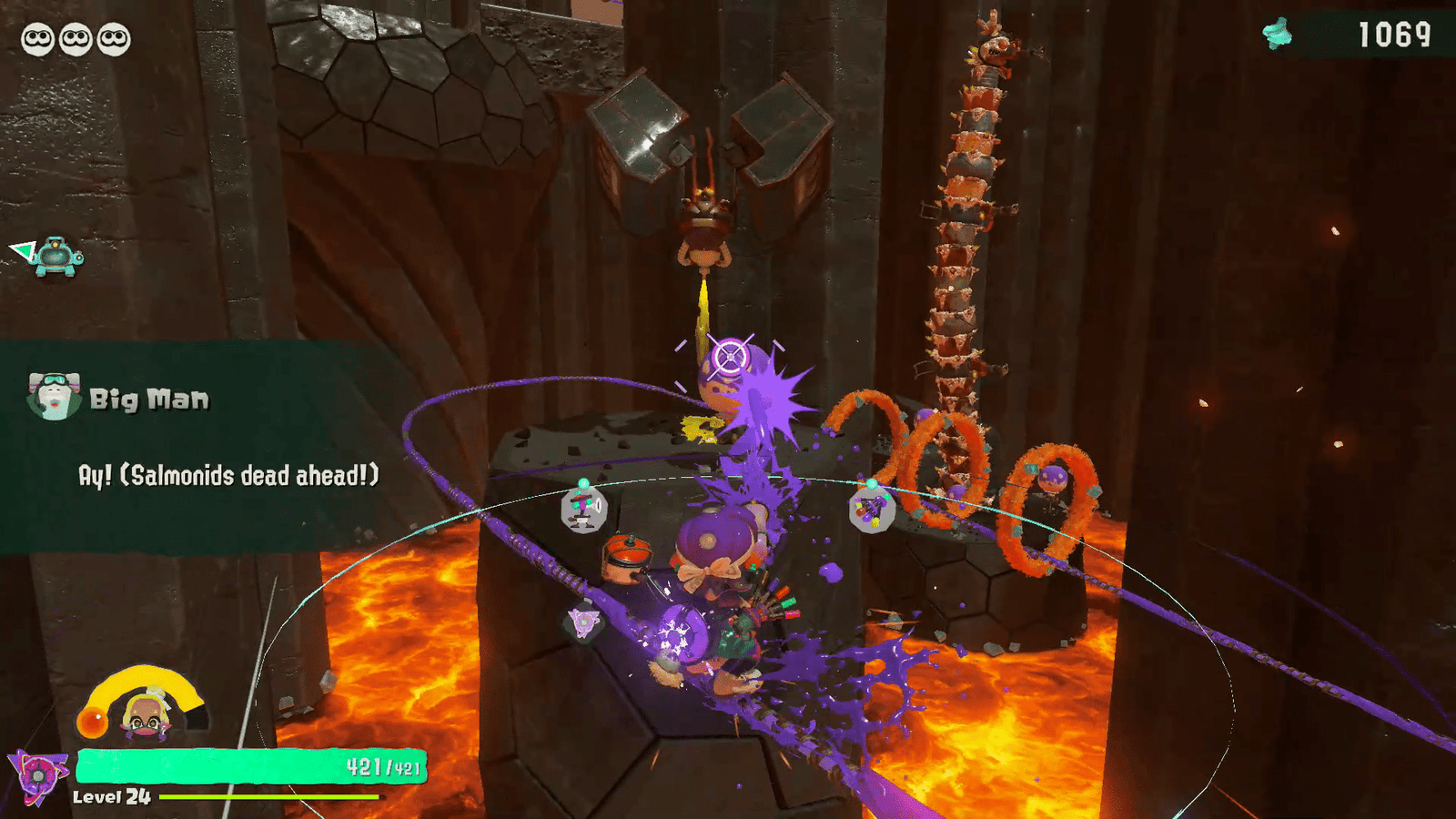
Even though most missions revolve around defeating large numbers of Salmonids, there is enough variation in the objectives and layouts to keep the action moving. Players may be asked to mine valuable crafting materials, clear smaller combat zones, or defeat enormous bosses, with each scenario allowing some freedom in how it is approached.
Several stages also embrace Nintendo’s platforming roots through traversal sections and light puzzles. These sequences often double as tutorials for new gadgets, including the Power Fist and laser grids, without significantly interrupting the pace. What helps Splatoon Raiders stand out is that its active abilities and gadgets are not limited to turrets, throwable items, and area attacks. They can also give Inklings and Octolings new ways to move around the battlefield.
When combined with the distinct attack patterns of the different Salmonid types, combat becomes more involved than simply holding a position and firing the hardest-hitting weapon available. Knowing when to retreat and recover ink, or when to switch targets in a split second, is just as important as entering a raid with properly levelled and adjusted equipment.
The companion robot piloted by the player’s chosen Deep Cut member also provides useful support, including jump boosts and a destructive Showstopper ultimate ability. These additions preserve Splatoon’s emphasis on mobility while allowing its combat systems to operate within a more traditional action RPG framework.
The Ideal Looter Shooter for the Casual Crowd
Players looking to reach the credits before returning to Inkopolis for competitive multiplayer may not connect with Splatoon Raiders strongly enough to justify the purchase. However, Nintendo’s take on the genre may introduce more casual players to the action RPG loop of finding better weapons and upgrades before using them to challenge increasingly powerful enemies.
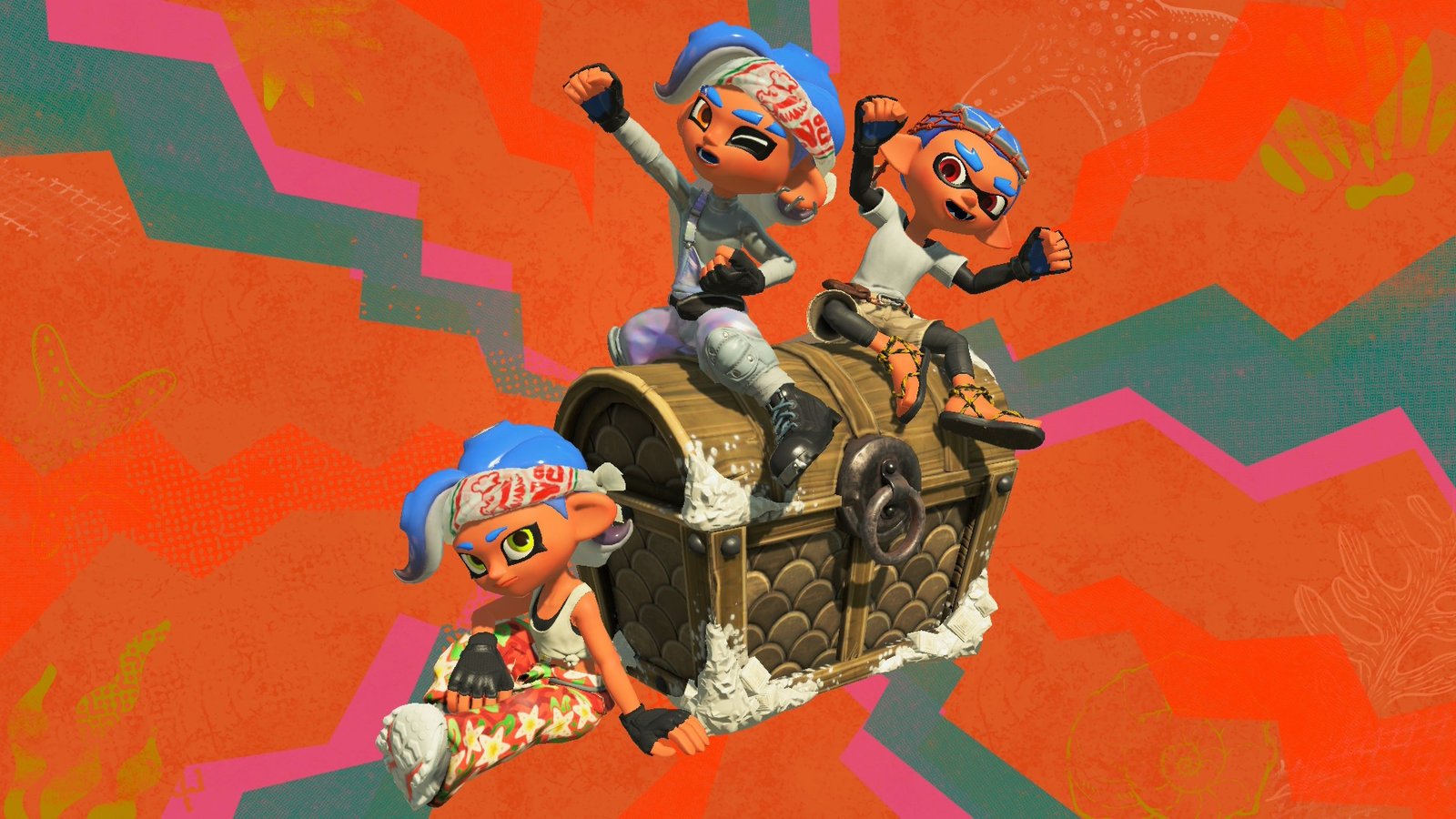
Its lean structure offers a more relaxed playground for experimentation and controlled chaos than many of its larger contemporaries. It is, quite simply, an excellent lunch-break game. Co-op is where Splatoon Raiders loses some of its lustre. Enemies inevitably become more durable, which is understandable when several players are attacking them at once. However, mixed-level groups can feel as though encounters have been calibrated around the strongest participant, leaving less-developed players struggling to contribute.
Outside of private rooms and arranged groups, players also have limited control over who joins them. This can lead to uneven sessions, particularly when trying to clear a specific raid rather than simply collecting resources or helping another player.
The endgame missions, including the endless dungeon, are where teaming up begins to make the most sense. At that stage, the additional firepower and support offered by other players can help overcome the increasingly demanding encounters.
While Splatoon Raiders is not a system seller with universal appeal, it represents a surprisingly confident first step into a subgenre that few would have expected Nintendo to tackle. More importantly, it preserves the strengths of the main series while presenting them in a tighter package that often feels more polished and consistent than its predecessors. That is no small achievement for an offbeat first attempt at expanding the limits of the Splatoon IP, and it bodes well for an inky but bright future.
Splatoon Raiders is available now on Nintendo Switch 2.
SavePoint Score
Summary
Splatoon Raiders is yet another surprising first-party addition to the Nintendo Switch 2’s catalogue. Its mission-based hunt for gold and power might not be for everyone, but Nintendo’s first step into the looter shooter space is confident and robust.
