

Table of Contents
Control Resonant on PS5 Pro
There is an obvious version of a Control sequel that Remedy Entertainment could have made. Jesse Faden would return to the Oldest House with the Service Weapon in hand, another supernatural threat would tear through its shifting halls, and players would once again fling office furniture at anyone unfortunate enough to get in the way. Control Resonant rejects that safety almost completely.
Jesse’s brother Dylan steps into the lead, the Oldest House gives way to a Manhattan being reshaped by the phenomenon known as the Patterning, and gunplay is displaced by an aggressive melee system built around a shapeshifting weapon called the Aberrant. Remedy has not simply expanded the original game’s mechanics; it has dismantled much of its familiar structure and rebuilt the series as a broader action RPG.
That makes Control Resonant fascinating even before reality begins folding in on itself. Not every addition reaches its full potential, especially once combat settles into a reliable routine, but Remedy understands the universe’s identity was never limited to one protagonist, weapon, or building. It lies in the urge to walk towards something you cannot possibly explain.
A Different Faden Takes Control

Dylan is an inspired choice of protagonist in Control Resonant precisely because he is not a replacement for Jesse. Where the first game’s heroine entered the Federal Bureau of Control searching for her brother and gradually claimed authority over an organisation built on secrets, Dylan has already been imprisoned, manipulated and changed by the forces surrounding it. His innate connection to the Hiss gives him a more intimate relationship with the paranatural threat consuming Manhattan, while his struggle to preserve his humanity adds an immediate vulnerability beneath all that destructive power.
The story uses those differences to develop Dylan as more than the damaged man who once waited at the end of Jesse’s search. He is compelling as a parallel to his sister, and their shared history gives returning players an emotional path through the new setting without leaving him trapped beneath her shadow. Jesse’s presence carries actual narrative value rather than functioning as an exercise in fan service, strengthening Dylan’s journey while allowing him to remain its centre.
His relationships with other characters, particularly his handler Zoe and other FBC-related personnel, offer an interesting lens into the increasingly complex universe Remedy is building, with Control Resonant being the latest addition. It all works in getting players even more excited and intrigued to unearth everything that is going on.
Remedy also strikes a smart balance with the campaign’s urgency. Manhattan is facing a crisis, characters have clear reasons to keep moving, and the central mystery provides enough momentum to pull players through a story that takes more than 30 hours to complete. Yet the structure of Control Resonant rarely makes wandering away from the next objective feel irresponsible. The urgency is present, but the pace ultimately belongs to the player, which is vital when so much of the game’s personality exists beyond the critical path.
That freedom occasionally loosens the larger narrative’s grip, though it remains structurally sound. Its effectiveness depends partly on a willingness to explore and connect discoveries, as much of Remedy’s worldbuilding sits in places that can be overlooked. Dylan nevertheless offers a sufficiently different perspective to make returning to this universe feel purposeful.
Welcome to Manhattan, Please Ignore Reality
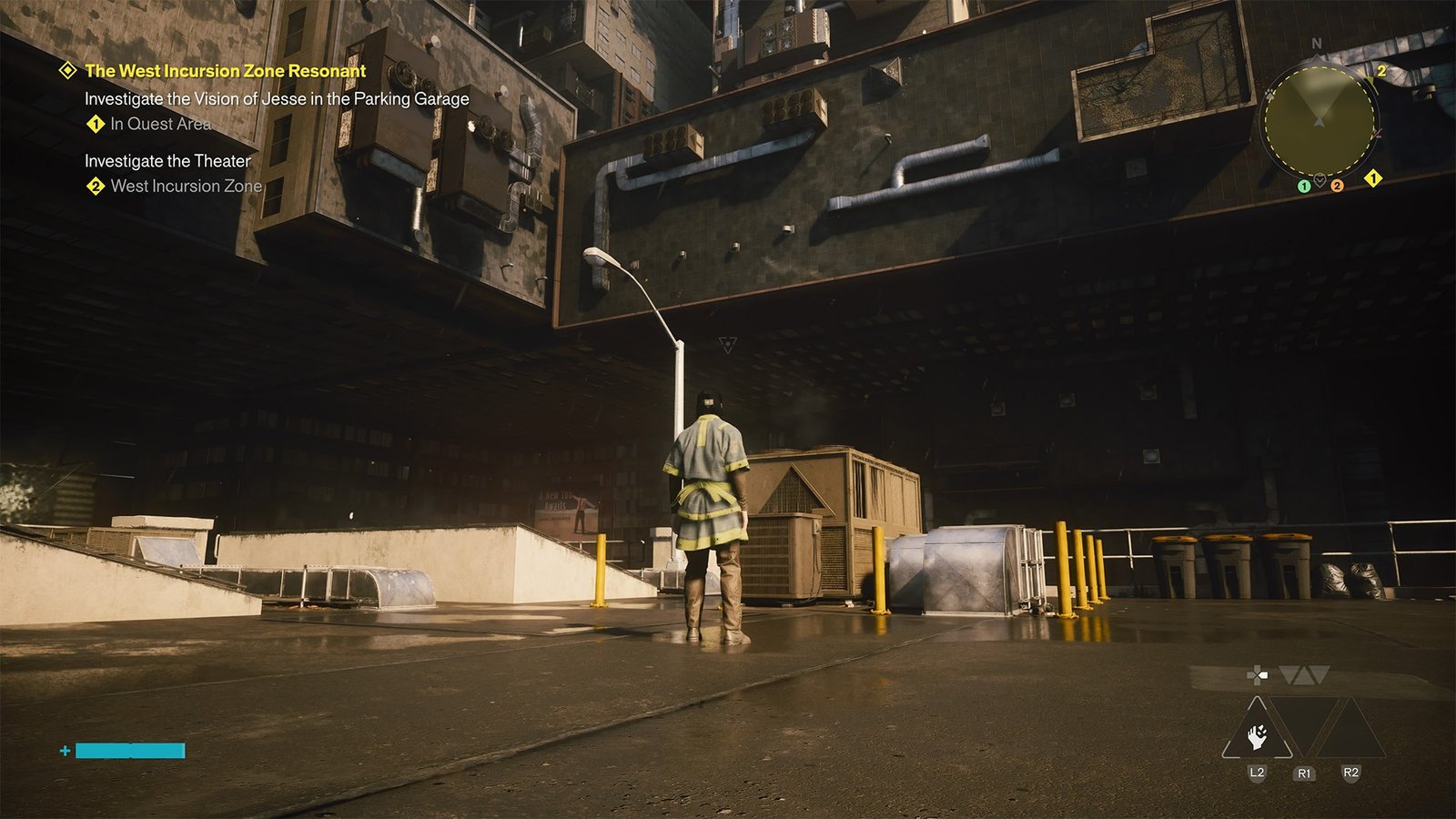
Manhattan is the real star of Control Resonant. The Patterning has twisted it into large zones where buildings lean at impossible angles, familiar streets lead to surreal intrusions, and gravity feels more like a suggestion. These distortions aren’t mere decoration; they shape exploration, gate placement, and turn every new traversal ability into another way to interpret the city.
Discovering Dimensional Faults and strengthening Dylan’s connection with Jesse gradually opens those possibilities. Lopsided surfaces become routes, distant anchor points provide vertical movement, and apparent scenery reveals hidden paths. Progression does more than make Dylan stronger; it makes Manhattan more legible, encouraging players to revisit places with a better understanding of what its broken geometry permits.
Navigation is not effortless in Control Resonant. The map can be confusing while players learn how spaces connect, and the limited number of Fast Travel Doors makes poor route planning more noticeable. Abilities alleviate some friction, and familiarity teaches you to read the Patterning, but enticing destinations can still feel easier to see than reach.
Curiosity is almost always rewarded, however. Files, permanent health and power upgrades, Dylan’s quirky sketches and other discoveries provide mechanical or narrative reasons to inspect the edges of each zone. More importantly, exploration leads to optional stories that remind you why you should never trust ordinary objects in a Remedy game.
One quest centres on a murderous karaoke machine, with Dylan required to sing the correct lyrics to save those caught in its influence. Another sends players searching for the components of a full speaker system, combining exploration and puzzle-solving before introducing a decision with genuine stakes. Not every diversion lands with the same impact in Control Resonant, but the strongest are funny, unsettling and surprisingly consequential, rather than variations of following a marker and clearing another group of enemies.
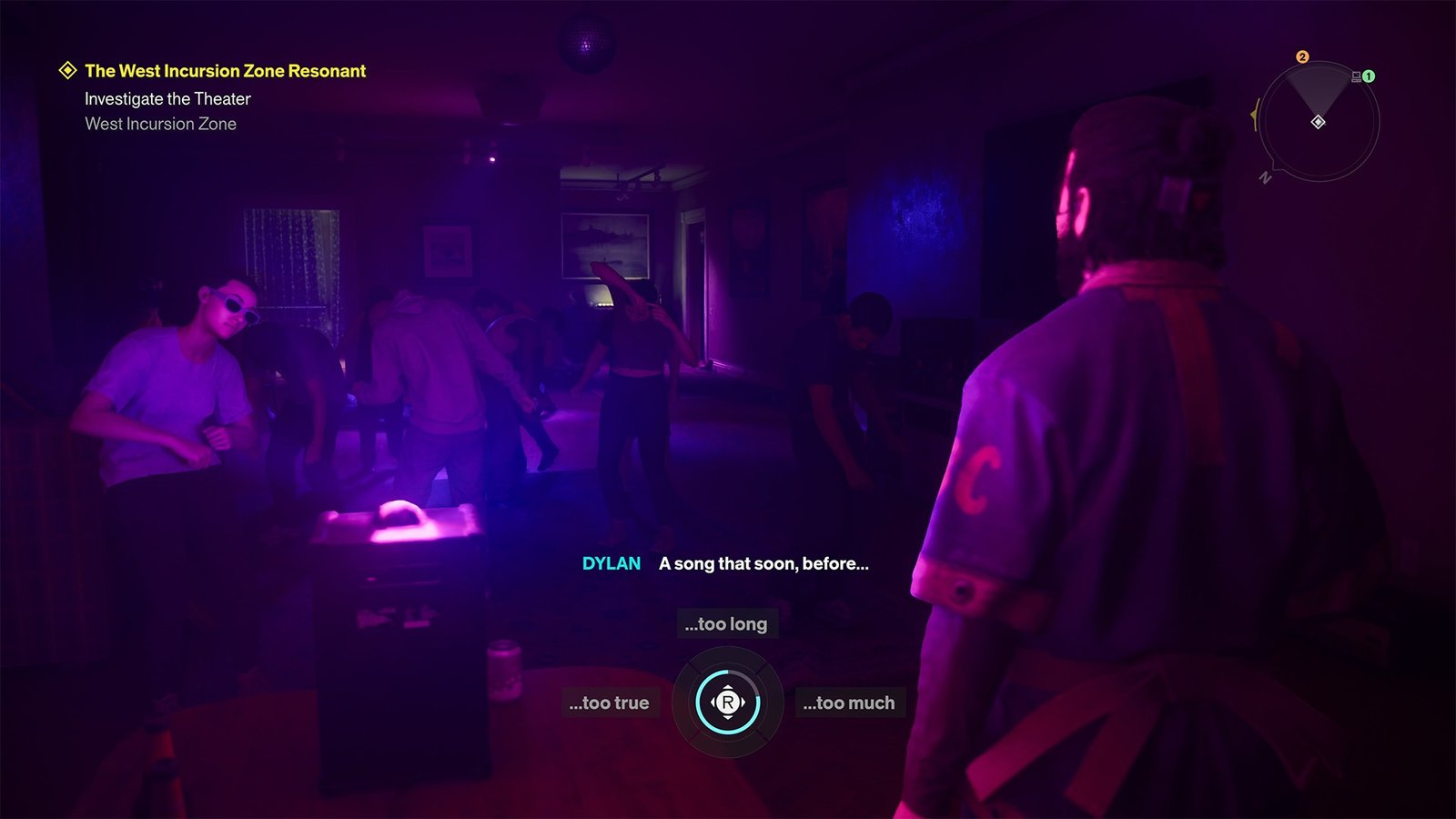
The same imagination extends to Manhattan’s inhabitants. A bus overflowing with Hiss is absurd in exactly the right way, while hulking Mold monsters look fluffy and horrifying at once. Even vending machines become elusive targets that spew valuable items when you hunt them down. Players rushing through the campaign will miss much of what makes the world special. Completionists could spend more than 50 hours here, but the value lies in never knowing what weirdness the next detour contains.
Building Your Own Dylan
Exploration feeds a progression system that pushes Control Resonant further into action-RPG territory. Rather than earning XP by just defeating the Hiss, the hero’s progress is tied to making inroads in each part of Manhattan. Finding discoveries, completing side quests, clearing areas, almost everything of consequence contributes to earning area XP. Hit a threshold, and you start gaining additional bonuses such as increased health drops, map markers, and the most vital of them all: talent points to improve the protagonist.
Dylan’s skill trees contain enough divergent paths to support meaningfully different approaches, while abilities, Artifacts, and Aberrant configurations add room to specialise. Even when you’re trying to do everything, loadouts ensure the choices you bring into battle still matter. My own preference changed as the campaign progressed.
The Aberrant’s rapid slicing Strike form was immediately satisfying, but the Glaive eventually became the more reliable choice for controlling groups and creating breathing room. Abilities add another layer of customisation, though Fire, Ignite, and Burning effects proved especially efficient in my build. Another player could lean into a completely different combination of Secondary Forms, Combo Finishers, Talents, and abilities, and being able to reset all invested upgrades and the ease of switching loadouts makes experimentation inviting rather than punitive.
Upgrading the Aberrant and Dylan’s abilities raises their combined Power Level, which you can compare with the number beside an enemy’s health bar. Meeting or exceeding it makes fights more manageable, while confronting a powerful Resonant early effectively creates a harder encounter. It connects exploration, growth and challenge without drowning players in calculations when enjoying the world of Control Resonant.

The Gap is an even better example of Remedy’s approach. What could have been a conventional menu is instead presented as a mindspace that Dylan can enter to unlock upgrades, manage builds, craft Artifacts and encounter additional story material. It is an extravagance in the best sense: a functional system turned into another piece of characterisation, because Remedy rarely accepts that administration has to sit outside its fiction.
This depth makes refining Dylan compelling, though it creates expectations encounters don’t always meet. Control Resonant offers plenty of ways to build and fight, but fewer reasons to abandon an effective combination once you find it.
Paranatural Violence Becomes Routine
Combat makes a formidable first impression. The Aberrant shifts between distinct forms, Dylan’s powers create opportunities to control space, and the combined effects of melee attacks, projectiles and environmental destruction fill encounters with motion. Building towards an execution or increased damage by applying Falter gives fights an aggressive rhythm, while new paranatural abilities earned from defeating Resonants continually expand the available toolkit.
The issue emerges over time. Once a dependable combination is established, many encounters in Control Resonant follow the same flow: stack Falter, execute the target, move on and repeat. Experimenting remains entertaining, but the game rarely pressures a successful player to reconsider. Mechanical variety exists; mechanical necessity is less reliable.
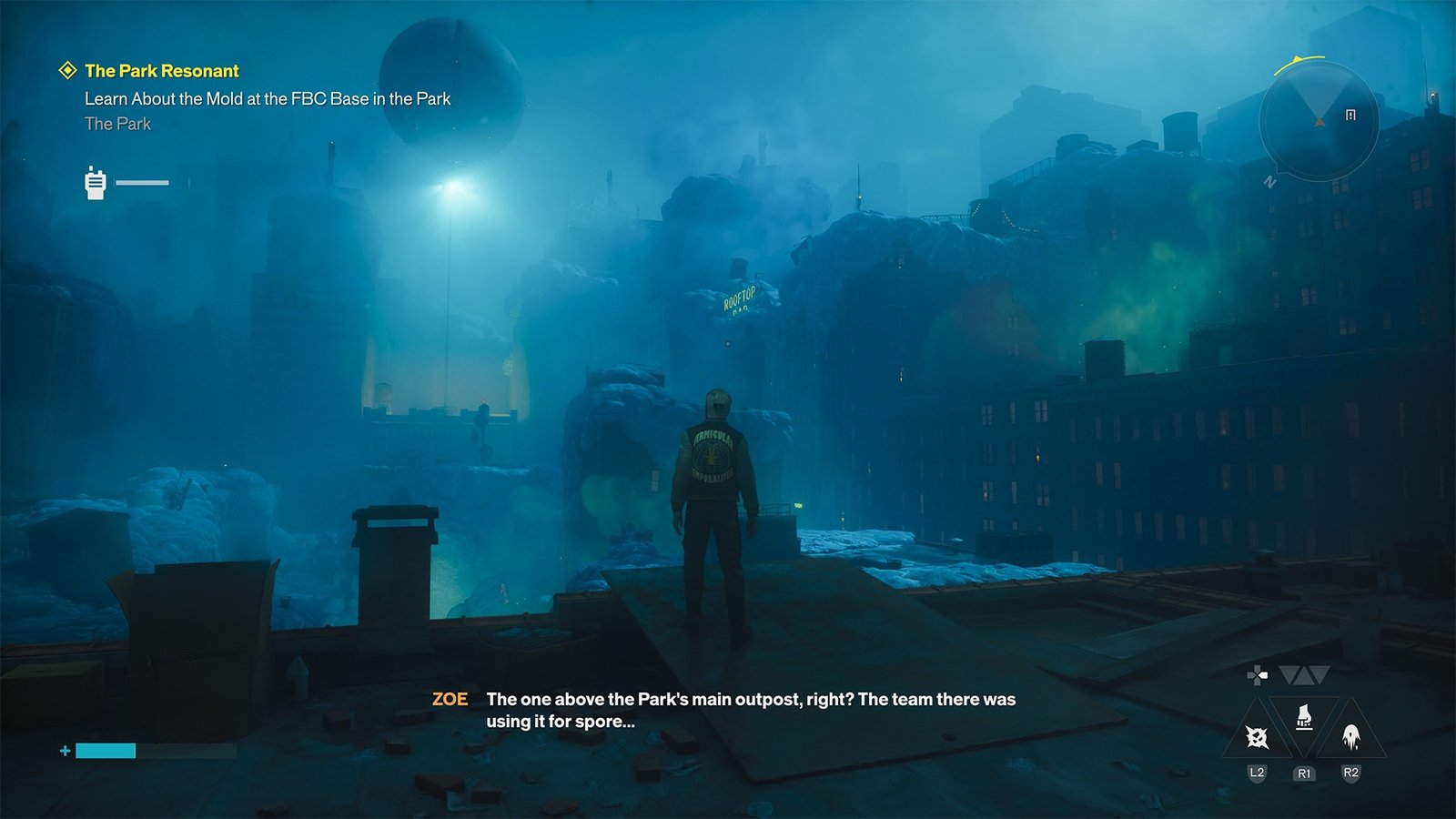
Aerial combat best illustrates the gap between possibility and practicality. Dylan can close distance and engage enemies above ground, yet the flow frequently draws him back to street level. Some actions require him to land, and familiar combinations are often more efficient than wrestling with the additional spatial demands. Aerial options broaden the spectacle without becoming as transformative as the vertical environments suggest.
Enemy designs in Control Resonant keep things from getting stale, though fresh silhouettes don’t always require fresh solutions. Combat remains responsive and enjoyable, but it becomes more predictable than its wealth of systems initially promises.
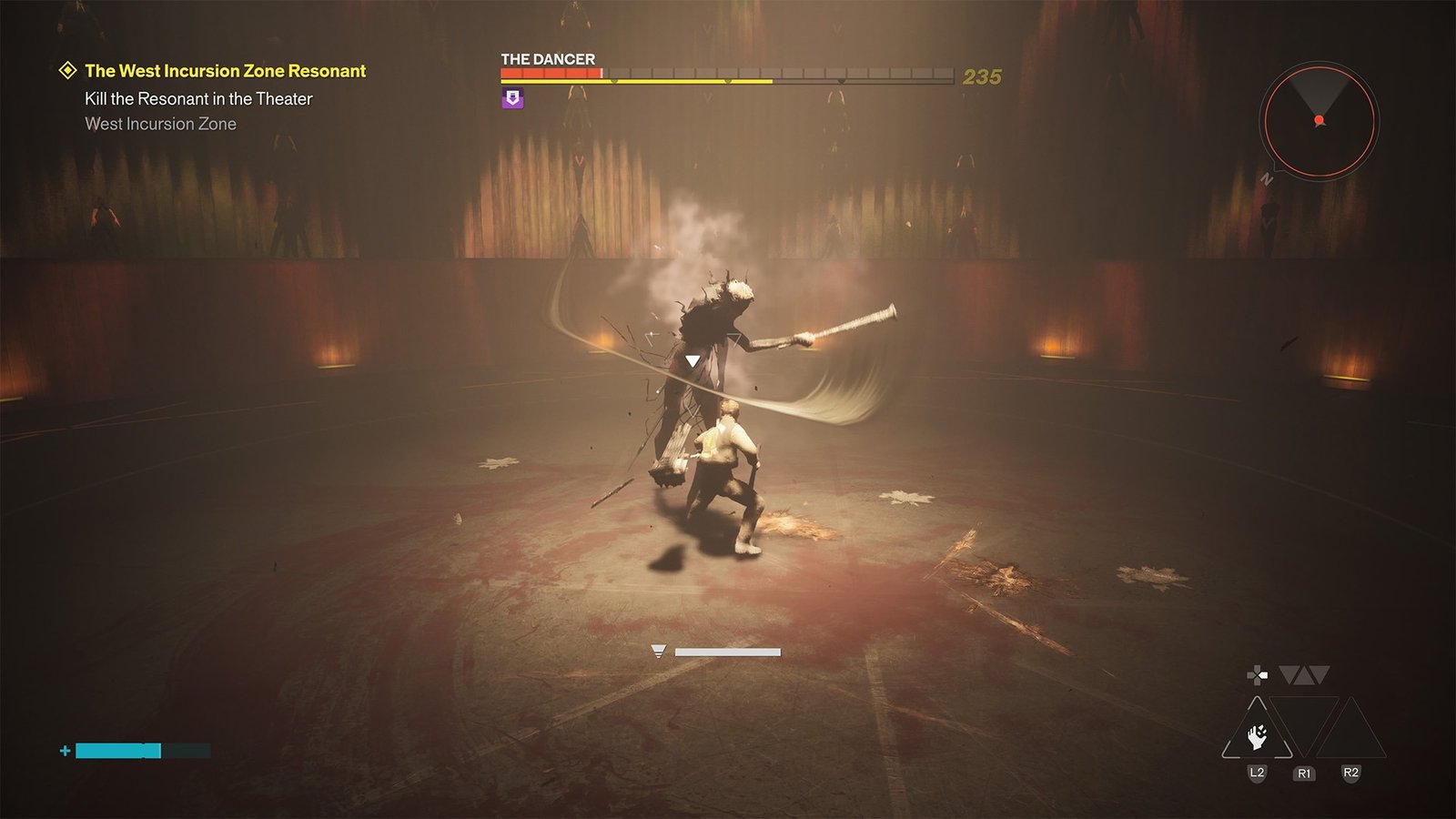
Boss fights share that inconsistency. The Resonants often possess strong designs and interesting mechanics, and defeating them matters because each victory grants another paranatural combat ability. Optional encounters can be especially tense when tackled before Dylan is properly prepared, turning a player’s appetite for exploration into a self-imposed difficulty choice.
Some of these fights evolve meaningfully as they progress, transforming the arena or introducing new demands that test more of Dylan’s repertoire. Others reveal their full idea early and then repeat it until the health bar is exhausted. The weaker examples are not disastrous, but they reinforce the sense that Control Resonant sometimes has more combat ideas than it knows how to sustain.
Assist Mode can reshape the experience, but the base difficulty provides sufficient challenge. Preparation matters against higher-level targets, and carelessness remains punishable even after a preferred build comes together.
Finding Control in the Chaos
The presentation makes every impossible corner of Manhattan worth seeing. Played on PS5 Pro in Balanced mode, which targets 40fps at 2160p with ray tracing on a compatible 120Hz display, Control Resonant remained solid and stable throughout. That consistency is especially welcome when the art direction depends so heavily on distorted architecture, unusual lighting, and environments shifting around Dylan.
Sound design is just as important to selling the collapse of reality. Otherworldly forces arrive with tremendous sonic weight, and the audio makes spaces feel unstable even before their strangest elements come into view. Certain sequences use songs and musical arrangements to excellent effect, although none quite reaches the iconic heights of Alan Wake 2‘s most celebrated musical performance. They do not need to; the score and soundscape serve Dylan’s journey rather than chasing a moment that worked for another game.
That confidence defines Control Resonant at its best. Remedy has taken a considerable risk by changing its protagonist, setting and combat foundation, yet the sequel remains unmistakably connected to what came before. Its greatest weakness is almost ironic: for all the flexibility built into Dylan’s abilities and the Aberrant, fighting the impossible eventually becomes routine.
Manhattan never does. Its side stories invite curiosity, its broken geometry turns movement into discovery, and its most mundane objects can become threats, punchlines or both. Control Resonant gives Dylan an enormous arsenal to survive the end of reality, but its finest achievement is ensuring players will always want to see what reality throws at him next. Remedy has changed almost everything around Control, only to prove that weirdness was its most important weapon all along.
Control Resonant launches digitally on September 24 for PlayStation 5, Xbox Series X|S and PC.
SavePoint Score
Summary
Control Resonant transforms Manhattan into an irresistible paranatural playground, pairing rewarding exploration with expressive buildcrafting. Repetitive combat loops and uneven encounters hold it back, but Remedy’s strange storytelling remains difficult to resist.
