

Table of Contents
Crimson Moon on PS5 Pro
There is something inherently appealing about being an angelic warrior sent to cleanse a city of demons, especially when the solution involves excessive bloodshed. Throw in gothic architecture, grotesque monsters, and powerful supernatural abilities, and you get plenty of potential for an entertaining power fantasy. Thatis exactly what ProbablyMonsters is banking on with Crimson Moon, a compact action RPG that blends Soulslike combat with roguelite progression.
Rather than sprawling environments and elaborate questlines, the focus is on repeated excursions into the cursed city of Gildenarch, growing stronger with each successful outing as you carve through anything unfortunate enough to stand in the way. The premise is straightforward, and it largely works thanks to enjoyable combat and an accessible progression system. However, the longer this holy crusade continues, the more apparent it becomes that even divine intervention cannot entirely overcome repetition.
Divine Retribution Never Looked So Brutal
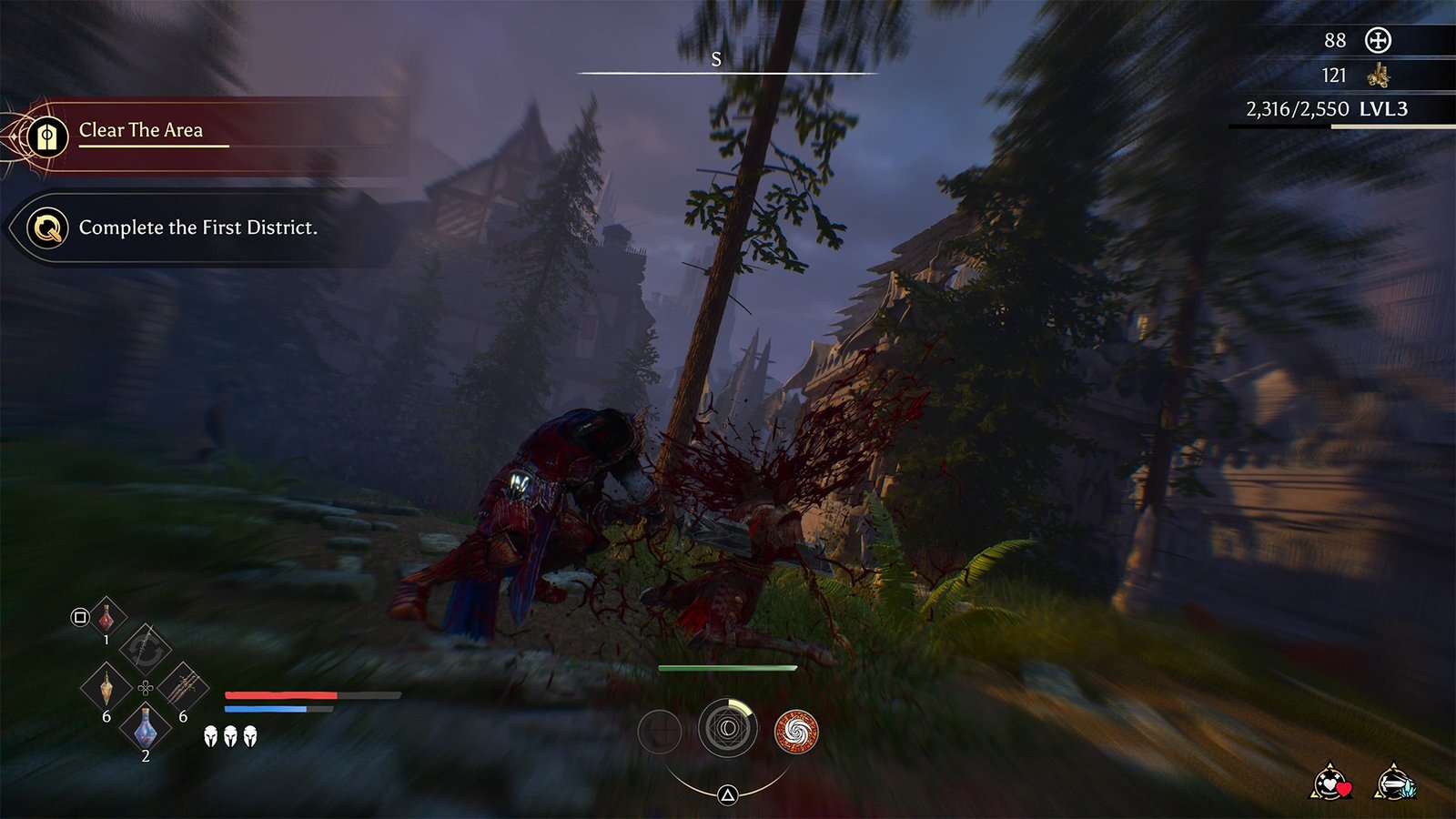
As a Nephilim, a hybrid of human and angel serving the Order of the Crimson Moon, players are tasked with reclaiming Gildenarch from the Infernal Legion and the various horrors that have taken residence within its walls. That means plenty of encounters with undead soldiers, vampires and other abominations, all eager to cut the adventure short.
Combat follows a familiar Soulslike template, with light and heavy attacks, dodging, blocking and parrying forming the foundation of every encounter. It emphasises recognising enemy patterns and choosing when to attack rather than recklessly charging into battle, though the relatively brisk pacing makes the experience more immediately approachable than some of its inspirations.
The real appeal of Crimson Moon comes from its sheer brutality. Successful engagements can culminate in gruesome executions, while different weapons and their associated abilities provide opportunities to experiment with offensive approaches. The Nephilim’s angelic transformation is another highlight, temporarily granting overwhelming power and turning particularly troublesome encounters into opportunities for spectacular retaliation.
The relationship between careful combat and explosive displays of strength is genuinely satisfying, especially when a well-timed parry creates an opening to finish off a dangerous opponent. Yet the mechanics don’t always deliver the consistency this style of gameplay demands. Attack commitment can occasionally feel restrictive, while unreliable camera positioning, especially against larger enemies or near environmental obstacles, can undermine otherwise manageable encounters.
These shortcomings become more noticeable as the action repeats, especially when familiar execution animations and enemy behaviours lose impact. Crimson Moon certainly knows how to make violence entertaining, but its combat system could have benefited from more refinement and a broader range of encounters to match its flashy presentation.
Progression Gives the Crusade Purpose
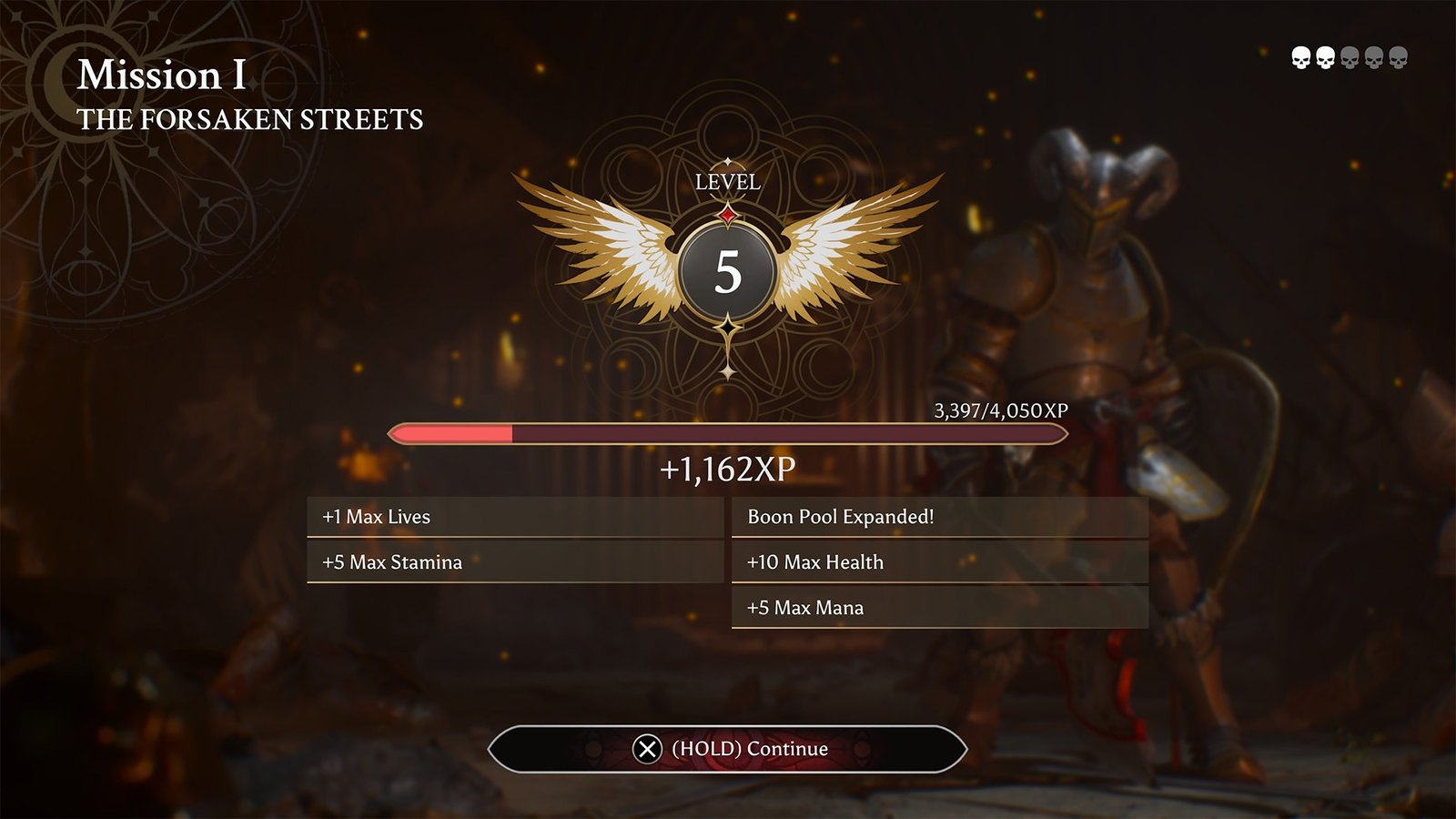
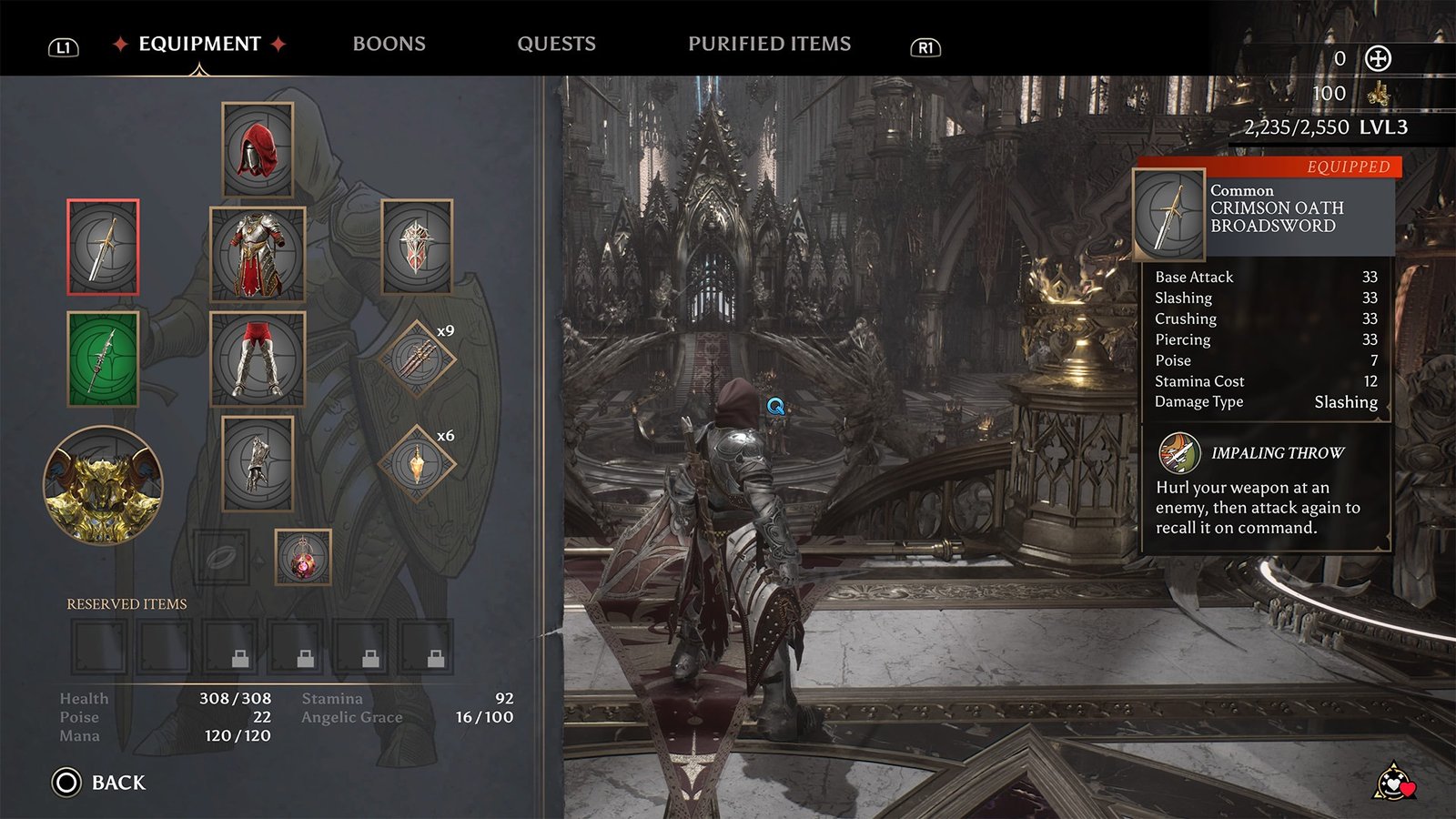
Instead of following a traditional linear adventure, Crimson Moon structures its progression around repeated missions launched from the Church, the central hub. From here, players prepare their equipment, access upgrades and venture into the city’s districts to confront increasingly dangerous threats.
Each expedition offers chances to find new weapons, armour, and equipment, along with temporary boons that shape how a run plays out. Combining different weapon effects and passive bonuses offers some welcome flexibility, allowing players to lean towards particular strengths or adapt to whatever equipment becomes available.
Importantly, progress isn’t entirely lost after a failed attempt. Permanent upgrades and retained equipment provide forward momentum, making subsequent incursions more manageable while giving players something tangible to work toward. Adjustable difficulty settings also help broaden the appeal, with tougher challenges offering more valuable rewards for those confident enough to pursue them.
This arrangement makes Crimson Moon easier to approach in shorter sessions, especially for players who enjoy the fundamentals of Soulslike combat without wanting to commit to a sprawling adventure. It also offers two-player co-op, adding a welcome social element as enemies and challenges scale to accommodate an additional Nephilim.
Unfortunately, this structure also exposes one of the game’s biggest limitations. Despite the build variety, the objectives and encounters rarely evolve enough to make each expedition feel genuinely distinct. Repeatedly clearing enemies, moving through familiar locations, and confronting bosses can eventually feel more like a routine than an exciting challenge.
Even with increasingly powerful equipment and the occasional satisfying ability combination, the underlying gameplay struggles to offer enough surprises. Progression remains rewarding in Crimson Moon, but there is a difference between wanting to replay a mission because it is genuinely compelling and doing so mainly because a better piece of equipment might be waiting at the end.
A Beautiful World That Needs More Life
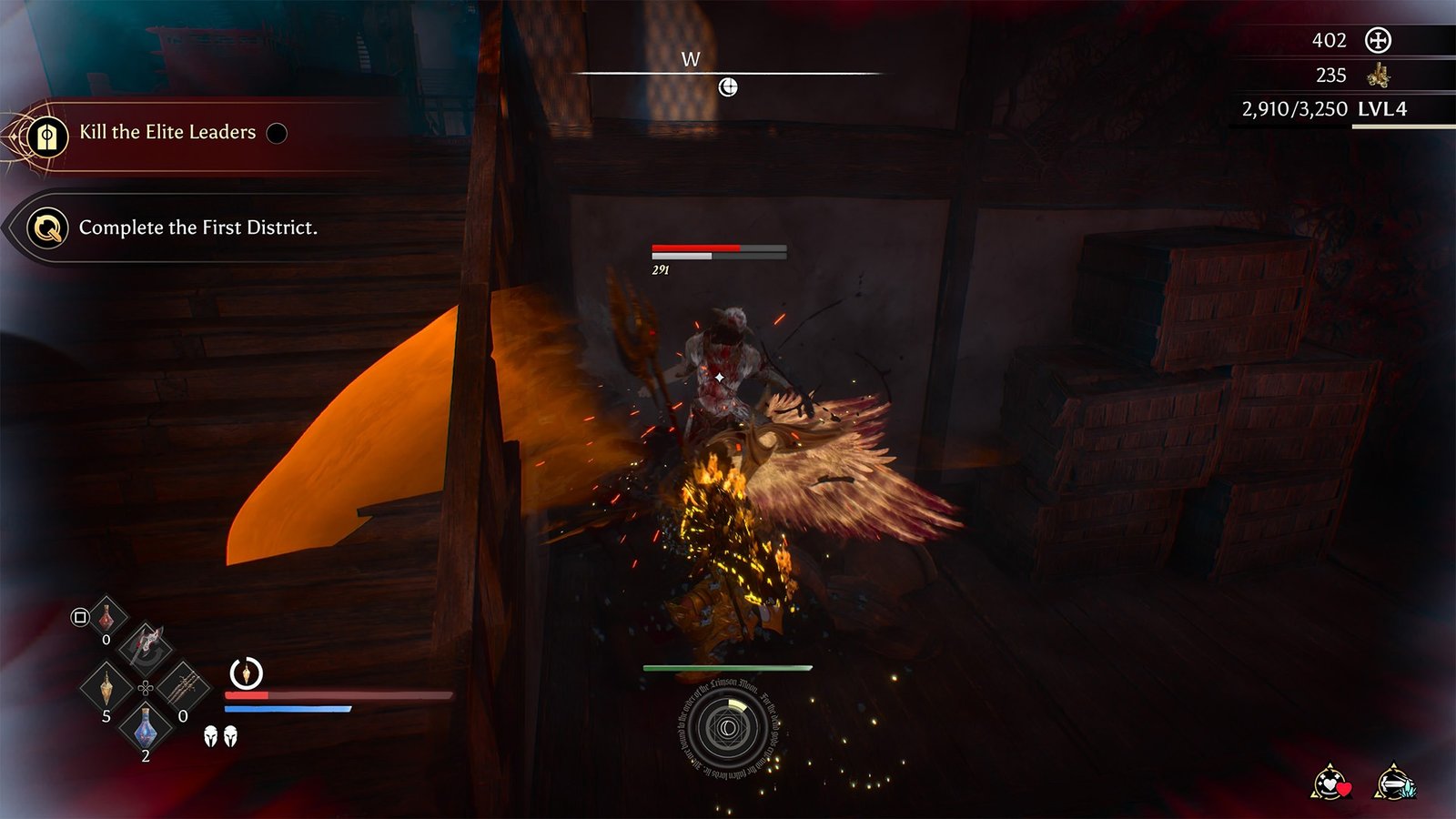
Crimson Moon makes a stronger impression through its presentation. Gildenarch is an attractive interpretation of gothic fantasy, filled with imposing architecture, decaying streets and environments corrupted by supernatural forces. The juxtaposition of religious imagery and grotesque monstrosities gives the adventure a distinct visual character, reinforced by elaborate equipment designs and the imposing appearance of its enemies.
The soundtrack deserves particular attention, combining orchestral and choral arrangements with heavier metal influences that complement the game’s aggressive combat. It is an effective mix that sells the fantasy of an angelic warrior waging war against an overwhelming demonic threat.
Sadly, the world of Crimson Moon is not quite as compelling as its appearance suggests. While the broader conflict between humanity, angels and demons provides sufficient motivation for the action, the narrative rarely develops beyond that initial premise. Characters largely serve functional roles, and the various missions offer little opportunity to invest in Gildenarch’s history or the consequences of reclaiming it.
Environmental variety is another issue. For all its impressive imagery, revisiting similar locations and encountering familiar opponents gradually diminishes the atmosphere. This is particularly unfortunate for a game built around repeated excursions, where a greater sense of discovery could have helped sustain interest beyond the pursuit of better equipment.
Not Quite a Heavenly Experience
Crimson Moon has an entertaining foundation. Its accessible blend of Soulslike combat and roguelite progression offers a satisfying alternative to more demanding adventures, while the gothic presentation and energetic soundtrack make its violent excursions considerably more appealing.
Tackling Gildenarch with a friend adds value, though the experience also works well for solo players. Its comparatively modest scope also works in its favour, offering something you can enjoy in manageable sessions rather than an enormous time investment.
Nevertheless, the repetitive mission structure, limited encounter variety, and occasional mechanical frustrations keep the experience from becoming truly exceptional. The combat remains enjoyable, but its strongest qualities aren’t quite enough to hide how familiar things get once the initial excitement subsides.
For those seeking an accessible, satisfyingly bloody action RPG, Crimson Moon offers enough to make the journey worthwhile, especially at its modest asking price. There is certainly potential for something greater here, provided ProbablyMonsters can build upon the existing foundation with more variety and refinement. For now, this crusade delivers plenty of divine punishment, even if the journey to salvation feels a little too familiar.
Crimson Moon is available now on PlayStation 5, Xbox Series X|S, and PC.
SavePoint Score
Summary
Crimson Moon combines visceral combat, rewarding equipment progression and striking gothic presentation into an enjoyable action RPG. However, repetitive encounters, inconsistent mechanics, and limited variety keep its promising blend of Soulslike and roguelite ideas from fully flourishing.
