

Table of Contents
Dosa Divas on PC
Dosa Divas: One Last Meal makes an immediate impression by knowing exactly how it wants to present itself. Its world is bright, expressive, and full of texture, with every character design, environment, and animation choice working together to create something that feels distinctive from the moment it begins.
Its presentation has a boldness that goes beyond mere colour. It feels lived in, shaped by memory, tradition, and personality, rather than assembled to fit a familiar role-playing template.
That confidence from Outerloop Games and Outersloth carries the game far. The town of Meyndish isn’t built to overwhelm with its size, but it doesn’t need to. What matters more is how clearly each location communicates its own atmosphere. Villages, roads, and encounters all have a distinct energy, giving the journey a rhythm that feels warm and inviting even as the story becomes more reflective. Dosa Divas understands that a small world can still feel rich when every part of it has purpose.
Much of that purpose is tied to food, not merely as a visual motif, but as something central to the game’s identity. Food here is culture, connection, labour, and memory all at once. That gives the adventure a stronger emotional foundation than many games with bigger budgets and broader ambitions. Rather than treating cuisine as a quirky aesthetic hook, Dosa Divas builds its world around the idea that what people cook, share, and protect says something meaningful about who they are.
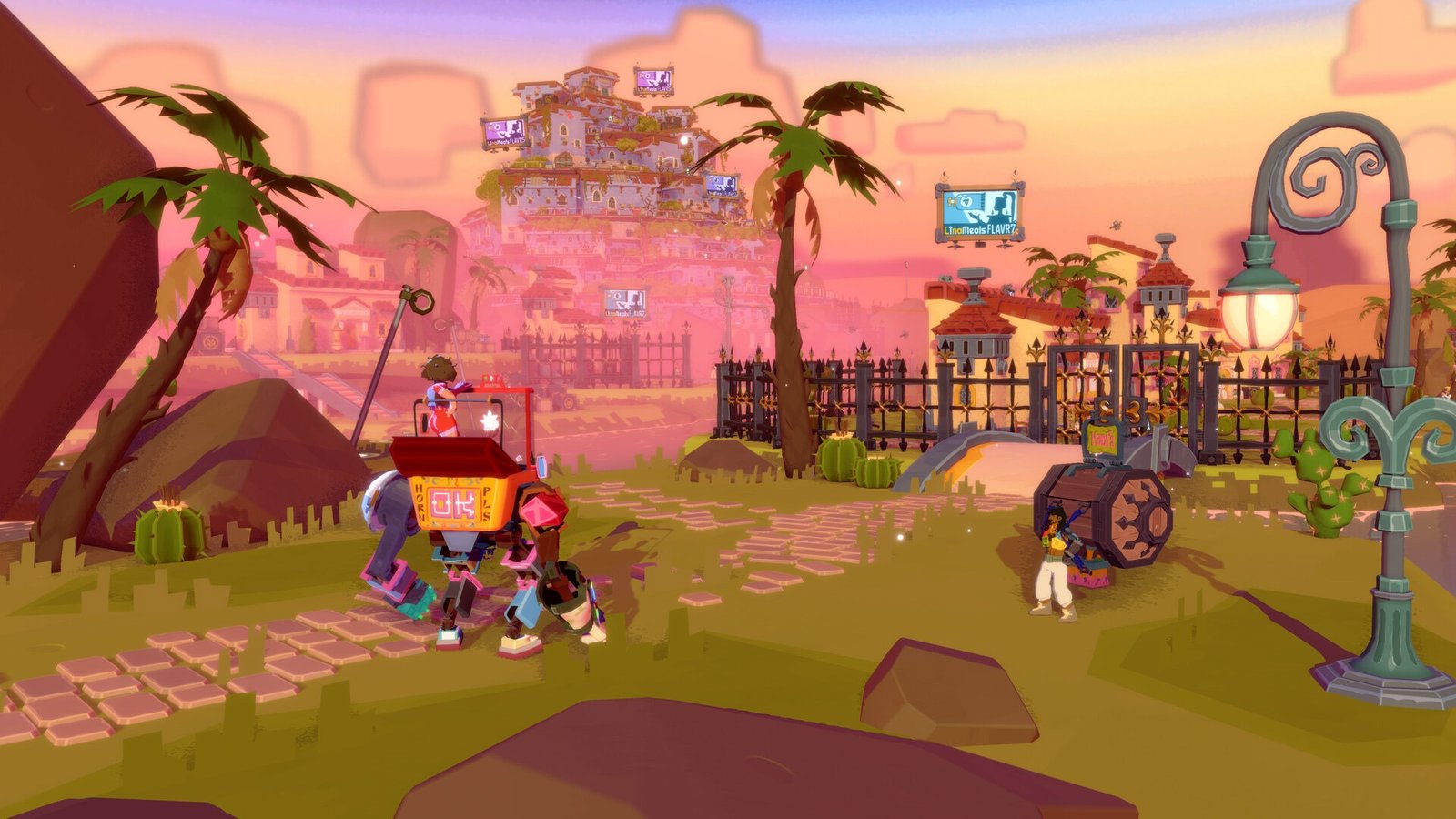
That approach gives the game a warmth that is hard to fake. Even before the story fully settles in, there is a clear sense that this is a journey interested in people first. The giant mech, the playful satire, and the lively road trip structure help keep the tone buoyant, but the heart of the experience comes from how naturally the world ties community and care together. It is a setting that invites you in quickly and, more importantly, gives you reasons to stay.
Family Tension Gives The Story Its Bite
For all its flamboyant style, Dosa Divas is most effective when it narrows its focus to the relationship at its centre. Samara and Amani give the story its shape, and the game is at its best when it allows their bond to feel messy, strained, and unfinished. There is history between them that cannot be brushed aside with one heartfelt scene, and the writing wisely resists making their reconciliation too neat for too long.
That emotional friction gives the road trip structure real momentum. The larger conflict may involve an oppressive fast food empire and a wider struggle over cultural erasure, but the more compelling thread is the personal one. Dosa Divas is interested in what happens when people who once understood each other can no longer speak easily, and how grief, resentment, and disappointment can settle into the spaces where love used to sit more comfortably. That gives the game a tenderness that feels earned rather than sentimental.
The supporting cast also helps reinforce the world’s values without overwhelming the story. Characters you meet along the way often reflect the broader themes of memory, belonging, and restoration, underscoring the idea that food can be both practical and deeply symbolic. The game does a good job of making these interactions feel like part of the same emotional ecosystem, even when individual scenes are brief.

Where the narrative falters slightly is in how much it tries to hold within a relatively compact runtime. There are moments when the game reaches towards bigger mythic and thematic ideas without always giving them enough room to fully settle.
Some emotional beats land beautifully because the groundwork is strong, while others feel slightly rushed as the story moves towards its later turns. Even so, the sincerity at the core of the writing remains its greatest strength. Dosa Divas may not explore every thread as deeply as it could, but it knows what matters most, and that keeps the story grounded when it threatens to stretch too far.
Clever Ideas That Do Not Always Fully Develop
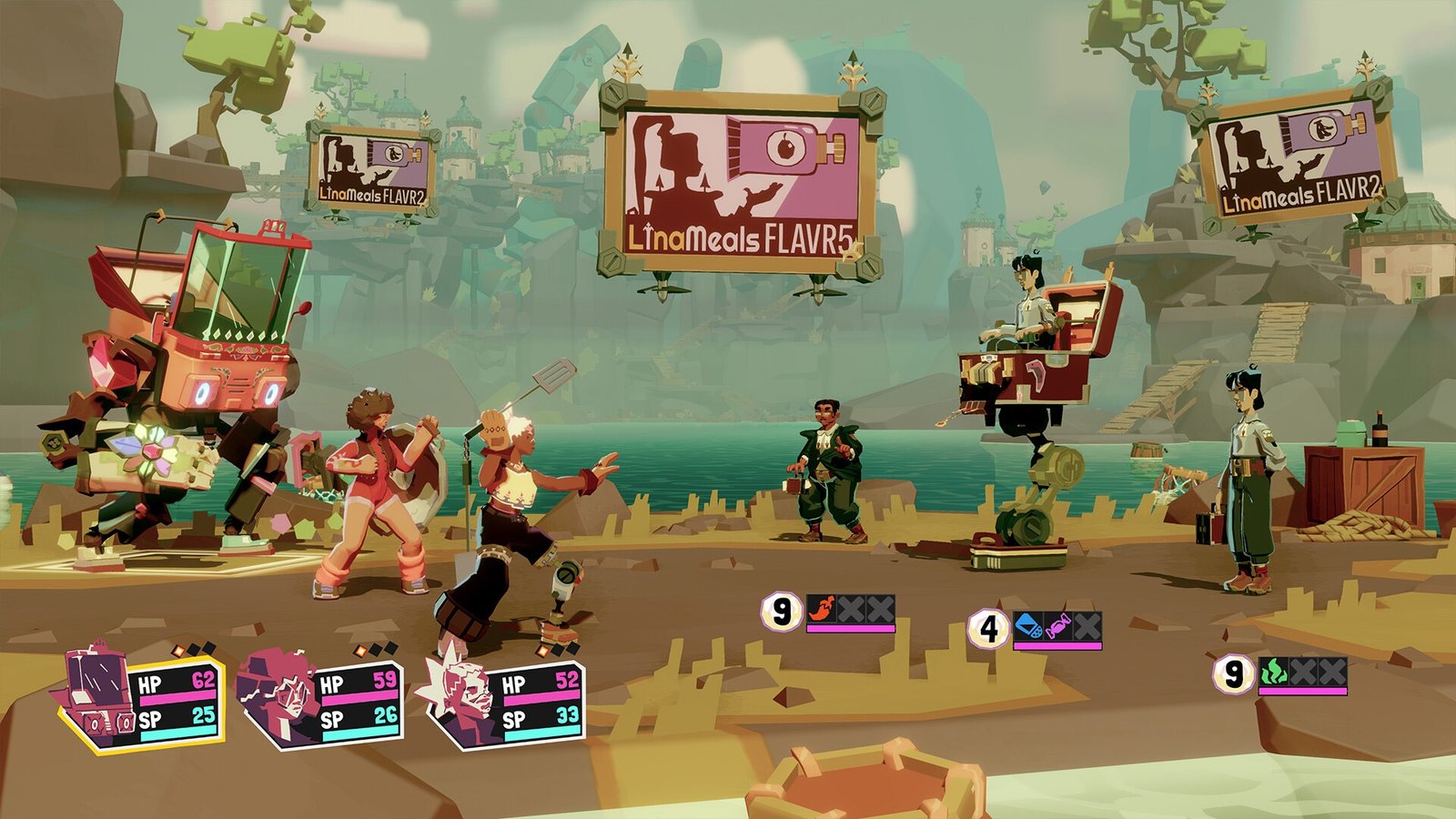
Mechanically, Dosa Divas has several smart ideas, especially in how its combat ties itself to the broader identity of the world. Battles use flavour-based interactions rather than more familiar elemental shorthand, and that alone helps the game feel more cohesive. Timed inputs add a bit of rhythm to attacks and defence, while enemy states and resource management provide just enough tactical structure to make early encounters engaging.
There is a satisfying snap to the combat in its best moments. Boss encounters in particular tend to make stronger use of the system, asking a little more of the player and letting the game’s timing-based elements breathe. The ideas are good, and more importantly, they feel like they belong in this world rather than existing as isolated mechanics. Dosa Divas deserves credit for that cohesion. It wants its systems and its identity to speak the same language, and often they do.
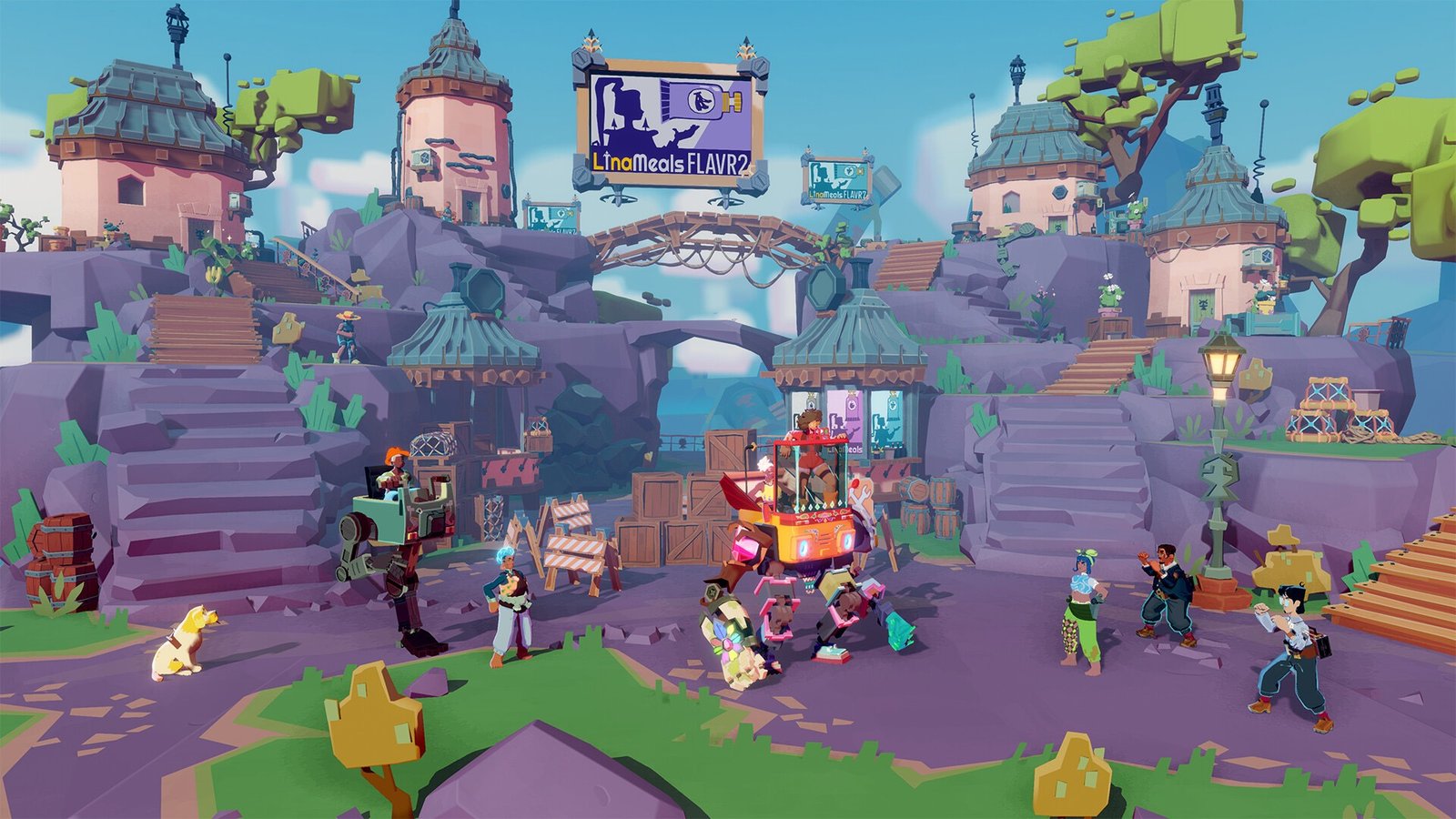
The problem is that the systems do not always live up to that early promise. Once the rhythm of battle becomes familiar, there is not enough added complexity to keep encounters feeling fresh all the way through. Player expression remains somewhat limited, and enemy variety does not consistently push the combat into new or more demanding territory. It remains enjoyable, but it does not quite evolve into something as rich as its premise suggests.
The same can be said for some of the side activities and progression hooks. Cooking, gathering, and helping communities all fit the tone beautifully, but they can start to feel repetitive once the novelty wears off. None of this breaks the experience, especially because the game is relatively concise, but it does create a lingering sense that Dosa Divas has stronger ideas than execution in a few key areas. You can see the fuller version of the game it could have been, which is both a compliment and a frustration.
Heart Carries It Through
Even with those limitations, Dosa Divas leaves a strong impression because of its complete identity. So many games chase scale, polish, or mechanical density in the hope that one of those qualities will substitute for personality. The game works the other way around. Its strongest ingredient is not depth or spectacle, but character. The art has confidence, the music has flavour, and the story has enough emotional honesty to make its rougher edges easier to accept.
There is also something refreshing about how modestly the game understands itself. It does not overstay its welcome, and it rarely feels bloated with unnecessary systems or distractions. That brevity means a few ideas feel underexplored, but it also helps preserve the warmth of the overall journey. Dosa Divas knows that what will linger is not just the structure of its combat or the efficiency of its progression. It is the feeling of reconnecting with people, places, and traditions that matter.
That is what makes it memorable. Not every mechanic reaches its full potential, but the spirit behind the game is clear from beginning to end. Dosa Divas has heart, style, and a point of view, qualities that give it a flavour all its own.
Dosa Divas is available now on PC, Nintendo Switch and Switch 2, Xbox Series X|S, and PlayStation 5.
SavePoint Score
Summary
Dosa Divas wins you over with colour, warmth, and a real sense of identity. Its combat and side systems do not always deepen as much as they should, but the story’s heart and the game’s cultural texture make the journey an easy one to savour.
