

Table of Contents
EA Sports FC on PS5 Pro
There comes a point when asking an annual sports game to reinvent itself becomes slightly unreasonable. Football remains football, the rules are largely unchanged, and after more than three decades of EA doing this, there are only so many ways to package 22 players chasing a ball before familiarity inevitably creeps in.
That has increasingly made each new EA Sports FC release an exercise in finding the changes that actually matter. Last year’s EA Sports FC 26 made a compelling case for refinement, particularly by separating Authentic and Competitive gameplay and paying more attention to Career Mode. It wasn’t a revolution, nor did it need to be, but it felt like EA had begun listening more carefully to what different sections of its audience wanted.
EA Sports FC 27 continues down that path, although this time the changes are more ambitious in places and strangely conservative in others. The headline arrival of The Grounds gives Clubs its biggest overhaul in years, Manager Career finally makes transfer business more interesting than clicking through familiar negotiation screens, and changes to defending continue to push responsibility away from automated assistance and back towards whoever is holding the controller.
The result isn’t dramatically different football, and anyone returning after FC 26 will be immediately comfortable. Yet after spending time with EA Sports FC 27, it feels like EA is finding a better balance between preserving what works and identifying areas that can still benefit from meaningful attention. Not every shot hits the target, but the team is starting to look more confident in possession.
Taking Control of the Match
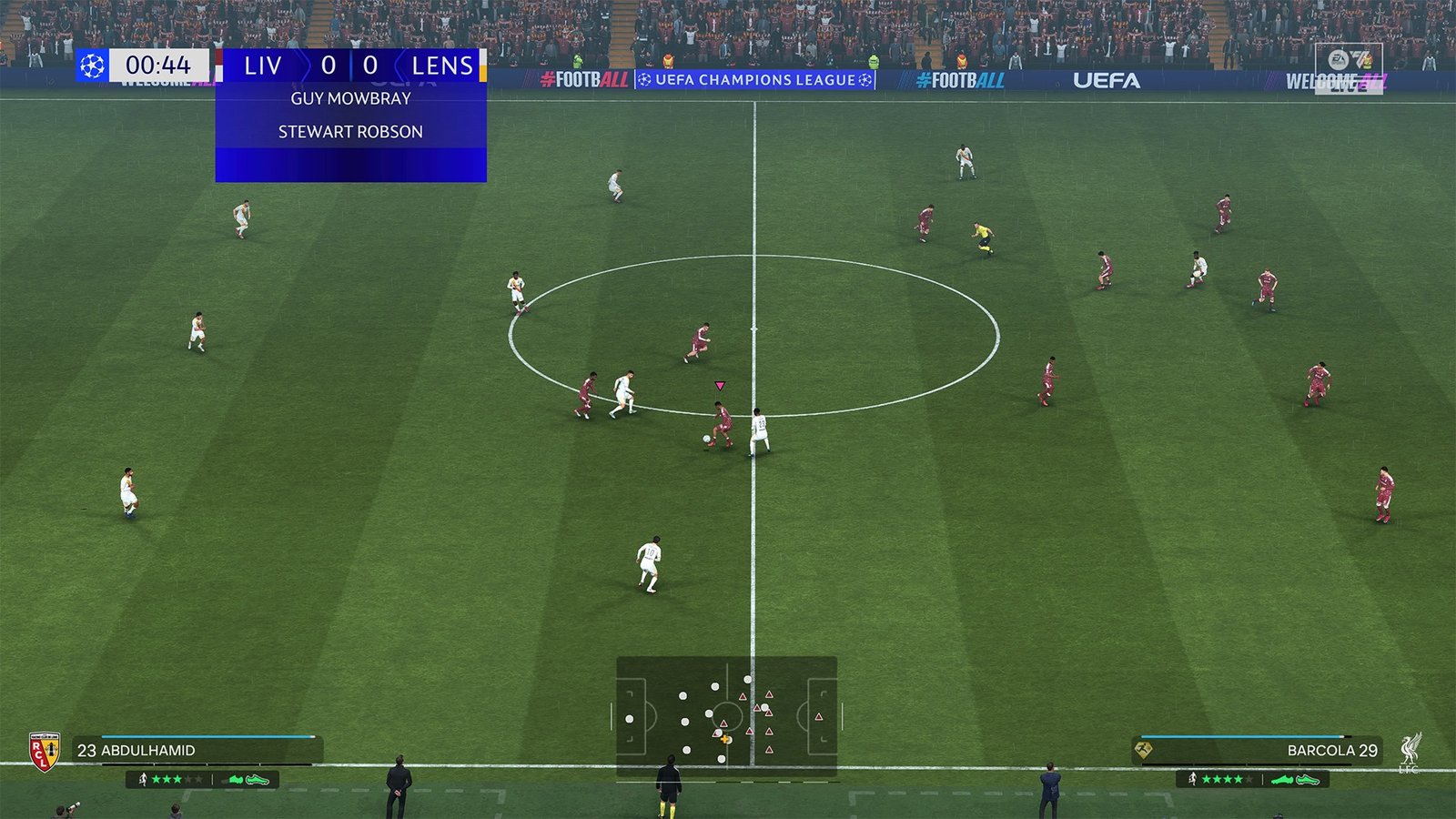
The most important improvements in EA Sports FC 27 are also some of its least flashy. Rather than adding another headline mechanical system that threatens to redefine football for twelve months before something else supersedes it, EA has focused on making individual decisions matter more.
This is most apparent in defending. Competitive gameplay reduces the tendency for AI-controlled defenders to step in and rescue situations automatically, placing greater responsibility on positioning, switching and the timing of your challenge. If an attacker gets beyond you because you committed too aggressively, there are fewer occasions where another defender conveniently solves the problem without your involvement.
There is naturally an adjustment period. Previous habits of controlling a midfielder while letting the back line take care of itself are punished more consistently, and aggressive defenders will quickly discover that pressing at the wrong moment creates gaps competent opposition can exploit in EA Sports FC 27. Yet that also produces a healthier rhythm because successful defending increasingly feels like something you actively achieved rather than something the game quietly handled.
Attacking football benefits from smarter movement at the other end. Teammates are better at bending their runs into useful spaces, providing more options when trying to dissect compact defences without reducing every attack to giving the ball to your fastest winger and hoping for the best. Crossing has more purpose as a result, while off-balance dribbling occasionally lets skilled players retain momentum through challenges rather than instantly surrendering possession on contact.
None of these additions completely transform the fundamentals of EA Sports FC 27. Pace remains powerful, certain players will inevitably become more useful than their attributes suggest, and the community will undoubtedly identify optimal tactics faster than EA can react. Goalkeepers can still swing between miraculous reflexes and moments where watching the ball go past seems like the preferred response.

Corners have received a more visible rework, combining delivery selection with control over players inside the box. Being able to set up the cross and subsequently move your intended target gives set pieces more tactical flexibility, although it can initially make them feel more cumbersome than necessary. Like so much competitive football in the game, its eventual usefulness will probably be dictated as much by the strategies players discover as by EA’s intentions.
Still, the cumulative effect is positive. EA Sports FC 27 feels slightly more deliberate without becoming sluggish, rewarding players who understand positioning and movement while retaining enough responsiveness for the quick transitions that have always made EA’s interpretation of football enjoyable. It doesn’t ask you to relearn the sport, it simply asks you to take greater responsibility for playing it well.
Career Mode Makes Its Move
That greater sense of responsibility extends neatly into Manager Career, where the rebuilt transfer system is one of the most welcome changes in this year’s package. Transfers have historically been functional rather than exciting in FC. Find a player, agree on a fee, settle the contract and move on. It achieved the desired result, but rarely captured the uncertainty and frustration that make the real transfer window such fertile ground for endless speculation.
EA Sports FC 27 adds significantly more friction to the process, and that is largely a good thing. Enquiries, responses from selling clubs, negotiations and player discussions form a longer chain, while rival teams can compete for targets and existing relationships between clubs influence whether a deal is even feasible. Performance clauses, buy-back arrangements and other conditions add more ways to structure a transfer beyond simply watching two numbers move closer together. It means identifying the player you want is no longer the end of the problem.
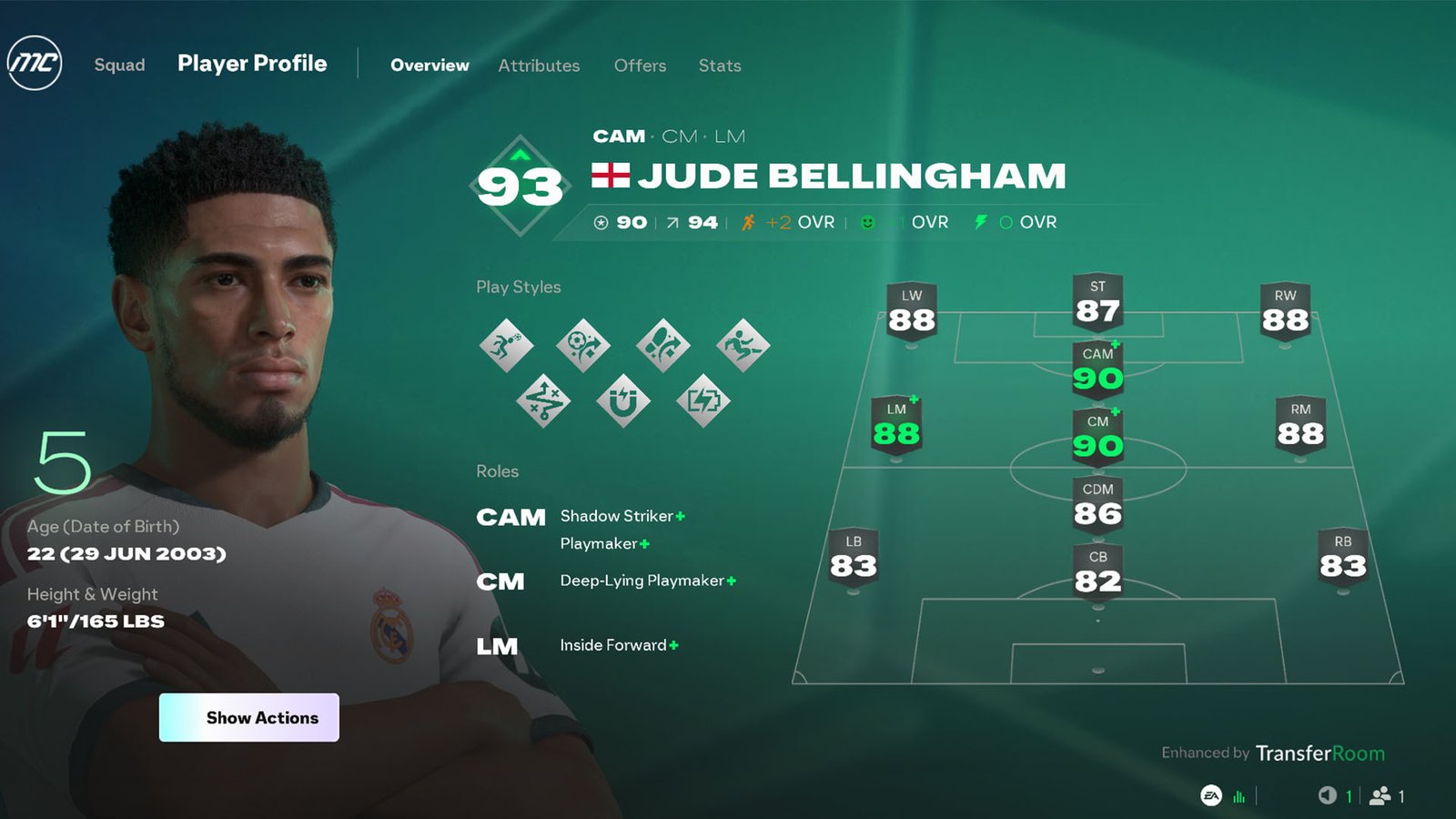
A transfer that seems straightforward can suddenly become urgent when another club starts circling, while rivalries can make certain deals much harder. The market consequently feels more active around you, rather than existing solely for your convenience. Dynamic Overall Ratings complement that philosophy by letting form, morale, and fitness affect how players are perceived, making squad assessment slightly less rigid than organising everyone by a permanent number in EA Sports FC 27.
The simulation still has limits, as once you understand the new negotiation logic, some of the mystery inevitably disappears, and Career remains a football-management approximation rather than competition for Football Manager. That is perfectly fine; the appeal has always been building a team and then actually controlling it on the pitch. What matters is that the surrounding structure is becoming more credible.
After the foundations laid in FC 26, Manager Career in EA Sports FC 27 now feels less like the mode EA remembers to update after everything else and more like a genuine pillar again. For players who want nothing to do with packs, online metas or seasonal objectives, that attention alone gives this year’s instalment considerably more longevity.
The Grounds Opens Up a New Side of Football in EA Sports FC 27
If Career represents EA improving something familiar, The Grounds is its attempt to give EA Sports FC 27 an identity of its own. Clubs sits at the centre of this new shared environment, but reducing The Grounds to a prettier menu for Clubs undersells what EA is trying to achieve.
Up to 100 players can occupy its social football playground, spread around distinct districts containing activities ranging from conventional 11v11 competition to 1v1, 2v2 and 3v3 matches, Rush and smaller diversions. There are obvious comparisons to the social spaces popularised by NBA 2K, and not all of those comparisons are flattering. Any time a previously efficient menu becomes a physical environment that requires you to move between activities, you can argue immersion comes at the expense of convenience.

The Grounds largely earns that inconvenience because its smaller-sided football provides a different tempo from the rest of EA Sports FC 27. Dropping into a quick match when you don’t have a full group assembled feels natural, while Clubs players no longer need a large group of friends online at the same time for the mode to come alive. This gives different types of players more space to interact with Clubs, rather than treating it as an isolated corner of the game.
That social flexibility is important in EA Sports FC 27. Rush has already shown how well the game works when traditional football is compressed into something faster and less serious, and The Grounds expands that philosophy into a broader ecosystem instead of letting it remain another disconnected mode; that said, it also requires caution.
The Grounds has been designed as an evolving space, which means judging its long-term value at launch is almost impossible. New events, activities and rewards can turn it into one of the franchise’s defining modes, but live-service history is filled with ambitious social spaces that lost momentum once the novelty faded. Progression and customisation also create clear opportunities for monetisation to seep further into the EA Sports FC 27 experience.
For now, however, there is enough substance to make The Grounds more than a gimmick. It gives EA Sports FC 27 something its immediate predecessors lacked: a feature that actually changes how you navigate and think about part of the package rather than merely refining another existing system. Whether it remains important twelve months from now will depend entirely on how EA supports it, but the foundation is surprisingly convincing.
Ultimate Team Sticks to Its Formation
It is telling that the mode normally responsible for consuming the most attention feels comparatively restrained this year. Football Ultimate Team remains as compulsive as ever. Building a squad, gradually replacing weaknesses and taking that team into increasingly competitive matches continues to provide a progression loop capable of swallowing ridiculous amounts of time. Anyone already committed to FUT is unlikely to need much persuasion to jump back into EA Sports FC 27.
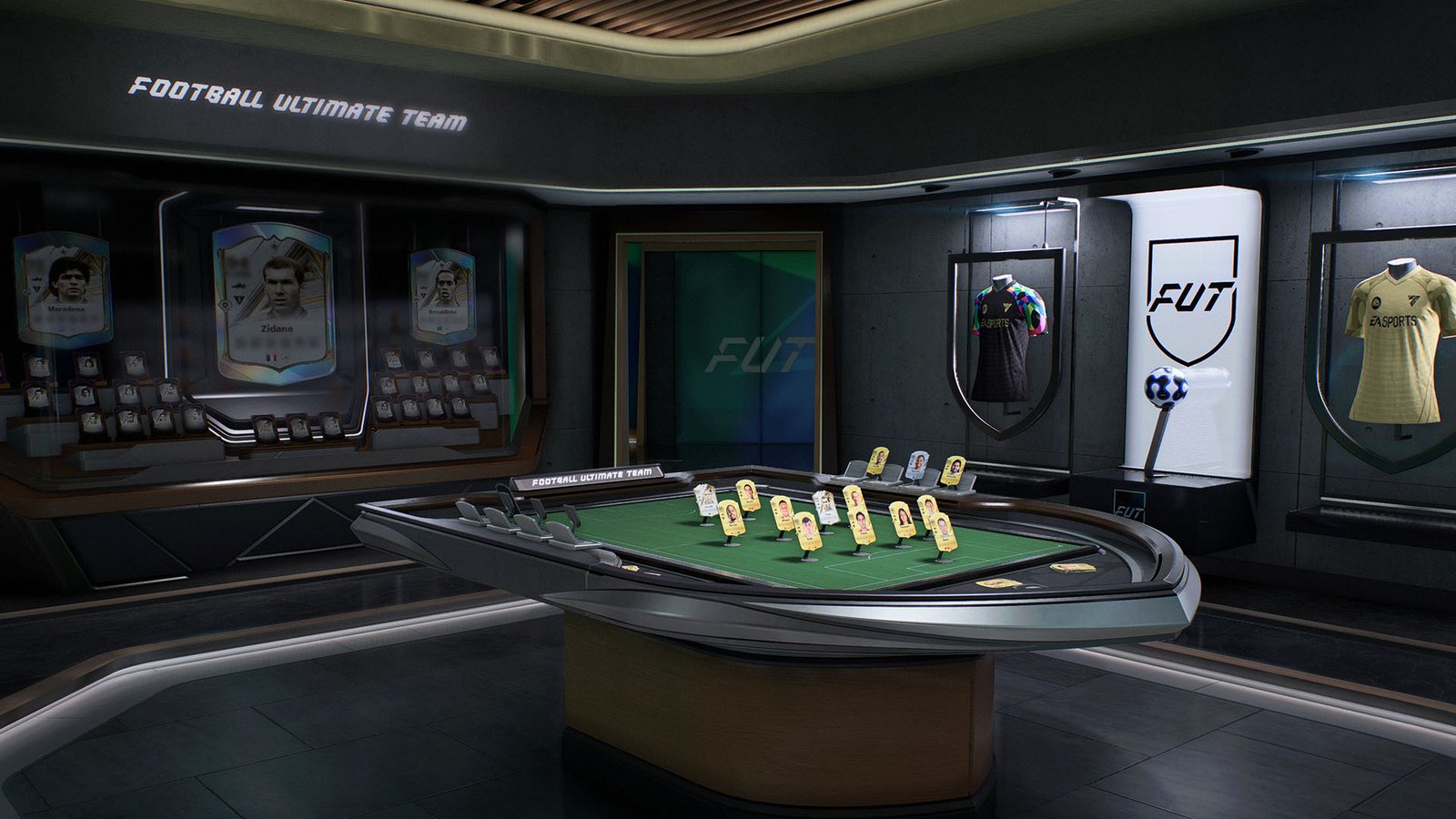
The FUT Gallery is the headline addition, preserving records of Player Items that have passed through your club and organising them into themed Sets that can generate rewards. Conceptually, creating a more permanent history for a mode built around constantly replacing players is appealing, especially when valuable cards frequently disappear into Squad Building Challenges.
In execution, Gallery can feel more administrative than celebratory. The ability to automatically populate Sets removes much of the thought involved, while repeatedly checking whether newly acquired cards improve existing collections risks turning what should be a satisfying record of your club into another menu to maintain.
Other changes are more immediately useful in EA Sports FC 27. Card rarity has been simplified, Streamlined SBCs reduce unnecessary friction in exchanging players, and branching Evolution pathways provide more flexibility in deciding how particular cards should develop. They are welcome quality-of-life changes, but none fundamentally alter the relationship players already have with Ultimate Team.
That also means the familiar reservations remain. Premium progression, packs, FC Points and the relentless pursuit of the next upgrade still sit at the heart of an ecosystem designed to keep players engaged for the entire season. The football surrounding that machinery has improved, but the machinery itself is still extremely recognisable.
Perhaps that explains why EA Sports FC 27 feels more interesting elsewhere. Rather than attempting to reinvent the mode that already dominates engagement, EA has spent more energy making the rest of the package harder to ignore.
Finding Its Form Again
Annual football games will always struggle with the expectation that every new entry should justify replacing the one players bought twelve months earlier. Only so much can change before football stops resembling football, and live updates mean even gameplay improvements no longer need to wait for a sequel. Within those limitations, EA Sports FC 27 does more than enough to establish its own identity.
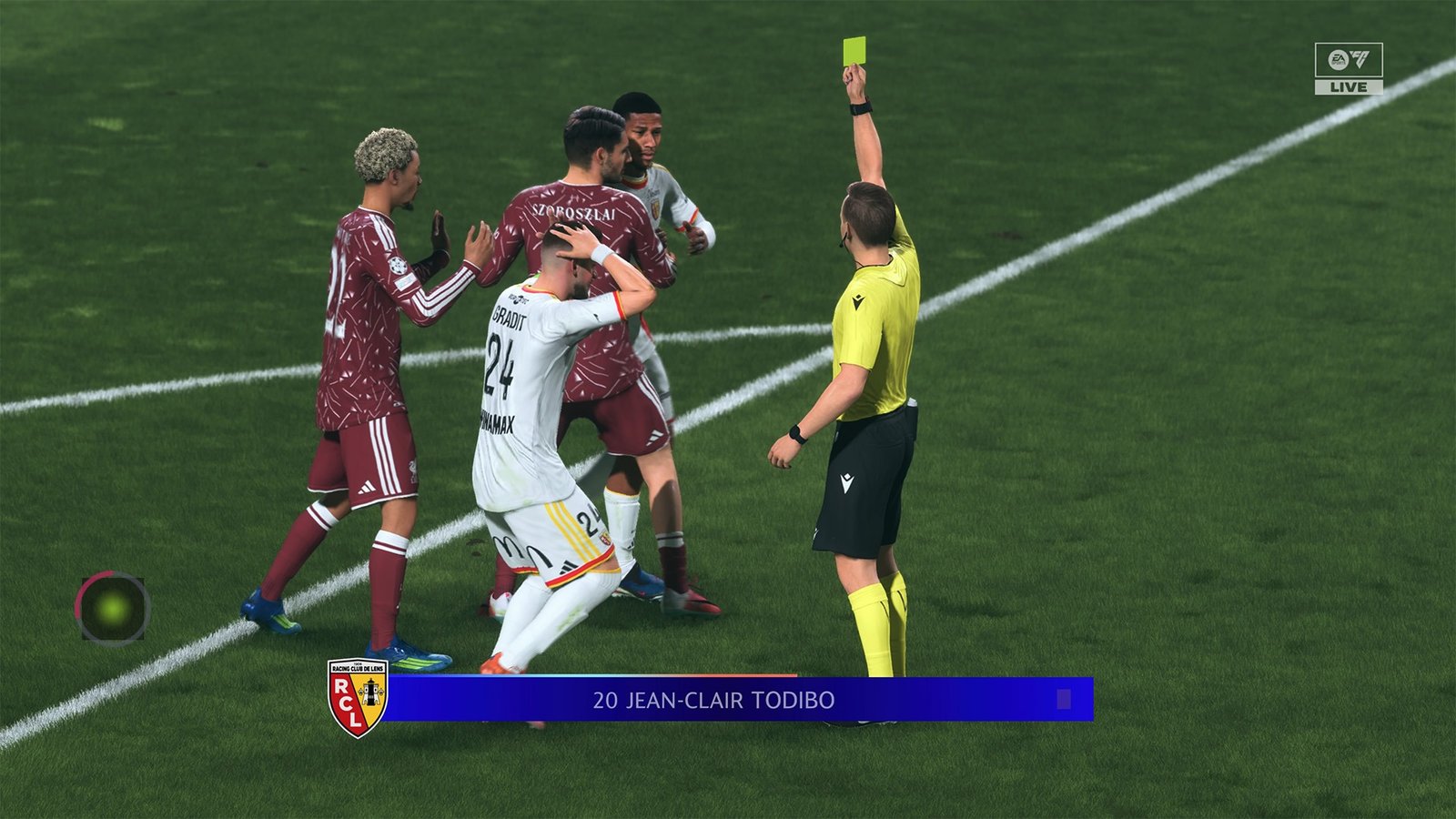
Its on-pitch changes continue the shift towards greater control, asking players to defend with intent while rewarding smarter attacking movement. Career Mode makes transfers substantially more engaging and gives offline players meaningful reasons to invest another season. Most importantly, The Grounds offers a substantial new idea that annualised sports games rarely attempt this deep into their lifespan.
There are caveats everywhere. The Grounds needs sustained support, Ultimate Team remains burdened by the same commercial pressures, set pieces may divide opinion, and no amount of incremental tuning will completely eliminate the occasional frustrations that have accompanied EA’s football games for years. But EA Sports FC 27 understands that meaningful progress doesn’t always require tearing everything down.
Sometimes a team simply needs to recognise what already works, address the weak positions and introduce something capable of changing how the pieces fit together. EA hasn’t assembled the perfect football game here, but after several seasons of searching for the right shape, EA Sports FC 27 looks increasingly comfortable with the system it wants to play, and this time, the form is returning.
EA Sports FC 27 is available now on PlayStation 5, PlayStation 4, Xbox Series X|S, Xbox One, Nintendo Switch, Nintendo Switch 2 and PC.
SavePoint Score
Summary
EA Sports FC 27 makes meaningful progress with more deliberate football, an improved Career Mode, and the promising arrival of The Grounds, though familiar frustrations and a conservative Ultimate Team keep it from reaching greater heights.
