

Table of Contents
Hidden around the World on Nintendo Switch
There is an immediate appeal to the idea behind Hidden around the World. Rather than chasing spectacle, pressure, or mechanical complexity, Ogre Pixel’s latest settles into something smaller and softer. It invites players to travel through illustrated versions of famous cities, scan every corner, and slowly pick out the little details tucked into each scene.
Each location has the texture of a busy postcard, with landmarks, animals, food stalls, vehicles, characters, and decorative props arranged into dense but friendly compositions. The result is not a realistic tour of the world, but a warm interpretation of it, where familiar places are filtered through a playful storybook lens.
As a cosy game on the Nintendo Switch, this setup makes sense. It is easy to dip into a level for a short search session, then stay longer than expected because the act of looking becomes pleasantly absorbing. Hidden around the World understands that hidden object games are rarely about surprise alone. They are about slowing down, noticing patterns, and enjoying the small satisfaction of finding something that was sitting in plain sight all along.
Discovery Works Best When It Feels Effortless
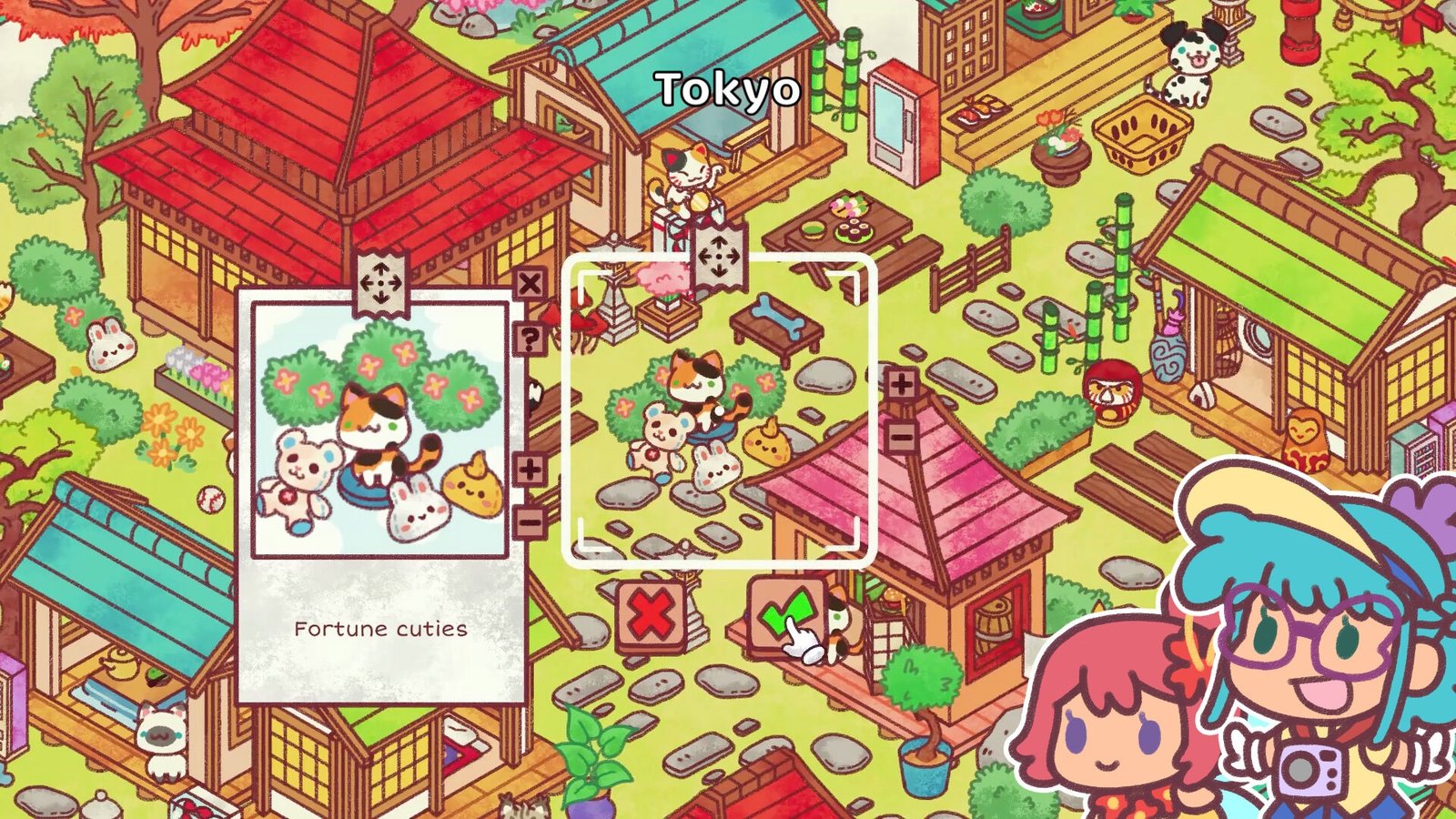
The basic loop of Hidden around the World is simple. Each city presents a list of objects, and the player searches through the scene until everything is found. That familiar structure is supported by small interactive touches: objects can be moved, scenes can be adjusted, and certain missions ask you to recreate small photo compositions using items from the environment.
Those photography tasks give the game a slightly more involved rhythm than a straightforward object hunt. Instead of merely tapping through a checklist, you begin to read the scene as a space you can rearrange. Benches, signs, animals, props, and landmark details become pieces in a tiny visual puzzle, and the process of building the required snapshot gives the game a gentle sense of craft.
The problem is that this charm depends heavily on flow. When the objects are readable and the scene gives you enough visual clarity, Hidden around the World can feel wonderfully calming. When items become too small, too cluttered, or awkward to position with a controller, that calm starts to break. The game still has a kind heart, but the act of searching is not always as smooth as the concept deserves.
Switch Friction Gets In The Way

On Nintendo Switch, the biggest issue is precision. This is the sort of game that feels as if it should thrive on direct touch interaction, yet the Switch version leans on traditional controls. That means moving a cursor, zooming, selecting small items, and repositioning objects can sometimes feel more fiddly than relaxing, especially when a scene becomes crowded.
Handheld play adds another layer to that friction. The art is cute and detailed, but the smaller screen can make certain objects harder to identify quickly. A hidden object game should make players squint because something is cleverly disguised, not because the interface and scale are fighting for attention. In Hidden around the World, the distinction is not always clean.
This does not ruin the experience, but it does change its texture. The game is still pleasant in short bursts, especially for players who already enjoy patient visual puzzles, but its rhythm can become stop-start when the controls refuse to disappear into the background. For a genre built on quiet concentration, even small interruptions matter.
Creativity Gives The Journey More Staying Power

Beyond the curated city levels, Hidden around the World also benefits from its creative side. Unlocking objects and building custom scenes gives the game a longer tail, especially for players who enjoy arranging decorative spaces as much as solving them. It is a smart extension of the core idea because it turns observation into authorship.
There is also clear personality in the broader package. The game is not trying to be dramatic or overly clever. It wants to be a gentle travel album, a puzzle toy, and a cosy decorating tool in one. That modesty helps it avoid feeling overdesigned, even when some of its systems could have used more refinement.
Where it falls slightly short is in making every destination feel meaningfully distinct beyond the surface level. The landmarks and layouts sell the global premise, but the hidden objects themselves can feel more generic than the setting suggests. A little more local flavour in what players are actually searching for would have made the journey feel richer and more memorable.
A Sweet Search That Needed Sharper Polish
Hidden around the World is easy to like. It has warmth, charm, and a clear understanding of why cosy hidden object games remain appealing. At its best, it turns each city into a gentle puzzle space where discovery feels unhurried and satisfying.
It is also easy to see where it could have been stronger. Better Switch specific interaction, clearer object scaling, and smoother help systems would have made the experience feel much more effortless. The game does not need major reinvention. It needs fewer small obstacles standing between the player and its relaxed sense of discovery.
For hidden-object fans, this is still a pleasant global getaway with enough sweetness to recommend it, especially in shorter sessions. For players who need their cosy games to feel frictionless, the trip may be more uneven than expected. Its heart is in the right place, but its suitcase could have been packed a little more carefully.
Hidden around the World is available on Nintendo Switch, PC, iOS, and Android.
SavePoint Score
Summary
Hidden around the World offers a charming hidden object escape with warm cityscapes, relaxed discovery, and creative tools, though tiny objects, uneven controls, and occasional friction keep its cosy journey from feeling fully seamless.
