

Table of Contents
Street Fighter (2026) in Theatres
There is nothing wrong with a Street Fighter movie being ridiculous. This is a franchise where a green man generates electricity, an American soldier has hair that defies gravity, and martial artists settle their differences by throwing fireballs. A little absurdity comes with the territory. The challenge is making that silliness work alongside characters whose fights we actually care about.
Capcom, Paramount Pictures, and director Kitao Sakurai’s Street Fighter occasionally find that balance. It packs plenty of gags, Easter eggs, and references for lifelong fans, and much of its cast understands the appeal of letting these larger-than-life fighters loose.
But the film repeatedly interrupts its action and emotional beats with jokes, then expects those same characters and conflicts to carry a dramatic climax. At times, I’m laughing at how stupid it is. At others, I’m waiting for either the punchline or the drama to get out of the way.
World Warriors Assemble
Fighting games have no shortage of elaborate backstories, but a film adaptation has a more immediate task: give its colourful characters a reason to meet, then make their confrontations worth watching. Street Fighter gets the first part moving quickly, using only a few backstory and exposition scenes before whisking its heroes away to Metrolao City for M. Bison’s World Warrior Tournament.
All the big names you would expect are here, from E. Honda and Cammy to Ryu and Chun-Li. Seeing this collection of characters share the screen is fun, especially when the supporting cast embraces the absurdity.
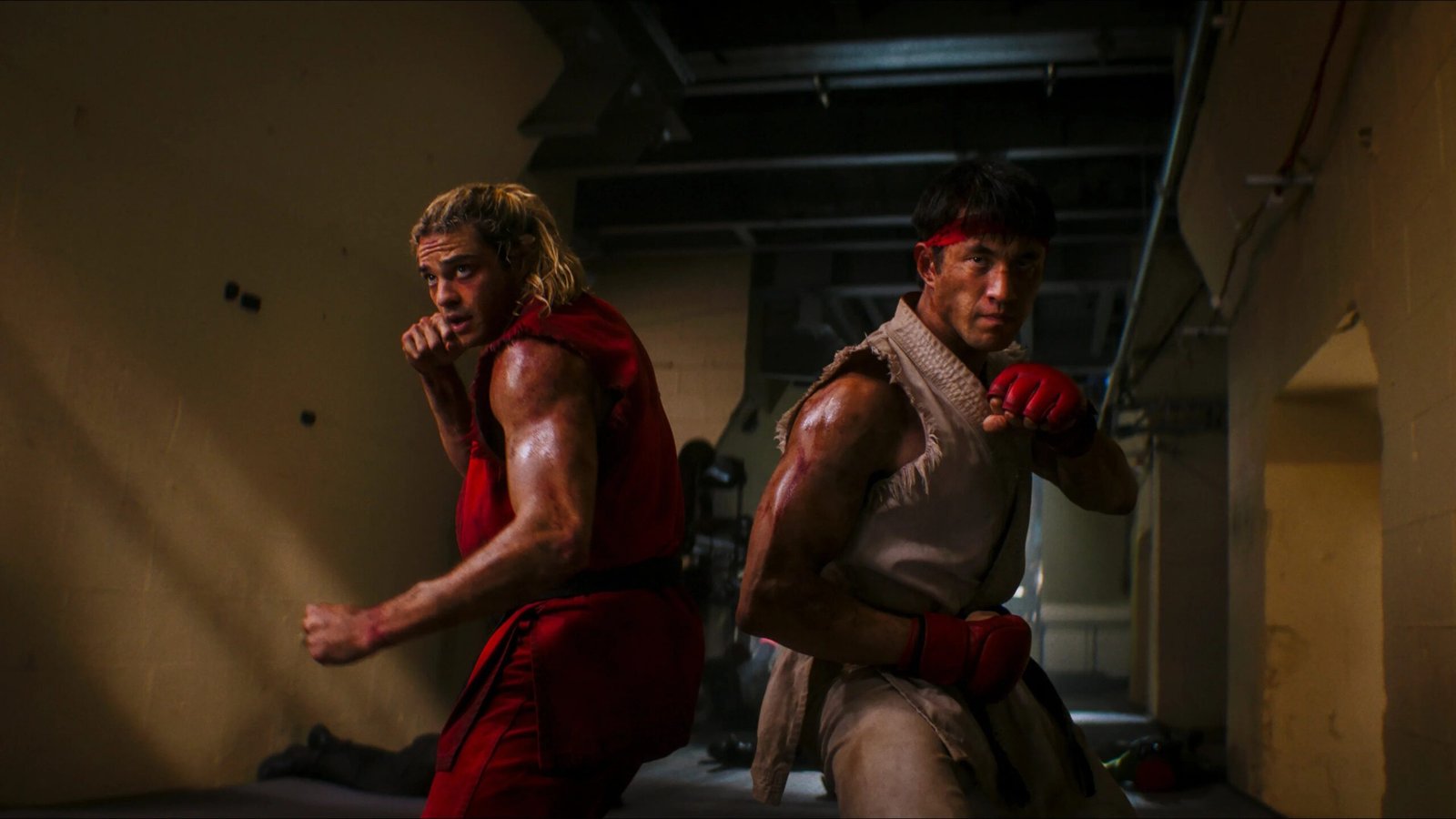
Sure, some Street Fighter casting choices take time to get used to. Seeing 50 Cent as Balrog will make you do a double take, but when the ensemble works, it works well. Jason Momoa’s Blanka is a blast to watch, while Cody Rhodes plays Guile with a jingoistic intensity that is hard to hate. David Dastmalchian’s M. Bison chews the scenery, even if he is a little too restrained to match the sheer wonder of the late, legendary Raul Julia’s interpretation.
The central trio is less consistently engaging. Andrew Koji’s Ryu is serious and stoic, but too often comes across as a stick-in-the-mud beside his more extravagant opponents. Callina Liang’s Chun-Li has a clear motivation in her quest for vengeance, yet that pursuit feels one-note. Both issues ultimately come down to writing. The film knows it needs an emotional core, but it doesn’t give these moments time to develop. Chun-Li’s anger is shown in a single scene, then never revisited until the climax, which makes her big confrontation with M. Bison feel hollow.
Then there is Noah Centineo’s Ken, our main audience viewpoint in Street Fighter, whose raging narcissism sometimes makes him feel like Ken Masters, or rather, Dan Hibiki. He is still a fun protagonist, brash as he may be, but being entertaining company and carrying the film’s emotional stakes are different responsibilities. This makes his relationship with Ryu even weaker as he flips wildly between lifelong friend and bitter rival. It’s tonal whiplash when, in one scene, he’s helping Ryu break out of jail, complete with one-liners and comedic gags, but in the next, they’re having a dramatic fight because of Ken’s sense of inferiority.
These contrasting personalities can complement one another. The problem is that the supporting characters’ exaggerated antics often leave a stronger impression than the people whose stories are meant to hold everything together.
Comedy First, Action Second
Street Fighter is a movie that thinks it is funny. At times, it is. Plenty of line readings land, and the incidental dialogue produces more than a few chuckles. But it also struggles to recognise when a joke has run its course, or when a scene would benefit from letting something other than comedy take priority.
Within the first ten minutes, What’s Up? by 4 Non Blondes plays three times. Each appearance is meant to be funny, but none works for me, and bringing it back for the climax only stretches an already exhausted gag. Elsewhere, serious moments become opportunities for another random joke.
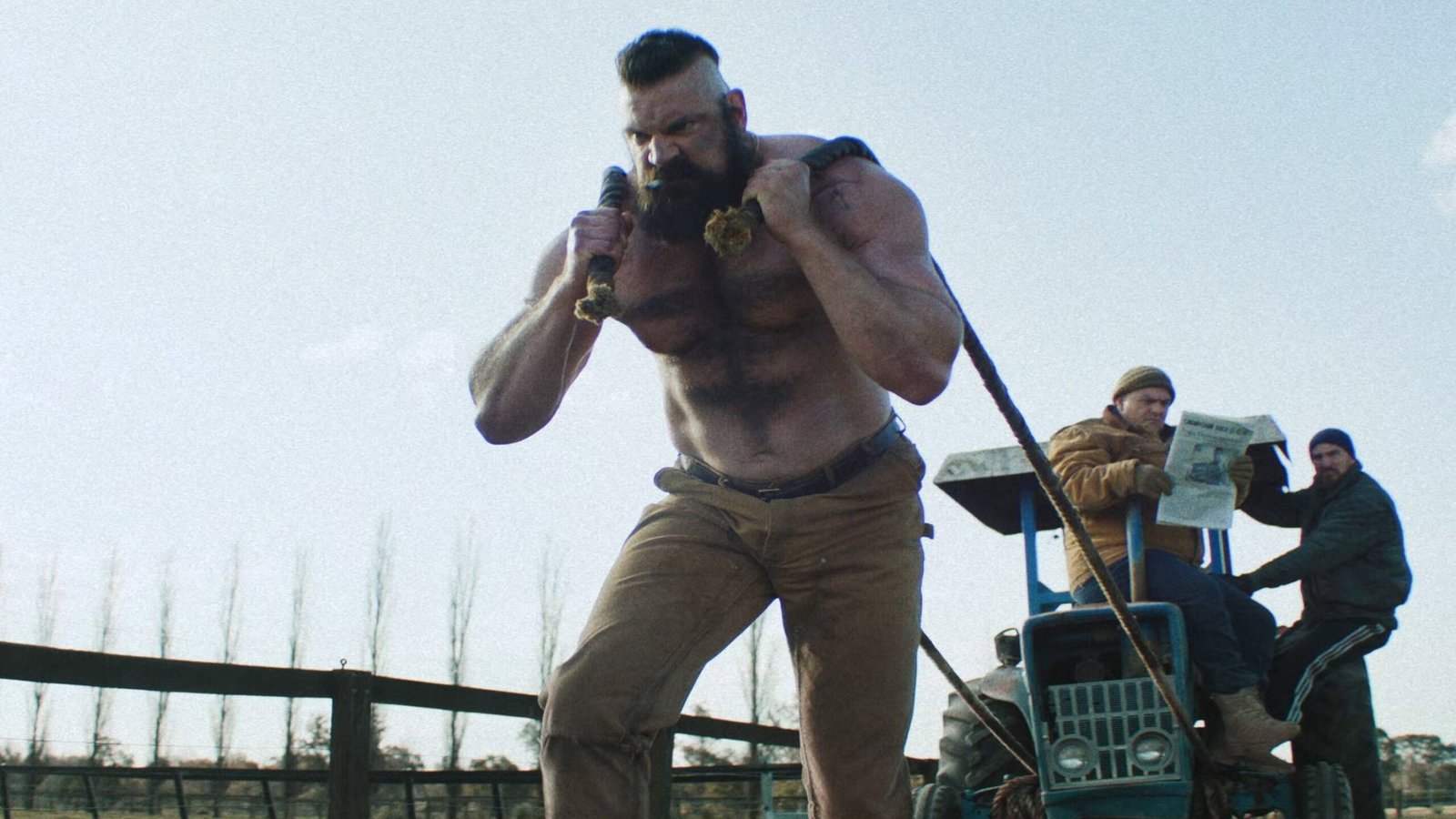
Cammy’s characterisation leans heavily on unhinged behaviour, like her laughing like a lunatic with M. Bison over the tournament’s outcome, breaking what would normally be a dramatic, serious moment, while Eric Andre’s megaphone commentary competes with the fighting for attention. Individual lines can be amusing, but the film keeps asking its own action and character moments to surrender the spotlight.
When it gives its fighters room to work, Street Fighter can be kinetic and fun. Ryu’s sauna fight with E. Honda is an early highlight, as is a nightclub brawl involving multiple fighters. These are the moments when watching recognisable characters knock each other around delivers exactly the pleasure it should. The characters fight as you would expect, using their iconic moves from the game, and are shot in ways that highlight just how nimble they are. It can prioritise hand-to-hand combat, but Street Fighter is more comfortable using wirework and special effects to sell each attack’s impact.
The issue is not that every joke diminishes the action in Street Fighter. The early highlights suggest there is room for playfulness within the fights themselves. Interrupting a bout for another gag is different, and the film doesn’t consistently distinguish between the two. As the comedy fades later on, the fights also lose some energy. That should be an opportunity for the action to take over, yet the climax is the film’s weakest stretch.
With multiple confrontations happening across different locations, it becomes difficult to follow who is where and what each fight is contributing. Characters appear wherever the plot needs them, even when the movement between those moments makes little sense. This also causes the action to take a downward turn in the film’s final act. One fight in particular is built up the entire film, and it should be amazing when we get to it, but thanks to jumpy editing that cuts to multiple different characters, it’s hard to get a sense of just how brutal the fight is, which makes it all the worse when you compare it to the earlier fights and how clear they are.
Worse, the film offers little proper resolution. It effectively stops and asks you to return for a sequel, leaving the current story feeling unfinished. Of course, you could argue this is cheap entertainment. Who cares about narrative housekeeping when there are fireballs to throw and familiar characters to send through walls? But Street Fighter also wants its grudges and relationships to matter. After spending so much time puncturing its own dramatic moments, it struggles to make that investment pay off when the jokes finally recede.
Dressed for a Better Fight
Despite its uneven decisions, Street Fighter offers pleasures beyond the occasional successful gag or brawl. Its flashbacks unfold through animated sequences, giving the backstory an energy that the live-action drama sometimes lacks.
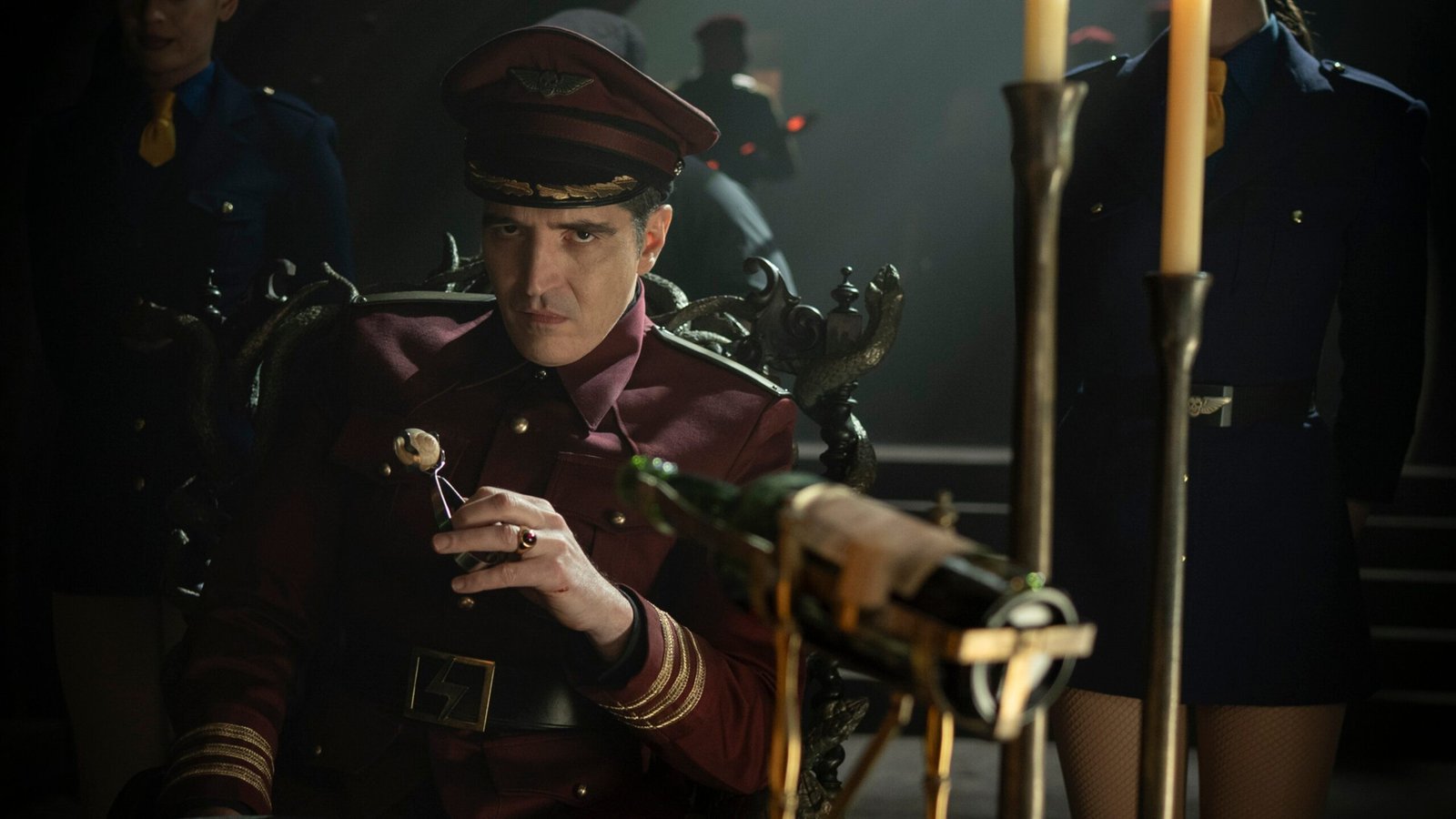
The transition from actors to anime-inspired versions of their characters can be jarring, but these passages have enough personality to make the change worthwhile. They even left me wondering what a fully animated version of this particular film might have looked like. Titmouse animated these sequences, and while they may not be as polished as animation from studios like MAPPA or Wit, they get the job done and spice up the film’s visuals.
The characters also look wonderful. Dan’s pink gi works, M. Bison’s wardrobe is ludicrous but majestic, and the lengths they go to make Guile’s ridiculous hair work in live action are nothing short of miraculous. Whatever the storytelling problems, the costumes and character designs give fans plenty to appreciate.
That visible care makes the uneven whole more frustrating. At times, the cast, designs, and playful action come together, offering a glimpse of a film that could sustain this ridiculous world. Too often, another overextended joke or underdeveloped dramatic turn breaks the momentum.
Fans willing to overlook those problems will find things to enjoy, particularly in the supporting performances and early fights. But recognising a costume or special move only goes so far when the central characters struggle to hold our attention and the final act cannot bring their stories to a satisfying pause.
Compared to the original 1994 movie, which bungled characterisation, had laughable fight choreography, and seemed almost ashamed to be a Street Fighter movie, this version, by all accounts, is the definitive live-action adaptation of the series. The film understands its fight cast for the most part, delivers kinetic choreography that captures what makes the game fun, and doesn’t shy away from the franchise’s ridiculousness.
Street Fighter does not need to become high art to succeed. Its best moments already show how much fun it is to watch these World Warriors collide. It simply needs the jokes, drama and action to stop tripping over one another. It is chaotic fun, but by the time the film asks us to care about the final round, too many of its punches have lost their impact.
Street Fighter is now in cinemas.
SavePoint Score
Summary
Street Fighter finds intermittent joy in its colourful cast, extravagant costumes and playful early fights. However, intrusive jokes, thin central characterisation, and a confused, unresolved climax keep those individual pleasures from making it a consistently satisfying film.
