

Table of Contents
Chaos and Cat Breeding Collide
Few indie projects carry the legacy expectations that surround Mewgenics. Conceived more than a decade ago by Edmund McMillen, the mind behind The Binding of Isaac, the game has long existed as a curious footnote in indie development history.
Now finally released, Mewgenics reveals itself as something far more unusual than a delayed curiosity. At its core, the game blends turn-based tactics with roguelike progression, asking players to breed and train squads of genetically modified cats to fight for the eccentric scientist Thomas A. Beanies.
The premise is ridiculous, but beneath the absurdity lies a surprisingly deep strategy game built around experimentation, risk, and mechanical mastery.
Tactical Combat That Rewards Precision
At a glance, Mewgenics resembles many other grid-based strategy games, but its pacing sets it apart immediately.
Rather than sprawling battles that stretch across lengthy maps, combat encounters are short, sharp, and frequent. Expeditions are broken into multiple bite-sized fights interspersed with events, shops, and narrative moments. The structure feels closer to a roguelike dungeon crawl than a traditional tactics campaign.
This design choice in Mewgenics works wonders for pacing. Each encounter introduces a fresh mix of enemy types, hazards, and positioning challenges without overstaying its welcome.
With a maximum party of four cats, turns remain quick and deliberate. There is little downtime between actions, and every movement decision carries weight. Maps are often compact and crowded, meaning a single mistake can quickly spiral into disaster.
Success depends on understanding positioning as much as damage output. Knowing when to retreat, when to advance, and how to control the battlefield often determines whether a run continues or ends abruptly.
Environmental Chaos Keeps Encounters Fresh
Adding further unpredictability are the environmental hazards that populate each battlefield.
Some hazards are tied to specific regions, while others are introduced through random events. Rain can extinguish fire-based attacks. Harpoons can drag both enemies and allies across the map. Other obstacles reshape the battlefield entirely, forcing players to rethink established strategies.
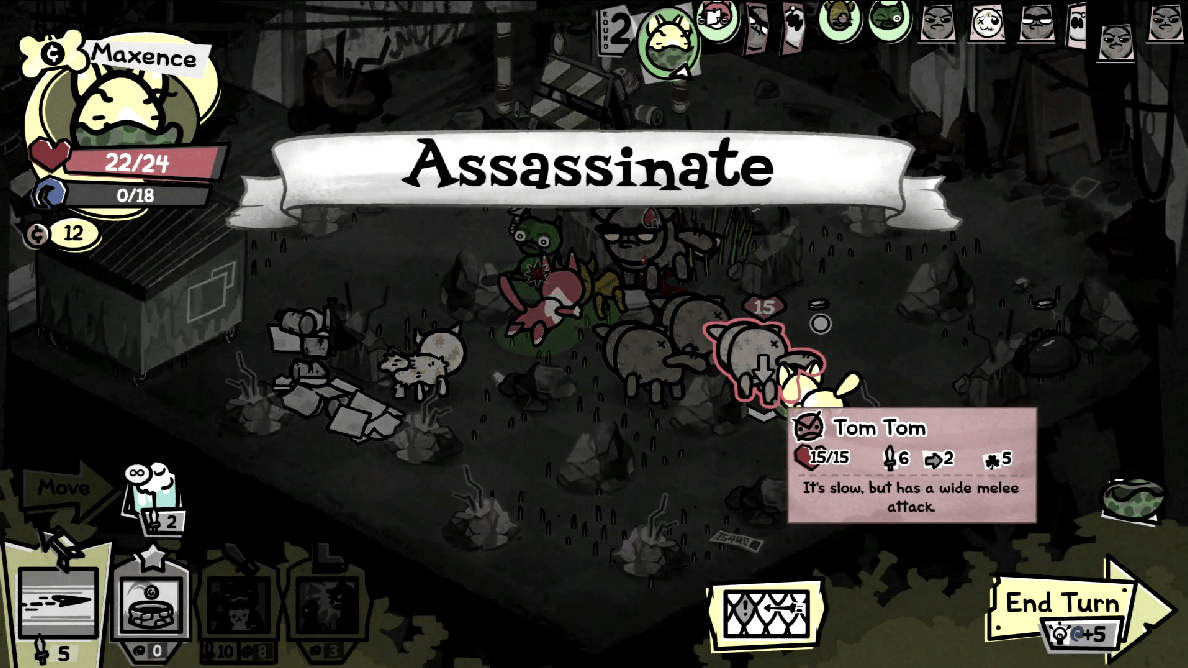
These systems ensure that no encounter feels routine. Even a familiar enemy composition can play out differently depending on the hazards in play.
Rather than relying purely on raw damage output, Mewgenics constantly nudges players toward adaptability.
Building the Perfect Cat Squad
Team composition is where Mewgenics truly begins to open up. As expeditions progress, cats can adopt different classes that echo traditional fantasy archetypes. Tanks soak up punishment, mages specialise in magical attacks, while clerics and support classes offer utility.
However, class choice is only the beginning. Each class draws from a pool of starting abilities, meaning even two cats sharing the same role can function very differently. As they level up, additional skills unlock, creating opportunities for powerful synergies between abilities.
A thief might gain a guaranteed critical strike when attacking from behind, while another ability allows the same cat to teleport directly behind enemies on the following turn. Combined together, these mechanics transform what would otherwise be a simple attack into a devastating combo.
Because classes also modify a cat’s underlying statistics, players are constantly weighing how best to shape each member of the team. A fragile cat might become a defensive tank, while a naturally agile one could evolve into a devastating ranger. Experimentation quickly becomes one of the game’s most rewarding aspects.
Encouraging Mastery Over Comfort
Mewgenics goes out of its way to discourage reliance on a single dominant strategy.
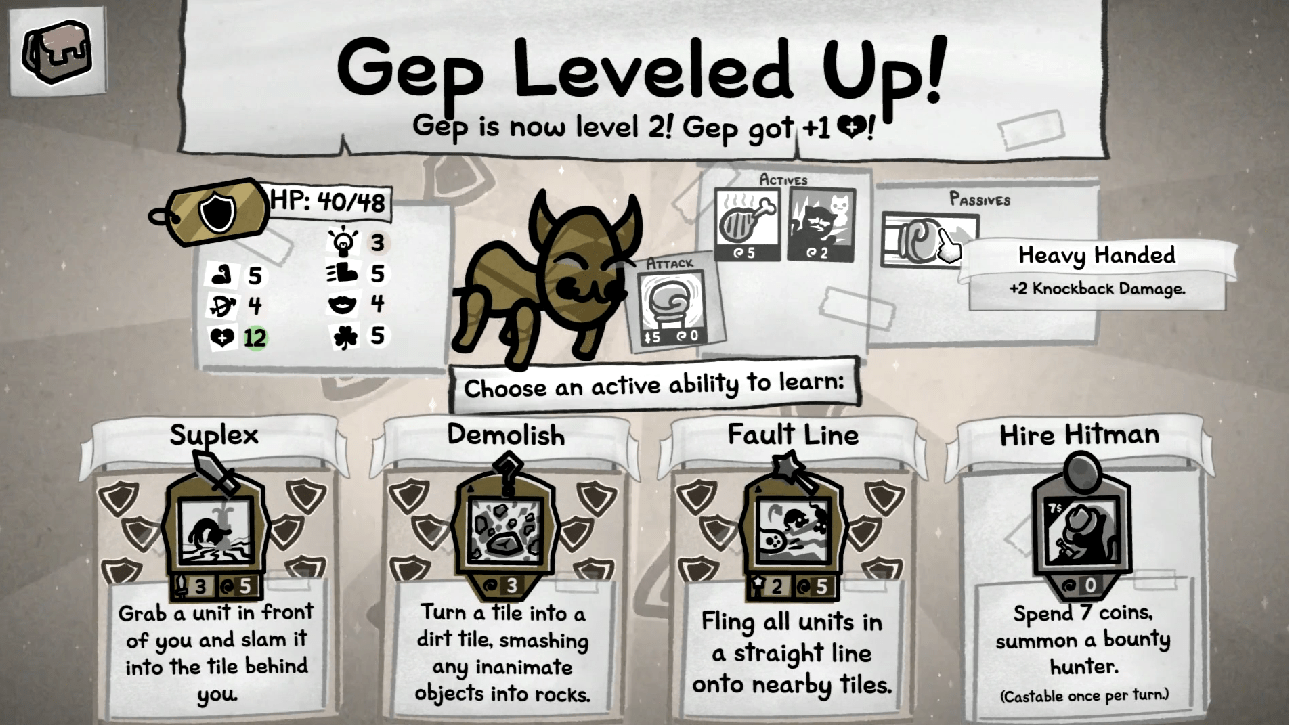
One of its most notable systems is retirement. After returning home from a successful expedition, cats can no longer participate in future runs. The mechanic prevents players from leaning too heavily on a single overpowered character and instead pushes them to continually experiment with new builds.
The trinket system reinforces this philosophy. Trinkets provide valuable bonuses such as stat boosts or additional abilities, but they deteriorate with repeated use and eventually break.
These mechanics ensure that every expedition feels slightly different from the last. Even when a powerful strategy emerges, it rarely lasts forever. Instead of optimisation leading to stagnation, the game keeps pushing players toward discovery.
Generations of Battle Ready Cats
Between expeditions, the player returns home to manage their ever-growing feline roster. Cats must be fed, housed, and cared for, with overcrowding or contamination potentially harming the colony. More importantly, cats can breed, producing offspring that inherit traits gained during previous runs.
Over time, this creates a generational system in which successful cats pass their strengths on to the next wave of fighters. A strong lineage can dramatically influence future expeditions, turning breeding into a long-term strategic layer.
New cats can also appear as strays, ensuring the roster never runs dry even when breeding results are less than ideal. It is a surprisingly thoughtful progression system wrapped inside an otherwise absurd premise.
McMillen’s Signature Absurdity
While strategy sits at the heart of Mewgenics, the game never loses sight of its creator’s distinctive style. Fans of Edmund McMillen’s previous work will immediately recognise the same brand of grotesque humour and offbeat charm that defined The Binding of Isaac.
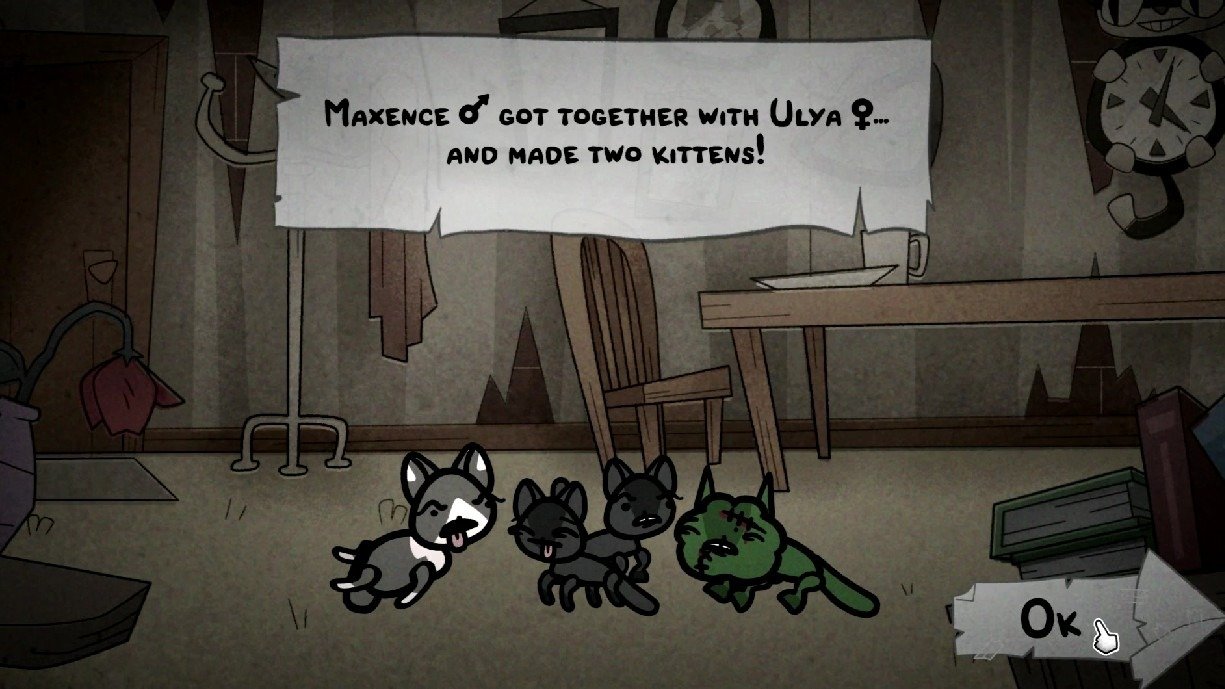
Characters range from strange to downright disturbing, including a hardened thug named Butch and the perpetually furious animal rights activist Tracy. The story rarely takes centre stage, but the bizarre personalities players encounter along the way add colour to an already eccentric world.
A Wild Experiment That Mostly Works
Mewgenics is not a traditional tactics game, nor is it a straightforward roguelike. Instead, it sits somewhere between the two, borrowing elements from both while forging its own identity.
Its battles are fast and tactical, its progression systems reward experimentation, and its strange humour ensures the entire experience never takes itself too seriously. For players willing to embrace its chaotic systems and unusual premise, Mewgenics offers a surprisingly deep strategic playground. And after more than a decade of waiting, the result feels worth the journey.
Mewgenics is currently available for PC.
