

Table of Contents
Feastopia on PC
There is something immediately inviting about Feastopia from White Star Studio and IndieArk. With its soft colours, cheerful food theme, and warm storybook presentation, it looks every bit like the sort of city builder designed for a slow evening and an easy rhythm.
The premise of building a thriving culinary settlement for a hungry deity named Dango sounds playful rather than punishing, and those first moments encourage exactly that assumption. Buildings are full of charm, the world feels bright and lively, and the whole thing gives off the impression of a management sim more interested in comfort than tension. That impression does not last for very long.
Feastopia quickly reveals itself as a much sharper and more demanding experience than its appearance suggests. Underneath the cosy exterior is a roguelite strategy game built around pressure, adaptation, and the constant need to keep a fragile food economy from falling apart. It is this contrast that gives the game its personality. The game is not content to be simply cute. It wants to test your planning, punish your complacency, and make every successful run feel earned.
Hides Its Bite Well

What makes Feastopia stand out early is how effectively it uses that contrast between presentation and mechanics. The visuals are warm and welcoming, which makes the strategic intensity underneath feel even more pronounced once it begins to take hold.
This is not a gimmick so much as the foundation of the game’s identity. It invites you in with the promise of comfort, then slowly asks more and more of you until the experience starts to resemble a balancing act held together by timing, foresight, and just enough improvisation.
That progression works because the systems themselves are strong. You are not simply placing buildings to create an attractive little settlement. You are establishing production chains, trying to maintain momentum, and constantly thinking a few steps ahead. Space matters, labour matters, and efficiency matters.
Feastopia understands that pressure becomes meaningful when it grows naturally out of your own decisions, and that is why the challenge feels engaging rather than arbitrary most of the time. When things start to go wrong, it is often because you can trace the problem back to an earlier compromise or missed opportunity.
Dango Turns Every Run Into A Race
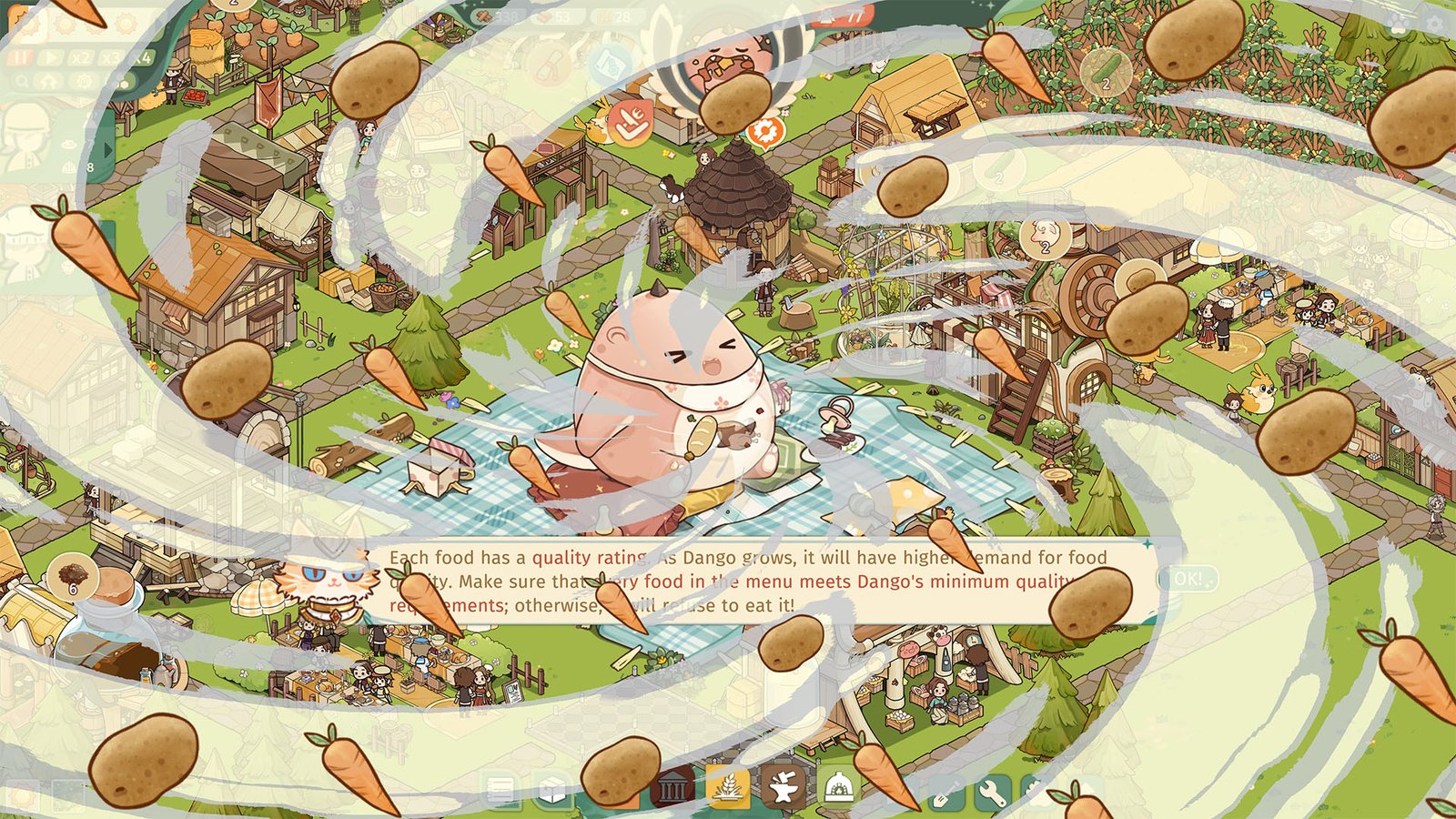
The game’s central hook is feeding Dango, the newborn god at the centre of your civilisation, and it gives everything else a clear sense of purpose. This is not just a charming framing device. It is the engine that drives each run forward. Every ingredient gathered, every building unlocked, and every dish produced feeds into a larger cycle of demand that keeps the player moving. There is always another meal to prepare and another threshold to reach, which gives Feastopia a satisfying sense of momentum from one phase of a run to the next.
This is also where the game’s culinary identity becomes more than decorative. Too many management games reduce their resources to abstract numbers, but Feastopia gives its economy shape and flavour. Ingredients move through recognisable stages, recipes feel tangible, and the whole production chain has a coherence that makes the settlement feel alive. Food is not just the theme layered over familiar systems. It is the lens through which those systems gain their identity, and that helps the game carve out its own space within a crowded genre.
The best moments come when all of those moving parts click into place. A once unstable town starts running smoothly, ingredients arrive where they need to be, and the next demand feels manageable because your planning has finally created breathing room. The game is very good at making those moments feel rewarding. Stability is never fully guaranteed, which makes each stretch of efficiency feel like a genuine accomplishment.
Randomness Gives The City Its Personality
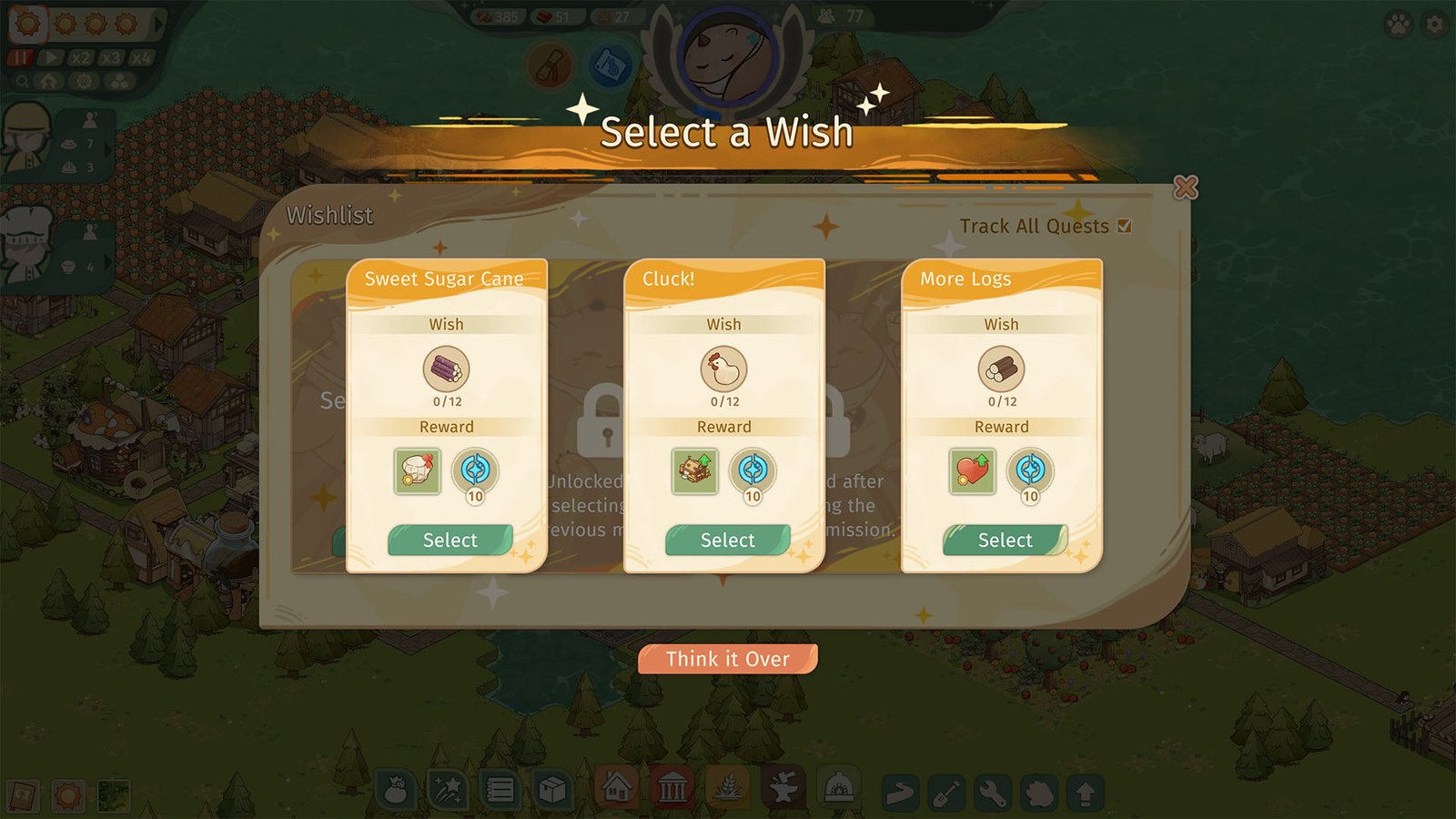
The roguelite structure is a major reason why Feastopia remains engaging over repeated runs. Rather than encouraging a single perfect layout or a dominant strategy, the game pushes players to adapt to changing circumstances. Maps, events, and evolving priorities force you to rethink your approach from run to run, keeping the experience lively and giving each settlement its own small story of survival.
More importantly, the structure softens the sting of failure. Feastopia can be punishing, particularly when several problems stack up at once, but the broader progression gives each attempt a sense of value. Even failed runs tend to contribute something, whether that is fresh knowledge, greater confidence with the systems, or new upgrades that make future attempts more manageable. That sense of continuity is vital in a game like this because it turns frustration into momentum instead of leaving collapse to feel like wasted time.
There is also a subtle pleasure in how randomness shapes each city’s identity. One run may be defined by scrambling to overcome pressure and shortages, while another may become a rare success story built on clever synergies and early stability. Those variations stop the game from feeling mechanical in the wrong way. Even when you are working within familiar systems, the path through each run feels distinct enough to stay memorable.
The Pressure Cooker Will Not Suit Everyone
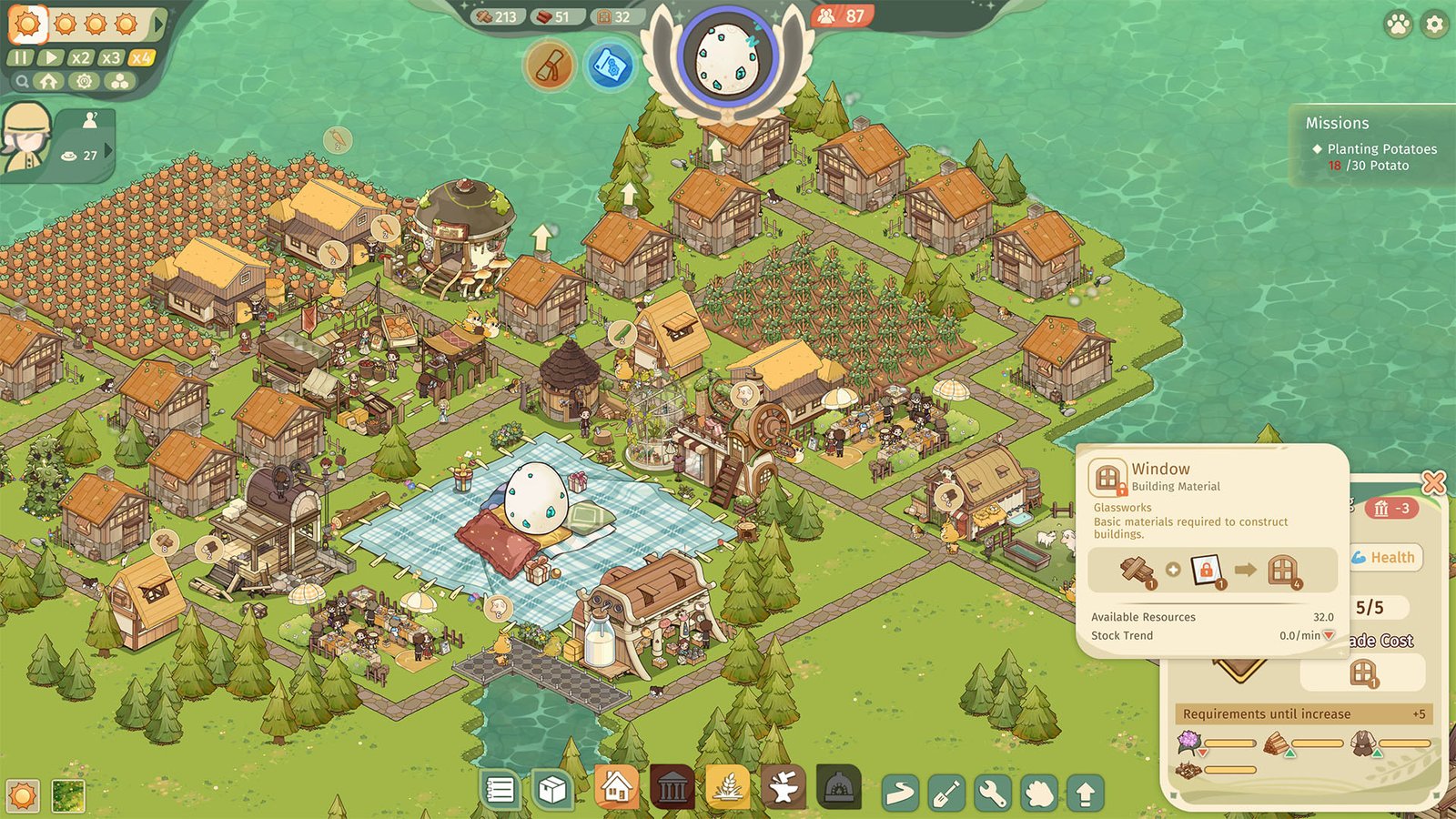
For all its strengths, Feastopia does carry a few rough edges, and most of them stem from the same tension that makes it so interesting. Players drawn in by the art style may reasonably expect a more relaxed kind of builder, only to find a game that can become surprisingly stressful quickly. This is not something you casually drift through. It demands attention, adjustment, and a willingness to recover when plans start unravelling.
The onboarding can also feel a touch uneven. Feastopia has several overlapping systems to grasp, and while discovery is part of the appeal, there are moments when the game feels harsher than it needs to be in teaching those lessons. Early failures can occur before the logic of a run fully settles in, leaving some players feeling pushed rather than guided.
Still, that intensity is also what gives this interesting title its edge. It does not dilute its systems just to preserve a softer mood, and there is something admirable about its commitment to its own identity. Feastopia may look like comfort food, but it plays more like a busy kitchen during a dinner rush. That tension between charm and pressure is exactly what makes it memorable.
Feastopia is available now on PC.
SavePoint Score
Summary
Feastopia is a colourful roguelite city builder that pairs an inviting culinary theme with surprisingly demanding strategic systems, creating a rewarding but occasionally stressful management experience built on adaptation, efficiency, and momentum
