

Table of Contents
Yoshi and the Mysterious Book for Nintendo Switch 2
There was a time when Nintendo considered itself a toy company first and a video game company second. Whether that still holds true today is up for debate, especially given the company’s recent pricing controversies, but that philosophy still appears in how Nintendo builds many of its games. At their best, they feel tactile, playful, and eager to surprise. They are not always designed around challenge in the traditional sense, but around the feeling of picking something up, turning it around, and seeing what happens.
That spirit sits at the heart of Yoshi and the Mysterious Book. Almost everything about this Nintendo Switch 2 adventure from developers Good-Feel is aimed at younger players, from its relaxed pacing and bright storybook aesthetic to its forgiving difficulty curve. It feels like the sort of game a parent could hand to a child as an early platforming experience without worrying too much about frustration, failure, or heavy mechanical demands.
In that regard, the game succeeds. It is soft, approachable, and immediately understandable, yet the question that lingers throughout the adventure is whether there is enough here for players beyond that narrow first-game audience. The answer is yes, but only to a point. The older or more experienced you are, the faster its gentleness begins to feel like a limitation.
Curiosity Gives The Adventure Its Early Spark
Yoshi games tend to keep their stories simple, and Yoshi and the Mysterious Book follows that tradition. The adventure begins when Yoshi and his friends discover a magical talking book called Mr. E, whose pages are home to unusual creatures. Instead of sending Yoshi on a grand quest to save the world, the game focuses on helping Mr. E learn more about the strange inhabitants living inside his pages.
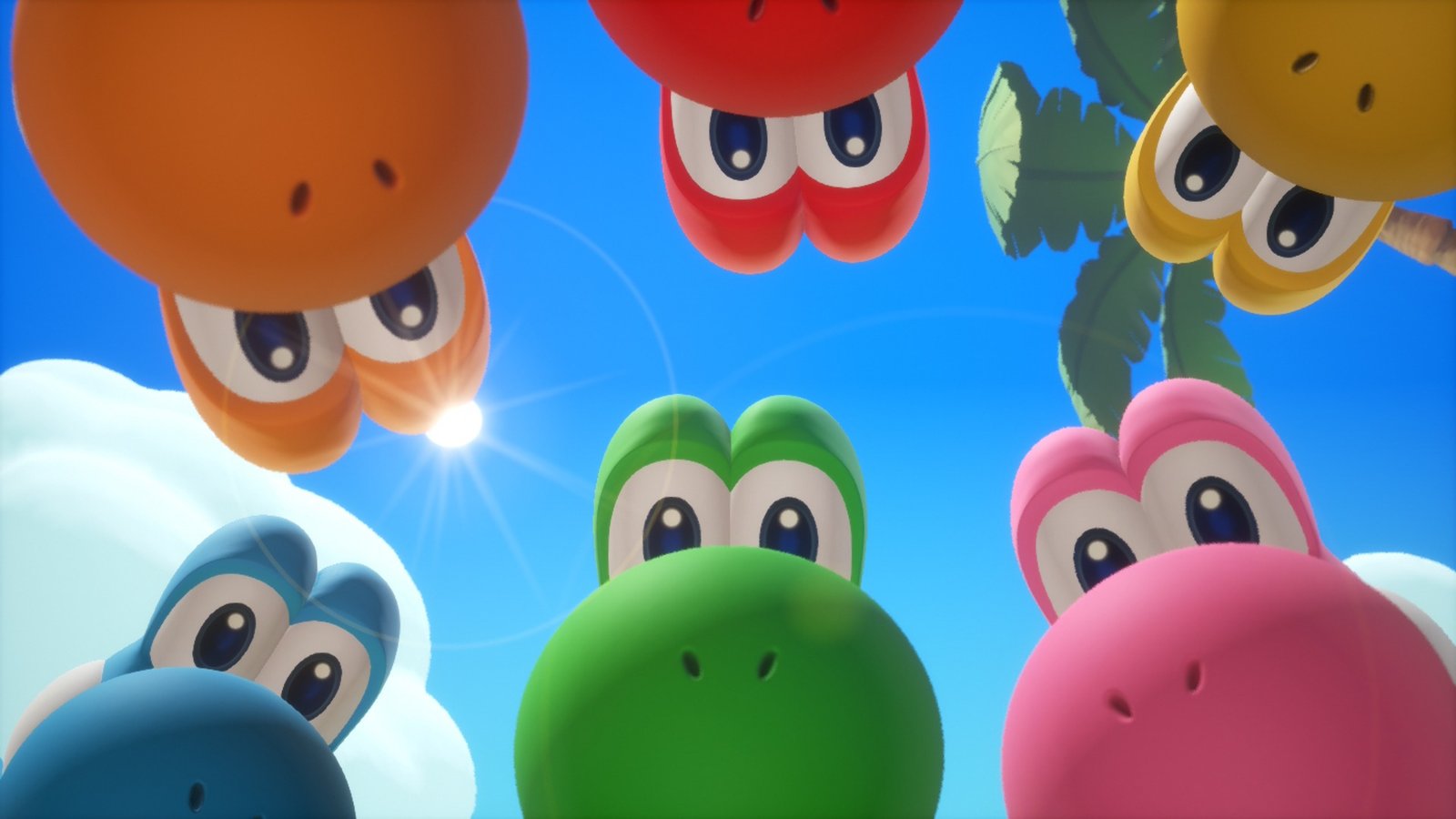
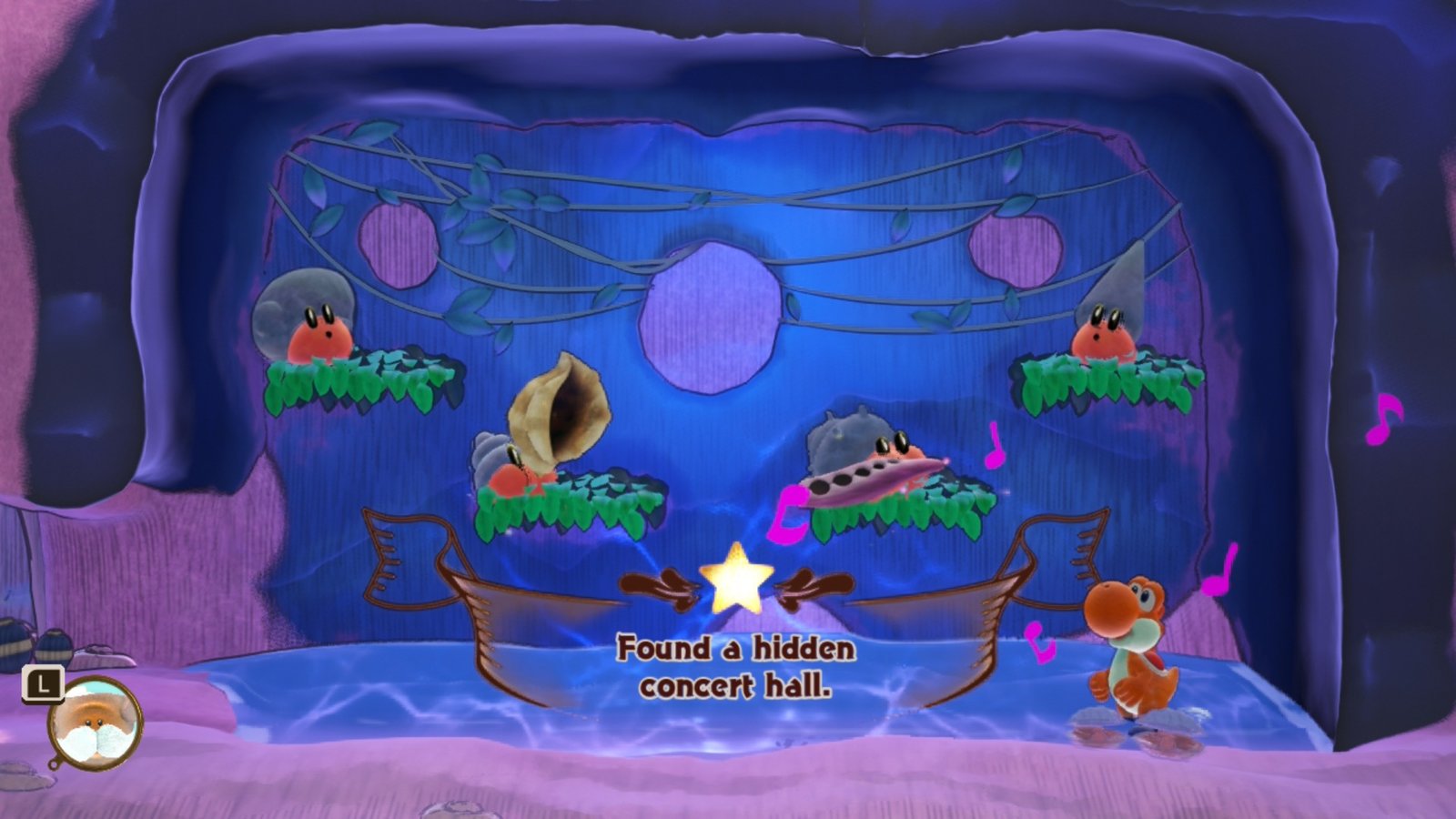
That setup works because it quickly gets the game into its central loop. Each stage introduces a creature, some familiar and others entirely new, then gives Yoshi room to observe, prod, and experiment. You may see what happens when Yoshi eats something, throws an egg at it, jumps on it, or manipulates the environment around it. Every new observation adds to your discoveries, which are then used to unlock more worlds.
At first, this is genuinely pleasant, with the stages feeling like small playgrounds rather than traditional platforming gauntlets, and the absence of meaningful danger makes Yoshi and the Mysterious Book easy to settle into. There is satisfaction in guessing how a creature might behave, testing that theory, and being rewarded when the world responds. When the game is at its best, it captures the simple joy of discovery without needing to turn every moment into a test of reflexes.
The Magic Fades Once The Pattern Settles
The problem is that Yoshi and the Mysterious Book reveals its rhythm too early. Once you understand the structure, the sense of surprise starts to fade. Enter a stage, find the highlighted creature, test a few interactions, gather discoveries, and move on. The formula is charming at first, but the game rarely complicates it in ways that make later stages feel meaningfully deeper.
That becomes more noticeable because individual stages do not always give you a strong reason to return. Some contain several discoveries, but fully clearing them can feel more tedious than rewarding. The game is generous enough with progress that you are rarely pressured to revisit older levels, which weakens the value of its collectable structure. There may be plenty to find, but not enough of it feels essential.
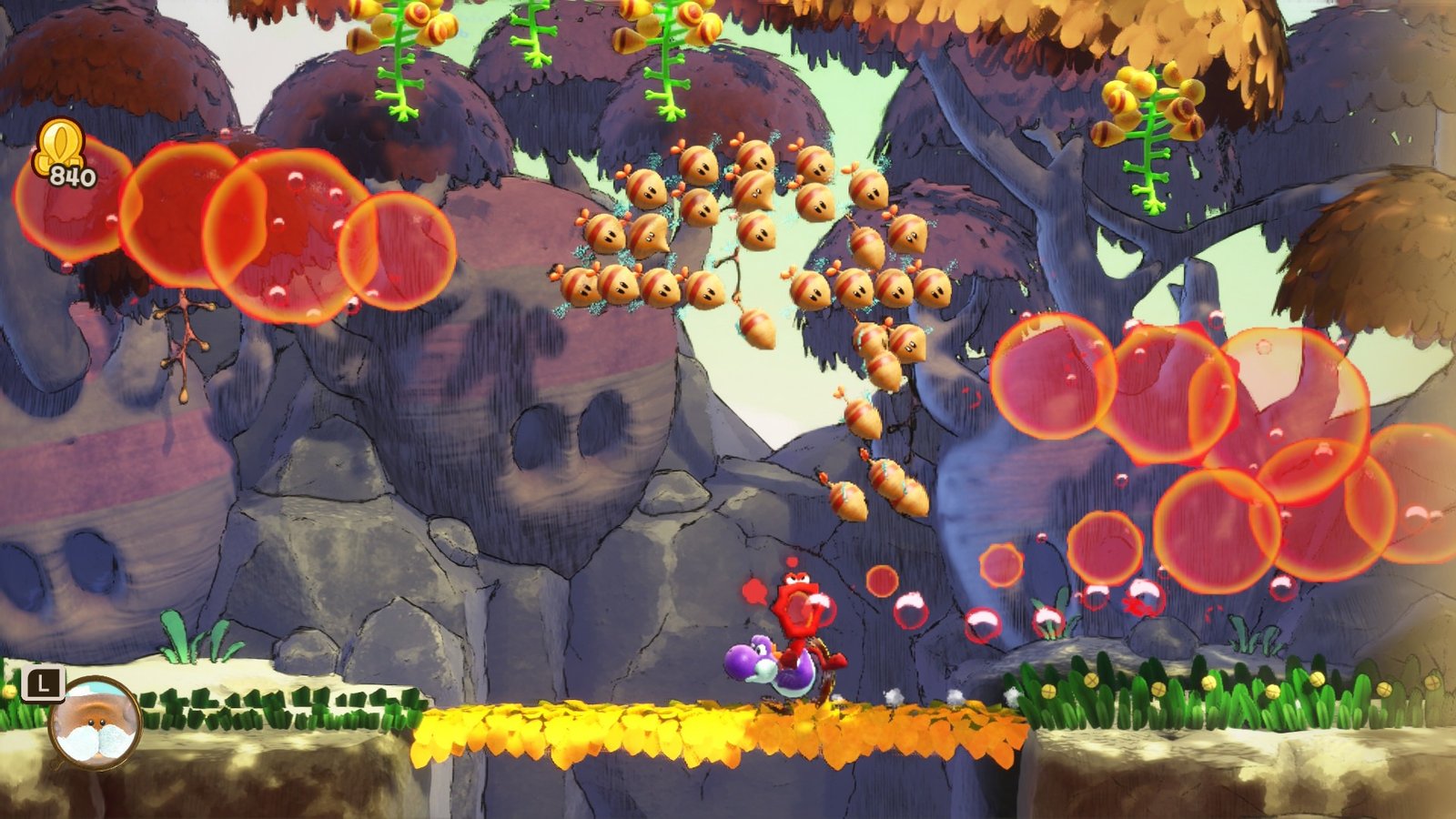
This is where the game’s toybox quality becomes both its identity and its limitation. Each stage in Yoshi and the Mysterious Book brings a new idea, but many of those ideas feel like they are packed away just as they begin to show potential. A boomerang slug stage, for instance, offers a fun and tactile way to break obstacles, while other concepts, such as throwing fruit at bugs, feel less engaging. The result is uneven, with flashes of creativity that never quite build into a stronger whole.
Classic Yoshi Mechanics Feel Strangely Underused
What makes that repetition more frustrating is how lightly Yoshi and the Mysterious Book uses Yoshi himself. The familiar pieces are here. You can flutter jump, make eggs, and throw them around the environment. These mechanics are part of what gives Yoshi games their identity, but here they often feel secondary to each stage’s creature gimmick.
That contrast matters because the game is not simply easy. Many great family-friendly platformers are easy, but still satisfying because movement, rhythm, level design, and optional mastery give players something to enjoy beyond basic completion. Kirby’s Epic Yarn remains a useful comparison because it also removed traditional failure, yet still found ways to make stages feel carefully composed and replayable.
Yoshi and the Mysterious Book does not reach that same balance. It has imagination, but not always the structure needed to support it. Its creature-driven stages can be amusing, but the core platforming often feels too passive, too brief, or too underdeveloped. Instead of feeling like a Yoshi game enhanced by new ideas, it often feels like a set of playful experiments loosely connected by Yoshi’s familiar abilities.
A Family Game Missing A Clear Family Hook
The game’s younger focus also makes the absence of co op more noticeable. Recent Good-Feel Yoshi games made shared play feel like a natural fit, especially for parents who wanted to guide younger children through gentler platforming spaces. Here, that option is missing, which makes Yoshi and the Mysterious Book feel oddly solitary for something so clearly built around early childhood accessibility.
That gap matters because some children may still need help with the game’s more observational or puzzle-like moments. Without a second player option, adults are left either offering instructions from the sidelines or waiting for the controller to be handed over. For a game that otherwise feels designed to welcome the youngest players, that feels like a missed opportunity.
Some convenience tools also arrive later than they should. Features that help with tracking discoveries or locating hidden collectables would have been more useful during the main journey of Yoshi and the Mysterious Book, not after players have already pushed through a substantial portion of the adventure. There is a sizeable post-game, but locking helpful tools behind later progress makes the overall flow feel less thoughtful than it should.
A Pretty But Modest Switch 2 Showcase
Visually, Yoshi and the Mysterious Book has plenty of warmth. Its storybook worlds are colourful, gentle, and full of soft, illustrative detail. It is easy to understand the appeal at a glance, especially for younger players drawn to bright characters and readable environments. The creature designs are often more memorable than the stages themselves, giving the adventure a playful sense of personality.
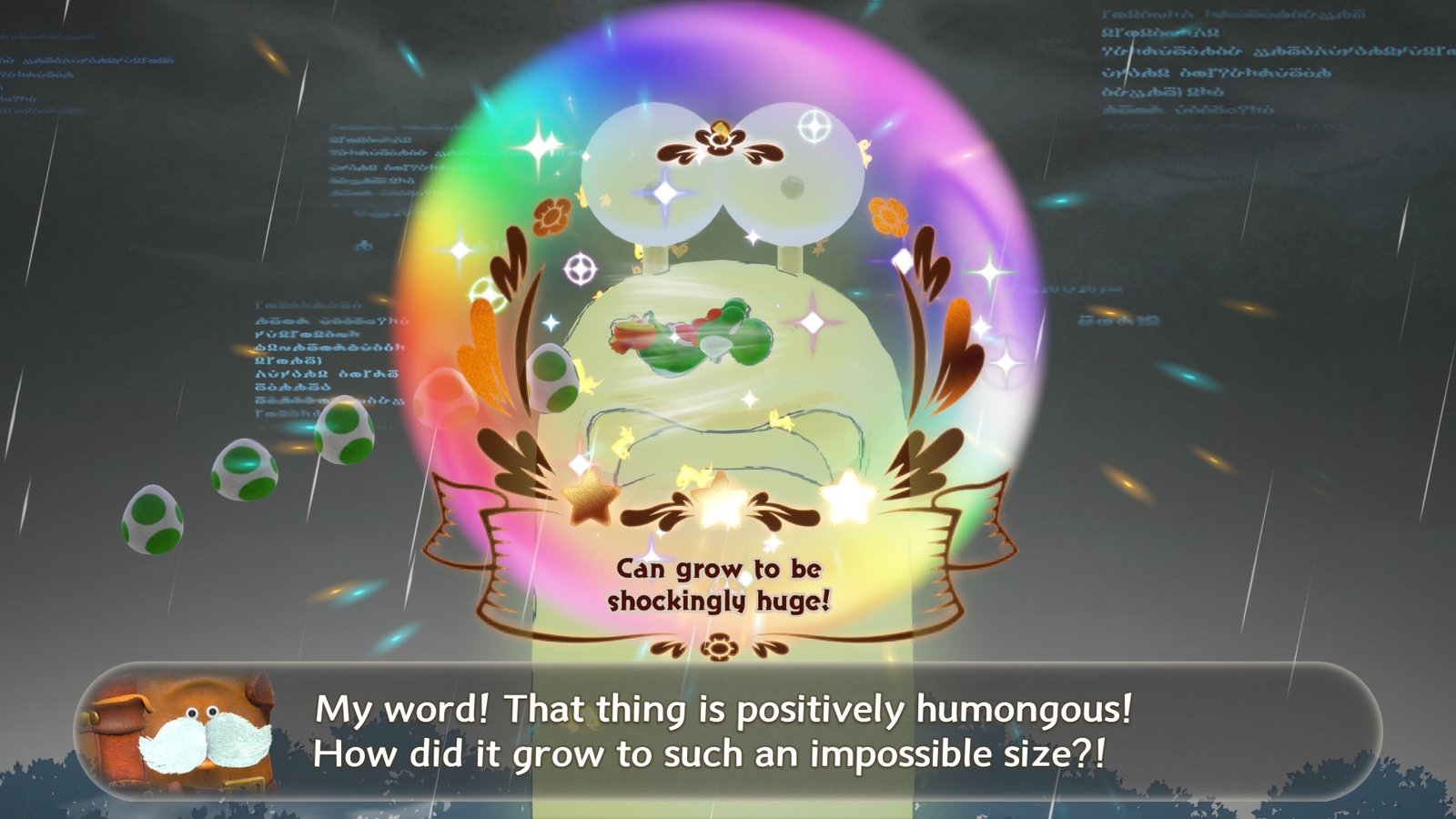
Even so, it does not always feel like a bold showcase for Nintendo Switch 2. The game looks pleasant, but not transformative. Its aesthetic has charm, but it rarely produces the kind of visual or mechanical spectacle that makes a new hardware exclusive feel essential. It feels polished in the way Nintendo games often do, but also modest in ambition.
The music follows a similar pattern. It suits the tone, keeps the atmosphere light, and never gets in the way, but few tracks leave a lasting impression. Like much of the game, it is perfectly agreeable in the moment and easy to forget once you step away.
A Gentle Adventure That Needed More Depth
Yoshi and the Mysterious Book is not a bad game. It is too cheerful, too accessible, and too full of small creative touches to dismiss outright. For very young players, it may work exactly as intended, as it gives them a safe space to explore, experiment, and enjoy Yoshi without the pressure of lives, damage, or demanding platforming.
The issue is that its best idea is also its ceiling. The discovery system gives the game a clear identity, but the stages rarely evolve enough to keep that identity feeling fresh. Its mechanics remain light, its replay value feels thin, and its most interesting gimmicks often disappear before they have been properly developed.
There is a sweet, toy-like appeal to Yoshi and the Mysterious Book, but it is the kind of toy that holds your attention for an afternoon rather than a season. It has charm, colour, and a sincere sense of play, but its storybook magic fades sooner than it should.
Yoshi and the Mysterious Book is now available on the Nintendo Switch 2.
SavePoint Score
Summary
Yoshi and the Mysterious Book is warm, accessible, and occasionally inventive, but its discovery loop grows thin as stages repeat ideas, classic Yoshi mechanics sit underused, and its best moments rarely build into something richer.
