

Table of Contents
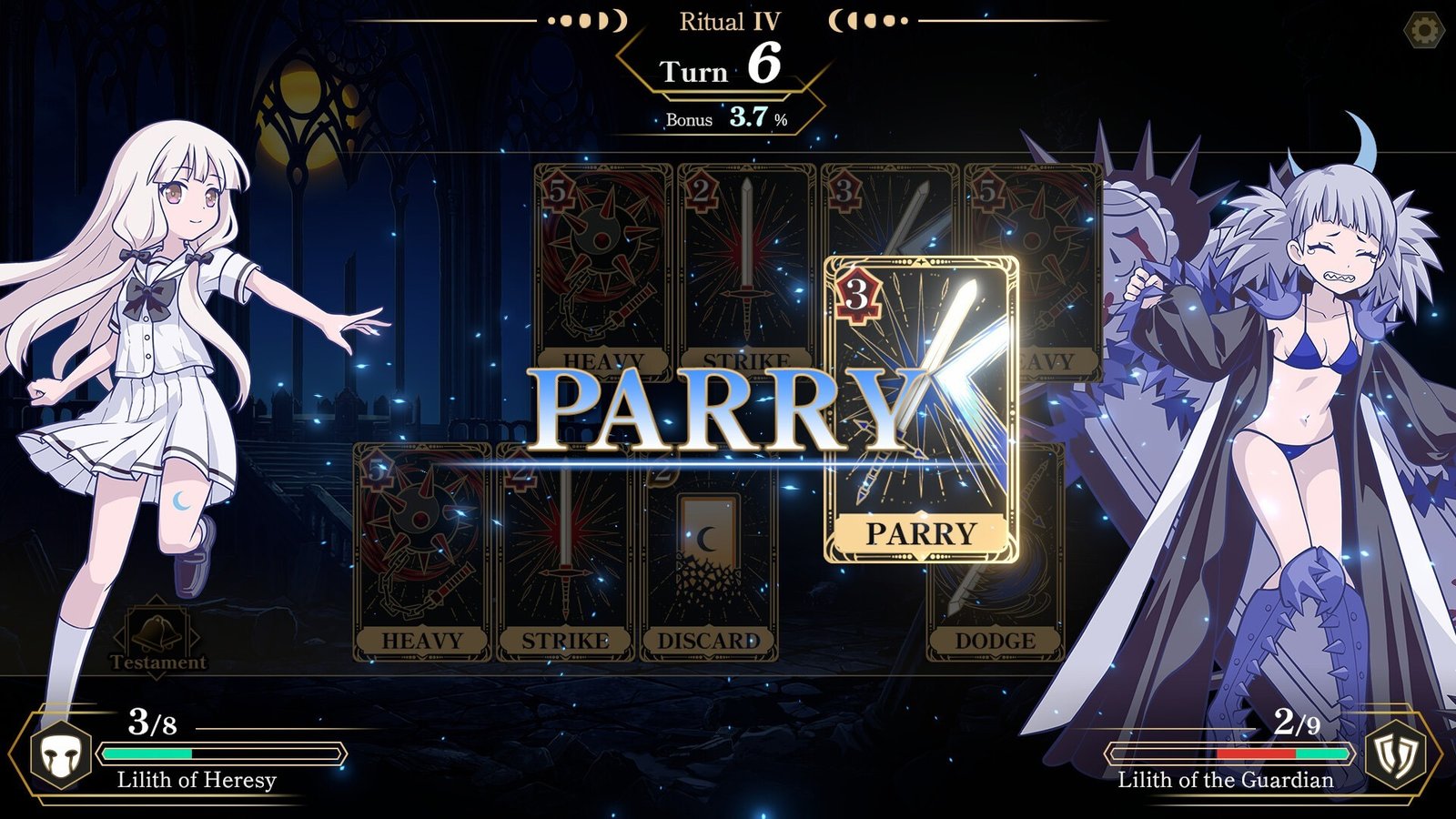
There is something immediately strange about the central mind game in LUNAR PULSE. Both players can see every card in the other’s hand. In many card games, removing that uncertainty would seemingly turn each exchange into a calculation. If all the information is in front of you, there should eventually be a mathematically correct response.
Fahrenheit 213 founder and LUNAR PULSE director Yosuke Shiokawa does not want it to be that simple. An opponent might recognise the logical move and make it. They might deliberately choose something else. More importantly, an aggressive witch should not necessarily behave like a cautious one even when both are facing exactly the same situation.
Personality itself becomes something the player has to read. That idea extends well beyond artificial intelligence. Speaking to SavePoint Gaming ahead of Tokyo Game Show, Shiokawa repeatedly returned to characters when discussing LUNAR PULSE, whether we were talking about deck construction, repeated deaths, branching narratives or what he learned while working on Fate/Grand Order. The cards provide the structure, but Shiokawa appears much more interested in the person sitting behind them.
LUNAR PULSE Interview Shows Why Characters Come Before Cards
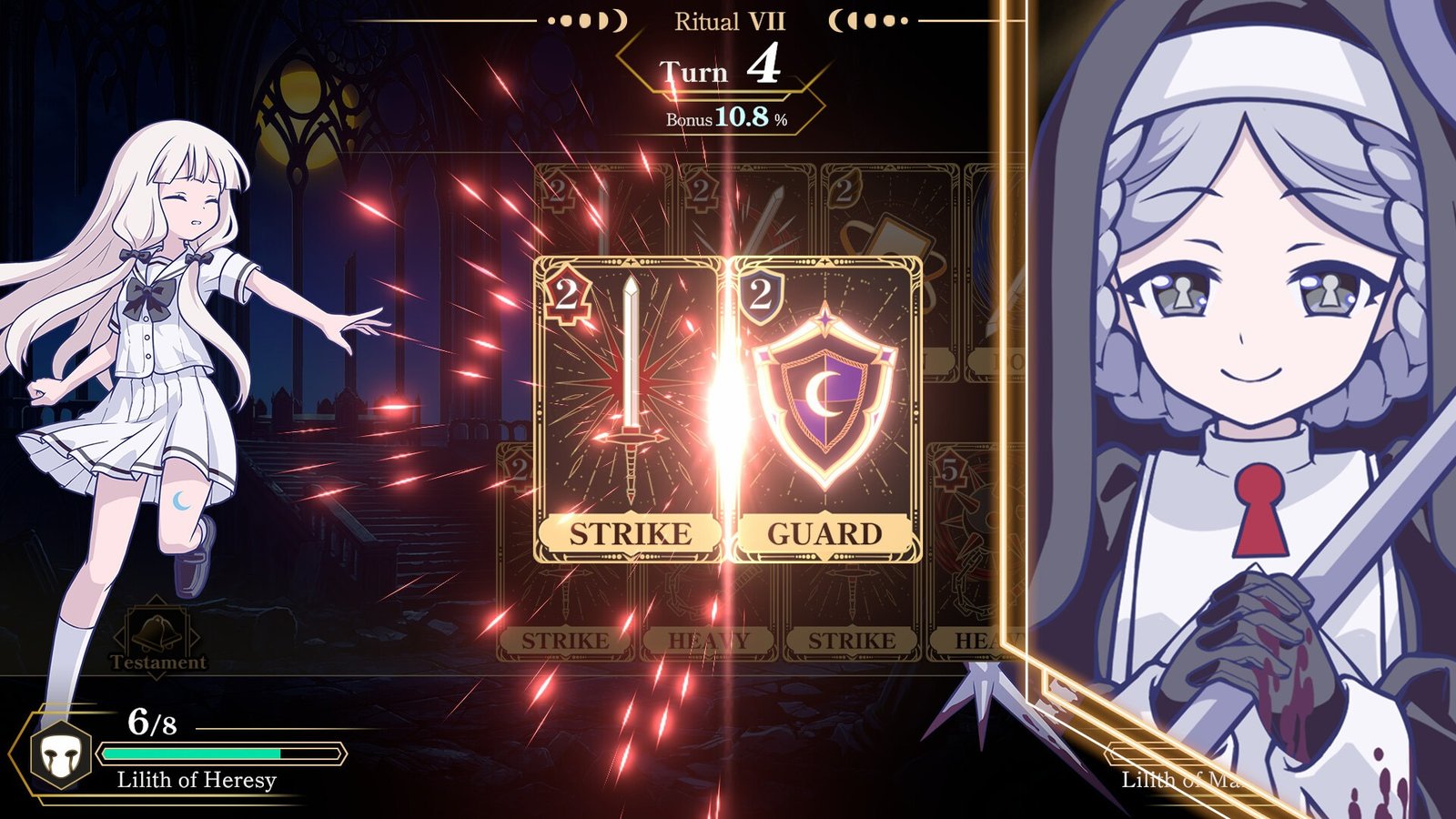
At first glance, revealing both hands seems to remove one of the foundations of a card game: uncertainty. LUNAR PULSE puts it somewhere else. Both sides select their cards simultaneously, forcing players to consider not just what an opponent can do, but what they think that particular opponent is likely to do.
For Shiokawa, making every character behave perfectly would undermine that idea.
“While there are times where the opponent will look at the situation and select the most optimal or logical card choice, this isn’t necessarily always the case. If the opponent only ever makes the most optimal decision, it makes it too predictable on the player’s end. In addition, some characters are designed to play more aggressively, while others are more cautious, and these differences in individual characters’ personalities affect the way they tend to play and behave in-game.”
He sums up the intention simply: “While it is a game of outthinking your opponent, we have intentionally built in an element of unpredictability.”
Opponents Are Designed as People, Not Perfect Players
That distinction makes LUNAR PULSE more interesting than a game where the computer merely needs to make sufficiently intelligent decisions. In fact, perfect intelligence could make it easier to solve.
If the player eventually learns that an opponent will always choose the mathematically strongest option, knowing their hand suddenly becomes an enormous advantage. The supposedly clever AI becomes another predictable system. Character tendencies disrupt that.
A cautious opponent does not need dialogue explaining her reluctance if the player gradually notices it through repeated encounters. Likewise, an aggressive character can reveal herself through the risks she repeatedly takes. Knowing every available card therefore does not mean knowing the person, and that is where LUNAR PULSE‘s character focus begins to seep directly into its rules.
Luck and Fast Retries Keep Every Duel Uncertain
Player knowledge is not intended to remove every other uncertainty either. One poor decision can result in instant defeat, yet Shiokawa does not believe individual skill should guarantee victory every time.
“I’d say a moderate element of luck is key. Whether it’s puzzle games, trading card games, poker, mahjong, or other such games, these games are designed to make you want to keep playing them precisely because individual skill doesn’t guarantee that you’ll win.”
The answer to potentially frustrating losses is not eliminating chance altogether. Instead, Fahrenheit 213 deliberately keeps the interval between failure and another attempt short. Shiokawa explained that by “shortening the cycle of playing, dying, and reviving”, the intention is for players to continue challenging themselves without having enough downtime for a bad outcome to start feeling overwhelmingly unfair.
That makes death less of a lengthy punishment and more another piece of information. Sometimes you made the wrong read, sometimes uncertainty won, and either way, another attempt arrives quickly.
Death Reveals More Than Another Way to Lose
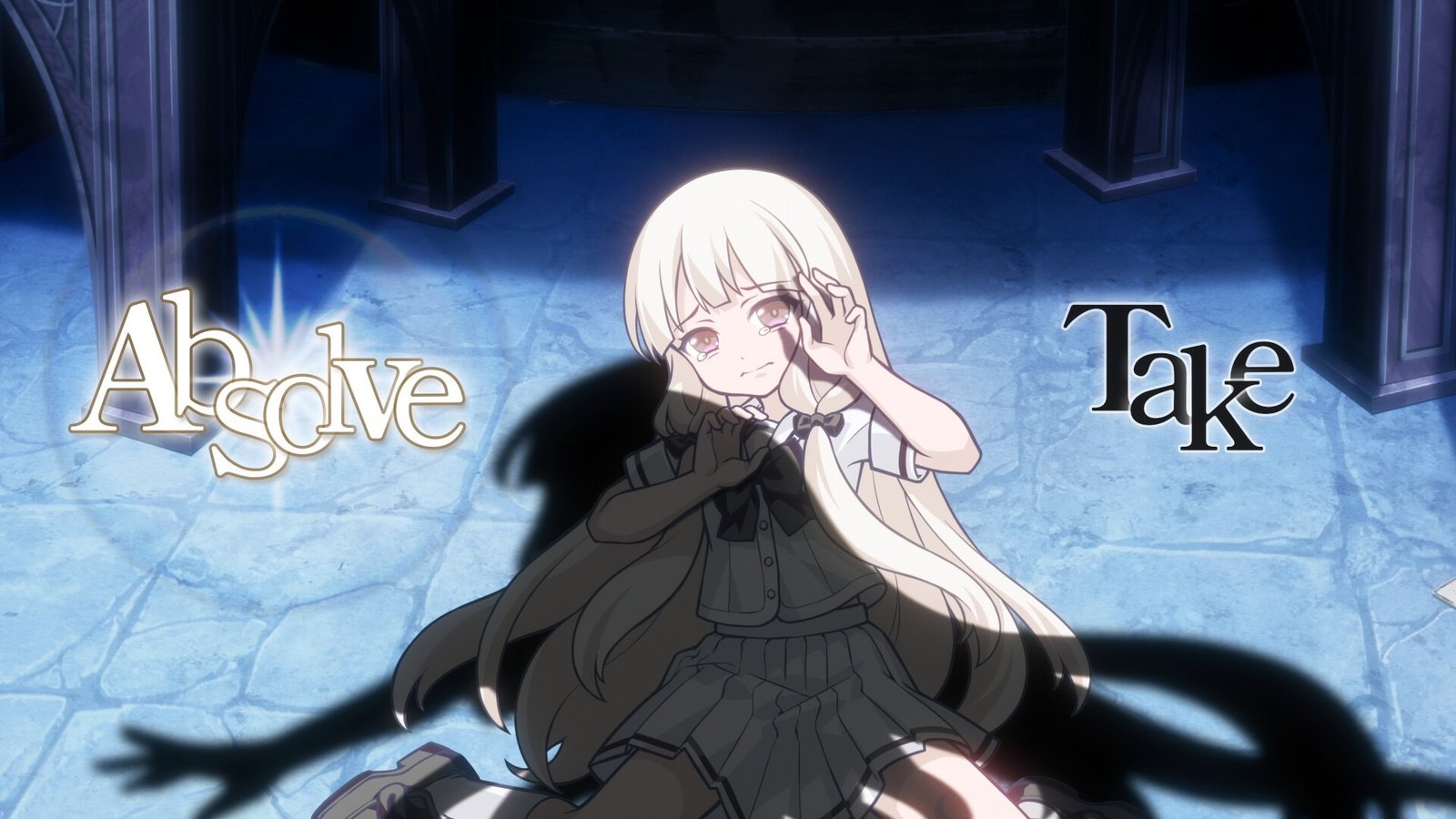
Repeated failure also feeds into the story. Runs gradually uncover more mysteries surrounding the witches, but Shiokawa doesn’t want the game’s numerous endings to become a checklist players mechanically clear. The intention is for curiosity to keep expanding alongside the player’s knowledge.
“The game is structured such that as the player carries out more and more runs, they will naturally uncover more mysteries they’ll want to solve, and they will also obtain more answers to questions as they progress through the game.”
More importantly, those answers remain tied to the people involved. “How the story develops is directly linked to the characters,” Shiokawa added, explaining that choosing whether to Absolve an opponent or Take from her will have “a significant influence on the story as well.”
That means the player is not simply learning how to defeat a witch more efficiently with every run; they are learning who she is, then deciding what to do with that knowledge.
Fate/Grand Order Still Shapes How Shiokawa Designs Games
This insistence on expressing characters through systems did not begin with LUNAR PULSE. During his work on Fate/Grand Order, Shiokawa previously discussed mechanics such as Command Cards in terms of how they express the relationship between Masters and Servants.
Creating an original game now gives Fahrenheit 213 the opportunity to develop that relationship between fiction and mechanics from the beginning. Shiokawa’s answer when we raised that connection gets directly to the heart of LUNAR PULSE:
“While LUNAR PULSE is a card game, it is also a character-driven game. Elements such as deck composition, character AI, branching storylines, endings, and so forth, act as both methods of expressing the individual characters, as well as the game mechanics themselves. So in that regard, I believe I was able to take what I learned and experienced from working on FGO and apply it here.”
Mechanics and Characters Were Never Separate Ideas
That answer explains why seemingly disparate elements of LUNAR PULSE keep circling back to the same place. The AI doesn’t behave differently just to make battles less predictable; its decisions communicate personality. Branching narratives are not separate rewards waiting after the card game is finished, and how players treat those same opponents changes where their stories go. Even the composition of a deck can become another expression of the person wielding it.
The mechanical and narrative sides of LUNAR PULSE therefore become hard to separate cleanly, which seems to be exactly what Shiokawa wants. It also makes the connection to Fate/Grand Order more interesting than simply noting that one of its former creative leads is now making an indie card game.
Shiokawa is not reproducing the systems he previously worked on; rather, he is carrying forward an underlying belief that the rules themselves can tell you something about the characters participating in them.
Being Japanese Means Keeping Characters at the Centre
That philosophy becomes even more explicit when Shiokawa talks about what Fahrenheit 213 considers distinctly Japanese about LUNAR PULSE. More than 80% of the game’s Steam wishlists currently come from outside Japan, according to the information provided during our interview, despite the studio consciously wanting the project to retain a Japanese identity.
Shiokawa’s interpretation of that identity is centred primarily on characters.
“There are several different qualities that make a game ‘Japanese,’ but the most notable for me is that it must be character-centric. Of course, narrative and play-style are also important, but the way in which Japanese games make characters their primary focal point above all else is definitely a unique characteristic that contributes to that ‘Japanese quality’ we’re referring to.”
Then comes the more important part:
“LUNAR PULSE is indeed a card game, but beyond that, I want to emphasize that it is a character-driven game, and that that is a key factor that I refuse to compromise on.”
That last phrase is particularly revealing, as international attention does not appear to be pushing Fahrenheit 213 towards making LUNAR PULSE more generically familiar. If anything, Shiokawa sees the character-centric approach as part of the game’s identity worth protecting.
Fahrenheit 213 Wants Strong Creative Voices, Not a House Style
That doesn’t mean Shiokawa expects every game Fahrenheit 213 produces to resemble LUNAR PULSE. His character-first approach is personal, but the studio’s broader identity is deliberately less restrictive. Shiokawa describes Fahrenheit 213’s central philosophy as:
“Games that stay with you for a lifetime.”
He argues that making something capable of doing that requires creators with a strong individual voice.
“To make that statement a reality, I believe you absolutely need a strong creative vision. And that belief is only further reinforced when I consider how FGO and the Fate franchise have managed to capture the hearts of fans for ten, even twenty years.”
For Shiokawa, an artist’s voice is an extension of their individuality, so there is no single required method for Fahrenheit 213 to pursue that goal.
“On a personal level, since I enjoy developing character-driven games, that’s the approach I have chosen to take,” he said, “but I don’t believe that all of Fahrenheit 213’s titles need to be character-driven games.”
Fahrenheit 213 Does Not Need Every Game to Look Alike
That gives the studio a potentially interesting definition of consistency, as its games do not necessarily need the same visual style, genre or mechanical priorities. What should connect them is a sufficiently strong creative voice behind each project.
For LUNAR PULSE, that voice is Shiokawa’s fascination with characters and how systems can express them. Another director could arrive at Fahrenheit 213 with an entirely different obsession, and the result would not necessarily look much like LUNAR PULSE, and according to Shiokawa, it does not have to.
A Small Studio Built on Experience From Much Bigger Games
Fahrenheit 213 remains a relatively small core team, with LUNAR PULSE co-developed alongside GIANTY, and responsibilities clearly divided. Fahrenheit 213 primarily handles planning, direction, conceptualisation and production, while GIANTY leads much of the actual implementation and construction of the game.
Shiokawa does not see that arrangement as particularly unusual. During his time at Square Enix and DELiGHTWORKS, he directed numerous projects using similar structures and worked with overseas collaborators, meaning maintaining a central creative vision while development extends outside the core team is familiar territory.
The studio’s smaller scale is more apparent in the games themselves. There is an interesting pattern between LUNAR PULSE and fellow Fahrenheit 213 project TSURUGIHIME. Both seem to take experience associated with considerably larger productions and compress some of those ideas into smaller projects.
We asked Shiokawa whether distilling larger game experiences into their essential ideas was becoming part of Fahrenheit 213’s design philosophy. His answer was refreshingly straightforward.
Shiokawa Still Wants to Make a “Major Title”
“That’s probably just a product of us being a small-scale indie game studio. I would love to create a major game title. Eventually.”
Shiokawa pointed towards the team’s experience on massive productions such as Kingdom Hearts and Fate/Grand Order, suggesting that lessons from those games naturally find their way into Fahrenheit 213’s current work.
But smaller projects aren’t necessarily where he intends the studio to stay forever, and his response ends with perhaps the most intriguing tease in the entire interview:
“Please look forward to the ‘major title’ that we will eventually create.”
It is a fitting note to leave Fahrenheit 213 on because it stops us from turning its current limitations into a creative doctrine the studio never claimed to have. For now, being small means concentrating ideas.
In LUNAR PULSE, that concentration means a card battle can double as a character study. AI behaviour can communicate personality. Death can reveal more about an opponent, while a choice made after victory can fundamentally alter where that person’s story goes.
Shiokawa’s time on Fate/Grand Order clearly remains part of that thinking, but LUNAR PULSE gives him an original set of characters and rules through which to express it. The cards might be what players are looking at, but ultimately, the characters are what he wants them to see.
LUNAR PULSE launches for PC through Steam in 2027.
