

Table of Contents
Dragon’s Dogma 2: Dark Arisen Provides Colder, Harder Reasons to Return
It says something about Norgan that a pack of wolves could make a level 50 Arisen reconsider his choices. Our hands-on session with Capcom‘s Dragon’s Dogma 2: Dark Arisen began at the start of the expansion’s new northern adventure, with a Fighter accompanied by three Pawns.
On paper, that should have been more than enough to handle the first ordinary enemies wandering through the snow. It was not. The wolves took more effort to put down than expected, while the Northern Giant and Fallen Dragon became long battles of attrition. Both encounters offered valuable moments when targeted attacks or depleted health could bring the creature down, creating an extended window for the party to concentrate its damage. Reaching those opportunities, however, required patience.
That increased resistance may be precisely what committed Dragon’s Dogma 2 players are looking for. Capcom has built Dark Arisen around tougher combat, randomised relic rewards, wider vocation loadouts and more reasons to continue developing an experienced Arisen.
Yet the hands-on also left one familiar question unresolved: does expanding every vocation truly make them equally enjoyable, particularly when melee classes still struggle to reach or consistently damage enormous enemies?
The answer is not clear yet. What is clear is that Dark Arisen is less interested in replacing the original adventure than giving its most dedicated players a tougher and more rewarding extension of it.
Experiencing Frozen Norgan
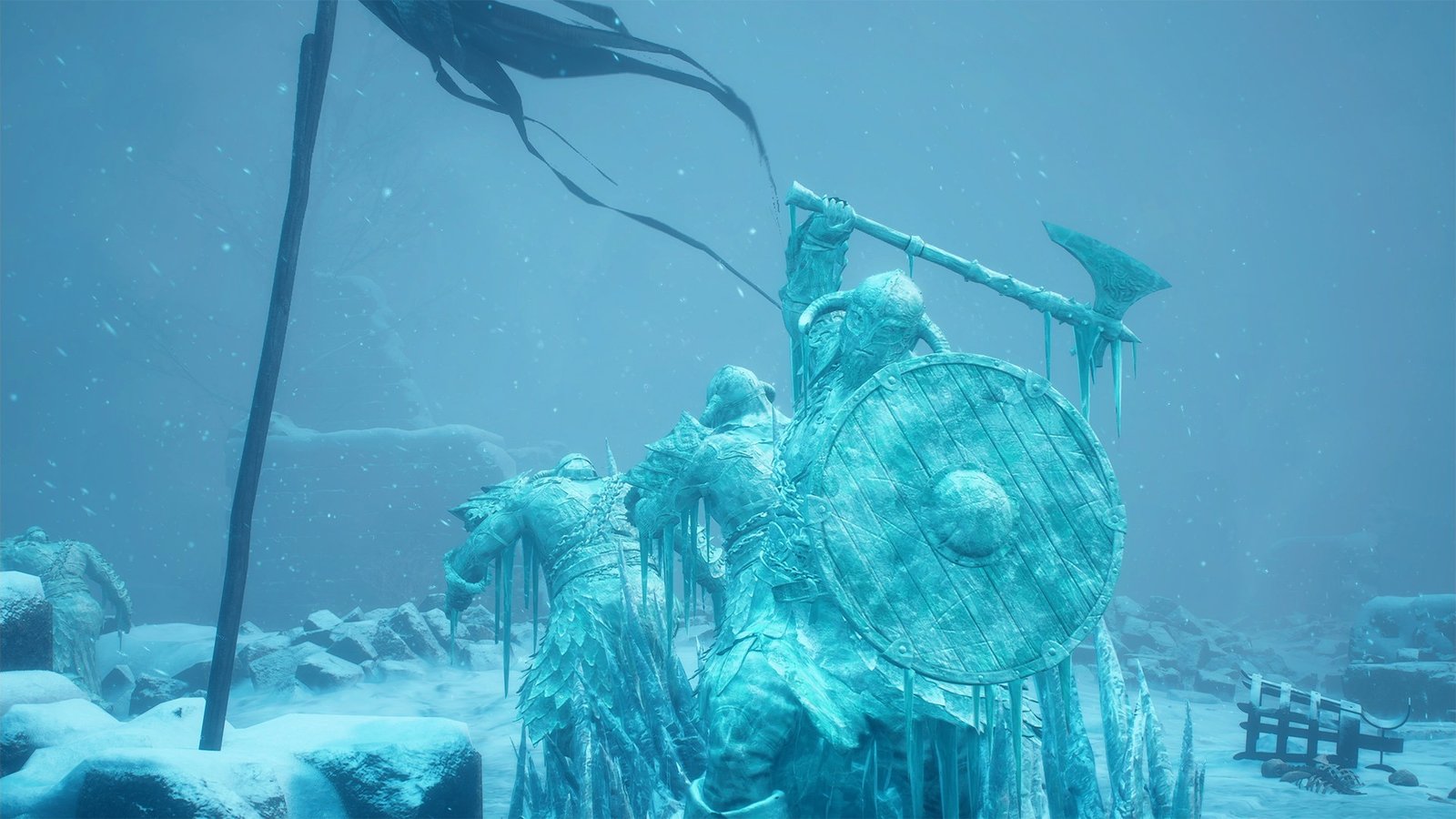
The expansion opens with the Arisen arriving in Norgan, a long-abandoned northern region defined by snow, ice and the mystery surrounding the undying Fallen Dragon. The visual change is immediate as Norgan’s frozen environment provides a clear break from the forests, settlements and arid terrain of the base game, creating a stronger feeling that the Arisen has genuinely travelled somewhere new.
That is important for an expansion built around continued exploration. A new set of objectives would not be enough if the surrounding region felt like another part of Vermund with snow scattered across it. Our opening time in Norgan suggested a place with its own hazards, routes and rules. Capcom was also keen to stress that the preview only covered its earliest portion.
“The content you experienced during the demo is only the starting point of Norgan,” the development team explained during our accompanying interview.
The expansion’s main story is expected to run for roughly 15 to 20 hours, depending on how directly players approach it. Beyond Norgan, 12 Lost Rites dungeon challenges will also appear across the existing world, giving returning Arisen reasons to revisit familiar regions rather than leaving every meaningful addition in the north.
Snow and Ice Become Part of the Fight
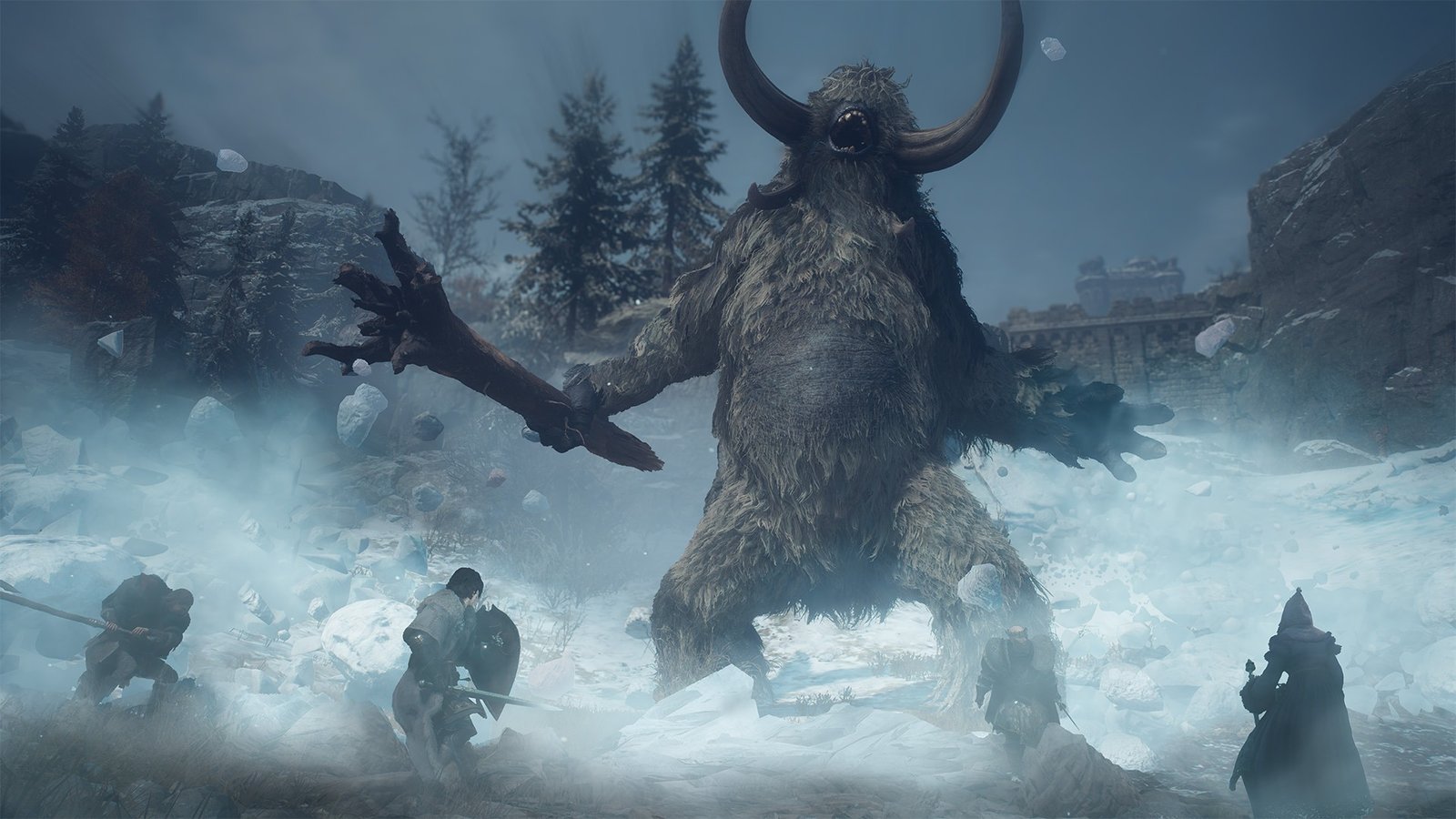
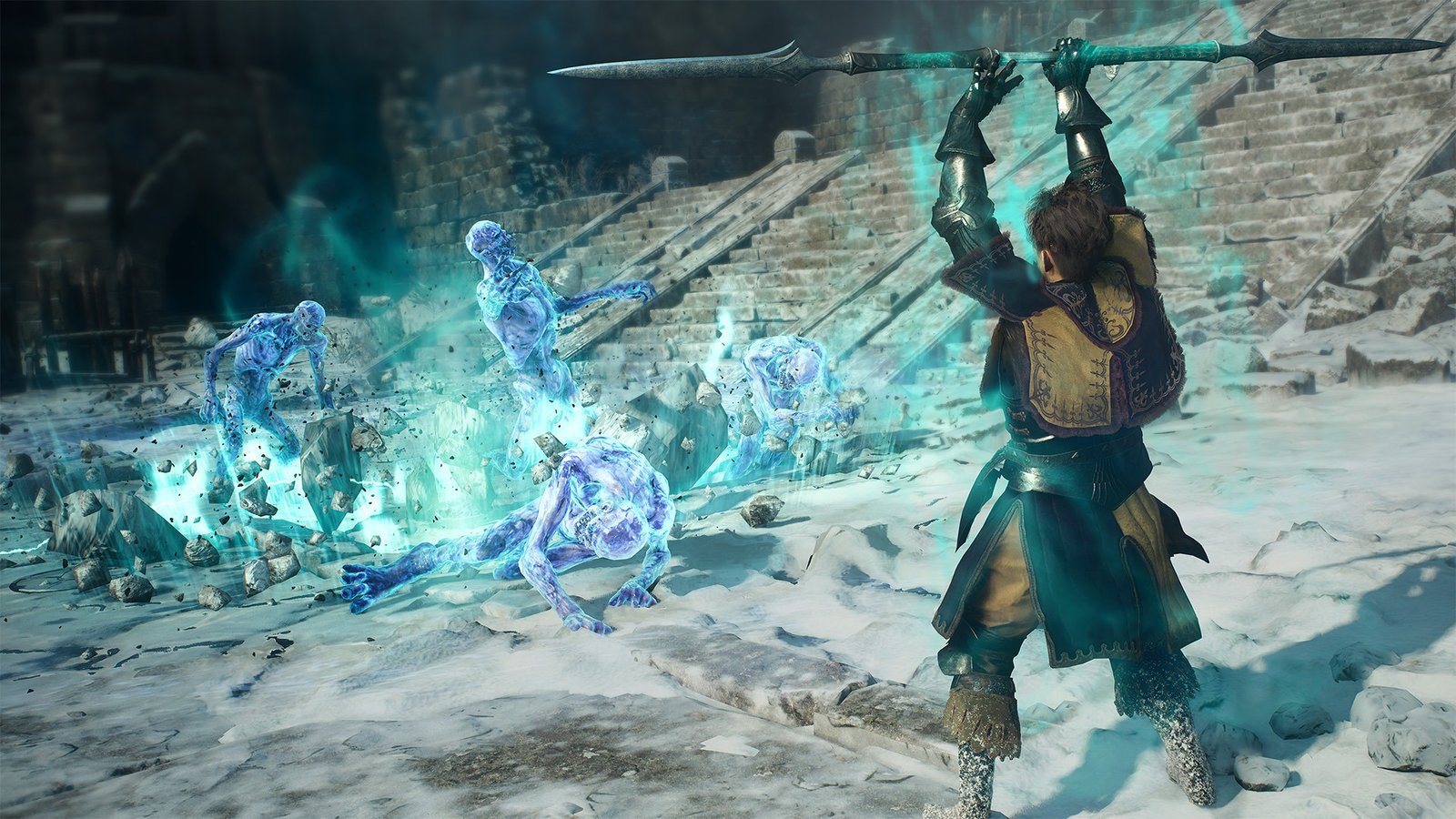
Norgan’s environments in Dragon’s Dogma 2: Dark Arisen are not simply decorative. Ice, avalanches and other hazards can threaten the party, but players can also manipulate parts of the terrain against enemies. Large icicles can be removed and thrown, whereas collapses can cause significant damage over a wider area.
“If you have a giant icicle protruding from the ground, players will be able to grab it and throw it into enemies, or cause the ice to collapse and use it to their advantage,” Capcom explained.
This fits naturally with Dragon’s Dogma 2, where memorable battles frequently emerge from the interaction between creatures, Pawns, terrain and physics rather than a tightly scripted sequence. A large enemy encounter is rarely confined to attacking a health bar. Players climb monsters, strike individual body parts, search for ways to unbalance them and rely on their Pawns to exploit whatever opening appears.
Norgan adds another variable. The environment may restrict movement or introduce new dangers, but recognising the right opportunity could also remove multiple smaller enemies or take a meaningful portion from a boss.
The value of those hazards will depend on how often players are allowed to discover and use them organically. If every icicle or avalanche appears in an obvious combat arena, the mechanic may start to feel prescribed. When integrated naturally into exploration, it has the potential to deepen the improvised battles that already define the series.
Norgan’s Bosses Are Built to Resist Overpowered Arisen
The Northern Giant and Fallen Dragon were the two largest threats encountered during our session with Dragon’s Dogma 2: Dark Arisen , and neither went down quickly. That was despite controlling a level 50 Fighter with a complete Pawn party. Even ordinary creatures proved more durable than expected, establishing Norgan as an area intended for experienced characters rather than a gentle continuation of the main campaign.
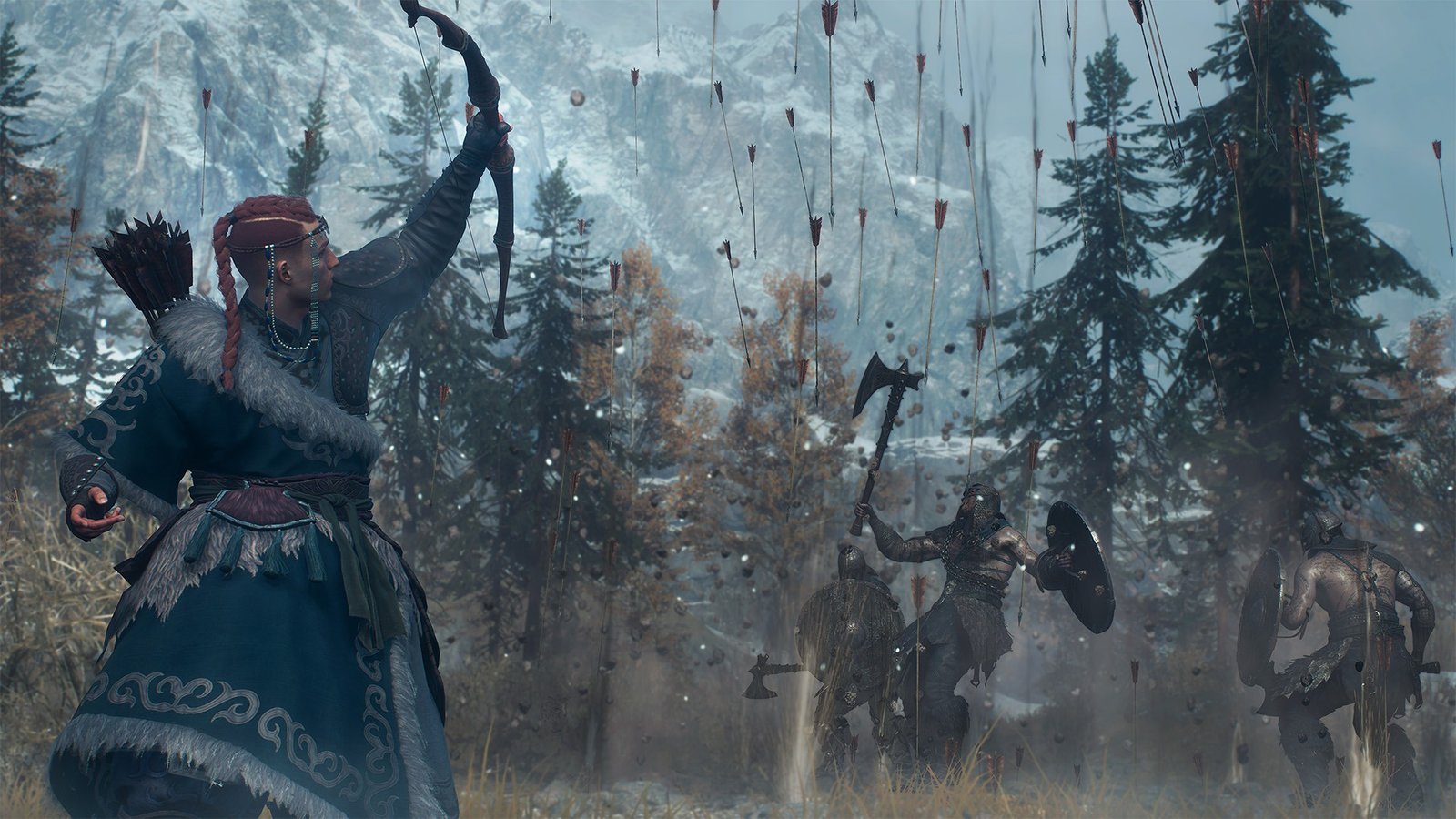
The Northern Giant turned the disadvantages of a melee vocation into a recurring concern. The Fighter remains satisfying when standing directly in front of an enemy, absorbing attacks and responding with carefully timed strikes. The problem arrives when the most valuable targets are high above the ground or constantly moving outside its immediate reach.
A Sorcerer can cast powerful magick from a distance. An Archer can continue applying pressure while repositioning. A Fighter often has to wait, climb or depend on the creature being brought down before reaching the same vulnerable areas.
Once the Northern Giant or Fallen Dragon collapsed, the fight shifted. The entire party could concentrate on a vulnerable point and deliver sustained damage before the creature recovered. Those windows felt rewarding because the encounters made the party work for them. They also reinforced how prolonged certain battles could become.
Capcom says difficulty in Dragon’s Dogma 2: Dark Arisen is not being increased through health and damage alone. Each new monster is intended to require a different response, with weaknesses and behaviour that players must learn even as stronger relics improve their statistics.
“We prioritise fresh gameplay above all else,” the team said when discussing the design of the new enemies.
That philosophy is promising, but it will need to remain visible throughout Norgan. Long health bars are easier to tolerate when the player is continually reading a creature, adapting to its attacks and uncovering better ways to bring it down. Without that variation, difficulty risks becoming endurance.
The Fallen Dragon Provides an Early Spectacle
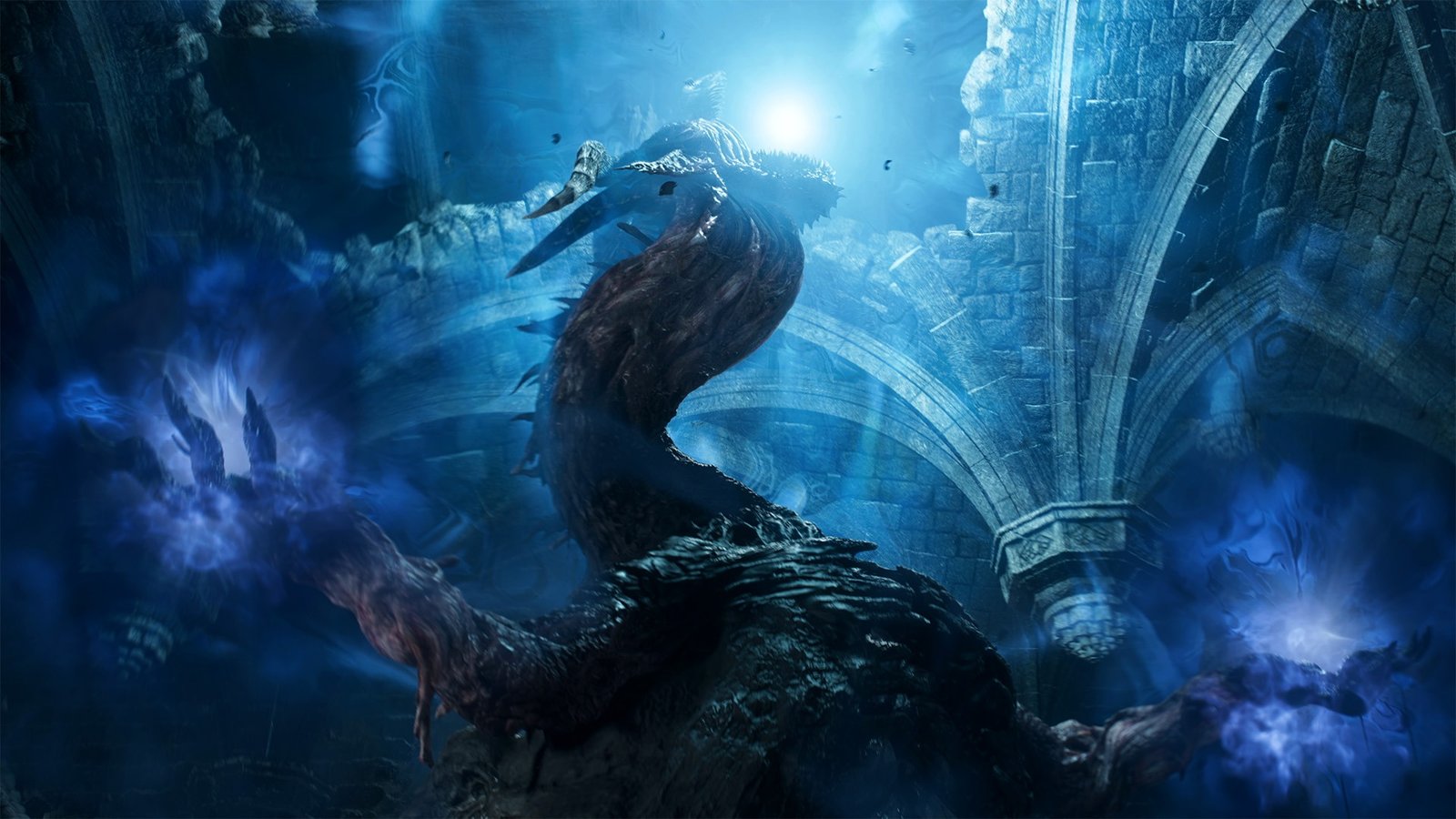
The Fallen Dragon marked the endpoint of the preview and provides the kind of large-scale encounter expected from the expansion’s central mystery. Like the Northern Giant, it took considerable time to defeat. The fight was at its best when the party successfully disrupted the creature and created an opening, rather than slowly reducing its health through repeated standard attacks.
That distinction matters for Dark Arisen. Its new loot cycle is designed to make the Arisen increasingly powerful, so the expansion needs enemies that cannot be solved through larger numbers alone. Capcom’s intention is for each opponent to retain specific strengths, weaknesses and counterplay even after players acquire stronger equipment. Relics should broaden the range of possible solutions rather than remove the need to understand the enemy.
Our early fights support that direction, although they also suggest that players returning after a long absence may need time to reacquaint themselves with the game’s less conventional combat rhythm.
Six Skill Slots Give Every Vocation More Room
One of the most immediately useful changes is the expansion of custom skill slots from four to six. The adjustment will be introduced through a free update rather than being restricted to owners of Dark Arisen. Combined with new and enhanced skills, the larger loadout gives each vocation more flexibility without forcing players to remove abilities that already define their preferred style.
For the Fighter, that meant having more responses available during combat. Additional skills provide room for defence, crowd control and specialised attacks to coexist, rather than requiring one useful option to be discarded for another. It is a straightforward improvement, particularly for players who have already settled into a familiar vocation.
Capcom considered that established relationship when choosing to deepen the existing roster instead of adding a completely new class.
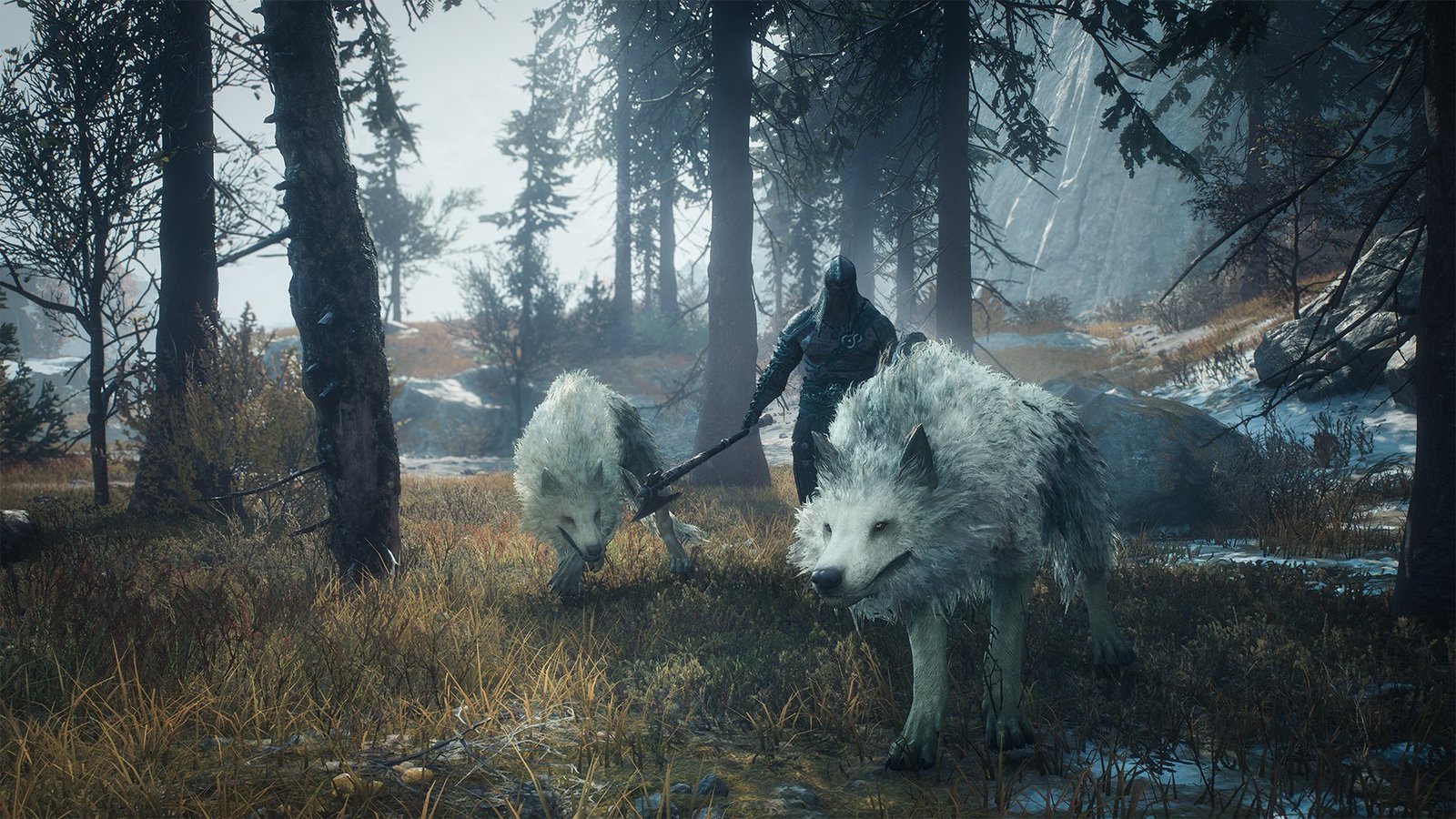
“Since a lot of players have already spent considerable time with the existing vocations, we thought it would be more rewarding to add more skills on top of them instead of coming up with something completely new,” the team explained.
The logic makes sense. A new vocation would create a fresh playstyle, but it would do little for someone who has spent dozens of hours refining a Fighter, Warrior or Sorcerer. Additional skill slots and relic-based abilities instead provide a reason to revisit those established builds.
More Skills Do Not Automatically Fix Vocation Balance
The larger loadout was welcome during our Fighter session, but it did not completely address the disadvantages facing a melee class against towering bosses. Having six skills means more tactical options. It does not necessarily provide consistent access to targets positioned well above the Arisen, nor does it remove the need to wait for a large creature to fall.
This is where Capcom’s philosophy for Dragon’s Dogma 2: Dark Arisen will be tested. The developers said player data showed that certain vocations and skills were selected more frequently than others. Rather than increasing the power of the most popular choices, the team studied less frequently equipped skills and developed enhanced versions intended to make them more attractive.
That may lead to greater build variety. It does not guarantee that every vocation will feel equally capable in every situation. Perhaps that is not the point. Dragon’s Dogma 2 has always encouraged parties built around complementary strengths, with Pawns compensating for what the Arisen cannot do alone. A Fighter struggling to reach an airborne or towering enemy may be an intentional weakness rather than a design failure.
Even so, “every vocation can have a good time” remains easier to accept in theory than during a prolonged battle where a melee character spends too long waiting for meaningful access.
Smarter Pawns Strengthen the Party Fantasy
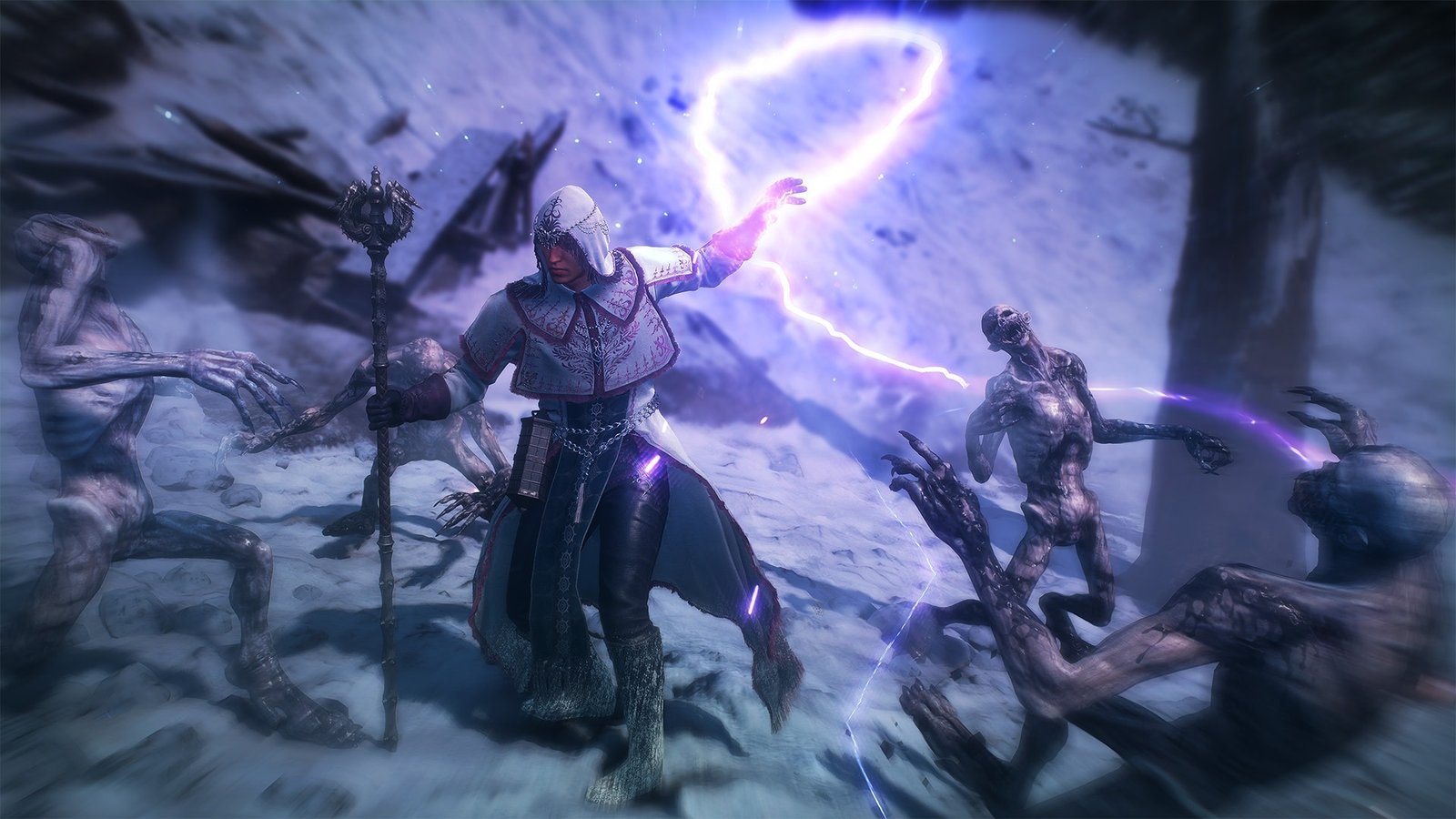
Pawns were one of the clearest improvements during the hands-on. Their behaviour appeared more responsive and cooperative, particularly during larger encounters. They combined attacks against enemies, capitalised on openings and showed a greater awareness of immediate danger.
The standout moment came when a Pawn threw itself into danger to push the Arisen away from an incoming area-of-effect attack. It was a brief interaction, but one that made the Pawn feel less like a collection of combat instructions and more like a companion reacting to the same battlefield.
Capcom is expanding these cooperative behaviours across different vocations. Archer Pawns may attempt to stagger large enemies, while Pawns can pursue smaller creatures launched into the air and join attacks already in progress.
Some can physically protect the Arisen from an incoming blow. Others can assist while climbing a large monster, reinforcing the idea that the party is working together rather than attacking independently.This does not mean every Pawn decision will suddenly become flawless. The unpredictability of their behaviour is part of what gives Dragon’s Dogma its personality, even when it produces frustration.
The improvement comes from making their useful interventions feel more deliberate and varied. In a region where even wolves can create problems for an experienced party, better cooperation is not merely a visual flourish. It could become essential.
The Relic Expedition Cycle Creates a New Endgame
The most substantial structural addition is the Relic Expedition Cycle, a repeatable, combat-focused loop built around finding and appraising randomised equipment. Relics are acquired through exploration and battle before being appraised to reveal their actual properties. The resulting equipment can provide stronger offensive or defensive statistics, alongside effects and abilities tied to specific vocations.
Our session offered access to this new hack-and-slash cycle, although there was not enough time to investigate individual relic combinations or develop a meaningful build around them. The appeal is nevertheless easy to understand.
The base game eventually reaches a point where conventional levels provide diminishing improvements. Randomised relics introduce another way to develop an established Arisen, encouraging repeated expeditions in search of equipment that complements a preferred vocation or opens a new approach. The system was created in response to one of the clearest messages Capcom received from players.
“I still want to fight. I still want to play,” the developers recalled hearing from the community.
That sentiment shaped the expansion’s more action-driven structure. Where the base game emphasised the unpredictable journey across its world, the Relic Expedition Cycle gives committed players a repeatable reason to keep battling after that initial journey has lost some of its mystery.
Randomised Loot Could Become Exhausting
The risk is volume. A loot system built around random qualities needs to distribute enough equipment to make each expedition exciting. That same generosity can quickly fill inventories with items the player has no intention of using.
Capcom is addressing this through a combination of new filtering, favourites and disposal options. Equipment can be marked with a star, while storage can be filtered by vocation. Favourite items will appear more prominently, reducing the need to search through an expanding collection whenever a build changes.
Low-level relics can also be converted without first being appraised, returning the currency used by the system. Appraised equipment can be sold in larger groups rather than processed individually. These changes should reduce friction, although they do not remove the danger of repetition. The Relic Expedition Cycle will ultimately depend on encounter variety and whether its most valuable rewards genuinely alter how a vocation plays.
If most relics provide small numerical increases, the loop may become another inventory-management exercise. Unique skills and unusual combinations are far more likely to keep players experimenting.

Dark Arisen Is Also Improving the Game Around the Expansion
Dark Arisen is arriving alongside a broader attempt to improve the entire Dragon’s Dogma 2 experience. Capcom’s June update introduced quality-of-life adjustments including the Eternal Ferrystone and additional Portcrystals. A second free update planned for August is set to add further frame-rate and performance improvements, more save slots and additional gameplay adjustments.
The expanded skill slots, new Pawn actions and inventory tools are part of that wider work rather than benefits limited entirely to the paid expansion. That separation is significant. Players who do not immediately travel to Norgan should still return to a more flexible and convenient base game.
Our preview build ran well during the limited session on a standard PlayStation 5. Combat remained responsive despite several Pawns, regular enemies and large monsters occupying the battlefield at once. A short controlled preview cannot establish how the game will perform across busy settlements, lengthy sessions or its most demanding encounters. That will require substantially more time with the final build, but the early result was encouraging, particularly with Capcom already promising another round of performance work before launch.
More Content for the Most Committed Arisen
Dragon’s Dogma 2: Dark Arisen is not attempting to reinvent the series. It takes the systems that already work, such as large-scale combat, Pawn cooperation, vocation-based abilities and unpredictable exploration, and gives committed players more reasons to remain inside them.
Norgan creates a visually distinct new region. Environmental hazards add another possibility to battles. Six skill slots provide greater freedom, while the Relic Expedition Cycle gives powerful Arisen a new form of progression after conventional levels begin losing their impact.
The Northern Giant and Fallen Dragon also indicate that the expansion will not allow experienced parties to move through its content without resistance. That increased challenge comes with reservations. Some fights already felt long, and the Fighter continued to struggle against creatures whose weakest targets remained out of reach. Randomised relics could produce a compelling endgame or an exhausting amount of disposable equipment.
Capcom appears aware of the latter concern, with sorting, favourites and faster disposal designed around the expected volume of loot. What matters most is that Dark Arisen feels aimed at players who enjoyed the base game enough to want another reason to inhabit it.
This is more content for committed Arisen, supported by quality-of-life changes that should make the return easier. It does not erase every imbalance or frustration, but our first experience with Norgan suggests a broader, tougher and more rewarding version of the adventure.
Dragon’s Dogma 2: Dark Arisen launches on October 9 for PlayStation 5, Xbox Series X|S, PC and Nintendo Switch 2. Existing owners on PlayStation 5, Xbox Series X|S and PC can purchase the expansion separately, while the Nintendo Switch 2 version includes the base game and expansion together.
