

Table of Contents
Xbox Game Pass Subscribers Remain Below Microsoft’s Early Ambitions
Xbox Game Pass once looked like the clearest version of Xbox’s future. Players could pay a monthly fee for access to Microsoft’s first-party games on day one, alongside a rotating library of third-party releases. For years, that made Game Pass one of the most compelling deals in gaming, especially when Xbox was still building momentum around acquisitions, cloud gaming, PC expansion, and its wider subscription ecosystem.
Now, the conversation feels very different. The service remains influential, but a new report suggests it is still far from the scale Microsoft once hoped it would reach.
Hovering Around 30 Million Subscribers
According to The Wall Street Journal, the service currently has around 30 million subscribers worldwide, based on a person familiar with Microsoft’s gaming business. That number is still significant, as Game Pass remains one of the biggest subscription services in gaming, and few competitors have built anything with the same day-one first-party model.
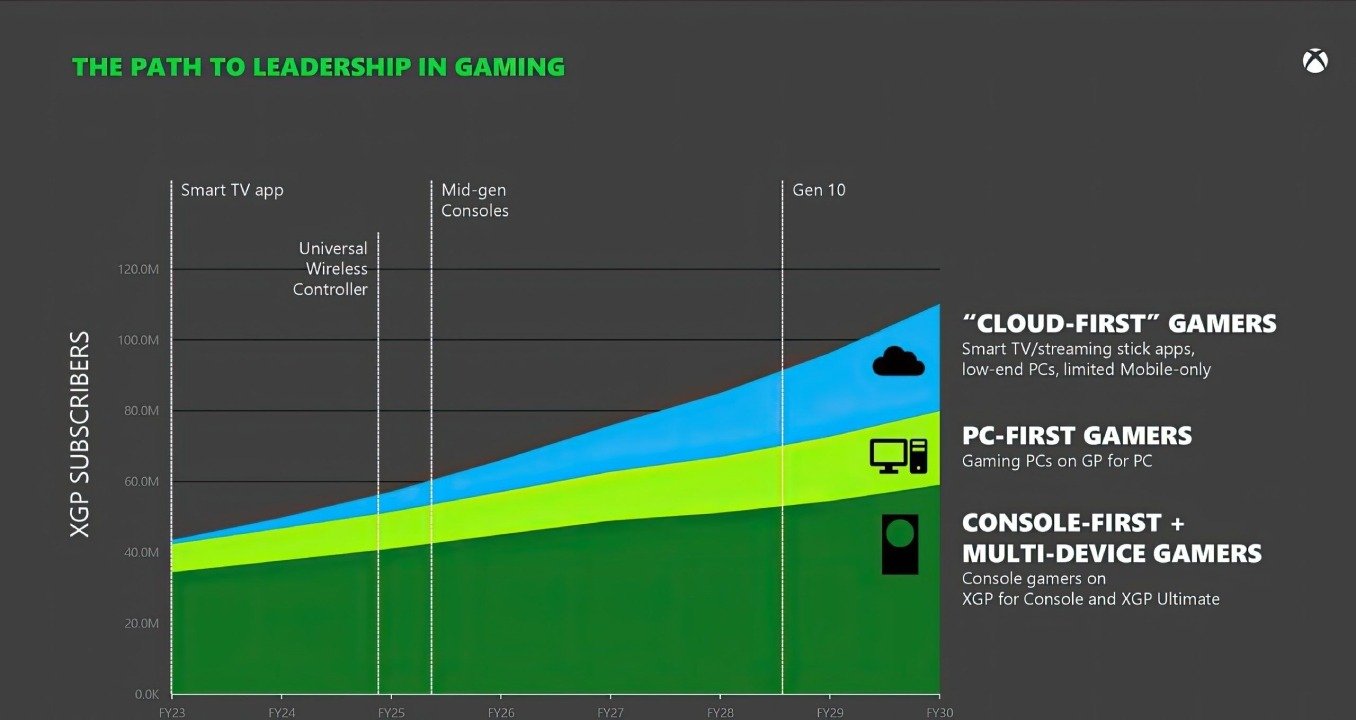
The issue is not the number in isolation; it is the gap between reported reality and Microsoft’s earlier ambition. During legal proceedings tied to the Activision Blizzard acquisition, internal projection material suggested Microsoft once expected Game Pass to reach around 77 million subscribers by this point.
If the reported 30 million figure is accurate, the subscription service is not simply growing slower than expected. It is operating at less than half of that earlier target.
Xbox Restructuring Makes the Game Pass Debate Louder
The timing makes the report more difficult for Microsoft. Xbox is currently undergoing a major restructuring, with thousands of roles being cut and several studios moving out from under Microsoft’s management. That reset has already raised questions about the cost of Xbox’s first-party strategy, the future of its studio system, and whether Game Pass can support the scale Microsoft built around it.
For years, Game Pass was presented as the foundation of Xbox’s long-term plan. It helped justify major content investment, large acquisitions, and the idea that Microsoft could reach players across console, PC, cloud, and handheld devices. A slower subscriber trajectory does not erase that strategy, but it does make the economics harder to defend.
Game Pass Is Still Powerful, But Growth Is the Problem
The important point is that Game Pass is not suddenly irrelevant. The service still gives Xbox a major platform advantage, especially when high-profile releases join the library on day one. It also remains a strong discovery tool for smaller games, older titles, and players who want access to a wide catalogue without buying every release individually.
However, subscription businesses depend on growth, retention, pricing discipline, and content flow. If subscriber numbers stall while development costs keep rising, the pressure shifts elsewhere. Microsoft either needs more users, higher prices, better margins, leaner content spending, or a different mix of all four.
That is likely why Game Pass has changed so much over the past few years, from tier adjustments to pricing changes and a more careful approach to what each subscription level offers.
Xbox Needs to Prove the Model Still Works
Game Pass remains one of Xbox’s most important ideas, but it is no longer being viewed with the same unchecked optimism it once enjoyed. The service helped reshape expectations around access, value, and first-party releases. At the same time, the latest report suggests Microsoft may have overestimated how quickly mainstream players would adopt a gaming subscription at the scale it wanted.
That leaves Xbox facing a difficult question after its latest restructuring. Game Pass can still be central to the platform, but Microsoft now has to prove it can be more than a generous deal for players. It has to become the sustainable foundation Xbox always said it would be.
