

Table of Contents
ALL WILL FALL on PC
There is something immediately appealing about ALL WILL FALL because it understands that a setting should do more than look dramatic. This is not just another post-apocalyptic management game with a striking skyline and a sad bit of lore in the background. The world created by All Parts Connected and tinyBuild actively shapes every choice you make.
The endless sea in ALL WILL FALL is not decoration. It is pressure. It limits where you can expand, dictates how your settlement grows, and constantly reminds you that civilisation is being rebuilt on scraps that barely deserve to be called solid ground. The result is a city builder with a strong sense of place, one where the fantasy of survival comes less from fighting enemies than from trying to impose order on an environment that clearly has no interest in making it easy.
That is what makes the game’s opening hook land so well. You are not spreading neatly across open land and slowly refining a clean blueprint. You are improvising. You are stacking homes, workstations, and supply routes in a drowned world where every layer upward feels like a compromise with gravity.
That alone gives ALL WILL FALL a much stronger personality than plenty of games in the genre. It does not simply ask whether you can build a functioning city. It asks whether you can build one in a place that feels fundamentally wrong for human life, and whether you can keep pretending the whole thing is stable for long enough to survive another day.
Visually, that tension works in the game’s favour. There is a scrappy charm to its ramshackle towers and improvised walkways, with settlements that look less like monuments to progress and more like communities stitched together out of stubbornness. That fits the tone beautifully.
ALL WILL FALL is not interested in making survival look elegant. It wants it to look functional, overextended, and just a little bit desperate. In turn, the setting feels more organic because the structures themselves tell the story. Every bridge and every extra floor says the same thing. We needed more space, and this was the best bad idea we had.
Where Building Feels Like Gambling
The most distinctive thing about ALL WILL FALL is that its building mechanics do not just support the fantasy. They are the fantasy. The game’s physics-based 3D construction system means you are always thinking about weight distribution, support, tension, and how each new addition affects the wider structure.
In another city builder, expansion tends to be comforting. Here, expansion often feels like a dare. Each new platform, house, or industry building can make your settlement stronger, but it can just as easily become the start of a future disaster if you have been too greedy, too hurried, or too confident in your engineering.
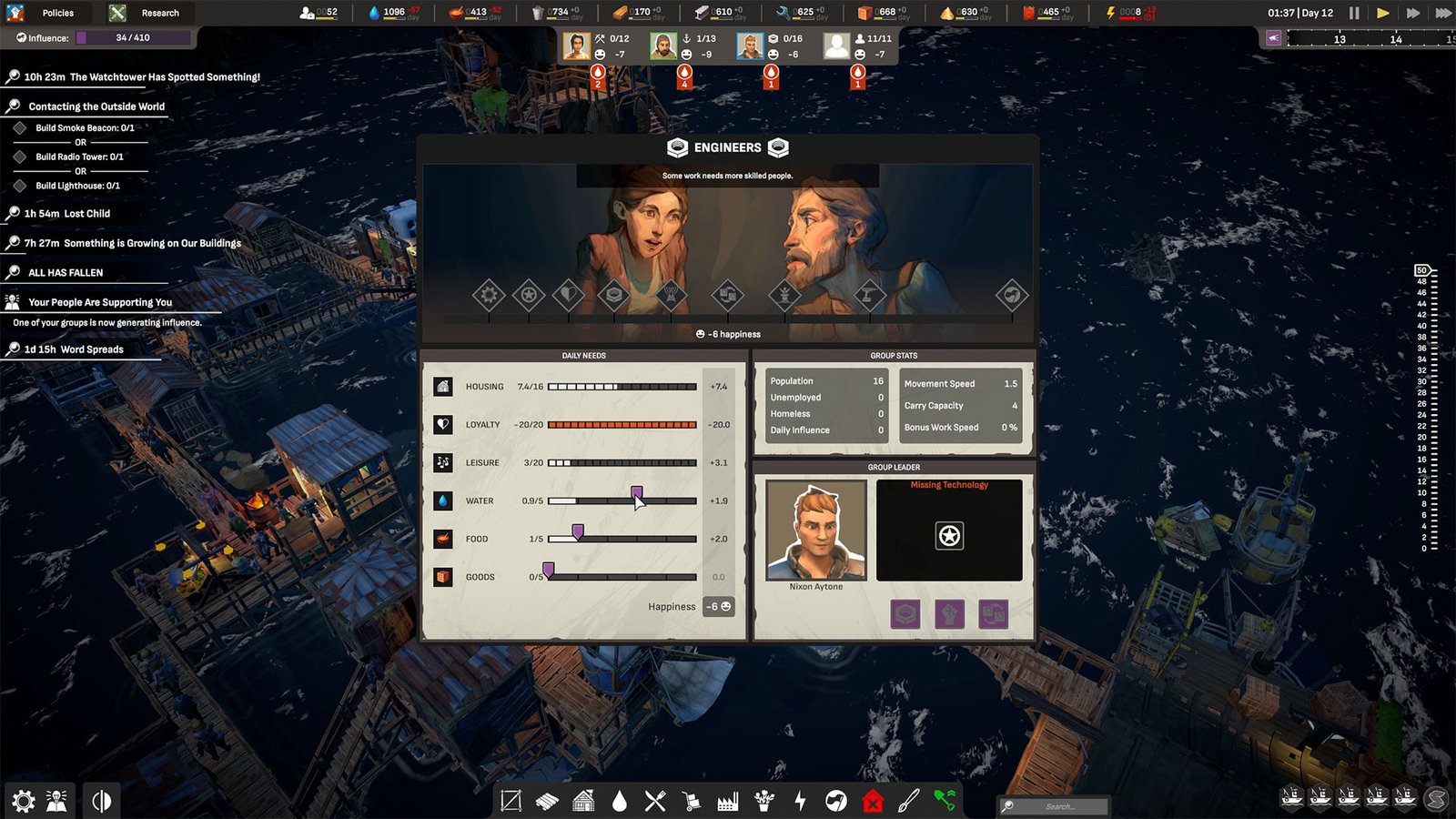
That is where ALL WILL FALL becomes genuinely fun. Watching a city collapse would be little more than a novelty if the game made failure feel arbitrary, but it usually seems much smarter than that. When things go wrong, it often feels like the natural outcome of your decisions. You overreached. You built too high, too quickly. You trusted a support structure that had no business carrying that much responsibility.
Because the system gives you ownership over success and failure, the physical dangers in the world feel earned rather than theatrical. The best moments come from that exact sensation of looking at a new addition and thinking it is probably a terrible idea, then building it anyway because survival doesn’t really leave room for caution forever.
It also helps that ALL WILL FALL appears to understand the comic potential of disaster. There is something darkly amusing about trying to hold together an overcomplicated tower town above the ocean, especially when one bad choice can send chunks of your ambition tumbling into the water. That lightness gives the game personality. It keeps the survival tension from becoming dour, and it makes the process of learning the systems more entertaining. You are not just solving equations in the background. You are building a precarious little monument to human denial and hoping it survives the week.
The Sea Is More Than a Backdrop
What lifts ALL WILL FALL beyond a clever construction toy is the way other systems bring the drowned setting to life. The city does not exist in isolation from the sea. Water levels shift, tides reveal new areas, storms complicate planning, and different structures work better depending on their relation to the shoreline.
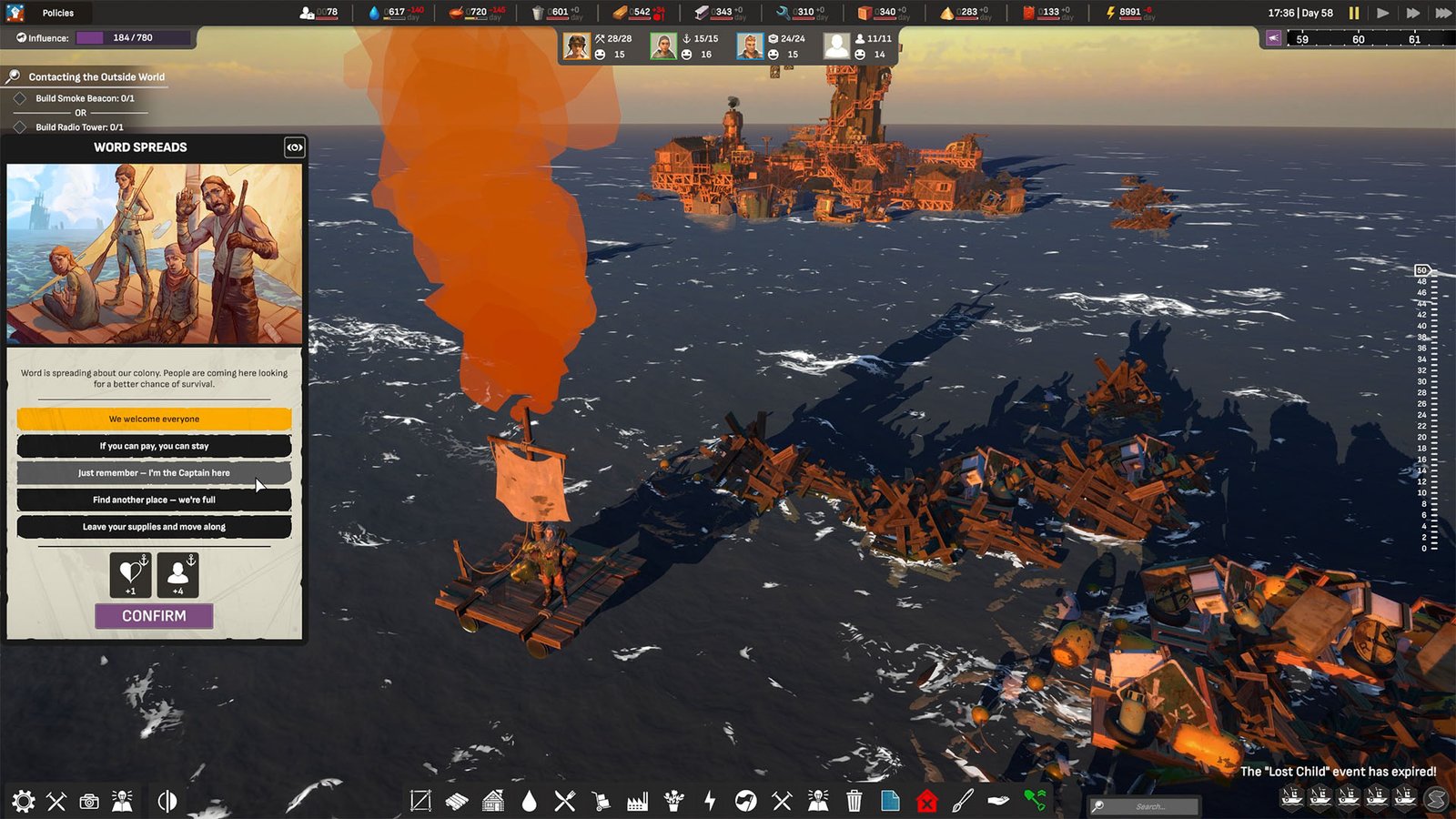
These are exactly the sorts of details that make the world feel mechanically believable. The ocean is not simply where the map ends. It is part of the settlement’s logic. You are constantly adjusting to it, reacting to it, and trying to squeeze opportunity out of it whenever conditions briefly shift in your favour.
That feeds into the game’s greatest strength: interdependence. A weak support is not only a weak support. It can threaten housing, interrupt a production chain, or make resource collection more awkward at the exact moment you can least afford it. Likewise, exposed resources are not just a nice bonus.
They can be the difference between momentum and stagnation if the tide finally opens up a new route or a fresh bit of building space. ALL WILL FALL understands that danger feels more convincing when it spreads. Problems rarely stay in one lane. They cascade. They lean into one another. They make every part of the city feel as though it is resting on everything else.
That also gives the citizens more texture, even when the human side of the simulation isn’t the deepest part here. The presence of different factions and worker types helps the city feel inhabited rather than abstract, and the need to consider who lives where adds a practical layer to the layout. This is not a case of dropping generic worker counters into buildings and moving on.
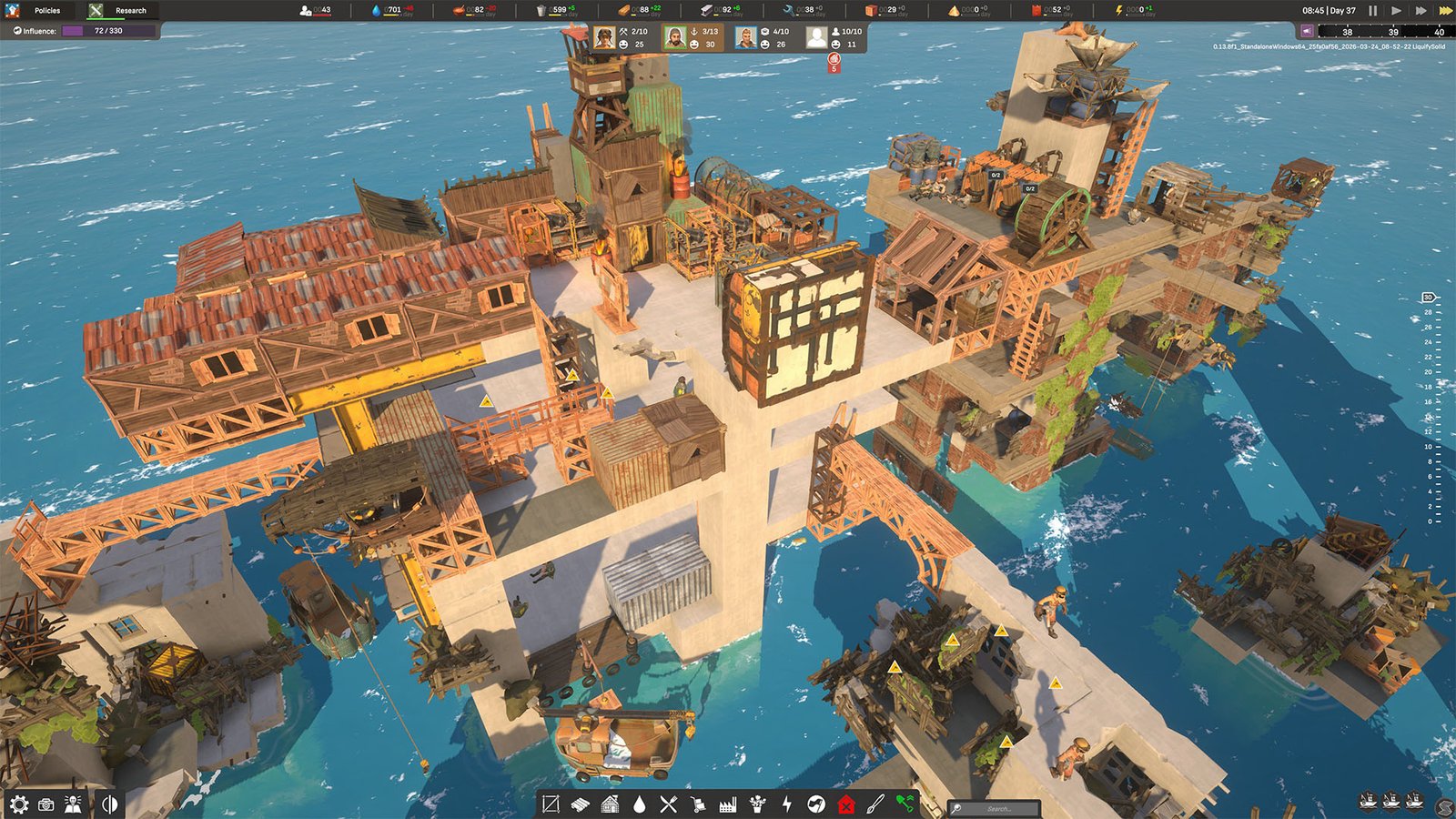
There is at least enough friction in the social and logistical design to make a settlement in ALL WILL FALL feel like a real place with routines, bottlenecks, and fragile patterns of daily life. When the game is humming, that combination of architecture, labour, and environmental pressure makes the world feel far more organic than its broad premise might initially suggest.
A Strong Fantasy That Does Not Always Go Far Enough
However, not every layer of ALL WILL FALL is equally compelling. The setting is excellent. The vertical building and physics are easily the stars of the show. The environmental pressures do a great job of making the world feel dangerous in a tangible way rather than merely dramatic. But once the novelty settles, parts of the wider colony management can feel more functional than fascinating. There is enough here to keep the city alive, but not always enough to make the broader human drama feel as vivid as the structural drama.
That is not a fatal problem because the game’s strongest ideas are strong enough to carry a lot of weight. Still, it does mean the most memorable stories tend to come from the city’s shape rather than from the society within it.
You remember the absurd bridge that somehow held. You remember the tower that felt impossible until it was not. You remember the scramble to adapt when the sea shifted, and the settlement suddenly had to be rearranged around a new opportunity or a new threat. Those are good memories, and they speak to a game with a clear identity. They just do not always add up to a colony sim that feels as rich in every other respect as it does in its core construction fantasy.
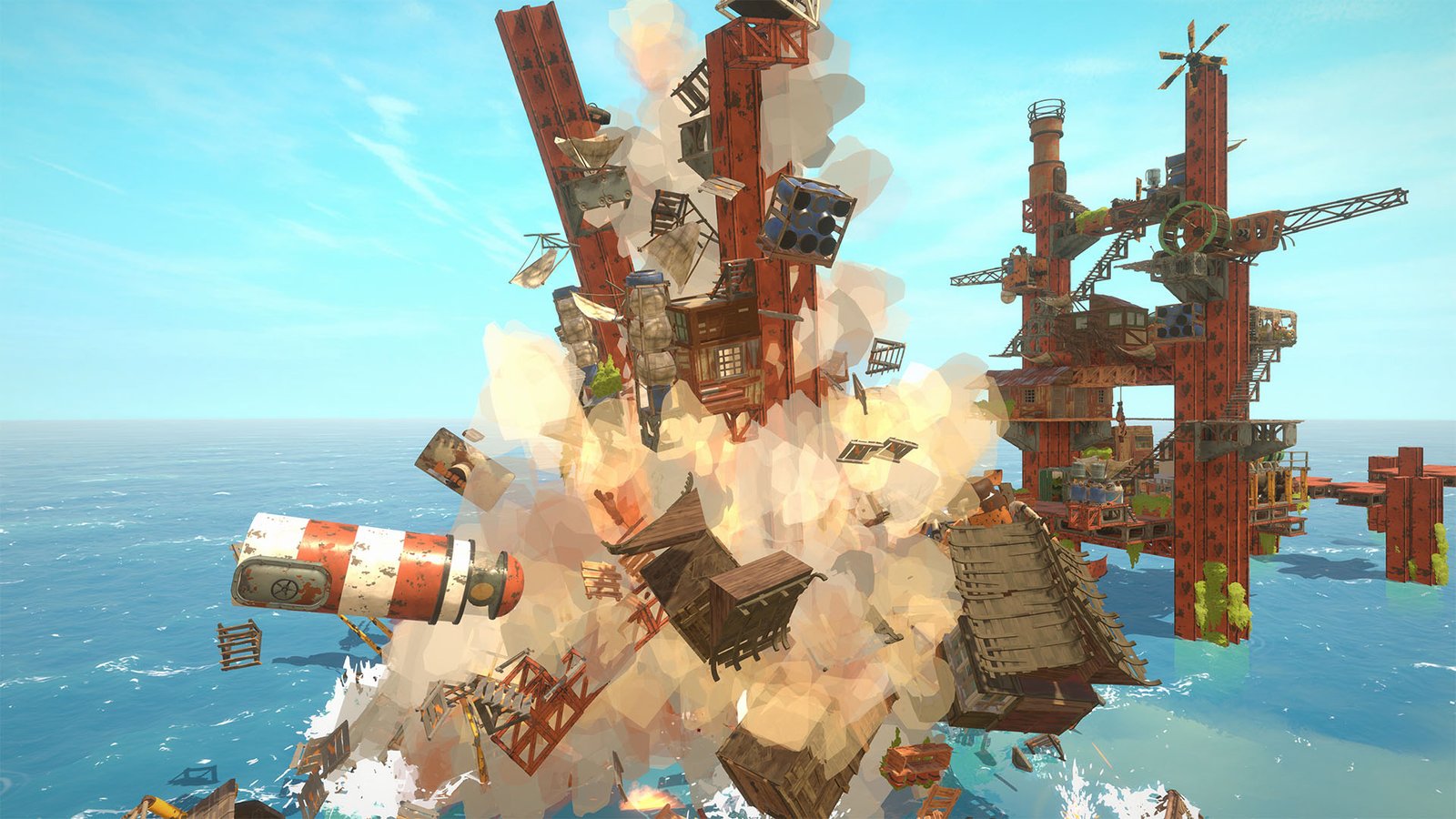
Even so, ALL WILL FALL has something many strategy and survival games would love to have: a premise that actually survives contact with the mechanics. The world feels unstable because the systems that govern it make it so. The setting feels dangerous because the act of playing proves that danger over and over again. That makes the game easy to appreciate, even when it is not quite firing on every cylinder. It may not build the richest society sim around its ideas, but it absolutely nails the fantasy of trying to stack civilisation on top of the ocean and praying it all holds together for one more day.
ALL WILL FALL is available now on PC.
SavePoint Score
Summary
All Will Fall does its best work when its drowned setting and precarious building systems make survival feel like a constant compromise. Every new floor, bridge, and supply line adds to a world that feels genuinely unstable, even if some of the wider management ideas do not always carry the same weight.
